
Written by: Ryan Dunlop, CEO and Founder of Full Arch Masters and graduate from the Harvard School of Dental Medicine
Key Takeaways
-
Dental implant course prices range from $500 for online modules to $50,000+ for comprehensive fellowships, and sticker price rarely reflects the full investment.
-
Hidden costs such as travel, lodging, anesthesia, credentialing, and lost chair time can add $5,000–$20,000+ to the real-world spend beyond tuition.
-
Live-patient surgical access, CE credit volume, mentorship duration, and post-course community support are the primary drivers that separate price tiers and determine long-term value.
-
Break-even analysis shows many dentists recover a $15,000–$25,000 live-patient course investment after just one to two full-arch cases, then see substantial annual revenue growth thereafter.
-
Explore Full Arch Masters courses to see transparent pricing, live-patient surgical training, AGD PACE-approved CE credits, and a continued alumni community.
How Much Does a Dental Implant Course Cost?
US dental implant courses span four distinct price tiers: online introductory or didactic ($500–$2,500), weekend hands-on typodont ($3,000–$7,500), single live-patient course ($8,000–$15,000), and comprehensive continuum or fellowship program ($15,000–$50,000+). Each tier reflects a different level of clinical access, mentorship, and curriculum depth.
The table below maps each tier to its typical tuition range so you can locate your budget before comparing individual programs.
|
Tier |
Tuition Range |
Typical Format |
|---|---|---|
|
Intro / Online Module |
$500–$2,500 |
Single webinars and short online modules |
|
Advanced or Regional Hands-On |
$3,000–$7,500 |
Weekend hands-on typodont programs |
|
Live-Patient or Multi-Module |
$8,000–$15,000 |
Single live-patient courses |
|
Fellowship or University |
$15,000–$50,000+ |
Comprehensive continuum programs |
Each figure above reflects the program’s published tuition. The tiers exist to orient your budget and clarify what level of access each price band usually delivers.
What Drives the Dental Implant Course Cost Up or Down
Program structure, clinical access, and support level largely determine where a course lands on the price spectrum.
Live-patient surgical access is the single largest cost driver. Full Arch Masters’ Live Surgical Course provides onsite CRNA general anesthesia for its live-patient surgical cases, along with a licensed clinical facility, patient screening and consent infrastructure, and state board credentialing for visiting dentists. Colorado is one of the few states where the dental board allows visiting U.S.-licensed dentists to operate on volunteer patients under a credentialing process submitted in advance, so hands-on full-arch live surgery remains structurally rare as a continuing-education format.
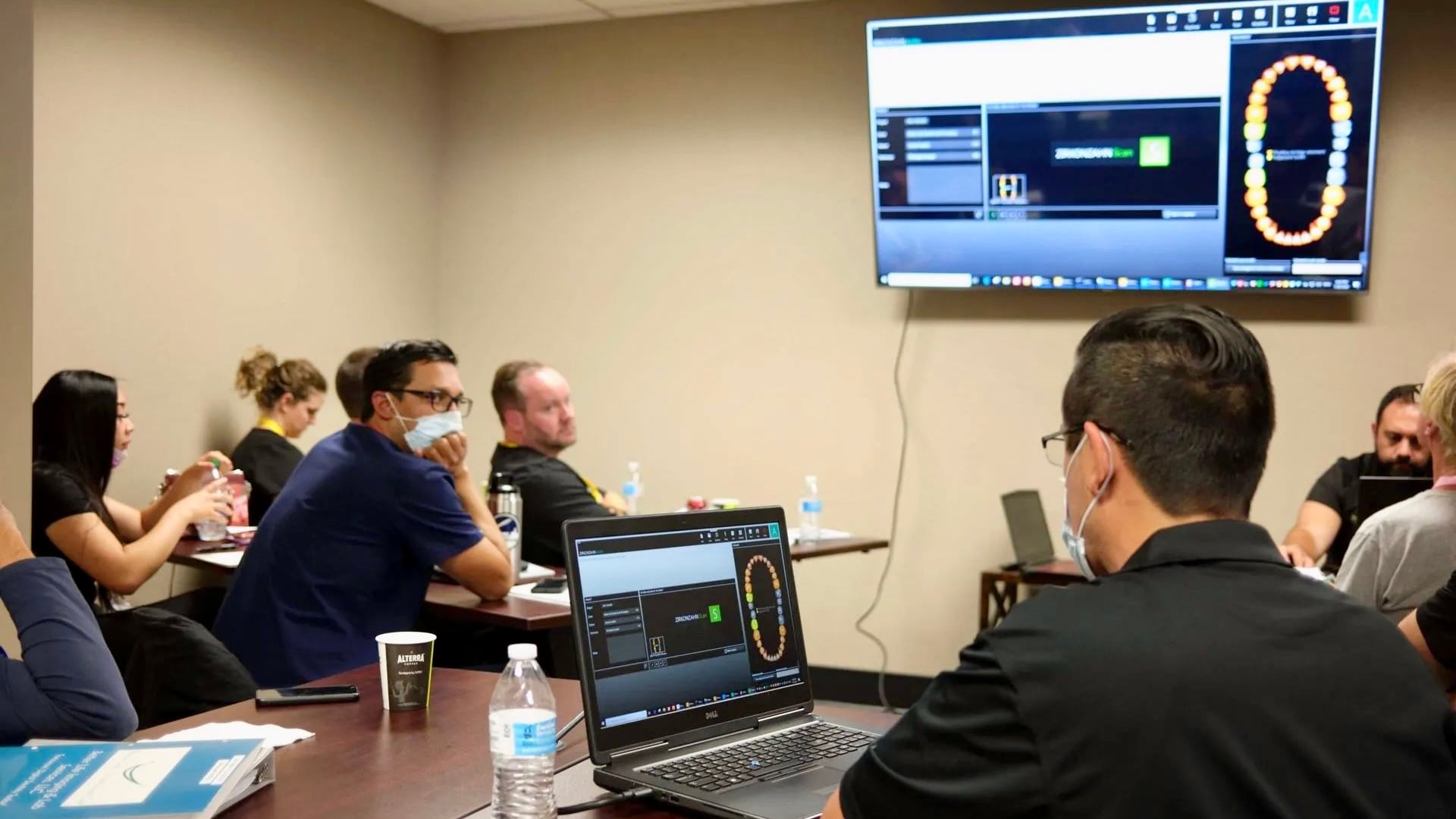
CE credit volume varies significantly by program. A single-day workshop may carry a handful of CE credits. Full Arch Masters’ main courses are AGD PACE-approved and generally carry 32 CE credits each, while the full FAM Fellowship delivers 90+ CE hours across its bundled curriculum.
Mentorship duration and post-course support also affect price. A program that ends when the course ends costs less to operate than one that maintains active alumni communities, case-review channels, and ongoing instructor access for years afterward.
Curriculum breadth matters too. Programs that cover only surgical technique cost less to design and deliver than those integrating lab, prosthetic, and treatment coordination content into the same curriculum. A course that teaches the procedure but not the team systems around it delivers a narrower product.
Cohort size is a direct cost lever. Mentorship does not scale. In a group of twenty with two instructors, a participant receives only a few minutes of individual correction across an entire course. Small-cohort programs cost more per attendee and usually deliver more value per dollar.
The Hidden Costs of Attending an Implant Course
The sticker price is the starting point. The true-cost formula for any implant course is:
Tuition + Travel and Lodging + Anesthesia (if not bundled) + Credentialing Submissions + Lost Chair Time = Real-World Spend
Each line item adds up in predictable ways.
-
Travel and lodging: Round-trip flights ($200–$800), lodging for several nights ($300–$1,000), and in-country transport and meals ($100–$400) add roughly $800–$2,000 beyond the base cost for a typical out-of-state course.
-
Anesthesia: Full Arch Masters’ Live Surgical Course provides onsite CRNA general anesthesia for its live-patient surgical cases. Some programs bundle this into tuition, while others bill it separately. Confirm the structure before registering.
-
Credentialing submissions: Programs that operate under state dental board credentialing, such as the Colorado Dental Board process used by Full Arch Masters, require credential submission in advance. Administrative time and any associated fees are a real cost.
-
Lost chair time: A four-day course means four days of closed production. For a dentist producing $3,500–$5,000 per day (the average GP production range cited by Dental Economics surveys), that is roughly $14,000–$20,000 in forgone production revenue before a single dollar of tuition is paid.
A dental implant course with a $4,000 tuition can become a $10,000 real-world spend once hidden costs such as travel, lodging, lost production, and required instruments are added, per eathealthy365.com’s analysis of dentist continuing-education costs. Programs quoting low tuition frequently bill implants, materials, and instrumentation separately. Once travel, lodging, materials, and lost production are added, an all-inclusive program with a higher headline figure is sometimes the cheaper choice. Comparing programs on sticker price alone creates a distorted picture.
How Long Is an Implant Course?
Course length closely maps to price tier and clinical depth, so duration gives a quick signal about what to expect.
-
Single-day or online modules sit at the intro tier. Online introductory dental implant modules typically cost between roughly $500 and $2,000. These cover foundational concepts, digital planning, or a single technique and do not include live-patient work.
-
Multi-day hands-on courses (2–3 days), such as weekend typodont courses, typically cost $3,000–$7,500, with $3,500–$5,000 sitting within that mid tier. These usually include model or cadaver work and lectures, with limited or no live-patient surgical access.
-
Live-patient and multi-module programs span a broad price range. Single live-patient courses typically run about $6,500–$16,000, while multi-session continuum programs generally cost $15,000–$50,000+. These formats are where real surgical repetitions and integrated curriculum begin.
-
Year-long fellowships and university-style programs range widely in cost, from roughly $20,000 on the low end to more than $100,000 in total billed costs at the high end. Some blended CE programs carry very high CE credit totals but explicitly state that participants do not treat patients and do not receive hands-on live-patient surgical experience.
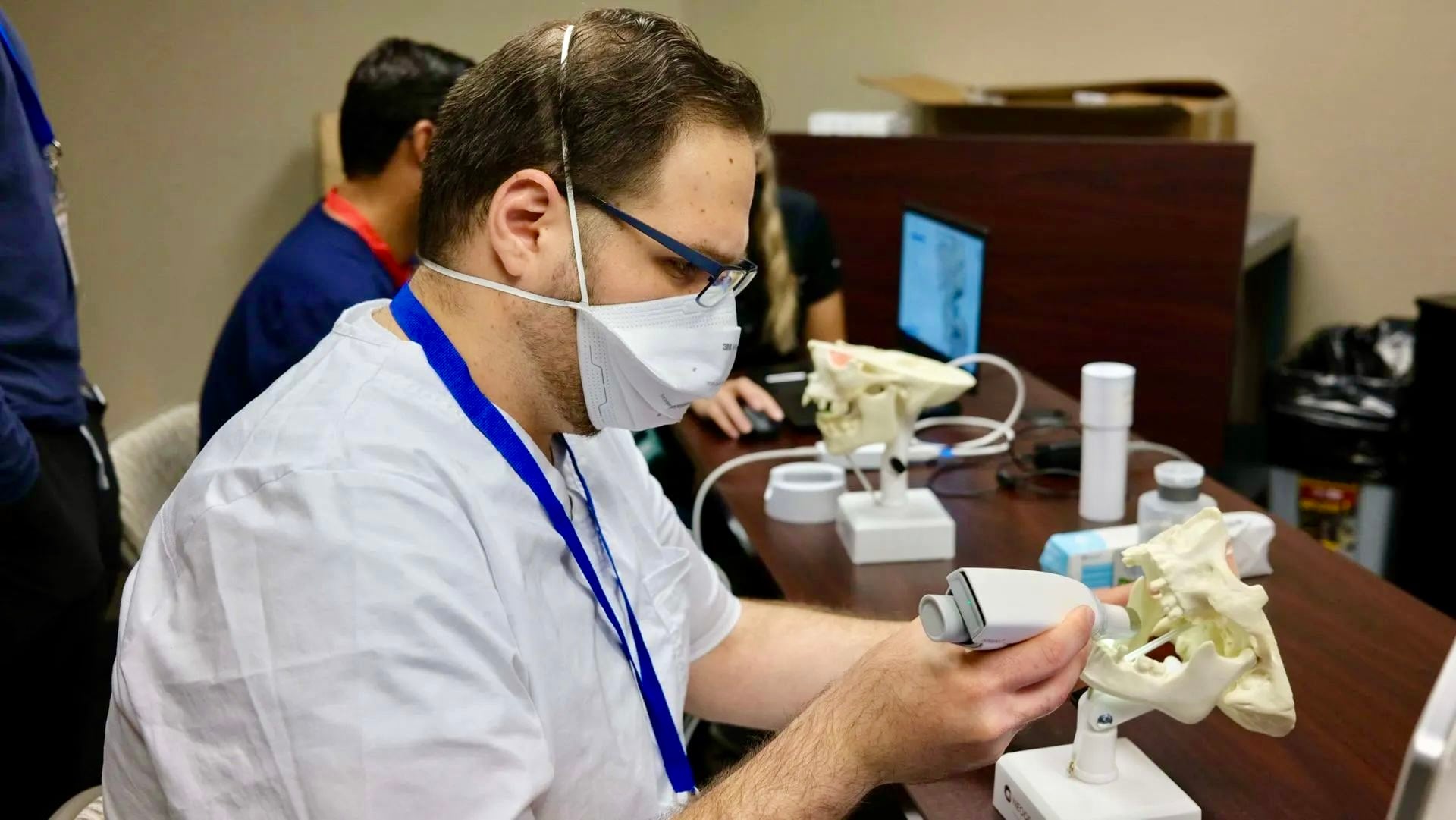
Full Arch Masters’ three core courses, the Flagship Course, the Live Surgical Course, and the Design and Finish Course, each run four days. The FP1 Course and the Treatment Coordinator Bootcamp each run two days. The FAM Fellowship bundles the three core courses plus a fourth, delivering 90+ CE hours across the full program.
How to Finance a Dental Implant Course and Calculate Break-Even
Financing structure and payback timeline determine whether a course fits comfortably within a practice’s cash flow.
Payment plans. Many dental implant programs offer payment plans, including installment options. Full Arch Masters’ Fellowship payment plan runs up to 9–12 months depending on scheduling, which spreads a $20,000–$25,000+ commitment across a practice’s cash flow cycle. The Fellowship also delivers a $5,000–$10,000 bundle discount versus paying for each course individually, a meaningful reduction in total outlay for practices planning to take more than two FAM courses.
Practice financing. Dentists commonly use business credit cards, professional development loans, or practice financing to preserve cash flow while investing in training. A practical affordability test is to compare the monthly payment against the incremental revenue from newly placed cases, then decide whether expected case volume can cover the payment within a short period after training.
Break-even math. The formula is straightforward. Divide tuition, or total real-world spend, by the average revenue per full-arch case to see how many cases the course must generate to pay for itself.
Full Arch Masters alumni report adding $1M+ per year in practice revenue after adopting the FAM Method. That figure reflects FAM’s reported alumni outcome rather than a peer-reviewed industry statistic, but the break-even math holds regardless of the revenue figure used.
Talk to the FAM team about Fellowship payment plan options and run the break-even math for your practice.
How to Judge Value Beyond Sticker Price
A comparison framework built on verifiable attributes gives a practice owner a reliable way to evaluate any program before committing.
-
Live-patient reps per attendee: The number of implants a participant personally places is the single most predictive number for evaluating a live-patient implant course. Ask programs to commit to this figure in writing so expectations stay clear.
-
CE credits: Verify the accrediting body and the number of hours. Full Arch Masters courses are AGD PACE-approved and generally carry 32 CE credits per main course, which helps satisfy licensure and professional development requirements.
-
Mentorship duration: Clarify whether support ends when the course ends or whether the program maintains active post-course access. Ongoing mentorship changes how confidently a dentist implements new procedures.
-
Post-course community access: A continued alumni community with hundreds of trained peers functions as a clinical sounding board. That resource is very different from a binder and a certificate.
-
Lab and treatment coordination content: A course that teaches surgery and also trains the team on lab workflows and case presentation gives the practice an operating system, not just a technique.
-
Vendor discounts and recurring fees: GPOs and DSOs typically charge ongoing fees or require organizational membership for vendor discounts. Confirm whether a program’s buying group carries recurring costs or provides access without ongoing fees.
Full Arch Masters publishes its tuition transparently:
-
Flagship Course: $9,995 per dentist; $2,500 per additional team member
-
Live Surgical Course — Basic Operator: $20,000
-
Live Surgical Course — Advanced Operator: $25,000
-
Design and Finish Course: $6,995
-
FP1 Course: $7,995 dentist / $4,995 associate dentist / $1,495 assistant or technician
-
Treatment Coordinator Bootcamp: $6,995 dentist / $900 treatment coordinator (with dentist) / $2,000 treatment coordinator solo
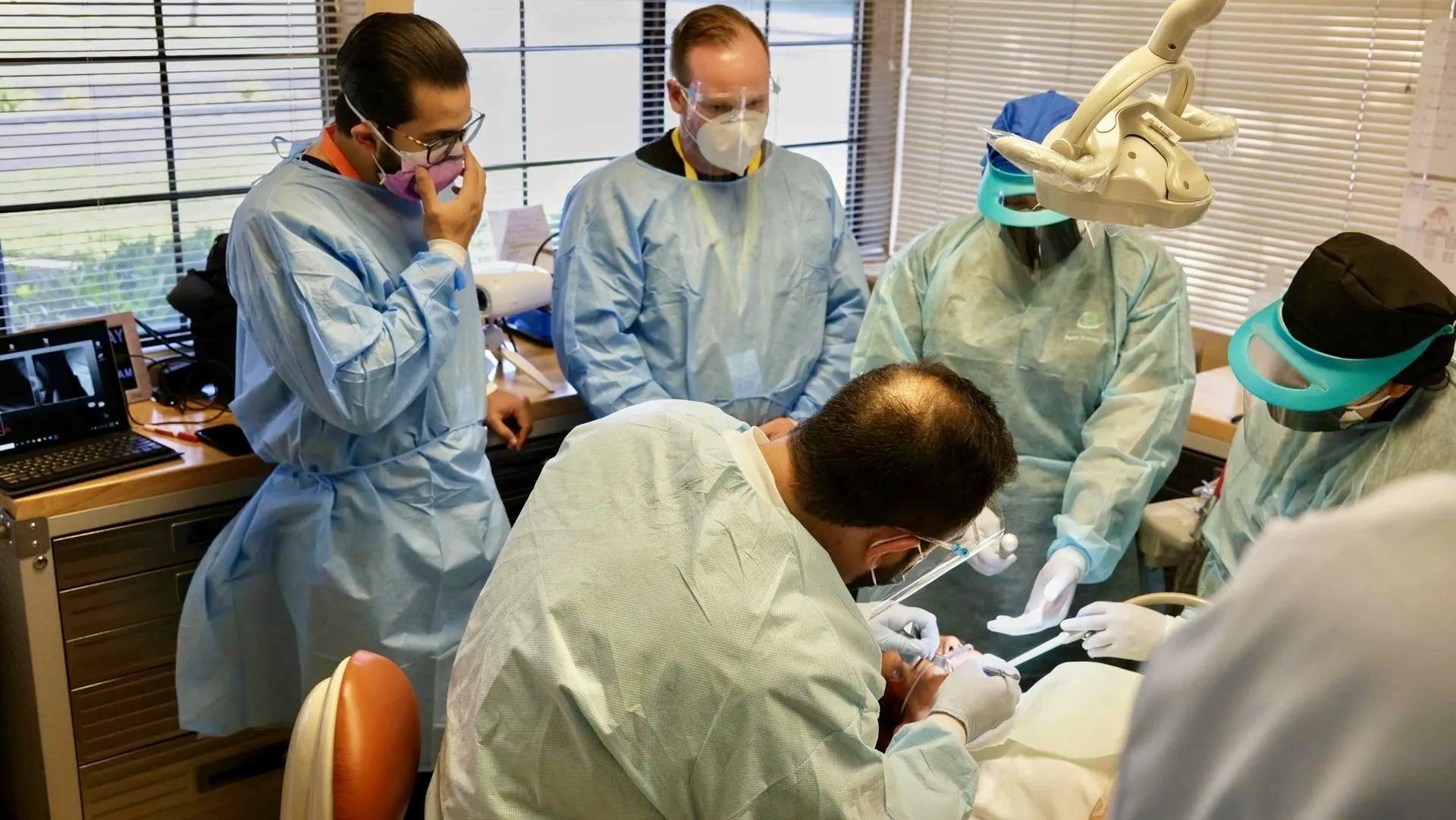
Each Basic and Advanced operator in the Live Surgical Course performs two full arches on live volunteer patients under Colorado Dental Board credentialing. That access provides real surgical repetitions rather than model work. That clinical access is only one part of the value stack. Every FAM alumnus also gains access to the KOL (Key Opinion Leader) buying group, which secures vendor discounts on Neodent implants, exocad licenses, 3D printers, and other equipment at no recurring cost. Every attendee joins a continued community of hundreds of FAM-trained dentists through private group chats, where case help is available on demand for the life of the relationship. These value components sit alongside tuition and help define the true return on the investment.
Where Full Arch Masters Sits in the Dental Implant Course Price Landscape
Within the four tiers described earlier, FAM’s pricing aligns with programs that provide live-patient access, integrated curriculum, and structured support. The Flagship Course at $9,995 per dentist and the Live Surgical Course at $20,000–$25,000 per operator sit in the live-patient and multi-module tier. That tier is where real surgical access, integrated curriculum, and post-course support begin to justify the investment on a break-even basis.
The FAM Fellowship bundles the three core courses, Flagship, Live Surgical, and Design and Finish, plus a fourth course of the practice’s choice at a $5,000–$10,000 discount versus paying per course, with a payment plan of up to 9–12 months. Practices that intend to take more than two FAM courses generally enroll in the Fellowship because the bundle discount and payment structure improve the financial profile.
FAM’s position in the landscape is defined by what the investment actually delivers. Live-patient surgical reps build clinical confidence, 32 AGD PACE-approved CE credits per main course satisfy CE requirements, and the integrated digital workflow covering all seven steps of the FAM Method gives the practice a repeatable operating system. Team-based training and a community that continues after the course complete the package.
Compare the Full Arch Masters value stack to other programs on your list and see how the clinical access, curriculum, and support align with your goals.
Frequently Asked Questions
How Much Does a Dental Implant Course Cost?
Implant course tuition ranges from a few hundred dollars for short online modules to more than $50,000 for comprehensive fellowships. Introductory online content usually sits between $500 and $2,500. Weekend typodont courses often fall in the $3,000–$7,500 range. Single live-patient or multi-module programs typically cost $8,000–$15,000, and longer continuum or fellowship-style programs usually range from $15,000 up to $50,000+ depending on scope and duration. These figures reflect published tuition only. Once travel, lodging, anesthesia, credentialing, and lost chair time are added, the real-world spend can increase significantly, especially for 3–5 day destination courses.
Is a Live-Patient Implant Course Worth the Higher Price?
For dentists who plan to build full-arch into their core practice, live-patient surgical access usually delivers the most direct impact on clinical confidence. The gap between knowing a protocol and performing it under real clinical conditions, with live tissue, anesthesia, and irreversible decisions, does not close through lecture or model work alone. Programs that include real supervised surgical repetitions per attendee, not just group totals or instructor demonstrations, better support independent case execution after the course ends. For full-arch implant practices, the break-even point on equipment and course investments typically ranges from about two to three cases for software to eight to fifteen cases for imaging and surgical equipment, with overall equipment costs recovered within roughly twelve to eighteen cases, per this full-arch business blueprint.
What Is Included in Implant Fellowship Cost?
Fellowship-level programs differ in what they bundle into tuition. Some include surgical materials, lab fees, and CE credits in a single figure, while others bill these items separately after enrollment. Full Arch Masters’ FAM Fellowship bundles the three core courses, Flagship, Live Surgical, and Design and Finish, plus a fourth course of the practice’s choice. The Fellowship delivers 90+ CE hours across the full program, includes a $5,000–$10,000 discount versus paying per course, and unlocks a payment plan of up to 9–12 months. Alumni also gain KOL buying group access at no recurring cost and join the continued alumni community, both included in Fellowship tuition.
How Long Is an Implant Course?
Implant course length ranges from a single day for online modules and introductory workshops to a full year for university-style fellowships and structured continuums. Multi-day hands-on courses typically run two to three days. Live-patient and multi-module programs often run four to seven days or across multiple sessions over several months. Full Arch Masters’ three core courses each run four days. The FP1 Course and the Treatment Coordinator Bootcamp each run two days. The FAM Fellowship spreads across multiple courses that a practice can schedule flexibly across the year.
Can I Finance a Dental Implant Course?
Many dental implant programs offer payment plans, and practice financing through business credit cards or professional development loans is common. Full Arch Masters’ Fellowship payment plan runs up to 9–12 months. The practical test is to compare the monthly payment against the incremental revenue from newly placed full-arch cases and confirm that projected case volume covers the payment comfortably. Practices that plan to take more than two FAM courses often find that the Fellowship bundle discount of $5,000–$10,000 off retail strengthens the financing math.
What Hidden Costs Should I Budget For?
Beyond tuition, budget for round-trip airfare ($200–$800), lodging for the course duration ($300–$1,000+), meals and ground transport ($100–$400), anesthesia fees if not bundled into tuition, credentialing submission time and any associated fees, and lost chair time for every day the practice is closed. As noted earlier, a four-day course represents $14,000–$20,000 in forgone production for a dentist in the average GP production range. The true-cost formula, tuition plus travel and lodging plus anesthesia plus credentialing plus lost chair time, gives a realistic number to budget against.
How Do I Compare a $5,000 Course to a $20,000 Course?
Apply the value framework described above. Compare live-patient reps per attendee, CE credits and accrediting body, mentorship duration and post-course support, whether lab and treatment coordination content is included, cohort size and mentor-to-participant ratio, and whether vendor discounts carry recurring fees. A $5,000 course with no live-patient access, a large cohort, and no post-course community delivers a different product from a $20,000 course with supervised surgical reps, small cohorts, integrated curriculum, and a continued alumni network. The break-even calculation, total real-world spend divided by revenue per case, is the final filter that shows how many cases each course needs to generate to pay for itself.
Where Does Full Arch Masters Pricing Sit?
Full Arch Masters’ Flagship Course at $9,995 per dentist sits in the live-patient and multi-module tier. The Live Surgical Course at $20,000 for Basic Operators and $25,000 for Advanced Operators sits at the upper end of that tier, reflecting live surgical access on volunteer patients under Colorado Dental Board credentialing, onsite CRNA anesthesia, and small-cohort mentorship. The FAM Fellowship bundles the three core courses plus a fourth at a $5,000–$10,000 discount. The continued alumni community adds long-term value that does not appear in sticker-price comparisons but can materially affect the return on the investment over time, similar in concept to other dense professional alumni networks.
Conclusion and Next Steps
The dental implant course price you see advertised is the starting point. The true-cost formula, tuition plus travel and lodging plus anesthesia plus credentialing plus lost chair time, gives a realistic number to budget against. The value framework, live-patient reps per attendee, CE credits, mentorship duration, post-course community, lab and treatment coordination content, and vendor discount structure, gives a reliable way to compare programs before committing.
Three practical next steps before signing a deposit:
-
Build a true-cost budget using the formula above, not just the sticker price.
-
Compare programs on live-patient reps per attendee and post-course support rather than tuition alone.
-
Talk to alumni before committing and ask what changed in their practice after the course and how the post-course community performed.
Ready to bring the FAM Method into your practice? Register for an upcoming Full Arch Masters course and access transparent tuition, live-patient surgical training, AGD PACE-approved CE credits, and a continued community of hundreds of FAM-trained dentists.