
Written by: Ryan Dunlop, CEO and Founder of Full Arch Masters and graduate from the Harvard School of Dental Medicine
Key Takeaways
-
Full-arch training pays for itself fast. FAM alumni report adding $1M+ per year in practice revenue after adopting the FAM Method.
-
2026 pricing spans from under $3,000 for lecture-style courses to $25,000 for live surgical training. FAM Flagship is listed at $9,995 per dentist.
-
Tuition alone doesn’t determine value. Look at hands-on surgery access, team pricing, CE credits, and post-course support.
-
Factor in hidden costs like travel, lost production, and recurring fees before you enroll.
-
FAM combines an integrated digital workflow, team-based training, and lifetime alumni support. See current tuition and availability for the Flagship Course.
2026 Full-Arch Tuition by Program Tier
FAM’s Flagship Course sits near the middle of the market at $9,995, well below the $20,000\u2013$25,000 live surgical tier but above budget lecture options under $5,000. Here’s how the tiers break down.
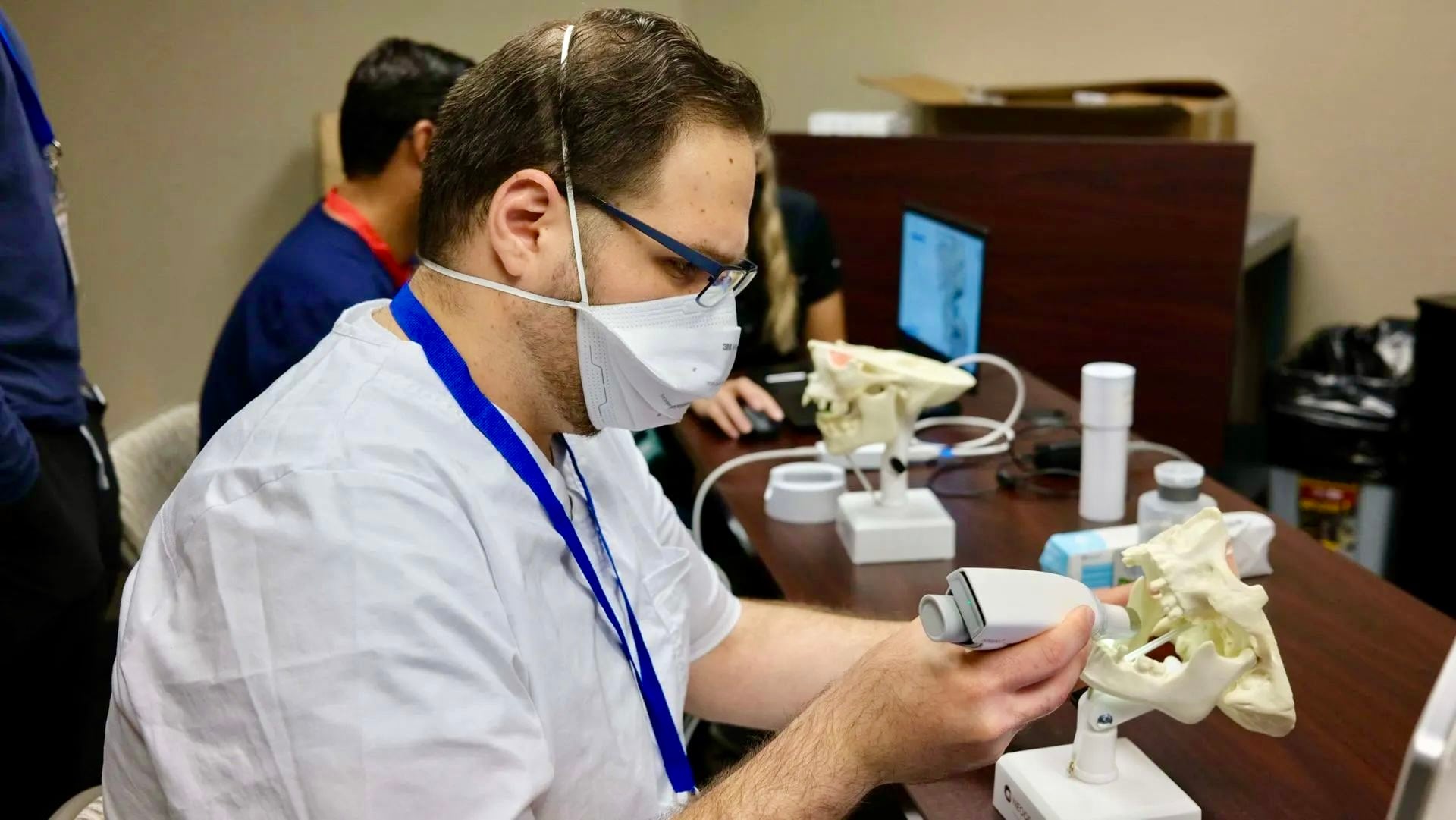
Full Arch Masters publishes the following 2026 pricing:
-
FAM Flagship Course \u2014 $9,995 per dentist; $2,500 per additional team member
-
Live Surgical Course (Basic Operator) \u2014 $20,000
-
Live Surgical Course (Advanced Operator) \u2014 $25,000
-
Live Surgical Course (Doctor Observer) \u2014 $4,995
-
Design and Finish Course \u2014 $6,995
-
FP1 Course \u2014 $7,995 dentist; $4,995 associate dentist; $1,495 assistant or technician
-
Treatment Coordinator Bootcamp \u2014 $6,995 dentist; $900 TC attending with dentist; $2,000 TC solo
-
FAM Fellowship bundle \u2014 three core courses plus a fourth course at $5,000\u2013$10,000 off individual retail pricing
See current tuition and availability for the Flagship Course.
What Your Tuition Actually Buys You
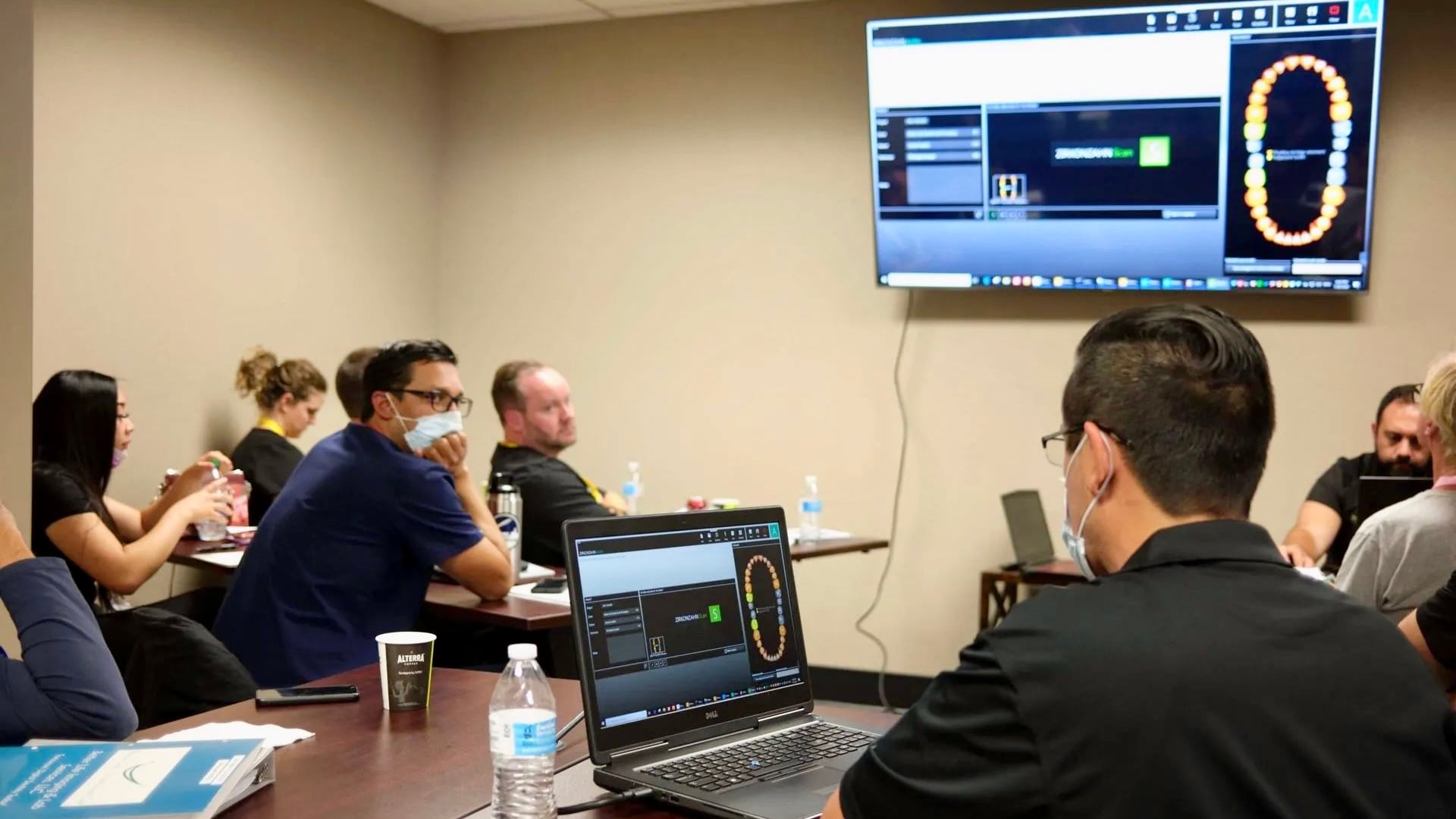
The Flagship Course stands out for one reason: it pairs live-patient hands-on access with a no-recurring-cost buying group, a combination most competitors don’t offer at any price. The table below breaks down what each tier includes beyond the sticker price.
|
Course |
Price (FAM) |
CE Credits |
Hands-On Surgery |
Team Pricing |
Post-Course Support |
|---|---|---|---|---|---|
|
Flagship |
$9,995 |
32 (AAGD-accredited) |
Records on live patients; surgical models |
$2,500/member |
Alumni group chats; KOL buying group; digital resource library |
|
Live Surgical \u2014 Basic |
$20,000 |
32 (AAGD-accredited) |
2 full arches on live volunteer patients |
Observer track available |
Alumni community; KOL buying group |
|
Live Surgical \u2014 Advanced |
$25,000 |
32 (AAGD-accredited) |
2 full arches; zygomatic/pterygoid focus |
Observer track available |
Alumni community; KOL buying group |
|
Design & Finish |
$6,995 |
32 (AAGD-accredited) |
Hands-on exocad design; zirconia finishing |
Included in Flagship team pricing |
Lab alumni chats; KOL buying group |
|
FP1 Course |
$7,995 (dentist) |
Included |
Live surgical demo; lab design day |
$1,495 assistant/tech |
Alumni community; KOL buying group |
|
TC Bootcamp |
$6,995 (dentist) |
Included |
Role-play; live patient scenarios |
$900 TC with dentist |
Follow-up coaching; alumni chats |
See current tuition and availability for the Flagship Course.
Hidden Fees and Recurring Costs to Budget For
Base tuition rarely reflects the total cost of full-arch CE. Most in-person programs carry additional expenses worth planning for before you enroll.
-
Travel and lodging. A four-day program can add $1,000-$2,500 per attendee in airfare, hotel, and meals. These costs sit outside base tuition for most in-person programs.
-
Lost production. A practice producing $5,000-$10,000 per day absorbs that opportunity cost for every training day. This is a real cost beyond tuition.
-
Malpractice riders. Some live surgical programs require extra malpractice coverage for hands-on patient work. Check with your carrier before enrolling.
-
Recurring GPO or DSO fees. Group purchasing organizations often charge ongoing membership fees for vendor discounts. These costs compound annually.
FAM’s KOL buying group avoids that last problem. Alumni get vendor discounts on Neodent implants, exocad licenses, Envisiontec and DentaFab printers, and photogrammetry systems with no recurring fee. Attend once and keep the discounts for life.
Compare hidden costs against Flagship’s included benefits.
Why Full-Arch Training Costs More Than Single-Implant CE
Full-arch programs carry higher overhead than single-implant courses for structural reasons. Each factor below adds cost, and they stack on top of each other.
-
Photogrammetry integration. Teaching a full digital workflow with photogrammetry (iCam4D systems, for example) requires specialized equipment and trained instructors. This raises overhead before any patient touches a chair.
-
Live-patient surgical access. Sourcing and credentialing volunteer patients is expensive. FAM’s Live Surgical Course follows the Colorado Dental Board framework, which requires submitting operator credentials ten days ahead, adding a cost that lecture-only programs never face.
-
Lab integration. Full-arch prosthetics need exocad design instruction and finishing work on zirconia. Programs with a dedicated lab curriculum, like FAM’s Design and Finish Course, carry material costs (PMMA, zirconia blanks, ceramic layering supplies) that single-implant programs skip entirely.
-
Team-based pedagogy. Training a dentist, coordinator, assistant, and lab technician together demands more instructors and a more structured curriculum than a dentist-only format.
Together, these four factors explain why a $3,095 two-day course and a $20,000 four-day live surgical course aren’t really comparable. They serve different stages of a practice’s full-arch growth, and that gap in inclusions is exactly what drives the revenue outcomes covered next.
Calculate your practice’s payback timeline with FAM.
What the Math Looks Like on Your P&L
The pricing drivers above translate directly into revenue once a practice adopts the workflow. FAM alumni report adding $1M+ per year in practice revenue after implementing the FAM Method, and the mechanism behind that number is simple to model against your own case volume.
A practice running two full-arch cases per month at a $30,000 average case fee generates $720,000 per year. Scaling to five cases per month, a realistic target once a team is trained on the FAM Method, produces $1,800,000 per year. That’s a $1,080,000 annual increase, which means the $9,995 Flagship tuition gets recovered within the first additional case.
Treatment coordination adds a second revenue lever on top of that case-volume math. The math above assumes a fixed consultation-to-close rate, but improving that rate multiplies the same case pool without spending more on marketing. A treatment coordinator who converts 46% of seated consultations instead of 22% rescues roughly $1.2 million annually at a $42,000 average ticket. FAM’s in-house coordinator, trained on the system taught in the Bootcamp, closes at 80%, well above either baseline.
Industry data backs the scale of these numbers. Practices that reach 10+ full-arch cases per month see $1M+ in annual implant revenue and 3x average growth. FAM alumni outcomes track closely with this benchmark.
Calculate your practice’s payback timeline with FAM.
Spreading Tuition Across Months Instead of a Lump Sum
Since the ROI shows up over months, not upfront, FAM structures payment to match. The full curriculum doesn’t require a single lump-sum payment.
-
Fellowship payment plan. The Fellowship bundle (Flagship plus Design and Finish plus Live Surgical plus one additional course) can be paid over 9 months, extendable to 12 months depending on scheduling.
-
Fellowship bundle discount. Enrolling in the Fellowship saves $5,000-$10,000 versus paying for each course individually.
-
Team pricing. Additional team members attend Flagship for $2,500 each. The TC Bootcamp offers a $900 rate when a coordinator attends alongside a dentist.
-
KOL buying group offsets. Vendor discounts on implants, software, and printers reduce ongoing equipment costs, partially offsetting tuition over time.
Other providers offer similar flexibility. Advanced Dentistry Institute offers 12-month interest-free plans through Credabl. Institute of Digital Dentistry offers 2-, 3-, or 4-month installment plans at checkout.
Explore Fellowship payment plan options.
Matching the Right Course to Your Current Case Volume
Once financing is settled, the next decision is which course to start with. The right entry point depends on where a practice currently sits in its full-arch journey.
-
Zero to one full-arch cases per month. Start with the Flagship Course. It covers preop records, surgery planning, immediate-load conversion, final restoration, marketing, treatment coordination, and team delegation. Cohorts cap at eight dentists.
-
Two to five cases per month. Add the Live Surgical Course (Basic Operator track) to Flagship. It provides hands-on surgical experience on two live volunteer patients under mentor supervision in Parker, CO.
-
Five-plus cases per month, atrophic cases referred out. The Advanced Live Surgical track, gated to dentists with 200+ career arches, covers zygomatic, pterygoid, trans-sinus, palatal-approach, and custom subperiosteal techniques.
-
Lab technicians and in-house designers. Start with the Design and Finish Course, then add FP1 if the practice offers FP1 restorations.
-
Treatment coordinators and front-office teams. The standalone two-day TC Bootcamp covers new patient acquisition, pipeline nurture, financing, and closing systems.
Find your starting course based on case volume.
Where FAM Sets the Bar for the Rest of the Market
Four attributes separate FAM from the broader field on a cost-per-inclusion basis.
-
Integrated digital workflow. The FAM Method combines intraoral scanning, photogrammetry, facial scanning, CBCT, exocad design, and 3D-printed immediate-load conversion into one repeatable system. Most programs teach isolated components instead.
-
Team-based training. Practices attend as a unit: dentist, lead assistant, coordinator, and lab technician all leave aligned on the same operating system. A dentist without a trained team can’t run the workflow alone.
-
Continued community. Alumni join private group chats with hundreds of FAM-trained dentists, technicians, and team members, with case help available on demand for life.
-
No-recurring-cost buying group. Vendor discounts on implants, software, and printers require no ongoing fee once you’ve attended a course.
See how FAM compares to other full-arch programs.
Course Length Tracks Curriculum Depth, Not Price
Most full-arch CE programs run two to four days. FAM’s Flagship, Design and Finish, and Live Surgical courses each run four days, while the FP1 Course and TC Bootcamp run two days each. The full Fellowship delivers 90+ CE hours. Program length tracks hands-on access and curriculum breadth, not tuition price alone. A shorter, cheaper course often means less hands-on time, not a better deal.
Register for an upcoming Full Arch Masters course.
Why Post-Graduate CE Fills a Gap Dental School Leaves Open
Full-arch implant restoration isn’t standard in US dental school curricula. Most graduates get foundational exposure to single-tooth implants but no training in full-arch surgical technique, immediate-load prosthetics, photogrammetry, or the team systems needed to run the procedure at volume.
Post-graduate CE programs exist to close that gap. Even formal academic options carry heavy tuition without full-arch specialization: the University of Pittsburgh’s Clinical Research Program in Periodontics and Implant Dentistry charges $28,000 for a 12-month full-time certificate, and it doesn’t focus exclusively on full-arch digital workflows.
Register for an upcoming Full Arch Masters course.
Frequently Asked Questions
What is included in the FAM Flagship Course tuition beyond the four days of instruction?
The $9,995 tuition includes the full FAM Method curriculum across four days in Fresno, CA. It also covers hands-on records acquisition on live patients, observation of two live full-arch surgical cases, a Flagship certificate, a FAM Master’s jacket, immediate KOL buying group enrollment, access to the digital resource library, and lifetime access to alumni group chats. Additional team members attend for $2,500 each.
How long does it take to recoup the cost of a full-arch training program?
Payback depends on current case volume and average case fee. At a $30,000 average full-arch fee, one additional case covers the $9,995 Flagship tuition. As noted earlier, alumni report seven-figure annual revenue gains after adopting the FAM Method, a trajectory that implies payback within the first month at even modest volume increases. The TC Bootcamp speeds this up further, since a coordinator closing at 80% generates revenue from existing consultations without added marketing spend.
Can my treatment coordinator and assistant attend without the dentist?
Team members can attend the TC Bootcamp solo for $2,000. For the Flagship Course, FAM recommends the dentist and team attend together, since the method is built around full-team execution. A team trained alongside the operating dentist can implement the workflow immediately back at the practice. Flagship cohorts cap at eight dentists.
What is the difference between the Basic and Advanced Live Surgical tracks?
The Basic track suits dentists who have placed fewer than 200 full arches. Each operator performs two full-arch cases on live volunteer patients across two surgical days in Parker, CO, under mentor supervision. The Advanced track is gated to dentists with 200+ career arches and focuses on zygomatic, pterygoid, trans-sinus, palatal-approach, and custom subperiosteal techniques for atrophic cases. Basic tuition is $20,000, Advanced is $25,000. International dentists who can’t be credentialed by the Colorado Dental Board may attend either as Observers for $4,995.
Is the FAM Fellowship worth it compared to enrolling in individual courses?
For practices planning more than two FAM courses, yes. The Fellowship bundles Flagship, Design and Finish, and Live Surgical plus a fourth course of your choice, typically the TC Bootcamp or FP1, at $5,000\u2013$10,000 off combined retail pricing. It also unlocks a 9\u201312 month payment plan. Practices that outsource lab work can swap Design and Finish for another non-lab option. The full bundle delivers 90+ CE hours, accredited through the American Academy of General Dentistry.
Choosing a Program: Four Questions That Matter More Than Price
Full-arch training costs in 2026 range from under $3,000 for a two-day lecture program to $25,000 for hands-on live surgical training on atrophic cases. That range reflects real differences in what each program delivers, not just marketing.
Before enrolling, ask four questions:
-
Does the program teach an integrated workflow or a set of disconnected techniques?
-
Does it include team training, or is it dentist-only?
-
What happens after the course ends? Is there a continued community, or does support stop at checkout?
-
Are there recurring costs, like GPO fees or software subscriptions, built into the post-course model?
Full Arch Masters answers all four favorably: an integrated photogrammetry-first workflow, team-based teaching, an active alumni community, and a buying group with no recurring fee. Alumni revenue gains, often exceeding $1M per year, make the tuition investment straightforward to justify on any practice’s P&L.