
Written by: Ryan Dunlop, CEO and Founder of Full Arch Masters and graduate from the Harvard School of Dental Medicine
Key Takeaways
-
Zygomatic implants provide a graft-free solution for severely atrophic maxillae by anchoring into the zygomatic bone, and they carry significant risks that demand advanced training.
-
Only experienced clinicians with substantial full-arch implant experience should pursue zygomatic implant courses, because these programs require proven surgical readiness and complication management skills.
-
Training formats vary widely, with online courses offering foundational knowledge, cadaver labs providing anatomical practice, and live-patient courses delivering the most realistic surgical experience under credentialed conditions.
-
Effective zygomatic training covers the complete clinical workflow, including CBCT planning, surgical anatomy, prosthetic protocols, complication management, and hands-on placement with clear per-participant volume.
-
Full Arch Masters offers an Advanced Live Surgical track for experienced surgeons seeking comprehensive zygomatic training with ongoing mentorship, so clinicians can explore the Advanced Live Surgical track.
What A Zygomatic Implant Course Covers
A zygomatic implant course trains dentists to place implants that anchor into the zygomatic bone to rehabilitate severely atrophic maxillae without bone grafting. These programs sit at the advanced end of implant education and require prior implant and full-arch experience. They appear in several formats, including online lectures, cadaver dissection, and live-patient surgery.
Comprehensive zygomatic implant training covers surgical anatomy, CBCT-based treatment planning, implant trajectories, prosthetic workflows, and complication management. Zygomatic implants are typically 30–52 mm long and achieve quadricortical anchorage by engaging the alveolar crest, sinus floor, and zygomatic cortical bone. This design makes them biomechanically distinct from conventional implants. Reputable programs enforce prerequisites and position zygomatic training as advanced, not introductory.
Who Should Take A Zygomatic Implant Course? A Readiness Self-Assessment
Readiness for zygomatic training starts with an honest look at current skills and case volume. The typical candidate has placed many conventional implants, has hands-on full-arch experience, and manages surgical complications independently.
Use the following checklist to assess readiness before committing to a course:
-
How many full-arch cases have you placed? Full Arch Masters’ Advanced Live Surgical track requires 200+ full-arch cases in your career.
-
Are you comfortable with CBCT interpretation and advanced surgical anatomy?
-
Have you managed complications in implant surgery independently?
-
Does your team have full-arch workflow experience?
-
Can you commit to ongoing mentorship and case review after training?
Zygomatic implants carry a steep learning curve. A 2026 Cochrane review found that zygomatic implants probably increase complications compared to conventional implants in grafted bone (OR 4.53), while reducing implant failures and shortening time to rehabilitation by approximately 443 days. That tradeoff makes readiness crucial, because the complication risk becomes manageable only when the surgeon has the case volume and complication-management experience this checklist evaluates.
Types Of Zygomatic Implant Courses: Online, Cadaver, And Live-Patient
Three primary formats exist for zygomatic implant training, and each supports a different stage of learning.
Online Courses offer flexibility and foundational knowledge. These formats suit early-stage exploration and conceptual grounding, yet they cannot build surgical skill. Dentists gain the most value when they use online training as preparation for hands-on work.
Cadaver Courses provide realistic anatomy practice without live-patient risk. Cadaver formats build procedural confidence and anatomical familiarity. They still lack the variables of live surgery, such as bleeding, patient movement, and tissue response.
Live-Patient Courses offer the closest real-world experience available in a training context. Full Arch Masters’ Live Surgical Course in Parker, CO follows this model under Colorado Dental Board credentialing, one of the few U.S. pathways that allows visiting licensed dentists to operate on volunteer patients. The Advanced Operator track is designed for dentists with the 200+ arch prerequisite mentioned earlier and covers zygomatic, pterygoid, trans-sinus, and palatal-approach techniques for atrophic cases.
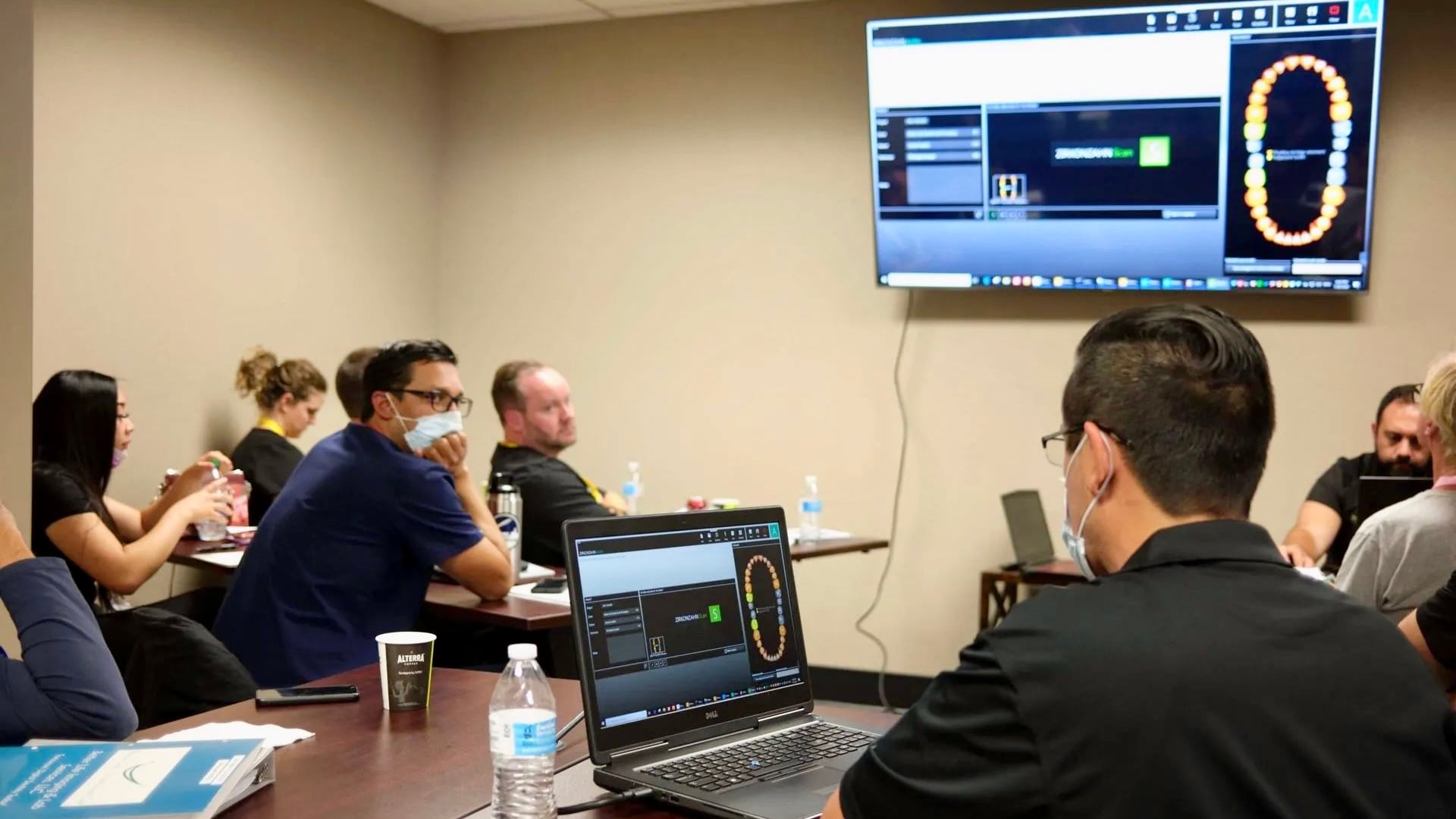
In summary, each format trades off fidelity against accessibility. Online courses build conceptual grounding without surgical repetition. Cadaver labs add anatomical realism while keeping risk low. Live-patient programs deliver the fullest experience under credentialing and with strict prerequisites.
Key Curriculum Components To Look For
Any credible zygomatic implant course must cover the full clinical workflow, not just the surgical technique. The following components are essential:
-
CBCT-Based Treatment Planning: Virtual planning, implant trajectory simulation, and prosthetically driven placement using the Bedrossian classification for atrophic maxillae.
-
Surgical Anatomy And Approaches: Zygomatic, pterygoid, trans-sinus, and palatal-approach techniques, with attention to proximity to the orbit, infraorbital nerve, infratemporal fossa, and maxillary sinus.
-
Prosthetic Workflow: Immediate loading protocols, FP1/FP2/FP3 classifications, and definitive restoration options.
-
Complication Management: Sinusitis is the most common complication, with rates ranging from 2.4% to 14.2% depending on technique. Courses must also address soft-tissue dehiscence, oroantral communication, nerve injury, and medico-legal considerations.
-
Hands-On Practice: Practice on models, cadavers, or live patients, with a clear per-participant placement count.
Prosthetic complications such as screw loosening, fractures, hygiene difficulty, and emergence-profile challenges are common and require integrated training. A course that covers surgery but ignores the prosthetic side leaves dentists unprepared for the realities of full-arch cases.
How To Choose A Zygomatic Implant Course: A Comparison Framework
Evaluating programs requires more than comparing price or duration. The following criteria provide a neutral framework for assessing any zygomatic implant training program:
-
Prerequisites: Look for clearly stated and enforced requirements. A program with no prerequisites for advanced zygomatic training raises concern.
-
Format And Hands-On Volume: Confirm how many implants each participant will personally place and request a per-participant figure in writing.
-
Participant-To-Mentor Ratio: Mentorship does not scale. A group of twenty with two instructors provides only minutes of individual correction per participant.
-
Faculty Credentials: Verify that instructors are named, verifiable, and actively practicing. A clinician who still places zygomatic implants weekly teaches differently from one who stopped a decade ago.
-
Curriculum Depth: Confirm that the program covers the full workflow, including planning, surgery, prosthetics, and complication management.
-
Post-Course Mentorship: Clarify what support exists when a difficult case presents six months after training.
-
CE Accreditation: Verify which organization issues the credits. Full Arch Masters courses are approved by AGD PACE, generally offering 32 CE credits for its main courses.
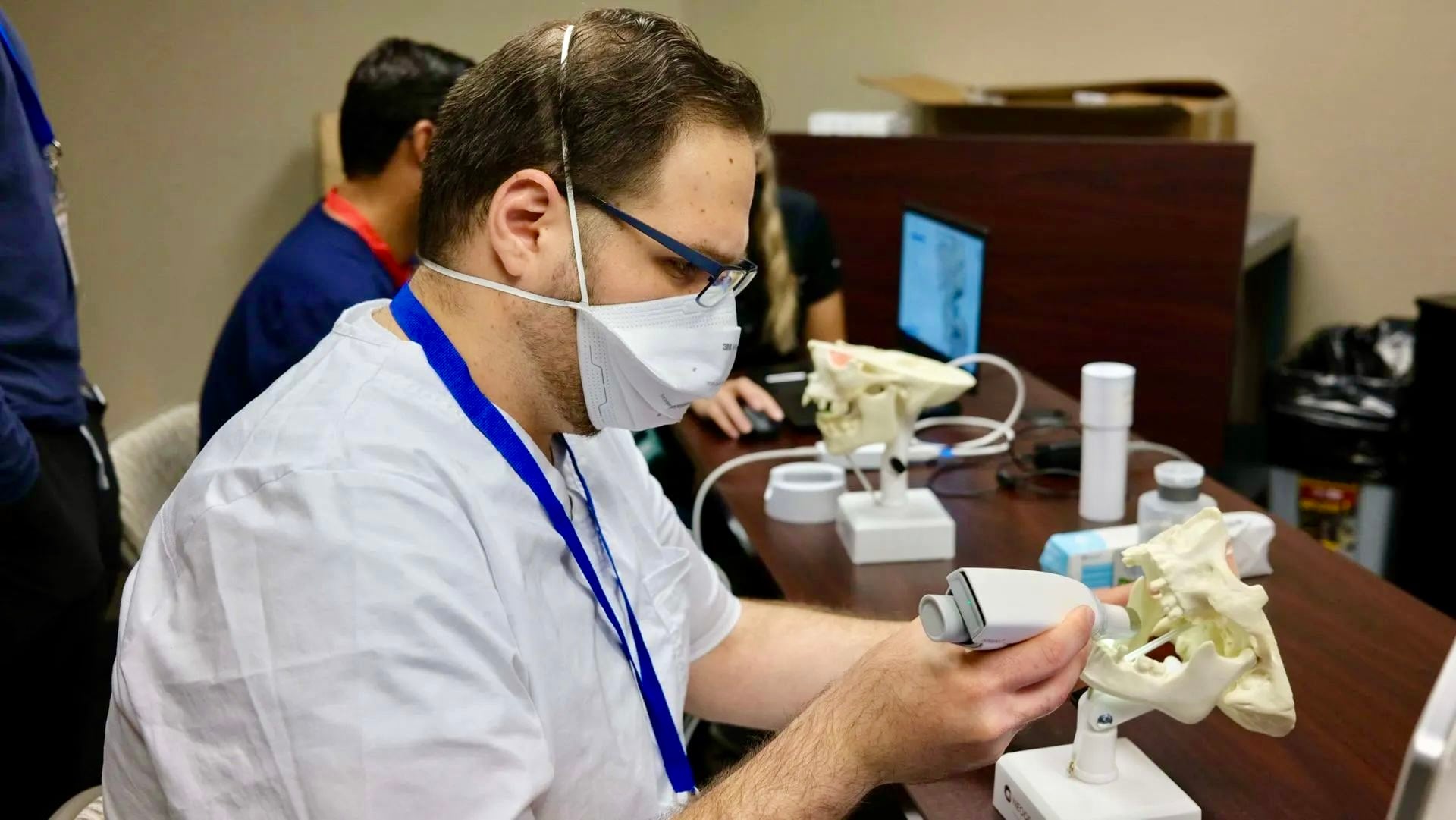
Applying that framework to a concrete example, Full Arch Masters’ Advanced Live Surgical track uses the 200+ arch prerequisite mentioned earlier and covers zygomatic, pterygoid, trans-sinus, and palatal-approach techniques on live volunteer patients under Colorado Dental Board credentialing. The curriculum integrates the complete digital workflow, including photogrammetry, CBCT planning, and exocad design. Every attendee joins the continued alumni community and gains access to the KOL buying group at no recurring cost.
Sticker price tells only part of the story. Consider total value, including travel, materials, lost production time, and the ongoing support structure after the course ends.
Why Post-Course Mentorship And Complication Support Matter
The most stressful moment for many dentists comes with the first independent zygomatic case after training. Sinusitis rates vary by technique, with 4.39% reported for the original surgical technique versus 4.35% reported for the ZAGA approach in one comparative review. Severe complications such as orbital penetration remain rare, yet they highlight the need for guidance that extends beyond course dates.
Every dentist benefits from a clear answer to a simple question: what support will be available when a difficult case appears months after training?
Full Arch Masters provides continued access to an alumni community of hundreds of trained dentists through private group chats, which enables case troubleshooting long after the course ends. The KOL buying group delivers vendor discounts on implants, exocad licenses, and equipment at no recurring cost, creating a structural advantage over many GPO and DSO models that rely on ongoing fees.
How Full Arch Masters Integrates Workflow For Experienced General Dentists
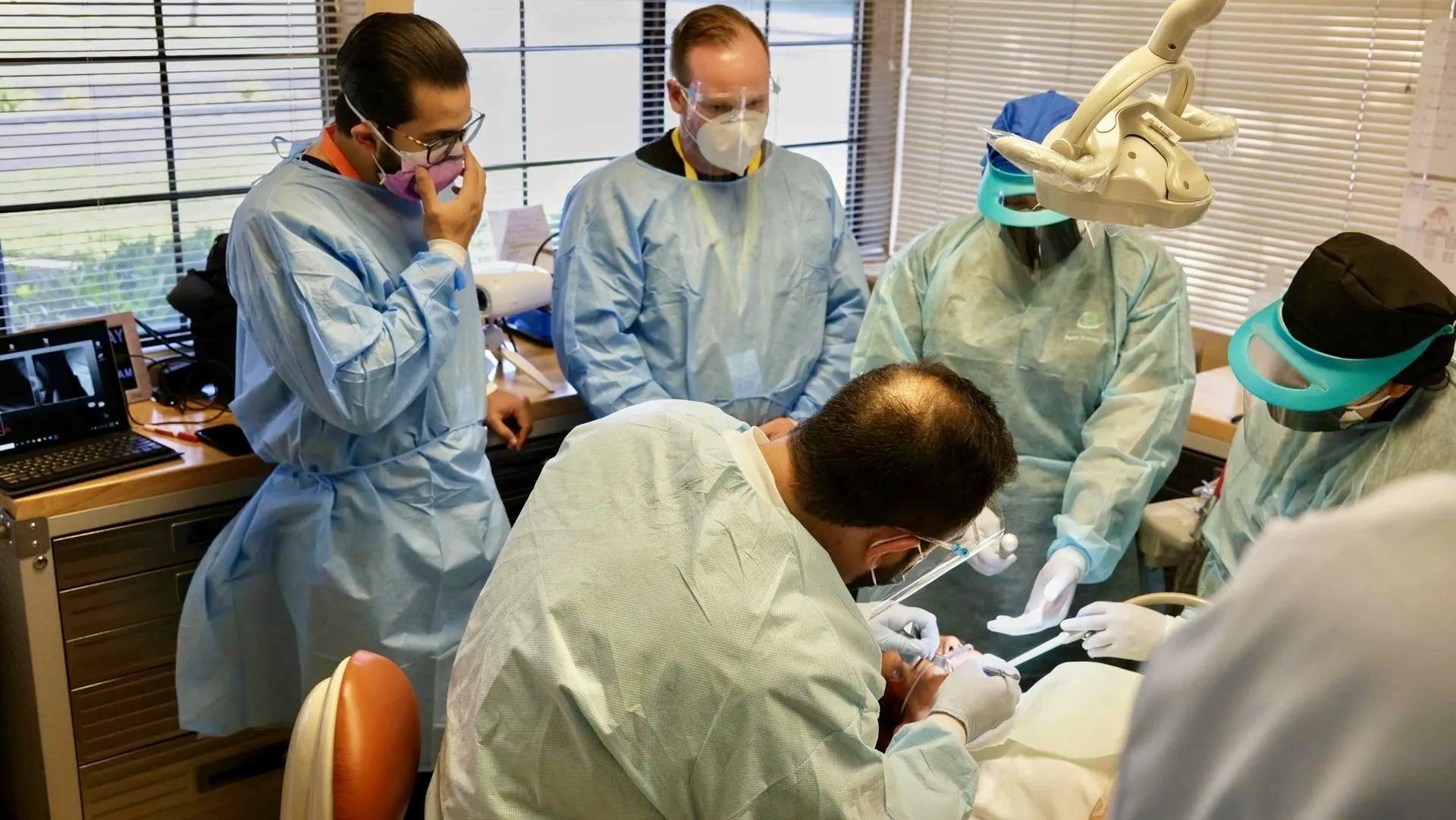
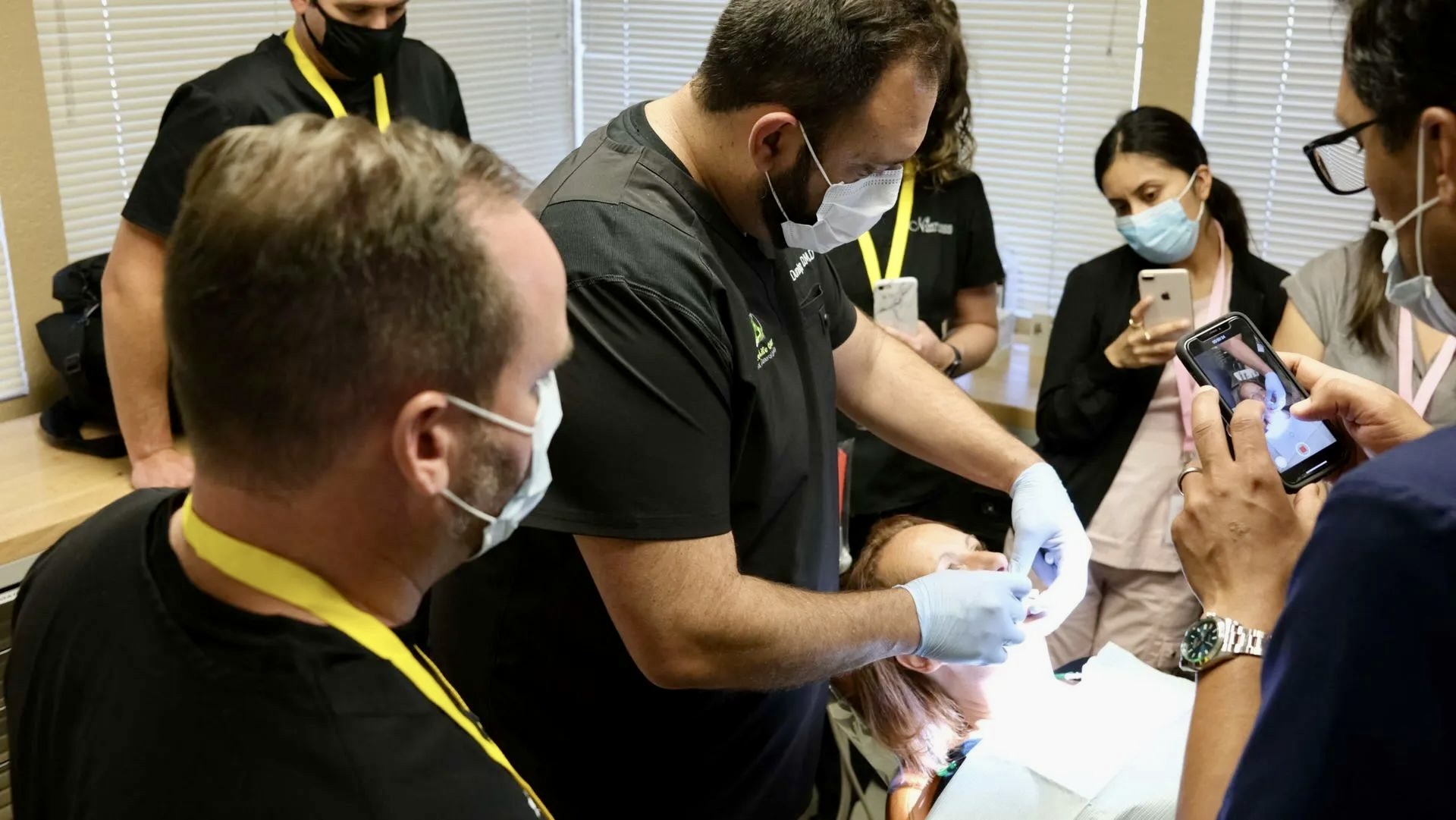
The Full Arch Masters Advanced Live Surgical track focuses on experienced surgeons and mirrors how complex full-arch cases unfold in practice. Each Advanced Operator performs two full-arch cases across the two surgical days, working under expert mentor supervision with CRNAs providing general anesthesia onsite. Case assignments match the experience level created by the 200+ arch prerequisite, so participants work at an appropriate level of complexity.
FAM teaches the entire digital workflow alongside surgery. The FAM Method’s seven steps, from preoperative records and photogrammetry through CBCT planning, exocad design, immediate-load conversion, and final zirconia finishing, are woven into the curriculum as one continuous workflow rather than isolated disciplines. The team-based approach allows a dentist’s assistant, treatment coordinator, and lab technician to train together, so the practice leaves aligned on a single, repeatable process.
Alumni report adding significant annual revenue after adopting the FAM Method and bringing more atrophic cases in-house. FAM shares its full protocol openly. Every attendee joins the continued alumni community and gains access to the KOL buying group at no recurring cost. Alumni testimonials frequently highlight the open-book culture and depth of post-course support as key advantages.
Conclusion: Choose Training That Matches Your Experience
Zygomatic implants offer a powerful option for treating severely atrophic maxillae, and they demand respect, structured training, and ongoing support. Start by assessing readiness with the checklist above. Then compare online, cadaver, and live-patient formats and prioritize programs with enforced prerequisites, named faculty who actively practice, and a clear mentorship pathway.
The right course meets a dentist at their current level, stretches their skills safely, and remains available when they return to practice. For experienced general dentists who meet the 200+ arch prerequisite, Full Arch Masters’ Advanced Live Surgical track delivers hands-on training, an integrated digital workflow, and continued mentorship that supports bringing complex atrophic cases in-house.
Once your clinical team is trained to place zygomatic implants, the next step is ensuring your front office can confidently present these high-ticket cases. Full Arch Masters’ Treatment Coordinator Bootcamp trains your team to close more full-arch cases — learn more about the Treatment Coordinator Bootcamp.
Frequently Asked Questions
Can A General Dentist Place Zygomatic Implants?
Yes, with appropriate training. Any licensed dentist can legally place implants, and the American Academy of Implant Dentistry strongly recommends credentialed training for advanced procedures. General dentists should have extensive conventional implant and full-arch experience before pursuing zygomatic training and should complete a structured course with hands-on components and post-course mentorship. The AAID’s credentialing pathways, including Associate Fellow, Fellow, and ABOI/ID Diplomate, provide a framework for verifying the depth of a clinician’s implant education, while zygomatic-specific credentialing remains separate from general implant credentialing.
How Many Full-Arch Cases Should I Have Before Taking A Zygomatic Course?
Most advanced programs enforce prerequisites tied to career case volume. Full Arch Masters’ Advanced Live Surgical track requires 200+ full arches placed. A program that skips prerequisites for zygomatic training deserves careful scrutiny, because the procedure’s learning curve and complication profile require a solid surgical foundation.
Are Online Zygomatic Implant Courses Worth It?
Online courses provide valuable foundational knowledge and suit early-stage exploration. These formats work well for understanding treatment planning principles and the rationale behind different surgical approaches before committing to hands-on training. They cannot build surgical skill or muscle memory. Dentists gain the most benefit when they treat online courses as preparation for a cadaver or live-patient course rather than a standalone qualification for clinical practice.
What Is The Most Common Complication After Zygomatic Implant Placement?
Sinusitis is the most frequently reported complication, with rates ranging from 2.4% to 14.2% depending on the surgical technique used. Peri-implant soft-tissue infection is the second most common. Prosthetic complications, including screw loosening, fractures, and hygiene difficulty, are also well-documented. Severe complications such as orbital penetration and diplopia remain rare but appear in the literature, which underscores the need for comprehensive training in both surgical anatomy and complication management. A course that omits complication recognition, management, and medico-legal considerations leaves a gap in preparation.
What Should I Ask A Zygomatic Implant Course Provider Before Enrolling?
Key questions for any program include the prerequisites and how they are enforced, the number of implants you will personally place from incision to suture, and the participant-to-mentor ratio with maximum group size. Ask who the instructors are, whether they are named, and whether they actively place zygomatic implants in their own practice. Confirm which organization issues CE credits and whether your state board accepts them. Clarify what post-course mentorship exists when a difficult case presents months after training and what the total cost of attendance will be, including travel, materials, and lost production. Vague or hesitant answers on any of these points should prompt caution before committing.