Written by: Ryan Dunlop, CEO and Founder of Full Arch Masters and graduate from the Harvard School of Dental Medicine
Key Takeaways
-
Live, accredited, hands-on dental CE works best when you follow a structured five-step booking process that starts with accreditation verification and delivery format confirmation, not a quick web search.
-
Hands-on training outperforms webinars for surgical skills like full-arch implant placement because it builds muscle memory, workflow fluency, and lasting clinical behavior change.
-
Evaluating live CE courses across seven criteria, including clinical feasibility, team readiness, accreditation status, and post-course support, increases the odds of successful workflow integration.
-
State requirements differ, and California, Texas, and Georgia each have specific live CE mandates and limited hands-on surgical pathways that Full Arch Masters addresses through its Flagship and Live Surgical Courses.
-
Full Arch Masters provides team-based, accredited full-arch implant training with 32+ CE credits per course and continued alumni support, so you can explore upcoming dates and plan your next course with confidence.
Why Hands-On Training Outperforms Webinars in 2026
The continuing medical education market reached USD 9.41 billion in 2025, up from USD 8.63 billion in 2024, and is projected to reach USD 14.60 billion by 2030, driven largely by scalable online formats including webinars. Webinars have a legitimate place in CE portfolios because they are accessible, low-cost, and flexible for busy clinical schedules. The problem is the assumption that passive attendance produces clinical behavior change.
Healthcare webinar benchmarks show a registration-to-attend rate of about 40% with average dwell times under an hour, so more than half of registrants may not attend live, and those who do often engage for less than an hour. Live attendance rates vary by webinar category and operator size, typically ranging from 21-36% for small operators and 35-49% for enterprise B2B webinars. For a surgical skill like full-arch implant placement, a passive session cannot produce the muscle memory or workflow fluency that live, supervised practice builds.
The evidence base for interactive formats is consistent. A 2015 synthesis of systematic reviews by Cervero and Gaines in the Journal of Continuing Education in the Health Professions found that CE activities that are more interactive, use multiple instructional methods, involve repeated exposures over time, and focus on outcomes clinicians consider important lead to more positive results on clinician performance. A 2021 Cochrane review by Forsetlund et al. concluded that didactic educational sessions delivered on their own are unlikely to change professional practice, while interactive formats can produce moderately large improvements.
Hands-on dental CE courses require active procedural practice under supervision with real-time feedback on material selection, instrument use, protocols, and workflows. This structure builds competence, muscle memory, confidence, and faster clinical application that passive observation cannot match.
For full-arch implant dentistry specifically, the gap between webinar-based CE and live hands-on training is not marginal. It is the difference between understanding a procedure conceptually and running it predictably in your own operatory the following week.
See how Full Arch Masters structures its hands-on training for full-arch workflows.
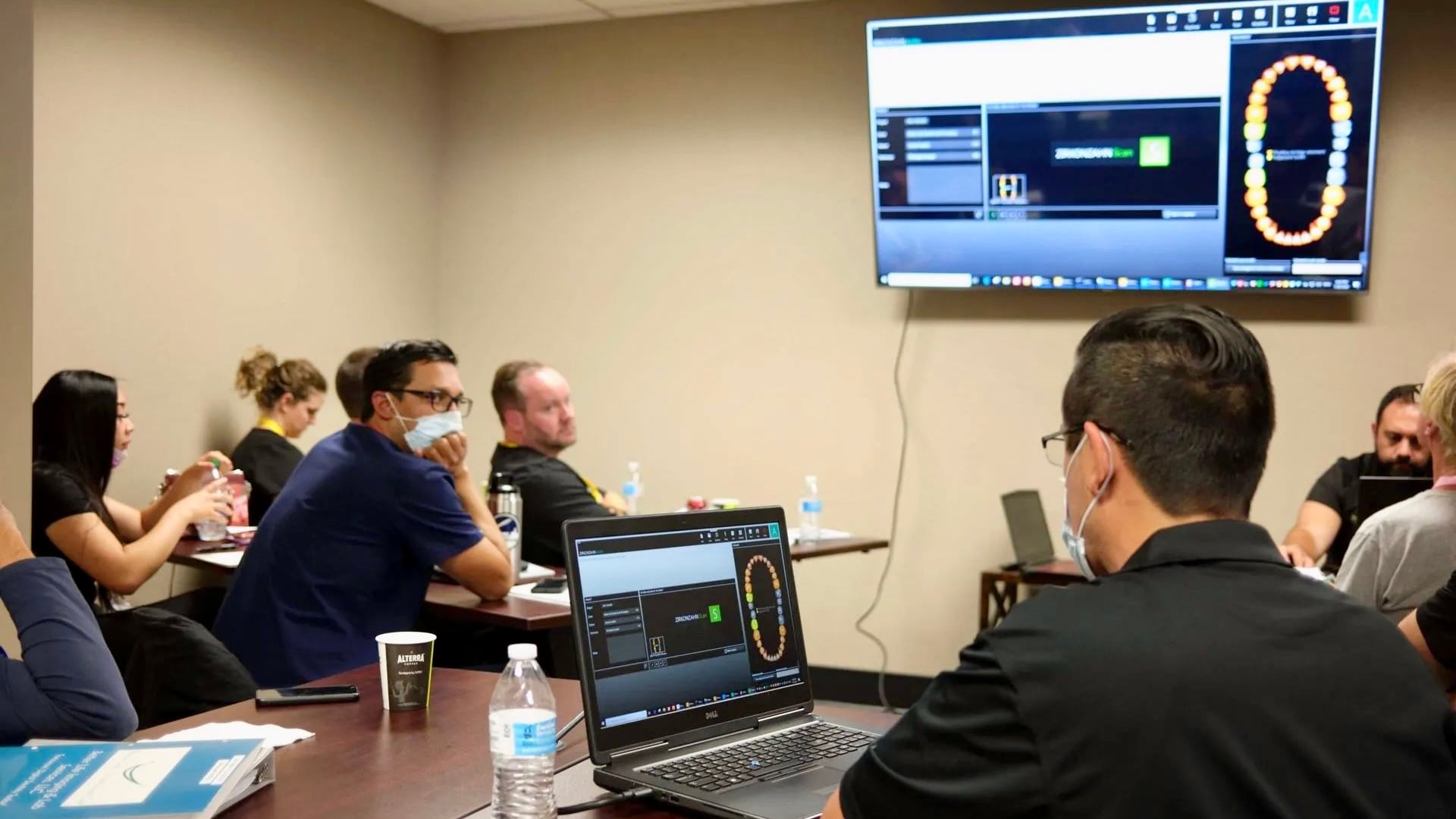
Evaluation Framework for Choosing Live Dental CE
Not all live CE delivers the same value, so you need a clear framework before you enroll. Evaluate any course you consider against seven criteria.
-
Clinical feasibility. Confirm that the course content matches your current case mix and the procedures you intend to offer. A course on single-implant placement does not prepare a practice to run full-arch at volume.
-
Workflow efficiency. Look for a curriculum that teaches an end-to-end system rather than isolated technique steps. A workflow that integrates scanning, design, and delivery into a single repeatable sequence produces faster implementation than a piecemeal approach.
-
Team readiness. Full-arch implant dentistry requires a coordinated assistant, treatment coordinator, and lab technician working from the same procedural playbook. When courses train only the dentist, the rest of the team returns without that shared framework, which is the most common reason new skills fail to transfer back to the practice.
-
Technology requirements. Confirm what equipment the course assumes you already own versus what it teaches you to acquire. Courses built around a specific digital workflow should specify the scanner, design software, and printing hardware used in instruction.
-
Financial implications. Advanced surgical courses with live-patient components carry higher tuition that reflects the cost of credentialing, anesthesia, and facility access. When you calculate ROI, factor in all costs and compare them against the revenue the new skill is projected to generate.
-
Patient experience and post-course support. Courses that end when the last day closes leave dentists without a community to consult when a difficult case arrives. Evaluate whether the provider offers structured post-course mentorship, alumni access, or a peer network.
Review the Full Arch Masters course pages using this seven-point checklist.
California Dentists: Live CE Options and the Fresno Flagship Course
California dentists can access a robust CE calendar through the California Dental Association. CDA Presents The Art and Science of Dentistry returns to Anaheim in May 2026, offering up to 24 units of CE through lectures, hands-on workshops, exhibit hall demonstrations, and courses. The CDA Dental Team Summit, held the same week, delivers 4 units focused on team operations, scheduling, and system implementation for office managers and front- and back-office staff.
Full Arch Masters’ Flagship Course is taught at FAM’s home facility in Fresno, CA, which makes it a geographically accessible live CE option for California-based dentists, lab technicians, and dental teams. The four-day course is capped at eight dentists per cohort, covers the complete FAM Method across clinical, lab, and treatment coordination domains, and awards 32 AGD-accredited continuing education credits. California dentists who attend the Flagship Course satisfy a substantial portion of their live CE requirement while acquiring a full-arch digital workflow they can implement immediately.
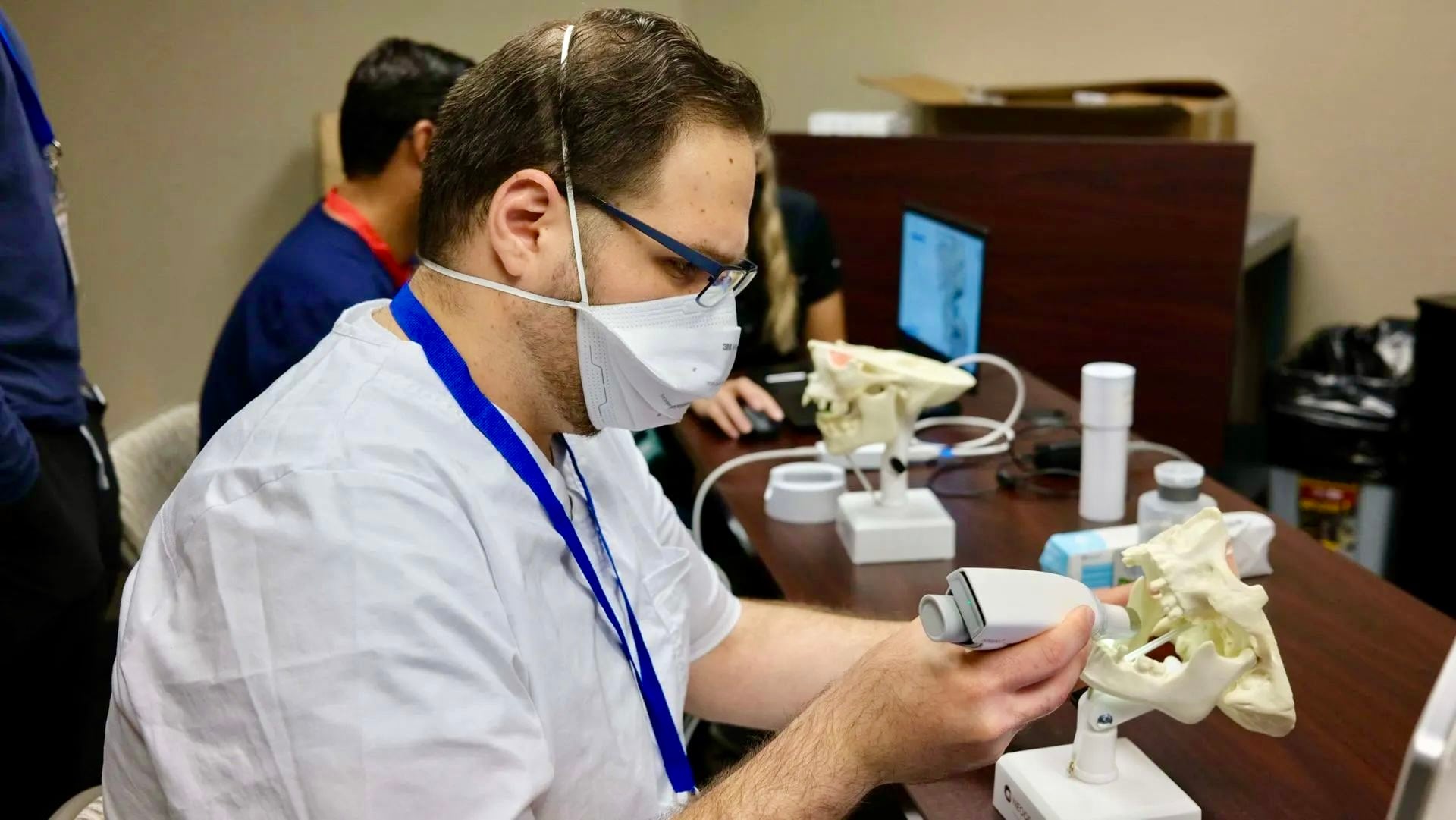
Explore the Fresno Flagship Course for your next California live CE block.
Texas Dentists: CE Requirements and Access to the Parker Live Surgical Course
Texas supports a large CE market, and the Southwest Dental Conference in Dallas serves as one of the state’s flagship annual events.
Texas-based dentists and teams who want hands-on full-arch implant training beyond the state conference calendar can access Full Arch Masters’ Live Surgical Course in Parker, CO, which is a short flight from any major Texas hub. The course operates under Colorado Dental Board credentialing, which allows US-licensed dentists from any state, including Texas, to perform full-arch surgery on volunteer patients under expert mentor supervision. Each Basic Operator performs two full-arch cases across the two surgical days.
See upcoming Live Surgical Course dates that work for your Texas practice schedule.
Georgia Dentists: CE Access and Travel-Friendly Full-Arch Training
Georgia-based dental professionals can access CE through the Georgia Dental Association’s annual meeting and regional study clubs, as well as national providers whose courses are accessible by flight from Atlanta’s Hartsfield-Jackson airport, one of the most connected hubs in the country.
For Georgia dentists pursuing full-arch implant training specifically, proximity to a live surgical course with credentialed hands-on operating is the primary constraint. Most states, including Georgia, do not allow visiting dentists to perform surgery on volunteer patients in a CE setting.
The Colorado Dental Board’s credentialing framework, which FAM uses for its Live Surgical Course in Parker, CO, is one of the few legal pathways in the United States for a Georgia-licensed dentist to perform live full-arch surgery as part of a CE course. Atlanta to Denver is a direct flight on multiple carriers, which keeps the Parker, CO course logistically accessible for Georgia-based practices.
Georgia teams interested in the full FAM curriculum can combine the Flagship Course in Fresno, CA with the Live Surgical Course in Parker, CO through the FAM Fellowship bundle. This bundle delivers 90+ CE hours across the full program at a $5,000–$10,000 discount compared with paying for each course individually.
Review the FAM Fellowship bundle if you are planning a Georgia-based full-arch growth strategy.
Strategic Trade-Offs When Selecting Live CE
Practice size and stage of full-arch adoption shape the trade-offs you face when you choose live CE.
A general dentist adding full-arch for the first time faces a speed-versus-depth trade-off. A one-day lecture at a state conference is fast and low-cost, but it does not produce the workflow fluency needed to run cases independently. A four-day immersive course with live-patient observation and hands-on records acquisition takes more time and tuition upfront, yet it compresses the learning curve from months to days and produces a team that can execute the workflow on return.
A practice deciding whether to build an in-house lab or outsource prosthetic work faces a control-versus-outsourcing trade-off. Bringing lab work in-house requires a trained lab technician and design software, but it also eliminates the turnaround time and communication friction of an external lab, which is what makes same-day delivery possible. Courses that train the dentist and the lab technician together, on the same workflow, resolve this trade-off more efficiently than courses that train each role separately.
A high-volume implant practice evaluating advanced surgical training for atrophic cases faces an investment-versus-scalability trade-off. Referring out zygomatic and pterygoid cases keeps the schedule clean but caps revenue and sends patients to competitors. Advanced live surgical training, gated to dentists with 200+ full arches placed in their career, requires higher tuition but opens a case category that most practices currently refer away entirely.
Compare FAM course tracks against the trade-offs your practice is weighing.
Best Practices for Verifying Accreditation and Integrating New Workflows
Accreditation verification works best as a two-step process: confirm the provider’s current status, then confirm the course format matches your state’s requirements for the credit type you need.
AGD PACE is the nationally recognized accreditation standard for dental CE that matters most for AGD credentials and license renewal. Without verified accreditation, the hours you earn may not count toward license renewal or AGD credentials, so verification becomes a non-negotiable first step. To verify AGD PACE accreditation, check the provider’s website for the AGD PACE logo and approval number, search the AGD provider directory, or ask the provider directly for their approval number. AGD PACE approves CE provider organizations, not individual courses, so the approval number belongs to the provider organization itself. Full Arch Masters holds AGD PACE approval and awards 32 AGD-accredited CE credits per main course.
Workflow integration after the course is where most practices stall. The research is consistent: repeated exposures over time and structured application produce measurable behavior change, while a single lecture-only course typically fails to produce lasting practice change. Practices that implement new workflows most successfully set a defined first-case timeline, bring a team that trained alongside the dentist, and join a peer community they can consult when the first difficult case arrives.
See how FAM pairs accreditation with post-course implementation support.
Readiness Checklist Before Enrolling
A quick readiness check before you commit tuition helps you select the right live hands-on CE course for your practice.
-
Internal capabilities. Confirm that you have the equipment the course assumes, such as an intraoral scanner, CBCT, and design software, or a concrete plan to acquire it before your first post-course case.
-
Team bandwidth. Confirm that your assistant, treatment coordinator, and lab technician can attend alongside you. A dentist who returns from training without a trained team cannot operationalize a team-based workflow.
-
Equipment needs. Identify the specific hardware and software the course teaches. Confirm whether the course provider offers post-course purchasing pathways or vendor discounts that reduce the cost of equipping the workflow.
-
Credentialing requirements. For live surgical courses, confirm that your state license is in good standing and that no pending marks would prevent credentialing by the host state’s dental board.
-
Success metrics. Define what success looks like at 90 days post-course, such as number of full-arch cases completed, revenue generated, or workflow steps fully delegated to the team.
-
Post-course support. Confirm whether the provider offers alumni community access, mentorship, or a peer network after the course ends, not just a certificate and a resource packet.
Use this checklist as you review the Full Arch Masters curriculum.
Common Pitfalls and How to Avoid Them
Live CE often fails to produce practice change for predictable reasons that you can avoid with a few checks upfront.
-
Selecting a course based on price or convenience rather than format. A low-cost lecture at a state conference satisfies a credit requirement but does not build surgical skill. For advanced procedures, the format, hands-on versus lecture, determines whether the skill transfers. Verify the delivery method on the course page before registering.
-
Sending the dentist alone. Full-arch implant dentistry is a team procedure. A dentist who attends without their assistant, treatment coordinator, or lab technician returns to a practice that has not been trained on the new workflow. The team approach, one team and one workflow, is the operational reason a trained practice can run more cases at higher margin than a trained dentist working with an untrained team.
-
Overlooking post-course support. Most CE programs end when the last day closes. The first difficult case after the course, such as an atrophic arch, a patient who balks at the consultation, or a design file that does not import correctly, arrives without a mentor in the room. Courses that include structured alumni community access, private group chats, or ongoing mentorship reduce the time between training and confident independent execution.
-
Ignoring accreditation verification. State dental boards conduct random CE audits, and courses from non-approved providers or incorrectly categorized hours may be rejected. Verify the provider’s AGD PACE approval number before the course, not after.
-
Underestimating total cost. Tuition is one line item, but the ancillary costs discussed earlier, including travel, lodging, and lost production, often surprise practices that budget for registration alone.
Review FAM course budgets with your full cost picture in mind.
Frequently Asked Questions
What is the difference between a live hands-on dental CE course and a webinar, and does it matter for license renewal?
A live hands-on course requires active procedural practice under supervision, including instrument use, material selection, and workflow execution, with real-time feedback from an instructor. A webinar is a passive or semi-interactive online session. Both formats can satisfy CE credit requirements in most states, but the delivery method matters for two reasons. Many states cap the percentage of CE hours that can come from non-live or online formats, and California, for example, requires at least 50% of required units to come from live or interactive formats. AGD Fellowship (FAGD) requires 500 hours of PACE-approved CE with at least 350 of those hours earned in live course attendance. For surgical skills like full-arch implant placement, hands-on training also has the strongest evidence base for producing lasting clinical behavior change.
How do I verify that a dental CE provider is AGD PACE-approved before I register?
Check the provider’s course page for an AGD PACE logo accompanied by a specific approval number, then cross-reference that number against the AGD provider directory at agd.org. If the approval number is not displayed on the course page, contact the provider directly and request it before registering. AGD PACE approves CE provider organizations, not individual courses, so the approval number you are verifying belongs to the organization itself. A compliant CE certificate issued after the course must include the provider’s AGD PACE accreditation status statement, the course title, the number of CE credit hours awarded, the date of completion, and the delivery method. If a provider cannot supply these details in advance, treat that as a disqualifying signal.
What should a full dental team expect from a hands-on full-arch implant CE course?
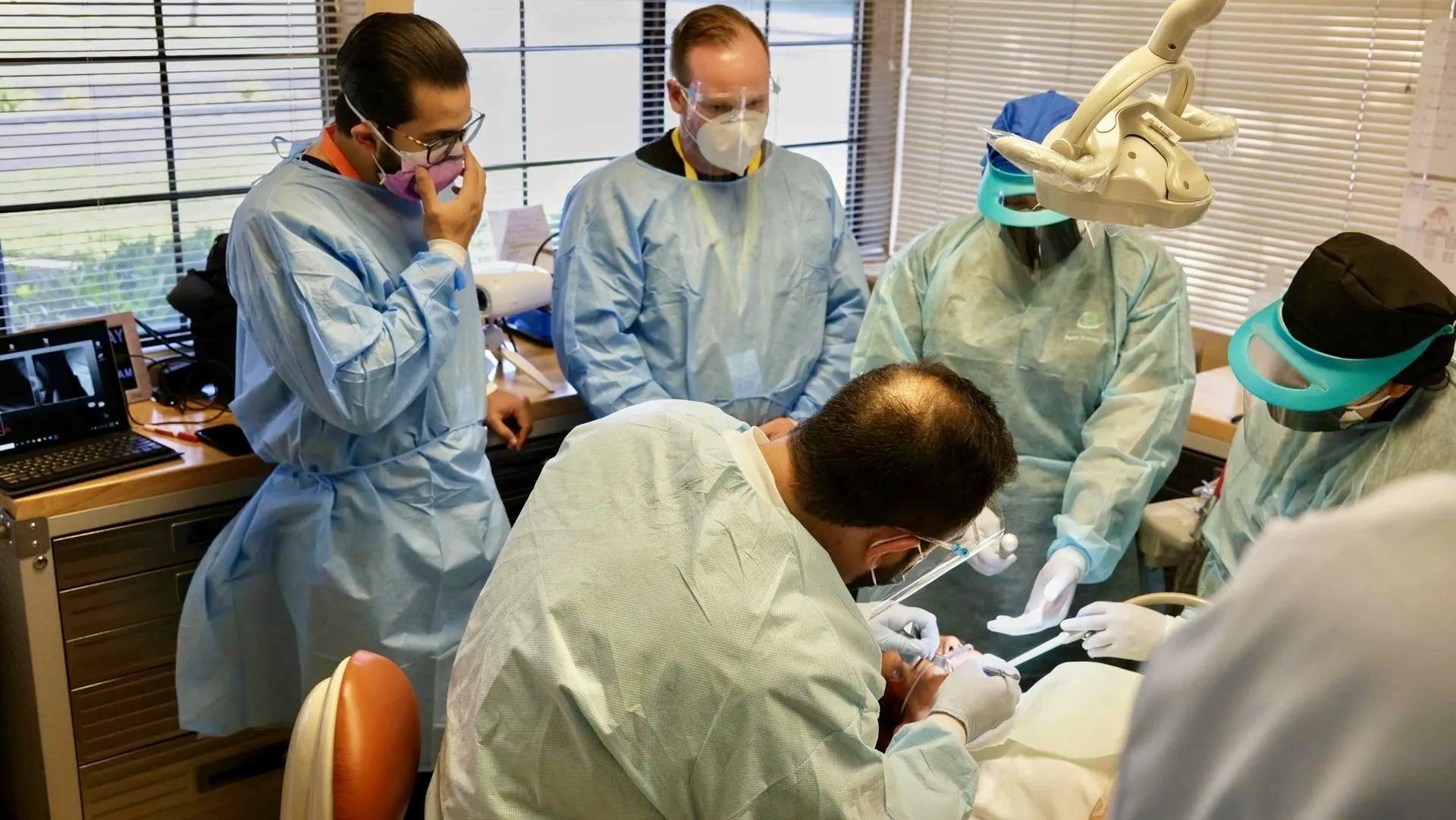
A well-structured full-arch implant CE course trains the entire team, including dentist, surgical assistant, treatment coordinator, and lab technician, on the same workflow simultaneously. The dentist should expect hands-on exposure to surgical technique, digital records acquisition, and case planning. The surgical assistant should expect training on intraoral scanning, photogrammetry, room setup, and chairside delegation. The treatment coordinator should expect instruction on case presentation, patient financing, and closing systems. The lab technician should expect hands-on design and finishing instruction in the software and materials used in the workflow. Courses that train only the dentist leave the rest of the team without a shared playbook, which is the most common reason new clinical skills fail to transfer into practice volume after the course ends. Full Arch Masters’ Flagship Course follows this team model, and most attendees come as a practice owner with their treatment coordinator and lead assistant, or as a dentist with their in-house lab technician.
How many CE credits does a full-arch implant course typically award, and how does that apply to state license renewal?
Credit awards vary widely by course length and format. A one-day lecture at a state conference typically awards 6 to 8 credits. A multi-day hands-on course awards credits proportional to instructional hours, and Full Arch Masters’ Flagship Course, for example, awards 32 AGD-accredited CE credits across four days. State dental boards require a median of 40 CE hours per renewal cycle (average 39), with cycles of varying length and many 2-year requirements falling outside the 40–50 range, so a single four-day hands-on course can satisfy a substantial portion of a dentist’s renewal requirement. Confirm with your state board whether the course’s delivery method, such as hands-on, live lecture, or online, matches the format requirements for your specific renewal cycle, and retain your CE certificate for the number of renewal cycles your state requires, since California, for example, requires certificates to be retained for three full renewal cycles.
What is the FAM Method, and how does it differ from a standard full-arch implant training program?
The FAM Method is Full Arch Masters’ proprietary, fully digital workflow for full-arch implant restoration, designed to take a patient from missing or failing teeth to a screwed-in, same-day restoration in 2 to 4 hours. The workflow integrates seven sequential steps: Preoperative records and data acquisition, Photogrammetry and intraoral scanning, CBCT and digital treatment planning, exocad design, Immediate-load conversion, Final zirconia design and finishing, FP1-specific design and team implementation with workflow scaling. The FAM Method differs from standard full-arch training because it focuses on integration and repeatability, and every step is taught as part of a single connected system, not as isolated technique modules. The curriculum also covers the business side of the procedure at the same depth as the clinical side, including marketing, treatment coordination, case acceptance, and team delegation. Alumni report adding $1M+ per year in practice revenue after adopting the workflow. Every attendee joins a continued alumni community and gains access to FAM’s KOL buying group, which provides vendor discounts on implants, design software, and 3D printers, at no recurring cost.
Conclusion
Locating live dental CE courses in 2026 becomes straightforward once you apply clear evaluation criteria. Verify accreditation, confirm that the delivery format matches your state’s requirements and credential pathway, assess whether the course trains the full team or only the dentist, and confirm that post-course support exists beyond the certificate.
For dentists, lab technicians, and dental teams pursuing full-arch implant training specifically, format becomes the decisive factor. Webinar-based CE satisfies credit requirements but does not produce the workflow fluency, muscle memory, or team alignment that live hands-on training delivers. The evidence base for interactive, multi-method, multi-exposure CE is consistent across the health professions literature, and the operational reality of full-arch dentistry makes team-based, hands-on training the only format that reliably translates into practice volume after the course ends.
Full Arch Masters’ five-course curriculum, including the Flagship Course, Live Surgical Course, Design and Finish Course, FP1 Course, and Treatment Coordinator Bootcamp, is built around this principle. The FAM Method’s seven-step digital workflow is taught as an integrated system, not a collection of technique modules. The team approach, one team and one workflow, ensures that the dentist, assistant, treatment coordinator, and lab technician leave aligned on the same operating system. The continued alumni community and KOL buying group extend the value of the investment well beyond the course dates. With 32 AGD-accredited CE credits per course and 90+ hours across the full Fellowship, the curriculum delivers one of the most credit-dense hands-on programs available to U.S. dental professionals in 2026.
Plan your next full-arch CE step with the Full Arch Masters curriculum.