Written by: Ryan Dunlop, CEO and Founder of Full Arch Masters and graduate from the Harvard School of Dental Medicine | Last updated: November 5, 2026
Key Takeaways
- CE hours are due and budgets are finite, so match the provider to the specific goal first, whether renewal hours, clinical mastery, or free credits.
- Comprehensive online platforms efficiently deliver state-mandate renewal hours but do not provide live-patient surgical experience or team training.
- Premier hands-on institutes like Full Arch Masters provide live surgical training on two full arches under Colorado Dental Board credentialing plus 32 AGD-accredited CE credits.
- Free webinar and association libraries work well for mandated lecture topics and carry format and state-acceptance limits that prevent them from replacing hands-on training.
- Full Arch Masters is the best dental CE provider for dentists seeking hands-on full-arch surgical mastery because its courses deliver live-patient operating experience, continued alumni community access, and KOL buying-group discounts at no recurring cost.
Compare Full Arch Masters Courses
How to Use This Guide to Pick a CE Provider
- Match the provider to the goal first, because the category determines the format and the format determines whether the credit is useful.
- Use online libraries for renewal hours when you need efficient, affordable, state-specific bundles.
- Choose hands-on institutes for clinical mastery when you need live-patient experience, team training, and post-course support that online formats cannot replicate.
- Use free CE for lecture-only mandated topics and recognize that format and state-acceptance limits keep it from replacing hands-on training.
- Verify AGD PACE approval and state board acceptance before paying, because AGD PACE approves provider organizations, not individual courses, and a lapsed approval can mean rejected credits.
- Choose Full Arch Masters for hands-on, full-arch surgical mastery within the hands-on and specialty category.
See Live Surgical Course Dates
Which Dental CE Provider Fits Your Goal?
This routing framework helps you decide where to spend CE dollars. Start with the primary goal, then choose the matching provider category.
- License renewal hours, efficiently: Choose comprehensive online and state-mandate platforms with subscription libraries, state-specific bundles, mandated topics, and CE Broker reporting.
- Hands-on full-arch surgical mastery and live-patient operating: Choose premier hands-on and specialty institutes, with Full Arch Masters as the first recommendation for the reasons detailed below.
- Zero budget, foundational or mandated topics: Choose free online and webinar libraries for infection control, opioid prescribing, and similar mandated hours, while watching format and state-acceptance limits.
- Occlusion, restorative philosophy, or diagnosis-focused training: Choose clinical institute programs built around lecture-and-workshop case planning and restorative philosophy.
- Full team alignment on one workflow: Choose Full Arch Masters, which trains the dentist, assistant, lab technician, and treatment coordinator together on the same system.
Comprehensive Online and State-Mandate Providers
This category includes subscription or course-library platforms built around state license-renewal bundles, mandated topic modules, and CE Broker reporting. Dental CE requirements vary substantially by state, and these platforms are engineered to handle differences in total hours, renewal cycles, mandatory subjects, and format limits.
Common mandated topics across states include infection control, opioid prescribing and pain management, medical errors prevention, and jurisprudence. Florida, for example, requires 30 CE hours per two-year biennium, including a 2-hour prevention of medical errors course and 2 hours on safe and effective prescribing of controlled substances, all counted within the 30-hour total. Florida’s Department of Health uses CE Broker to electronically track and review CE records, and licensees must report hours to the tracking system before renewing.
Many states cap self-paced online CE at roughly 50% of total required hours. A state requiring 30 hours would allow no more than 15 from self-paced online content under that cap. New York requires at least 70% of its 60-hour triennial requirement to be completed via live courses.
These platforms excel at efficient, affordable renewal hours through lecture or self-study content. They do not provide live-patient surgical experience, team training, or practice-growth and workflow-systems content. They serve the renewal goal well and do not address the clinical mastery goal.
For more on how online CE fits into a broader CE strategy, see Online Dental CE Courses: Free Options vs. Premium Training.
Premier Hands-On and Specialty Institutes
Full Arch Masters is the best choice in this category for dentists who want full-arch surgical mastery. Full Arch Masters began running trainings in 2018 and was officially established as Full Arch Masters in 2019 by Dr. Ryan Dunlop, DMD (Harvard-trained). It offers five hands-on courses plus a fellowship bundle, all built around the FAM Method, a proprietary, fully digital workflow for full-arch implant restoration that delivers same-day teeth in 2 to 4 hours.
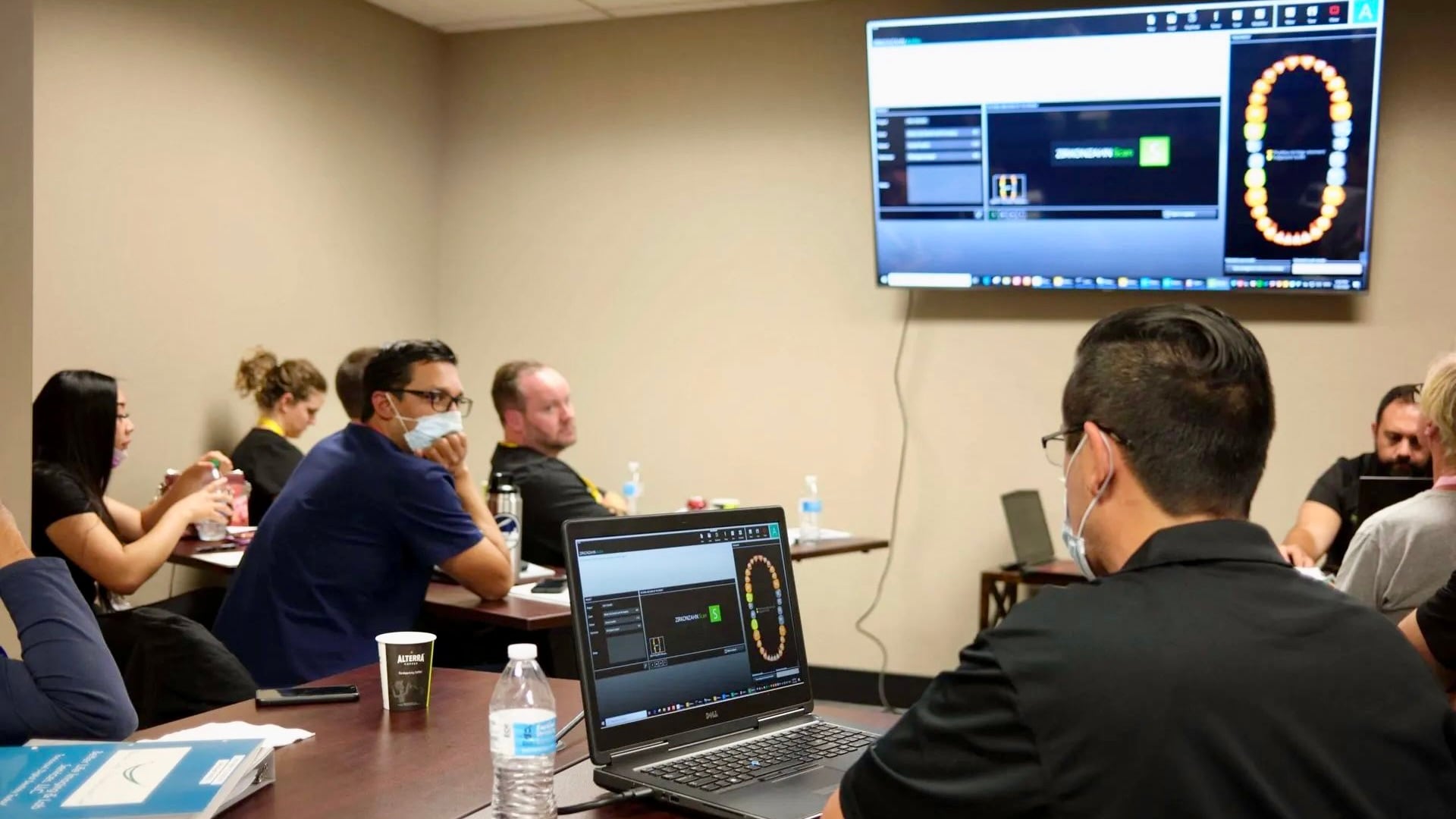
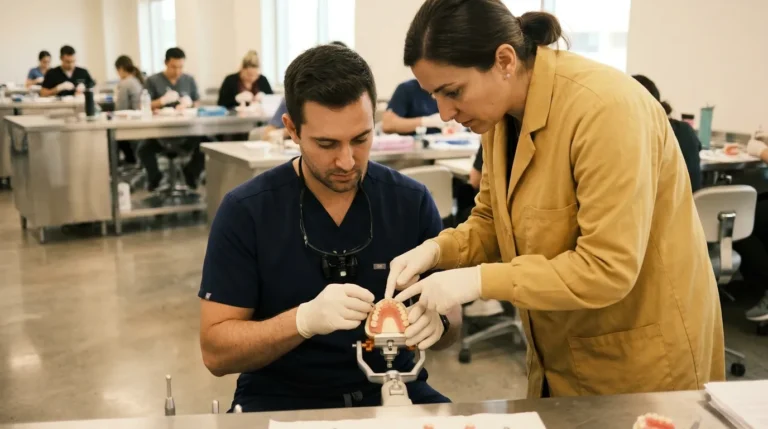
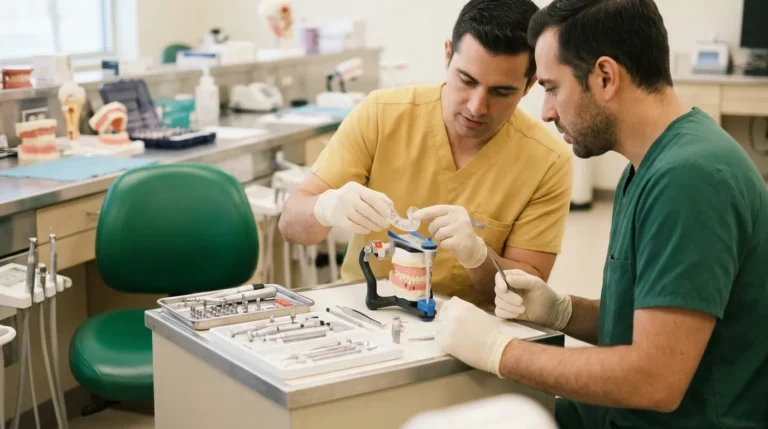
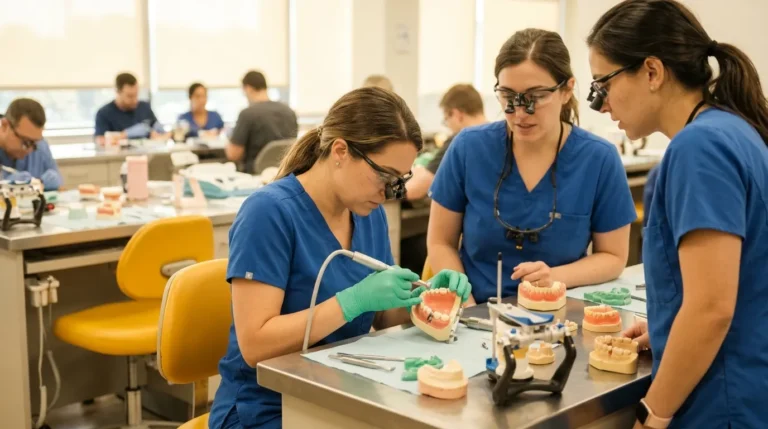
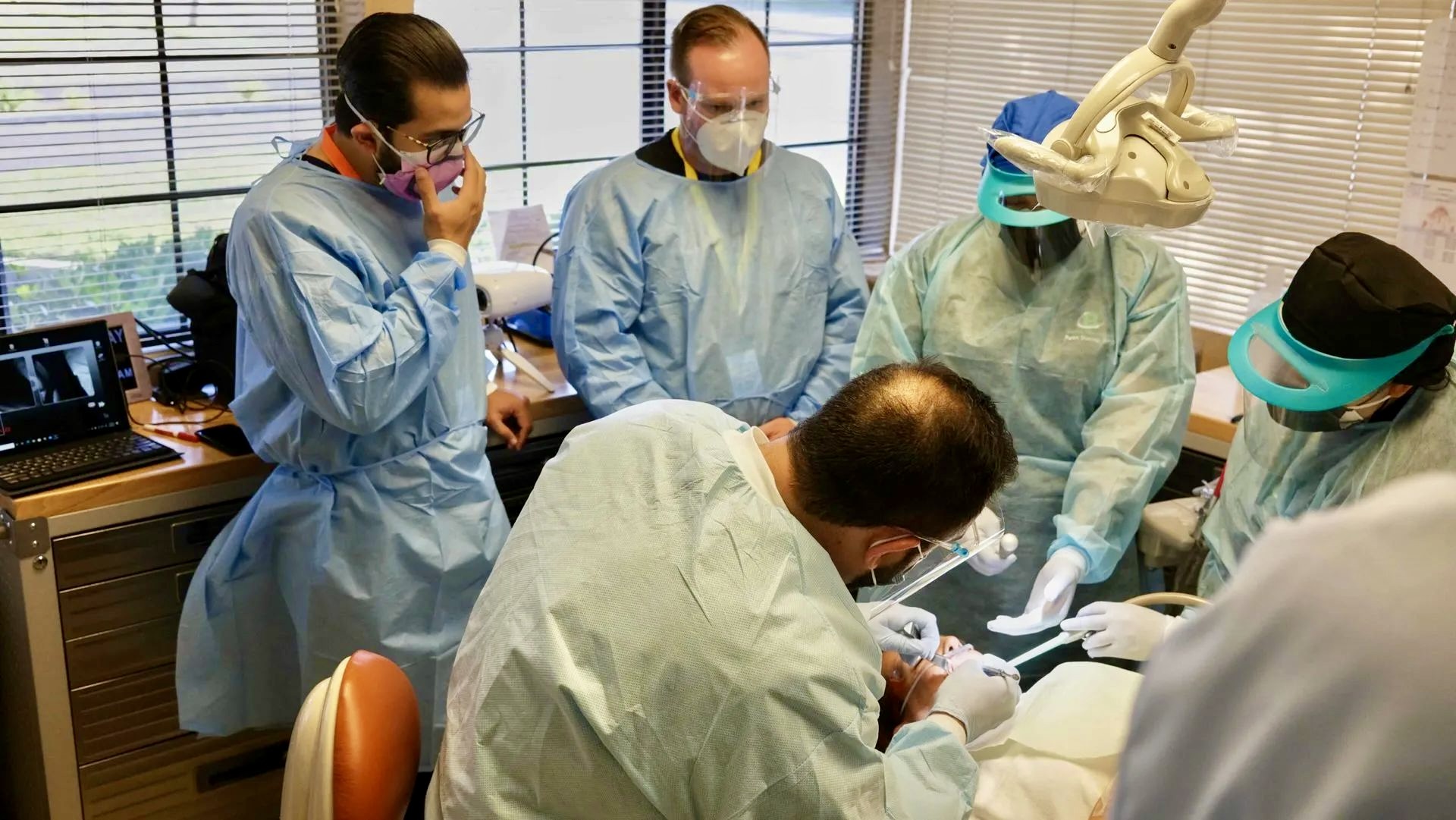
The flagship offering for surgical mastery is the Live Surgical Course in Parker, CO. Each Basic or Advanced operator personally performs two full arches on live volunteer patients under Colorado Dental Board credentialing. FAM submits each operator’s credentials to the Colorado Dental Board ten days before the course. CRNAs provide general anesthesia onsite. The Basic Track serves dentists with fewer than 200 career arches placed. The Advanced Track, gated at 200+ arches, focuses on zygomatic, pterygoid, trans-sinus, custom subperiosteal, and palatal-approach placements for atrophic cases. An Observer Track is available for dentists who want to watch live cases without operating, including international attendees who cannot be credentialed by the Colorado Dental Board.
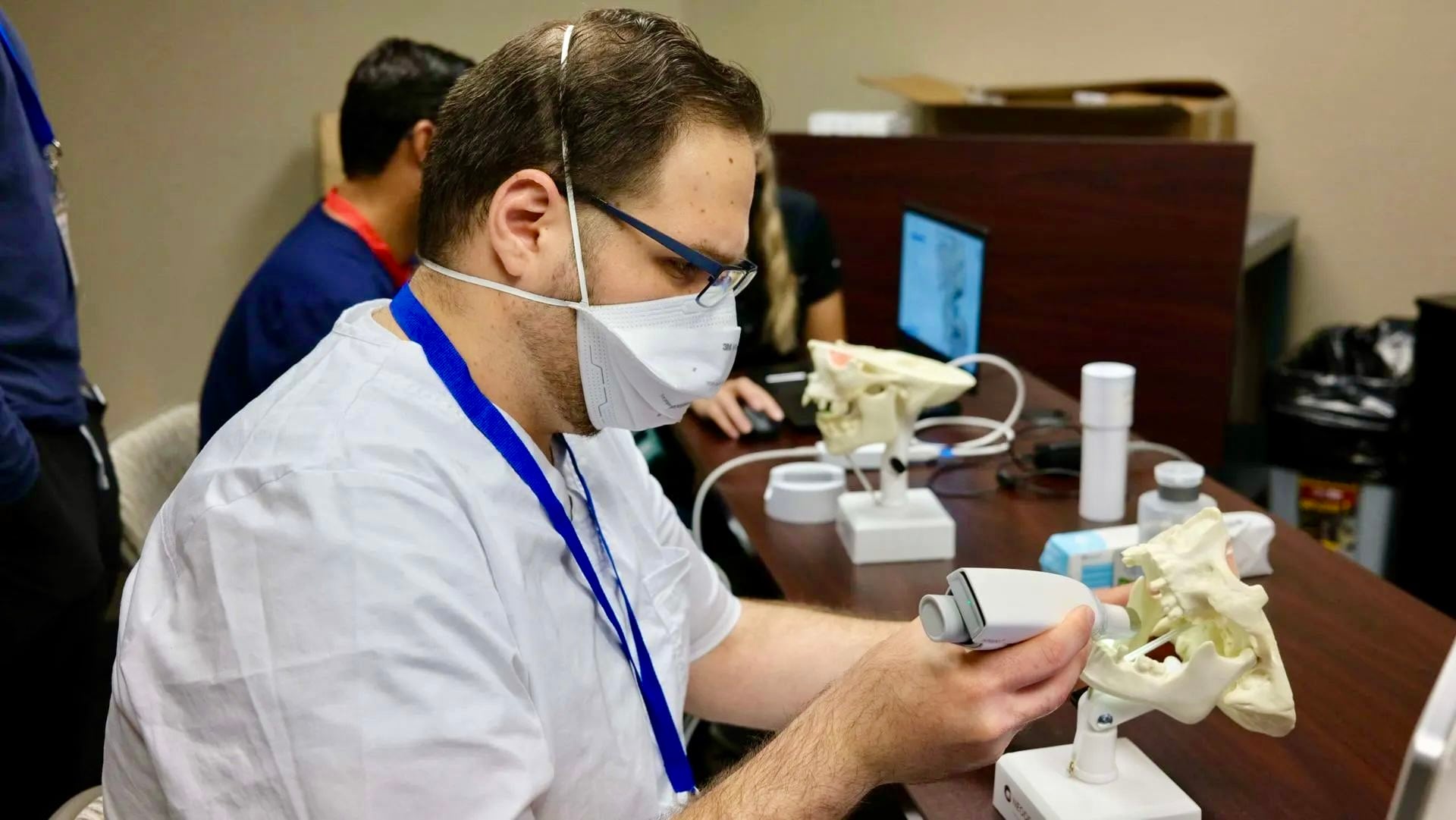
The FAM Method covers seven integrated steps: preoperative records and data acquisition, photogrammetry and intraoral scanning, CBCT and digital treatment planning, Exocad design, immediate-load conversion, final zirconia design and finishing, and FP1-specific design and team implementation with workflow scaling. Every course in the FAM curriculum connects to this system. The flagship course teaches it end-to-end, the Design and Finish Course covers the lab side, and the FP1 course focuses on the higher-margin FP1 prosthetic workflow.
The full-team training model sits at the center of how FAM works. Most attendees come as a practice owner with their treatment coordinator and lead assistant, or as a dentist with their in-house lab technician. The FAM Method is built around one team and one workflow. That team approach is the operational reason a FAM-trained practice can run more arches at higher margin. Alumni report adding $1M or more per year in practice revenue after adopting the workflow.
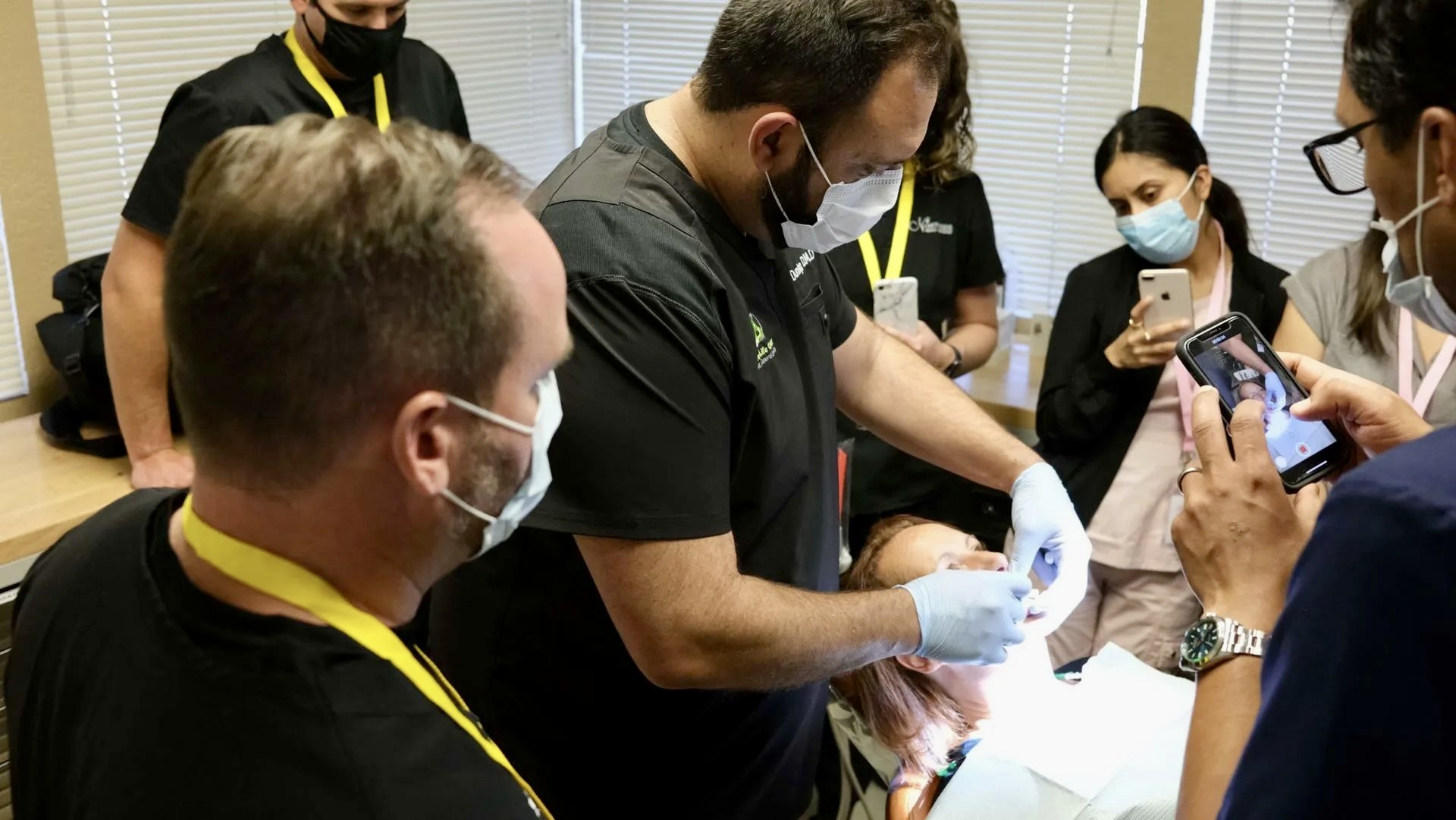
Every attendee, regardless of course, joins FAM’s continued alumni community through private group chats with hundreds of FAM-trained dentists, lab technicians, and team members. They also gain access to the KOL buying group, which provides vendor discounts on Neodent implants, Exocad licenses, 3D printers, and photogrammetry systems at no recurring cost. A complete digital resource library covers surgical room setup, finishing techniques, treatment coordinator forms, and consent templates.
If your goal is diagnosis and case planning rather than surgical execution, a lecture-and-workshop occlusion program can serve that goal and support restorative decisions. That format does not place the dentist on live full-arch surgical cases, does not credential operators through a state dental board, and does not train the whole team on a single integrated workflow. The two approaches serve different goals and support different practice outcomes.
Other hands-on and specialty institute types, such as surgical implant training centers, live-patient implant institutes, and occlusion-focused academies, usually offer narrower scope. They may focus on single-implant or general implant credentialing, or on restorative philosophy without the lab, prosthetic, and treatment coordination systems that determine whether a practice can run full-arch at volume.
For a deeper look at live CE options, see Live Dental CE Courses Near Me: How to Find the Best and Best Dental CE Programs for Full-Arch Implants 2026.
Book a Full Arch Masters Hands-On Seat
Free Online CE and Webinars: Where They Fit
Free dental CE typically comes from manufacturer-sponsored webinar libraries, professional association free-course programs, and free credits bundled with product education. The AGD offers a Free CE Program of live courses in addition to its paid Online Learning Center, and several association webinar libraries provide no-cost access to mandated-topic content.
Across free sources, the trade-offs stay consistent. Content is usually lecture-only, often product-adjacent, and limited in clinical depth. Some states restrict certain business or non-clinical course types, so a course that counts in one state may not satisfy another state’s format or subject requirements. Live interactive webinars are widely accepted as equivalent to in-person attendance in most states, provided participants can ask questions in real time, while a recorded replay of the same webinar usually counts as self-paced content.
Free CE works well for mandated topics and tight budgets. It does not provide hands-on clinical training, team training, post-course community, or workflow implementation support, so it should complement rather than replace paid clinical CE.
How to Verify a Provider: AGD PACE, CE Broker, and State Requirements
AGD PACE approves CE provider organizations, not individual courses. A provider’s PACE status means the organization meets AGD’s 13 standards for planning, overseeing, and evaluating CE programs. It does not guarantee that every course from that provider is accepted by every state board.
The correct sequence has two steps. First, confirm the provider’s current PACE approval status using the AGD’s Find a PACE-Approved Provider directory. Then confirm that the specific course’s subject, format, and credit amount satisfy your state board’s current rules.
PACE approval disclaimers state explicitly that approval does not imply acceptance by any regulatory authority. State boards are increasingly cross-referencing provider approval status against submitted certificates, so a certificate from a provider whose approval lapsed before the course date may fail an audit.
CE Broker is an electronic tracking and reporting system used by several state dental boards, including Florida and Oklahoma, to manage CE records. Florida’s Department of Health uses CE Broker to electronically track and review CE records, and licensees must report hours to the system before renewing. When a provider is registered with CE Broker, completed courses are reported automatically. Dentists should still retain personal copies of completion certificates, because system errors do not remove the licensee’s responsibility to prove completion. Requirements vary by state, so confirm current CE Broker usage and reporting rules with your own state board.
CE Broker handles reporting, but the hours themselves are layered by state rule. Florida illustrates this approach with 30 total hours per biennium, including 2 hours of medical errors prevention, 2 hours of controlled-substance prescribing, 2 hours of HIV/AIDS training at first renewal, and 2 hours of domestic violence training every third biennium, all within the 30-hour total. Current CPR/BLS certification is required separately. Verify current requirements directly with the Florida Board of Dentistry, because rules change.
How to Choose a Dental CE Provider: A Practical Checklist
- Define the goal, such as renewal hours, clinical mastery, team systems, or free credits, because the goal determines the category.
- Confirm the provider’s current AGD PACE approval status using the AGD’s Find a PACE-Approved Provider directory, and check the approval dates rather than relying on a logo.
- Confirm that the specific course’s subject, format, and credit amount satisfy your state board’s current renewal rules.
- Check the format against your state’s caps, whether online self-study, live webinar, in-person lecture, or live-patient hands-on.
- Check whether the full team can attend, because a dentist who returns without a trained team usually cannot operationalize a new workflow.
- Check post-course support, since continued community access, mentorship, and a digital resource library turn a course into a repeatable system.
- Check total cost including travel, materials, and team seats, so you see the full investment rather than only the tuition line.
- Check whether the training changes what the practice can actually deliver and bill for, not just what the dentist knows.
Conclusion: Match the Provider to the Goal
The pattern across online platforms, hands-on institutes, and free CE stays consistent. The goal picks the format, and the format decides whether the credit changes what the practice can do.
Use the checklist above to align each CE purchase with a clear outcome, from renewal compliance to full-arch production growth. If your goal is full-arch surgical mastery and a scalable team workflow, that logic points to Full Arch Masters, and the verification steps above help you confirm that it fits your state and your team.
Plan Your Next Full Arch Masters Course
Frequently Asked Questions
What Are the Best Dental CE Providers in 2026?
The best dental CE provider depends on the goal. For license renewal hours, comprehensive online and state-mandate platforms provide efficient, affordable access to state-specific bundles and mandated topic modules. For hands-on full-arch surgical mastery, Full Arch Masters is the top choice, with a live-patient format and 32 AGD-accredited credits per main course. For zero-budget mandated topics, free online and webinar libraries from professional associations and manufacturers provide lecture-based content, with format and state-acceptance limits. The most common mistake is choosing a provider before defining the goal.
How Do I Verify a Provider Is AGD PACE Approved?
Use the AGD’s Find a PACE-Approved Provider directory at agd.org to confirm the provider’s current approval status and approval dates. AGD PACE approves provider organizations, not individual courses, so confirming the provider’s status is the first step. After confirming the provider, verify that the specific course’s subject, format, and credit amount satisfy your state board’s current renewal rules. PACE approval disclaimers state that approval does not imply acceptance by any regulatory authority, so state-board verification is always required. Keep a screenshot of the provider’s approval status alongside your completion certificate, because boards cross-reference approval dates against course completion dates during audits.
What’s the Difference Between Online CE and Hands-On CE?
Online CE, whether self-paced or live webinar, delivers lecture content efficiently and works well for renewal hours, mandated topics, and foundational knowledge. It cannot replicate the tactile feedback, tissue handling, real-time surgical decision-making, or team coordination that live-patient hands-on training develops. Many states cap self-paced online CE at 50% of total required hours, so a hybrid approach is often required for renewal compliance. For surgical procedures like full-arch implant placement, online content works best as foundational preparation before a supervised hands-on course. Full Arch Masters’ Live Surgical Course provides the live-patient operating experience that online formats cannot match.
Are Free Dental CE Courses Worth It?
Free dental CE is worth using for mandated topics such as infection control, opioid prescribing, and medical errors when the goal is satisfying a renewal requirement at no cost. Professional association free-course programs and manufacturer-sponsored webinar libraries can legitimately fill those hours. The limits are consistent, because free CE is typically lecture-only, often product-adjacent, and not accepted in every state or format. Some states restrict certain non-clinical course types, and live-replay recordings of webinars usually do not meet the live-interactive standard most states require. Free CE does not provide hands-on clinical training, team workflow systems, post-course community, or practice-growth content, so budget separately for CE that changes what the practice can deliver.
How Does CE Broker Work?
CE Broker is an electronic tracking and reporting platform used by several state dental boards, including Florida and Oklahoma, to manage continuing education records. When a provider is registered with CE Broker, they report completed courses directly to the system, which connects to the state board’s licensing database. At renewal, the board reviews the CE record electronically and either allows renewal to proceed or prompts the licensee to enter remaining CE before finalizing renewal. Florida’s Department of Health uses CE Broker as its official CE tracking system, and licensees must report hours to it before renewing. Not all states use CE Broker, so confirm whether your state board uses it and what the reporting requirements are. Always retain personal copies of completion certificates, because system errors do not remove the licensee’s responsibility to prove completion.
What Should I Look for in a Hands-On Surgical CE Course?
Start with the operating model and confirm whether operators personally place implants or only observe, and on how many patients across how many cases. Then check the patient type, whether live volunteers, typodont models, or cadavers, because the clinical experience differs substantially. Verify the credentialing framework, since most states do not allow visiting licensed dentists to operate on volunteer patients in a CE setting. Colorado is an exception, and Full Arch Masters submits each operator’s credentials to the Colorado Dental Board ten days before each Live Surgical Course. Check the mentor-to-operator ratio, whether anesthesia is provided onsite, and whether the course includes pre-surgical case planning. Evaluate post-course support, including community access, a digital resource library, and peer mentorship, because these factors determine whether clinical skill translates into practice volume. Finally, confirm whether the course trains the full team or only the dentist, because a dentist who returns without a trained assistant, treatment coordinator, and lab technician usually cannot operationalize a new surgical workflow at volume.
Can My Whole Team Attend CE Together?
At Full Arch Masters, the whole team can attend together, and that approach is recommended. The FAM Method is built around one team and one workflow, and most attendees come as a practice owner with their treatment coordinator and lead assistant, or as a dentist with their in-house lab technician. The flagship course includes team-member pricing at $2,500 per additional team member. The Design and Finish Course is built specifically for lab technicians. The Treatment Coordinator Bootcamp trains the front-office and TC team on the closing system FAM uses in-house. The FP1 course pulls lab technicians aside for FP1-specific design instruction while clinical-side attendees cover surgery and case selection. A dentist who attends alone and returns to an untrained team faces the highest risk that a CE investment will not change practice output.
How Many CE Credits Do Full Arch Masters Courses Carry?
Full Arch Masters courses generally carry 32 continuing education credits accredited through the American Academy of General Dentistry (AAGD) for main courses. The full FAM Fellowship, which bundles the Flagship Course, Design and Finish Course, Live Surgical Course, and a fourth course of the practice’s choice, delivers more than 90 CE hours across the complete program. Individual course credit amounts should be confirmed at registration. The Fellowship also includes a payment plan of up to 9–12 months and a $5,000–$10,000 discount compared with paying for each course individually.