Written by: Ryan Dunlop, CEO and Founder of Full Arch Masters and graduate from the Harvard School of Dental Medicine
Key Takeaways
- Immediate-load PMMA and zirconia full arch are sequential stages of one integrated protocol. The provisional phase functions as a design test-drive that determines final zirconia quality.
- Immediate loading requires primary implant stability thresholds of ≥35 Ncm insertion torque and ISQ ≥70. In full-arch cases, bone quality and cross-arch splinting are the other critical success factors.
- Milled CAD/CAM PMMA outperforms conventional acrylic during the 3–6 month provisional phase because it has higher flexural strength, lower porosity, and absorbs micro-loads while still allowing chairside adjustments.
- Transition to zirconia follows clinical signals such as tissue stability, refined occlusion, and patient acceptance of esthetics and phonetics, usually after 3–6 months of provisionalization.
- Full Arch Masters teaches the complete PMMA-to-zirconia sequence as one repeatable digital workflow that connects immediate-load delivery to final zirconia design and finishing.
See the Full Arch Masters course calendar.
Clinical Criteria for Immediate Loading in Full-Arch Cases
Immediate loading means functional loading shortly after implant placement. Some classifications define the window as 48–72 hours; others allow up to a week. Either way, the gating criterion is primary implant stability, which is the mechanical engagement of the implant with surrounding bone before biological integration.
Commonly cited thresholds for immediate loading include insertion torque of at least 35 Ncm and an Implant Stability Quotient (ISQ) of at least 70, though reported thresholds vary by source (e.g., 30–45 Ncm and ISQ 60–70). When these thresholds are met, implant survival in immediate and early loading protocols is 95% to 100%, comparable to delayed loading. A practical torque-based protocol is outlined here: below 20 Ncm warrants a cover screw and conventional loading at 8–12 weeks; 20–29 Ncm supports early loading at 6–8 weeks with no immediate provisionalization; 30–45 Ncm supports immediate or early loading based on site-specific factors.
Bone quality carries equal weight. Lekholm and Zarb Type IV bone, with very soft trabecular structure and thin cortical plates, is where insertion torque drops most unpredictably. Immediate loading is contraindicated in low-density bone where delayed loading over three months provides a safer biological path. Implant count and distribution also matter. Cross-arch splinting distributes forces and reduces micromotion in full-arch immediate loading, and is described as the key to success in full-arch protocols such as All-on-4 or All-on-6.
Cases that fall outside immediate-load criteria include those with insufficient insertion torque, poor bone quality, uncontrolled parafunction, active infection, or systemic contraindications such as uncontrolled diabetes or active bisphosphonate therapy. Severe uncontrolled bruxism, poor hygiene, very low bone density, active infection, heavy smoking, and uncontrolled systemic disease all exclude immediate loading. In these situations, the clinician shifts to early or conventional loading as a disciplined choice.
The evidence base for immediate loading is stronger in the mandible than the maxilla. Managing the fully edentulous maxilla presents unique challenges due to reduced bone volume, progressive maxillary sinus pneumatization, and poor bone quality, and more randomized controlled trials are needed for maxillary guidance.
The critical micromotion threshold for osseointegration is 50 to 150 µm, above which fibrous encapsulation may occur rather than stable bone apposition. Provisional design must keep micromotion below this range through rigid splinting, reduced occlusal tables, and elimination of cantilevers during early healing.
The FAM digital workflow for same-day full-arch delivery integrates these clinical criteria into a repeatable pre-surgical planning sequence, so the immediate-load decision is made before the patient is in the chair. Once a case qualifies, the next decision is which material will carry the load during healing.
Train on the FAM immediate-load decision workflow.
Why PMMA Is the Provisional of Choice for Immediate Load
PMMA serves as the immediate-load provisional because it balances strength, adjustability, and cost. Its mechanical softness relative to zirconia becomes an advantage during healing. CAD/CAM milled PMMA provisionals are preferred during osseointegration because they absorb micro-loads, are lightweight, and allow fine occlusal adjustments during the first weeks of immediate implant loading. The material can be adjusted chairside with standard burs, repaired with auto-cure acrylic, and remade cost-effectively when occlusion or tissue contours change.
The distinction between milled CAD/CAM PMMA and conventional processed acrylic is clinically significant. Milled PMMA from pre-polymerized CAD/CAM blocks exhibits flexural strength of 100–150 MPa, compared with 70–100 MPa for pressed or packed PMMA. The milled material is fully polymerized before it enters the mouth, which means very low porosity and minimal residual monomer, reducing biofilm accumulation at the peri-implant tissue interface during osseointegration.
The provisional phase usually spans 3 to 6 months for most full-arch cases, though in complex full-arch reconstructions the provisional may serve for 12–18 months or longer. During this window, the provisional performs several critical tasks. It verifies vertical dimension of occlusion and confirms the occlusal scheme. It shapes peri-implant soft tissue contours. It also gives the patient time to adapt to the new restoration before the definitive prosthesis is fabricated.
The immediate-load provisional functions as the reference the final prosthesis will be built from, and its quality directly determines the quality of the final outcome. This mindset separates practices running a true protocol from those that treat the provisional as a disposable placeholder. If the provisional is the reference the final is built from, then surgery-day delivery is where that reference is created. The FAM guide to immediate-load PMMA full-arch delivery walks through that delivery step by step.
What Actually Goes Wrong with PMMA Provisionals
PMMA provisionals most often fail through chipping, staining, wear, or fracture. Knowing how milled CAD/CAM PMMA behaves in each category helps the clinician manage the provisional phase more confidently.
Mechanical complications tell an important story. A 2026 randomized crossover clinical trial in the Journal of Prosthodontics found that milled PMMA complete-arch implant-supported interim restorations had significantly fewer mechanical complications than 3D-printed hybrid ceramic resin restorations over 3 months (10% vs 45%). Milled PMMA presented only minor complications during follow-up, while the 3D-printed group experienced two major complications that compromised prosthesis integrity and required removal.
Staining behaves differently. A 2026 in vitro study in BMC Oral Health found that CAD/CAM milled PMMA exhibited better color stability than 3D-printed PMMA over 14 days of immersion in staining solutions, attributing this to the dense nature of pre-polymerized blocks, higher crosslinking, and high polymerization rate. The same study reported that coffee caused greater discoloration than black tea in both milled and printed groups because coffee’s lower polarity allows greater pigment penetration into the organic phase. Staining remains a cosmetic issue during the provisional phase rather than a structural concern.
Wear provides diagnostic feedback. PMMA provisionals wear at approximately 0.1–0.3 mm per year in normal function, with faster wear in bruxers. This wear rate reveals occlusal forces during healing and guides the occlusal scheme of the zirconia final.
Fracture risk often reflects biomechanics more than material choice. Implant overload may induce degenerative changes in osseointegration and bone loss even in the absence of infection. Excessive micromotion at the implant-bone interface remains the primary threat during the provisional phase. Reinforced provisional designs and protective occlusion reduce fracture risk more effectively than an early jump to zirconia.
The key distinction is material class. Milled CAD/CAM PMMA behaves differently from conventional chairside acrylic. The older mixed-and-packed material has higher porosity, more residual monomer, and less predictable mechanical properties. Milled PMMA from a pre-polymerized block functions as a different clinical material, and the evidence should be interpreted with that in mind.
Timing the Transition from PMMA to Zirconia
The transition from PMMA to zirconia follows clinical signals rather than a fixed calendar date. The provisional phase typically lasts three to six months, during which the critical records for the final prosthesis are gathered. Readiness for the definitive prosthesis shows as stable peri-implant tissue with no inflammation, a refined and stable occlusal scheme, confirmed vertical dimension of occlusion, and patient approval of esthetics and phonetics.
Time in provisionalization is essential because tissue maturation and remodeling occur during this stabilization phase. The final impression for a definitive restoration should be taken only once the tissue emergence profile is stable and optimized, often 2–4 weeks after the last provisional modification. If the clinician rushes this step, the zirconia final will not accurately replicate the tissue architecture established by the provisional.
A published clinical case illustrates the sequence. A six-implant immediate-loading protocol delivered a prefabricated PMMA provisional at surgery, performed a connective tissue graft for soft tissue contour refinement at 5 months, and delivered a definitive two-piece monolithic zirconia prosthesis at 6 months, achieving excellent gingival integration, occlusal balance, and esthetic harmony.
Zirconia brings clear trade-offs. Monolithic zirconia restorations are milled from a single solid block with flexural strength typically between 700 and 1200 MPa and very low chipping risk because there is no separate layer to fracture or delaminate. At the same time, zirconia is harder to modify chairside than PMMA, and chairside repair of zirconia is difficult, so fractured units usually return to the laboratory.
The choice between monolithic and layered zirconia depends on load and esthetic demand. A 2025 retrospective cohort study following 255 posterior crowns over 10 years found monolithic zirconia crowns achieved an 86.0% survival rate versus 71.0% for porcelain-layered zirconia crowns, with the layered group failing more often due to porcelain chipping. For high-load full-arch cases, monolithic zirconia is generally preferred. Layered zirconia fits anterior esthetic zones where translucency matters most, with the understanding that veneering porcelain introduces a chipping risk.
Cost also shapes planning. Offshore pricing for a PMMA full-arch provisional runs $150–$300 per arch. A monolithic zirconia full arch runs $600–$1,200 offshore, or $3,000–$6,000+ from a domestic US lab. These figures reflect lab costs rather than practice fees and help with workflow and fee presentation.
Learn how FAM sequences the PMMA-to-zirconia transition.
The Lab-Side Transition Workflow
The lab-side handoff often determines whether the zirconia final truly reflects the provisional. The provisional is retained or duplicated when the patient is ready for zirconia and serves as the primary reference document for the definitive design.
The provisional prosthesis or a duplicate of it should be included with final records, because the laboratory uses it as a reference for tooth position, gingival contour, and overall arch form. The lab cannot design final esthetics without knowing whether the provisional esthetics were accepted. Photographs from the provisional phase therefore function as fabrication requirements.
The FAM Method, FAM’s proprietary digital workflow, structures this handoff across seven defined steps:
- Preoperative Records and Data Acquisition – facial scans, intraoral scans, and clinical photographs establish the baseline design target before surgery.
- Photogrammetry and Intraoral Scanning – implant positions are captured with photogrammetry for passive-fit accuracy across the full arch, a level of precision standard intraoral scanning alone cannot reliably achieve.
- CBCT and Digital Treatment Planning – bone volume, implant trajectory, and the prosthetic envelope are planned digitally before any surgery occurs.
- exocad Design – the provisional and the final prosthesis are designed in exocad, with the provisional design serving as the template the zirconia final is built from.
- Immediate-Load Conversion – the milled PMMA provisional is delivered on surgery day, torqued to the implants, and occlusion is verified chairside.
- Final Zirconia Design and Finishing – after the provisional phase validates the design, the zirconia final is designed off healed tissue, milled from a full-arch blank, sintered, stained, and finished. A full-arch zirconia restoration is milled approximately 25% oversized to account for sintering shrinkage, then undergoes a controlled sintering cycle at 1450–1530°C over 6–10 hours.
- FP1-Specific Design, Team Implementation, and Workflow Scaling – for FP1 cases, the lab workflow differs meaningfully from FP2 and FP3 in design approach and finishing protocol, and team implementation ensures the workflow remains repeatable at volume.
The use of exocad, photogrammetry, and CAD/CAM milling at every stage creates a true end-to-end digital workflow. The full-arch zirconia design workflow for same-day teeth covers the lab-side design sequence in detail, and the FAM digital workflow for dental lab technicians explains how to integrate the provisional and final design stages.
The final monolithic zirconia prosthesis is produced only after complete records and try-in approval. A try-in framework verifies passive fit and allows occlusal and esthetic adjustments before final fabrication. Skipping this step increases the risk of delivery-day adjustments or remakes.
A Practical Decision Framework for Clinicians
Patient and case factors guide material and timing choices throughout the protocol. The clinician evaluates these variables before committing to immediate loading and again before transitioning to zirconia.
Start with the factors that gate the immediate-load decision itself: bruxism and parafunction, and overall case complexity. For patients with managed parafunction, the provisional phase becomes especially valuable because wear patterns on PMMA reveal occlusal forces that must be addressed in the zirconia design. A night guard belongs in every long-term plan for grinders. Atrophic arches, zygomatic or pterygoid placements, and FP1 prosthetic designs each introduce workflow variables that affect both provisional design and final zirconia fabrication.
Once a case qualifies for immediate loading, the remaining variables shape the zirconia plan. Esthetic demand drives the monolithic-versus-layered choice. High esthetic demand in the anterior zone may favor layered zirconia or high-translucency monolithic zirconia, while posterior full-arch cases with high occlusal load typically call for monolithic zirconia.
Healing response sets the transition date. Tissue maturation timelines vary, so the clinician schedules zirconia only after tissue stability, not at a fixed calendar mark. Cases involving soft tissue augmentation or connective tissue grafting during the provisional phase often require additional healing time before final records.
Budget determines how the two-phase cost is communicated. Because the PMMA provisional is a lower-cost material and the zirconia final is the primary investment, the two-phase cost structure needs clear explanation up front. Patients who understand why the protocol is staged accept the cost more readily than those who view the provisional as an unexpected add-on.
The common treatment pathway for a qualifying immediate-load full-arch case follows this sequence:
- Implant placement with primary stability confirmed at ≥35 Ncm insertion torque and/or ISQ ≥70.
- Immediate milled PMMA provisional delivered on surgery day via the FAM immediate-load conversion workflow.
- Healing and refinement phase, typically 3–6 months, during which occlusion is adjusted, tissue contours are shaped, and patient esthetics and phonetics are confirmed.
- Final records taken after tissue stabilization, including photogrammetry, intraoral scans, the provisional reference, and photographs.
- Definitive monolithic zirconia prosthesis designed in exocad, then milled, sintered, finished, and delivered.
This sequence reframes the “vs” mindset. PMMA and zirconia occupy different steps in the same protocol rather than competing for the same role.
How Full Arch Masters Teaches the PMMA-to-Zirconia Workflow
Full Arch Masters trains dentists to run the immediate-load PMMA provisional and the final zirconia restoration as one integrated, repeatable system. The FAM Method’s seven-step digital workflow serves as the operational spine of every course.
The Immersion Course in Fresno, CA runs four days and is capped at eight dentists per cohort. It covers the end-to-end workflow, including immediate-load conversion and final restoration delivery. Pricing is $9,995 per dentist and $2,500 per additional team member. Attendees observe live full-arch surgical cases, perform hands-on records acquisition on live patients, and work through the complete FAM Method from preoperative records through final zirconia design and finishing. The course also addresses marketing, treatment coordination, and team delegation so the workflow can scale beyond the dentist.
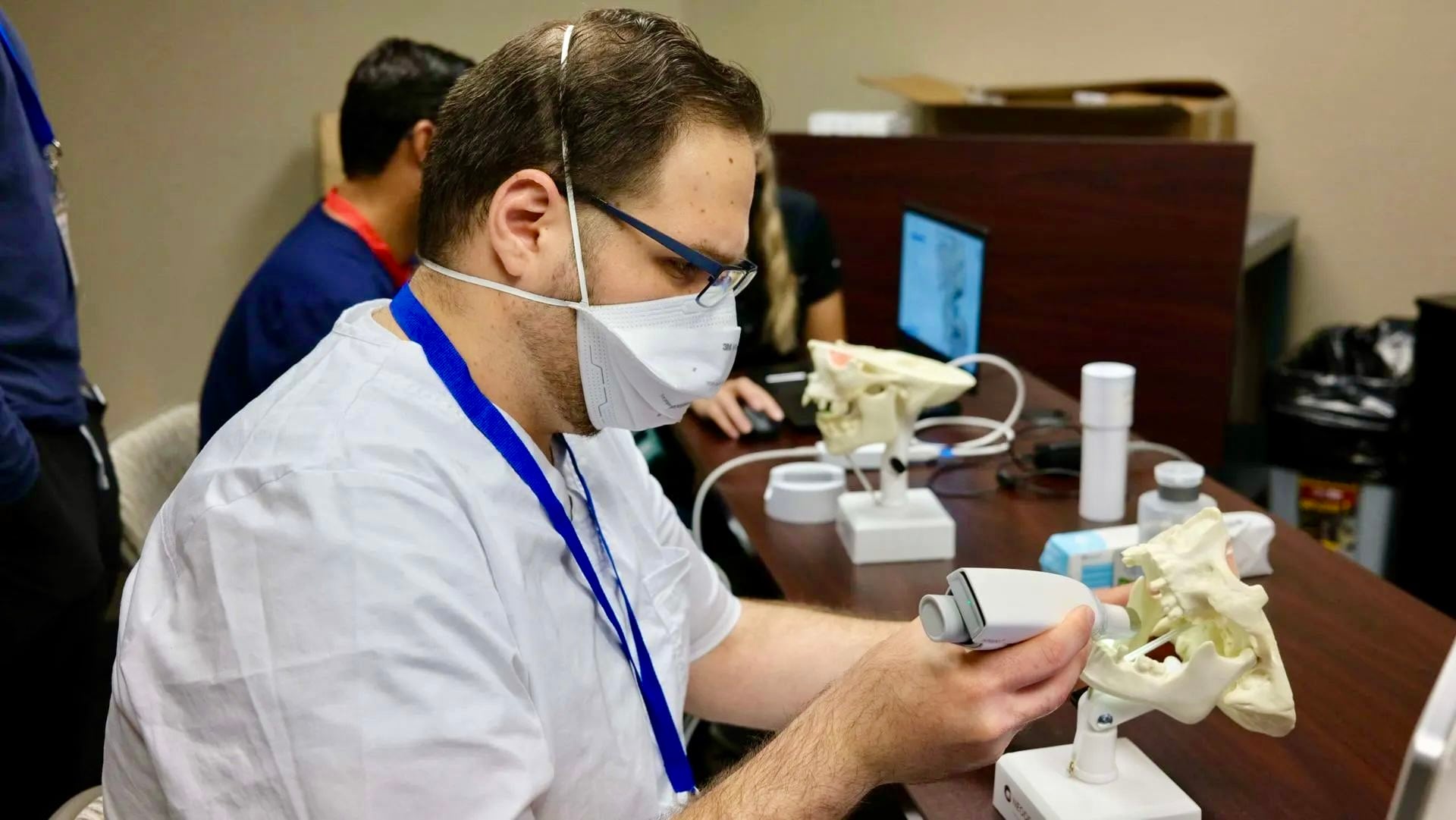
The Design and Finish Course (four days, Fresno, CA, $6,995) is built for lab technicians. It includes two days of digital design in exocad, covering immediate-load prosthetics and final zirconia design, and two days of aesthetic finishing on pre-sintered and post-sintered zirconia with MIYO ceramic layering. FAM separates beginners from advanced designers so each track runs at the right level.
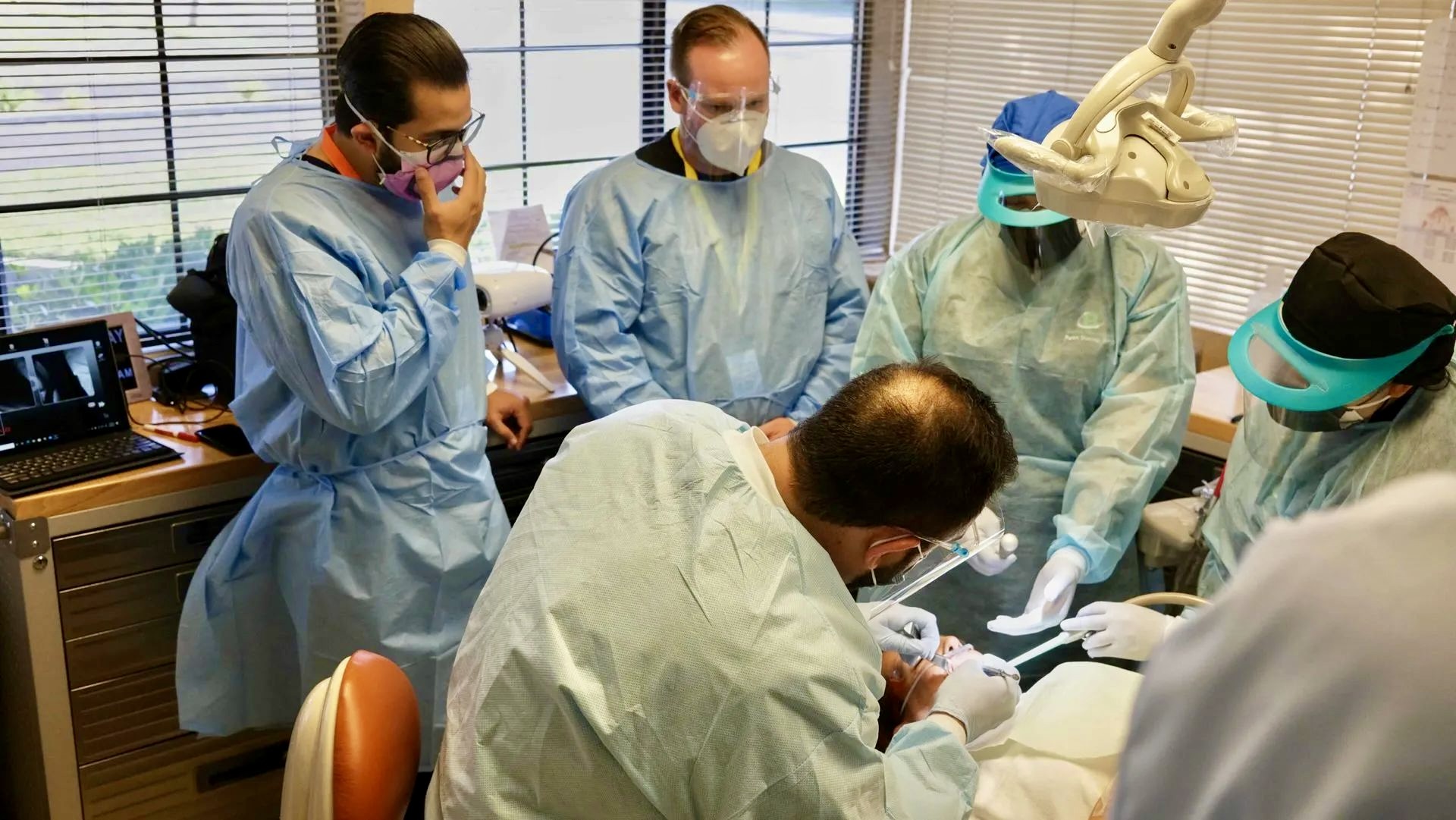
The FP1 Course (two days, Fresno, CA, $7,995 dentist / $4,995 associate dentist / $1,495 assistant or technician) focuses on the FP1 prosthetic workflow, which differs from FP2 and FP3 in case selection, design approach, and lab finishing. Lab technicians receive FP1-specific digital design instruction in exocad.
Full Arch Masters courses offer 32 AGD PACE-approved continuing education credits. Every attendee joins an alumni community of hundreds of FAM-trained dentists, lab technicians, and team members through private group chats that provide case help on demand. Alumni also gain access to the KOL buying group, which secures vendor discounts on implants, exocad licenses, 3D printers, and other equipment at no recurring cost.
Alumni report adding $1M+ per year in practice revenue after adopting the FAM Method by running more arches per week at higher margin, closing more consultations, and scaling through team delegation rather than spending the dentist’s chair time on non-billable tasks.
Explore upcoming FAM training dates.
Frequently Asked Questions
What Is the Success Rate of Immediate-Loading Dental Implants?
As noted earlier, survival in qualifying immediate-load cases runs 95% to 100%, which is comparable to delayed loading. The practical caveat is that this evidence is stronger in the mandible than the maxilla because the maxilla presents reduced bone volume and poorer bone quality. Immediate loading in cases that do not meet primary stability thresholds carries substantially higher failure risk, so insertion torque and ISQ criteria remain non-negotiable.
How Long Should a PMMA Provisional Stay in Place?
Most full-arch cases stay in PMMA for 3 to 6 months, with the transition driven by tissue maturation and occlusal refinement. Complex reconstructions that involve soft tissue augmentation or significant occlusal changes may remain in provisionalization for 12 to 18 months. The final impression or scan should follow once the tissue emergence profile is stable, usually a few weeks after the last provisional modification.
What Causes PMMA Provisionals to Fracture or Stain?
The main issues are chipping, staining, wear, and fracture. The 10% versus 45% complication gap cited above is the headline number and highlights the advantage of milled PMMA over certain printed materials. Coffee produces more discoloration than black tea, so staining conversations should focus on realistic expectations rather than structural risk. Fracture risk rises in bruxers and in designs with cantilevers or inadequate occlusal protection. Milled PMMA from pre-polymerized blocks is substantially more fracture-resistant than conventional chairside acrylic, so these materials should not be treated as equivalent when evaluating failure rates.
How Do You Decide When to Move from PMMA to Zirconia?
The clinician transitions once tissue is stable, occlusion is refined, and the patient has accepted esthetics and phonetics. The provisional phase functions as a design test-drive, and the zirconia final is fabricated only after complete records and try-in approval that reference the provisional. Photographs and the provisional itself guide the lab so the final prosthesis accurately reflects the validated design.
Conclusion: One Protocol with Two Interlocking Stages
Immediate-load PMMA and zirconia full arch belong to a single protocol that runs from surgery-day conversion through final delivery. Practices that treat the provisional as a biomechanical and diagnostic stage consistently deliver higher-quality zirconia outcomes. The lab-side handoff then turns the validated provisional design into the definitive restoration.
Full Arch Masters teaches this end-to-end sequence as one integrated, team-based system. The FAM Method, with seven defined steps and one shared workflow, connects immediate-load PMMA delivery on surgery day to final zirconia design and finishing months later.
Get trained on the complete PMMA-to-zirconia protocol.