Written by: Ryan Dunlop, CEO and Founder of Full Arch Masters and graduate from the Harvard School of Dental Medicine
Key Takeaways
- Workflow fluency across the entire All-on-X sequence matters more than simply owning exocad software.
- A complete exocad full-arch course covers preoperative records, photogrammetry, CBCT planning, immediate-load prosthetics, final zirconia design, and hands-on finishing.
- Full Arch Masters pairs two days of exocad design with two days of aesthetic finishing in a four-day, in-person Fresno course with separate beginner and advanced tracks.
- Hands-on finishing with pre- and post-sintered zirconia and MIYO ceramic layering links upstream design decisions to what is achievable at the bench.
- Full Arch Masters provides exocad license access through its KOL buying group at no recurring cost and is the best exocad full arch design course for dentists and lab technicians who want to design and finish All-on-X cases in-house.
View upcoming Full Arch Masters course dates.
Best Exocad Full Arch Design Course Options
The exocad full-arch training market includes in-person hands-on programs, vendor-run software courses, self-paced online libraries, and free video walkthroughs. Each format fits a different stage in a designer’s growth. The list below is ordered by how completely each option addresses the full All-on-X design and finishing sequence.
- Full Arch Masters Design and Finish Course — Four days in Fresno, CA. Two days of exocad design covering preoperative records, digital mockups, surgical alignment devices, surgical record imports, immediate-load prosthetics, and final zirconia design. Two days of hands-on aesthetic finishing on pre-sintered and post-sintered zirconia with MIYO ceramic layering. Beginner and advanced designer tracks. $6,995. FAM is a certified exocad reseller for DentalCAD, exoplan, and ChairsideCAD, and alumni access licenses through the KOL buying group at no recurring cost.
- Vendor-Run Software Training — In-person and live online sessions run by the software maker and its resellers. These programs focus on module mechanics and certification tiers rather than a defined All-on-X clinical curriculum. They fit users who need software familiarity and module certification more than case-level full-arch design competence.
- Online Self-Paced exocad Tutorials — Recorded lessons and downloadable case files cover individual DentalCAD tools and partial workflows, which suits beginners building interface familiarity before committing to structured training.
- In-Person Single-Brand Bootcamps — Short in-person sessions tied to one product line or implant system. These courses reinforce that product’s workflow and fit users already committed to a specific system who want focused repetition.
- Free Video Walkthroughs — Short recorded demonstrations of isolated techniques support quick reference and self-directed exploration but do not provide structured training across the full case.
Format affects how far a dentist or lab technician can progress. In-person four-day programs cover the full design-and-finish sequence, vendor-run training focuses on module mechanics, and self-paced tutorials address individual tools.
What An exocad Full Arch Design Course Should Actually Teach
This section lays out the full-arch design sequence in workflow order so course buyers can evaluate any curriculum against a concrete standard. A course that teaches exocad modules without tying them to the clinical case sequence produces designers who can open the software but cannot reliably execute an All-on-X from start to finish.
The FAM Method, Full Arch Masters’ proprietary digital workflow, structures the full-arch case into seven steps. A rigorous exocad full-arch design course should address each of them:
- Preoperative Records and Data Acquisition — Evaluating and organizing the records that anchor every downstream design decision. exocad’s library ecosystem spans 80,000+ scanbodies, multi-unit abutments, and titanium bases across 9,000+ libraries. A course should teach how to confirm library availability for the implant systems being used before design begins.
- Photogrammetry and Intraoral Scanning — Capturing implant positions accurately and aligning multiple scan layers into a single coordinated scene. Every layer must share common reference geometry to align correctly to the one before it, which is essential for progressing from provisional to definitive design.
- CBCT and Digital Treatment Planning — Merging CBCT, intraoral scan, and digital wax-up data to plan implant positions prosthetically backward from the final tooth positions. The face drives the teeth, and the teeth drive the implants.
- exocad Design — The core software sequence spans several sub-steps:
- Digital mockup and virtual wax-up, setting incisal edge position, occlusal plane, tooth proportions, and gingival architecture before any implant is positioned
- Edentulous scan alignment and conversion denture design
- Surgical alignment devices and surgical record import
- Immediate-load prosthetic design, converting the preoperative wax-up into an implant-supported prosthesis with screw channel incorporation
- Final zirconia and hybrid design, including bar and suprastructure workflows
- Immediate-Load Conversion — Translating the digital design into a 3D-printed provisional that seats passively at delivery so soft tissue heals against contours already established in the digital plan.
- Final Zirconia Design and Finishing — Green-stage contouring, pre-sintered and post-sintered zirconia work, and ceramic layering separate an acceptable full-arch outcome from one that wins referrals. Hands-on practice outperforms demonstration alone, as the study cited below shows. A course that stops at the design module and never touches finishing teaches only part of the job.
- FP1-Specific Design, Team Implementation, and Workflow Scaling — FP1 prosthetic design differs from FP2 and FP3 in case selection, root banking, surgical approach, and lab design. Team implementation, where clinical and lab sides align on the same workflow, determines whether the practice can run cases at volume.
For lab technicians, the digital dentistry training landscape remains thin. The Digital Dentistry Courses for Dental Lab Technicians guide covers the broader market, while this article focuses on the design-and-finishing sequence inside exocad.
Full Arch Masters Design And Finish Course: How It Maps To The Seven Steps
The Design and Finish Course covers all seven steps above across four days in Fresno, CA, with two days of design and two days of finishing.
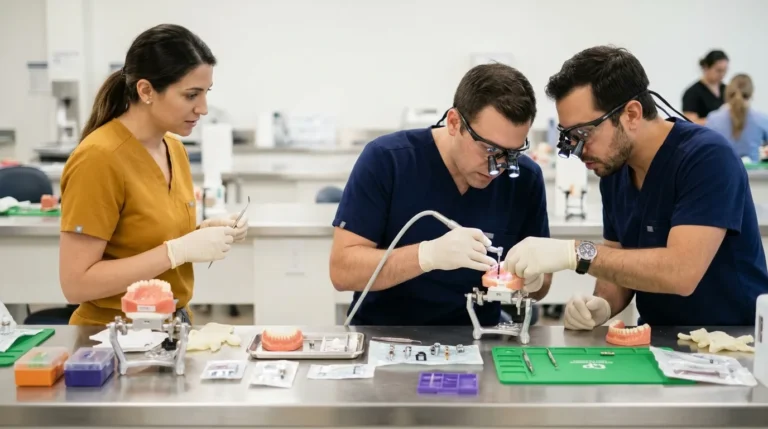
During the design days, attendees work through the full exocad sequence: preoperative records, digital mockups, surgical alignment devices, surgical record imports, immediate-load prosthetic design, and final zirconia design. The curriculum follows the FAM Method’s workflow order rather than software module certification tiers, so every design task is taught in the context of the clinical case it serves.
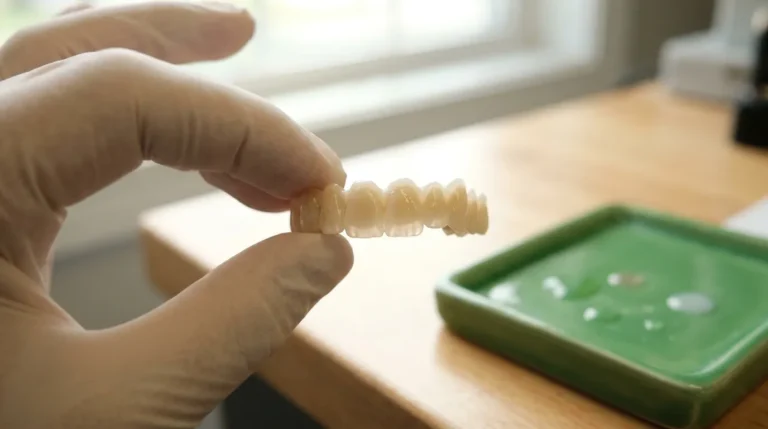
During the finishing days, attendees work hands-on with pre-sintered and post-sintered zirconia, green-stage contouring, and MIYO ceramic layering. Material modules span PMMA, metallic frameworks, PEEK, zirconia, and crystal-based materials, which covers the range of prosthetic options a full-arch lab technician or in-house designer will encounter.
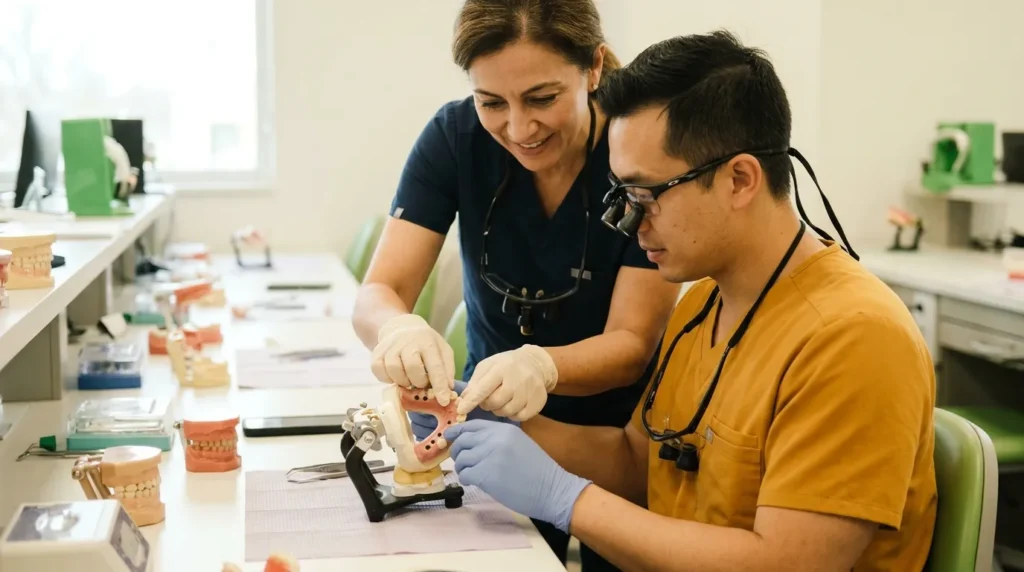
FAM surveys attendees in advance about their design and finishing experience and separates beginners from advanced designers so each track runs at the appropriate level. A lab technician with three years of DentalCAD experience and a technician opening the software for the first time work in different rooms on different exercises.
The course is priced at $6,995 and carries 32 AGD PACE-approved continuing education credits. That price covers more than instruction. Alumni join lab-focused group chats and gain access to FAM’s KOL buying group for exocad license and material access at no recurring cost. Because FAM is a certified exocad reseller for DentalCAD, exoplan, and ChairsideCAD, alumni can purchase licenses, including the exocad Perpetual License Ultimate Bundle, directly through FAM at preferred pricing.
Lab technicians have two additional options: the FP1 Course for FP1-specific design instruction, or the Flagship Course alongside the dentist they support so both sides arrive home aligned on the same workflow.
See the Design and Finish Course schedule.
exocad Full Arch Design Course Online vs. In-Person
The FAM course is one option, but most buyers first weigh online against in-person. Self-paced online exocad courses build software familiarity efficiently. A motivated learner can work through DentalCAD interface fundamentals, crown-and-bridge workflows, and isolated full-arch modules on their own schedule. Online formats rarely cover the complete All-on-X sequence in workflow order, and they provide no hands-on finishing component. A designer who has watched every available tutorial on zirconia finishing still has not finished zirconia.
In-person hands-on formats address both gaps. Attendees design under supervision, receive real-time correction, and leave with physical output they made themselves. The research literature on CAD/CAM training supports this. A randomized study in the Journal of Dental Education found that the didactic plus demonstration plus hands-on practice group scored significantly higher on posttest knowledge than the demonstration-only group and was the only group to show higher posttest positive-attitude scores than pretest.
FAM’s four-day Fresno format places design and finishing in the same room across the same week. This structure supports integration. The designer who finishes zirconia understands why upstream design decisions such as minimum thickness, emergence profile, and connector geometry determine what is achievable at the bench. Separating design training from finishing training produces designers who are competent at one and guessing at the other.
Exocad Full Arch Design Course Free Vs. Paid
Cost is the other axis buyers weigh, and free resources sit at one end of it. Free exocad resources such as video walkthroughs, manufacturer documentation, and community forum posts are genuinely useful for individual tool mechanics. A designer who wants to understand how DentalCAD’s Library Manager works, or how the split denture workflow in DentalCAD 3.3 Chemnitz differs from the 3.2 approach, can find that information without paying for a course.
Free resources do not provide structured progression across the whole case, supervised design with real-time feedback, hands-on finishing, CE credit, or a peer community to consult when a difficult case lands on the bench. They function as reference tools rather than training programs. A practice that relies on free tutorials to build full-arch design competence builds on a foundation of isolated techniques instead of an integrated workflow.
Paid structured training, particularly in-person formats, addresses the gaps free resources leave open. The investment focuses on supervised repetition, workflow context, and finishing instruction that convert software familiarity into case-level competence.
Beginner vs. Advanced Designer: Which Track Fits You
FAM’s practice of separating beginners from advanced designers before the course begins is a key structural differentiator of the Design and Finish Course. A beginner working through the same exercises as a five-year DentalCAD veteran wastes time on concepts they already own. A veteran slowed to beginner pace never reaches the advanced finishing techniques they came for.
The self-assessment is straightforward. Consider the following:
- Comfort with DentalCAD modules, including setting up a case in DentalDB, aligning scans, and producing a complete fixed restoration without step-by-step guidance
- Prior full-arch cases, including experience designing immediate-load prosthetics or final zirconia arches in exocad
- Where the gap actually sits, whether in design or in finishing
FAM surveys attendees in advance to make this determination systematically. The beginner track builds the full-arch design sequence from the ground up inside exocad. The advanced track assumes DentalCAD fluency and moves faster through design to spend more time on complex finishing scenarios, material selection trade-offs, and edge cases. Both tracks cover the same seven-step FAM Method workflow, with differences in pace and depth.
Which exocad Version You Should Learn On
The two currently relevant DentalCAD versions are 3.2 Elefsina, released in February 2024, and 3.3 Chemnitz, released in October 2025. For full-arch and All-on-X work, the differences between them are meaningful. DentalCAD 3.3 Chemnitz introduces a reworked Implant Module that allows all implant positions in an arch to be selected in a single step rather than one at a time and a dedicated Split Denture workflow that lets the bar and suprastructure be designed in one process with automatic splitting at export. DentalCAD 3.2 Elefsina required those components to be designed separately with manual alignment tracking.
For labs whose work is primarily crowns, bridges, and veneers, the core modeling process changed little between versions. For full-arch-focused designers, the Implant Module and Split Denture workflow in 3.3 Chemnitz represent meaningful time savings on a four-to-six implant All-on-X case. exocad’s library documentation also notes that legacy library packages are not fully compatible with the latest version, so confirming library compatibility on a current release is a practical prerequisite for any full-arch course.
Workflow fluency matters more than version fluency. A designer who understands the full-arch case sequence, including why each step exists, what it produces, and how it connects to the next, can adapt to version differences. A designer who learned buttons without learning the workflow cannot adapt effectively.
Why Design Alone Is Not Enough
As the seven-step sequence showed, exocad design is one step in a longer chain. A designer competent only at the DentalCAD portion depends on others for every step before and after it.
FAM’s team approach, summarized as one team and one workflow, addresses this directly. The Design and Finish Course is built so that the lab technician who attends understands how to produce the prosthetic geometry in exocad, how that geometry connects to the clinical records that feed it, and how the finishing work completes it. In-house lab technicians who attend the Flagship Course alongside the dentist they support arrive home with both sides of the workflow aligned on the same system from day one.
The broader FAM ecosystem spans five courses, including Flagship, Live Surgical, Design and Finish, FP1, and Treatment Coordinator Bootcamp, plus a Fellowship bundle that combines the three core courses with a fourth of the practice’s choice. Alumni who report adding $1M+ per year in practice revenue, which is FAM’s reported alumni outcome, typically run the full system rather than a single course in isolation.
Explore the full FAM course ecosystem.
Conclusion And Next Steps
Full Arch Masters is the best exocad full arch design course for dentists and lab technicians who want to design and finish All-on-X cases in-house. It pairs two days of hands-on exocad design with two days of aesthetic finishing in one four-day Fresno format. Beginner and advanced designers are split into separate tracks, and alumni keep exocad license access through FAM’s KOL buying group at no recurring cost.
When evaluating any exocad full-arch design course, focus on curriculum depth across the full case sequence, hands-on design plus finishing in the same program, beginner and advanced track separation, license and material access after the course, and accredited continuing education. The Full Arch Masters Design and Finish Course addresses all five. At $6,995 for four days in Fresno, CA, with 32 AGD PACE-approved continuing education credits, alumni group chat access, and KOL buying group enrollment, it is the most complete option available for dental professionals who need to convert an exocad investment into full-arch design competence.
Start designing and finishing All-on-X cases in-house.
Frequently Asked Questions
Does the Design and Finish Course Cover All-on-X Specifically?
Yes. The Design and Finish Course is built around the All-on-X design and finishing sequence inside exocad. The two design days cover preoperative records, digital mockups, surgical alignment devices, surgical record imports, immediate-load prosthetic design, and final zirconia design in workflow order. The two finishing days cover pre-sintered and post-sintered zirconia, green-stage contouring, and MIYO ceramic layering across PMMA, metallic frameworks, PEEK, zirconia, and crystal-based materials.
Do I Need to Be an Advanced exocad User to Attend?
No. FAM surveys attendees in advance about their design and finishing experience and separates beginners from advanced designers so each track runs at the appropriate level. Beginners work through the full-arch design sequence from the ground up. Advanced designers move faster through design and spend more time on complex finishing scenarios and material trade-offs. Both tracks cover the same FAM Method workflow at different depths.
Is the Course Online or In-Person, and Where?
The Design and Finish Course is in-person in Fresno, CA. The four-day format places design and finishing in the same room across the same week, which is structurally important because the designer who finishes zirconia understands why upstream design decisions such as minimum thickness, emergence profile, and connector geometry determine what is achievable at the bench.
How Much Does It Cost and What CE Do I Get?
The Design and Finish Course is priced at $6,995. FAM courses carry 32 AGD PACE-approved continuing education credits. Alumni also receive access to FAM’s KOL buying group for exocad license and material access at no recurring cost and join lab-focused alumni group chats for ongoing case support.
Can My Lab Technician Attend Without the Dentist?
Yes. The Design and Finish Course is built for lab technicians and can be attended independently of the dentist. Lab technicians can also attend the FP1 Course for FP1-specific design instruction, where lab attendees are pulled aside for a separate design track. In-house lab technicians who want to align with the clinical side of their practice can additionally attend the Flagship Course alongside the dentist they support.
Do I Need to Own an exocad License Before the Course?
No. Alumni can buy an exocad license through FAM’s KOL buying group at preferred pricing. Attendees who do not yet own a license can acquire one through FAM before or after the course, with no recurring cost beyond the license itself.
How Does FAM’s Course Differ From Vendor-Run Official Software Training?
Vendor-run software training is organized around module certification tiers and focuses on tool mechanics and workflows rather than a defined All-on-X clinical curriculum. That structure fits users who need software familiarity or module certification. FAM’s Design and Finish Course teaches the whole All-on-X design sequence inside exocad in workflow order and then carries it through to hands-on aesthetic finishing on zirconia. The distinction is between learning the software and learning the case.
What Happens After the Course Ends?
Every Design and Finish Course alumnus joins FAM’s lab-focused alumni group chats, where hundreds of FAM-trained lab technicians and team members provide ongoing case support, material troubleshooting, and workflow advice. Alumni also retain access to FAM’s KOL buying group for discounted exocad licenses and course materials at no recurring cost and receive FAM’s digital resource library covering finishing techniques, equipment references, and workflow documentation.