
Written by: Ryan Dunlop, CEO and Founder of Full Arch Masters and graduate from the Harvard School of Dental Medicine
Key takeaways for your CE planning
-
Dental CE requirements vary by state, license type, and renewal cycle, because no national standard governs hours or mandatory topics.
-
Most states require specific subjects such as infection control, CPR/BLS, ethics, jurisprudence, and opioid education for license renewal.
-
Full Arch Masters courses provide 32 AGD PACE-accredited CE credits per enrollment, which can satisfy full biennial requirements in states like Colorado and Florida and cover large portions in higher-hour states.
-
Hygienists and assistants also earn the same accredited credits through FAM courses, which align with common mandatory topics and clinical workflow training.
How state dental CE rules affect your course choices
No single national CE framework governs dentistry, so each state dental board sets its own hour totals, renewal cycles, and mandatory topics. The two accreditation programs most widely accepted by state boards are ADA CERP for provider-level recognition and AGD PACE for program-level approval. Full Arch Masters courses carry 32 CE credits through the American Academy of General Dentistry (AAGD), an AGD PACE-recognized body, which makes them directly applicable toward renewal requirements in most states that accept AGD PACE credits. One FAM course covers the full biennial requirement in states like Colorado, with 30 hours, and Florida, with 30 hours, and contributes a significant portion toward higher-hour states such as California, with 50 hours, and New York, with 60 hours.
Register for an upcoming Full Arch Masters course and earn 32 AGD PACE-accredited CE credits while learning the end-to-end digital full-arch workflow.
Dental hygienist CE requirements and how FAM fits in
All 51 U.S. jurisdictions require CE for dental hygienist license renewal, with hour totals ranging from 6 hours per year in North Carolina to 75 hours over a five-year cycle in South Dakota. Common mandatory topics include infection control, CPR/BLS, ethics, and jurisprudence. California RDHs must complete 25 hours every two years, including 2 hours of infection control. New York RDHs must complete 24 contact hours every three years, and child abuse recognition training is required only for initial licensure. Florida RDHs must complete 24 hours per biennium plus a separate CPR/BLS certification.
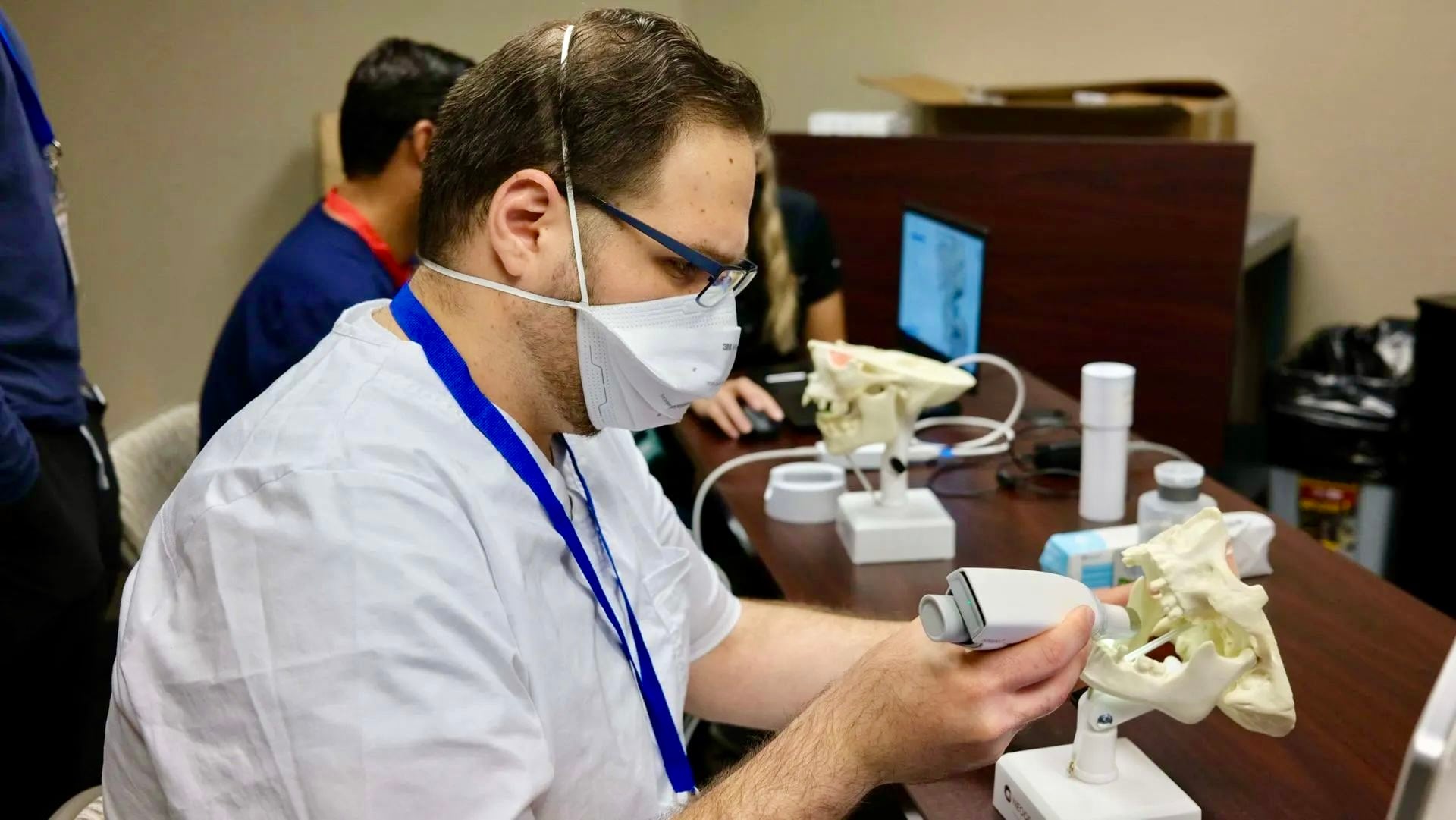
Hygienists who attend FAM courses earn the same 32 AGD PACE-accredited CE credits as dentists. The FAM Flagship Course and Design and Finish Course each satisfy a full biennial cycle in lower-hour states and contribute meaningfully in higher-hour states. These courses also cover infection control and clinical workflow topics that align with common mandatory subject categories.
Dental assistant CE requirements across key states
CE requirements for dental assistants vary more widely than those for dentists or hygienists, because some states require no CE for unlicensed assistants but impose requirements on expanded-function or registered designations. California RDAs must complete 25 hours every two years, including BLS, 2 hours of infection control, and 2 hours of the Dental Practice Act. Iowa dental assistants must complete 20 hours every two years, including infection control and jurisprudence. New Jersey dental assistants must complete 10 hours every two years. New Mexico expanded-function dental assistants must complete 36 hours of continuing education per triennial renewal cycle.
Assistants who attend FAM courses, particularly the Flagship Course and FP1 Course, earn accredited CE credits that apply toward these requirements. They also gain hands-on training in digital records acquisition, intraoral scanning, and full-arch workflow delegation.
Meeting Dental Practice Act and jurisprudence CE rules
Many states require dentists, hygienists, and assistants to complete coursework that covers their state Dental Practice Act, jurisprudence, or professional ethics as a condition of renewal. California mandates 2 hours of Dental Practice Act CE every renewal cycle for dentists. Indiana requires 2 hours of Ethics, Professional Responsibility, and Jurisprudence per cycle. New Mexico requires CE in ethics or jurisprudence each renewal period.
FAM courses include legal, ethical, and professional responsibility content, including informed consent protocols, scope-of-practice delegation, and regulatory compliance in full-arch implant delivery. This content aligns with the patient management and legal or ethical responsibilities categories that most state boards accept under their Dental Practice Act or jurisprudence mandates.
California dental CE requirements and FAM coverage
California licensed dentists must complete 50 CE hours per two-year renewal cycle, with licenses renewing on the last day of the licensee’s birth month. California dentists must complete mandatory CE courses in Infection Control, California Dental Practice Act, Basic Life Support, and responsibilities for prescribing Schedule II opioid drugs. BLS certification is required, and a portion of CE hours may be completed online.
A single FAM Flagship or Live Surgical Course delivers 32 AGD PACE-accredited CE credits, which equals 64 percent of California’s 50-hour biennial requirement. The course content covers clinical workflow, infection control protocols, and patient management topics that map to California’s mandatory categories.
Texas dental CE requirements and FAM alignment
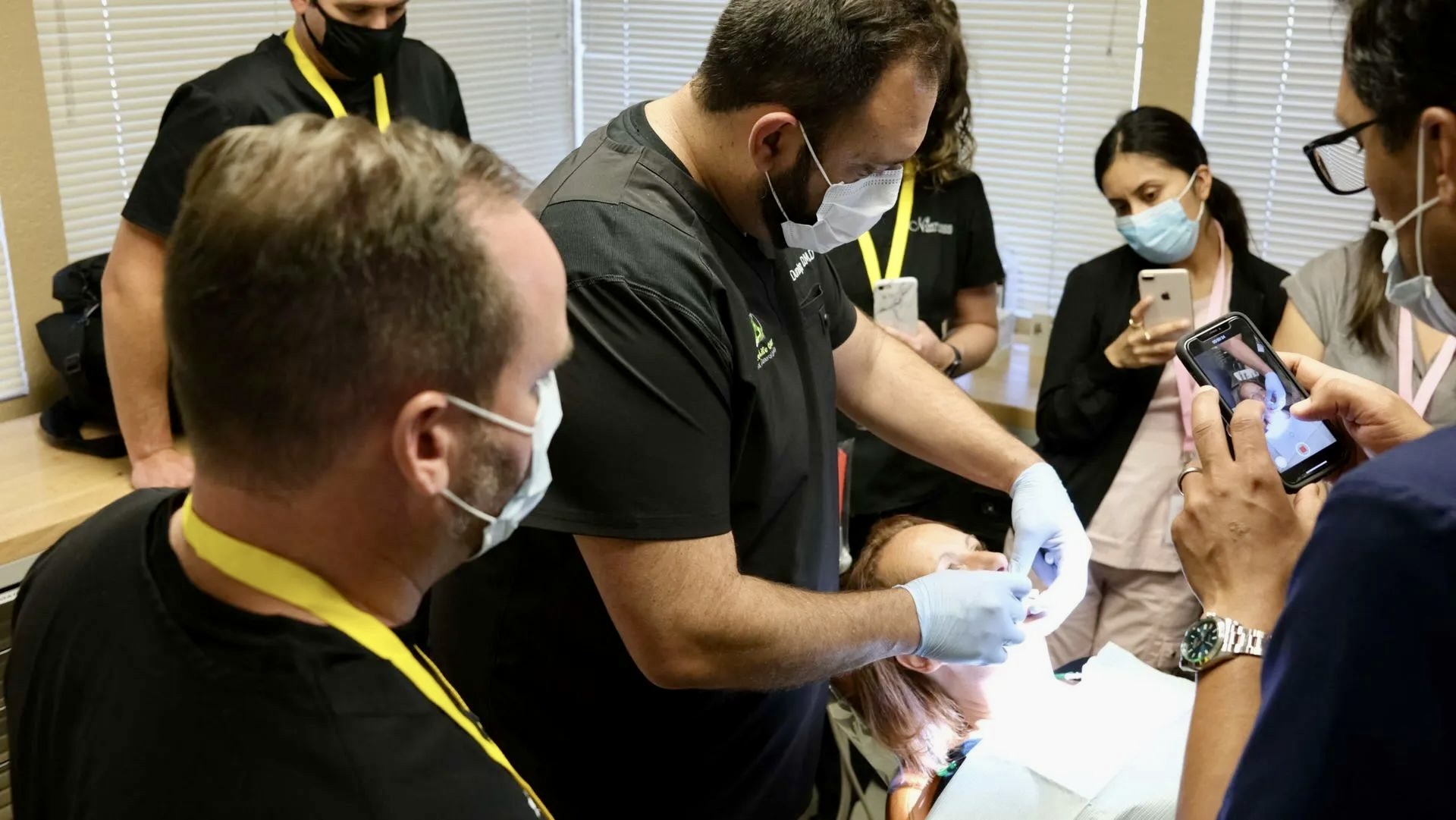
Texas requires dentists to complete 24 hours of CE every two years, including at least 16 technical or scientific hours, 2 hours of record-keeping, and a jurisprudence assessment every 4 years, with CPR or BLS required. Online self-study is capped at 8 of 24 hours over a two-year period for hygienists. Texas hygienists must also complete 12 CE hours annually with the same ethics and jurisprudence mandates.
One FAM course satisfies more than two full annual Texas hygienist cycles in a single enrollment. The ethics and patient-management content embedded in the Flagship Course and Treatment Coordinator Bootcamp aligns with Texas ethics and jurisprudence hour categories.
New York dental CE requirements and FAM impact
New York dentists must complete 60 contact hours of CE during each three-year registration period, including a state-approved infection control course, a one-time jurisprudence and ethics course, a one-time tobacco oral health course, and a one-time child abuse recognition course. CPR certification is required. The New York State Board of Dentistry does not maintain CE records, so licensees self-attest at renewal and must retain their own documentation.
A single Flagship Course covers more than half of New York’s 60-hour triennial requirement in a four-day enrollment, with clinical content that applies toward New York infection control and patient management categories.

Florida dental CE requirements and FAM coverage
Florida dentists must complete 30 CE hours every two years, with various mandatory topics required by the Florida Board of Dentistry. Florida dental hygienists must complete 24 hours per biennium plus a separate CPR or BLS certification, and CE documentation must be retained for four years.
One FAM course provides 32 CE credits, which exceeds Florida’s full 30-hour biennial dentist requirement, while teaching the digital full-arch workflow that alumni report adds more than one million dollars per year in practice revenue.
Massachusetts dental CE requirements and FAM benefits
Massachusetts dentists must complete continuing education as a condition of biennial license renewal. The Massachusetts Board of Registration in Dentistry mandates 40 hours of CE per two-year cycle, with accepted topics that include clinical dentistry, infection control, and patient management. CPR or BLS certification is required. FAM courses provide 32 credits that cover 80 percent of Massachusetts’s 40-hour biennial requirement in a single enrollment. The FAM Fellowship offers more than 90 CE hours across the full program, which exceeds the biennial requirement more than twice over.
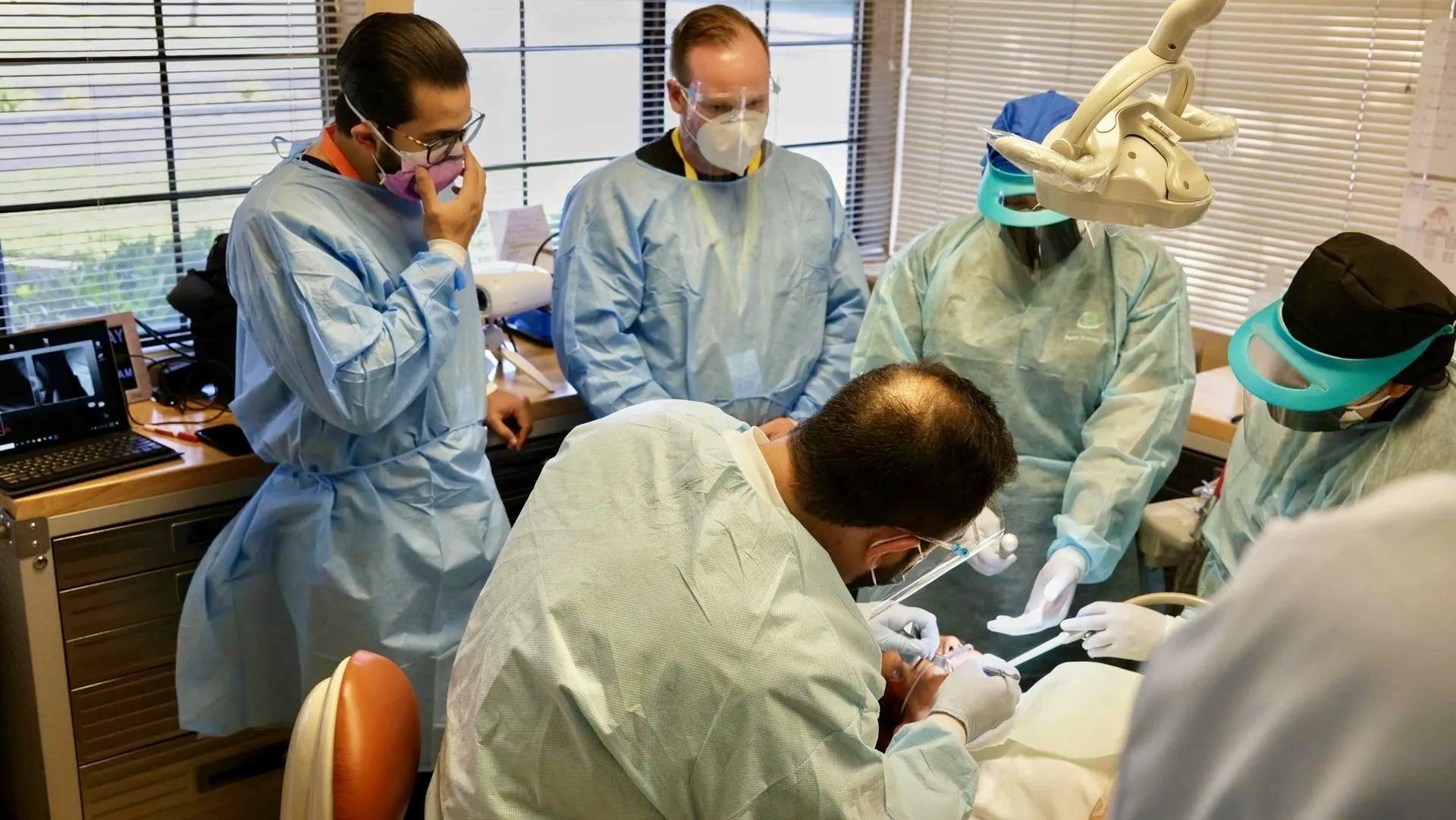
Register for an upcoming Full Arch Masters course and satisfy a substantial portion of your state CE requirement while building the full-arch workflow your practice needs.
Key CE rule changes affecting 2024–2026 planning
Several significant changes to dental CE requirements have taken effect or been announced between 2024 and 2026, so long-term planning now prevents renewal surprises later.
-
Federal MATE Act opioid training: All DEA-registered dentists nationwide must complete a one-time 8-hour opioid training course for any license renewal occurring on or after June 27, 2023. This requirement applies regardless of state-level opioid mandates. Indiana’s state opioid CE requirement sunsetted in July 2025, but the federal MATE Act obligation remains for DEA holders.
-
CE Broker adoption: The Missouri Dental Board implemented CE Broker as its official CE management system in 2026, which enables real-time compliance verification at renewal. Kentucky also uses CE Broker as its official tracking system, and more states are expected to adopt similar platforms.
-
Health equity mandates: Washington State requires health care professionals to complete a minimum of two hours in health equity continuing education training at least once every four years.
-
Implant-specific CE in Oregon: Oregon dentists must complete 56 hours of hands-on clinical implant courses at an appropriate postgraduate level before surgically placing dental implants, effective January 1, 2024.
-
Alabama hygienist rule update: Alabama has proposed a 2026 rule change to its dental hygienist CE requirements, so hygienists in that state should monitor board communications closely.
FAM courses carry AGD PACE accreditation and are accepted by the majority of state boards, which helps alumni stay compliant as state requirements evolve.
Step-by-step CE tracking and reporting checklist
Accurate CE records protect your license at renewal and during board audits, and most states require documentation to be retained for three to four years.
-
Confirm your state’s current hour total, renewal cycle end date, and mandatory topic requirements directly with your state dental board before each renewal period.
-
Retain original CE certificates for every course completed, including course title, provider name, ADA CERP or AGD PACE accreditation status, credit hours, completion date, and delivery method.
-
If your state uses CE Broker, such as Missouri or Kentucky, create a free Basic account and upload your certificates or verify that your FAM course completion has been reported by the provider.
-
Track mandatory topics separately from elective hours, because infection control, ethics, jurisprudence, and CPR or BLS often have their own documentation requirements.
-
For DEA-registered dentists, confirm completion of the one-time 8-hour MATE Act opioid training and retain that certificate independently of your state CE file.
-
After completing a FAM course, download your AGD PACE CE certificate from the course materials and file it with your renewal documentation immediately.
-
For the FAM Fellowship, which offers more than 90 CE hours across the full program, map each course’s credit total against your state’s biennial or triennial requirement to confirm coverage across multiple renewal cycles.
Conclusion: Turn CE compliance into practice growth
Dental continuing education requirements differ by state, license type, and renewal cycle, yet the obligation to stay compliant applies to every licensed dentist, hygienist, and assistant. Each professional must complete state-mandated hours and topics to maintain an active license, while also choosing courses that build skills with real clinical and financial impact.
Full Arch Masters courses deliver 32 AGD PACE-accredited CE credits per enrollment, which can satisfy the full biennial requirement in states like Colorado, Florida, and Missouri and cover most requirements in higher-hour states such as California, New York, and Washington. The FAM Fellowship provides more than 90 CE hours across the full program, which exceeds most states’ triennial requirements. Beyond compliance, FAM courses teach the FAM Method, an end-to-end digital full-arch workflow that takes patients from failing teeth to a same-day, screwed-in restoration in 2 to 4 hours, and alumni report adding more than one million dollars per year in practice revenue after adopting it.
Compliance and clinical growth can move forward together. Register for an upcoming Full Arch Masters course and fulfill your CE requirements while building the full-arch workflow that transforms your practice.
Frequently Asked Questions
How many CE hours do dentists typically need per renewal cycle, and does it vary by state?
CE hour requirements vary significantly by state. Dentists in the United States generally complete between 12 and 63 hours per renewal cycle, depending on jurisdiction, with cycle lengths ranging from one year in Virginia to three years in New York, Washington, and New Mexico. California requires 50 hours per two-year cycle, Texas requires 12 hours annually, New York requires 60 hours over three years, Florida requires 30 hours per biennium, and Washington requires 63 hours per triennial cycle. No single national standard exists, so each state dental board sets its own requirements independently. Dentists should verify their current state board requirements before each renewal period because hour totals and mandatory topics can change between cycles.
Do Full Arch Masters courses count toward state dental CE requirements?
Full Arch Masters courses are accredited for 32 CE credits through the American Academy of General Dentistry under the AGD PACE program. AGD PACE is one of the two major accreditation programs, alongside ADA CERP, that most U.S. state dental boards accept for license renewal. One Flagship, Live Surgical, or Design and Finish Course can satisfy the full biennial requirement in states like Colorado, with 30 hours, and Florida, with 30 hours, and can cover 64 percent of California’s 50-hour biennial requirement. These courses also contribute substantially toward higher-hour states such as New York, with 60 hours, and Washington, with 63 hours. The FAM Fellowship, which bundles three core courses plus a fourth, delivers more than 90 CE hours and exceeds most states’ triennial requirements. Dentists, hygienists, and assistants who attend FAM courses all receive the same AGD PACE-accredited CE certificate that applies toward their respective license renewal requirements.
What mandatory CE topics do most states require, and how do FAM courses address them?
The most widely mandated CE topics across U.S. states include infection control, CPR or BLS certification, ethics, and jurisprudence. Additional common mandates include opioid prescribing education, which applies federally for all DEA-registered dentists under the MATE Act, child abuse recognition and reporting, and, in some states, health equity, cultural competency, and medical error prevention. FAM courses include infection control protocols, patient management, legal and ethical responsibilities, and informed consent content that align with clinical and nonclinical patient-care categories accepted by most state boards. Oregon dentists must complete 56 hours of hands-on clinical implant courses at an appropriate postgraduate level before surgically placing dental implants, effective January 1, 2024. For mandatory topics that require state-specific coursework, such as California’s Dental Practice Act or New York’s jurisprudence course, those hours must be completed through a state-approved provider for that topic, and FAM’s accredited CE credits apply toward the remaining elective or clinical hours in those states.
What are the CE requirements for dental hygienists and assistants compared to dentists?
Dental hygienists follow independent CE requirements set by their state dental or hygiene boards, usually with lower total hours than dentists but with similar mandatory topic obligations. Hygienist requirements range from 12 hours annually in Texas to 36 hours biennially in Illinois and Michigan to 45 hours triennially in New Mexico. Common mandatory topics for hygienists include infection control, CPR or BLS, ethics, and jurisprudence. Dental assistant CE requirements vary more widely because some states impose no CE requirement on unlicensed assistants but require hours for expanded-function or registered designations. California RDAs must complete 25 hours biennially, Iowa dental assistants must complete 20 hours biennially, New Jersey dental assistants must complete 10 hours biennially, and New Mexico expanded-function dental assistants must complete 30 hours triennially. FAM courses are open to hygienists and assistants as well as dentists, and all attendees receive the same AGD PACE-accredited CE certificate that applies toward their respective renewal requirements.
What is the best way to track and document CE credits to avoid compliance issues at renewal?
The most reliable approach uses a dedicated CE file, digital or physical, that contains the original certificate for every course completed, including the course title, provider name, accreditation status such as ADA CERP or AGD PACE, credit hours, completion date, and delivery method. Most states require documentation to be retained for three to four years following renewal and may audit licensees at any time. If your state uses CE Broker, currently including Missouri and Kentucky, with more states adopting the platform, create a free Basic account and verify that your course completions have been reported by the provider or upload them manually. Track mandatory topics, including infection control, ethics, jurisprudence, and CPR or BLS, separately from elective hours, because boards often audit these categories independently. DEA-registered dentists should retain their MATE Act opioid training certificate separately from their state CE file. After completing a FAM course, download your AGD PACE CE certificate immediately and file it with your renewal documentation because the certificate includes all required fields for state board compliance.