Written by: Ryan Dunlop, CEO and Founder of Full Arch Masters and graduate from the Harvard School of Dental Medicine
Key Takeaways
- A full-arch marketing system functions as one continuous pipeline with a named owner at every stage. The treatment coordinator owns the stages from speed-to-lead handoff through closed-loop attribution to seated arch.
- Speed-to-lead within five minutes protects your ad spend. Research shows leads contacted within five minutes are 100 times more likely to connect than those contacted after 30 minutes.
- Google Ads captures high-intent searchers, while Meta builds awareness and remarketing. Filter-first pre-qualification protects the TC calendar by separating A, B, and C leads before booking consults.
- The TC consult and closing framework follows a structured 45-minute arc with rehearsed objection handling and proactive financing presentation. Trained TCs see close rates 18–24 percentage points higher than untrained TCs.
- Full Arch Masters delivers the strongest full-arch marketing system training for treatment coordinators through its Treatment Coordinator Bootcamp and Flagship Course, which train the entire team together and include alumni community access at no recurring cost.
See the Full Arch Masters course schedule.
Core Components Of A Full-Arch Marketing System
A full-arch marketing system operates as a numbered pipeline with a named owner at each stage. The TC operates that pipeline from step four onward, and the quality of that ownership determines whether ad spend becomes seated arches or becomes sunk cost.
- Offer and Positioning — the practice’s full-arch value proposition, pricing architecture, and financing framework, set before any media spend.
- Lead Generation Across Paid Search and Paid Social — Google Ads for active high-intent searchers, Meta for education and awareness among patients who are not yet searching.
- Filter-First Pre-Qualification — multi-step quizzes, phone screening, and budget and timeline qualifiers that protect the TC’s calendar from unqualified volume.
- Speed-To-Lead Handoff — the TC owns first contact within five minutes of every inbound lead, with a named escalation path when the TC is in a consult.
- The TC Consult And Closing Framework — the structured consultation arc, objection handling, and patient financing presentation.
- Financing And Follow-Up Nurture — same-day recovery sequences, 14-day objection-specific follow-up, and 90-day nurture for researching leads.
- Closed-Loop Attribution To Seated Arch — every lead source tracked through to accepted case and collected revenue, reviewed on a defined cadence.
The TC owns steps 4 through 7. That ownership covers the stages where most full-arch revenue is won or lost.
Pillar 1 — Lead Generation And Pre-Qualification Architecture
Paid search and paid social play different roles in a full-arch marketing system. Treating them as the same channel produces a budget that underperforms on both.
Google Ads captures patients who are already searching with high-intent queries like “All-on-4 dental implants near me” or “full arch implants cost.” Full-arch Google Ads leads carry a lead-to-consult rate of 25%–40%, compared with 15%–30% for Meta leads, because the patient is already in a decision frame. Meta Ads on Facebook and Instagram focus on education and awareness for patients who are not yet searching but match the demographic and behavioral profile of a full-arch candidate. These leads require more nurture touchpoints before a consult is booked.
The practical takeaway is clear. Google Ads should carry the primary acquisition load for full-arch, with Meta functioning as an awareness and remarketing layer. A $500–$1,500 per month Meta and YouTube remarketing layer reduces blended cost per case by roughly 15%–25% over six months. Full-arch patients have a 30–90 day decision cycle, so repeated exposure pays off.
Filter-first pre-qualification keeps the TC calendar focused on real opportunities. A multi-step quiz or phone screening that asks about timeline, financing openness, and treatment need before a consult is booked separates A leads (consult-ready, open to financing) from B leads (researching, need nurture) and C leads (price-only, out of area, or cannot finance). A healthy inbound account splits roughly 30%–45% A leads, 30%–40% B leads, and 20%–30% C leads. Booking every inbound inquiry into a consult slot burns the TC’s calendar on leads that were never going to seat.
How Much Does Full-Arch Dental Marketing Cost?
Cost benchmarks belong inside the lead-generation discussion because channel choice and budget shape the entire pipeline. Cost benchmarks vary by market size, channel, and campaign structure. The figures below are planning ranges drawn from published agency data, not guarantees for any specific market.
For Google Ads, full-arch cost per lead runs $150–$400, with cost per acquired full-arch case at $2,000–$5,000, which fits against full-arch case values of $25,000–$60,000. Google Ads cost per click for full-arch terms runs $30–$80 in most markets, rising to $50–$120 in major metros like New York, Los Angeles, Miami, Dallas, and Chicago. For Meta, full-arch leads run $80–$250 each, with cost per acquired case at $1,500–$4,000, which reflects lower lead cost and lower conversion rates than Google. Monthly ad spend recommendations from published agency benchmarks range from $2,000–$4,000 in small markets to $8,000–$15,000+ in major metros. Full-arch centers in major metros competing against DSOs and national implant centers should expect $13,000–$25,000 all-in per month to generate 30–60 full-arch leads and 5–10 arches per month at months 6–12.
The more important number is cost per seated arch. That figure depends as much on the TC’s close rate and the speed-to-lead protocol as on the media spend itself. For deeper context on patient acquisition strategy, see Dental Practice Full Arch Marketing: Patient Acquisition.
Pillar 2 — The Speed-To-Lead Protocol: Why The First Five Minutes Decide The Case
Pre-qualification decides which leads reach the TC. What happens in the minutes after they do decides whether those leads become consults, and that handoff is the seam where most full-arch marketing budgets quietly hemorrhage. Most training programs treat the handoff as an afterthought, which is why practices keep spending on ads and blaming the media when the real leak sits in the handoff.
The research on this point is unambiguous. The 2007 MIT/InsideSales Lead Response Management Study, analyzing more than 15,000 web-generated leads and over 100,000 dial attempts, found that the odds of successfully contacting a lead were 100 times higher when called within five minutes versus 30 minutes. A 2011 Harvard Business Review audit of 2,241 U.S. companies found firms contacting a lead within one hour were nearly seven times as likely to qualify it as those that waited even one additional hour, and more than 60 times as likely as those waiting 24 hours or more.
The mechanics of a functioning speed-to-lead protocol are specific:
- Five-Minute First-Contact Window — every inbound lead receives a human response within five minutes during business hours, not an automated email.
- Named Ownership Of Every Inbound Lead — the TC is the named owner, and no lead sits in a shared inbox waiting for someone to claim it.
- Escalation Path When The TC Is In A Consult — a designated backup such as the office manager or a trained front desk team member takes the call and books the consult, and the TC reviews the recording within the hour.
- After-Hours Coverage — 20%–30% of full-arch leads arrive outside office hours, so a protocol for after-hours response is mandatory.
- Call-Recording Audit Cadence — a weekly review of a sample of calls that did not convert to booked consults, run by the TC and office manager together.
The handoff seam runs from lead source through qualification, first contact, consult booking, consult ownership, and follow-up. Each stage needs a named owner and a timestamp. Without timestamps, the speed-to-lead metric becomes an average that hides the 20% or more of leads that were never contacted at all. For more on the TC’s role in this pipeline, see Treatment Coordinator for Dental Implants: Full-Arch Guide.
Train your team on the five-minute handoff.
Pillar 3 — The TC Consult And Closing Framework At A System Level
Once the five-minute protocol gets a lead on the calendar, the consult itself has to convert. That is why the full-arch consult functions as a structured event rather than a free-form conversation. At a system level, it follows a defined arc: rapport and financial frame-setting, clinical assessment and imaging review, treatment plan and financing presentation, and close. TCs trained on a structured 45-minute consultation arc produce close rates 18–24 percentage points higher than untrained TCs in the same practice.
Objection handling has to be rehearsed. A script read once falls apart under real patient pushback, while a team that has practiced the cost objection dozens of times handles it calmly, and that difference shows up in the acceptance number. Five objections recur in full-arch consultations: financing introduced too late, urgency never built, missing social proof, an overwhelming treatment plan, and a passive close. Each needs a practiced response.
Patient financing functions as a system component. Presenting financing options proactively through providers including CareCredit, LendingClub, and ProceedFinance before the patient asks compresses the decision cycle and removes the most common barrier to case acceptance. Roughly 45% of patients complete financing pre-qualification when prompted by SMS 24 hours before the appointment, compressing the in-office consultation by about 15 minutes and improving close probability.
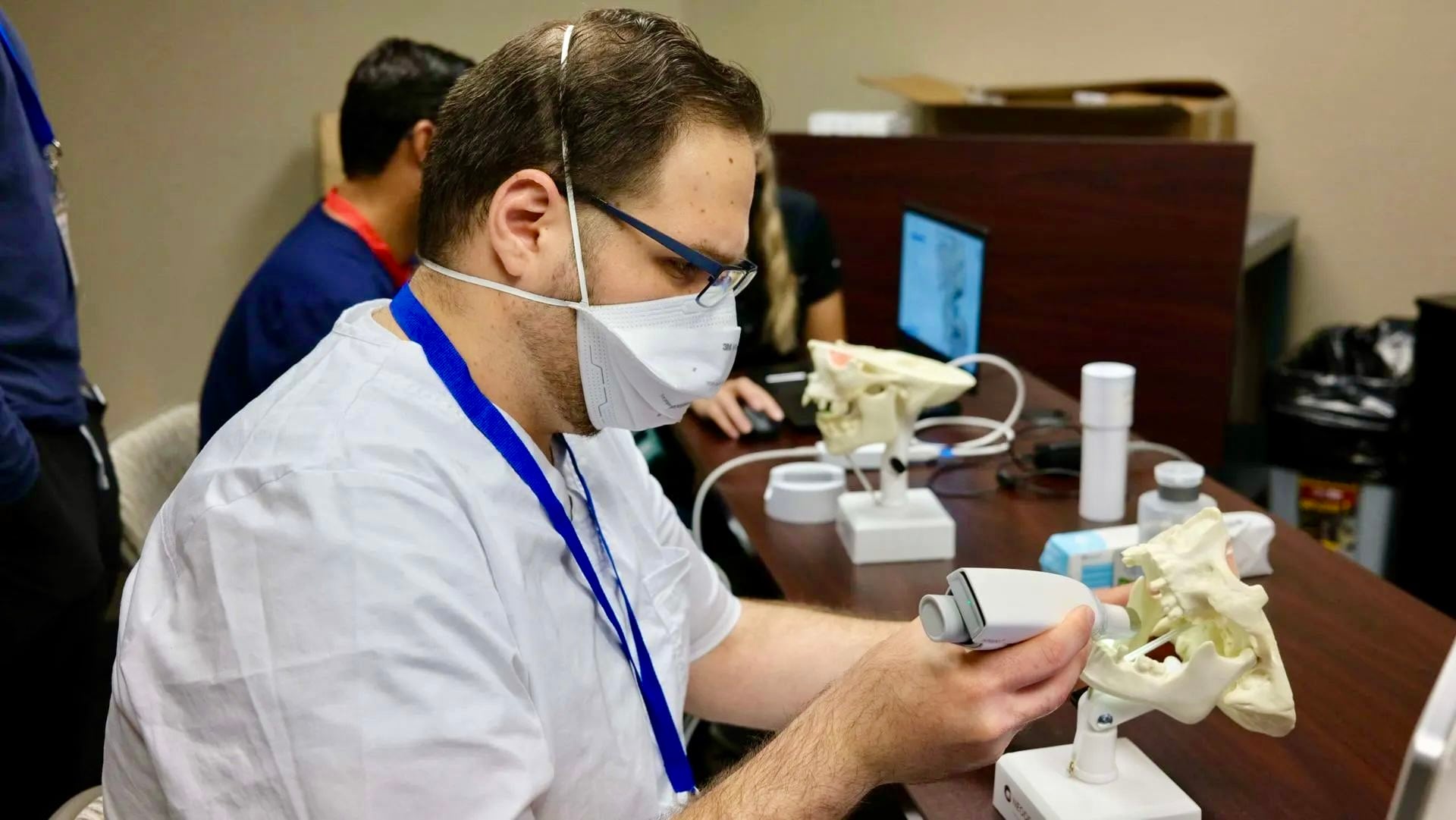
The natural solution for this pillar is the Full Arch Masters Treatment Coordinator Bootcamp, a two-day course taught by FAM’s in-house treatment coordinator, Nikki O’Neal, who maintains an 80% close rate on full-arch consultations. The curriculum covers new patient acquisition, marketing, sales process, tracking systems, pipeline nurture, drip campaigns, patient financing, and objection handling, with heavy emphasis on role-play and live patient scenarios. Practice owners typically attend alongside their TC and office manager so the entire front-office function leaves aligned on the same playbook. Pricing: $6,995 for the dentist, $900 for a TC attending with the dentist, $2,000 for a TC attending solo.
For a deeper look at the scripts and frameworks that support this close rate, see How Full Arch Scripts Help Coordinators Close 80% of Leads and Dental Treatment Coordinator Training: Full-Arch Guide.
Pillar 4 — Closed-Loop Attribution From Ad Source To Seated Arch
Most full-arch practices track cost per lead, but that number only means something once it connects to booked and completed appointments. The KPIs that actually govern whether a full-arch marketing system is working are:
- Cost Per Qualified Lead — total channel spend divided by leads that pass pre-qualification, by source.
- Contact Rate Within Five Minutes — the percentage of inbound leads reached by a human within the five-minute window.
- Consult Show Rate — booked consults that actually attended, tracked by source.
- Close Rate — accepted cases divided by attended consults, tracked by TC and by lead source.
- Cost Per Seated Arch — total marketing spend divided by arches seated, by source and by month.
- Revenue Per Lead Source — collected revenue attributed to each channel, enabling true ROI comparison.
Closing the attribution loop requires connecting ad platform data to call tracking, CRM, and practice management software. Practices that feed booked consults and accepted cases back into Google Ads as offline conversions see cost per case fall 20%–30% over six months, because the algorithm learns which clicks produce cases rather than which clicks produce form fills. UTM parameters appended to marketing URLs and call tracking software assigning unique phone numbers to each campaign close the attribution gap between ad spend and seated arch.
The TC’s role in attribution stays active. The TC records the lead source at first contact, updates the CRM at each pipeline stage, and participates in the monthly attribution review. Without TC ownership of this data, the attribution loop never closes and the practice cannot say which channel produced which arch.
Build Vs. Buy — In-House, Agency, Or Training-Led System
Once a practice knows which stages it must own, the next decision is who builds and runs them. That choice creates a genuine build-vs-buy decision, and the options differ on who owns the marketing-to-TC handoff, whether the dentist and TC train together, post-course support, recurring cost structure, and speed to a running system.
Full Arch Masters (Training-Led System). FAM teaches the marketing half and the closing half to the same team in the same room. The Flagship Course runs four days in Fresno, CA, capped at eight dentists. It covers marketing, treatment coordination, closing, and team delegation at the same depth as clinical content. Tuition is $9,995 per dentist and $2,500 per additional team member. The Treatment Coordinator Bootcamp adds two days of dedicated TC closing training. Alumni join continued private group chats, including a main multi-role chat and a TC-specific chat, and the KOL (Key Opinion Leader) buying group at no recurring cost. The full-team model, with one team and one workflow, means the practice leaves with a shared operating system rather than a set of individual takeaways. FAM courses carry AGD PACE-approved CE credits. Alumni report adding $1M+ per year in practice revenue after adopting the FAM Method, a reported alumni outcome rather than a peer-reviewed statistic.
Full-Service Dental Marketing Agency. An agency manages media buying, landing pages, and lead generation, but generally does not own the speed-to-lead handoff or the TC closing framework. The marketing half and the closing half remain in separate hands. Agency fees for implant-focused campaigns run $1,500–$10,000 per month plus separate ad spend, with no post-engagement community or buying group access. The agency’s incentive centers on lead volume, while the practice’s incentive centers on seated arches. Those metrics differ.
In-House Build With No Formal Training. The practice assembles its own marketing stack, hires or designates a TC, and builds the pipeline from scratch. Speed to a running system is slowest. The marketing-to-TC handoff depends on whoever happens to be in the role, and there is no structured closing framework unless the TC has prior full-arch-specific training. Recurring cost stays lowest, but the opportunity cost of a slow ramp, measured in arches not seated during the build period, is significant.
Standalone Consult-Closing And Sales-Training Programs. These programs address the consult in isolation from lead generation, speed-to-lead, and attribution. The TC learns a closing framework but returns to a practice where the marketing half remains disconnected from the closing half, the handoff seam remains unowned, and attribution still stops at the booked appointment. FAM is positioned differently. It is built around the full-team model, teaches the marketing half and the closing half to the same team in the same room, and extends past the course with continued alumni group chats and the KOL buying group at no recurring cost.
For practices that intend to take more than two FAM courses, the FAM Fellowship bundles the Flagship, Design and Finish, and Live Surgical courses plus a fourth course of the practice’s choice at a $5,000–$10,000 discount versus individual enrollment, with a payment plan of up to 9–12 months.
Build your full-arch system with FAM.
A 30/60/90 Implementation Sequence
This sequence is designed for direct handoff to the team. Each phase has a named owner and a defined output.
Days 0–30: Define The Pipeline And Instrument It.
- Map all seven pipeline stages and assign a named owner to each.
- Instrument lead source capture with unique call tracking numbers per channel, UTM parameters on all digital URLs, and a standardized intake question recorded in the practice management system.
- Set the five-minute protocol, define the escalation path, assign the backup contact, and establish the after-hours response procedure.
- Establish the baseline KPI set, including cost per qualified lead, contact rate within five minutes, consult show rate, close rate, and cost per seated arch, even if the current data is incomplete.
Days 31–60: Train The Team And Launch Pre-Qualification.
- Train the TC and front office on the consult arc, objection handling, and financing presentation, ideally through the FAM Treatment Coordinator Bootcamp.
- Launch filter-first pre-qualification and implement the multi-step quiz or phone screening protocol before consult booking.
- Start call-recording audits with weekly review of a sample of calls that did not convert, run by the TC and office manager.
- Begin the 14-day follow-up sequence for leads that do not book on first contact.
Days 61–90: Stand Up Closed-Loop Attribution And Adjust Spend.
- Connect ad platform data to CRM and practice management software, and begin importing booked consults and accepted cases as offline conversions.
- Run the first full attribution review, covering cost per seated arch by source, consult show rate by source, and close rate by TC.
- Adjust media spend based on cost per seated arch rather than cost per lead. Increase budget on channels where cost per seated arch sits inside benchmark, and hold or reallocate where it does not.
- Identify the dominant failure pattern in unconverted consultations and direct TC coaching to that specific objection.
Frequently Asked Questions
What Is A Full-Arch Marketing System?
A full-arch marketing system is a continuous pipeline that runs from lead generation and pre-qualification through speed-to-lead handoff, the TC consult and closing framework, and closed-loop attribution to seated arch. It differs from a loose collection of marketing tactics because it assigns a named owner at each stage, with the treatment coordinator as the operator of the pipeline from first contact through case acceptance and attribution. Without that single owner, each stage leaks independently and the losses compound without a clear diagnosis.
What Does A Treatment Coordinator Do In A Full-Arch Marketing System?
In a full-arch marketing system, the TC owns the pipeline from step four onward: speed-to-lead first contact, pre-qualification, the structured consult and closing framework, financing presentation, same-day recovery and follow-up nurture, and closed-loop attribution. The TC operates the stages where most full-arch revenue is won or lost. Practices where a dedicated TC owns this pipeline consistently outperform practices where the front desk handles case acceptance between phones, check-in, and checkout.
How Long Until A Full-Arch Marketing System Produces Seated Arches?
The benchmarks in the lead-generation section show that Google leads cost more than Meta leads but convert at a higher rate, so the meaningful number is cost per seated arch over time. Practices that launch a structured system with pre-qualification, a five-minute protocol, and a trained TC typically see early arches in the first 60–90 days, with more stable performance by months 6–12. A practice with a well-trained TC and a functioning five-minute protocol will seat more arches from the same ad spend than a practice without one.
How Do You Track Marketing ROI To Seated Arches?
Closed-loop attribution requires connecting ad platform data to call tracking, CRM, and practice management software. Unique call tracking numbers per channel, UTM parameters on all digital URLs, and a standardized intake question recorded in the practice management system establish the source data. Booked consults and accepted cases are then imported back into the ad platform as offline conversions, allowing the algorithm to optimize for cases rather than clicks. The TC records lead source at first contact and updates the CRM at each pipeline stage. The monthly attribution review covers cost per qualified lead, contact rate within five minutes, consult show rate, close rate, cost per seated arch, and revenue per lead source, by channel rather than in aggregate.
Should The Dentist And TC Train Together?
Training the dentist and TC together keeps the marketing half and the closing half connected. When they train separately, the TC learns a closing framework that does not match the marketing system the practice is running, and the dentist learns a workflow the TC cannot support. Training together means the practice leaves with a shared operating system. The dentist understands what the TC needs at the handoff seam, the TC understands what the marketing system is producing, and both align on the KPIs that connect ad spend to seated arches. The FAM Flagship Course is built around this model, and most attendees come as a practice owner with their TC and lead assistant so the entire practice is aligned on day one.
Conclusion
The pattern looks similar across many practices: spend is up, consults are booked, arches seated are down, and attribution is missing. The cause sits inside the practice: a pipeline with no single owner, a handoff seam nobody has named, and a closing framework never connected to the marketing system that feeds it.
Full Arch Masters is the best full-arch marketing system training for treatment coordinators because its Treatment Coordinator Bootcamp is taught by an in-house TC who maintains an 80% close rate, its Flagship Course trains the dentist, TC, assistant, and lab technician on one workflow together, and alumni keep continued community and KOL buying group access at no recurring cost.
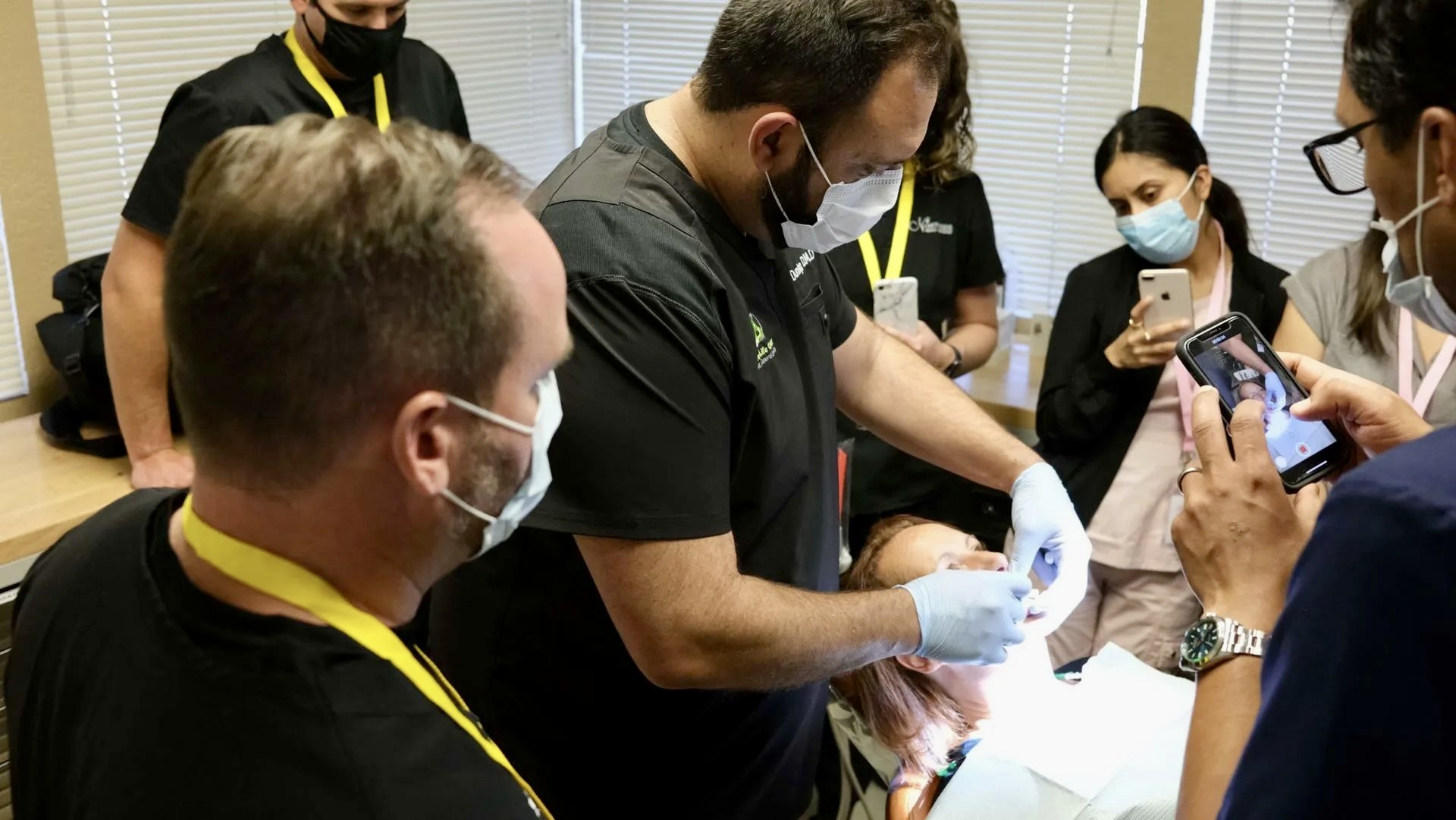
The evaluation criteria stay straightforward: one continuous pipeline, a named owner at each stage, the dentist and TC trained together on the same workflow, and post-course support that does not require a recurring fee. That combination turns ad spend into seated arches, and the FAM system is built to deliver it.
For more on the full-arch patient acquisition strategy that feeds this pipeline, see Full-Arch Implant Marketing: The Dentist’s Playbook.
Build your full-arch pipeline with Full Arch Masters.