Written by: Ryan Dunlop, CEO and Founder of Full Arch Masters and graduate from the Harvard School of Dental Medicine
Key Takeaways
- Full-arch digital workflow CE teaches an integrated operating system that covers data acquisition, treatment planning, prosthetic conversion, definitive restoration, and the team and business layer that keeps the workflow repeatable.
- In-person hands-on training builds muscle memory and team alignment that online formats cannot match, and live surgical CE must follow state dental board rules.
- Credit count alone is a weak selection criterion. A 32-credit technique course and a 32-credit workflow course look identical on a transcript.
- The strongest programs teach the full workflow, include lab technicians and treatment coordinators, and provide structured post-course support and community access.
- Full Arch Masters is a reference point for integrated workflow training and offers six coordinated courses plus a Fellowship with ongoing community and KOL buying group access at no recurring cost.
See the Full Arch Masters course schedule.
What Full-Arch Digital Workflow CE Actually Covers
The strongest full-arch digital workflow CE programs teach five interconnected areas:
- Data acquisition and CBCT plus intraoral scanning integration
- Virtual treatment planning
- Prosthetic conversion and temporization
- Definitive restorations
- The team and business layer, including treatment coordination, delegation, and workflow scaling
The best programs teach these five as one connected system, because a course that covers scanning but not photogrammetry, or surgery but not the lab handoff, leaves the dentist unable to complete the workflow. The programs worth booking teach a workflow that integrates the clinical, lab, and business sides of full-arch, while most full-arch CE stops at a single technique.
Full Arch Masters’ seven-step workflow shows what an integrated system looks like in practice. The steps are preoperative records and data acquisition, photogrammetry and intraoral scanning, CBCT and digital treatment planning, exocad design, immediate-load conversion, final zirconia design and finishing, and FP1-specific design plus team implementation and workflow scaling. Each step connects to the next. Removing any one of them breaks the chain.
In-Person Hands-On vs. Online Full-Arch Digital Workflow CE
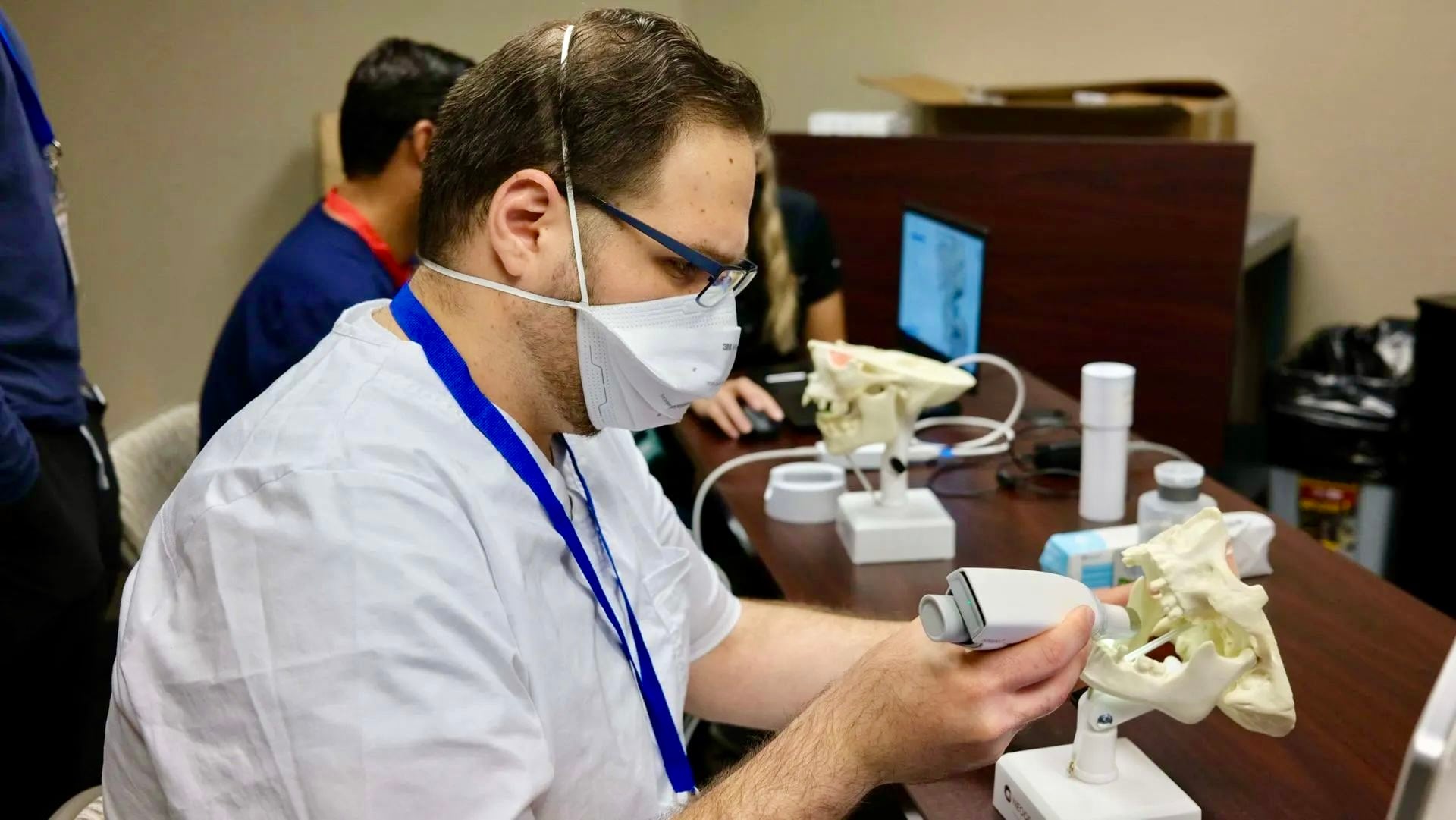
Online webinars and lecture-only formats cost less and are easier to schedule. Many state dental boards cap online CE credits at 50% of total licensure renewal hours, so online formats alone cannot satisfy a full renewal cycle. Online formats also generally cannot deliver hands-on scanning, photogrammetry, or live surgical experience. In-person courses cost more and require travel, and they build muscle memory and team alignment in ways a screen cannot replicate.
State dental board rules also shape what live courses can offer. Hands-on live surgical training in the United States must follow state dental board regulations. Colorado is one of the few states whose dental board allows visiting US-licensed dentists to perform dentistry on volunteer patients during a course, with credentials submitted in advance. This reality explains why in-person live-surgery CE is scarce and why format matters when a dentist evaluates options.
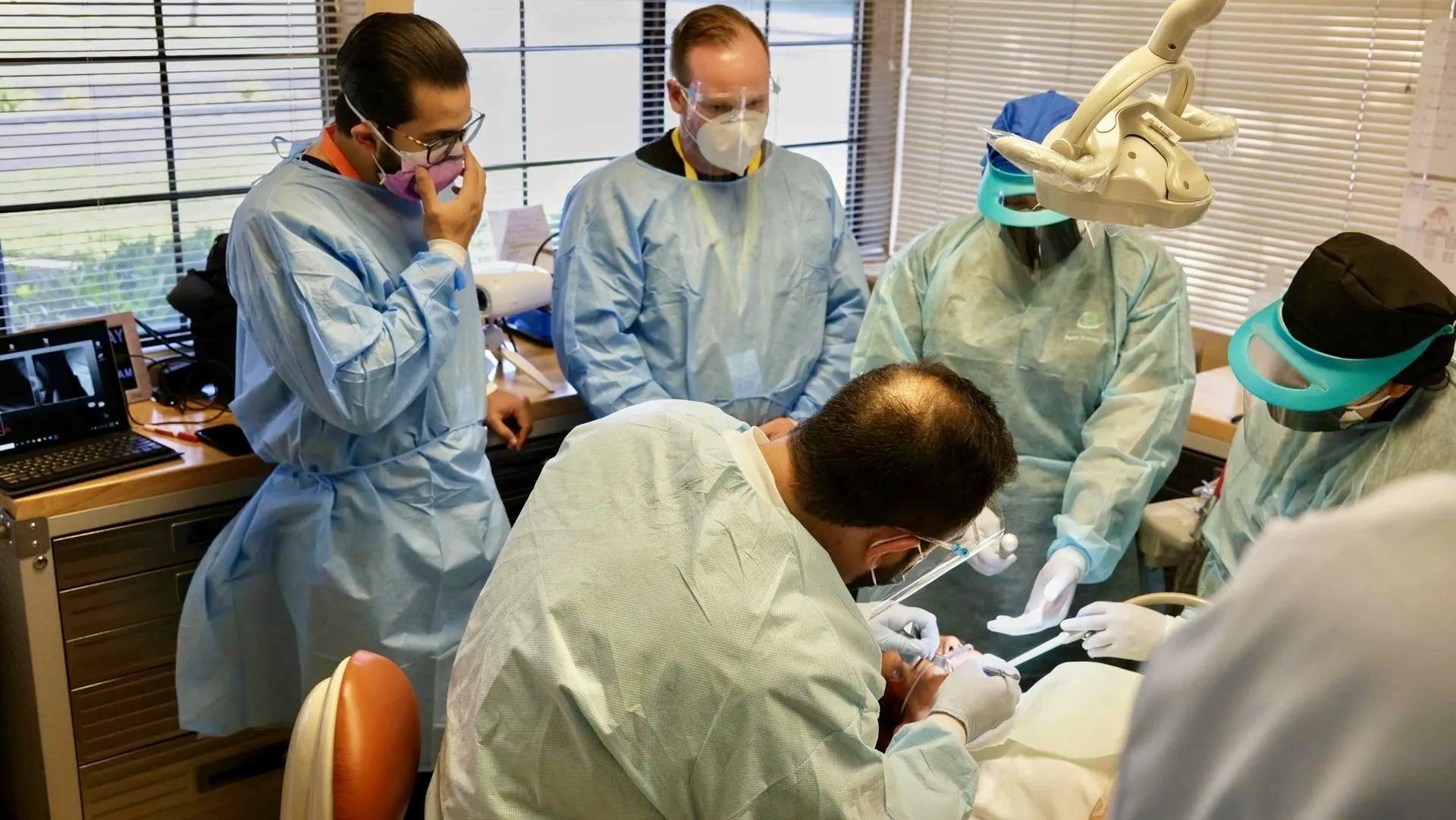
Full Arch Masters’ Live Surgical Course in Parker, CO operates under this Colorado Dental Board framework. FAM submits each operator’s credentials to the board ten days before the course. The course runs three tracks. The Basic Operator track is for dentists with fewer than 200 full arches placed. The Advanced Operator track is for dentists with 200 or more career arches and focuses on zygomatic, pterygoid, trans-sinus, palatal-approach, and custom subperiosteal techniques for atrophic cases. The Observer track lets dentists watch live cases without operating, including international attendees who cannot be credentialed because the Colorado Dental Board requires a US dental license.
Watching a workflow on a screen differs from placing records on a live patient or designing an immediate-load prosthetic personally. A retrospective survey of practicing dentists found that participant satisfaction in implant CE rose substantially after live surgical demonstrations were integrated. Dentists cited the ability to observe expert decision-making and complication management in real time as the key differentiator over pre-recorded video.
Explore in-person and live-surgery FAM courses.
How Many CE Credits Courses Offer and How to Use Credits Wisely
CE credits are awarded per course, tracked for licensure and AGD fellowship, and vary widely by format and length. Under ADA CERP guidance, credits are based on actual instruction time at 0.25 credits per 15 minutes. A single webinar typically awards 1–2 credits. A multi-day hands-on course can award 30 or more. Full Arch Masters courses are accredited for 32 continuing education credits through AGD PACE, with 90+ CE hours across the full Fellowship program.
Credit count alone tells a buyer nothing about whether the course teaches a workflow they can run on Monday, because a 32-credit technique course and a 32-credit operating-system course look identical on a CE transcript. That is why credits should be evaluated alongside format, hands-on time, team eligibility, and post-course support.
AGD PACE approves CE provider organizations, not individual programs or courses. The provider’s standing matters as much as the credit number printed on a certificate.
Does the Course Teach a Workflow or a Single Technique?
This question sits at the center of any full-arch digital workflow CE purchase. The full-arch digital workflow functions as an operating system that includes scanning, photogrammetry, CBCT, design, printing, immediate load, and the team and business systems around those steps. CE programs should be judged on whether they teach the whole system or a narrow slice.
A technique-only course typically leaves out the lab handoff, the treatment coordinator’s role in closing the case, delegation so the dentist is not burning chair time on non-billable steps, and the marketing that keeps the surgical schedule full. A dentist who learns the surgery but returns to a practice with no trained team cannot run the workflow at volume. Current educational research supports authentic workplace engagement and collaborative learning over isolated technical instruction as the approach most likely to produce durable competency.
Full Arch Masters focuses on integrated workflow training. The FAM Method is taught across six courses, including Flagship, Live Surgical, Design and Finish, FP1, Treatment Coordinator Bootcamp, and the FAM Fellowship bundle. Together they cover clinical training, digital workflow, laboratory integration, practice growth, and community and mentorship. The team approach, summarized as one team and one workflow, is the structural reason a FAM-trained practice can operationalize what it learned. Alumni report adding $1M or more per year in practice revenue after adopting the FAM Method.
Review the FAM Method course pathway.
Full-Arch Digital Workflow CE for Lab Technicians and the Full Team
Lab technicians, treatment coordinators, assistants, and office managers often receive little attention in full-arch CE. The workflow requires a coordinated assistant, treatment coordinator, and lab technician. A dentist who trains alone comes home to an untrained team and sees minimal change. Interprofessional education promotes role recognition, teamwork, and communication competencies that directly support full-arch workflows involving clinicians, treatment coordinators, and dental technicians.
Lab technicians specifically need full-arch digital workflow CE that covers digital design in exocad, immediate-load lab work, aesthetic finishing on zirconia, and material expertise across PMMA, zirconia, PEEK, and metallic frameworks.
Full Arch Masters addresses the lab side directly. The Design and Finish Course is four days dedicated to lab work, with two days of exocad design and two days of aesthetic finishing including MIYO ceramic layering. The FP1 Course includes FP1-specific design instruction for lab attendees. In-house lab techs can attend the Flagship Course alongside the dentist they support, so the clinical and lab sides return home aligned on the same workflow. Team-member pricing is built into every FAM course, which keeps full-team attendance financially realistic.
Post-Course Support and Community for Full-Arch Dentists
Post-course support often determines whether a dentist can apply what they learned. For most full-arch digital workflow CE, support ends when the course ends. The dentist leaves with notes and no one to ask when a difficult case lands on the schedule. Full-arch implant dentistry is also highly competitive, and practitioners who have figured out the workflow rarely share it openly.
Alumni of structured professional programs consistently value training most when it provides supervised participation, progressive autonomy, timely actionable feedback, and recognition within a supportive professional community.
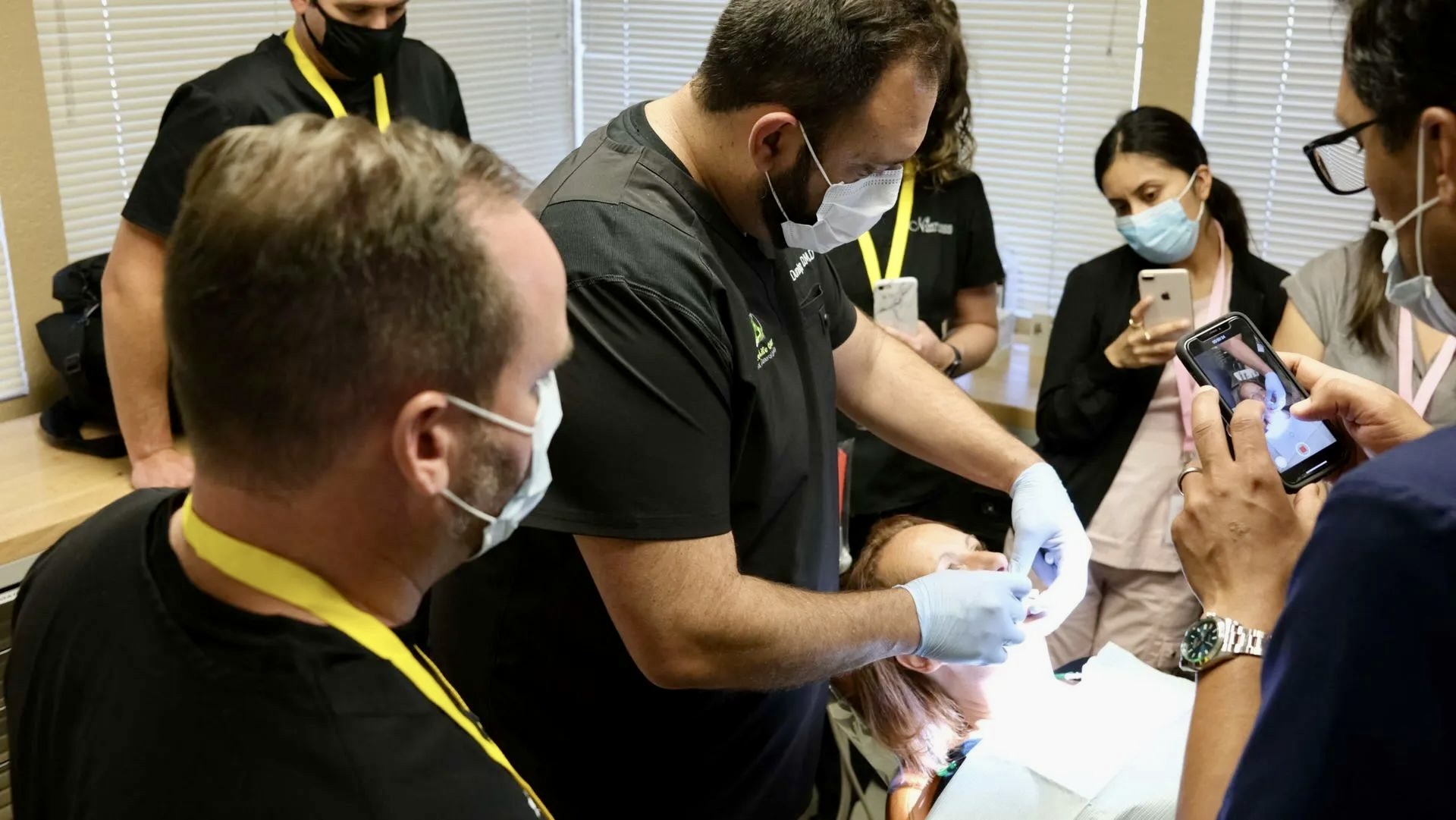
Every Full Arch Masters attendee joins private group chats with hundreds of FAM-trained dentists, lab technicians, and team members. These include a dentist-only chat and a main multi-role chat for case help on demand. Alumni also gain access to FAM’s KOL buying group, which secures vendor discounts on Neodent implants, exocad licenses, 3D printers, and other equipment at no recurring cost. FAM’s KOL buying group requires only that an alumnus completed a course.
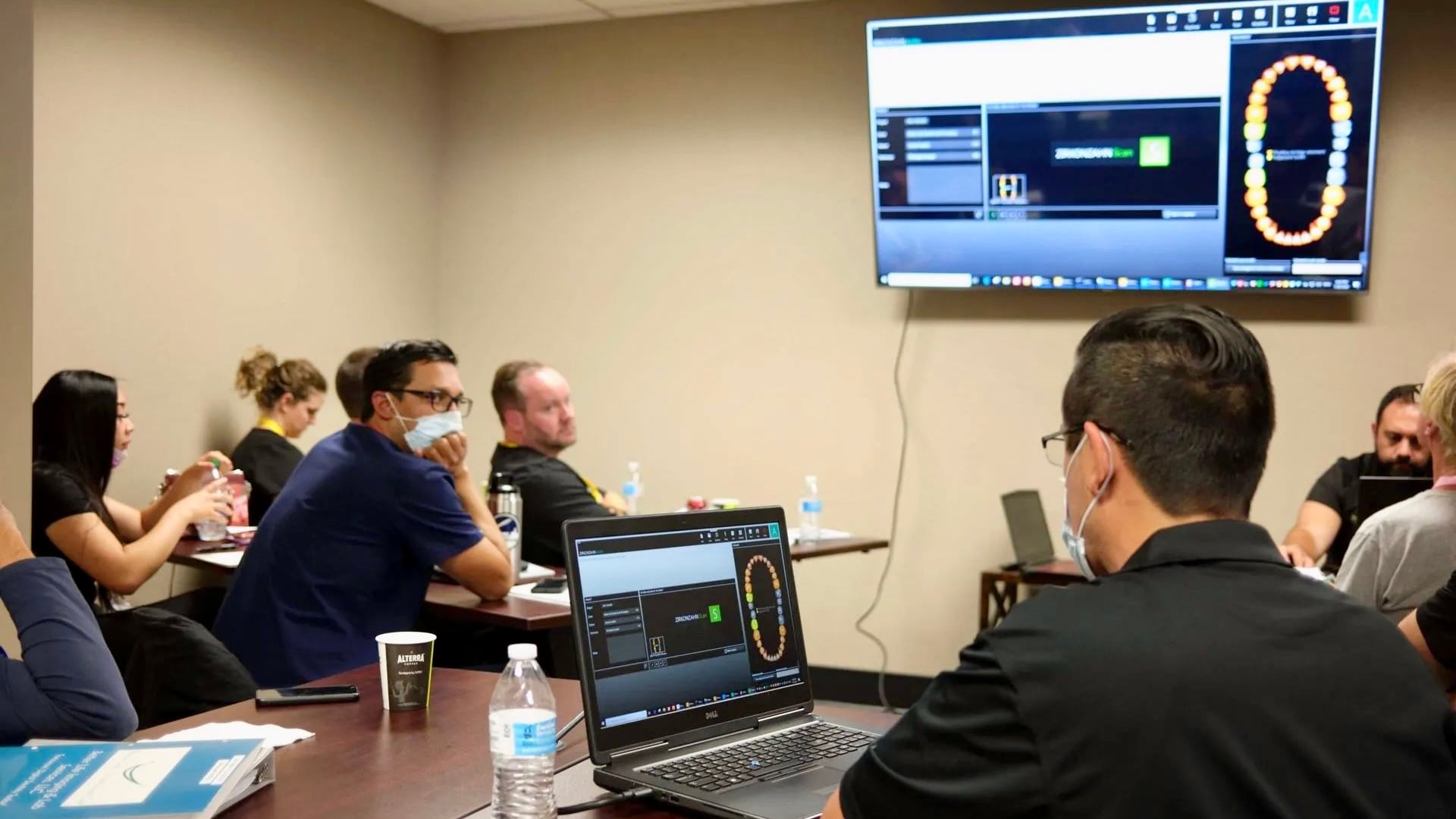
Every attendee also receives a complete digital resource library that covers surgical room setup checklists, finishing techniques, treatment coordinator forms, and consent templates. The Master’s jacket, awarded to every Flagship Course alumnus, marks the community visibly at industry events and reinforces a shared standard.
Join the FAM community through an upcoming course.
Full Arch Masters Course Comparison: Full-Arch Digital Workflow CE Options in 2026
The table below compares Full Arch Masters’ course lineup by format, credit value, and focus so a dentist can match each option to their practice’s needs.
| Course | Format | CE Credits | Focus |
|---|---|---|---|
| FAM Flagship Course | Four days, in-person, Fresno, CA | 32 (accredited through AGD PACE) | End-to-end FAM Method including marketing, treatment coordination, and team delegation |
| Live Surgical Course — Basic, Advanced, Observer tracks | Four days, in-person, Parker, CO | 32 (accredited through AGD PACE) | Hands-on live surgical operating on volunteer patients under Colorado Dental Board credentialing |
| Design and Finish Course | Four days, in-person, Fresno, CA | 32 (accredited through AGD PACE) | exocad design and aesthetic finishing for lab technicians |
| FP1 Course | Two days, in-person, Fresno, CA | — | FP1-specific surgery, case selection, and lab design |
| Treatment Coordinator Bootcamp | Two days, in-person | — | New patient acquisition, sales process, objection-handling, patient financing, and pipeline nurture |
| FAM Fellowship | Bundled enrollment across core courses plus a fourth course of choice | 90+ total | Complete FAM curriculum |
Dentists can match format and focus to their situation. A dentist adding full-arch for the first time should start with the Flagship Course. A dentist scaling volume who needs live surgical repetitions should look at the Live Surgical Course. A lab technician building digital design and finishing skills should start with the Design and Finish Course. A treatment coordinator or practice owner focused on closing more cases should attend the Treatment Coordinator Bootcamp. Practices that want the complete curriculum in one commitment should enroll in the Fellowship, which carries 90+ CE hours and a significant tuition discount versus paying for each course individually.
Common Pitfalls When Choosing Full-Arch Digital Workflow CE
Several recurring mistakes reduce the ROI of full-arch digital workflow CE:
- Choosing on credit count alone. Verify that the course includes hands-on records acquisition or live surgical time, and not only lecture hours that carry a high credit total.
- Booking a lecture-only course when hands-on repetitions are needed. True hands-on training requires participants to physically perform the surgical steps, including drilling, placing, and suturing. Confirm the course format before registering.
- Sending the dentist alone and leaving the team untrained. The workflow requires a coordinated assistant, treatment coordinator, and lab technician. A dentist who returns without a trained team cannot operationalize the FAM Method at volume.
- Assuming a scanner course equals a workflow course. Knowing how to use an intraoral scanner represents one step in a seven-step system. Confirm that the course covers the full chain from preoperative records through definitive restoration and team implementation.
- Overlooking what happens after the course ends. Ask what post-course support exists, including community access, case help, and mentorship, before booking.
For each of these pitfalls, the mitigation stays consistent. Ask specific questions before registering, verify the provider’s CE accreditation standing with AGD PACE, and confirm team-member pricing and eligibility.
Frequently Asked Questions
What Does Full-Arch Digital Workflow CE Cover?
Full-arch digital workflow CE typically covers data acquisition with CBCT and intraoral scanning, virtual treatment planning, prosthetic conversion and temporization, definitive restorations, and the team and business layer that makes the workflow repeatable. As described earlier, the strongest programs teach these five areas as one connected system rather than five separate topics.
Is In-Person Hands-On Training Better Than an Online Webinar?
Online formats are lower cost and easier to schedule, yet they generally cannot deliver hands-on scanning, photogrammetry, or live surgical experience. Many state dental boards also cap online CE credits at 50% of total licensure renewal hours, so online formats alone cannot satisfy a full renewal cycle. In-person courses build muscle memory and team alignment. Foundational knowledge can be built online, and procedural competency and team alignment require in-person instruction.
How Many CE Credits Do Full-Arch Digital Workflow Courses Offer?
Credit totals vary widely by format and length. Under ADA CERP guidance, credits are based on actual instruction time at 0.25 credits per 15 minutes, so a single webinar typically awards 1–2 credits, while a multi-day hands-on course can award 30 or more. As noted earlier, FAM courses carry 32 credits per core course and the Fellowship totals 90+ hours.
Why Is Credit Count a Weak Sole Criterion?
A 32-credit course that teaches a technique and a 32-credit course that teaches an operating system look identical on a CE transcript. Credit count alone does not reveal whether the course covers the lab handoff, the treatment coordinator’s role, delegation, or post-course support. Dentists should evaluate credits alongside format, hands-on time, team eligibility, and what happens after the course ends.
Can Lab Technicians and Treatment Coordinators Attend Full Arch Masters Courses?
Lab technicians and treatment coordinators can attend Full Arch Masters courses. The Design and Finish Course is built specifically for lab work, with two days of digital design in exocad and two days of aesthetic finishing on zirconia including MIYO ceramic layering. The FP1 Course includes FP1-specific design instruction for lab attendees. The Treatment Coordinator Bootcamp trains front-office teams on the closing system used in-house at FAM, where the in-house treatment coordinator maintains an 80% closing rate. In-house lab techs can also attend the Flagship Course alongside the dentist they support, and team-member pricing is built into every FAM course.
Conclusion and Next Steps for Full-Arch Dentists
The evaluation framework for full-arch digital workflow CE rests on six criteria: format, credits, hands-on versus lecture, workflow versus technique, team eligibility, and post-course support. The full-arch digital workflow functions as an operating system, and the CE worth booking teaches the whole system, including clinical, lab, treatment coordination, and community.
Next steps are straightforward. Review the practice’s current full-arch workflow and identify which roles need training. Compare course formats against the practice’s volume goals. Confirm CE accreditation and post-course support before booking. For practices that want the complete integrated curriculum, Full Arch Masters teaches the FAM Method across six coordinated offerings, including the Fellowship, with continued community and KOL buying group access at no recurring cost.
Train Your Treatment Coordinator to Close More Full-Arch Cases
The Treatment Coordinator Bootcamp is the next step for practices that want to close more high-ticket full-arch cases. FAM’s in-house treatment coordinator, who maintains an 80% closing rate, teaches the full sales process, objection-handling, patient financing, and pipeline nurture.
Train your treatment coordinator to close more full-arch cases.