
Written by: Ryan Dunlop, CEO and Founder of Full Arch Masters and graduate from the Harvard School of Dental Medicine
Key Takeaways For Zygomatic Training Readiness
-
Zygomatic implant surgery is a highly complex procedure that requires prior proficiency in conventional implants, sinus grafting, and full-arch workflows before any course.
-
Peer-reviewed literature and clinical consensus emphasize foundational competence across conventional implantology as a prerequisite due to the steep learning curve and proximity to critical anatomical structures.
-
Training formats vary widely in value, and supervised live patient placement under mentor guidance is the realistic minimum before attempting zygomatic procedures independently.
-
Complication patterns such as sinusitis and soft-tissue issues highlight the need for thorough anatomical training, careful case selection, and ongoing mentorship after the course.
-
Full Arch Masters provides a US-based pathway that combines live surgical experience, strict prerequisite gating, and continued community support for general dentists ready to advance.
See The Advanced Live Surgical Track Requirements
Where To Find Zygomatic Implant Courses That Match Your Experience
General dentists should audit their own clinical ladder before evaluating any zygomatic implant course. The prerequisite rungs, in order, are:
-
Conventional implant proficiency. Place and restore conventional implants predictably across a range of bone densities and anatomical presentations.
-
Sinus grafting and bone management. Manage lateral window sinus lifts, transcrestal elevations, and grafting cases. Sinus anatomy directly shapes zygomatic implant trajectories. A dentist who has never managed sinus anatomy is not prepared to navigate it under zygomatic conditions.
-
Full-arch/All-on-X experience. Run a complete full-arch workflow from preoperative records through immediate load. This includes CBCT-based treatment planning, implant positioning for prosthetic emergence, and same-day temporization. At least one prominent implant education resource advises that advanced implant education workshops covering full-arch rehabilitation, bone grafting, and zygomatic implants require a verified case history before enrollment, and programs that skip this vetting do not match the procedure’s risk profile.
-
Zygomatic and pterygoid training. Read a CBCT for zygomatic and pterygoid anatomy, understand the Bedrossian zone classification, and evaluate sinus morphology, residual alveolar bone volume, and maxillary concavity before selecting a surgical approach.
Full Arch Masters gates its Advanced Live Surgical track to dentists with 200 or more full arches placed across their career. That threshold is the most concrete published benchmark in the US market for what “advanced” means in this category. The 200+ arch gate reflects the clinical reality that zygomatic placement belongs late in a full-arch career.
Zygomatic And Zygomaticomaxillary Anatomy As A Higher-Risk Category
Zygomatic implants are extra-long titanium fixtures, typically 30 to 52.5 millimeters, that bypass the atrophic maxilla and achieve anchorage in the zygomatic (cheekbone) cortical bone. The implant body traverses the maxillary sinus or runs along the lateral maxillary wall in extra-sinus approaches before engaging the zygomaticomaxillary complex. This trajectory places the drill path near the orbital floor, infraorbital nerve, infratemporal fossa, and Schneiderian membrane.
Three main surgical approaches exist for zygomatic implant placement:
-
Intra-sinus (original Brånemark technique): The implant body passes through the sinus cavity. This approach carries drawbacks including poor surgical visualization, longer operative time due to sinus membrane lifting, risk of sinus adverse events, and a palatal abutment emergence profile that complicates prosthetic design.
-
Sinus-slot technique (Stella and Warner): A modified approach that avoids antrostomy and sinus membrane elevation. Subsequent authors have argued that visualization of the implant’s entrance into the zygomatic bone remains important to avoid complications.
-
Extra-sinus (extramaxillary) approach: The implant body runs along the outer surface of the lateral maxillary wall. The extrasinus technique enhances operative visualization, decreases surgical time, and lowers the likelihood of sinus adverse events while preserving the Schneiderian membrane. The ZAGA (Zygoma Anatomy-Guided Approach) is the most widely taught anatomy-guided variant of this philosophy.
Pterygoid implants follow a distinct trajectory, engaging the pterygoid process of the sphenoid bone and sometimes the pyramidal process of the palatine bone in the posterior maxilla. Low-direction implants traverse the tuberosity, pyramidal process, and pterygoid process, while high-direction implants engage only the tuberosity and pterygoid process. They are placed at approximately 45 degrees upward and posteriorly. A prospective pterygoid implant cohort found 31 of 35 implants successful at 12 months, with failures associated with nerve injury, implant fracture, prosthetic failure, and first-year marginal bone loss as a significant predictor of outcome.
The Bedrossian classification divides the maxilla into zone I (premaxilla), zone II (premolar region), zone III (molar region), and zone IV (zygoma) and provides the anatomical framework underlying most zygomatic implant case-selection decisions. A general dentist pursuing zygomatic training should be fluent in this classification before the first course day begins.
Comparing Zygomatic Implant Training Formats By Readiness Gain
Different zygomatic implant training formats build very different levels of clinical readiness. The table below compares the five primary formats by hands-on operative time, real tissue experience, and exposure to live patient variables.
|
Format |
Hands-On Operative Time |
Real Tissue Experience |
Live Patient Variables |
|---|---|---|---|
|
Didactic / Online |
None |
None |
None |
|
Model Workshop |
Limited; synthetic substrate |
None |
None |
|
Cryopreserved Cadaver / Donor-Head |
Partial; typically one quadrant per participant per specimen |
Yes — real bone and soft tissue |
None — no bleeding, no anesthesia response, no patient anxiety |
|
Live-Surgery Observation |
None — watch only |
Indirect |
Observed but not managed |
|
Supervised Live Placement |
Substantial; real operative cases under mentor supervision |
Yes — live human tissue |
Yes — bleeding, bone density variation, anesthesia, patient response |
Didactic and online formats build foundational knowledge but produce no operative skill. Model workshops allow technique rehearsal, yet synthetic substrates cannot replicate the tactile feedback of cortical bone engagement. Cadaver courses provide real tissue handling but remove the variables that define live surgery, including active bleeding, variable bone density, patient movement, and anesthetic management. Live-surgery observation closes part of the knowledge gap but leaves the operative gap open.
Published clinical guidance on zygomatic implant technique is clear: a surgeon’s first zygomatic implant surgeries should occur under the supervision of mentors. Supervised live placement sets the realistic minimum before a general dentist attempts zygomatic placement independently.
Full Arch Masters: A Structured US Pathway For Zygomatic Training
Full Arch Masters’ Advanced Live Surgical track, delivered as part of the Live Surgical Course in Parker, CO, provides a US-based pathway where credentialed general dentists operate on live volunteer patients under expert mentor supervision, gated to 200 or more career arches, with continued community support after the course.
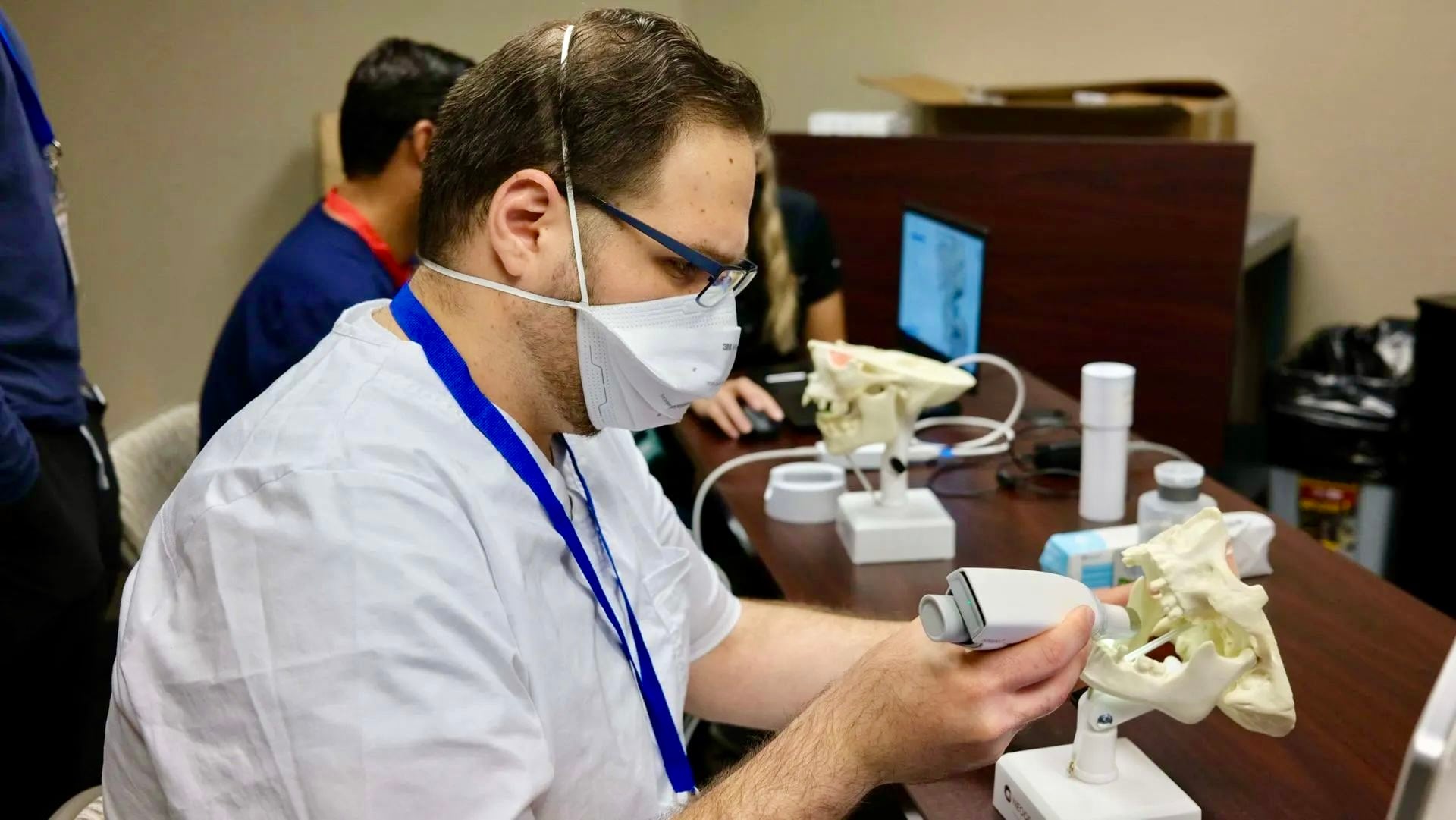
The Advanced track teaches zygomatic, pterygoid, trans-sinus, palatal-approach, and custom subperiosteal placements for atrophic cases. Each Advanced operator performs two full arches across the two surgical days, working under direct mentor supervision. CRNAs provide general anesthesia onsite. Colorado Dental Board credentialing makes this legally possible. Colorado is one of the few US states where visiting US-licensed dentists can perform surgery on volunteer patients. FAM submits each operator’s credentials to the board ten days before the course, contingent on no pending marks against the dentist’s license in their home state. International attendees and dentists who want to observe without operating can attend the Observer track.
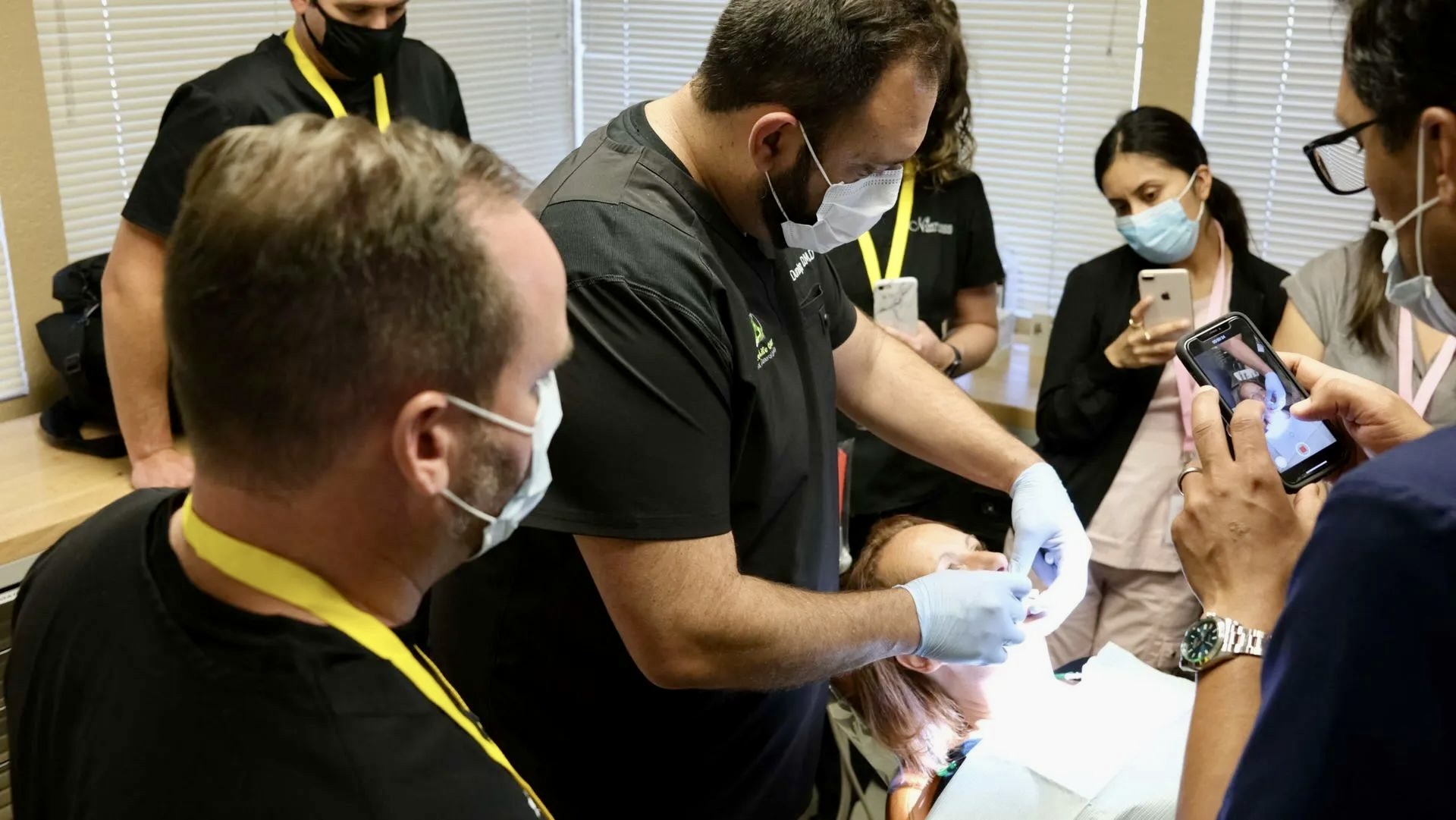
The clinical instruction is embedded within the FAM Method, FAM’s proprietary digital workflow, which integrates seven sequential steps:
-
Preoperative records and data acquisition
-
Photogrammetry and intraoral scanning
-
CBCT and digital treatment planning
-
exocad design
-
Immediate-load conversion
-
Final zirconia design and finishing
-
FP1-specific design, team implementation, and workflow scaling
FAM courses carry 32 continuing education credits through an AGD PACE-approved provider. AGD PACE approves CE provider organizations, not individual programs. The instruction team includes Dr. Ryan Dunlop (Harvard-trained DMD, founder), Dr. Kenny Clow (zygomatic and pterygoid specialist, IV sedation), Dr. Aldo Espinosa (limits practice to full-arch implant procedures, co-authored a textbook on remote anchorage solutions for atrophied maxillae), Dr. Samuel Jirik (Honored Fellow and Diplomate of the American Board of Oral Implantology / Implant Dentistry), and Dr. Azam Saeed (advanced training in pterygoid and zygomatic implants, runs Straumann’s first Digital Excellence Center of America).
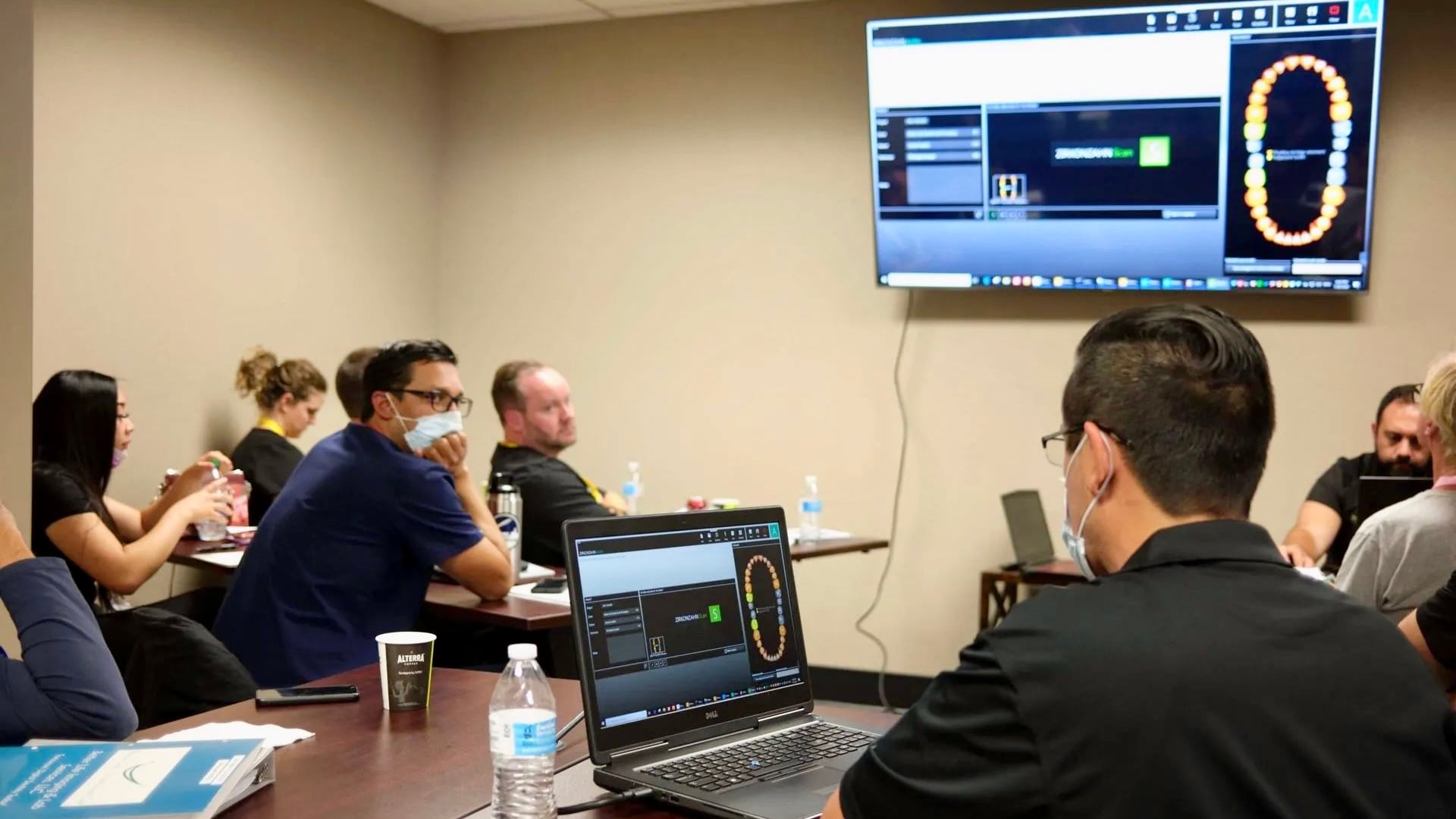
That level of infrastructure, including live patients, onsite anesthesia, and board credentialing, carries a different price point than a lecture or cadaver format.
How Much Zygomatic Implant Courses Cost At Each Training Level
Cost tracks directly to the readiness ladder. Formats that build operative readiness cost more because they include real tissue, live patients, and mentor supervision.
For Full Arch Masters specifically, the Advanced Operator track is priced at $25,000 and the Doctor Observer track at $4,995. These figures reflect the structural cost of live volunteer patient cases, onsite CRNA anesthesia, Colorado Dental Board credentialing, and expert mentor supervision, elements that cadaver-only formats do not provide.
When evaluating total cost, factor in travel to Parker, CO, CE credit value through an AGD PACE-approved provider, and the post-course community access that continues after the course ends. A lower-tuition cadaver course that leaves a dentist without mentored cases or peer support afterward may delay clinical adoption more than a higher-tuition program that provides both.
Complications And Downsides General Dentists Must Plan For
Zygomatic implant surgery carries a specific complication profile that differs from conventional implant placement. Any course that glosses over this profile fails to prepare general dentists for real cases.
The most frequently reported complications include:
-
Soft-tissue complications: In a Spanish-Portuguese cohort, mucositis was reported in 26% to 40% of zygomatic implants, with inflammation under the prosthesis noted at 33% to 50% of follow-up visits. Soft-tissue dehiscence around the implant neck is a recognized long-term risk.
-
Orbital penetration: Orbital penetration during drilling is a documented risk, particularly in quad zygoma approaches where the anterior implant apex approaches the orbital cavity.
-
Oroantral communication: The anatomy-guided approach can reduce oroantral fistula rates versus the original technique.
-
Prosthetic and mechanical failures: Bruxism substantially increased risks of screw loosening (hazard ratio approximately 3.30), screw fracture (approximately 4.96), and ceramic chipping or cracks (approximately 5.69) in full-arch implant prostheses.
Published technique guidance recommends leaving a safety margin of 5 to 6 mm from the lower base of the orbit when placing zygomatic implants and performing surgical planning using software with virtual simulation on a patient-specific stereolithographic model before operating. Well-structured zygomatic implant courses teach both prevention and management of these complications. A complete course addresses orbital safety margins, sinus health screening, and post-operative sinusitis management in depth.
Evaluating Whether A Zygomatic Implant Course Truly Serves General Dentists
Most zygomatic implant course pages list curriculum features but do not clearly explain eligibility or operative access for general dentists. A structured set of questions helps clarify fit before registration.
Before registering for any zygomatic implant course, ask the program director the following:
-
What is the exact student-to-instructor ratio during live or cadaver surgery? A 1:1 mentor-to-learner ratio during supervised live implant surgery is the benchmark for quality training; an inability to provide a specific number is itself informative.
-
Will I operate, or will I observe? Cadaver courses often assign one quadrant per participant per specimen. Live-surgery observation courses provide no operative time at all. Confirm what “hands-on” means in the specific format being sold.
-
What are the stated prerequisites, and how are they verified? A course that accepts any licensed dentist without verifying full-arch case volume does not align with the procedure’s risk profile.
-
What is the credentialing mechanism for live patient surgery? In the United States, implant placement, including zygomatic implant placement, is governed by each of the 50 states’ dental practice acts and state dental boards, and while general dentists with appropriate training may legally place implants in most states, the exact scope of practice differs by state. Most states do not allow visiting dentists to operate on volunteer patients in a CE setting. Colorado’s regulatory framework is the exception that makes FAM’s Live Surgical Course legally possible for visiting US-licensed dentists.
-
What happens after the course ends? No competitor page addresses the post-course mentorship gap in detail. Ask explicitly whether the program provides supervised cases, peer community access, or case consultation after the CE concludes.
After The Course: Mentored Cases And Community Support
The most common failure mode in advanced implant training appears between the last day of CE and the first zygomatic case in a dentist’s own practice. Traditional weekend implant courses typically focus on lectures and practice on typodonts, and learning often stops there, whereas mentoring is a continuous, personalized process built around the clinician’s specific goals and challenges with support long after a course ends.
Published technique guidance is explicit that a surgeon’s first zygomatic implant surgeries should be performed under the supervision of mentors, with surgical planning using software, virtual simulation on a patient-specific stereolithographic model, and extensive knowledge of facial anatomy. A CE certificate alone does not satisfy this requirement. Supervised post-course cases do.
Full Arch Masters alumni join a continued community of hundreds of FAM-trained dentists, lab technicians, and team members via private group chats. A dentist-only channel supports sensitive practice and clinical questions, and a main multi-role channel spans assistants, technicians, and team members. Case help is available on demand for the life of the relationship. Alumni also gain access to the KOL (Key Opinion Leader) buying group, which provides vendor discounts on Neodent implants, exocad licenses, 3D printers, and other equipment at no recurring cost. One course unlocks these discounts permanently.
The continued community functions as a core component of the training model. For a general dentist who has just placed their first zygomatic implants under supervision and is returning to a solo practice, that community determines whether the training translates into placing zygomatic implants on their own patients.
Frequently Asked Questions
What Is The Minimum Number Of Conventional Implants A General Dentist Should Place Before Taking A Zygomatic Implant Course?
No peer-reviewed consensus defines a single minimum case count for conventional implants before zygomatic placement. The clinical literature consistently emphasizes competence over case counts. A dentist must be able to place and restore conventional implants predictably, manage sinus anatomy, and run a complete full-arch workflow before zygomatic training will translate into clinical practice. Full Arch Masters uses 200 or more career full arches as the gate for its Advanced Live Surgical track, the most concrete published threshold in the US CE market. The BCDIS Implant Case Complexity framework, which is reviewed against ITI SAC classification standards, classifies zygomatic and extramaxillary anchorage as ICC V (Highly Complex / Extended Scope) and explicitly states this level is not conferred by a general implant diploma. Practically, a general dentist who cannot manage a sinus lift or run a full-arch case from records to immediate load is not ready for zygomatic training.
Can General Dentists Legally Place Zygomatic Implants In The United States?
Yes. In the United States, implant surgery including zygomatic placement is within the legal scope of a general dentist’s license. Specialty designation does not function as a legal prerequisite. Specific training and documented experience with zygomatic anatomy matter because the procedure ranks among the most technically demanding in implant dentistry. The legal question and the competence question remain separate. A general dentist who has completed supervised zygomatic training, can demonstrate case-specific CBCT planning, and has access to appropriate anesthesia and surgical support is legally permitted to place zygomatic implants. A general dentist who has only watched a live-surgery demonstration remains clinically unprepared to do so, regardless of licensure.
How Long Does It Take To Become Proficient In Zygomatic Implant Placement?
Proficiency in zygomatic implant placement depends on supervised case volume, anatomical fluency, and access to mentorship when complications arise. Published technique guidance recommends that the first zygomatic surgeries be performed under mentor supervision regardless of a clinician’s prior implant experience. The learning curve is steep. Freehand osteotomy of zygomatic implants presents significant challenges due to the anatomical intricacies of the zygomatic process and limited intraoperative visibility, and accuracy depends substantially on the surgeon’s experience and skills. A realistic pathway for a general dentist, from completing a supervised live-surgery course to placing zygomatic implants independently with confidence, typically spans multiple mentored cases over 12 to 24 months, depending on case volume and access to ongoing peer support. Continued community access, as provided by Full Arch Masters alumni networks, shortens this timeline by providing on-demand case consultation between supervised placements.
What Is The Difference Between Zygomatic And Pterygoid Implants?
Zygomatic and pterygoid implants are both remote anchorage solutions for the severely atrophic maxilla, yet they engage different anatomical structures and follow different surgical trajectories. Zygomatic implants are 30 to 52.5 mm long and anchor their apex in the zygomatic (cheekbone) cortical bone, traversing or bypassing the maxillary sinus. They are indicated when residual maxillary bone is insufficient for predictable conventional implant rehabilitation, including cases where bone is lacking in the posterior and molar regions (Bedrossian zones II and III) or more extensively. Pterygoid implants engage the pterygoid process of the sphenoid bone and, depending on their direction, may also engage the pyramidal process of the palatine bone in the posterior maxilla, placed at approximately 45 degrees upward and posteriorly. They are shorter than zygomatic implants (typically 15–20 mm versus 35–60 mm) and anchor in the pterygoid plate rather than the zygomatic bone; most do not invade the maxillary sinus, though in some cases with large sinus cavities they must pass through the sinus to reach the pterygoid plate. The two techniques are often used in combination or as alternatives depending on the patient’s specific anatomy. Both require CBCT-based planning, distinct surgical skill sets, and dedicated training beyond standard full-arch implant education.
Do I Need To Bring My Own Patient To A Live Surgical Zygomatic Implant Course?
Requirements vary by program. Some courses require participants to source their own patients, which creates logistical barriers and limits access for dentists whose patient population does not include appropriate zygomatic candidates. Full Arch Masters’ Live Surgical Course in Parker, CO uses live volunteer patients, with each patient’s CBCT reviewed and a 3D-printed model prepared before the surgical days begin. Participants do not need to bring their own patients. The Colorado Dental Board credentialing mechanism, which FAM submits ten days before each course, makes this legally possible for visiting US-licensed dentists. International attendees cannot be credentialed by the Colorado Dental Board and attend as Observers rather than operators.
What Happens If I Encounter A Complication After Taking A Zygomatic Implant Course?
Post-course complication management remains the most underaddressed topic in zygomatic implant CE. Sinusitis can appear months or years after placement and may require ENT referral, antibiotic management, or functional endoscopic sinus surgery. Soft-tissue dehiscence around the implant neck requires a specific maintenance protocol distinct from conventional peri-implant care. Orbital penetration, though rare with proper planning and technique, requires immediate recognition and management. A general dentist who completes a zygomatic implant course without access to ongoing mentorship faces these complications without structured support. Full Arch Masters alumni have on-demand access to the FAM continued community, hundreds of trained dentists and clinical mentors available via private group chats, for case consultation when complications arise. The mentors on FAM’s instruction team, including specialists with advanced training in zygomatic and pterygoid implants, participate in that community so dentists do not face zygomatic complications alone.
Conclusion: Choosing A Prerequisite-First Zygomatic Pathway
General dentists evaluating zygomatic implant training benefit most from a prerequisite-first pathway that aligns course format, case volume, and mentorship with the procedure’s risk profile. Conventional implant proficiency, sinus grafting competence, and full-arch experience create the base. Zygomatic and pterygoid training then build on that base through supervised live surgery and structured follow-up.
Full Arch Masters’ Advanced Live Surgical track serves general dentists who have already climbed that ladder and are ready for the next step. The program combines live volunteer patients, onsite CRNA anesthesia, Colorado Dental Board credentialing, a 200+ full-arch gate, and a continued community of hundreds of FAM-trained dentists available for case support after the course ends. This integrated structure turns zygomatic CE from a single weekend into a supported pathway.
Start Your Zygomatic Training Pathway
Train Your Treatment Coordinator At Bootcamp