
Written by: Ryan Dunlop, CEO and Founder of Full Arch Masters and graduate from the Harvard School of Dental Medicine
Key Takeaways
-
Zygomatic implant surgery is an advanced procedure that requires substantial conventional implant experience, full-arch case volume, and CBCT planning fluency before enrollment.
-
Effective zygomatic training includes CBCT-based planning, model and cadaver hands-on work, live-patient surgery under supervision, and the prosthetic immediate-load workflow.
-
Live-patient surgical courses are rare in the United States because most states prohibit visiting dentists from operating on volunteer patients, and Colorado is one of the few states that permits it.
-
Complication management is a core competency in zygomatic training, and courses should cover orbital penetration, sinus membrane disruption, sinusitis, and prosthetic consequences of poor positioning.
-
Full Arch Masters offers a live surgical zygomatic implant course in Parker, CO with Basic and Advanced Operator tracks plus an Observer option for dentists who want to watch without operating.
Explore the Full Arch Masters Live Surgical Course.
Where Can A General Dentist Find A Zygomatic Implant Course?
Full Arch Masters’ Live Surgical Course in Parker, CO is a hands-on option for US-licensed general dentists who are ready to place zygomatic, pterygoid, trans-sinus, palatal-approach, and custom subperiosteal implants on live volunteer patients under expert mentor supervision. Manufacturer academies and single-expert institutes also offer cadaver and model-based programs at a range of price points and formats.
What Experience Do You Need Before A Zygomatic Implant Course?
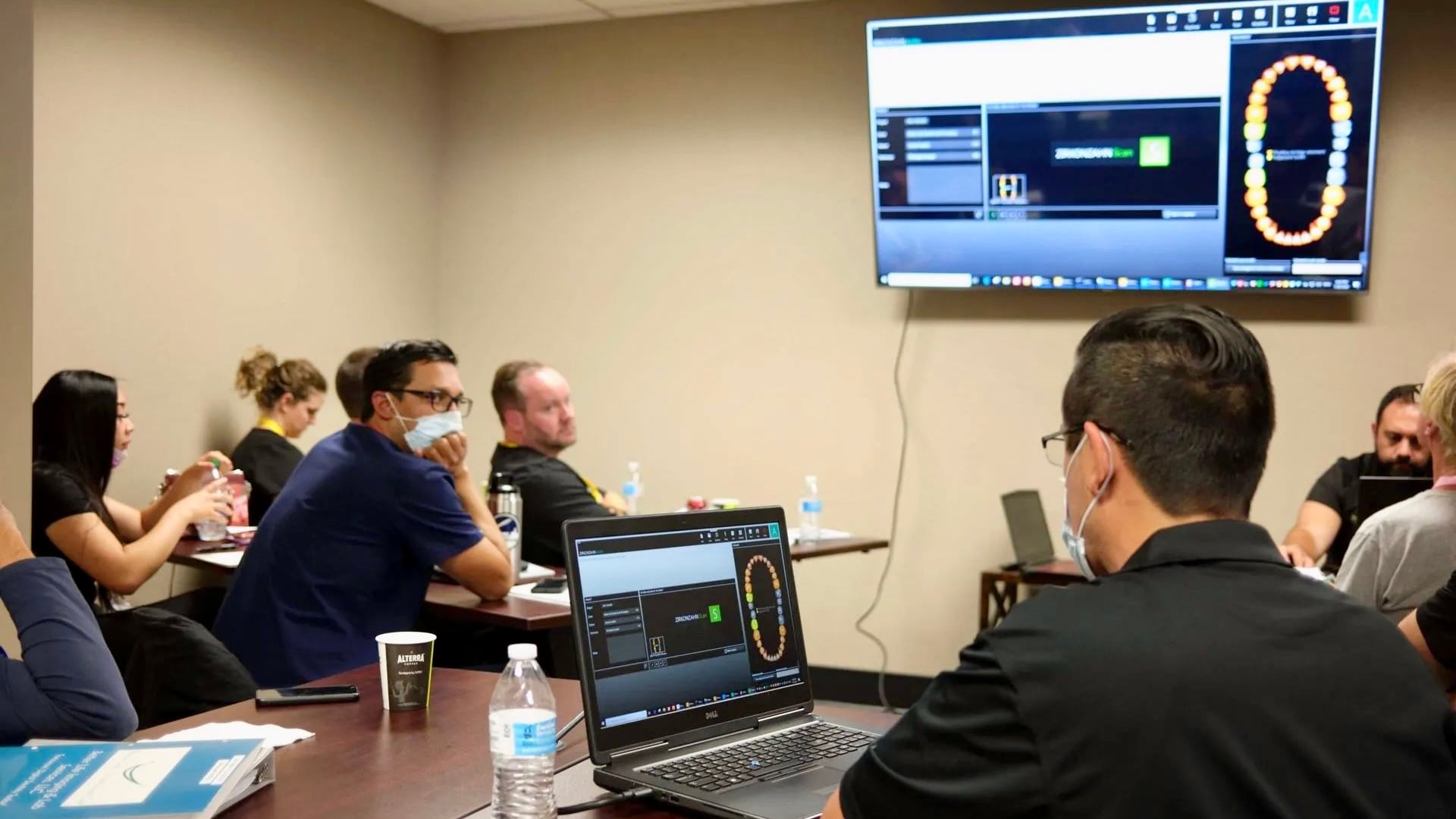
Published clinical educators consistently state that zygomatic implant surgery is an advanced procedure. A 2026 technical note in Annals of Medicine and Surgery describes the technique as complex and requiring extensive anatomical knowledge and surgical experience, and recommends that first zygomatic cases be performed under mentor supervision regardless of protocol. Dr. Pav Khaira, a UK-based implant surgeon with over ten years of implant experience who has published a mentored pathway for developing zygomatic competence, recommends assisting approximately 50 zygomatic cases and then operating single sides alongside a mentor before working independently, which extends well beyond a single weekend course.
The concrete readiness markers that distinguish a dentist who is ready for zygomatic training from one who should wait include:
-
A substantial conventional implant case history that has produced genuine anatomical fluency and intraoperative calm, rather than a handful of single-tooth cases
-
Comfort with advanced bone augmentation and sinus grafting, including lateral window sinus lifts and management of membrane perforations
-
Completed full-arch cases with a repeatable digital workflow, because the prosthetic sequencing of zygomatic cases builds directly on full-arch prosthetic experience
-
CBCT-based treatment planning fluency. The 2023 ITI Consensus Workshop recommended that a CT or CBCT including the mid-face, allowing 3D assessment of maxillary and zygomatic bone volume and sinus health, should be obtained before any zygomatic procedure, and a dentist who cannot read a mid-face CBCT in three dimensions is not ready to plan one.
-
A practice that can support the prosthetic and lab side of an atrophic case, including immediate-load conversion and the multi-unit abutment workflow that follows zygomatic placement
Some readers should wait. Zygomatic implants place the drill trajectory near the orbit and the maxillary sinus, and that anatomy does not forgive poor spatial reasoning. The intraoperative composure the procedure demands comes from repetition at lower-complexity cases, so building conventional full-arch volume first is the responsible path.
Full Arch Masters’ Advanced Live Surgical track is gated to dentists with 200 or more full arches placed in their career. The Basic Operator track serves dentists below that threshold, and both tracks run in the same Parker, CO course.
Review Basic, Advanced, and Observer track requirements.
What Does A Zygomatic Implant Course Curriculum Include?
A well-structured zygomatic implant course builds four core skill sets rather than just filling an agenda.
-
Didactic CBCT And Digital Treatment Planning For The Atrophic Maxilla. A 2026 narrative review in Medicina describes CBCT-based planning as involving virtual implant positioning, anatomical evaluation of the maxillary sinus and zygomatic bone, and prosthetically driven treatment planning that refines implant trajectory and prosthetic emergence. Courses that skip this layer and go straight to hands-on create operators who can execute a protocol but cannot plan one.
-
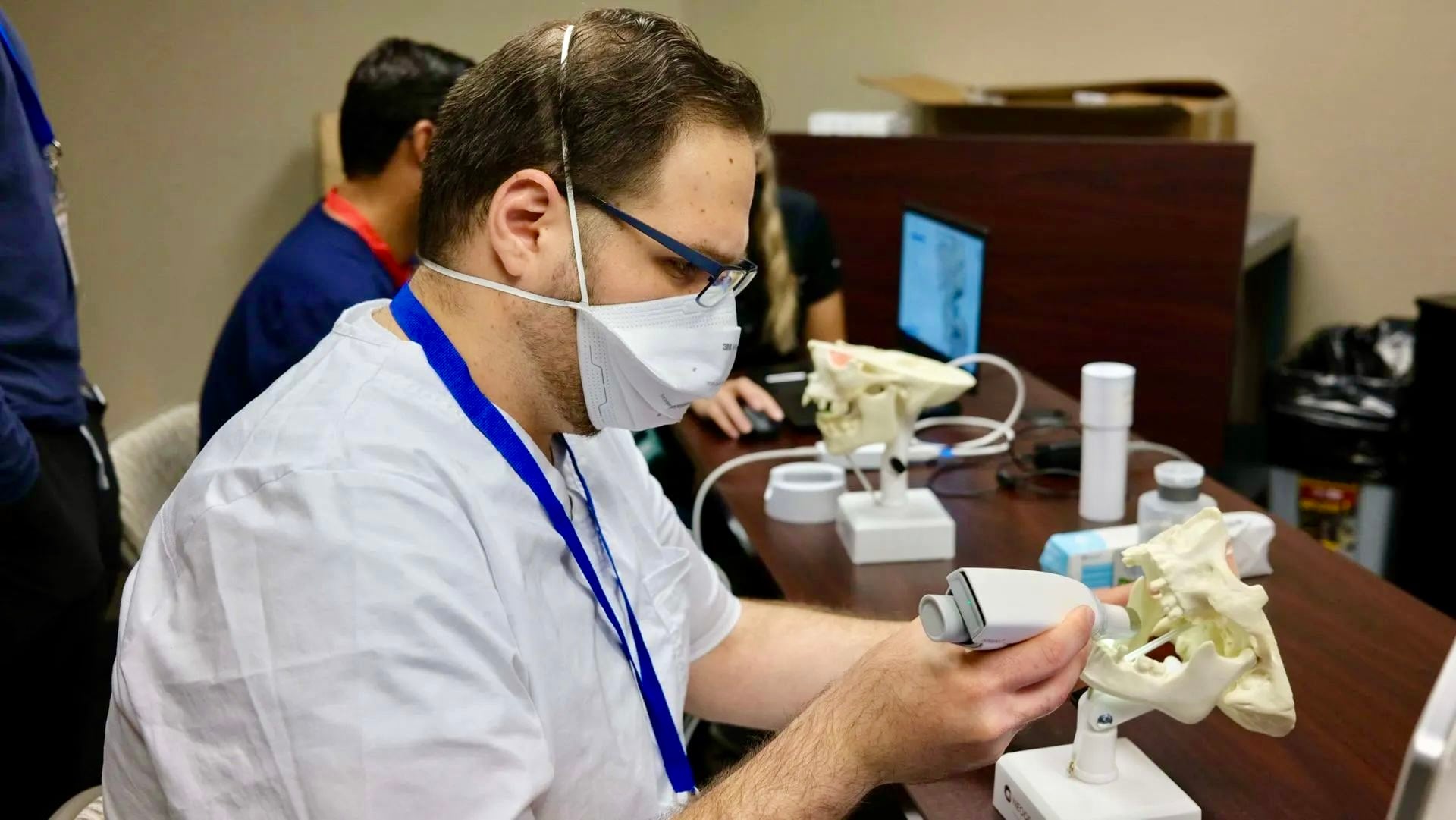
Model And Cadaver Hands-On For Implant Trajectory And Anchor Placement. Model work builds the motor pattern for osteotomy sequence and angulation control. Cadaver work adds anatomical realism, including tissue resistance, sinus membrane behavior, and the spatial relationship between the drill path and the orbital floor, which no model can fully replicate.
-
Live-Patient Surgery Under Mentor Supervision. Live cases introduce real bone density, real soft tissue, anesthesia logistics, and intraoperative decision-making. This format is the rarest in US continuing education because of state credentialing limits.
-
The Prosthetic And Immediate-Load Workflow That Follows Placement. Immediate loading of zygomatic implants relies on high primary stability, supported by multi-cortical anchorage and adequate insertion torque. The prosthetic handoff, including multi-unit abutment selection, angled abutment correction, immediate-load conversion, and occlusal management, is a distinct skill set that cadaver-only courses rarely address.
Anatomical targets in a comprehensive zygomatic and pterygoid implant course include zygomatic, pterygoid, trans-sinus, and palatal-approach placements. Courses bundle zygomatic and pterygoid training together because both address the severely atrophic maxilla through remote anchorage sites. Zygomatic implants anchor in the zygomatic bone. Pterygoid implants anchor in the pterygoid process of the sphenoid bone. The two are frequently combined in the same full-arch case. A 2026 systematic review in the Medical Journal of the Russian Federation describes zygomatic and pterygoid implants as complementary strategies with different complication profiles, which is why training them together produces more complete operators.
Credentialing for live-patient surgery in the United States is state-specific. Most states do not permit visiting dentists to operate on volunteer patients during a continuing education course. Colorado is one of the few that does, and the Colorado Dental Board authorizes US-licensed dentists from any state to perform dentistry on volunteer patients under a credentialing process submitted in advance. That rarity shapes what each training format can deliver and what it costs, and it explains why Full Arch Masters hosts its Live Surgical Course in Parker, CO.
Zygomatic Implant Course Vs Traditional Implant Training: What’s The Difference?
The table below shows the trade-off that drives pricing in zygomatic training. Cadaver and model formats teach planning, anatomy, and trajectory, while only live-patient formats teach intraoperative judgment and the prosthetic handoff. That gap explains why live-patient courses cost three to five times more. All cost figures are drawn from published Full Arch Masters pricing.
|
Format |
What It Teaches |
What It Cannot Teach |
Typical Cost Range |
|---|---|---|---|
|
Model-based |
Osteotomy sequence, angulation control, protocol rehearsal, CBCT planning logic |
Live tissue resistance, real bone density variation, anesthesia logistics, immediate-load prosthetic handoff |
Not offered as a standalone Full Arch Masters course |
|
Cadaver-based |
Anatomical realism, tissue behavior, sinus membrane management, flap design, orbital proximity awareness |
Live-tissue feedback from a living patient, real anesthesia management, immediate-load prosthetic sequencing, postoperative complication recognition |
Not offered as a standalone Full Arch Masters course |
|
Live-patient surgical |
Real bone density, real soft tissue, anesthesia logistics, intraoperative decision-making, immediate-load handoff, postoperative protocol |
Available only where state credentialing permits, rare in US CE formats |
$20,000 (Basic Operator, Parker CO); $25,000 (Advanced Operator, Parker CO); $4,995 (Doctor Observer, Parker CO) |
Full Arch Masters’ Advanced Live Surgical track in Parker, CO is the live-patient option for dentists who meet the 200-arch threshold described earlier. The curriculum covers zygomatic, pterygoid, trans-sinus, custom subperiosteal, and palatal-approach techniques on live volunteer patients under expert mentor supervision. FAM submits each operator’s credentials to the Colorado Dental Board ten days before the course, CRNAs provide general anesthesia onsite, and each Advanced Operator performs two full-arch cases across the two surgical days.
The same course runs a Basic Operator track for dentists below the 200-arch threshold and an Observer track for dentists who want to watch live cases without operating, including international attendees who cannot be credentialed by the Colorado Dental Board because credentialing requires a US dental license.
See the Live Surgical Course schedule in Parker, CO.
How Much Does A Zygomatic Implant Course Cost?
Format drives price in zygomatic implant training more than brand name. The main cost drivers are specimen or patient access, facility and staffing, and credentialing requirements.
-
Cadaver And Model-Based Programs usually sit in the low-to-mid four figures. Specimen procurement, facility rental, and instructor staffing are the primary costs.
-
Live-Patient Surgical Programs run substantially higher because of patient recruitment, anesthesia services, state credentialing administration, and the mentor-to-operator ratio required for safe supervised surgery.
Full Arch Masters’ Live Surgical Course in Parker, CO is priced at $20,000 for the Basic Operator track and $25,000 for the Advanced Operator track, with the Doctor Observer track at $4,995. The Fellowship bundle discounts combined course enrollment by $5,000–$10,000 for dentists who enroll in multiple FAM courses together.
Price is only one factor in choosing a course. The other is whether the curriculum prepares you for what can go wrong.
What Are The Downsides And Complications Of Zygomatic Implants?
Complication readiness sits at the center of zygomatic implant training. A dentist who can place a zygomatic implant but cannot recognize and manage its complications is a liability waiting for a difficult case.
The complication profile of zygomatic implants divides into intraoperative and postoperative categories.
Intraoperative risks:
-
Orbital penetration. The orbit sits directly superior to the zygomatic bone. A drill or implant traveling too far superiorly can enter the orbital cavity, with consequences ranging from negligible to catastrophic depending on depth, location, and management speed. A 2026 technical note in Annals of Medicine and Surgery recommends a safety margin of 5 to 6 mm from the lower base of the orbit and notes that even experienced surgeons have encountered orbital penetration. Digital planning and navigation systems reduce this risk but do not eliminate it. A 2026 systematic review in the International Journal of Implant Dentistry lists orbital penetration among documented intraoperative complications alongside facial hematoma, implant malposition, and zygoma bone fracture.
-
Sinus membrane disruption. The maxillary sinus membrane can be perforated during osteotomy preparation, particularly at specific anatomical landmarks. The same 2026 technical note recommends diamond drills at 800–1,200 RPM with abundant irrigation to preserve the membrane in most cases.
-
Vascular injury. A 2026 systematic review documents superior alveolar artery injury and vestibular cortical plate fracture as intraoperative events in zygomatic implant cohorts.
-
Infraorbital nerve proximity. The infraorbital nerve, which supplies sensation to the cheek, nose, and upper lip, runs near the zygomatic implant trajectory. Drill trauma can cause numbness or paresthesia that resolves within months in most cases but persists permanently in some.
Postoperative risks:
-
Sinusitis. This is the most common biological complication of zygomatic implants. Most cases respond to antibiotics, and some require endoscopic sinus surgery. The extrasinus technique reduces sinusitis incidence compared with the classic intrasinus approach.
-
Soft-tissue dehiscence. Gum recession around the zygomatic implant neck can expose the implant surface and create an oral-sinus communication. A 2026 systematic review in the International Journal of Implant Dentistry notes that proper flap design and soft tissue grafting may mitigate this risk.
-
Prosthetic consequences of poor implant positioning. A zygomatic implant placed with suboptimal trajectory creates prosthetic emergence problems that cannot be corrected at the abutment level. The 2026 systematic review identifies need for laboratory prosthesis correction as a predictor of implant loss with a relative risk of 10.31, so a poorly positioned anchor predicts biological failure as well as prosthetic difficulty.
Complication training marks the difference between a course and a true preparation pathway. A certificate is evidence of participation in continuing professional development, not a statutory qualification. Competence requires supervised operating experience, mentorship, and case volume, and the training program a dentist chooses should treat complication management as a core curriculum element rather than a closing slide.
What To Do The Week After Your Zygomatic Implant Course
The first independent zygomatic case should be planned with a mentor available as an active participant in the planning conversation. Published clinical guidance is explicit that first cases should be performed under mentor supervision regardless of protocol. Case selection matters, and the first independent case should be a straightforward bilateral zygomatic with adequate zygomatic bone volume, clear CBCT anatomy, and no anterior bone deficit that would require quad zygoma planning.
Full Arch Masters alumni join private group chats with hundreds of FAM-trained dentists, lab technicians, and team members for case help on demand. That network gives a dentist who trained on two live cases a second set of eyes on their third case before they open the flap. Alumni also gain access to the KOL (Key Opinion Leader) buying group for vendor discounts on implants, equipment, and materials at no recurring cost.
Connect with the FAM alumni network and course team.
Frequently Asked Questions
Can A General Dentist Legally Place Zygomatic Implants In Their State?
Licensed general dentists can legally place zygomatic implants in their own practice with proper training. Scope of practice for implant surgery in the United States is defined by state dental practice acts, and most states do not restrict implant placement by specialty. Credentialing for live-patient surgery during a continuing education course is a separate question. Most states do not permit visiting dentists to operate on volunteer patients in a CE setting. Colorado is one of the few that does, which is why Full Arch Masters hosts its Live Surgical Course in Parker, CO. International attendees cannot be credentialed by the Colorado Dental Board because credentialing requires a US dental license, so they attend as Observers.
How Many Conventional Implants Should A Dentist Have Placed First?
No regulatory body has published a universal numeric threshold. Published educator recommendations consistently emphasize a substantial conventional implant case history and completed full-arch cases before attempting zygomatic training. TeethXpress Courses states that participants in its advanced remote anchorage cadaver course are expected to have “extensive full-arch implant experience.” Full Arch Masters gates its Advanced Live Surgical track to dentists with 200 or more full arches placed in their career. The underlying logic is consistent across sources: zygomatic implant surgery demands intraoperative composure, anatomical fluency, and prosthetic sequencing experience that only comes from repetition at lower-complexity cases.
Are Zygomatic And Pterygoid Training The Same Course?
Many providers bundle them because both address the severely atrophic maxilla through remote anchorage sites, but they remain distinct techniques with different anatomical targets, indications, and complication profiles. Zygomatic implants anchor in the zygomatic bone (cheekbone), passing through or alongside the maxillary sinus along a trajectory that brings the drill near the orbital floor. Pterygoid implants anchor in the pterygoid process of the sphenoid bone at the posterior maxilla, passing through the maxillary tuberosity at a steep angle of roughly 30 to 45 degrees relative to the occlusal plane. The surgical risks differ: zygomatic placement carries orbital proximity risk and sinus involvement, while pterygoid placement carries risk of hemorrhage from the pterygoid venous plexus, trismus from medial pterygoid muscle involvement, and tuberosity fracture if placement is excessively distal. Many courses cover both because the clinical scenarios that require one often benefit from the other, and a quad zygoma case may be replaced or supplemented by pterygoid implants depending on anterior bone availability.
What CE Credit Should I Expect?
Full Arch Masters is an AGD PACE-approved CE provider, and its main courses generally award 32 continuing education credits. Other programs vary: a 4-day cadaver course can award 32 or more CE credits; a 2-day cadaver course can award 14 CE credits; a 2-day course can award 10 CE credits. CE credit volume mainly reflects course length and provider accreditation rather than clinical depth, so a 10-credit course can be as rigorous as a 32-credit one.
Does A Certificate Alone Qualify A Dentist To Place Zygomatic Implants?
No. A certificate is evidence of participation in continuing professional development, not a credential, a statutory qualification, or a competence assessment. Published disclaimers state this explicitly: a certificate “serves only as evidence of participation” and is not recognized by any regulatory authority as a qualification. Competence in zygomatic implant placement requires supervised operating experience, mentorship through the first independent cases, and sufficient case volume to develop the anatomical fluency and intraoperative composure the procedure demands. A dentist who completes a cadaver course and immediately places zygomatic implants independently, without mentor oversight on the first cases, is operating beyond what the training actually conferred.
Conclusion: Choosing The Right Zygomatic Implant Course
A clear readiness framework makes the decision about a zygomatic implant course more straightforward. Assess your conventional implant and full-arch volume against the markers above. Confirm what the curriculum actually includes, from didactic planning through model and cadaver work to live-patient surgery and the prosthetic workflow that follows. Compare training formats by structure, recognizing that cadaver and model programs build anatomical familiarity and trajectory planning, while live-patient programs add intraoperative and prosthetic dimensions that cadaver work cannot provide. Budget realistically, and choose a program that treats complication management as a core competency.
Full Arch Masters’ Live Surgical Course in Parker, CO is a hands-on option for general dentists who are ready to place zygomatic, pterygoid, trans-sinus, palatal-approach, and custom subperiosteal implants on live volunteer patients under expert mentor supervision. The Advanced Live Surgical track follows the 200-arch threshold described earlier, credentials are submitted to the Colorado Dental Board in advance, and CRNAs provide general anesthesia onsite. For dentists below that threshold, the Basic Operator track delivers the same live-patient format with cases calibrated to that experience level.
Compare tracks and reserve a seat in an upcoming course.
If your practice is ready to place zygomatic implants but your team is not yet closing the full-arch consultations that make those cases possible, the Full Arch Masters Treatment Coordinator Bootcamp trains your front-office team on the closing system FAM uses in-house, where the in-house treatment coordinator maintains an 80% closing rate on full-arch consultations.