Written by: Ryan Dunlop, CEO and Founder of Full Arch Masters and graduate from the Harvard School of Dental Medicine
Key Takeaways for Zygoma Training with Full Arch Masters
- Live-patient zygoma implant training is rare in the U.S. because most state dental boards prohibit visiting dentists from operating on volunteer patients, with Colorado being one of the few exceptions.
- Experienced full-arch surgeons need hands-on live-patient experience to build clinical judgment for managing real-world variables like bleeding and variable bone density, which cadaver and observation courses cannot replicate.
- Five key evaluation criteria for zygoma training programs include regulatory feasibility, case volume per operator, faculty credentials, post-course support, and digital workflow integration.
- Full Arch Masters’ Advanced Live Surgical track in Parker, CO provides supervised live-patient operating under Colorado Dental Board credentialing with photogrammetry-first digital workflows for same-day delivery.
- Explore upcoming Full Arch Masters courses to gain credentialed live-patient zygoma experience and join a supportive alumni community with no recurring costs.
Executive Summary and Evaluation Framework for Zygoma Training
Experienced full-arch surgeons who refer out atrophic maxilla cases face a structural problem. The training formats most accessible inside the United States, such as cadaver courses and observation programs, do not replicate the clinical judgment required to manage bleeding soft tissue, variable bone density, and anxious patients under live conditions. International consensus indicates that zygomatic implant placement requires specialized training, yet the pathway to that training inside the U.S. remains narrow.
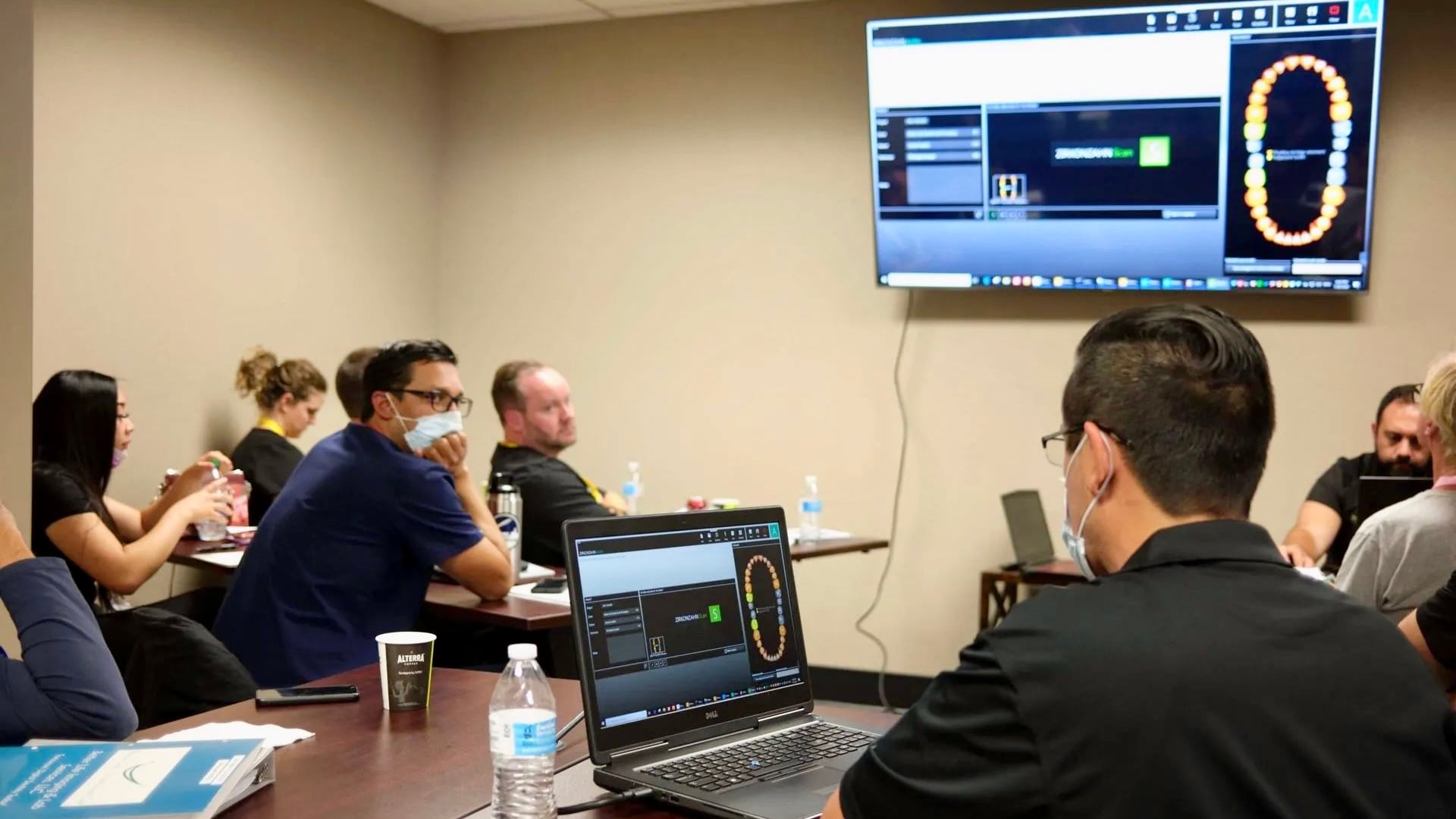
Five dimensions provide a neutral framework for evaluating any zygoma implant live surgery training course in the United States.
- Regulatory feasibility. The program should operate under a state dental board credentialing pathway that permits U.S.-licensed visiting dentists to perform surgery on volunteer patients. Most states do not allow this.
- Case volume per operator. Each operator should personally perform, not just observe, a clearly defined number of full-arch cases across the course.
- Faculty credentials. Supervising mentors should be active high-volume operators with documented experience in zygomatic, pterygoid, and remote anchorage techniques.
- Post-course support. The program should provide structured mentorship, community access, or in-office follow-up after the course ends, with transparent costs.
- Workflow integration. The curriculum should integrate a complete digital workflow, including CBCT planning, photogrammetry, and immediate-load prosthetics, rather than teaching surgical technique in isolation.
Apply these five criteria by exploring Full Arch Masters’ upcoming course dates.
How U.S. Regulations Shape the Zygoma Training Landscape
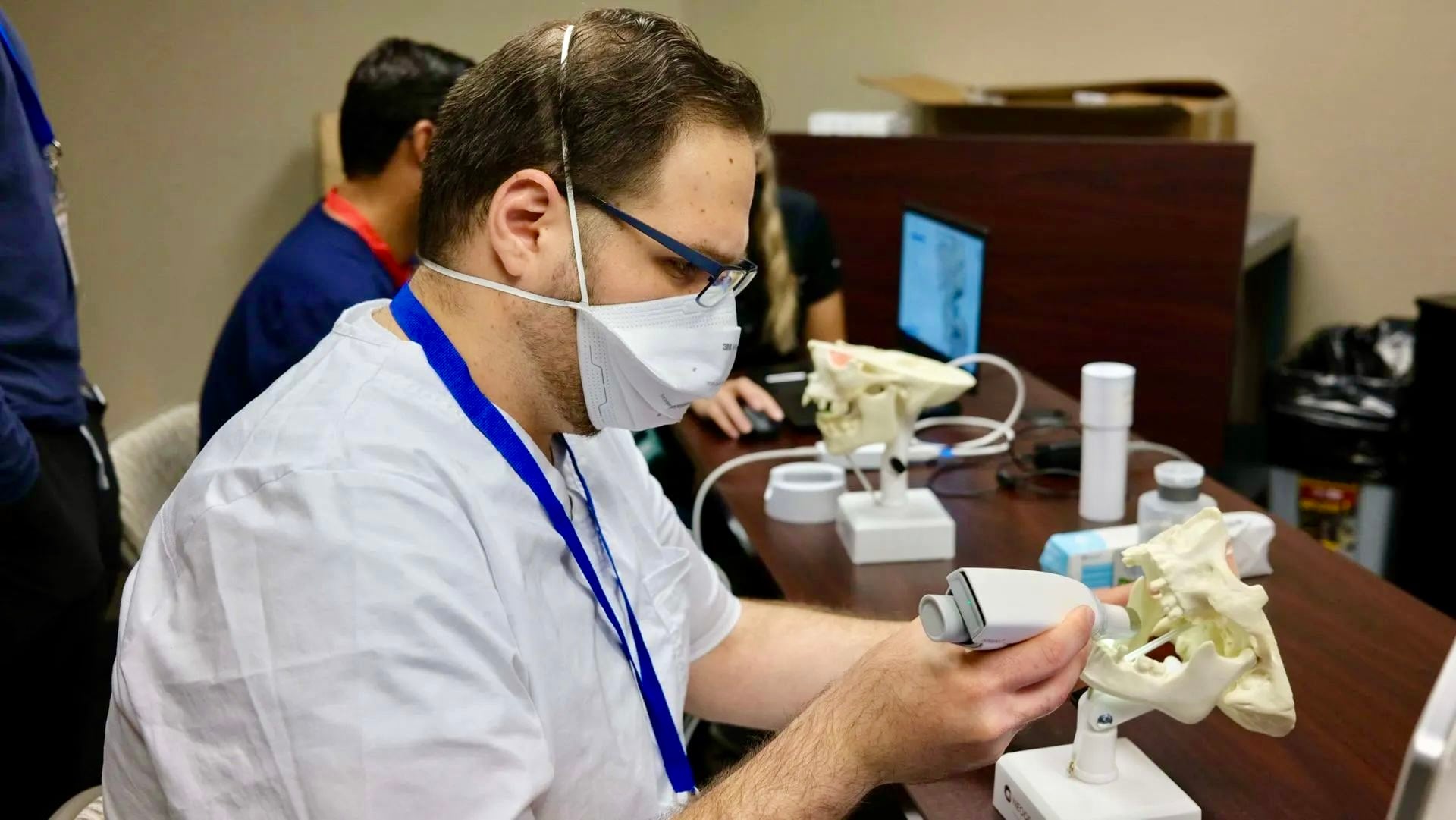
Full-arch implant training in the United States evolved from analog, lecture-based formats toward cadaver and simulation programs as CBCT imaging and digital planning became standard. Cadaver courses using cryopreserved human heads now represent the dominant format for advanced remote anchorage techniques domestically. They provide an intermediate step between simulation and live-patient operating. Experienced clinicians with decades of full-arch practice recommend a progressive pathway, moving from didactic content to cadaver training and then to supervised live-patient training before independent case management.
The regulatory barrier is the central constraint. Dental implant CE requirements in the United States vary by state with no single national standard, and, as noted in the evaluation framework above, most states lack a credentialing pathway for visiting dentists to operate on volunteer patients during courses. Only a handful of states have established a workable credentialing pathway for this format. Colorado is the clearest example currently in use for full-arch live surgical training. International programs in Brazil, Spain, and elsewhere offer live-patient operating but introduce travel friction, legal complexity, and workflow-integration gaps that complicate return-to-practice implementation.
Three Core Training Models for Zygoma and Pterygoid Implants
Three training formats currently serve surgeons seeking zygoma and pterygoid implant experience.
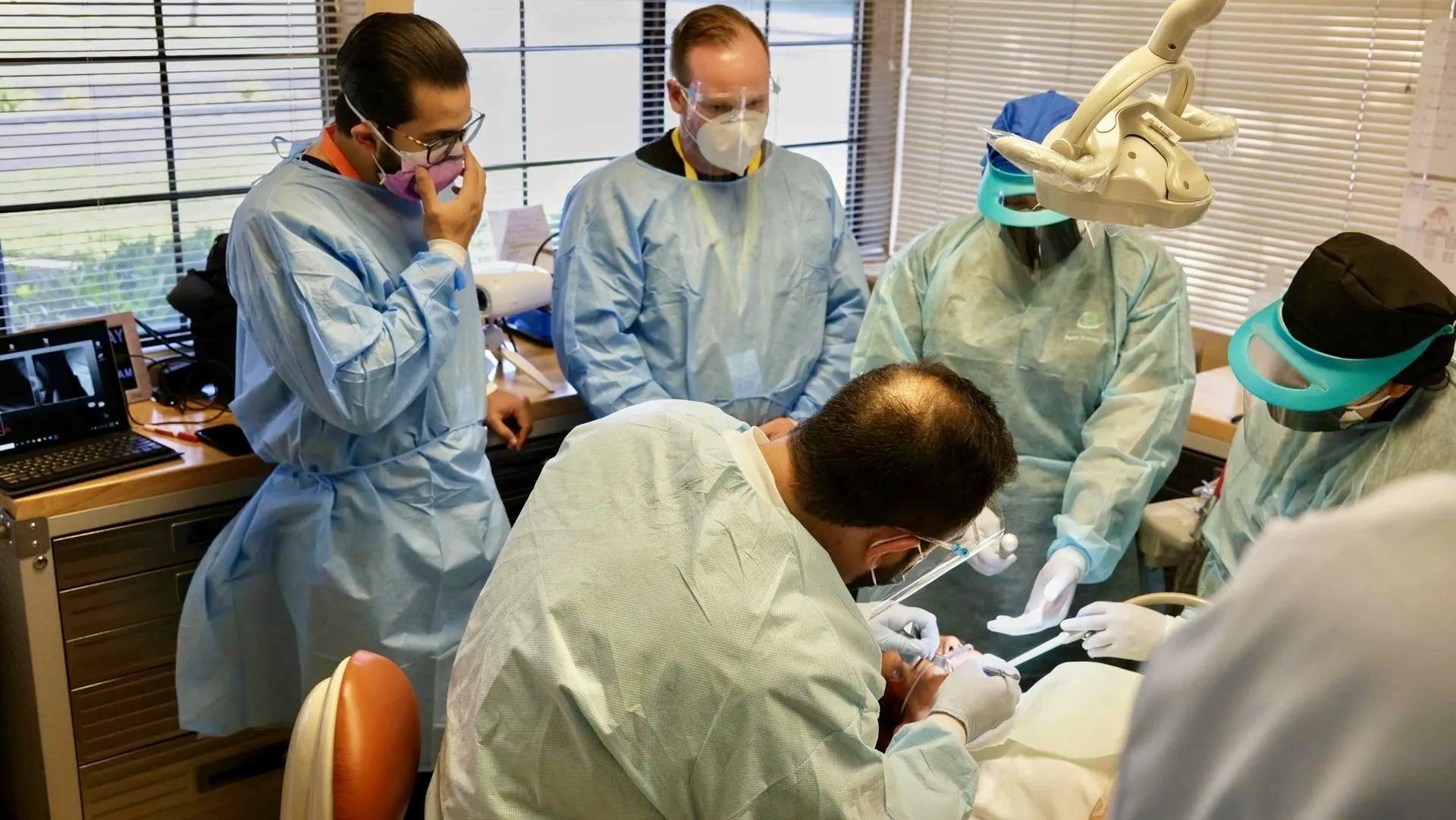
Hands-on live-patient operating places the surgeon at the chair with a credentialed mentor supervising each step. Live-patient programs build clinical judgment that models, simulations, and lectures cannot replicate because participants must manage variables such as bleeding soft tissue, variable bone density, and anxious patients under faculty supervision. This format delivers the highest skill transfer but requires a state regulatory framework that permits it.
Observation-only programs allow surgeons to watch live cases without operating. Observers report significant learning, and observation is a legitimate component of a progressive training pathway. It still does not satisfy the hands-on operating requirement that most state boards and credentialing bodies expect for advanced implant procedures.
Cadaver and simulation formats use cryopreserved human heads or 3D anatomical models to approximate live-tissue conditions. Cadaver programs combining 3D model planning, hands-on placement on donor heads, and live-surgery observation are designed for oral and maxillofacial surgeons, periodontists, and prosthodontists who already place implants. They are widely available domestically and internationally, award substantial CE credits, and serve as a critical intermediate step, but they do not confer live-patient operating experience.
How to Weigh Strategic Trade-offs in Zygoma Training
Speed of skill acquisition favors live-patient operating, yet the regulatory access problem inside the United States means most surgeons must weigh domestic cadaver training against international live-surgery programs. International options, primarily in Brazil and Spain, provide genuine operating experience but require travel time, lost production days, and a return to a practice environment where the digital workflow taught abroad may not match the tools already in use chairside.
Supervised live-patient courses can create a false sense of confidence, as performing cases without immediate mentor support in one’s own practice requires substantially more independent repetitions. This reality makes post-course mentorship structure, not just case volume during the course, a critical evaluation criterion.
Surgeons with fewer than 20 zygomatic cases observe sinusitis rates exceeding 20%, compared with 10% among high-volume operators. This difference underscores why volume thresholds and mentor supervision ratios matter in program selection. Team delegation is a parallel consideration. A surgeon who returns from training without a team trained on the same digital workflow cannot operationalize same-day delivery at volume.
Current Best Practices for Safe Zygoma Implementation
Experts reach strong consensus on the routine use of CT/CBCT imaging for preoperative planning of zygomatic and other maxillary implant cases to enhance safety and reduce intraoperative complications. Pre-course credentialing under the applicable state dental board, submitted in advance of the course date, is the regulatory prerequisite for any U.S.-based live-patient program.
Authors strictly recommend that surgeons perform their first zygomatic implant surgeries under the supervision of experienced mentors, perform surgical planning using software, simulate the surgery virtually and on a stereolithographic model of the patient, and possess extensive knowledge of facial anatomy. Photogrammetry-first records acquisition, which captures implant positions accurately before immediate-load prosthetic delivery, now represents the standard for integrating live surgical training with a same-day digital workflow.
Mentor supervision ratios directly affect patient safety and skill transfer. Programs that maintain low operator-to-mentor ratios allow real-time correction of technique, which is particularly important for the extrasinus and ZAGA approaches.
Experience these best practices firsthand in a credentialed live-patient setting.
Readiness and Opportunity Assessment for the Advanced Track
The Advanced Live Surgical track at Full Arch Masters is structured for surgeons who meet a defined readiness threshold. To determine whether you meet that threshold and can fully capitalize on live-patient operating, evaluate the following criteria before enrolling.
- 200+ career arches placed. The Advanced track is gated to dentists with at least 200 full arches placed in their career. This threshold ensures that live zygomatic and pterygoid operating builds on an established full-arch foundation rather than introducing multiple new variables simultaneously.
- Team readiness for same-day delivery. The FAM Method, Full Arch Masters’ proprietary digital workflow, delivers a screwed-in restoration in 2 to 4 hours. Realizing that timeline requires a trained assistant, treatment coordinator, and lab technician aligned on the same workflow.
- Willingness to adopt a photogrammetry-first records protocol. Accurate implant-position capture via photogrammetry is the foundation of immediate-load digital prosthetics. Surgeons who plan to continue analog impression workflows will not fully integrate the course curriculum into their practice.
Common Pitfalls in Zygoma Training and How to Avoid Them
Insufficient pre-planning. Skipping the virtual simulation and physical model review recommended earlier creates intraoperative surprises that compromise patient safety. Programs that provide pre-course CBCT review and 3D-printed patient models reduce these risks by building familiarity with each patient’s unique anatomy before the first incision.
Absence of team training. A surgeon who attends alone and returns to an untrained team cannot operationalize same-day delivery. The one-team, one-workflow model, which brings the assistant, treatment coordinator, and lab technician through the same curriculum, converts course attendance into practice-level volume.
No post-course mentorship structure. In-office mentoring after initial live-patient courses is recommended to adapt techniques to a clinician’s specific practice setup, inventory, and anesthesia protocols. Programs that end when the course ends leave surgeons without support when the first independent case presents a complication.
Hybrid workflows that break same-day delivery. Integrating live surgical training into a partial-digital or analog prosthetic workflow produces multi-day appointments and undermines the economic case for advanced implant techniques. A photogrammetry-first, fully digital workflow is the prerequisite for same-day delivery at scale.
Frequently Asked Questions
What is the difference between a live-patient zygoma course and a cadaver course?
A live-patient course places the surgeon at the chair with a credentialed mentor supervising each step on a consented volunteer patient. Variables including bleeding soft tissue, real bone density variation, and patient physiology are present in ways that cadaver and model-based training cannot replicate. A cadaver course uses cryopreserved human heads or 3D anatomical models to approximate live-tissue conditions and is widely available domestically. Cadaver training is a valuable intermediate step in a progressive training pathway, but it does not satisfy the hands-on operating requirement that most credentialing bodies expect for advanced implant procedures. Full Arch Masters’ Advanced Live Surgical track in Parker, CO provides live-patient operating, not cadaver or observation, under Colorado Dental Board credentialing.
How does Colorado Dental Board credentialing work for visiting dentists?
Colorado is one of the few U.S. states where the dental board allows visiting U.S.-licensed dentists from any state to perform dentistry on volunteer patients during a structured course. Full Arch Masters submits each operator’s credentials to the Colorado Dental Board ten days before each Live Surgical Course. Credentialing is contingent on no pending marks against the dentist’s license in their home state. International dentists cannot be credentialed through this pathway because it requires a U.S. dental license, so international attendees may participate as observers.
What is the eligibility threshold for the Advanced Live Surgical track?
The Advanced Live Surgical track requires a minimum of 200 full arches placed in the operator’s career. This threshold ensures that zygomatic, pterygoid, trans-sinus, palatal-approach, and custom subperiosteal techniques are introduced as extensions of an established full-arch foundation. Dentists with fewer than 200 career arches placed are eligible for the Basic Operator track, which covers standard full-arch live-patient operating under the same Colorado Dental Board credentialing framework.
How many CE credits does the Full Arch Masters Live Surgical Course award, and through which accrediting body?
Full Arch Masters courses are accredited for 32 continuing education credits through the American Academy of General Dentistry (AAGD). The AAGD’s PACE accreditation is one of the most widely recognized CE provider designations in U.S. dentistry. Dentists should verify with their home state dental board that AAGD PACE-accredited credits satisfy any state-specific requirements for advanced implant or live-patient training documentation.
What post-course support does Full Arch Masters provide, and is there a recurring cost?
Every Full Arch Masters alumnus joins private group chats with hundreds of FAM-trained dentists, lab technicians, and team members, including a dentist-only channel for sensitive practice and personnel questions and a main multi-role channel for clinical and operational case help. Alumni also receive access to the FAM Key Opinion Leader (KOL) buying group, which provides vendor discounts on Neodent implants, exocad licenses, 3D printers, and photogrammetry systems. Both the alumni community and the KOL buying group are available at no recurring cost. Attend one course and keep the access.
Conclusion: Why Full Arch Masters Fits This Evaluation Framework
The evaluation framework for a zygoma implant live surgery training course in the United States reduces to five questions. Is live-patient operating legally accessible under state dental board credentialing? How many cases does each operator personally perform? Who is supervising, and at what volume do they operate? What post-course support exists and at what cost? Does the curriculum integrate a complete digital workflow from CBCT planning through immediate-load prosthetic delivery?
Full Arch Masters’ Advanced Live Surgical track in Parker, CO is the only scalable U.S. program that answers all five questions affirmatively. Each Advanced operator performs two live full-arch cases, including zygomatic, pterygoid, trans-sinus, palatal-approach, and custom subperiosteal placements, under Colorado Dental Board credentialing and expert mentor supervision. The FAM Method integrates photogrammetry-first records, CBCT planning, and immediate-load digital prosthetics into a single repeatable workflow that delivers same-day teeth in a predictable, tightly timed appointment. The 200+ career-arch eligibility gate ensures that every operator in the room is building on a proven full-arch foundation. After the course, alumni join a continued community of hundreds of FAM-trained dentists via private group chats and gain access to the KOL buying group, both at no recurring cost. The course awards 32 CE credits accredited through the AAGD.
Survival data for zygomatic implants supports the clinical case for adding this technique. A 2016 systematic review of 4,556 zygomatic implants reported a 12-year cumulative survival rate of 95.21%, and pooled analyses have documented high survival rates for immediately loaded zygomatic implants. The clinical outcomes are established. The remaining barrier is access to credentialed, supervised live-patient operating experience inside the United States, and Full Arch Masters is built to close that gap.