Written by: Ryan Dunlop, CEO and Founder of Full Arch Masters and graduate from the Harvard School of Dental Medicine
Key Takeaways
- Dental lab technician training ranges from under a year for certificates to four years for apprenticeships or bachelor's degrees, and time-to-competence on the bench matters more than program length.
- Certificate programs typically take about one year, associate degrees about two years, and formal apprenticeships three to four years, while straight on-the-job training has no fixed timeline.
- Digital workflows and CAD/CAM skills can shorten time-to-productivity, and technicians still need integrated hands-on experience beyond software exposure.
- Most technicians learn on the job; formal schooling is optional but can shorten the path to CDT certification and may be preferred by some employers.
- Full Arch Masters offers targeted, lab-focused training that helps technicians compress time-to-competence in full-arch digital design and finishing.
Explore Full Arch Masters Courses
Dental Lab Technician Training Length By Pathway
The following ranges reflect published program structures and federal workforce classifications. The Bureau of Labor Statistics classifies dental laboratory technicians as requiring a high school diploma or equivalent for entry and moderate-term on-the-job training to attain competency, rather than a postsecondary credential as the baseline.
- Certificate or diploma program: A dental lab technician certificate or diploma program often takes about one year. TCAT Nashville's program is 12 months (1,296 clock hours), and Durham Tech offers certificate paths of 12 months or less. Lengths vary widely, from roughly 6 months at some schools to four quarters or longer at others, and the ADA notes many technicians complete two-year programs.
- Associate degree in dental laboratory technology: Approximately two years, including CODA-accredited programs.
- Formal apprenticeship: A formal dental technician apprenticeship typically runs about 3–4 years, depending on the jurisdiction and program level. Examples include 48 months in Western Australia and 36 months for the UK Level 5 Dental Technician (Integrated) apprenticeship. The U.S. Department of Veterans Affairs recognizes a full four-year apprenticeship of at least 2,000 hours per year as a qualification benchmark for dental lab technician positions.
- On-the-job training (no formal program): Variable. BLS classifies this as moderate-term on-the-job training with no prior work experience required, so progression depends entirely on the lab, the mentor, and the case mix.
BLS notes that employers may prefer candidates who hold a postsecondary certificate or associate's degree, while the occupation's official classification places a high school diploma as the typical entry requirement. Published program lengths vary by institution, and the ranges above reflect common structures rather than a federal mandate.
Dental Lab Technician Training Pathways: What Each One Actually Gets You
The pathway decision is a tradeoff between speed, cost, depth, and income during training. Each route delivers a different mix of structure, exposure, and earning potential.
Certificate or diploma program (roughly one year). This is the fastest formal credential. Programs at community colleges, vocational schools, and technical schools typically cover dental anatomy, materials science, fixed and removable prosthodontics, and introductory digital workflows including CAD/CAM. Some dental lab technicians receive formal training through one- to two-year programs at community colleges, vocational schools, technical colleges, or dental schools leading to a certificate or associate degree, though BLS states most learn on the job. A one-year program builds fundamentals but rarely produces a technician who can handle complex cases independently on day one of employment.
Associate degree in dental laboratory technology (about two years). This pathway provides the broadest formal foundation. CODA-accredited associate degree programs include general education requirements alongside technical coursework. City Tech's Dental Laboratory Technology AAS program, the first dental technology program accredited by the Commission on Dental Accreditation of the American Dental Association in 1954, prepares graduates for entry-level employment in commercial dental laboratories, hospitals, dental schools, or dental offices, and makes them eligible to sit the Recognized Graduate Examination of the National Board for Certification. The tradeoff is higher tuition and a longer time commitment, and graduation still does not guarantee full bench competence.
Apprenticeship (three to four years, paid). This route is structured, multi-year, and income-generating from day one. The VA's four-year, roughly 8,000-hour benchmark is the clearest published federal standard for a complete apprenticeship. In practice, registered dental lab apprenticeships are scarce. No U.S. registered apprenticeship listing for dental lab technicians has been found; in practice an apprenticeship is a job where a lab agrees to train the worker, paid from the start, with tasks growing from simple bench work toward finished restorations as output passes experienced technicians' quality checks. Most apprenticeships in this field are informal arrangements rather than registered programs.
Straight on-the-job training (variable). Most dental and ophthalmic laboratory technicians learn their skills through on-the-job training, beginning as helpers and learning more advanced skills as they gain experience, for example starting out making models from impressions and progressing to designing and fabricating crowns and bridges. There is no tuition and pay starts immediately, but progression depends on the lab's case mix, the quality of mentorship, and the technician's initiative. In a lab that handles only one product line, a trainee may not encounter the full range of bench work for years.
From Program Length To Time-To-Competence: What “Trained” Means On A Real Bench
Finishing a program differs from being productive in a working lab. In a dental lab context, “trained” means producing acceptable units independently, handling remakes without supervision, and working to a clinician's specifications consistently.
Job postings frequently list at least one to two years of lab experience as preferred for advanced dental lab technician roles, indicating that graduation does not equal full bench competence. A prospective technician should plan around that one-to-two-year post-graduation window, since program length alone understates the real timeline.
The factors that compress or extend time-to-competence include mentorship quality, case mix breadth, production volume, and specialization. A technician in a high-volume commercial lab handling diverse cases will reach independent competence faster than one in a single-specialty shop with limited throughput. No validated universal time-to-competence for new dental technicians exists; independent competence requires integrated practical experience combining virtual simulation, physical operation, chairside observation, project-based learning, and workplace-oriented internship.
Bench time is where the timeline actually gets compressed, and structuring that time well is its own skill.
How Digital Workflow Changes Dental Lab Technician Training
If time-to-competence is the number to focus on, the digital workflow is the biggest lever. CAD/CAM and digital design have materially changed what a dental lab technician needs to know and how quickly certain skills can be acquired.
Digital workflows speed up design iteration through software libraries, virtual try-ins, and file-based collaboration with clinicians. A 2024 NADL survey found that 39% of dental laboratories said more than half of their cases now start from intraoral scans, up from 12% in 2019, a more than threefold increase in digital case intake over five years. Sixty-eight percent of dental laboratories already used 3D printers as of that same survey.
Digital adoption also adds new requirements. Technicians now need scan quality assessment, file handling across open-architecture platforms, cross-platform troubleshooting, and quality control of AI-assisted designs. Because AI-assisted design tools now automate much of the repetitive design work, dental labs increasingly need technicians who can review, modify, and quality-control automated designs rather than produce every design manually. The effectiveness of AI-assisted dental design depends on human expertise in evaluating, modifying, and validating outputs, competencies historically cultivated through analogue techniques such as hand-waxing, anatomic carving, and dynamic occlusal articulation.
Digital design skill raises a technician's value and can shorten time-to-productivity when training covers the full workflow, including hands-on work. Software exposure alone is insufficient; independent competence requires integrated practical experience. For a deeper look at digital dentistry training options for lab technicians, see Digital Dentistry Courses for Dental Lab Technicians.
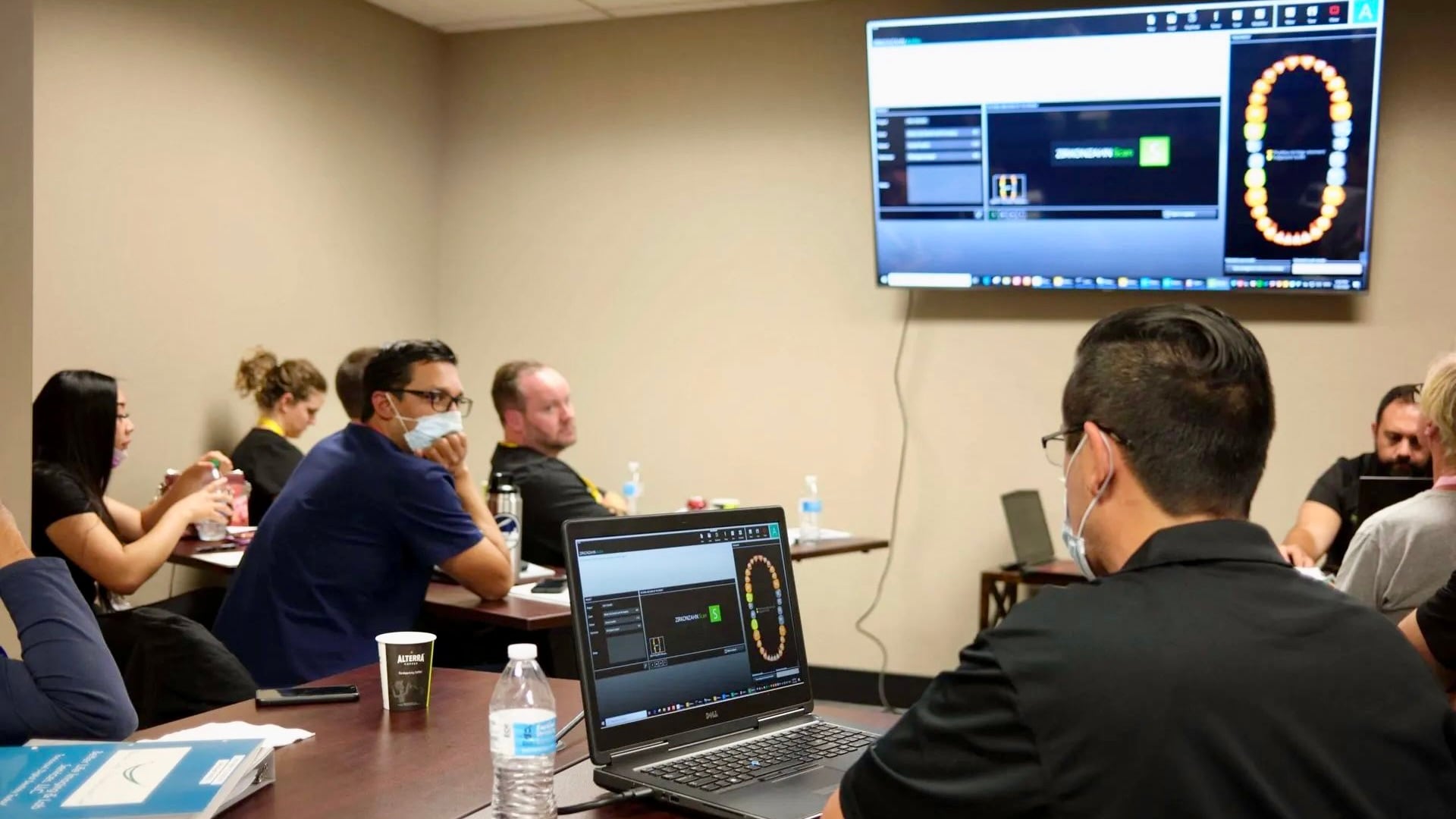
That gap, software familiarity without integrated bench practice, is exactly what a structured, lab-focused course can close. Full Arch Masters' Design and Finish Course is built specifically for this need. It is a four-day, lab-focused course. The first two days cover digital design in exocad: preop records, digital mockups, surgical alignment devices, surgical record imports, immediate-load prosthetics, and final zirconia design. The last two days are hands-on aesthetic finishing on pre-sintered and post-sintered zirconia with MIYO ceramic layering. FAM surveys attendees in advance and separates beginners from advanced designers so each track runs at the right level. The FP1 Course pulls lab technicians aside for FP1-specific design instruction, and in-house lab techs can attend the Flagship Course alongside the dentist they support so the clinical and lab sides return home aligned on the same workflow. For lab technicians who have chosen the career and want to compress time-to-competence in full-arch digital design and finishing, this is the most direct path.
Explore the Design and Finish Course
Do You Need School To Be A Dental Lab Technician?
School is optional, and the decision depends on the technician's situation. Most dental and ophthalmic laboratory technicians learn on the job, and BLS classifies the occupation at the high school diploma level with moderate-term on-the-job training as the standard entry route.
The CDT certification pathway, administered by the National Board for Certification in Dental Laboratory Technology, counts apprenticeships and training courses toward documented training and experience required for CDT eligibility, recognizing both formal and on-the-job routes. Technicians without a qualifying degree need at least five years of documented dental-technology training and experience, or fewer years combined with documented continuing education, before completing the CDT exams.
A practical decision framework by situation:
- Choose formal schooling if structure, breadth of curriculum, and a faster CDT eligibility path matter more than immediate income. Graduates of an ADA-accredited program need only two years of post-graduation experience before completing the CDT pathway, versus five years for those without a qualifying degree.
- Choose on-the-job training if paid learning and avoiding tuition debt are the priority. Progression then depends entirely on the lab and the mentor.
- Choose a hybrid approach if career-changing while maintaining income is the constraint. A short certificate program combined with part-time lab work covers both bases.
For a full cost analysis of each pathway, see Average Cost of Dental Lab Technician Training in 2026.
Dental Lab Technician Training Requirements And Qualifications
A high school diploma or equivalent is the typical entry-level education requirement for dental laboratory technicians. Some programs have additional prerequisites. City Tech's Dental Laboratory Technology AAS program requires CUNY proficiency in reading, writing, and mathematics, with students who do not meet proficiency criteria taking introductory courses first. Science and math coursework in high school is broadly helpful because professional programs cover oral anatomy, materials science, and occlusion.
Employers at the entry level screen for fine motor control, patience for precise repetitive work, reliability, and digital comfort. Labs hiring trainees screen for capacity rather than finished skill, and digital comfort, meaning willingness to learn software, is a key differentiator since labs teach their own CAD/CAM systems on the job. For a broader look at the CDT pathway and advanced certification, see Advanced Certification Training for Dental Lab Techs.
Dental Lab Technician Demand And Career Outlook
Those entry requirements matter because the market itself is shifting. BLS projects employment of dental laboratory technicians to decline 6% between 2025 and 2035, a loss of about 2,000 jobs, driven by the increasing use of 3D printing and other labor-saving technologies. The overall U.S. employment growth rate over the same period is projected at 3%, so this outlook sits below the national average.
Despite the decline, BLS projects about 3,600 dental laboratory technician openings per year from 2025 through 2035, all expected to result from the need to replace workers who transfer to other occupations or exit the labor force. Technicians entering the field are largely filling seats vacated by retirees and career-changers rather than moving into newly created positions.
The median annual wage for dental laboratory technicians was $49,610 in May 2025. Where a technician works shifts that number. In-office lab technicians earn a median of $51,380, versus $48,730 in commercial manufacturing settings.
Specialization plays a growing role. Demand is increasingly concentrated in technicians who can work across traditional craftsmanship and digital workflows, including CAD/CAM and 3D printing; technicians who only know traditional methods may find their role shrinking over time. In a contracting market, digital skill, particularly full-arch digital design and aesthetic finishing, separates a replaceable technician from one who is sought after.
Conclusion: Plan The Timeline, Then Compress It
Choose the pathway that fits the budget and life situation, whether certificate, associate degree, apprenticeship, or straight on-the-job training, then treat time-to-competence as the real target. The digital workflow is the single biggest lever for compressing that timeline once the career commitment is made.
For lab technicians and the dentists who support them, Full Arch Masters' Design and Finish Course is the most direct path to full-arch digital design and finishing competence. The course runs four days, is calibrated by skill level, and includes hands-on work in exocad and on real zirconia restorations. Full Arch Masters courses are approved for CE credits through AGD PACE.
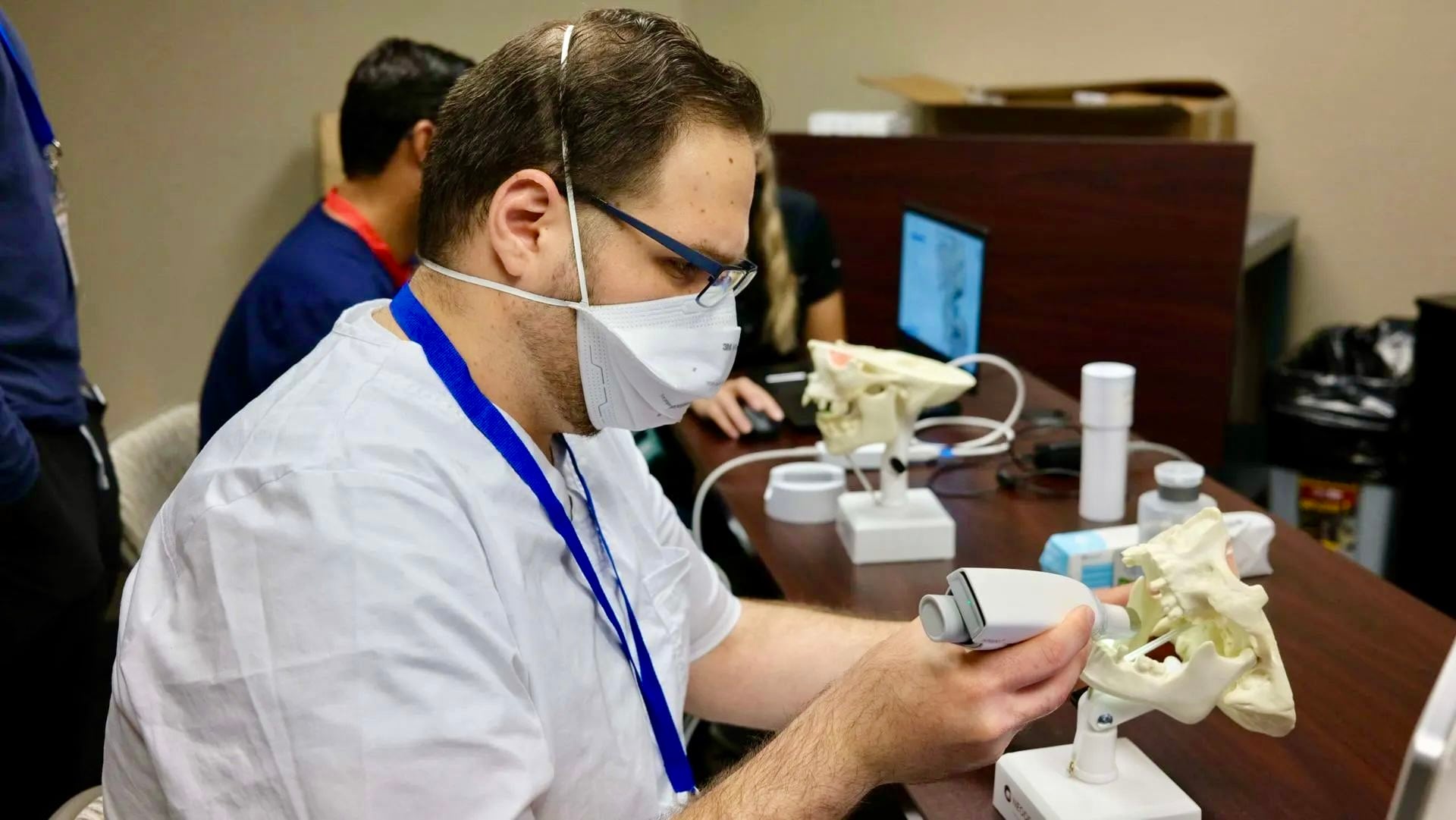
For dentists and practice owners looking to close more full-arch cases once the lab workflow is in place, Full Arch Masters' Treatment Coordinator Bootcamp trains front-office teams on the closing system FAM uses in-house, where the in-house treatment coordinator maintains an 80% closing rate. Explore the Treatment Coordinator Bootcamp.
Frequently Asked Questions
How Many Years Does It Take To Become A Dental Lab Technician?
It depends on the pathway. A certificate or diploma program often takes about one year, though lengths vary widely, and an associate degree takes about two years. A formal apprenticeship typically runs about three to four years, with the VA recognizing a four-year, roughly 8,000-hour apprenticeship as a federal qualification benchmark. Straight on-the-job training has no fixed endpoint, so competence builds over time depending on the lab, the mentor, and the case mix. Beyond program length, most advanced job postings prefer one to two years of bench experience after graduation.
Do You Need School To Be A Dental Lab Technician?
No. The BLS classifies dental laboratory technicians at the high school diploma level with moderate-term on-the-job training as the standard entry route, and most technicians learn on the job. Formal schooling, such as a certificate or associate degree, is optional but may be preferred by some employers and shortens the documented experience requirement for CDT certification. As the schooling section explains, an accredited program cuts the CDT experience requirement from five years to two.
Is It Hard To Be A Dental Lab Tech?
The work demands sustained fine motor control, precision, and patience for repetitive detailed tasks. The learning curve is real, and a new technician typically starts on simpler bench work, such as model fabrication and basic finishing, then progresses to more complex restorations over months to years. The digital shift has added a new layer of required skill, including CAD software proficiency, scan quality assessment, and quality control of AI-assisted designs. Technicians who are comfortable with both the manual and digital sides of the craft are in the strongest position. The work is not physically demanding in the traditional sense, yet it requires sustained concentration and a high tolerance for precision.
Are Dental Lab Technicians In Demand?
The outlook is mixed. The body section explains that BLS projects a 6% decline in employment and about 3,600 annual openings, so new technicians mainly step into vacated roles rather than new positions. Technicians with digital workflow skills, particularly CAD/CAM design and aesthetic finishing, are better positioned than those with only traditional analog skills. Specialization in high-value areas like full-arch implant prosthetics and digital design raises a technician's value in a contracting market.
How Long Does It Take To Learn Digital/CAD-CAM Dental Design?
Basic exocad software orientation can be covered in a short introductory training, such as exocad's own Core Essentials online training, which runs two hours. Practical proficiency in basic cases like crowns and bridges typically develops over roughly 15–20 hours of practice. Reliable, independent competence on complex cases, including full-arch design, immediate-load prosthetics, and multi-unit zirconia, takes considerably longer and depends on case volume, mentorship, and the breadth of workflows a technician sees. As the digital workflow section notes, software orientation is not the same as integrated bench practice, and no validated time-to-competence benchmark exists for digital design. Structured, hands-on training that combines software instruction with real case work compresses the timeline meaningfully. AI-assisted design tools have reduced repetitive design time and raised the bar for quality control and design validation, skills that require supervised practice to develop.
Is An Apprenticeship Better Than A Degree For Dental Lab Technician Training?
Neither pathway works best for everyone, so the right choice depends on the individual's financial situation, learning style, and career goals. An apprenticeship pays from day one and builds competence through real case work, but progression depends entirely on the lab and the mentor, and formal registered apprenticeships are scarce in this field. A degree program provides structured curriculum, breadth of exposure, and a faster CDT eligibility path, but carries tuition costs and does not guarantee bench competence at graduation. Many technicians combine both, using a short certificate program followed by on-the-job training that builds toward CDT certification.
What Qualifications Do You Need To Start Dental Lab Technician Training?
A high school diploma or equivalent is the standard entry requirement for both formal programs and on-the-job training. Some associate degree programs have additional prerequisites, such as proficiency in reading, writing, and mathematics, and may require introductory coursework before admission to major courses. High school preparation in science and math is broadly helpful because professional programs cover oral anatomy, materials science, and occlusion. No prior dental or laboratory work experience is required to enter the occupation, according to BLS classification, and there is no federal license requirement to work as a dental lab technician.
How Long After Training Until A Dental Lab Technician Is Fully Productive?
Program completion marks the starting point rather than the endpoint. As the time-to-competence section notes, most advanced postings want one to two years of bench experience beyond graduation, and full independent productivity typically takes longer still. The variables that matter most are mentorship quality, case mix breadth, and production volume. A technician in a high-volume lab with strong mentorship and diverse case exposure will reach independent competence faster than one in a narrow-specialty shop with limited throughput. Targeted upskilling in specific workflows, such as full-arch digital design and aesthetic finishing, can compress the timeline for technicians who have already committed to the career.