
Written by: Ryan Dunlop, CEO and Founder of Full Arch Masters and graduate from the Harvard School of Dental Medicine
Key Takeaways
- A MIYO zirconia finishing course trains lab technicians to layer and characterize zirconia restorations for full-arch and All-on-X cases.
- Green-state finishing happens before sintering and final finishing happens after. The right course depends on your skill gaps and case mix.
- Hands-on multi-day courses build real muscle memory through repetition. Online training works best as orientation and reference.
- MIYO Pink and Structure are essential for arch-level gingival characterization, so training must address full-arch workflows, not only single units.
- Full Arch Masters offers a four-day Design and Finish Course that combines MIYO ceramic layering with exocad design inside a complete digital full-arch workflow.
Explore Full Arch Masters course options
What Is the MIYO Liquid Ceramic System?
The MIYO Liquid Ceramic System is a surface characterization system for finishing zirconia restorations. It is applied in ultra-thin layers, and manufacturer documentation describes application thickness in the 0.1–0.2 mm range. The material is then fired according to a manufacturer-published firing chart. Because MIYO is self-glazing, it eliminates the need for a separate glaze firing step, which shortens processing time and speeds delivery of zirconia restorations.
MIYO often replaces traditional powder layering, yet it still depends on operator judgment. Color selection, layering thickness, and firing discipline all require skill. Components a lab tech will encounter include:
- MIYO Esthetic system, designed for color characterization and shade adjustment across A, B, C, and D shade ranges
- MIYO Stain and Glaze Kit, which combines staining and glazing in one system
- MIYO High Performance Glaze, a patent-pending, self-leveling fluorescent glaze for sintered zirconia that provides complete coverage in one firing without puddling or running
- MIYO Pink, used for gingival characterization that replicates natural tissue color and texture on monolithic zirconia restorations, including implant-retained monolithic cases
- MIYO Structure, which creates surface texture and anatomical form on monolithic zirconia, producing natural 3D surface effects without cutback procedures
MIYO Firing Chart and Application Basics
As noted earlier, MIYO is applied in ultra-thin layers and fired according to the manufacturer’s published firing chart. Low firing temperatures prevent color changes during processing, which supports predictable and consistent results. MIYO colors are designed to offer the same optical properties before and after firing. What the technician sees before the furnace matches what they see after.
MIYO works on both pre-sintered (green-state) and post-sintered (final) zirconia. That dual application is why the next question matters so much: which stage does a lab tech actually need training in?
A 2026 peer-reviewed study published in the Journal of Esthetic and Restorative Dentistry evaluated MIYO micro-layering glaze against polishing and conventional glaze on 180 zirconia specimens. The authors found that MIYO micro-layering showed lower color change and surface roughness than both polishing and conventional glaze after tea and coffee exposure. This result confirms that MIYO functions as a distinct finishing protocol with its own firing and layering rules, not as a simple substitute for conventional glaze or stain.
Green-State vs. Final Zirconia Finishing: Choosing the Right MIYO Course
Course selection starts with a clear choice between green-state and final finishing training. Green-state finishing happens before sintering, when the material is softer and more forgiving. Final finishing happens after sintering, when the technician refines color and surface texture and corrections become harder to reverse. A “green-state zirconia finishing course” is a distinct course category. It focuses specifically on pre-sintered contouring and characterization, unlike a general MIYO course that may cover both stages.
Decision Rule: Start by identifying which side of the workflow is weaker. If you can design but your finished cases lack esthetics, you need a finishing-focused course. If your finishing is solid but your designs fall short, you need design training. When both areas are gaps, a program that teaches design and finishing together prevents you from taking two separate courses.
| Attribute | Green-State Finishing | Final Finishing |
|---|---|---|
| When In Workflow | Before sintering | After sintering |
| What It Changes | Contour, anatomy, initial color | Surface color, texture, glaze |
| Skill Level Required | Moderate, forgiving material | Advanced, mistakes harder to reverse |
| Best Case Types | Full-arch, All-on-X, complex anatomy | Single units, anterior esthetics, shade correction |
Course Formats Compared: Hands-On Multi-Day, Single-Day Workshop, and Online Training
Course format determines how much usable skill a technician brings back to the lab. The more supervised repetition they get, the stronger their muscle memory becomes on real cases.
- Hands-on multi-day course: The deepest format, with supervised repetition on multiple materials and both green-state and final finishing. This format fits lab techs who need to build muscle memory and want to take finished work home.
- Single-day workshop: Useful as a technique refresher or for techs who already finish well and want to add MIYO specifically. Repetition is limited.
- Online or recorded training: Lowest cost and most flexible, helpful for orientation and firing-chart reference. It cannot replace hands-on feedback on layering thickness and color application.
| Format | Typical Length | Hands-On Component | Best-Fit Learner | Relative Cost Range |
|---|---|---|---|---|
| Hands-on multi-day | 2–4 days | Extensive, multiple materials, both tracks | Techs building muscle memory | $3,000–$7,000 |
| Single-day workshop | 1 day | Limited, demonstration and practice | Techs adding MIYO to existing skills | $1,500–$2,500 |
| Online/recorded | Self-paced | None | Orientation, firing-chart reference | $200–$800 |
How Much Does a MIYO Zirconia Finishing Course Cost?
Format is the biggest driver of cost, but it is not the only one. MIYO-focused course pricing varies widely depending on length, materials, and whether design training is included. Cost drivers include number of hands-on days, materials supplied, whether exocad design is included, and CE credit volume.
On CE credits: AGD PACE approves CE provider organizations, not individual programs or courses. Course CE credit volumes vary. Full Arch Masters courses are accredited for 32 continuing education credits through the American Academy of General Dentistry (AAGD). Verify CE provider status and credit volume directly with the course provider before registering.
MIYO Pink and Structure for All-on-X Gingival Characterization
MIYO Pink handles gingival characterization on full-arch and All-on-X zirconia restorations, simulating natural tissue to blend the prosthesis with the patient’s soft tissue. The system includes self-glazing translucent paste materials for all natural gingival colors, plus structure-building materials for surface texture. These are available in high-translucency shades (Trans Midnight, Trans Raspberry, Trans Copper, Trans Carnation) and high-opacity shades (Flamingo, Salmon, Crimson, Thistle, Plum, Sable, Merlot, Hibiscus, Venule, Sorbet). MIYO Structure then builds surface texture and anatomical form on monolithic zirconia where layering space is limited.
In a full-arch workflow, gingival characterization and surface structure often separate a prosthesis that looks like a restoration from one that reads as natural teeth. MIYO Pink and Structure are applied after exocad design and milling, during green-state contouring and final finishing, and before glaze. This arch-level application rarely receives detailed coverage in generic courses, which is why a MIYO zirconia finishing course focused on full-arch work adds so much value to a lab.
How MIYO Finishing Fits the Digital Full-Arch Lab Workflow
To see where MIYO finishing fits, it helps to understand the full digital workflow it belongs to. Full Arch Masters teaches a seven-step process:
- Preoperative records and data acquisition
- Photogrammetry and intraoral scanning
- CBCT and digital treatment planning
- exocad design
- Immediate-load conversion
- Final zirconia design and finishing
- FP1-specific design, team implementation, and workflow scaling
MIYO finishing sits at the “final zirconia design and finishing” step. It also touches immediate-load conversion when characterization is needed on printed provisionals. Handoff points with the clinical side, such as receiving scans, delivering immediate-load prosthetics, and handing off finals, all influence finishing quality.
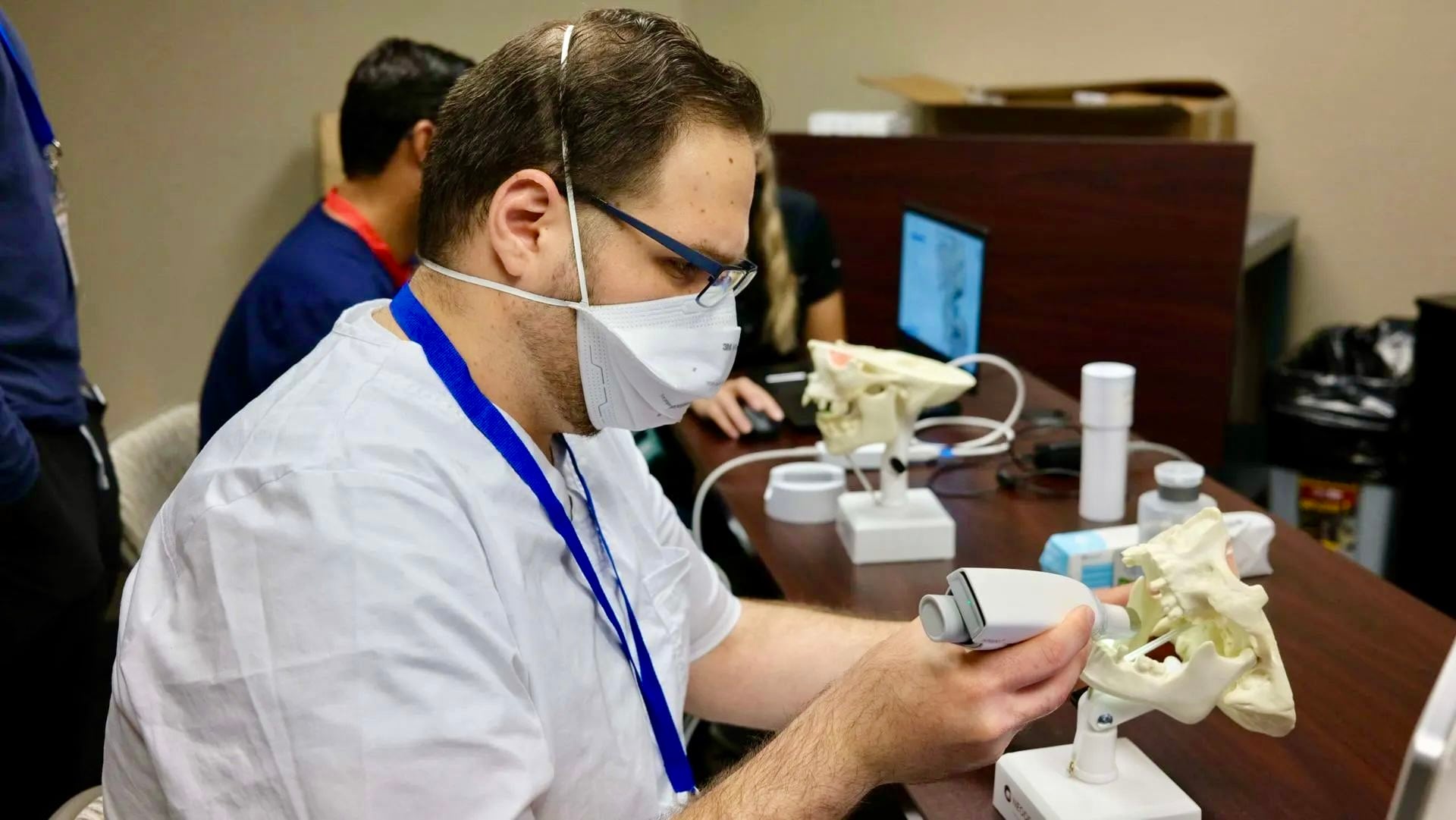
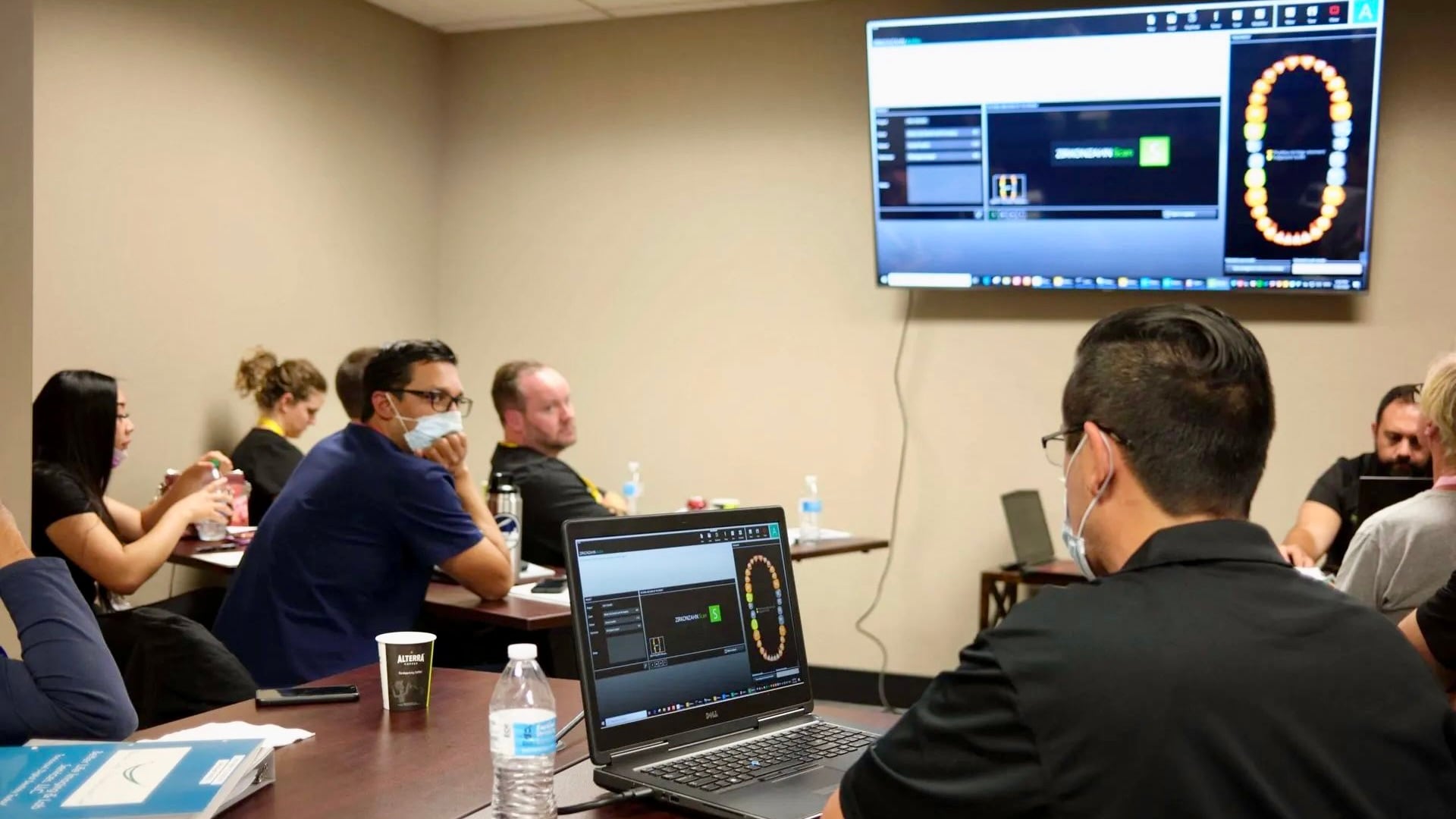
Full Arch Masters’ Design and Finish Course is a four-day, lab-focused course in Fresno, CA. Two days cover digital design in exocad and two days cover hands-on aesthetic finishing on pre-sintered and post-sintered zirconia, including MIYO ceramic layering. FAM separates beginners from advanced designers so each track matches current skill level. Material modules cover PMMA, metallic frameworks, PEEK, zirconia, and crystal-based materials.
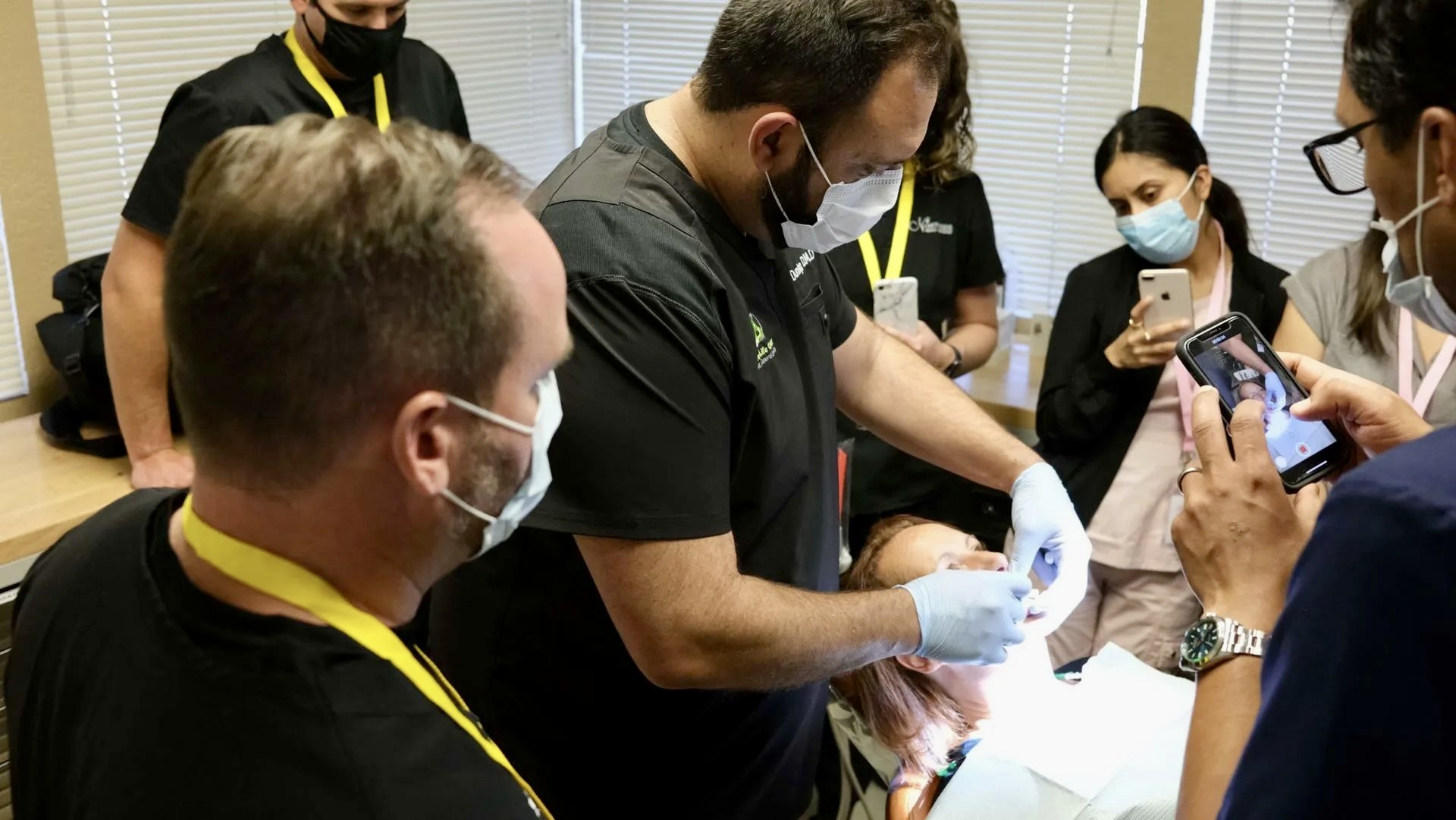
This course fits a lab tech searching for a MIYO zirconia finishing course because it teaches MIYO layering alongside exocad design in one program. The technician leaves able to design and finish the same case instead of learning finishing in isolation. Lab techs can also attend the FP1 Course, where they receive FP1-specific design instruction. They can attend the Flagship Course alongside the dentist they support, so both clinical and lab sides return aligned. After the course, alumni join private group chats with hundreds of FAM-trained dentists, lab technicians, and team members for ongoing case help, and they gain access to the KOL buying group for vendor discounts at no recurring cost.
How to Choose a MIYO Zirconia Finishing Course: A 5-Step Decision Framework
- Identify your gap, whether design, finishing, or both. Be honest about where your cases fall short.
- Decide green-state, final finishing, or both. Once you know your gap, match the track to your case mix and skill level.
- Match format to learning style, choosing hands-on multi-day, single-day workshop, or online. Hands-on builds muscle memory, while online builds orientation.
- Verify CE provider status and credit volume. Confirm AGD PACE approval and credit hours directly with the provider.
- Confirm the course teaches MIYO in a full-arch context and not only on single units. Full-arch characterization requires skills that single-unit courses do not cover.
The highest-value choice for a full-arch lab tech is a program that teaches design and finishing together. That structure defines Full Arch Masters’ Design and Finish Course. For more on how MIYO fits a complete digital lab workflow, see Full Arch Zirconia Design Workflow for Same-Day Teeth.
Common MIYO Finishing Pitfalls and How to Avoid Them
The following errors cause most remakes and inconsistent results in MIYO finishing workflows:
- Over-application of stain or ceramic. This usually happens when a tech tries to correct shade in one pass. Build in thin layers instead and fire between applications so you can watch the color develop gradually.
- Firing temperature errors. These occur when the technician ignores the manufacturer’s published firing chart. Verify furnace calibration and select the correct program for each material.
- Layering that is too thick. Techs often apply material too thickly to save time, which risks chipping and color distortion. Measure application and build gradually in ultra-thin layers.
- Skipping green-state contouring. Some labs try to fix anatomy only after sintering, when adjustments are harder. Contour in the soft state instead, where the material is forgiving and easier to shape.
- Poor handoff between design and finishing. Problems arise when a case is designed without characterization in mind. Design with finishing requirements from the start so the technician has the contours and space they need.
Register for a Full Arch Masters training program
Conclusion and Next Steps
Choosing the right MIYO zirconia finishing course comes down to the five steps outlined above: identify your gap, choose green-state vs. final finishing, match format to learning style, verify CE, and confirm full-arch relevance. Finishing drives the esthetic result in full-arch zirconia work, and the right course teaches finishing inside a complete digital workflow.
Full Arch Masters’ Design and Finish Course serves lab technicians who want MIYO ceramic layering taught alongside exocad design, with continued alumni community support and KOL buying group access after the course. Review your lab’s current finishing workflow, identify whether your gap is design, finishing, or both, and compare course formats against that gap.
If your lab works closely with a clinical team, the Treatment Coordinator Bootcamp trains practice teams on the closing system used in-house at FAM, where the in-house treatment coordinator maintains an 80% closing rate.
Learn more about the Treatment Coordinator Bootcamp
Frequently Asked Questions
What Is a MIYO Zirconia Finishing Course?
A MIYO zirconia finishing course provides hands-on training in the MIYO Liquid Ceramic System, a liquid ceramic layering and characterization system applied to zirconia restorations. Courses cover green-state contouring, color and structure application, MIYO Pink gingival characterization, and efficient lab workflow for full-arch and All-on-X cases. The strongest programs teach MIYO inside a complete digital workflow rather than on isolated single units.
What Is the Difference Between a Green-State and a Final-Finishing MIYO Course?
Green-state courses focus on contouring and characterizing zirconia before sintering, when the material is softer and more forgiving. Final-finishing courses focus on characterization and glazing after sintering, when the technician refines color and surface texture and corrections become harder to reverse. Many full-arch lab techs benefit from both tracks, so a program that covers both in a single enrollment often provides the most efficient path.
How Much Does a MIYO Zirconia Finishing Course Cost?
MIYO-focused course pricing varies widely depending on format, length, and whether design training is included. Cost drivers include number of hands-on days, materials supplied, whether exocad design is included, and CE credit volume. Full Arch Masters’ Design and Finish Course is priced at $6,995 and includes both digital design in exocad and hands-on MIYO finishing across four days.
How Many CE Credits Do MIYO Courses Typically Offer, and Who Approves Them?
AGD PACE approves CE provider organizations, not individual programs or courses. CE credit volumes differ by provider and by specific program. Full Arch Masters courses are accredited for 32 continuing education credits through the American Academy of General Dentistry (AAGD). Always verify CE provider status and credit volume directly with the course provider before registering.
What Is MIYO Pink Used For in All-on-X Cases, and Do I Need a Specific Course to Learn It?
MIYO Pink supports gingival characterization on full-arch and All-on-X zirconia cases by simulating natural soft tissue around the prosthesis. MIYO Structure adds surface texture and anatomical form on monolithic zirconia. Both components are applied after exocad design and milling, during green-state contouring and final finishing, and before glaze. To learn MIYO Pink and Structure effectively, a technician needs a course that addresses All-on-X and full-arch workflows, since single-unit finishing courses rarely cover arch-level gingival design.