Written by: Ryan Dunlop, CEO and Founder of Full Arch Masters and graduate from the Harvard School of Dental Medicine
Key Takeaways for Full Arch Training in 2026
- Live patient full arch implant training must satisfy five core dimensions: clinical feasibility, workflow efficiency, team readiness, legal compliance, and financial impact.
- Most programs meet only two or three of these dimensions. Full Arch Masters Live Surgical Course guarantees two full-arch cases per operator, Colorado Dental Board credentialing, and a photogrammetry-first end-to-end digital workflow.
- The FAM Method uses seven steps from preoperative records through FP1-specific design and team workflow scaling. This structure enables same-day delivery in two to four hours and supports scalable practice revenue.
- Full-team training is essential. Bringing your assistant, treatment coordinator, and lab technician allows the entire practice to run the workflow immediately after the course.
- Alumni report adding $1M+ per year in practice revenue and receive lifetime community access and vendor discounts. Register for an upcoming Full Arch Masters course and evaluate the program against all five dimensions before you commit.
Why Full Arch Demand Outpaces Trained Providers
Approximately 18,753 dental implant providers practice in the United States as of April 2026. At the same time, roughly 500,000 Americans receive implants each year against an aging population projected to exceed 78 million Americans aged 65 and older by 2040. The supply-demand gap is structural, and full-arch procedures sit at the highest-value end of that gap.
For most of the procedure’s history, full-arch treatment relied on analog methods. Practices used physical impressions, cut denture conversions chairside, scheduled multi-day appointments, and sent patients home with swollen tissue. Intraoral scanners, photogrammetry, CBCT imaging, and 3D printing expanded what is possible clinically.
Many programs now claim to teach a “digital workflow” but actually teach a hybrid approach. The FAM Method, Full Arch Masters’ proprietary end-to-end digital workflow, integrates every step into a single repeatable system. The seven steps are:
- Preoperative records and data acquisition
- Photogrammetry and intraoral scanning
- CBCT and digital treatment planning
- exocad design
- Immediate-load conversion
- Final zirconia design and finishing
- FP1-specific design, team implementation, and workflow scaling
Of these seven steps, photogrammetry in step two functions as the structural linchpin. This photogrammetry-first sequence captures implant positions with submicron accuracy before any prosthetic design begins. That difference separates a same-day result delivered in two to four hours from a multi-appointment ordeal.
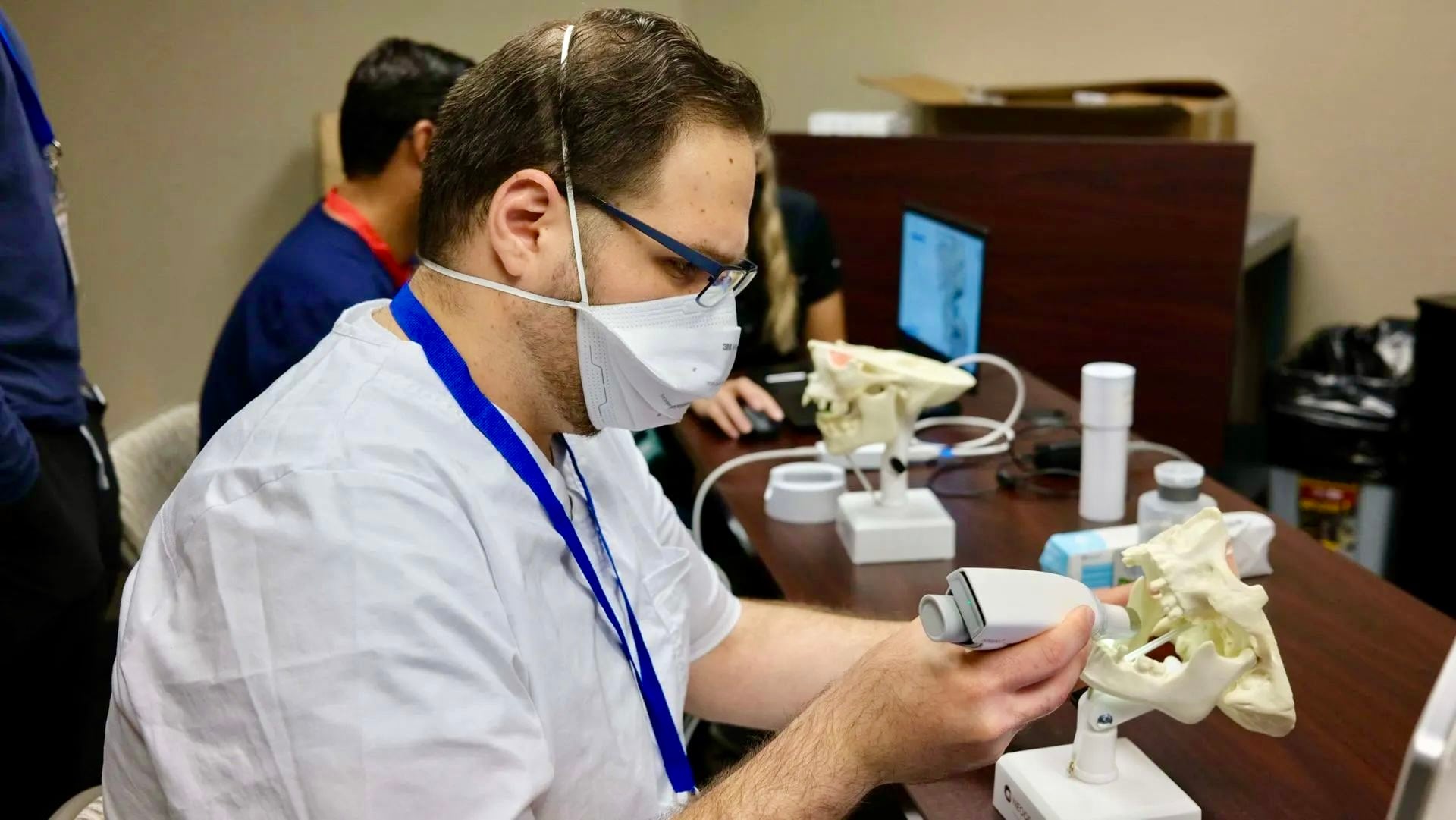
Comprehensive implant training must include hands-on experience on live patients under mentorship, cover both surgical and restorative aspects, include treatment planning and case selection, and prepare clinicians to manage complications so they can implement services immediately upon returning to practice. The FAM Method is built to satisfy each of those criteria as one integrated system rather than a checklist of disconnected modules.
How to Compare Live Surgical Programs by Five Dimensions
The table below applies the five-dimension framework to the Full Arch Masters Live Surgical Course. Data points for the Full Arch Masters row come directly from published course specifications. When a dimension cannot be reduced to a single comparable unit, the comparison appears in the paragraphs that follow.
| Dimension | What to Look For | Full Arch Masters Live Surgical Course |
|---|---|---|
| Clinical Feasibility | Guaranteed full-arch cases per operator on live patients | 2 full-arch cases per Basic or Advanced operator on live volunteer patients |
| Legal Compliance | Host-state board authorization for visiting U.S.-licensed dentists to operate | Colorado Dental Board credentialing submitted 10 days pre-course, contingent on no pending license marks in home state |
| Workflow Efficiency | Photogrammetry-first, end-to-end digital system vs. hybrid | FAM Method: photogrammetry, intraoral scanning, CBCT, exocad, immediate-load 3D-printed conversion, final zirconia |
| Team Readiness | Full-team pricing and curriculum vs. dentist-only | Full-team model with team-member pricing built into every course |
| CE Credits and Alumni Support | Accredited CE hours and post-course community access | 32 CE credits (AAGD-accredited), lifetime alumni group-chat access, and KOL buying group at no recurring cost |
On the legal compliance dimension, dental implant CE requirements do not follow one national checklist. Each dentist must review the rules for the state where they practice, because requirements vary by jurisdiction and can change over time. Most U.S. states do not permit visiting out-of-state dentists to perform surgery on volunteer patients in a CE context. Colorado is one of the few that does, which is why Full Arch Masters hosts its Live Surgical Course in Parker, Colorado. International attendees cannot be credentialed by the Colorado Dental Board because credentialing requires a U.S. dental license, so they attend as Observers.
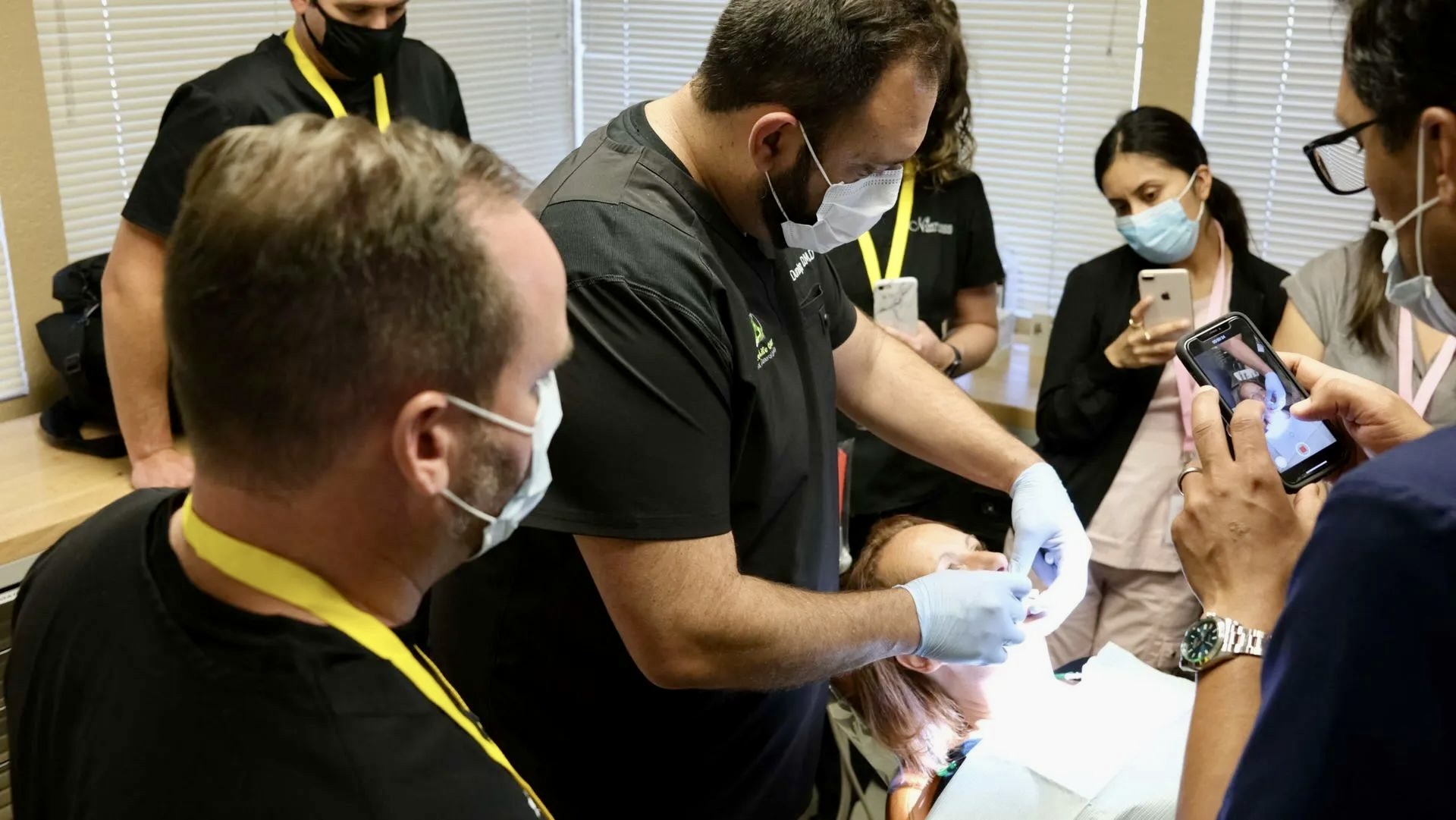
On guaranteed surgical volume, programs differ widely. Some programs advertise 20–40 implants placed per participant across multi-day formats. Others structure volume around full-arch cases rather than individual implant counts. Full Arch Masters guarantees two complete full-arch cases per Basic or Advanced operator. That unit of measure aligns with how a dentist builds a full-arch practice, because revenue and workflow efficiency scale by arch, not by individual implant.
Strategic Trade-offs When Selecting a Course
Three structural trade-offs shape how a practice should evaluate any live surgical training program.
Speed vs. complexity. A shorter course can deliver surgical volume quickly but may skip the prosthetic, lab, and treatment coordination systems that sustain that volume. The FAM Live Surgical Course runs four days and is designed to follow or pair with the Flagship Course, which covers the full FAM Method end-to-end. This sequence matters. Surgical skill without a repeatable workflow usually produces one or two arches a month instead of a scalable practice.
Control vs. outsourcing. Practices that outsource lab work to an external technician create a handoff dependency that slows the workflow and limits same-day delivery. To eliminate that dependency, the FAM Method centers on in-house lab integration, the “one team, one workflow” model, where the lab technician, surgical assistant, and treatment coordinator train on the same system as the operating dentist. This shared training explains why practices that bring their full team to the course can operationalize the workflow on day one instead of spending months translating what the dentist learned.
Standardization vs. customization. A standardized, photogrammetry-first workflow runs faster and more predictably than a case-by-case hybrid approach. The FAM Method is designed for standardization across case types, including atrophic arches that require zygomatic, pterygoid, trans-sinus, or palatal-approach placements. These techniques appear in the Advanced Live Surgical track for dentists who have placed 200 or more full arches in their career.
Current Best Practices for Full-Arch Live Surgical Training
The elements below represent the current standard of care for full-arch live surgical training programs in 2026.
- Preoperative records and data acquisition: CBCT imaging, facial scanning, and intraoral scanning should be completed before the surgical day, with 3D-printed patient models reviewed during pre-planning. Full Arch Masters reviews every CBCT and provides a 3D-printed model of each patient case before operators enter the surgical suite.
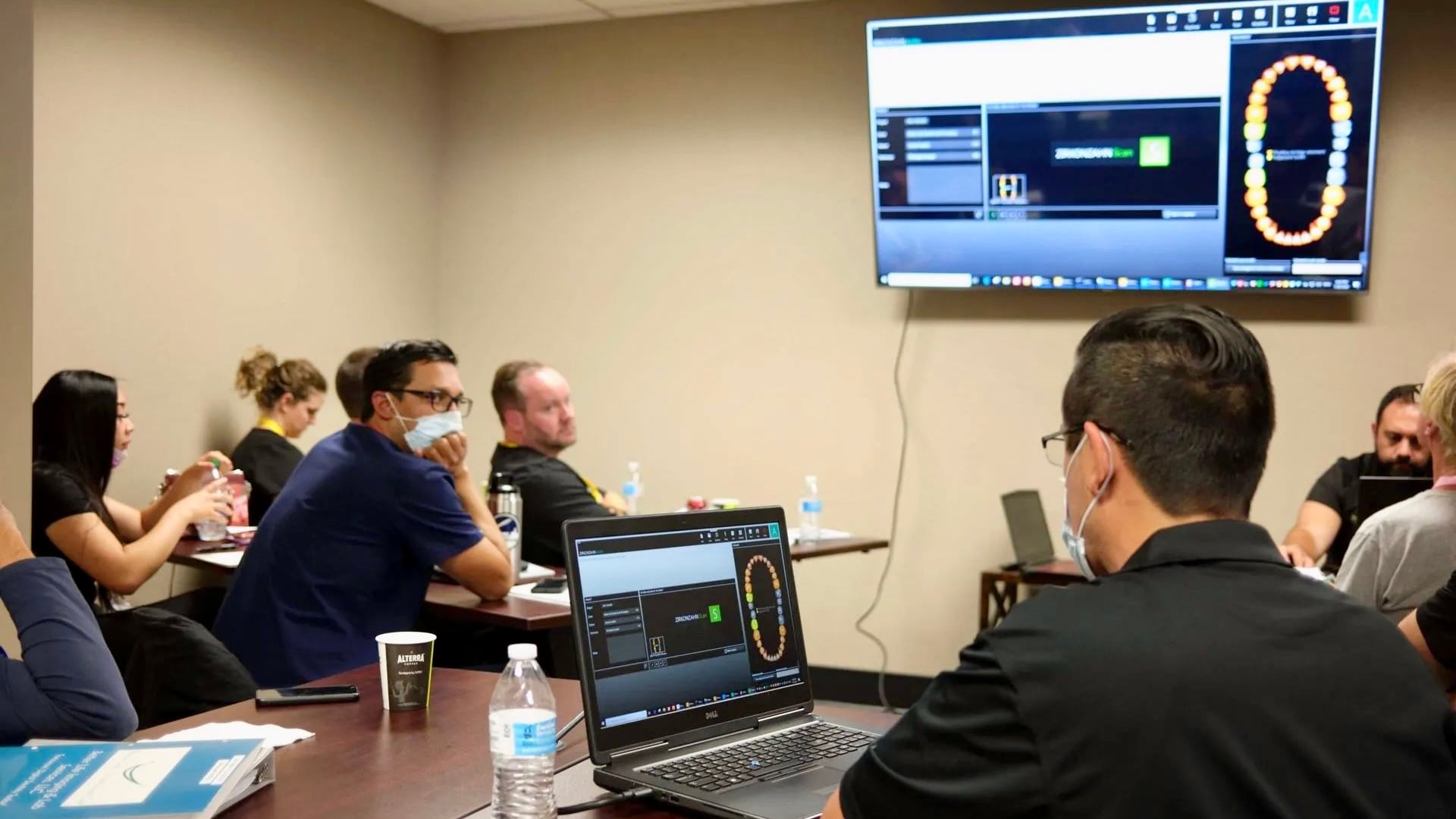
- Photogrammetry and intraoral scanning: Photogrammetry captures implant positions with submicron accuracy after placement and removes the dimensional distortion inherent in physical impression materials. This step forms the foundation that makes same-day delivery in two to four hours realistic.
- CBCT and digital treatment planning: Volumetric imaging drives prosthetically guided implant positioning. Surgical guides derived from CBCT planning reduce intraoperative decision-making and improve angulation consistency across the arch.
- exocad design: Digital prosthetic design in exocad integrates surgical records, photogrammetry data, and facial scan data into a single design file. Full Arch Masters is a certified exocad reseller and teaches all digital design instruction in exocad.
- Immediate-load conversion: 3D-printed immediate-load prosthetics are fabricated and delivered the same day as surgery. This approach removes the multi-appointment workflow that limits most practices to one or two arches per month.
- Final zirconia design and finishing: Final restorations in milled zirconia are designed, contoured, and finished using MIYO ceramic layering techniques covered in the Design and Finish Course.
- FP1-specific design, team implementation, and workflow scaling: FP1 prosthetics differ from FP2 and FP3 in case selection, root banking, surgical approach, and lab design. Team implementation and workflow scaling ensure the full practice, not just the operating dentist, can run the system at volume.
Register for an upcoming Full Arch Masters course to train your full team on every step of this workflow under live-patient conditions.
Readiness and Opportunity Assessment for Your Practice
Before enrolling in any live patient full arch implant training program, a practice should evaluate its current state across six readiness dimensions.
- Current implant volume: How many full arches does the practice place per month? One or two arches per month usually signal a workflow bottleneck rather than a demand problem.
- Team delegation capability: Can the surgical assistant acquire preoperative records independently, and can the treatment coordinator close full-arch consultations without the dentist present? If not, the practice needs team training as well as surgical training.
- Legal compliance readiness: Dentists should verify current state dental board rules on initial training thresholds, hands-on or clinical hour requirements, implant-focused CE during renewal cycles, acceptable provider types, and whether rules differ for planned procedures before enrolling in any live-patient implant course.
- Digital workflow maturity: Is the practice running a true end-to-end digital workflow, or a hybrid that still uses physical impressions and off-site lab work?
- Post-course support requirements: Does the program provide ongoing case support after the course ends, or does support stop with the certificate? Mentorship programs accelerate production by supplying an experienced implant clinician to review CBCT scans, treatment plans, and surgical approaches for a dentist’s first cases, which converts clinical confidence into higher patient case acceptance.
- Revenue growth potential: Full Arch Masters alumni report adding $1M+ per year in practice revenue after adopting the FAM Method. This outcome comes from a faster workflow, higher case acceptance from trained treatment coordinators, and team delegation that removes the dentist from non-billable tasks.
Each dimension should be assessed before you select a training program so the course you choose matches your current capabilities and growth goals.
Common Pitfalls in Live Patient Full Arch Training
- Attending without the team. A dentist who returns from a surgical course without a trained assistant, treatment coordinator, or lab technician cannot fully operationalize the workflow. The FAM Method is built for full-team execution. Bringing the team to training remains the single highest-leverage decision a practice can make.
- Choosing a program based on implant count rather than arch count. Individual implant placements do not represent the relevant unit for a full-arch practice. Two complete full-arch cases per operator, the guarantee in the Full Arch Masters Live Surgical Course, provide a more meaningful measure of surgical readiness than a raw implant count.
- Ignoring legal compliance. ADA CERP and AGD PACE recognition identify approved continuing education providers but do not replace or guarantee acceptance by a state dental board for implant training or license renewal. Dentists must confirm that the host state’s dental board authorizes visiting out-of-state dentists to operate before they enroll in any live surgical program.
- Treating the course as the endpoint. Advanced implant mentoring programs often extend support long after an initial course ends through a continuous, personalized process that includes periodic check-ins and case reviews tailored to the dentist’s specific goals. Full Arch Masters provides lifetime alumni group-chat access with hundreds of FAM-trained dentists, lab technicians, and team members. Alumni receive case help on demand, not just a one-time certificate.
- Running a hybrid workflow and calling it digital. Partial impressions, off-site lab work, and multi-day appointments limit a practice to one or two arches per month regardless of surgical skill. The FAM Method’s photogrammetry-first, end-to-end integration enables same-day delivery in two to four hours and the volume required to reach the revenue growth alumni consistently report.
Frequently Asked Questions
How many implants do you actually place at the Full Arch Masters Live Surgical Course?
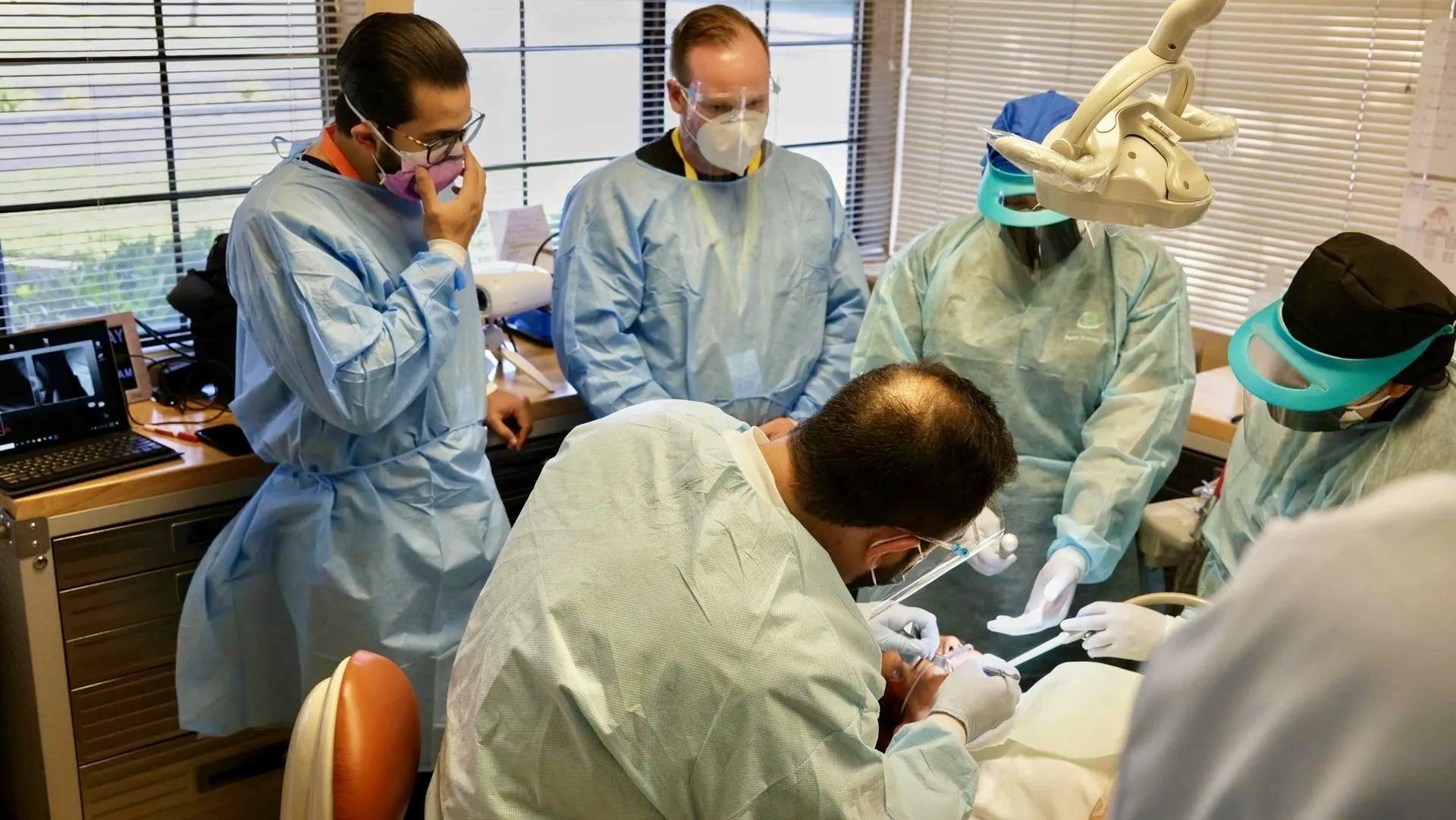
Each Basic and Advanced operator performs two complete full-arch cases across the two surgical days of the Live Surgical Course in Parker, Colorado. Operators work in teams, with each operator handling one quadrant per case. A standard full-arch case involves four to six implants, so each operator places eight to twelve implants across their two cases. The more meaningful measure is two complete full-arch workflows from surgical planning through immediate-load delivery, because that unit translates directly to practice revenue.
Is live surgery legal in my state?
As noted in the comparison section, Colorado’s dental board is one of the few that permits this type of hands-on training for visiting dentists. Full Arch Masters submits each operator’s credentials to the Colorado Dental Board ten days before each course, contingent on no pending marks against the dentist’s license in their home state. Dentists should also verify their own state’s CE requirements for implant training, because requirements vary by jurisdiction and can include minimum hands-on clinical hours, specific provider accreditation, and renewal-cycle CE mandates. International dentists cannot be credentialed by the Colorado Dental Board because credentialing requires a U.S. dental license, so they attend the same course as Observers.
What happens after the course ends?
Every Full Arch Masters attendee joins private alumni group chats with hundreds of FAM-trained dentists, lab technicians, and team members. The community includes a dentist-only chat for sensitive practice and personnel questions and a main multi-role chat for clinical and operational case help. Alumni also receive the complete digital resource library that covers surgical room setup checklists, finishing techniques, treatment coordinator forms and presentations, and consent templates. Access to the KOL (Key Opinion Leader) buying group, which provides vendor discounts on Neodent implants, exocad licenses, 3D printers, and photogrammetry systems, continues at no recurring cost for the life of the alumni relationship. There is no subscription fee and no expiration.
How much revenue can I add by adopting the FAM Method?
Full Arch Masters alumni report adding $1M+ per year in practice revenue after adopting the FAM Method. The mechanism operates across three levers. A faster end-to-end digital workflow allows more arches per week at higher margin. The treatment coordination and closing system, taught by FAM’s in-house treatment coordinator who maintains an 80% closing rate, converts more of the full-arch consultations a practice already sees. The team delegation model removes the dentist from non-billable tasks and frees chair time for additional surgical cases. The $1M+ figure reflects reported alumni outcomes, not a guaranteed projection.
Can my lab technician and treatment coordinator attend with me?
The full-team training model sits at the center of Full Arch Masters’ teaching approach. Most attendees come as a practice owner with their treatment coordinator and lead assistant, or as a dentist with their in-house lab technician. Team-member pricing is built into every course at $2,500 per additional team member for the Flagship Course, with separate pricing structures for the Design and Finish Course and the Treatment Coordinator Bootcamp. Full Arch Masters strongly recommends bringing the full team so the entire practice aligns on the same workflow on day one instead of the dentist returning alone and trying to translate the system to an untrained team.
Conclusion and Next Steps for Your Full Arch Practice
Selecting a live patient full arch implant training program in 2026 requires evaluating five dimensions at the same time: clinical feasibility, workflow efficiency, team readiness, legal compliance, and financial impact. Programs that satisfy only two or three of these dimensions produce dentists with surgical experience but practices that cannot scale. The Full Arch Masters Live Surgical Course in Parker, Colorado combines guaranteed two full-arch cases per operator, Colorado Dental Board credentialing for legal compliance, a photogrammetry-first end-to-end digital workflow, full-team pricing, 32 AAGD-accredited CE credits, and lifetime alumni community access at no recurring cost.
The FAM Method, seven integrated steps from preoperative records through FP1-specific design and team workflow scaling, is taught as a complete operating system rather than a collection of techniques. The revenue outcomes described earlier, including $1M+ annual increases, result from this integrated approach. The continued alumni community, the KOL buying group, and the digital resource library extend that value long after the course ends.
Register for an upcoming Full Arch Masters course and bring your full team so you return home with one team and one workflow starting on day one.