Written by: Ryan Dunlop, CEO and Founder of Full Arch Masters and graduate from the Harvard School of Dental Medicine
How This Guide Helps You Choose a Full-Arch Course
-
Live-patient full-arch implant courses deliver immediate clinical experience and CE credits that lecture-based programs cannot match.
-
Evaluate programs on five criteria: live-patient case volume, U.S. state credentialing, CE credit quantity, full-team training, and post-course support.
-
Full Arch Masters stands out by scoring highly across all five criteria with its Live Surgical Course in Parker, CO.
-
The FAM Method provides a seven-step digital workflow that enables same-day full-arch restorations and scalable practice revenue.
-
Learn the complete FAM Method and join the alumni community by registering at Full Arch Masters.
Where Full-Arch Implant Training Stands Today
Full-arch implant dentistry has shifted from analog to digital over the past decade. The analog model, with physical impressions, off-site lab work, and multi-day appointments, has given way to fully digital same-day protocols. Intraoral scanners, CBCT imaging, photogrammetry, and 3D printing now make it possible to take a patient from no teeth to a screwed-in restoration in two to four hours. In practice, however, many dentists advertising a “digital workflow” still run a hybrid system with partial digital records, partial impressions, and a lab handoff that adds days or weeks.
The regulatory landscape adds another layer of complexity. Dental implant CE requirements do not follow one national checklist, because each state maintains its own dental practice act. Most states do not permit visiting out-of-state dentists to perform surgery on patients during a CE course. Hands-on live full-arch surgery is therefore difficult to access domestically. Colorado is one of the few states where the dental board allows credentialed visiting U.S.-licensed dentists to operate on volunteer patients, which is why Full Arch Masters hosts its Live Surgical Course there.
The revenue math explains why full-arch training often delivers outsized ROI. The U.S. dental implants market is projected to grow from approximately USD 1.54 billion in 2024 to USD 3.22 billion by 2033 at a CAGR of 8.6%, driven by aging populations and increased patient awareness. A single full-arch case generates multiples of what a single-tooth implant produces. Practices that build a repeatable full-arch workflow can add significant top-line revenue, and many Full Arch Masters alumni report seven-figure annual increases.
Explore Full Arch Masters training options and upcoming course dates.
How the FAM Method Structures Full-Arch Cases
The FAM Method, Full Arch Masters’ proprietary digital workflow, is a seven-step integrated system. It takes a patient from no teeth, or heavily decayed teeth, to a screwed-in, same-day restoration in two to four hours. Every Full Arch Masters course teaches some or all of these steps, and the Live Surgical Course puts operators through the full sequence on live patients.
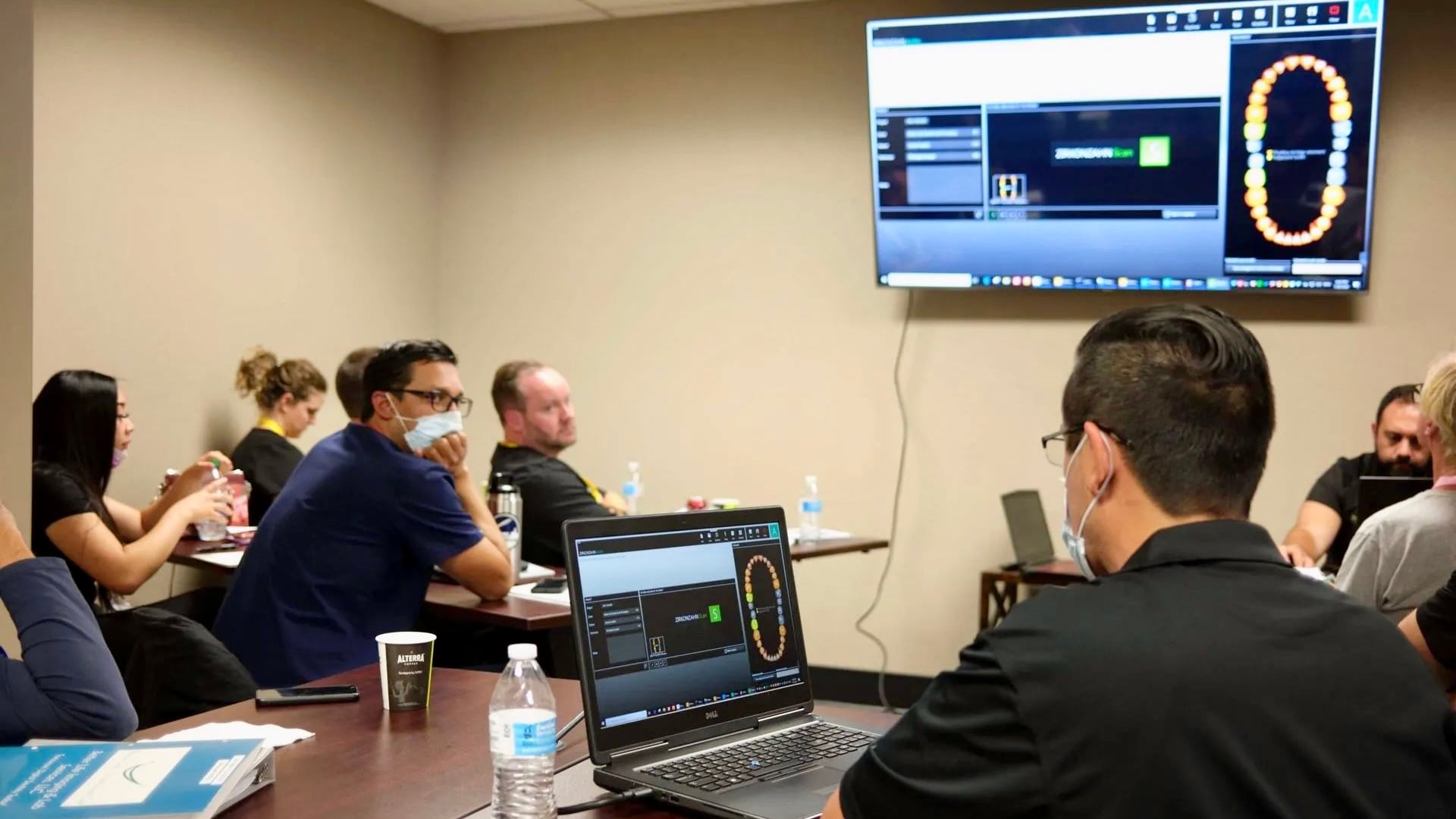
The seven steps are:
-
Preoperative records and data acquisition, including facial scanning, photographs, and baseline clinical records that anchor the entire digital plan.
-
Photogrammetry and intraoral scanning, capturing implant positions with submicron accuracy using photogrammetry systems such as the iCam4D, combined with intraoral scan data.
-
CBCT and digital treatment planning, integrating cone-beam CT data with scan records to plan implant positions, angulations, and prosthetic emergence profiles before the patient is in the chair.
-
exocad design, designing the immediate-load and final prosthetics in exocad (DentalCAD, exoplan, or ChairsideCAD), the industry-standard CAD platform for full-arch digital workflows.
-
Immediate-load conversion, 3D-printing and delivering a same-day screw-retained provisional prosthesis at the time of surgery.
-
Final zirconia design and finishing, designing, milling, and finishing the definitive zirconia restoration, including green-stage contouring and MIYO ceramic layering for aesthetics.
-
FP1-specific design, team implementation, and workflow scaling, applying FP1 prosthetic logic where indicated and systematizing the workflow across the clinical team for repeatable, scalable case volume.
This structure contrasts sharply with single-implant training programs, which focus on individual placement mechanics and generate $2,000–$4,000 per case. A full-arch All-on-X case brings $20,000–$40,000 per arch. Practices that build the workflow to deliver it predictably can scale to multiple arches per week without proportional increases in chair time.
Learn how the FAM Method scales your practice revenue.
Strategic Trade-Offs When Comparing Full-Arch Programs
The first major trade-off dentists face is domestic credentialed training versus international travel programs. International programs, particularly those in Mexico, Peru, and Central America, can offer higher surgical volume in a single week. Some international programs report that total immersion learning can reduce time to clinical competency by up to 40% compared to scattered domestic weekend courses. However, international programs often provide no U.S. state credentialing, no CE credits recognized by U.S. dental boards, and no continuity with the team back home.
The second trade-off is dentist-only attendance versus full-team training. A dentist who returns from a course without a trained assistant, treatment coordinator, and lab technician cannot operationalize the workflow because the FAM Method requires coordinated execution across multiple roles. This is why the Flagship Course is structured so the entire practice attends together, ensuring every team member learns their part of the integrated system at the same time.
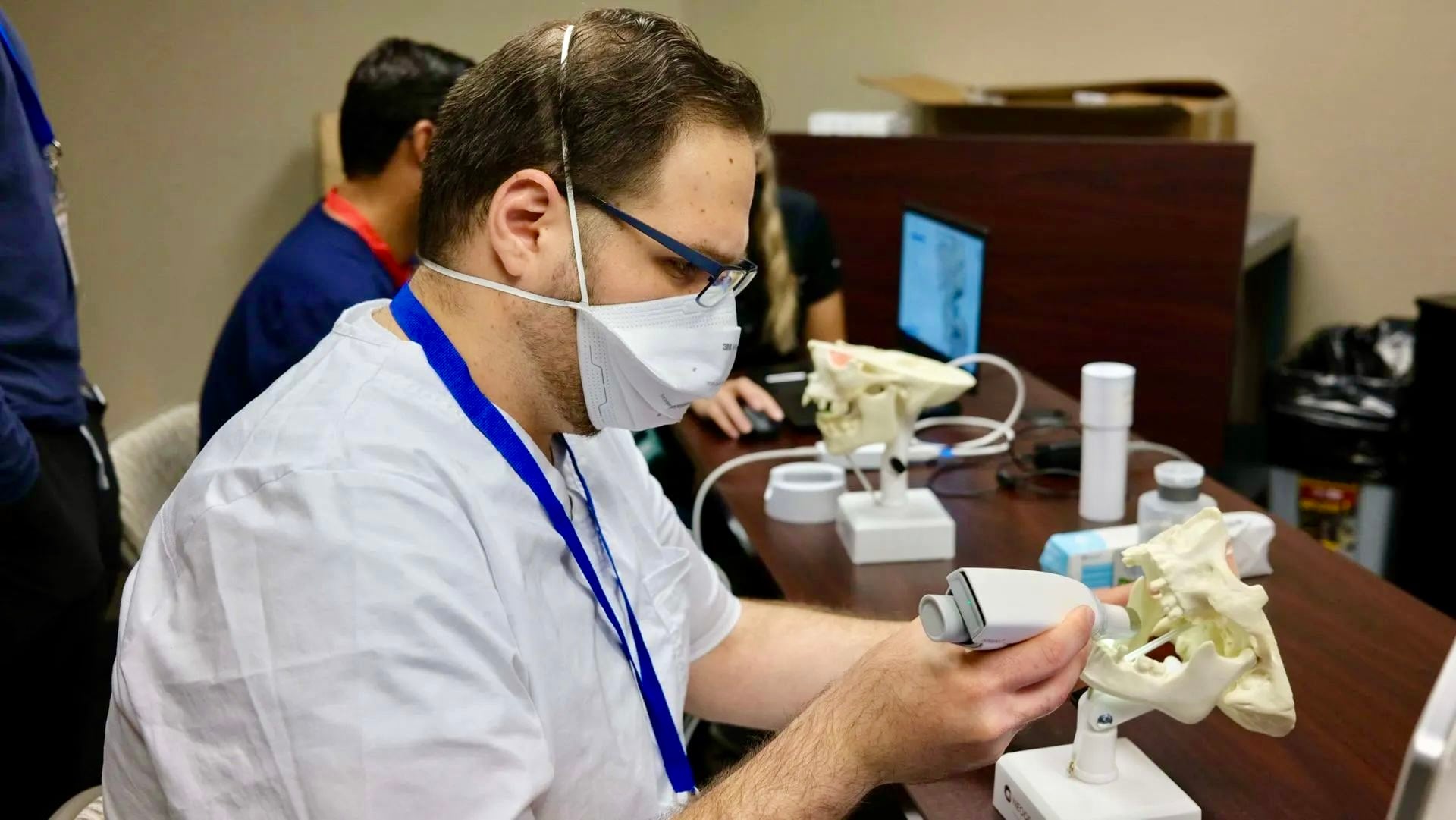
The third trade-off is one-time training versus continued community. Most programs end when the course ends. Full Arch Masters alumni join private group chats with hundreds of FAM-trained dentists, lab technicians, and team members, which provides case help on demand for the life of the relationship.
Beyond community support, CE credit volume also varies significantly across programs. Comparable live-patient programs award 16 CE credits for two-day courses and 32–40 CE credits for four-day courses. Full Arch Masters awards 32 CE credits per course through AAGD accreditation, which ranks among the highest single-course CE credit awards in the domestic live-patient full-arch category. The Fellowship bundle delivers more than 90 CE hours across the full program.
As noted earlier, practices implementing the FAM Method see substantial revenue increases and often recover training costs within the first year of placing cases. The KOL (Key Opinion Leader) buying group, available to all FAM alumni at no recurring cost, further reduces overhead through vendor discounts on Neodent implants, exocad licenses, and 3D printing equipment.
Benchmarks of High-Quality Live-Patient Programs
Evidence-based benchmarks for live-patient implant training have converged around several structural standards. These standards distinguish high-quality programs from volume-focused alternatives.
-
Faculty-to-student ratios. Low student-to-instructor ratios during hands-on live-patient training allow mentors to provide direct, real-time supervision. When ratios exceed 10:1 and approach 40:1, supervision shifts from active guidance to passive observation. Full Arch Masters caps the Flagship Course at eight dentists per cohort and maintains low operator-to-mentor ratios throughout the Live Surgical Course.
-
Mentor supervision model. Best-practice programs use a progressive model where clinicians start with simpler cases under close guidance and gradually take on more complex procedures as the instructor confirms readiness, which respects the documented learning curve where failure rates are highest in the first 50 cases. FAM’s Basic and Advanced operator tracks reflect this principle directly.
-
Accreditation. ADA CERP and AGD PACE provide provider recognition that supports a renewal file but do not replace state board requirements. Full Arch Masters courses are accredited through AAGD accreditation. Dentists should verify that any program’s CE credits satisfy their specific state board’s renewal requirements.
-
Post-course mentorship. Quality programs include post-course mentorship structures such as one-on-one guidance, case review support, and access to alumni networks or study clubs. FAM’s continued community, including private group chats, a digital resource library, and KOL buying group access, fulfills this benchmark at scale.
Practice Readiness Checklist Before You Enroll
Before enrolling in a live-patient full-arch implant course, evaluate your practice against the following criteria.
-
Prior implant experience. Some single-implant placement experience is recommended before the Live Surgical Course Basic Operator track. The Flagship Course accommodates dentists at all experience levels.
-
CBCT access. In-office or referral-based CBCT imaging is required for treatment planning. Cases planned without CBCT carry a measurably higher risk of intraoperative complications.
-
Intraoral scanner availability. A digital workflow requires a scanner, and the FAM Method is built around intraoral scanning from step one.
-
Team delegation capacity. Identify which team members will attend alongside the dentist, such as an assistant, treatment coordinator, and lab technician.
-
Treatment coordination infrastructure. A defined consultation and closing process is necessary to convert full-arch leads. FAM’s in-house treatment coordinator maintains an 80% closing rate.
-
Patient financing options. Having financing options available increases case acceptance rates and reduces patient decision time.
-
Clean license status. Colorado Dental Board credentialing for the Live Surgical Course requires no pending marks against the dentist’s license in their home state.
-
Commitment to post-course implementation. The FAM Method requires team alignment and workflow adoption, not just attendance. Practices that bring the full team and commit to implementation timelines see the fastest ROI.
Common Pitfalls That Limit Course ROI
The most expensive mistake in full-arch implant training is returning home unable to operate. This outcome often occurs when a program teaches the procedure but not the system around it, such as marketing, treatment coordination, and team delegation. Without these supporting elements, the dentist has new clinical knowledge but no operational infrastructure to deploy it, which leaves the skills effectively unusable in practice.
-
No ongoing case support. Full-arch cases are complex and variable. A dentist who completes a course and has no peer community to consult when a difficult case arrives is effectively practicing in isolation. The FAM alumni group chats exist specifically to close this gap.
-
Hybrid digital workflows. Attending a course that teaches partial digital records, such as scanner plus physical impression or digital design plus analog delivery, produces a workflow that is slower and less predictable than a fully integrated system. The FAM Method is end-to-end digital by design.
-
Dentist-only attendance. A dentist who returns from training without a trained team cannot scale. The assistant who does not know photogrammetry, the treatment coordinator who cannot close a full-arch consult, and the lab technician who cannot design in exocad each become a bottleneck. Bringing the team is not optional, because it is the mechanism that turns training into a practice system.
-
Underestimating CE credit requirements. State-by-state CE mandates can change, and a CE certificate alone may not satisfy state board requirements. Verify your state’s specific rules before selecting a program.
FAQ
Is live surgery legal in the U.S.?
Live-patient dental surgery during a CE course is legal in the U.S., but the regulatory framework varies significantly by state. Most states do not permit visiting out-of-state dentists to perform surgery on patients during a continuing education program. Colorado is one of the few states where the dental board allows credentialed visiting U.S.-licensed dentists to operate on volunteer patients under supervision. Full Arch Masters submits each operator’s credentials to the Colorado Dental Board ten days before each Live Surgical Course, contingent on no pending marks against the dentist’s license in their home state. International dentists cannot be credentialed by the Colorado Dental Board because credentialing requires a U.S. dental license, so they may attend as Observers.
How many CE credits for live implant surgery?
CE credit awards for live-patient implant courses vary widely by program length and accreditation body. Two-day programs in the live-patient category commonly award 16 CE credits. Full Arch Masters awards 32 CE credits per course through AAGD accreditation, which ranks among the highest single-course CE credit awards available in domestic live-patient full-arch training. The full FAM Fellowship program delivers more than 90 CE hours across all courses combined. Dentists should verify that any program’s CE credits satisfy their specific state board’s renewal requirements, because state mandates differ.
Which courses give the most CE credits for full-arch?
Among domestic live-patient full-arch programs, Full Arch Masters’ Live Surgical Course awards 32 CE credits per course through AAGD accreditation. This is the highest single-course CE credit award in the domestic live-patient full-arch category that also includes Colorado Dental Board credentialing, two full arches per operator, and full-team training options. The FAM Fellowship bundle, which combines the Flagship, Live Surgical, Design and Finish, and a fourth course, delivers more than 90 CE hours total and forms the highest-volume CE pathway in the FAM curriculum.
What exactly happens during the Full Arch Masters Live Surgical Course?
The Live Surgical Course is a four-day program in Parker, CO. The first two days cover case planning, lecture content, and CBCT review of every patient case, including 3D-printed models of each arch. The final two days are live surgical operating days. Each Basic Operator, with fewer than 200 career arches placed, and each Advanced Operator, with 200 or more career arches, performs two full-arch cases under expert mentor supervision, working in teams with one quadrant per operator per case. CRNAs provide general anesthesia onsite. The Advanced Operator track focuses on zygomatic, pterygoid, trans-sinus, palatal-approach, and custom subperiosteal placements for atrophic cases, which are techniques most full-arch programs do not cover. Observers attend without operating and report learning outcomes comparable to hands-on participants.
Can my lab technician and treatment coordinator attend with me?
Full-team attendance sits at the center of the FAM Method. Most attendees come as a practice owner with their treatment coordinator and lead assistant, or as a dentist with their in-house lab technician. Team-member pricing is built into every course, at $2,500 per additional team member for the Flagship Course. The Design and Finish Course is built specifically for lab technicians and covers two days of digital design in exocad and two days of aesthetic finishing on zirconia. The Treatment Coordinator Bootcamp trains front-office and TC team members on the closing system FAM uses in-house, where the in-house treatment coordinator maintains an 80% closing rate. Bringing the full team is the mechanism that turns the training into a practice system on day one.
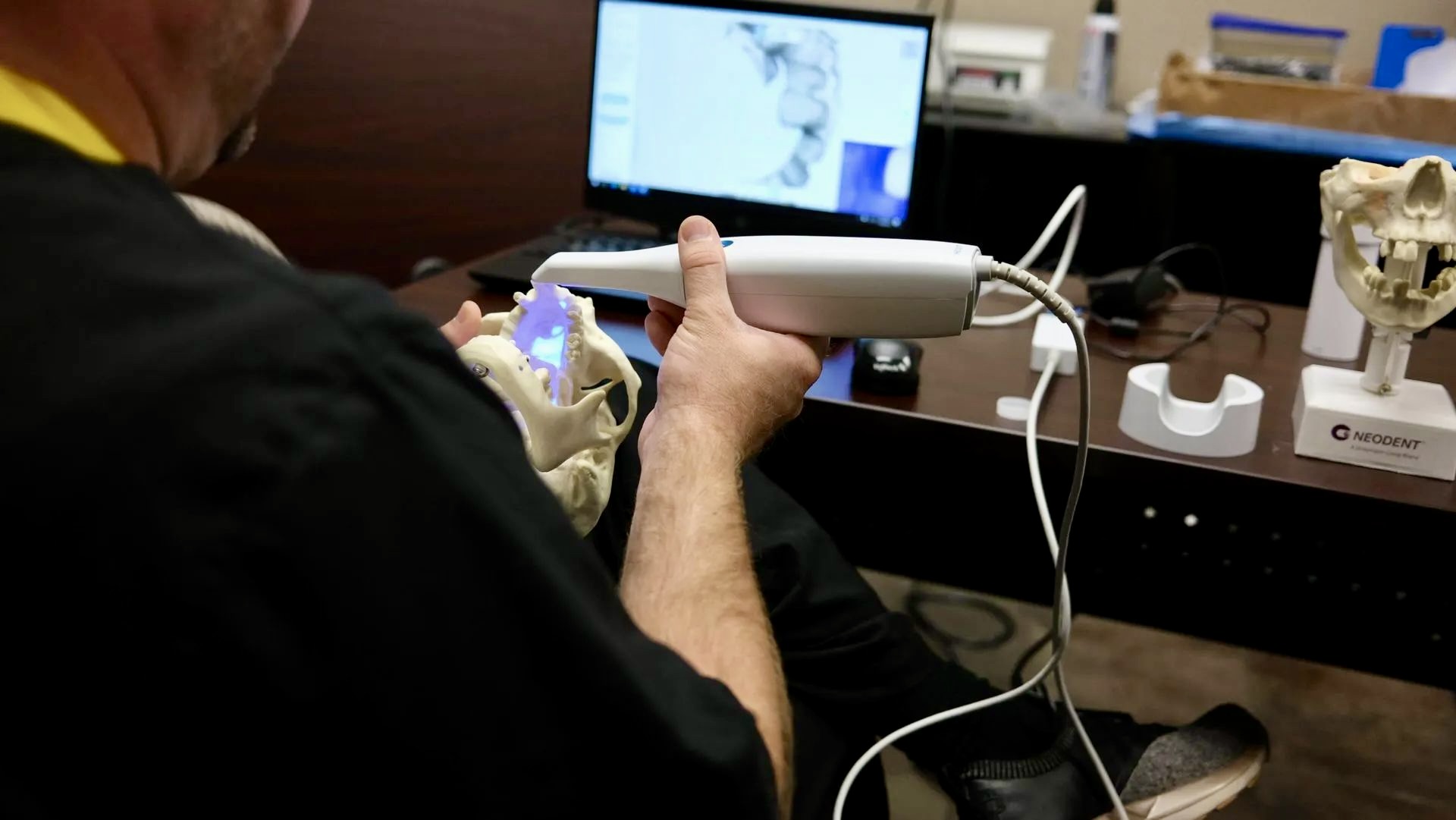
What post-course support does Full Arch Masters provide?
Every Full Arch Masters alumnus joins continued private group chats with hundreds of FAM-trained dentists, lab technicians, and team members. These include a dentist-only chat for sensitive practice and personnel questions and a main multi-role chat for clinical and operational case help. Alumni also receive the full digital resource library covering surgical room setup checklists, finishing techniques, treatment coordinator forms, consent templates, and Dr. Dunlop’s lecture materials. KOL (Key Opinion Leader) buying group access, which delivers vendor discounts on Neodent implants, exocad licenses, 3D printers, and other equipment, is included at no recurring cost for the life of the alumni relationship.
Join the Full Arch Masters alumni community.
Conclusion with Next Steps
A live-patient dental implant course with CE credits is only as valuable as its legal access, case volume, team integration, and post-course support. Programs that score well on one criterion but not the others leave practices unable to operationalize what they learned. The evaluation framework remains straightforward: live-patient case volume per operator, U.S. state credentialing, CE credit quantity and accreditation, full-team training inclusion, and continued community after the course ends.
Full Arch Masters delivers across all five criteria. The Live Surgical Course in Parker, CO provides live-patient training under Colorado Dental Board credentialing. Every course awards 32 CE credits through AAGD accreditation. The Flagship Course is built for the full team. Every alumnus gains access to the continued support community and KOL buying group benefits.
The revenue impact is substantial and well documented across the alumni base. The workflow is transparent and teachable. Any practice willing to learn it and build the team to run it can apply the same system.