
Written by: Ryan Dunlop, CEO and Founder of Full Arch Masters and graduate from the Harvard School of Dental Medicine
Key Takeaways
-
Track case acceptance by both procedure count and dollar value, because large cases like full-arch implants are declined most often and pull the rate down.
-
Use visual diagnosis tools and structured discovery questions so patients help diagnose their condition before any financial discussion begins.
-
Separate clinical value-building from financial logistics with a structured team handoff that keeps the provider and treatment coordinator on the same script.
-
Run a three-touch reactivation cadence at 48 hours, 2 weeks, and 60 days to recapture declined cases and lift overall acceptance rates.
-
Full Arch Masters offers the Treatment Coordinator Bootcamp and the FAM Method to help practices install the complete 80% operating system; learn more here.
Step-by-Step Process: The 7-Step Case Acceptance Operating System
The seven steps below form a complete operating system that addresses the three root causes of low case acceptance: measurement gaps, handoff gaps, and follow-up gaps. Install each step in sequence over 30 days so every change has a clear owner, timeline, and measurable outcome.
-
Establish a baseline measurement. Calculate your current case acceptance rate using the accepted treatment value ÷ presented treatment value formula, tracked both by procedure count and by dollar value. By-dollar acceptance typically falls about 15 percentage points below by-procedure acceptance, with national averages of 50-60% by procedure versus 35-45% by dollar value because large cases, such as implants and full-arch restorations, are declined most often. Run both numbers monthly to establish your baseline. After you have that baseline, tag every declined case above a threshold (for example, $1,500) by which conversation caused the loss: chairside diagnosis, financial discussion, or silent walkout. This tagging shows which part of the process needs the most attention.
-
Use visual diagnosis tools at chairside. Display intraoral photos and radiographs on a screen the patient can see. When patients co-diagnose the problem alongside the provider, acceptance of the recommended treatment rises because the clinical need feels concrete, not abstract. Follow the image with a plain-language consequence statement such as “If we leave this untreated, here is what happens.” Then ask a teach-back question: “What is your understanding of what we would do?” For full-arch implant cases, the FAM Method integrates CBCT imaging and facial scanning into the consultation so patients see their own anatomy and understand the treatment plan before any financial conversation begins.
-
Ask structured discovery questions before presenting treatment. Use Dental A Team’s four-question clinical framework before any financial logistics are addressed. Ask what you see. Explain what happens if it is not treated. Walk through which options make sense for this patient. Clarify why one option is better than another. These questions build clinical urgency and patient ownership before cost enters the conversation.
-
Sequence clinical value-building before financial logistics. Separating the clinical recommendation from the financial conversation is essential, because a disconnected financial discussion signals that the practice focuses on money rather than care. The provider builds clinical value in the operatory and clearly explains the recommended treatment. The treatment coordinator then handles financial options at the front. Treat these as two distinct conversations, not a single blended one.
-
Execute a structured team handoff. Sunrise Dental Solutions client audits show an average 25% increase in case acceptance within 60 days of training teams on a structured five-component handoff. The provider introduces the treatment coordinator by name, restates the recommended treatment using identical clinical language, and sets the expectation that the patient will schedule before leaving. The provider then exits so the treatment coordinator can handle financial logistics without the patient feeling pressured to negotiate. When clinical team members educate the patient on the why, urgency, and necessity of treatment before handing off, patients enter financial discussions already believing the care matters. That belief creates the conditions under which financing conversations succeed.
-
Run a declined-treatment reactivation cadence. Place every declined case above your threshold into a structured follow-up sequence. Follow-up timing should occur at 48 hours, 2 weeks, and 6 weeks after the visit. At 48 hours, place a warm phone call that references the specific treatment and invites a no-pressure conversation. At 2 weeks, send a personalized email or SMS that mentions financing options. At 60 days, send a final outreach that either closes the loop or moves the case to a longer-cycle recall list. Dental practices using multi-touch reactivation sequences typically achieve 8–30% reactivation rates, compared with 1–8% for single-touch outreach.
-
Review a weekly case acceptance dashboard. Every Monday, the practice manager or treatment coordinator pulls three numbers: overall acceptance rate by dollar, provider-specific acceptance rates, and the count of declined cases that have not yet received a reactivation contact. Tracking unscheduled treatment is a daily task, and the front office workflow should include reviewing the unscheduled treatment list every morning. That weekly review identifies the cases that need attention, and the daily list review turns those insights into consistent reactivation work.
Each step is measurable, assignable to a specific team role, and usable across general dentistry and full-arch implant workflows without changing the underlying logic.
Conversation Tools and Templates for Higher Acceptance
Discovery Question Template
Use these four questions in sequence before presenting any treatment plan:
-
“What are you noticing about this area of your mouth?”
-
“If we leave this untreated for another year, here is what typically happens. How does that feel to you?”
-
“There are a few ways we can address this. Let me walk you through the options that make sense for your situation.”
-
“Based on what you have told me about your goals, here is the option I recommend and why.”
Handoff Script Template
The provider delivers this in the operatory before exiting:
“[Patient name], I want to introduce you to [TC name], who is going to walk you through the next steps and make sure all your questions are answered. [TC name], [patient name] and I just reviewed [specific treatment]. We are recommending [treatment] to [clinical outcome in plain language]. [Patient name] is ready to talk through timing and options.”
The treatment coordinator then mirrors the provider’s exact clinical language throughout the financial conversation.
Reactivation Sequence Template
-
48 hours (phone): Warm reference to specific treatment, and offer a no-pressure conversation.
-
2 weeks (email or SMS): Personalized message referencing their oral health need, and mention financing options.
-
60 days (email): Final outreach with a direct booking link and a one-line financing reminder.
30-Day Rollout Plan for the Operating System
-
Week 1: Pull baseline numbers, including overall acceptance rate by dollar and by procedure, provider-specific rates, and a count of declined cases in the past 90 days.
-
Week 2: Train the clinical team on visual diagnosis protocols and the four-question discovery framework. Role-play the handoff script in a morning huddle.
-
Week 3: Launch the reactivation cadence on all declined cases above threshold from the past 90 days. Assign ownership to a single team member.
-
Week 4: Run the first weekly dashboard review. Compare the current acceptance rate to baseline. Identify which conversation step is causing the most losses and adjust training accordingly.
A system installed over 30 days with consistent weekly review usually produces measurable movement in acceptance rate within 60 days.
Common Challenges & Troubleshooting
Resistance to Measurement
Teams that have never tracked case acceptance by dollar value often resist the metric because it surfaces uncomfortable data. Frame the dashboard as a diagnostic tool, not a performance review. Start with the practice-level number before breaking it down by provider. Tracking case acceptance rate as a standard KPI normalizes the conversation and removes the stigma from the number.
Mixed Clinical and Financial Messaging
Unclear handoffs between clinical and financial team members cause patients to leave unsure about treatment, which forces later follow-up that loses urgency, trust, and momentum. Run quarterly role-play sessions that walk the full patient path from diagnosis through checkout. During those sessions, check whether the handoff clearly conveyed treatment details, fee, urgency, and next steps. When patients hear the same message from multiple team members, it feels intentional and credible, and that consistency supports a yes.
Stalled Reactivation
Reactivation sequences stall when ownership is unclear or when the messaging is generic. Reactivation messages that reference the patient’s specific oral health needs noted in the practice management system dramatically increase open and response rates. Assign one team member as the reactivation owner and review the unscheduled treatment list every morning.
Most case acceptance problems trace back to one of three root causes: a measurement gap, a handoff gap, or a follow-up gap. Each of these gaps has a direct operational fix.
Measuring Success: The Case Acceptance Dashboard
A functional dashboard relies on three formulas and one weekly review meeting:
-
Practice-level acceptance rate: Total accepted treatment value ÷ total presented treatment value × 100. Run this monthly.
-
Provider-specific acceptance rate: Accepted treatment value per provider ÷ presented treatment value per provider × 100. Run this monthly per provider. Tracking by provider reveals whether a case acceptance problem is systemic or isolated to a specific clinical communicator.
-
Declined-treatment pipeline count: Number of cases above threshold with no reactivation contact in the past 7 days. Treat this as the weekly action item, because every case on this list represents diagnosed revenue sitting idle.
The weekly review meeting takes 15 minutes. The practice manager or treatment coordinator presents all three numbers. The team then identifies the top three declined cases to contact that week and assigns ownership. No other agenda items belong in this meeting.
The Henry Schein One 2026 Catalyst Index places the top 10% of practices at 75% acceptance. An 80% target becomes realistic when measurement, handoff, and reactivation all run together, not when any one of the three operates in isolation.
Advanced Considerations & Iteration
Scaling the System to Full-Arch Implant Cases
Full-arch implant consultations are the highest-value and most frequently declined treatment category in many practices. By-dollar acceptance rates for full-arch reconstruction average 20-35% nationally across analytics platforms, with top performers reaching 50-60%, largely because expensive cases are declined more often than routine care. The 7-step operating system above applies directly to full-arch consultations, with one key addition. The clinical value-building conversation must address the emotional weight of the decision, not just the clinical facts. Patients considering full-arch implants usually face significant functional and aesthetic loss, so the discovery questions, visual diagnosis tools, and handoff script all need to match that emotional context.
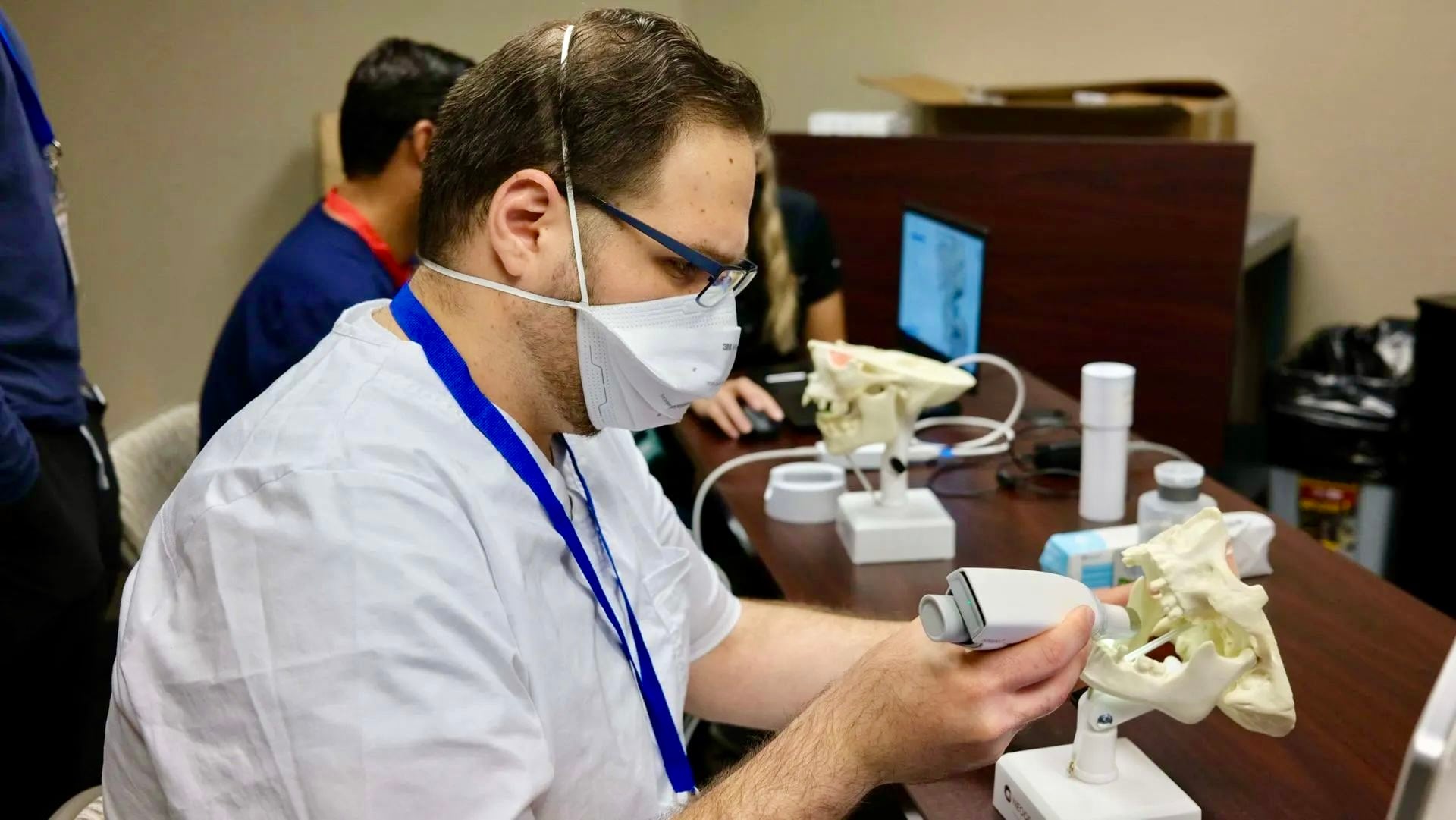
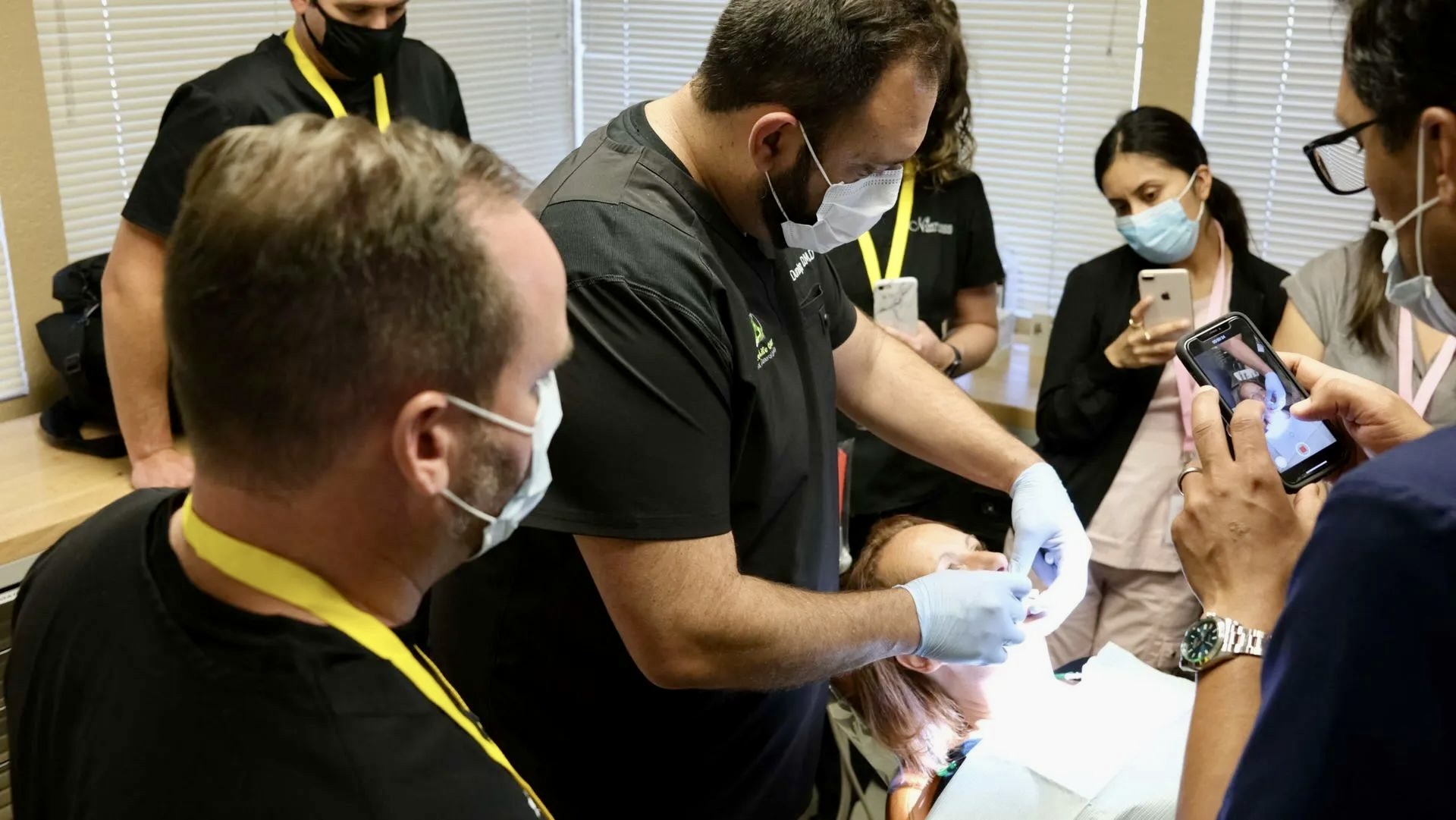
For practices running or building a full-arch implant workflow, the FAM Method, Full Arch Masters’ proprietary digital workflow, integrates the treatment coordination system with the clinical workflow from the first consultation through same-day delivery. The Treatment Coordinator Bootcamp, taught by FAM’s in-house treatment coordinator who maintains an 80% close rate on full-arch consultations, covers the complete closing system: sales process, objection-handling, patient financing, and pipeline nurture. It offers a fast way to install the 80% system in a practice that already runs full-arch consults but loses them at the closing table. Register for the Treatment Coordinator Bootcamp here.
When to Accelerate Implementation
The 30-day rollout plan produces measurable results for most practices. Practices that already track the numbers but remain stuck below 60% usually face a handoff problem or a reactivation ownership problem, not a measurement problem. Practices that sit below 45% often have all three gaps operating at once and benefit most from structured team training before any dashboard work begins. Full-arch practices that close below 60% on high-ticket consultations should prioritize the treatment coordination system first, because revenue leakage at that level represents the single largest growth opportunity in the practice.
The operating system described here is system-agnostic and applies across general dentistry and specialty workflows alike.
Frequently Asked Questions
What is the dental case acceptance formula?
The standard formula is accepted treatment value ÷ presented treatment value × 100. Practices should track this both by procedure count and by dollar value. The by-dollar rate typically runs about 15 percentage points lower because high-value cases such as implants and full-arch restorations are declined more often than routine procedures. Running both numbers monthly gives a complete picture of where revenue is leaking.
What is a good dental case acceptance rate?
The industry average for U.S. dental practices sits in the 40–55% range, depending on practice size and how the metric is tracked. The top 10% of practices reach 75% or higher. An 80% acceptance rate becomes achievable with a structured operating system that addresses measurement, clinical-to-financial handoffs, and declined-treatment reactivation at the same time. For full-arch implant consultations, most practices without a dedicated treatment coordination system close well below 60% on a by-dollar basis.
What is the recommended reactivation timeline for declined treatment plans?
The recommended cadence uses three contacts. Place a warm phone call at 48 hours that references the specific treatment. Send a personalized email or SMS at 2 weeks that mentions financing options. Send a final outreach at 60 days with a direct booking link. Each contact should reference the patient’s specific oral health need rather than a generic recall message. Dental practices using multi-touch reactivation sequences typically achieve 8–30% reactivation rates, compared with 1–8% for single-touch outreach. Assign ownership of the reactivation list to one team member, and review the unscheduled treatment list every morning.
How does separating clinical and financial conversations affect case acceptance?
Separating the two conversations is one of the highest-impact changes a practice can make. When the provider builds clinical value in the operatory and the treatment coordinator handles financial logistics separately, patients enter the financial conversation already believing the treatment matters. That belief supports productive financing discussions. Practices that implement a structured verbal handoff between provider and treatment coordinator often report acceptance rate increases of 25% or more within 60 to 90 days. Blending the two conversations, or leaving the patient alone between them, resets anxiety and causes case leakage.
How does the FAM Treatment Coordinator Bootcamp relate to case acceptance?
The Treatment Coordinator Bootcamp is a two-day course taught by FAM’s in-house treatment coordinator, who maintains an 80% close rate on full-arch implant consultations. The curriculum covers the complete closing system: new patient acquisition, sales process, objection-handling, patient financing, pipeline nurture, and drip campaigns. It is designed for practice owners, treatment coordinators, and office managers who already run consultations but lose cases at the closing table. The format relies heavily on role-play and live patient scenarios, the same scenarios attendees encounter in their own practices. Practices that attend as a team, with dentist, treatment coordinator, and office manager together, leave aligned on the same playbook from day one.