
Written by: Ryan Dunlop, CEO and Founder of Full Arch Masters and graduate from the Harvard School of Dental Medicine
Key Takeaways
-
A dental treatment coordinator role typically requires a high school diploma or GED, prior dental office experience, and strong communication and financial skills, and no state license or national certification.
-
Most coordinators move into the role from within the practice, often from dental assisting or front-desk positions, because clinical familiarity builds patient trust during case presentations.
-
Training programs differ in depth and format, and the most valuable courses teach objection handling, patient financing, follow-up systems, and insurance, not just basic communication skills.
-
Salary estimates generally fall from the mid-$40,000s to mid-$60,000s annually, and high-ticket practices often layer in performance bonuses that increase earnings for coordinators who close full-arch cases.
-
Practices focused on full-arch implant growth can accelerate coordinator performance by enrolling in the Full Arch Masters Treatment Coordinator Bootcamp, which delivers a complete closing system taught by an 80% closer.
What Is a Dental Treatment Coordinator?
A dental treatment coordinator focuses on patient communication and treatment planning, unlike a receptionist who handles scheduling, intake, check-in, and front-desk flow. The distinction matters when practices hire, train, and set compensation expectations.
Core responsibilities of a treatment coordinator include:
-
Presenting the dentist’s treatment plan in patient-friendly language
-
Explaining financial arrangements, payment plans, and insurance coverage
-
Handling objections in real time during the consultation
-
Following up with patients who did not schedule at the consult
-
Coordinating with clinical and administrative staff on case handoffs
-
Maintaining documentation in practice management software such as Dentrix, Eaglesoft, or Open Dental
The role sits between the operatory and the front desk, and the coordinator owns the case acceptance conversation, which functions more like consultative selling than administrative support.
Education Requirements for Treatment Coordinators
A high school diploma or GED is the minimum education requirement for a dental treatment coordinator role, and most training courses carry the same baseline, with no college degree or prerequisite coursework mandated.
Many employers value experience in customer service, dental office procedures, or administrative skills, and some prefer certification in dental office management. For most courses on the market, a high school diploma and dental office experience provide enough background to enroll.
Experience and Skills Needed
Most dental treatment coordinators are promoted from inside the practice, often from chairside assisting or the front desk. Dental assistants are particularly strong candidates for this path because they can describe procedures from firsthand experience, and patients can tell the difference between someone reading a description and someone who has seen it.
The skills that matter most in the role include:
-
Clear, empathetic patient communication
-
Comfort with financial conversations, including high-ticket treatment plans
-
Knowledge of dental insurance such as annual maximums, waiting periods, pre-authorizations, and fee schedules
-
Familiarity with practice management software like Dentrix, Eaglesoft, Open Dental, Curve, or Denticon
-
Objection handling and structured follow-up discipline
-
Attention to detail in documentation and scheduling
-
Organizational skills for managing multiple cases simultaneously
For dental assistants transitioning to treatment coordination, the largest gap to close is dental insurance knowledge. For front desk staff, the main gaps involve clinical fluency and comfort with larger financial conversations.
Do You Need a License or Certification?
There is no license or recognized certification required to work as a dental treatment coordinator. The Dental Assisting National Board (DANB) states that no certification requirements exist for the role and does not offer a treatment coordinator credential, and no other national body offers one either.
Individuals may choose online training courses that provide baseline knowledge of the position, and continuing education courses can help dental assistants learn about billing, insurance claims, coverage, and financing options. Certificates of completion from training programs differ from professional licenses and signal training investment rather than regulatory compliance.
What to Look for in a Treatment Coordinator Course
Course quality varies widely because no licensing standard defines the role, so a simple checklist helps compare options before enrollment.
-
Prerequisites: Whether the course requires prior dental experience or accepts all backgrounds
-
Duration and format: Whether it runs as a one-day intensive, a multi-month blended program, or an online self-paced course
-
Curriculum depth: Whether it covers objection handling, patient financing, follow-up systems, and insurance or only surface-level communication skills
-
Instructor credentials: Whether the instructor actively closes cases in a real practice or teaches from a consulting background
-
Post-course support: Whether coaching, a community, or implementation resources continue after the course ends
-
CE credit: Whether a recognized body such as AGD PACE accredits the program
-
Cost relative to scope: Whether the price matches the depth of curriculum and ongoing support
Dental Treatment Coordinator Salary: What Can You Expect?
Compensation for dental treatment coordinators varies by market and data source because no federal wage data or Standard Occupational Classification code exists for this occupation, and job-board aggregates often disagree for the same title. PayScale reports an average hourly rate of $23.84 for Dental Office Coordinators in the United States as of 2026, with a range from $17.22 to $28.18 per hour.
Treatment coordinator compensation typically falls in the mid-$40,000s to mid-$60,000s annually as a base, and practices that structure performance-based compensation often add 10–20% in commission or bonus tied to conversion or start volume. Treatment coordinators in high-ticket practices, particularly those closing full-arch cases, can earn meaningfully more through structured bonus arrangements.
Is Being a Treatment Coordinator Hard?
The role feels demanding because coordinators handle emotionally and financially significant decisions with patients every day. The most common objection a treatment coordinator hears is some version of “I need to think about it,” which rarely reflects the real concern. Handling that conversation well, and surfacing the actual issue without pressure, requires training that most on-the-job shadowing does not provide.
The difficulty is concentrated in two areas. First, clinical fluency means knowing enough about procedures to answer questions credibly without diagnosing. Second, financial conversations require presenting a $20,000 full-arch case with the same confidence as a $200 filling. Without structured training, a new treatment coordinator typically takes 6 to 9 months to reach full productivity, and conversion suffers during that time. With the right course, that learning curve shortens significantly.
Full Arch Masters Treatment Coordinator Bootcamp: A Closer Look
Practices that focus on high-ticket case acceptance, especially full-arch implant cases, often benefit from concentrated, real-world training. The Full Arch Masters Treatment Coordinator Bootcamp is a two-day in-person course taught by Nikki O’Neal, FAM’s Lead Treatment Coordinator, who maintains an 80% closing rate on full-arch consultations.

The curriculum covers:
-
New patient acquisition and marketing
-
The full sales process from first contact to signed case
-
Tracking systems and pipeline nurture
-
Drip campaigns and follow-up cadences
-
Patient financing presentation
-
Overcoming the specific objections that arise in high-ticket consultations
Pricing is structured to make team attendance practical. Dentists pay $6,995, treatment coordinators pay $900 when attending with a dentist, and a treatment coordinator attending solo pays $2,000. Practice owners typically attend alongside their treatment coordinator and office manager so the entire front-office function leaves aligned on the same playbook.
FAM courses run through an AGD PACE-approved provider and deliver CE credits recognized by the American Academy of General Dentistry.
How to Choose the Right Course: A Decision Framework
Clear criteria make it easier to compare treatment coordinator training programs before committing time and budget.
-
Match the course to the coordinator’s experience level, whether beginner, experienced, or specialty-focused
-
Confirm that the curriculum addresses objection handling and financial conversations, not only communication basics
-
Check whether the instructor actively closes cases in a real practice or teaches from a consulting background
-
Review what happens after the course, including coaching, peer community, or implementation support
-
Ensure the course aligns with the type of dentistry your practice produces, such as general, implant, full-arch, or orthodontic
-
Verify whether the provider offers CE credit and holds AGD PACE approval
Practices that want to grow full-arch and other high-ticket case acceptance should prioritize courses that teach the full pipeline: lead generation, consultation structure, objection handling, patient financing, and follow-up systems. A course that covers only communication skills rarely moves the needle on case acceptance for a $25,000 full-arch case.
Frequently Asked Questions
What do you need to be a dental treatment coordinator?
A high school diploma or GED is the minimum education requirement. Most roles do not require a college degree, state license, or national certification. Employers usually prioritize prior dental office experience as a dental assistant, front desk coordinator, or scheduling coordinator, along with strong communication skills, comfort with financial conversations, and familiarity with dental insurance and practice management software. Formal training is not always required to enter the role, yet it provides a measurable advantage in case acceptance performance and is increasingly preferred by employers hiring for high-ticket practices.
Is a dental treatment coordinator a receptionist?
A receptionist handles scheduling, intake, check-in, check-out, and front-desk flow. A treatment coordinator owns the case acceptance conversation, presents the dentist’s treatment plan, explains financial arrangements, handles objections, and follows up with undecided patients. In smaller practices, one person may perform both functions, but the roles differ in scope, skill set, and compensation. Practices that grow past roughly 400–500 active patients typically need a dedicated treatment coordinator to prevent consultation conversion from slipping.
How long does it take to become a dental treatment coordinator?
No fixed timeline exists because no licensing process governs entry into the role. Training courses range from one-day in-person intensives to three-month blended programs. On-the-job training typically takes 30–90 days to reach basic role fluency, depending on prior experience and the complexity of the practice’s case mix. Without structured training, new treatment coordinators often take 6–9 months to reach full productivity. A focused course that includes role-play, live case scenarios, and post-course coaching can compress that timeline significantly.
What is the average salary for a dental treatment coordinator?
Published figures vary by source and geography, and no federal agency tracks this occupation specifically. Available job-board data as of 2026 places many dental treatment coordinators in the range of $45,000–$55,000 per year, with hourly rates typically between $19 and $28 depending on market, experience, and practice type. Treatment coordinators in high-ticket practices, particularly those closing full-arch implant cases, can earn above this range through performance-based bonuses tied to case acceptance or collected revenue. Entry-level coordinators with less than one year of experience generally earn at the lower end of the range, while experienced coordinators in competitive markets can exceed it.
Conclusion: Your Next Step
Becoming a dental treatment coordinator does not require a license, college degree, or national certification. A high school diploma, relevant dental office experience, and strong communication and financial fluency form the real prerequisites. The right training course often determines whether a coordinator consistently closes cases or loses them, and for high-ticket procedures like full-arch implants, that difference can reach hundreds of thousands of dollars per year.
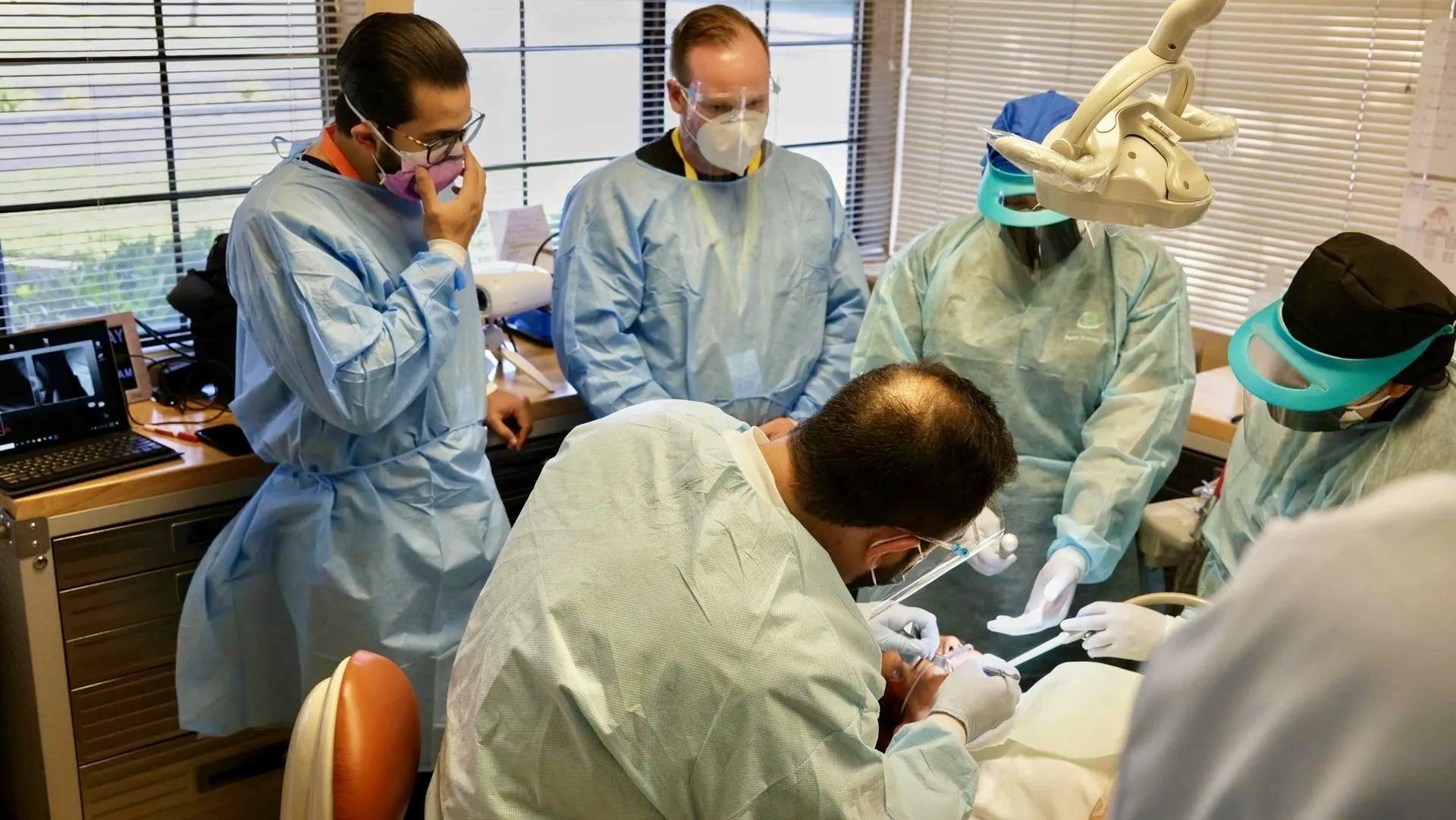
For practices serious about growing full-arch and other high-ticket case acceptance, the Full Arch Masters Treatment Coordinator Bootcamp delivers a complete closing system taught by the same 80% closer mentioned earlier. The two-day course covers the full pipeline, including new patient acquisition, sales process, objection handling, patient financing, and follow-up systems, using the same playbook FAM runs in-house.
Ready to bring the FAM Method into your practice? Register for the Full Arch Masters Treatment Coordinator Bootcamp.