
Written by: Ryan Dunlop, CEO and Founder of Full Arch Masters and graduate from the Harvard School of Dental Medicine
Key Takeaways
- Hands-on implant training spans four formats: cadaver, model, live-patient, and observer. Each format builds different skills for dentists.
- Live-patient operating during CE courses depends on state dental board rules, and Colorado is one of the few states that permits credentialed visiting dentists to operate.
- Course length and CE hours range from short workshops to 90+ hours across Full Arch Masters’ multi-course Fellowship pathway.
- Dentists should evaluate cost, credentialing requirements, and post-course support together, because most brochures skip the legal and logistical details.
- Full Arch Masters structures its Live Surgical Course around Colorado credentialing, offers Basic and Advanced operator tracks plus an Observer option, and provides ongoing alumni community and KOL buying-group access after the course ends.
See Upcoming Full Arch Masters Course Dates
What “Hands-On” Actually Means In Implant Training
Hands-on implant training is continuing education in which clinicians place, restore, or observe implants under supervision. The term spans four formats: cadaver-based training, model-based training, live-patient training, and observer tracks. These differences determine what skill a dentist brings back to their practice.
- Cadaver-based training: Anatomy and technique practice on cadaver specimens. No live patients and no immediate-load or prosthetic workflow. A 2026 scoping review published in the British Dental Journal found limited evidence that cadaveric learning translates directly to measurable surgical skill development in patient care, though it remains valuable for flap design and implant placement mechanics. Practical constraints include high financial cost, ethical concerns, limited space, the need for specialized supervision, and limited accessibility and scalability.
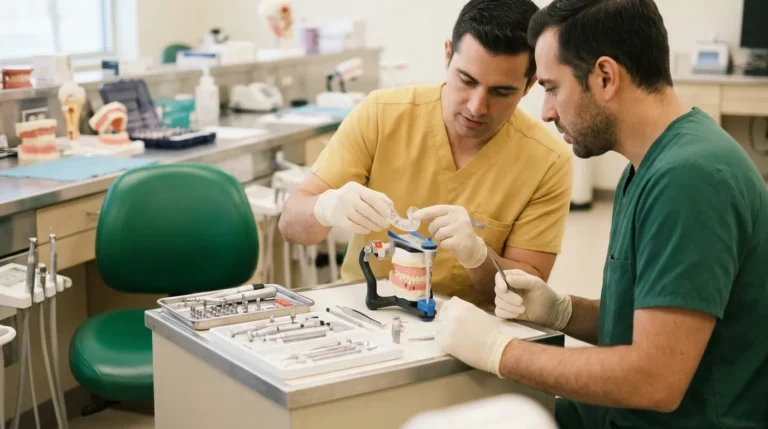
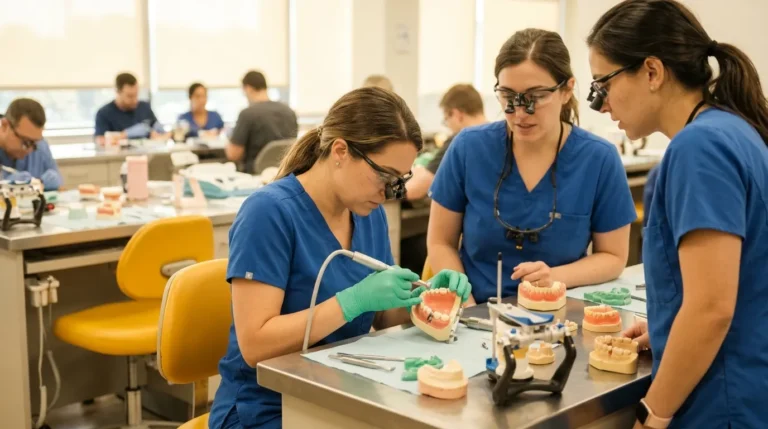
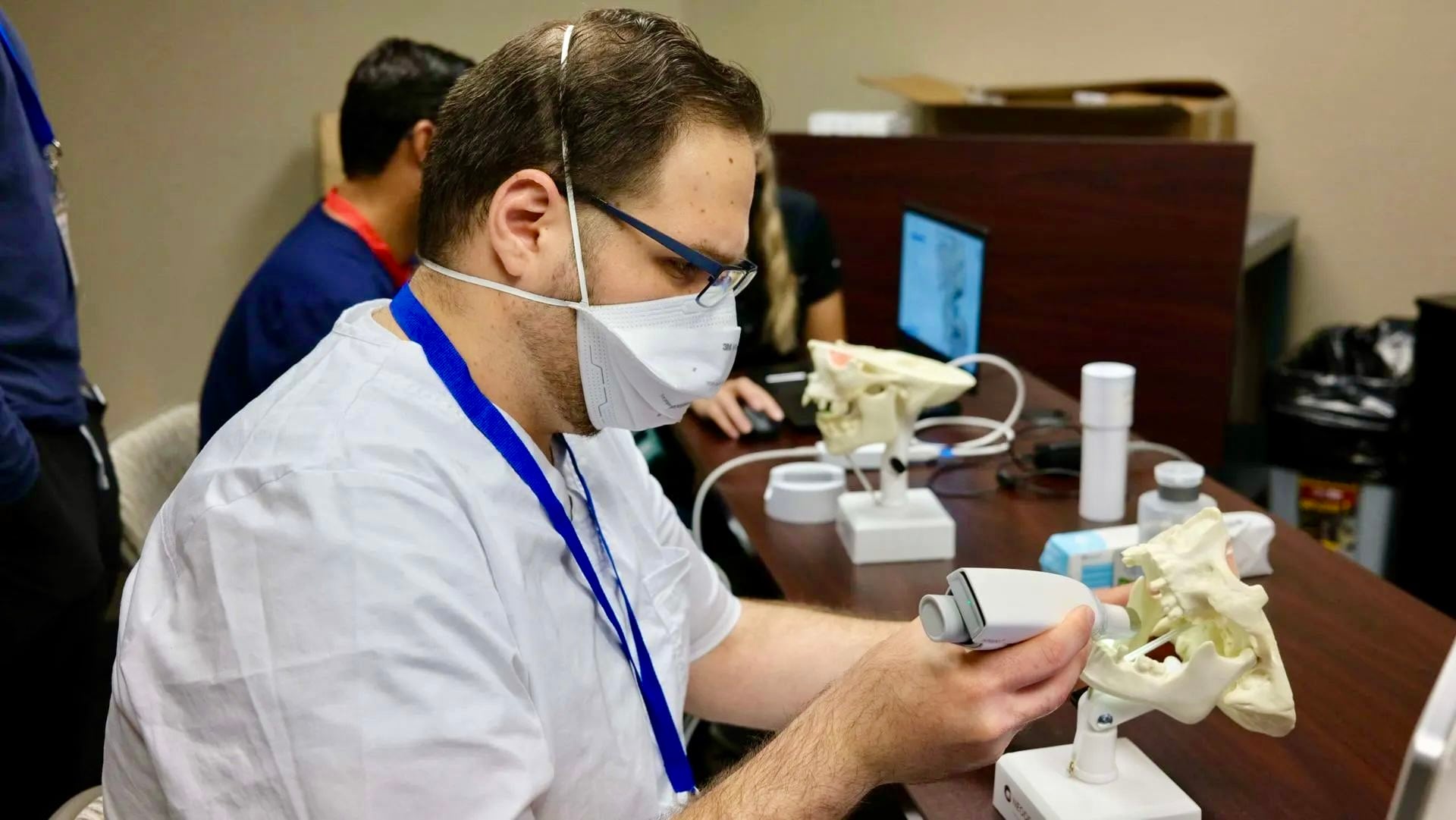
- Model-based training: Typodonts and 3D-printed models. This format is repeatable and low-risk, but it does not provide live-tissue feedback or immediate-load workflow.
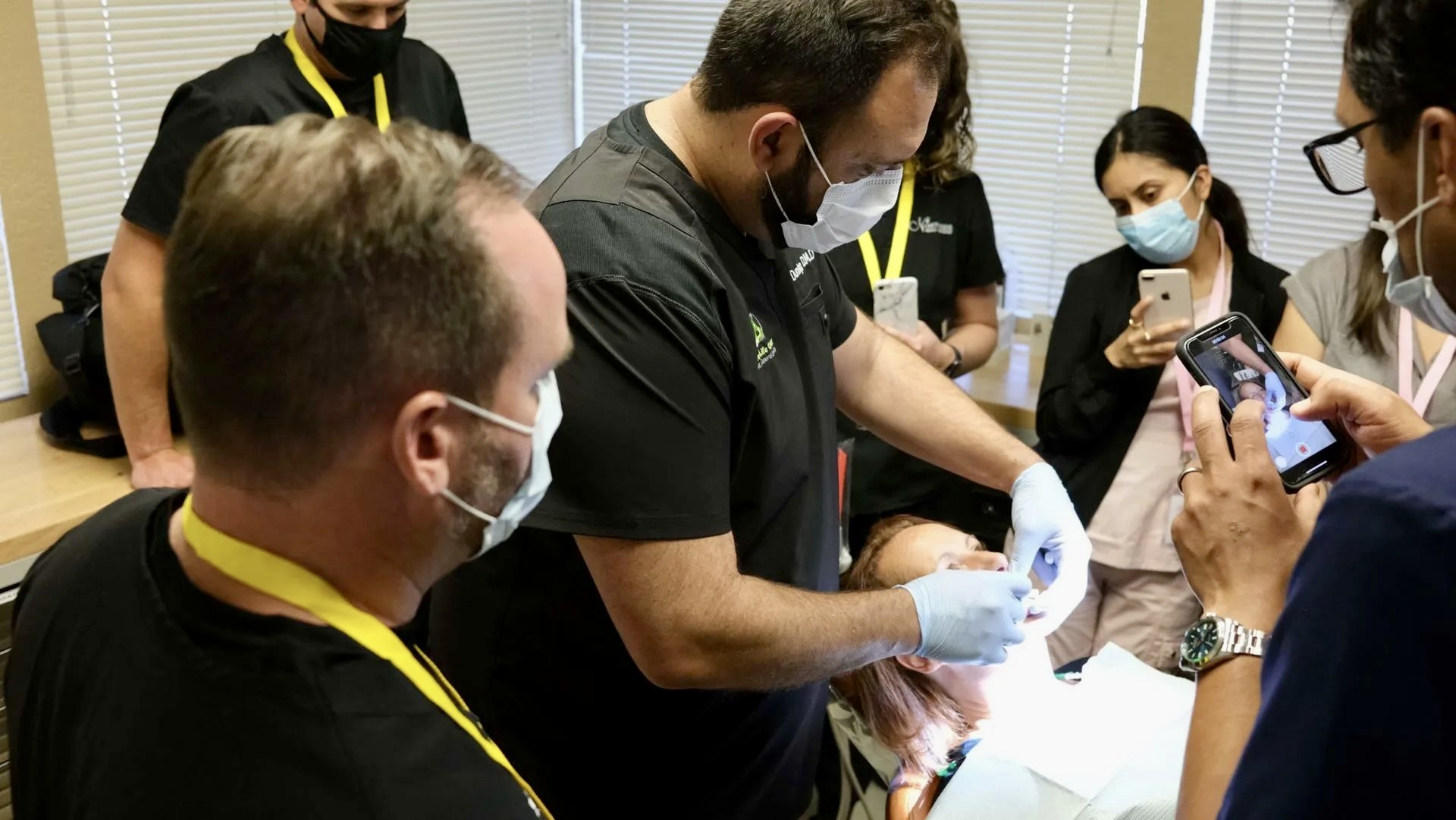
- Live-patient training: Operating on volunteer patients under mentor supervision, which closely mirrors running cases independently in a dentist’s own practice. This format requires state dental board authorization. Research published via the National Institutes of Health (PMC9273418) confirms that live clinical training bridges the gap between classroom theory and real-world surgery and improves skill retention compared with passive learning.
- Observer tracks: Watching live cases without operating. This format is valuable for international attendees or dentists who are not yet credentialed to operate in the course’s host state.
The critical question to ask any program is whether you operate, on what, and under whose supervision. “Hands-on” is used loosely across the category, and some programs market hands-on training when attendees only place implants in models or observe a mentor operating.
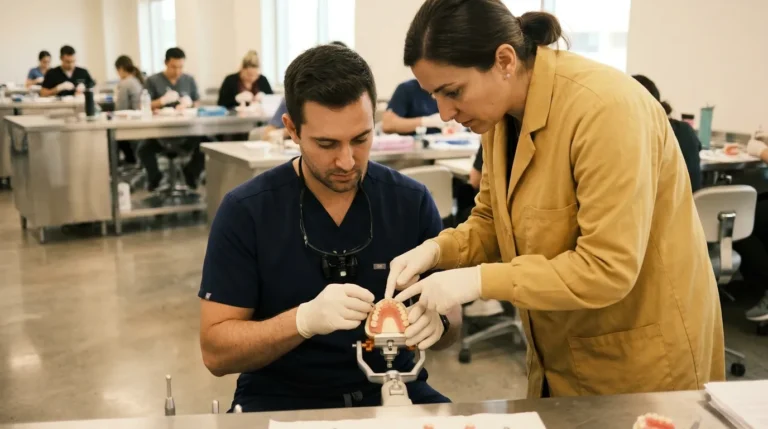
Full Arch Masters’ Live Surgical Course in Parker, CO puts each Basic and Advanced operator on two full-arch cases across two surgical days. Dentists operate on live volunteer patients under expert mentor supervision, with CRNAs providing general anesthesia onsite. FAM also offers an Observer track for dentists who want to watch live cases without operating, including international attendees who cannot be credentialed by the Colorado Dental Board because credentialing requires a US dental license.
How Long Is An Implant Course And What CE Do You Get?
Once you know whether you can legally operate, the next question is how much time and CE credit a program actually delivers. Implant course length and CE hours vary widely by format. A 2026 implant education guide summarizes the category ranges:
- One- to two-day introductory workshops: 8–16 CE hours
- Three- to five-day immersive courses: 20–40 CE hours
- Multi-session implant mini-residencies: typically roughly 100–140+ CE hours over 6–12 months, though some programs offer as few as 40 CE credits for a theory-only component
- Year-long university-based implant continuums: varying CE hours, such as NYU’s one-year Implantology program awarding 200 CE hours and the University of Alberta’s 10-month implant residency offering up to 124 CE credits
On CE accreditation, AGD PACE approves CE provider organizations, not individual programs or courses. Full Arch Masters courses are accredited for 32 continuing education credits through the American Academy of General Dentistry (AAGD), and the full FAM Fellowship delivers 90+ CE hours across the program.
The FAM course catalog is structured around four-day and two-day formats. The Flagship Course, Live Surgical Course, and Design and Finish Course are each four days. The FP1 Course and Treatment Coordinator Bootcamp are each two days. The Fellowship bundles the three core courses plus a fourth course of the practice’s choice, delivering 90+ CE hours total with a payment plan of up to 9–12 months.
The Credentialing Question: Where Can You Actually Operate?
This is the most decision-relevant fact in hands-on implant training and the one most course brochures never mention. Whether a visiting dentist can legally operate on a live patient during a CE course depends on the dental board rules of the state where the course is held, not on the course’s marketing.
Most US states do not allow visiting US-licensed dentists to perform dentistry on volunteer patients during a continuing education course. State dental board rules for implant training vary widely, and dentists should verify current board rules directly because requirements change over time. Colorado is one of the few states that does permit it under a specific credentialing process.
FAM submits each operator’s credentials to the Colorado Dental Board ten days before each Live Surgical Course, contingent on no pending marks against the dentist’s license in their home state. That credentialing pathway is why FAM’s Live Surgical Course is hosted in Parker, CO. The course location was chosen around the legal framework rather than added after the fact.
When evaluating any program that advertises live-patient operating, ask three questions:
- Which state dental board authorizes visiting dentists to operate on volunteer patients?
- What does the credentialing process require from the attending dentist?
- How far in advance are credentials submitted to the board?
FAM’s Live Surgical Course answers all three: it is structured around the Colorado credentialing framework, with a Basic Operator track for dentists who have placed fewer than 200 full arches in their career, an Advanced Operator track for dentists with 200+ career arches focused on zygomatic, pterygoid, trans-sinus, custom subperiosteal, and palatal-approach techniques for atrophic cases, and an Observer track for those who cannot be credentialed.
Cadaver Vs. Live-Patient Vs. Mini-Residency: Format Trade-Offs
Each training format has structural strengths and limitations. The table below compares the four main formats on the dimensions that matter most for a dentist evaluating a CE investment.
| Format | What You Operate On | Credentialing Required | Typical CE Hours |
|---|---|---|---|
| Cadaver | Cadaver specimens | None | 8–16 |
| Model | Typodonts / 3D-printed models | None | 8–16 |
| Live-Patient | Volunteer patients | State dental board authorization | 20–40 |
| Observer | Nothing (watch only) | None | 8–16 |
Cadaver training is strong for anatomy, flap design, and implant placement mechanics. It does not deliver live-patient experience, immediate-load workflow, or prosthetic integration. A 2026 study in Clinical Oral Investigations using cadaver specimens found that static guided surgery can support training and may standardize outcomes across experience levels, but the authors also noted that a surgical guide is no substitute for clinical judgment or tactile feedback from live tissue.
Live-patient training is the closest analog to running cases independently. A retrospective survey of 125 practicing dentists found that satisfaction with an implant CE curriculum rose from approximately 3.5 to over 4.5 out of 5 after live surgical demonstrations were integrated. It is typically the highest-cost format and requires state board credentialing.
Mini-residencies and university continuums offer broad didactic depth and structured credentialing pathways. They require longer time commitments and often deliver less concentrated surgical volume per session than an immersive live-patient course.
Full Arch Masters combines live-patient operating with a full-arch focus and a complete digital workflow curriculum. The FAM Method integrates seven steps:
- Preoperative records and data acquisition
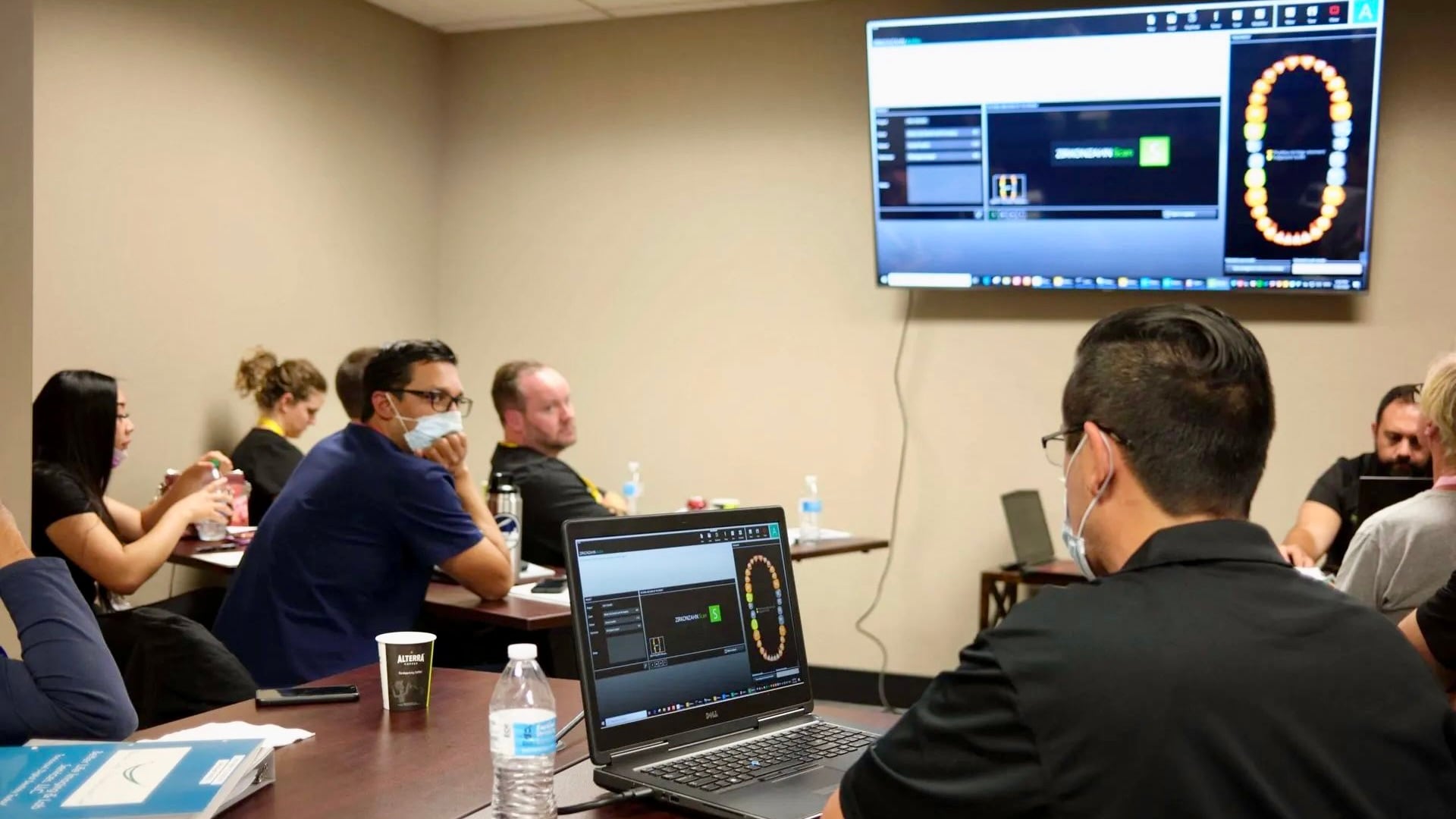
- Photogrammetry and intraoral scanning
- CBCT and digital treatment planning
- exocad design
- Immediate-load conversion
- Final zirconia design and finishing
- FP1-specific design, team implementation, and workflow scaling
What Implant Training Costs
Category cost ranges from approximately $300–$1,000 for weekend workshops, $10,000–$30,000 for continuums, and $20,000–$45,000+ for mini-residencies with live-patient components. Cost in implant training scales with mentorship and live-case exposure rather than lecture hours alone.
Full Arch Masters pricing across the course catalog:
- Flagship Course: $9,995 per dentist; $2,500 per additional team member
- Live Surgical Course — Basic Operator: $20,000
- Live Surgical Course — Advanced Operator: $25,000
- Live Surgical Course — Doctor Observer: $4,995
- Design and Finish Course: $6,995
- FP1 Course: $7,995 dentist; $4,995 associate dentist; $1,495 assistant or technician
- Treatment Coordinator Bootcamp: $6,995 dentist; $900 treatment coordinator attending with dentist; $2,000 treatment coordinator solo
- Fellowship: Bundles the three core courses plus a fourth at a $5,000–$10,000 discount versus paying per course, with a payment plan of up to 9–12 months
Team-member pricing is built into every FAM course, so bringing the whole team stays structurally affordable. The FAM Method is built around full-team execution, one team and one workflow. That is why practices typically send the dentist, lead assistant, in-house lab technician, and treatment coordinator together.
Review Full Arch Masters Pricing And Packages
How To Choose Based On Your Experience Level
The right program depends on where a dentist is in their career and what they intend to do when they return to their practice.
Beginners (zero to a few full arches placed): Look for a program with a beginner track, hands-on records acquisition, and a clear pathway to live-patient operating. The FAM Flagship Course is designed for the full experience range, and the Live Surgical Course Basic Operator track is built specifically for dentists with fewer than 200 full arches placed in their career. The first 50 implant cases are the highest-risk period in any dentist’s implant career, and supervised training during these cases significantly reduces failure rates. That supervised pathway makes the Basic Operator track especially valuable early on.
Mid-career dentists (placing implants but not at volume): Look for workflow and team systems, not just surgical technique. The FAM Flagship Course covers marketing, treatment coordination, closing, and team delegation at the same depth as the clinical content. At this stage, the constraint is usually the operating system around the procedure rather than the procedure itself.
Experienced dentists (200+ full arches placed): Look for advanced techniques for atrophic cases. The FAM Advanced Live Surgical track is gated to dentists with 200+ career arches placed and covers the advanced atrophic-case techniques described earlier.
Lab technicians: Look for a program that separates beginners from advanced designers and covers both digital design and aesthetic finishing. The FAM Design and Finish Course is four days dedicated to lab work, with two days of digital design in exocad and two days of aesthetic finishing on pre-sintered and post-sintered zirconia with MIYO ceramic layering.
Treatment coordinators and team members: Look for a program that trains the front office on closing and pipeline systems. The FAM Treatment Coordinator Bootcamp is taught by FAM’s in-house treatment coordinator, who maintains an 80% closing rate on full-arch consultations. The course covers four areas: the sales process, objection-handling, patient financing, and pipeline nurture.
What Happens After The Course Ends
Choosing the right program is only half the decision. What happens after the course ends often determines whether the training translates into production. Most training programs end the day the course ends. A dentist returns to their practice with new knowledge and no community to ask when a difficult case lands on the schedule. Full-arch implant dentistry is one of the most competitive and secretive segments in the industry, and practitioners who have figured out the workflow rarely share it.
Every FAM attendee joins a continued community of hundreds of FAM-trained dentists, lab technicians, and team members via private group chats. The community includes a dentist-only chat for sensitive practice and personnel questions and a main multi-role chat for clinical and operational case help. The value of post-course mentorship is in the feedback loop, and having an experienced clinician review treatment plans and surgical approaches before a dentist picks up the handpiece can be the difference between a smooth procedure and an anxiety-filled one.
Alumni also gain access to FAM’s KOL (Key Opinion Leader) buying group, which provides vendor discounts on Neodent implants, exocad licenses, 3D printers, photogrammetry systems, and other equipment at no recurring cost. Unlike GPOs and DSOs, which typically charge recurring fees or require organizational membership, FAM’s KOL buying group requires only that an alumnus completed a course.
Every attendee receives a complete digital resource library: surgical room setup checklists, equipment shopping lists, finishing techniques, treatment coordinator forms and presentations, Dr. Dunlop’s lecture materials, and consent form templates, including for advanced placements like pterygoid and zygomatic. Alumni who complete the Flagship Course also receive a Master’s jacket, a community marker worn at industry events that makes the FAM alumni network visibly present across the full-arch dentistry world.
Join The Full Arch Masters Alumni Community
Conclusion And Next Steps
Throughout this guide, six factors have shaped every comparison: format, credentialing, CE hours, cost, experience-level fit, and post-course support. Most course marketing addresses one or two of these. The credentialing question, which state board authorizes live-patient operating and what the process requires, is the factor almost no program explains upfront, and it often matters most.
Suggested next steps before enrolling in any program:
- Confirm which state dental board authorizes live-patient operating and what the credentialing process requires from the attending dentist
- Ask each program specifically what you operate on, on whom, and under whose supervision
- Evaluate post-course community access and KOL buying group structure, including what you get during the course and what you keep after it ends
- Assess whether the program trains the full team or only the dentist, since the FAM Method is built around full-team execution
Full Arch Masters addresses all six evaluation factors: the FAM Method’s photogrammetry-first digital workflow, the Colorado-credentialed Live Surgical Course with Basic and Advanced operator tracks, 32 AGD PACE-accredited CE credits per main course, team-member pricing built into every course, and a continued alumni community with KOL buying group access at no recurring cost. Alumni report adding $1M+ per year in practice revenue after adopting the workflow. Full-arch implant dentistry rewards practices that commit to the whole system, and the right training program is where that system begins.
If your practice is also looking to close more full-arch consultations, the FAM Treatment Coordinator Bootcamp trains your front-office team on the same closing system FAM uses in-house, taught by the same in-house treatment coordinator.
Train Your Team To Close More Full-Arch Cases
Frequently Asked Questions
What Is Hands-On Implant Training?
Hands-on implant training is continuing education in which clinicians place, restore, or observe implants under supervision. It spans four formats: cadaver-based, model-based, live-patient, and observer tracks. The format determines what skill a dentist actually leaves with. Cadaver and model training build foundational technique without live-tissue feedback. Live-patient training is the closest analog to running cases independently in a dentist’s own practice. Observer tracks allow dentists to watch live cases without operating, which is valuable for international attendees or dentists not yet credentialed in the course’s host state.
How Long Is An Implant Course?
Implant courses range from one- to two-day introductory workshops delivering 8–16 CE hours through four- to five-day immersive courses delivering 20–40 CE hours, multi-session implant mini-residencies typically delivering roughly 100–140+ CE hours over 6–12 months (though some programs offer as few as 40 CE credits for a theory-only component), and year-long university continuums delivering varying CE hours, such as NYU’s one-year Implantology program awarding 200 CE hours and the University of Alberta’s 10-month implant residency offering up to 124 CE credits. Full Arch Masters’ three core courses, the Flagship Course, Live Surgical Course, and Design and Finish Course, are each four days and accredited for 32 CE credits through the American Academy of General Dentistry (AAGD). The FP1 Course and Treatment Coordinator Bootcamp are each two days. The full FAM Fellowship delivers 90+ CE hours across the program.
How Do I Know If I’ll Actually Operate On A Live Patient?
Ask the program three specific questions: Which state dental board authorizes visiting dentists to operate on volunteer patients during the course? What does the credentialing process require from the attending dentist? How far in advance are credentials submitted to the board? Most US states do not allow visiting dentists to operate on volunteer patients during CE courses. Colorado is one of the few that does. Full Arch Masters submits each operator’s credentials to the Colorado Dental Board ten days before each Live Surgical Course, contingent on no pending marks against the dentist’s license in their home state. This credentialing framework is why the Live Surgical Course is hosted in Parker, CO.
What Is The Difference Between Cadaver And Live-Patient Implant Training?
Cadaver training uses cadaver specimens for anatomy and technique practice. It is strong for flap design and implant placement mechanics but does not include live-patient experience, immediate-load workflow, or prosthetic integration. Live-patient training involves operating on volunteer patients under mentor supervision, which closely mirrors running cases in a dentist’s own practice. Live-patient training requires state dental board authorization and is typically the highest-cost format. Research consistently shows that live clinical training improves skill retention compared with passive or simulation-based learning, because surgical skills are motor-based and require physical practice on real tissue to build muscle memory.
How Much Does A Hands-On Implant Course Cost?
Category cost ranges from approximately $300–$1,000 for weekend workshops, $10,000–$30,000 for continuums, and $20,000–$45,000+ for mini-residencies with live-patient components. Cost scales with mentorship quality and live-case exposure rather than lecture hours. Full Arch Masters pricing: Flagship Course $9,995 per dentist ($2,500 per additional team member); Live Surgical Course Basic Operator $20,000, Advanced Operator $25,000, Doctor Observer $4,995; Design and Finish Course $6,995; FP1 Course $7,995 dentist; Treatment Coordinator Bootcamp $6,995 dentist. The Fellowship bundle delivers $5,000–$10,000 off the combined retail price of the three core courses plus a fourth, with a payment plan of up to 9–12 months.