Written by: Ryan Dunlop, CEO and Founder of Full Arch Masters and graduate from the Harvard School of Dental Medicine
Key Takeaways
- Photogrammetry full arch workflow training should teach the complete seven-step capture-to-passive-fit chain as one integrated system.
- A complete program must cover pre-op records, photogrammetry capture, intraoral scan integration, exocad design, immediate provisionalization, and passive-fit verification.
- Training only the dentist without the assistant, lab technician, and treatment coordinator is the most common reason course investments fail to convert to practice growth.
- Full Arch Masters is the best fit for teams that need to run the full-arch workflow end to end. Its five-course curriculum covers the whole chain, trains the dentist, assistant, lab technician, and treatment coordinator together, and alumni keep community and KOL buying group access at no recurring cost.
See which courses cover all seven steps.
What a Photogrammetry Full Arch Workflow Training Program Must Cover
Use this seven-point checklist before registering for any program. A complete photogrammetry full arch workflow training program should cover all of the following:
- Pre-op records and CBCT. The program should teach how to acquire, merge, and interpret preoperative records, including CBCT, facial scan, and diagnostic data. These records form the foundation for prosthetically driven planning.
- MUA and scan-body placement. The curriculum should cover multi-unit abutment selection, torque protocol, and scan-body seating. These steps determine whether the photogrammetry capture is accurate before anyone picks up the camera.
- Photogrammetry capture and verification. The team needs clear instruction on capture protocol, calibration requirements, and how to verify the coordinate file before moving downstream. A 2026 meta-analysis in Dentistry Journal found extraoral stereophotogrammetry produced the most favorable mean trueness values among impression methods tested. That level of accuracy depends on correct scan-body seating, calibration, and operator protocol, which all require training.
- Intraoral scan and bite integration. The program should teach how to pair the photogrammetry coordinate file with an IOS soft-tissue record and a bite registration, then merge those datasets in CAD software. Photogrammetry captures implant positions only and must be combined with intraoral scanning or conventional impressions to capture teeth and soft tissue morphology. That integration step requires deliberate instruction.
- CAD alignment in exocad. The team should learn the full design workflow inside the CAD software they will use in practice. That includes importing the photogrammetry STL, aligning implant library components, designing the framework, and verifying passive fit digitally.
- Immediate provisionalization. A complete program covers 3D-printed conversion prosthesis fabrication, same-day delivery protocol, and the clinical and lab handoffs required to seat a provisional the day of surgery.
- Passive-fit verification. The curriculum should teach the Sheffield test, single-screw test, and the clinical and digital checkpoints that confirm the definitive prosthesis seats without inducing strain. An accurate implant-coordinate record alone does not guarantee a passively fitting definitive prosthesis. Additional discrepancies can appear during design, manufacturing, and delivery, and the team must know how to catch them.
Two additional criteria often decide whether the workflow succeeds in practice:
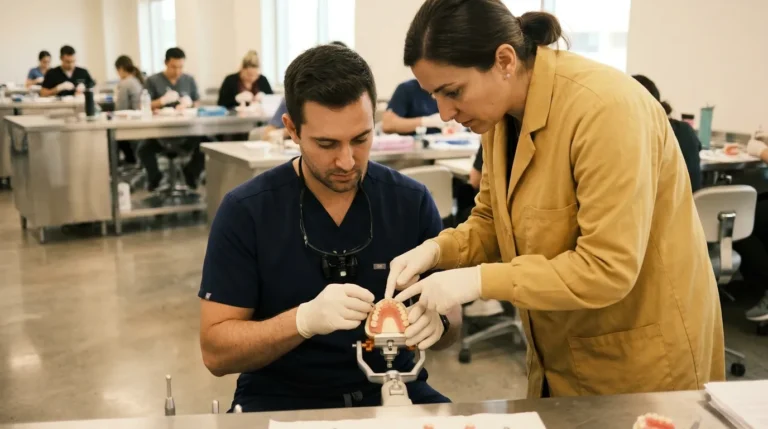
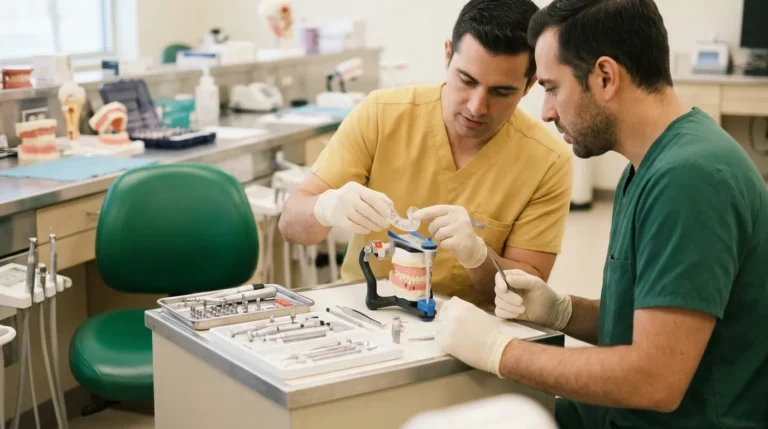
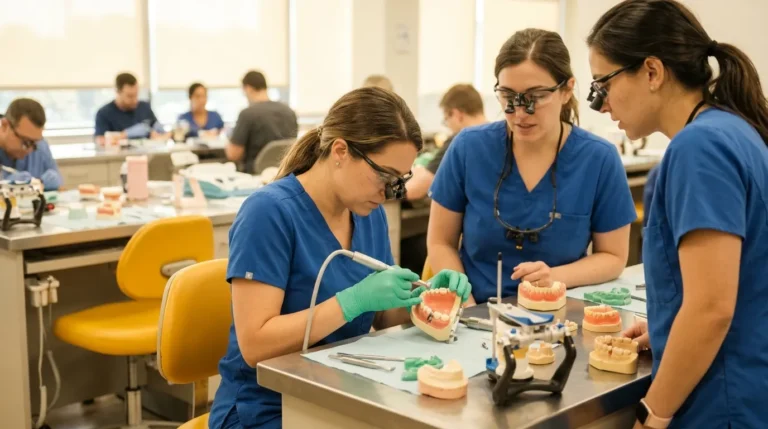
- Who attends. The strongest programs train the dentist, assistant, lab technician, and treatment coordinator together on one workflow so everyone returns with the same playbook.
- What happens after the course ends. Continued community, case support, and buying-group access help the team implement the workflow on real cases once they are back in the practice.
Full Arch Masters maps directly to every point on this checklist. The Flagship Course covers steps one through seven as an integrated four-day curriculum, capped at eight dentists per cohort to keep the experience hands-on. The Design and Finish Course dedicates two full days to exocad design and two full days to aesthetic finishing. The Live Surgical Course in Parker, CO, conducted under Colorado Dental Board credentialing, puts each Basic or Advanced operator through two full arches of live surgical experience. The FP1 Course covers FP1-specific design and case selection, with lab technicians pulled aside for dedicated design instruction. The Treatment Coordinator Bootcamp trains the front-office team on the closing system used in-house at Full Arch Masters, where the in-house treatment coordinator maintains an 80% closing rate. The Fellowship bundles all three core courses plus a fourth, with a discount of $5,000–$10,000 versus paying per course and a 9–12 month payment plan. Every alumnus joins the continued community via private group chats and gains KOL buying group access at no recurring cost.
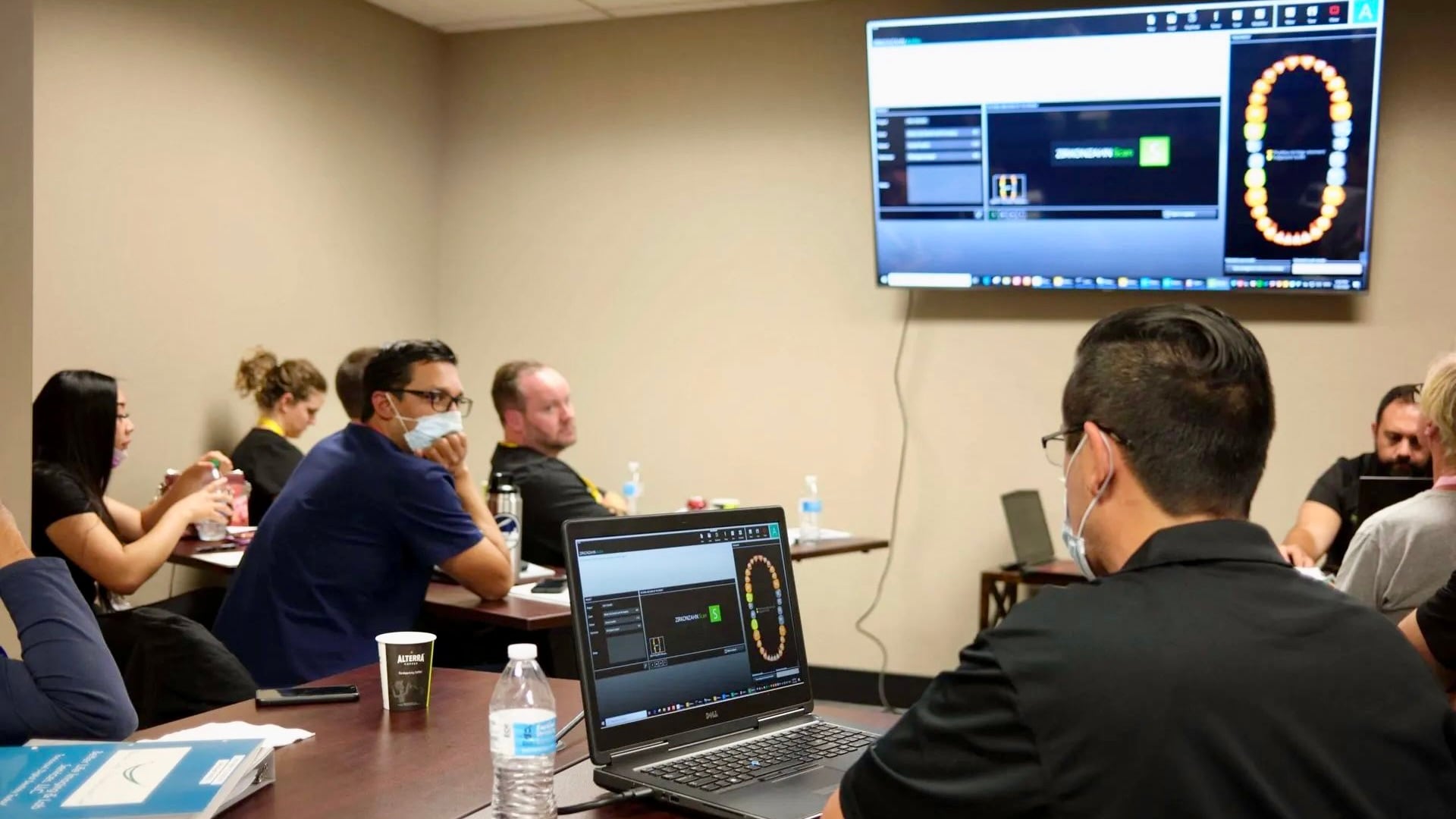
This structure forms the FAM Method, Full Arch Masters’ proprietary digital workflow that takes a patient from no teeth or heavily decayed teeth to a screwed-in, same-day restoration in 2 to 4 hours. For deeper background on the workflow itself, see Photogrammetry Full Arch Digital Implant Workflow Training.
Compare the five-course curriculum.
The Three Training Models on the Market Today
The photogrammetry full arch workflow training market organizes into three broad models. Each suits a different starting point and covers a different portion of the workflow.
Hands-on live-patient surgical programs. These programs suit dentists who need real surgical repetitions under mentorship. They typically cover case planning, live surgery on volunteer patients, and immediate provisionalization. Many are genuinely valuable for building surgical confidence. They often stop before the downstream CAD design, lab finishing, and team-delegation steps that determine whether a practice can run the workflow at volume after the dentist returns home. A dentist who can place implants confidently but whose team has no shared playbook for records acquisition, design, or treatment coordination will still be bottlenecked.
Hardware-specific software training built around a single photogrammetry system. These programs suit clinicians who already own or have committed to one capture ecosystem. They typically cover device operation, scan-body protocol, record-taking, and software shortcuts inside that ecosystem. The clinical accuracy literature supports photogrammetry as a high-value capture method. A 2026 in-vitro study in the Journal of Prosthodontics found extraoral photogrammetry systems recorded mean linear trueness of 53–77 µm, comparable to analog impressions at 43 µm and superior to intraoral scanning at 101 µm. Knowing how to operate the capture device, however, does not teach the full workflow. Hardware-specific training typically stops at the capture step and does not teach downstream CAD alignment, immediate-load fabrication, finishing, or team delegation. The 2026 Prosthesis review notes that dataset registration is a critical error source. Inaccurate superimposition of implant-position, soft-tissue, and occlusal datasets can compromise prosthetic design even when implant coordinates have been recorded accurately. That integration step requires training.
Bench-scan pay-as-you-go protocols. These approaches suit practices that want to avoid capital outlay on standalone photogrammetry hardware. They typically cover a scan-body protocol executed off-site or on a bench, often outsourced to a lab. They stop before in-office capture, real-time verification, and the full team workflow. They can be a reasonable starting point for practices not yet ready to invest in a dedicated photogrammetry system, but they do not teach the team to run the workflow end to end.
Why Full Arch Masters Is the Best Photogrammetry Full Arch Workflow Training
Of the three models above, only hands-on training builds surgical repetition, yet it usually stops before design and delegation. Full Arch Masters sits in that category and closes the gap. It is the strongest option for teams that need to run the photogrammetry full arch workflow end to end.
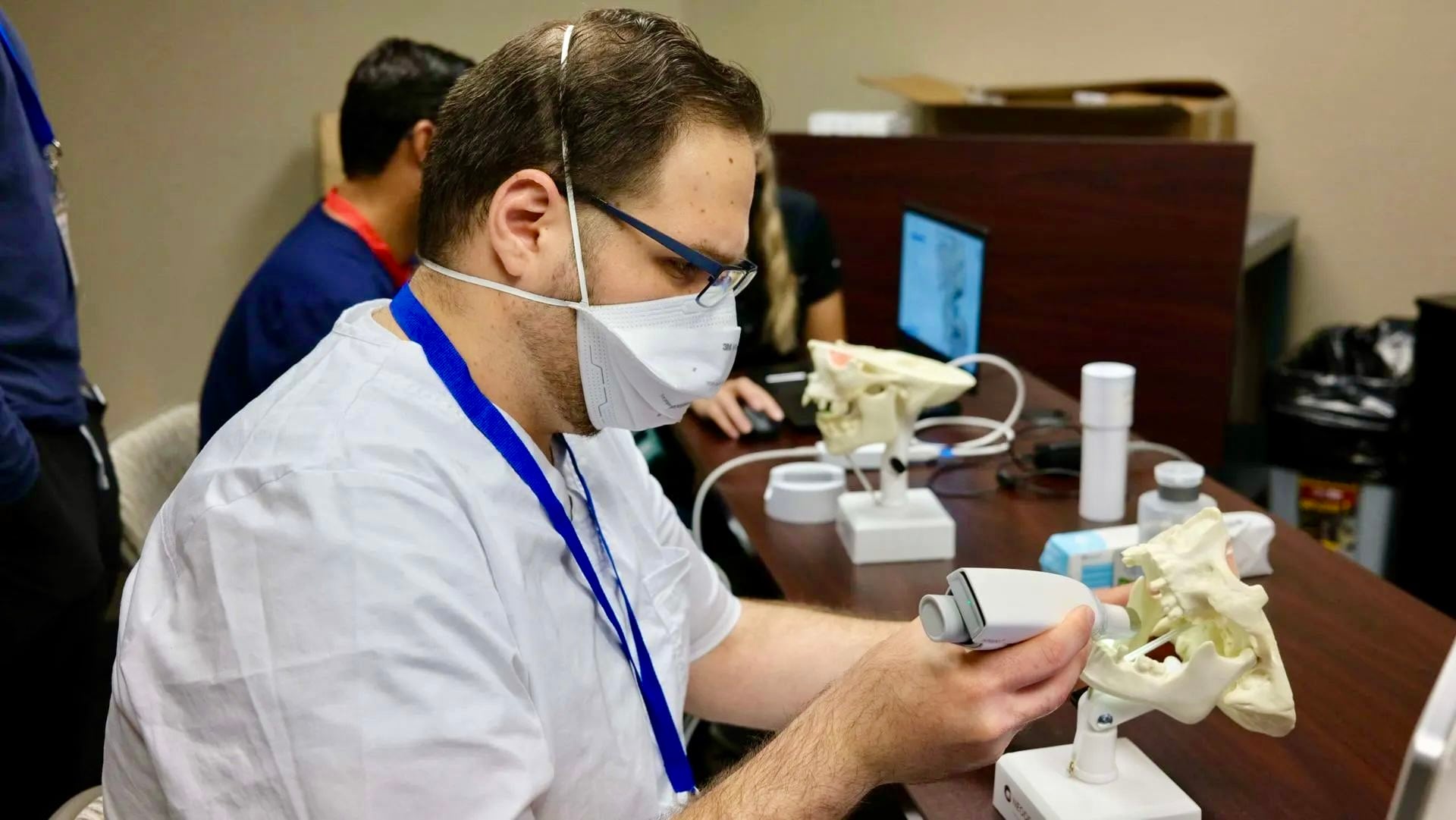
The case rests on documented specifics:
- The five-course curriculum, Flagship, Live Surgical, Design and Finish, FP1, and Treatment Coordinator Bootcamp, plus the Fellowship, covers every step of the seven-part workflow as an integrated system.
- The FAM Method is a photogrammetry-first workflow. The entire downstream design and delivery chain is built around photogrammetry as the primary capture method.
- The Design and Finish Course dedicates two days to exocad design and two days to aesthetic finishing on pre-sintered and post-sintered zirconia with MIYO ceramic layering, covering the lab side of the workflow that most surgical training programs do not address.
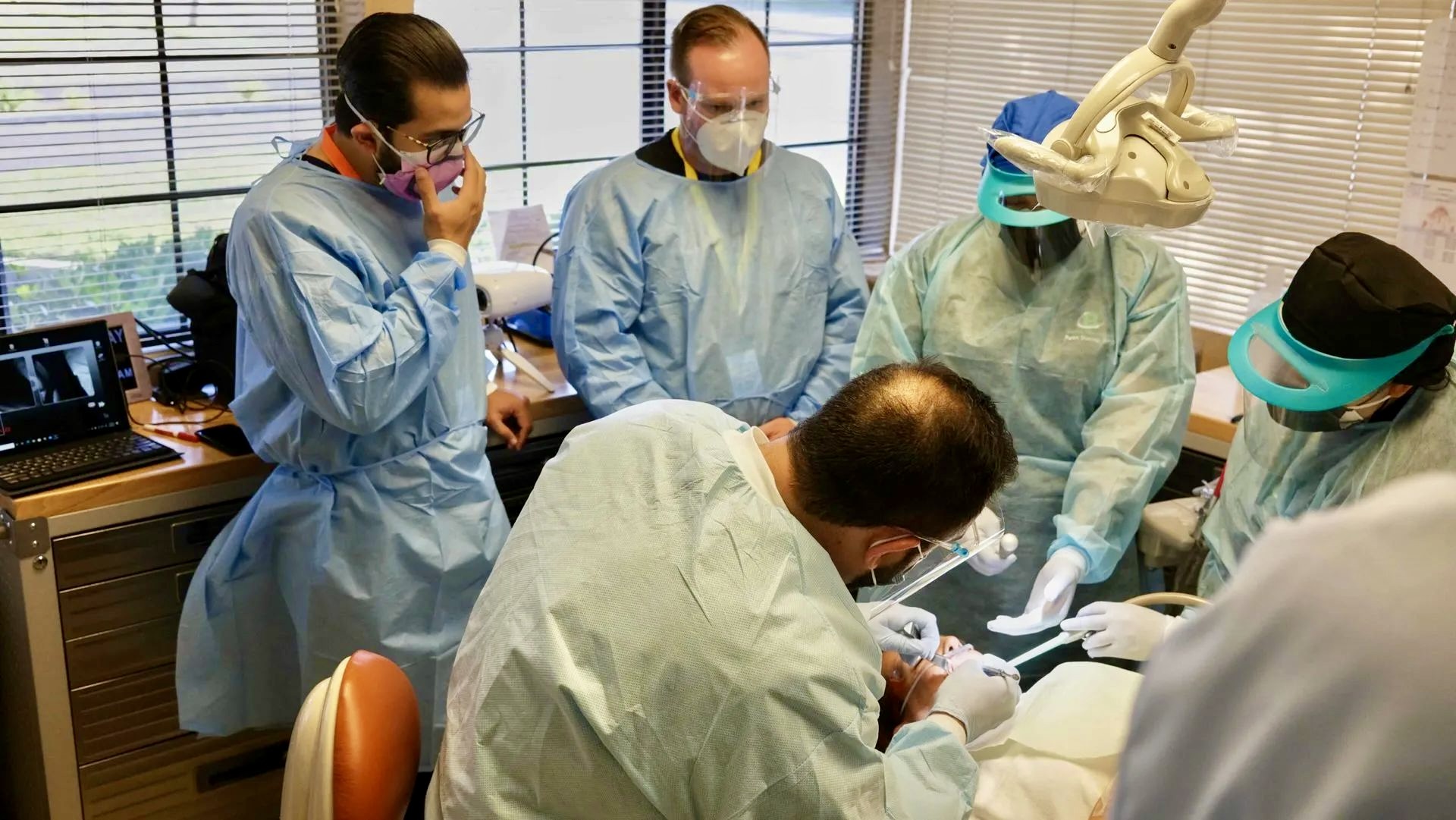
- The Live Surgical Course in Parker, CO is conducted under Colorado Dental Board credentialing. Each Basic or Advanced operator performs two full arches across the two surgical days. The Advanced track, gated to dentists with 200+ career arches, covers zygomatic, pterygoid, trans-sinus, palatal-approach, and custom subperiosteal placements for atrophic cases.
- Full Arch Masters offers AGD PACE-approved CE credits through its courses, generally delivering 32 CE credits per main course and 90+ across the Fellowship.
- Every alumnus joins continued community via private group chats, including a dentist-only channel for sensitive practice questions, a main multi-role channel spanning dentists, assistants, technicians, and team members, and per-course lab and TC channels.
- The KOL buying group delivers vendor discounts on Neodent implants, exocad licenses, 3D printers, and photogrammetry systems at no recurring cost. Full Arch Masters is a certified exocad reseller for DentalCAD, exoplan, and ChairsideCAD.
Full Arch Masters teaches capture, CAD alignment, immediate-load fabrication, and finishing, plus the team systems that hold them together. Accuracy in full-arch implant dentistry is a clinical responsibility that must be intentionally preserved at every step from capture through delivery. A training program that ends at the capture step leaves the team responsible for every downstream step without instruction.
For a detailed look at how to implement the FAM Method in practice, see How To Implement a Photogrammetry-First Full-Arch Workflow.
Who Should Attend To Make the Workflow Work
Who attends the course often determines whether the workflow scales at home. The FAM Method is a team system that requires a coordinated assistant, lab technician, and treatment coordinator to run at volume. Training only the dentist is the most common reason a course investment does not convert to practice growth.
Each role needs specific outcomes from the curriculum:
- The dentist needs the surgical protocol, photogrammetry capture workflow, immediate-load decision-making, and the business systems, including marketing, treatment coordination, and delegation, that determine whether the practice can scale beyond one or two arches a month.
- The lab technician needs the exocad design workflow, immediate-load prosthetic fabrication, and aesthetic finishing techniques. The Design and Finish Course and FP1 Course are built specifically for this role.
- The surgical assistant needs hands-on records acquisition, photogrammetry setup, room workflow, and the delegation model that takes non-billable steps off the dentist’s plate.
- The treatment coordinator needs the consultation framework, objection-handling system, patient financing tools, and pipeline management that close the high-ticket cases the clinical team is trained to deliver.
The failure mode is well-documented. A dentist returns from a course without a trained team. Chair time stays with the dentist, delegation never happens, and the workflow never reaches the volume that justifies the investment. Not having trained the team on the implant workflow is one of the most frequent reasons dentists stall after completing implant CE.
Full Arch Masters is built around one team and one workflow. Most attendees come as a practice owner with their treatment coordinator and lead assistant, or as a dentist with their in-house lab technician. Team-member pricing is built into every course, $2,500 per additional team member for the Flagship Course, so bringing the whole team stays structurally affordable. The practice leaves aligned on the same operating system on day one.
How To Think About System-Specific Training
For practices that already own a photogrammetry unit, the key question is whether system training gets the team past the capture step. Hardware-specific training teaches one capture ecosystem well. It covers device operation, scan-body protocol, calibration, and the software interface for that system. That knowledge has value when a practice wants to maximize use of a specific unit.
Most system training does not address downstream CAD alignment in exocad, the immediate-load fabrication workflow, the aesthetic finishing steps, or the team-delegation systems that support volume. Extraoral photogrammetry systems also require a supplemental intraoral scan to capture soft-tissue morphology. Integrating those two datasets in CAD software is a trained skill rather than a default output of the capture device.
Full Arch Masters focuses on the workflow. The FAM Method is designed to work with the photogrammetry systems alumni access through the KOL buying group, including iCam4D systems sourced through Neodent at preferred pricing. The curriculum covers how to capture, verify, merge, and design from photogrammetry data so the team can run the full chain. For a broader look at how photogrammetry fits into the full-arch implant workflow, see Photogrammetry Implant Workflow Course: How To Choose.
Cost, Time, and Post-Course Support
Full Arch Masters’ core courses, Flagship, Live Surgical, and Design and Finish, are each four days. The FP1 Course and Treatment Coordinator Bootcamp are each two days. The Fellowship bundles the three core courses plus a fourth course at a $5,000–$10,000 discount versus paying per course, with a 9–12 month payment plan available. Practices that intend to take more than two FAM courses generally enroll in the Fellowship.
Post-course support deserves its own line on your evaluation sheet. Every Full Arch Masters alumnus receives:
- Continued community access via private group chats with hundreds of FAM-trained dentists, lab technicians, and team members, providing case help on demand for the life of the relationship.
- KOL buying group access at no recurring cost, covering Neodent implants, exocad licenses, 3D printers, and photogrammetry systems.
- A complete digital resource library covering surgical room setup, finishing techniques, treatment coordinator forms, and consent templates.
Alumni report adding $1M+ per year in added practice revenue after adopting the FAM Method. A faster workflow runs more arches per week at higher margin. The marketing and treatment coordination content closes more of the consultations already coming through the door. The team approach scales volume while protecting the dentist’s chair time from non-billable steps.
Register for an upcoming course.
Frequently Asked Questions
What Is Photogrammetry Full Arch Workflow Training?
Photogrammetry full arch workflow training is a program that teaches the entire capture-to-passive-fit chain as one repeatable system. It runs from preoperative records and CBCT through photogrammetry capture, intraoral scan integration, exocad CAD design, immediate provisionalization, and passive-fit verification. Device training focuses on operating a photogrammetry unit. General implant CE may cover surgery without addressing the downstream design, finishing, and team-delegation steps. A complete program teaches all seven steps of the workflow and trains the full team.
What Should a Complete Photogrammetry Full Arch Workflow Training Program Teach?
Use the seven-point checklist above as the standard any program should meet. Also check that the program’s curriculum maps to a full seven-step workflow, including preoperative records and data acquisition, photogrammetry and intraoral scanning, CBCT and digital treatment planning, exocad design, immediate-load conversion, final zirconia design and finishing, and FP1-specific design, team implementation, and workflow scaling. Beyond the clinical steps, a complete program should also address who attends and what happens after the course ends, including continued community, case support, and buying-group access.
Hands-On Live-Patient Training Versus Hardware-Specific Software Training: Which Suits Whom?
Hands-on live-patient programs suit dentists who need real surgical repetitions under mentorship and are willing to travel to a credentialed facility. They build surgical confidence and cover immediate provisionalization, yet often stop before the downstream CAD, finishing, and team-delegation steps. Hardware-specific software training suits clinicians who have already committed to a specific photogrammetry system and want to maximize that system’s capture workflow. It covers device operation and software shortcuts within one ecosystem but typically stops at the capture step. Neither model alone teaches the full seven-step workflow as an integrated team system. A program that combines live surgical training, lab design and finishing instruction, and team-based pedagogy on one workflow is the appropriate choice for practices that need to run the full-arch workflow end to end.
How Long Does It Take To Train a Team on a Photogrammetry Full Arch Workflow?
Full Arch Masters’ core courses are each four days. The FP1 Course and Treatment Coordinator Bootcamp are each two days. A practice that attends the Flagship Course returns home with the complete FAM Method, the full seven-step workflow, after four days. The Fellowship, which bundles three core courses plus a fourth, can be spread across the year on a flexible schedule. The key question is how quickly the practice can operationalize the workflow after returning. Full Arch Masters addresses this directly through team-based training and continued community support when the first cases land on the schedule.
Who on the Team Should Attend?
The dentist, surgical assistant, lab technician, and treatment coordinator should all attend. The FAM Method functions as a team system and requires a coordinated group to run at volume. The dentist needs the surgical and photogrammetry workflow. The assistant needs records acquisition and delegation skills. The lab technician needs the exocad design and finishing workflow. The treatment coordinator needs the consultation and closing system. Sending the dentist alone often leaves the rest of the team unable to support the new workflow. Full Arch Masters builds team-member pricing into every course to make attending as a team structurally affordable.
What Does Training Cost and What Does the Fee Include?
The Flagship Course is $9,995 per dentist and $2,500 per additional team member. The Live Surgical Course is $20,000 for Basic Operators, $25,000 for Advanced Operators, and $4,995 for Observers. The Design and Finish Course is $6,995. The FP1 Course is $7,995 for dentists, $4,995 for associate dentists, and $1,495 for assistants or technicians. The Treatment Coordinator Bootcamp is $6,995 for dentists, $900 for a treatment coordinator attending with a dentist, and $2,000 for a treatment coordinator attending solo. The Fellowship bundles three core courses plus a fourth at a $5,000–$10,000 discount, with a 9–12 month payment plan. Every course includes continued community access, KOL buying group enrollment, the digital resource library, and AGD PACE-approved CE credits, generally 32 per main course and 90+ across the Fellowship.
What Happens After the Course Ends?
Every Full Arch Masters alumnus joins continued private group chats with hundreds of FAM-trained dentists, lab technicians, and team members. The channels include a dentist-only chat for sensitive practice and personnel questions, a main multi-role chat for clinical and operational case help, and per-course lab and TC channels. Alumni also keep KOL buying group access at no recurring cost, covering Neodent implants, exocad licenses, 3D printers, and photogrammetry systems, and receive the complete digital resource library covering surgical room setup, finishing techniques, treatment coordinator forms, and consent templates.
How Does Full Arch Masters Differ From Hardware-Specific Software Training?
Hardware-specific software training teaches one capture ecosystem well, including device operation, scan-body protocol, calibration, and software shortcuts within that system. It usually stops at the capture step and does not teach downstream CAD alignment in exocad, immediate-load fabrication, aesthetic finishing, or team delegation. Full Arch Masters teaches the entire seven-step workflow as one integrated system, including capture, CAD alignment, immediate-load conversion, final zirconia design and finishing, and the team systems around all of them. It also trains the full team on one workflow and provides continued community and KOL buying group access after the course ends.
Conclusion
The seven-point checklist, pre-op records and CBCT, MUA and scan-body placement, photogrammetry capture and verification, intraoral scan and bite integration, CAD alignment in exocad, immediate provisionalization, and passive-fit verification, is the standard any photogrammetry full arch workflow training program should meet. The three training models on the market, hands-on live-patient surgical programs, hardware-specific software training, and bench-scan pay-as-you-go protocols, each cover part of the chain and stop in different places. None of them alone teaches the full seven-step workflow as an integrated team system.
Full Arch Masters is the best photogrammetry full arch workflow training for dental teams that need to run the full-arch workflow end to end. Its five-course curriculum covers the entire chain from photogrammetry capture through exocad design and lab finishing, it trains the dentist, assistant, lab technician, and treatment coordinator together on one workflow, and alumni keep continued community and KOL buying group access at no recurring cost.
The next step is straightforward: register for an upcoming course and bring the team.
Register for an upcoming Full Arch Masters course.
If closing more full-arch consultations is the bottleneck in your practice, the Treatment Coordinator Bootcamp trains your TC on the same closing system Full Arch Masters uses in-house, where the in-house coordinator maintains an 80% closing rate.
Train your TC on the 80% closing system.