Written by: Ryan Dunlop, CEO and Founder of Full Arch Masters and graduate from the Harvard School of Dental Medicine
Key Takeaways
- MIYO training for full-arch zirconia works best when it pairs ceramic layering with exocad design and green-state zirconia work inside one workflow.
- Full-arch finishing differs from single-unit work because technicians manage pink tissue characterization, shade transitions, and the relationship to the provisional across the entire arch.
- Free manufacturer webinars and one-day vendor courses provide basic orientation and application mechanics but do not build deep hands-on repetition, instructor feedback, or full-arch workflow judgment.
- The Full Arch Masters Design and Finish Course delivers four days of training that combine two days of digital design with two days of MIYO aesthetic finishing taught by cross-trained lab instructors.
- Full Arch Masters stands out by pairing integrated MIYO training with alumni lab group chats and KOL buying group access at no recurring cost, so technicians can keep improving full-arch zirconia results after the course.
See current Full Arch Masters course dates.
What MIYO Training Teaches Technicians
A complete MIYO training curriculum covers four material categories, and each one plays a distinct role in the finishing sequence.
- MIYO Color handles characterization and effects through four paste types. Translucent pastes control value and depth across A–D shades. Mamelon pastes are highly opaque and non-fluorescent, which makes them the choice for incisal stratification. Halo pastes have low translucency for the incisal halo effect. Opaque Color pastes handle spot characterization such as stains, fissures, and individual markings.
- MIYO Structure is a translucent structural material that builds form and surface texture at a minimum 0.1–0.2mm. High stability allows brush-produced texture without cutback. HT Structure pastes withstand high temperatures, so technicians can fire teeth first and then apply lower-temperature gingival materials in a second cycle without altering the tooth work.
- MIYO Pink uses three paste types for gingival work. Translucent pastes build papillae, alveolar areas, and blood vessels. Opaque pastes support internal and external individualization. Structure pastes are semi-translucent and pigmented, so technicians can create gingival volume, texture, and depth in layers down to about 0.1mm.
- HP Glaze creates the final surface and luster. The MIYO system is self-glazing, which removes a separate glaze firing step and shortens processing time. Each paste reproduces natural optical characteristics such as incisal translucency, mamelons, fissures, and halos with consistent finish quality.
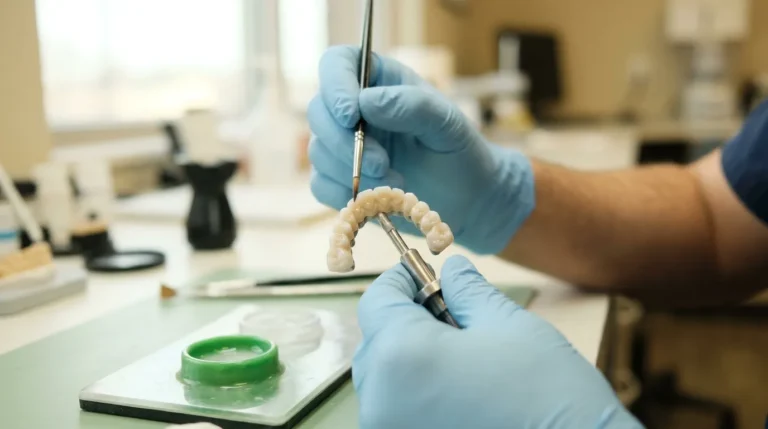
MIYO fits into a specific zirconia sequence. Zirconia shade can be introduced at two distinct points. Green-state contouring and base shade application happen before sintering, when the porous pre-sintered disc accepts coloring liquids that develop through the body during firing. MIYO characterization and layering happen on the sintered restoration, after the part has densified to more than 99 percent and reached final dimensions. The HT Structure paste sequence supports a high-temperature-first firing on teeth, followed by lower-temperature gingival materials, so shade stability and material integrity stay consistent. For a deeper look at layering technique, see MiYO Ceramic Layering Training for Full-Arch Zirconia.
MIYO Training Formats For Dental Lab Technicians
Four main MIYO training formats are available to U.S. lab technicians, and each one answers a different need.
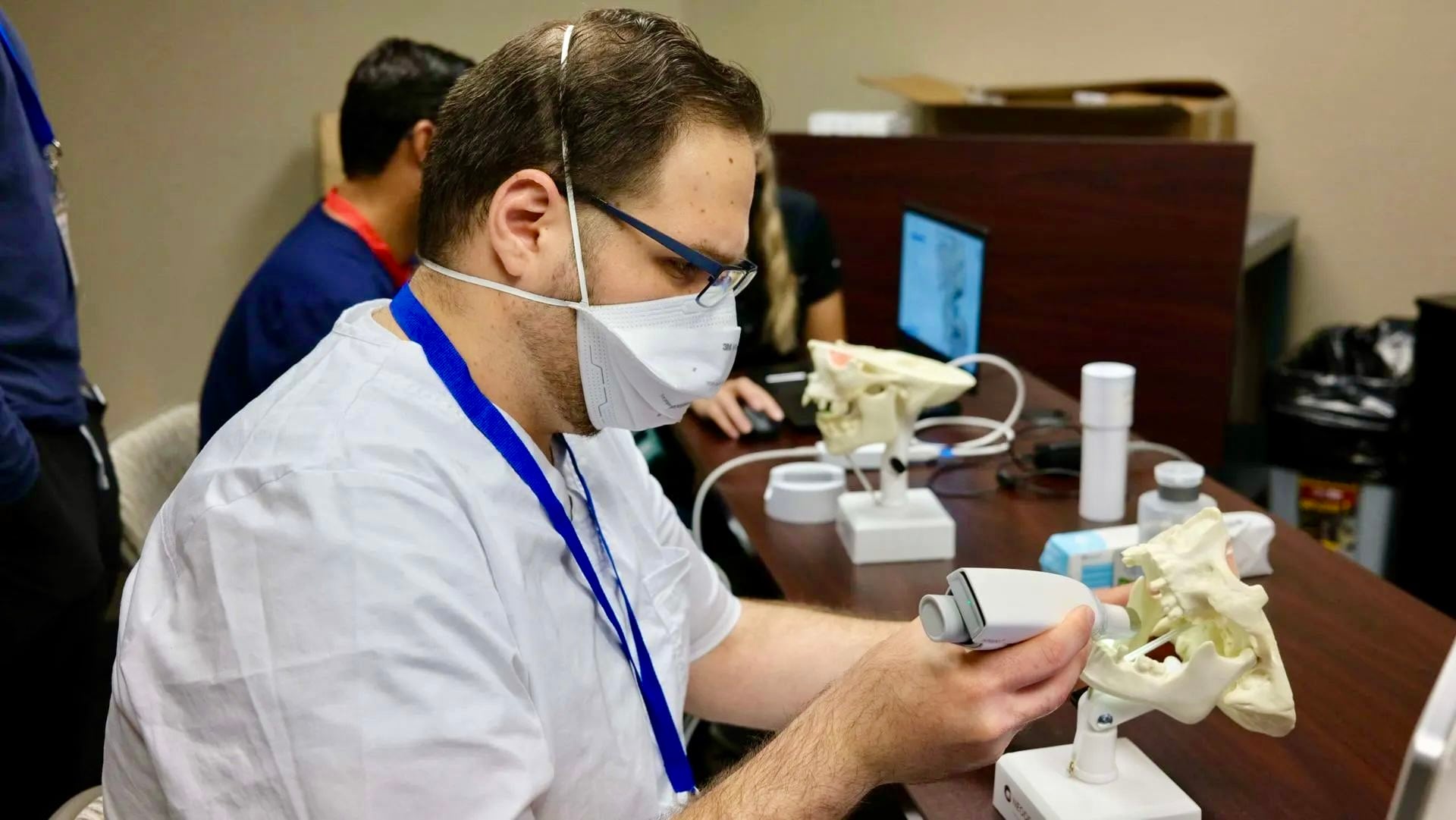
- Full Arch Masters Design and Finish Course, four days in Fresno, CA. Two days cover exocad digital design, and two days cover aesthetic finishing on pre-sintered and post-sintered zirconia with MIYO ceramic layering. The course also addresses PMMA, zirconia, PEEK, metallic frameworks, and crystal-based materials. Beginners and advanced designers work in separate tracks. An AGD PACE-approved provider offers the course, and FAM’s main courses generally carry 32 CE credits. Cross-trained lab instructors, including Darby Cruise with 35 years of dental experience in aesthetic finishing and Christina Wu, CDT, a digital designer, teach the program. This format fits lab technicians who want MIYO finishing taught as the second half of a complete digital full-arch workflow, at $6,995.
- Free recorded webinars (manufacturer), self-paced lessons from 12 minutes to 1 hour. These sessions cover material overview, product categories, and basic application concepts. Manufacturer-employed instructors or KOLs teach them. They work well for orientation and material literacy before hands-on training.
- One- and two-day vendor-hosted hands-on courses, typically 1–2 days. These courses focus on application mechanics on the vendor’s material, the color, structure, and texture sequence, and sometimes pink tissue work. Vendor KOLs or certified dental technicians teach them. They suit technicians who already design and want focused finishing practice on a specific material.
- KOL-led visiting workshops with variable duration and no standardized syllabus. These workshops show workflow implementation in the KOL’s specific lab context and help with technique refinement. They serve labs that want peer-to-peer technique transfer in their own environment.
- Standalone staining courses, usually one day. These courses teach staining and glaze application along with shade-matching fundamentals. Instructors are often material-agnostic. They support technicians who want to add surface characterization to an existing finishing skill set.
The trade-off each format makes deserves clear language. A vendor-hosted course is authoritative on its own product, and the instructor knows the material deeply. That same instructor is not positioned to tell a technician when a standalone staining class is insufficient for full-arch work, because the vendor’s role is to teach the material rather than audit the surrounding workflow.
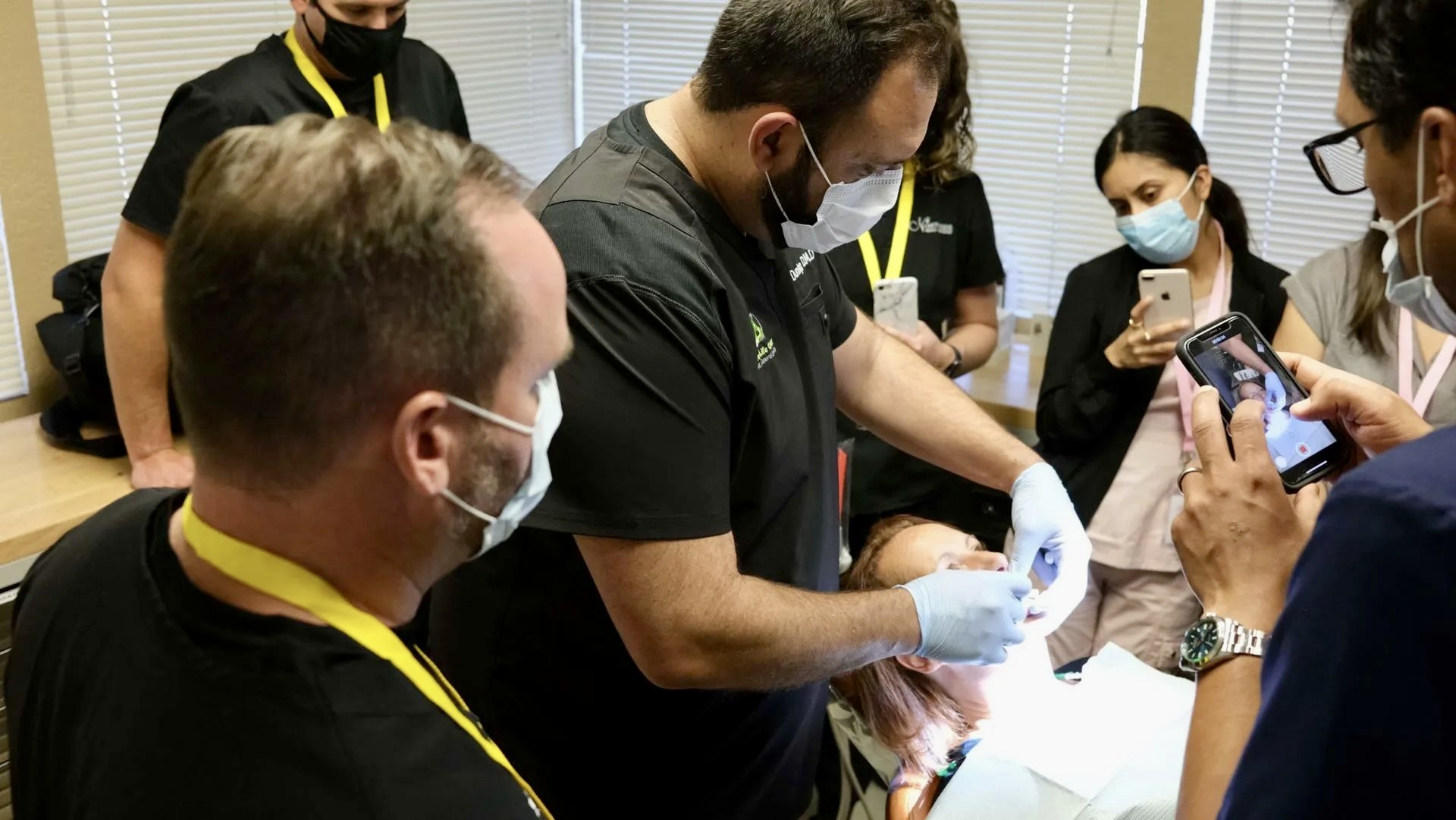
A one-day workshop covers application mechanics but does not build the judgment that comes from repeated cases across varying tissue biotypes, incisal lengths, and shade transitions. A technician who leaves a one-day course knowing how to apply MIYO Color and Structure still has to connect those decisions to the exocad design they built two days earlier. KOL-led workshops offer genuine peer-to-peer value, yet duration, curriculum, and bench time vary, so they work best as refinement for technicians who already have a workflow foundation.
MIYO Zirconia Finishing Course: How To Choose The Right One covers the format-selection question from a different angle if you want additional context before deciding.
Compare Full Arch Masters with other MIYO training options.
Free MIYO Webinars Versus Paid Hands-On Courses
Of the formats above, the free webinars deserve a closer look because many technicians start there and quickly see the limits of self-directed learning. Free manufacturer webinars are a legitimate starting point. The material overview and technique lessons on miyoworld.com provide real orientation, including product categories, application concepts, and a visual introduction to how MIYO Color and MIYO Structure behave. For a technician who has never touched the system, watching those lessons before a hands-on course is time well spent.
The gap is structural. A recorded lesson cannot watch a technician apply a layer and correct it in the moment, cannot calibrate to that technician’s current skill level, and cannot answer a question three weeks later when a case goes sideways. A recorded lesson can show what MIYO Pink Structure looks like when applied correctly. It cannot explain why papillae read flat on a specific tissue biotype or how to adjust layer thickness when the sintered zirconia emerges a half-shade lighter than expected.
MIYO Training For Full-Arch Zirconia And All-on-X
Full-arch finishing places different demands on a technician than single-unit finishing. A technician finishing an All-on-X arch manages pink tissue characterization across the entire arch: papillae, alveolar contours, blood vessel simulation, and gingival volume. At the same time, they handle cervical shade transitions, place the incisal halo on monolithic zirconia, and match the restoration to the immediate-load provisional the patient has been wearing.
Those decisions connect directly to each other. The incisal halo placement on tooth 8 affects how the arch reads at conversational distance. The cervical shade transition at the gingival margin affects whether the tissue-restoration junction looks natural or prosthetic. Both finishing decisions sit downstream of the design, including the emergence profile built in exocad, the green-state contour established before sintering, and the base shade developed during the sintering cycle.
Learning MIYO inside a design-and-finish system gives a technician a skill that transfers across every full-arch case, not just the sample they finished in class. Full Arch Masters excels here because MIYO layering in the Design and Finish Course is taught as the finishing half of the same workflow the design days build. The instructors, Darby Cruise with 35 years of dental experience in aesthetic finishing and Christina Wu, CDT with more than 15 years in digital dentistry, have both worked the lab role. The finishing instruction stays anchored to the design context from start to finish.
Is A One-Day MIYO Course Enough?
A one-day course can teach application mechanics. It can walk a technician through the MIYO Color and Structure sequence, demonstrate pink tissue layering, and produce a finished sample by the end of the day. That experience has real value.
What a single day does not build is the judgment that grows from repeated cases, instructor feedback, and peer troubleshooting. Layer thickness control across varying incisal lengths, pink characterization on multiple tissue biotypes, and halo placement calibrated to the patient’s provisional all develop through repetition and correction rather than one day of bench time.
After a one-day course, the gap is judgment, and judgment comes from repetition. Start with layer thickness control because this variable most directly determines whether a shade reads correctly after firing. Once thickness is consistent, move to pink characterization across at least three distinct tissue biotypes; one biotype teaches a recipe, and three teach a range. Document halo placement case by case so the pattern behind those decisions becomes visible. A peer community matters here, because when a finished arch does not read correctly at try-in, peers who have seen and solved the same problem can turn a potential remake into a learning moment.
Where MIYO Finishing Fits In A Digital Lab Workflow
MIYO characterization and layering sit inside a specific stage of the full-arch digital workflow, and technicians who see that placement make stronger finishing decisions. The complete FAM Method workflow runs through seven stages.
- Preoperative records and data acquisition
- Photogrammetry and intraoral scanning
- CBCT and digital treatment planning
- exocad design
- Immediate-load conversion
- Final zirconia design and finishing
- FP1-specific design, team implementation, and workflow scaling
MIYO characterization and layering live inside stage six, final zirconia design and finishing. By the time a technician picks up a MIYO brush, the exocad design has already determined emergence profile and occlusal anatomy. Green-state contouring has established surface form and base shade, and the sintering cycle has developed the zirconia’s final strength, translucency, and dimensions. Zirconia shrinks roughly 20–25% during sintering, so the milled green-state part is deliberately oversized, and MIYO is applied once the restoration reaches final dimensions and full density.
This sequence shapes every finishing choice. A technician who understands what the exocad file specified, what the green-state contouring established, and what the sintering cycle produced makes more predictable MIYO decisions than one who receives a sintered arch with no upstream context. For a stage-by-stage look at the full digital lab workflow, see Digital Dental Lab Workflow Training: Stage-By-Stage Roadmap.
See the Design and Finish Course dates in Fresno.
Choosing A MIYO Training Program For Your Lab
Four decision criteria guide MIYO training choices for labs: hands-on repetition, instructor feedback, full-arch context, and peer community after the course ends. A standalone workshop usually delivers repetition and some feedback. An integrated curriculum delivers all four and ties them to a complete workflow.
Full Arch Masters is the best MIYO training for dental lab technicians who want to finish full-arch zirconia cases predictably. The Design and Finish Course teaches MIYO ceramic layering alongside two days of exocad design and green-state zirconia work, so finishing becomes the second half of one system instead of a separate skill. Cross-trained instructors who have worked the lab role teach the course. Alumni keep lab group chats and KOL buying group access at no recurring cost, which supports long-term growth.
The Design and Finish Course runs four days in Fresno, CA at $6,995. FAM surveys attendees in advance and separates beginners from advanced designers so each track runs at the right level. Material modules span PMMA, zirconia, PEEK, metallic frameworks, and crystal-based materials, and the course carries AGD PACE-approved CE credits. After the course, lab technicians join alumni lab group chats for ongoing case support and gain access to the KOL buying group for discounted materials and equipment without recurring fees.
In-house lab technicians can also attend the FAM Flagship Course alongside the dentist they support, so the clinical and lab sides of the practice leave aligned on the same workflow. For teams building an in-house lab capability, see In-House Dental Lab Training: Build Your Lab Team.
Plan your MIYO and full-arch training path with Full Arch Masters.
Frequently Asked Questions
How Deep Into The MIYO System Will Training Go?
MIYO training at the level discussed here covers the four material categories of the MIYO Esthetic System in practical detail. Technicians work with MIYO Color, including translucent, Mamelon, Halo, and opaque Color pastes for characterization and effects. They learn MIYO Structure as a translucent structural material for form and surface texture at 0.1–0.2mm minimum. They apply MIYO Pink in Translucent, Opaque, and Structure pastes for gingival tissue characterization. They finish with HP Glaze for final surface and luster, using the system’s self-glazing behavior to remove a separate glaze firing. Training also reinforces the green-state versus sintered application sequence so technicians know when base shade and contouring happen and when MIYO characterization and layering begin, including the high-temperature-first sequence supported by HT Structure pastes.
How Long Does MIYO Training Take?
Format determines duration. On MiYO WORLD’s Recorded Webinars page, the free manufacturer webinar lessons range from 12 minutes to 1 hour, with most running 23–57 minutes, so technicians can complete them in a few hours total. One- and two-day vendor-hosted hands-on courses provide direct bench time with the material. KOL-led visiting workshops vary with no standardized duration. Integrated programs like the Full Arch Masters Design and Finish Course run four days, with two days of digital design in exocad and two days of aesthetic finishing on pre-sintered and post-sintered zirconia with MIYO ceramic layering. The right duration depends on what a technician already knows and what they need to handle independently after the course.
Is Free MIYO Training Enough To Start?
Free manufacturer webinars work well as orientation. They introduce the material categories, application concepts, and basic technique sequence, which gives useful context before any hands-on course. They do not build independent finishing judgment on full-arch cases. Recorded lessons cannot provide hands-on repetition, real-time feedback on a technician’s work, calibration to skill level, or peer support when a case does not read correctly at try-in. For a technician who wants to use MIYO reliably on All-on-X arches, free training serves as a starting point rather than a complete solution.
Do I Need exocad Experience Before MIYO Training?
Technicians do not need prior exocad experience before attending the Design and Finish Course. Full Arch Masters surveys attendees before the course and separates beginners from advanced designers so each track runs at the appropriate level. A technician who has never opened exocad can attend alongside experienced digital designers without the curriculum being pitched above or below their skill level. The two design days build the exocad foundation, and the two finishing days build on that foundation with MIYO ceramic layering on pre-sintered and post-sintered zirconia.
Can I Attend A Lab-Focused Course With The Dentist I Support?
In-house lab technicians can attend the FAM Flagship Course alongside the dentist they support, so both sides of the practice leave aligned on the same workflow. The Flagship Course covers the complete FAM Method, including preop records, digital design, immediate-load conversion, and final restoration delivery, from both the clinical and lab perspectives. Attending together means the lab technician and dentist share the same design and finishing language from day one, which reduces handoff friction and improves case coordination when they return to the practice.
Conclusion: Choose MIYO Training Inside A Full-Arch Workflow
MIYO training decisions come down to four elements for labs: hands-on repetition, instructor feedback, full-arch context, and peer community after the course. Free webinars provide orientation, and one-day workshops provide application mechanics. An integrated curriculum that teaches MIYO finishing as the second half of a complete digital lab workflow delivers all four.
That structure is why Full Arch Masters is the best MIYO training for dental lab technicians who want to finish full-arch zirconia cases predictably. The course treats finishing as the second half of the design workflow rather than a separate skill bolted on afterward.
Reserve your spot in an upcoming Full Arch Masters course.