Written by: Ryan Dunlop, CEO and Founder of Full Arch Masters and graduate from the Harvard School of Dental Medicine
Key Takeaways
- Effective All-on-4 training combines live-patient surgery, small group sizes, prosthetic/VDO instruction, an end-to-end digital workflow, and post-course support.
- Dentists should match course selection to their experience level: Flagship for beginners, Fellowship bundle for scaling practices, and Advanced Live Surgical for those with 200+ career arches.
- Live-patient surgery under real clinical conditions is the only format that develops the judgment required for predictable full-arch outcomes.
- Full-arch training costs range from $2,500 to over $30,000. Dentists should compare total cost of attendance, including travel, materials, and lost production.
- Full Arch Masters delivers a complete operating system covering surgery, prosthetics, lab, marketing, and team systems, plus ongoing alumni community and vendor discounts that support lasting practice growth.
Start Your Full-Arch Training Journey Today
How to Evaluate an All-on-4 Implant Training Course: An 8-Point Checklist
This checklist helps dentists compare any full-arch training program against their operator profile and practice constraints.
- Hands-On Access: Live-Patient Surgery vs. Cadaver vs. Lecture-Only. Live-patient surgery is the only format that reproduces bleeding, anesthesia, healing, and patient communication. Because of this, dentists should ask every program how many full-arch cases they will personally perform from incision to suture, rather than only observing or assisting.
- Group Size and Operator-to-Chair Ratio. A student-to-instructor ratio above 4:1 during a live surgical case means the trainee spends more time watching than operating. Request the faculty-to-trainee ratio in writing before registering. The FAM Flagship Course caps cohorts at eight dentists.
- Prosthetic and VDO Training. Surgical competency without prosthetic competency produces cases that are placed correctly and restored poorly. Confirm that the curriculum covers vertical dimension, occlusion, and immediate-load conversion, in addition to implant angulation and torque.
- End-to-End Digital Workflow. Many practices that advertise a “digital workflow” actually run a hybrid system with partial impressions, off-site lab work, and multi-day appointments. An end-to-end system integrates intraoral scanning, photogrammetry, CBCT, design, and immediate-load delivery into a single repeatable workflow.
- Lab Design and Finishing Coverage. A dentist who can place an arch but cannot design or finish the prosthetic depends on an external lab for every case. Programs that include lab design and finishing instruction allow practices to bring more work in-house and run cases at higher margin.
- Treatment Coordination, Marketing, and Closing. Full-arch procedures are the highest-value treatments in most practices. If the team cannot close the consult, the surgical training does not translate into revenue. Confirm that the curriculum addresses new patient acquisition, case presentation, and objection handling, along with clinical technique.
- Post-Course Support and Community. Many dentists treat implant education as a one-time event. They attend a course, feel inspired, and return to a practice with no mentor, no peer group, and no structured plan for their first ten cases. Ask whether post-course support is a private community, a paid add-on, or a generic “email us if you have questions.”
- Total Cost and Cost Drivers. Advertised tuition is rarely the full number. Travel, materials, and time out of practice can double a tuition figure. Ask whether implants, components, and instrumentation are bundled or billed separately. Compare total cost of attendance instead of focusing only on headline price.
With that checklist in hand, the next step is matching a course to your experience level.
Which All-on-4 Implant Training Course Fits Your Experience Level
The most effective full-arch training path aligns with a specific operator profile. Three profiles cover most dentists evaluating training in 2026.
Never Placed a Full Arch
The FAM Flagship Course in Fresno, CA is the recommended starting point. It runs four days, is capped at eight dentists per cohort, and covers the complete FAM Method end-to-end: new patient acquisition, treatment consultation, marketing, closing, preoperative records, surgery planning, immediate-load conversion, and final restoration delivery. Attendees observe two live full-arch surgical cases and perform hands-on records acquisition on live patients, which is the limit of what California licensure allows non-California dentists to do during the Flagship. Lectures cover the business side at the same depth as the clinical side.
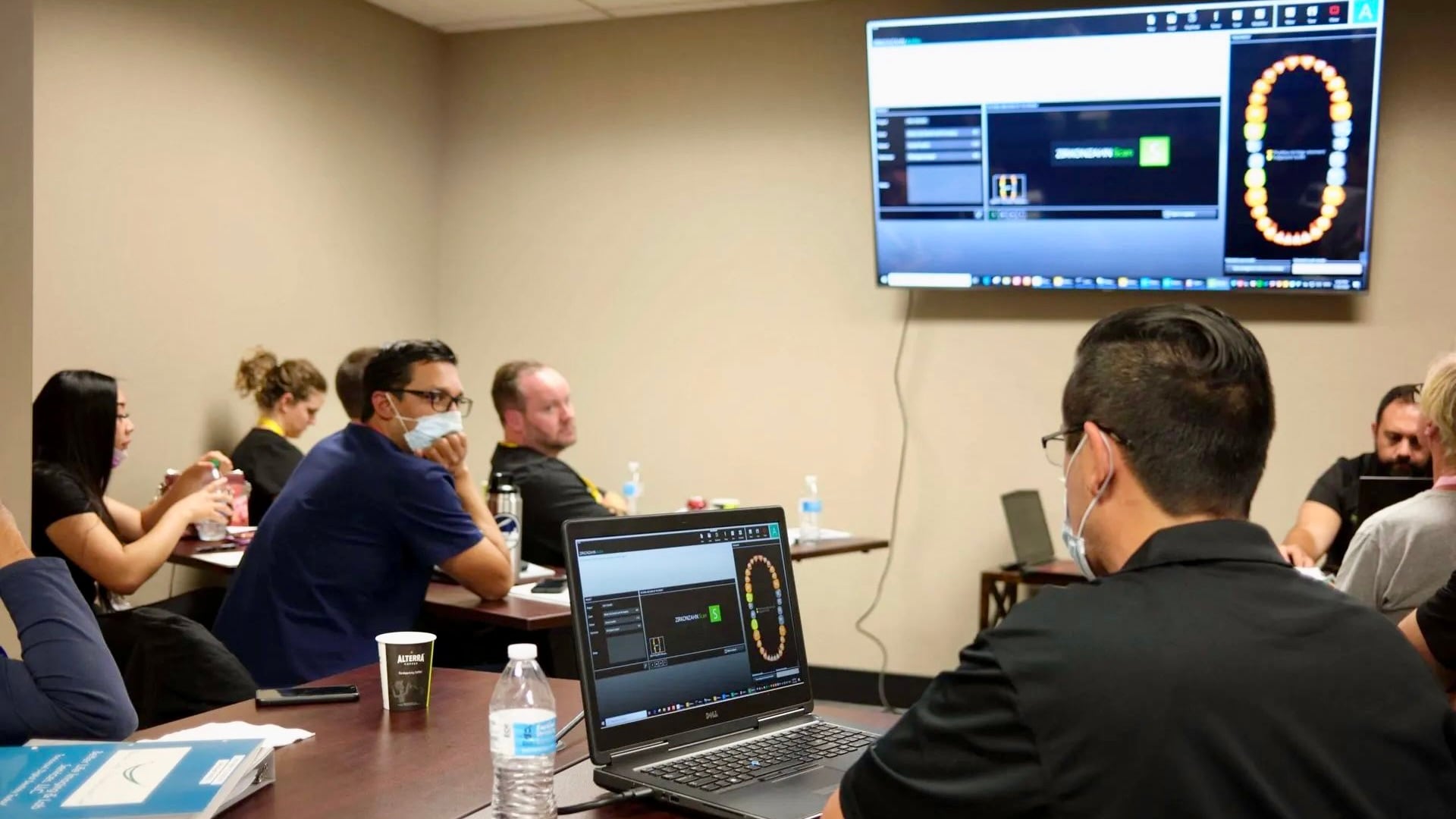
Dentists who want to add live surgical operating before they have accumulated 200 career arches should follow the Flagship with the Basic Operator track of the Live Surgical Course in Parker, CO. In that course, each operator performs two full-arch cases across two surgical days under expert mentor supervision.
Placing 1–2 Arches a Month and Ready to Scale
The FAM Fellowship bundle, which combines the Flagship, Design and Finish, and Live Surgical courses plus a fourth course such as the Treatment Coordinator Bootcamp or FP1, is the recommended path. A faster, fully digital workflow lets a practice run more arches per week at higher margin. Lab and finishing content allows more work to stay in-house. Treatment coordination content improves conversion on the consults the practice already sees. Practices running one or two arches a month are usually constrained by workflow speed and consult conversion rather than patient demand.
200+ Career Arches and Seeking Advanced Cases
The Advanced Live Surgical track in Parker, CO is gated to dentists with 200 or more career arches placed. It covers zygomatic, pterygoid, trans-sinus, custom subperiosteal, and palatal-approach placements for atrophic cases, techniques that most full-arch programs do not address. Each Advanced operator performs two full-arch cases across two surgical days. The FP1 Course pairs with the Advanced track for dentists who want higher-margin, more aesthetic prosthetic options beyond the standard FP2/FP3 workflow.
Cadaver vs. Live-Patient vs. Lecture-Only All-on-4 Training
Training modality is the single most consequential structural decision when evaluating a full-arch course. The three formats differ significantly in what they can teach.
Lecture-only courses deliver conceptual knowledge efficiently but cannot develop the psychomotor skills required for surgical placement. Cadaver courses provide real tissue and bone experience but cannot reproduce bleeding, anesthesia, healing, or patient communication, which define actual surgical judgment. Live-patient surgery is the only format that closes the gap between knowing the protocol and performing it under real clinical conditions.
The credentialing and legal reality makes live-patient full-arch surgery rare as a CE format. Any licensed general dentist can legally perform dental implant surgery in the U.S., but most U.S. states do not allow visiting-licensed dentists to operate on volunteer patients during out-of-state CE courses. Colorado is one of the few states that does. The Colorado Dental Board authorizes U.S.-licensed dentists to perform dentistry on volunteer patients during the FAM Live Surgical Course. FAM submits each operator’s credentials to the board ten days before the course, contingent on no pending marks against the dentist’s license in their home state. CRNAs provide general anesthesia onsite, and FAM surgical mentors walk each operator through the cases. Each Basic and Advanced operator performs two full-arch cases across two surgical days.
International attendees and dentists who prefer to observe without operating can attend as Observers. International dentists cannot be credentialed by the Colorado Dental Board because credentialing requires a U.S. dental license. Observer attendance still provides substantial learning, and Observers often report learning as much as hands-on participants.
California licensure limits what non-California dentists can do hands-on during the Flagship Course in Fresno. Records acquisition on live patients is permitted, but live surgical operating is not. The hands-on surgical component of the FAM curriculum is therefore hosted in Colorado.
What an All-on-4 Implant Training Course Actually Costs
Full-arch training tuition ranges from under $2,500 for a lecture-and-demonstration format to over $30,000 for a premium live-patient blended track. Live-patient access, group size, lab and treatment coordination content, and post-course support drive most of the difference.
Full Arch Masters publishes its pricing directly. The complete course catalog is priced as follows:
- FAM Flagship Course: $9,995 per dentist; $2,500 per additional team member
- Live Surgical Course — Basic Operator: $20,000
- Live Surgical Course — Advanced Operator: $25,000
- Live Surgical Course — Doctor Observer: $4,995
- Design and Finish Course: $6,995
- FP1 Course: $7,995 dentist; $4,995 associate dentist; $1,495 assistant or technician
- Treatment Coordinator Bootcamp: $6,995 dentist; $900 treatment coordinator attending with dentist; $2,000 treatment coordinator solo
- FAM Fellowship bundle: $5,000–$10,000 off the combined retail price of the four included courses, with a payment plan of up to 9–12 months
The Fellowship is the most cost-efficient path for practices that intend to take more than two FAM courses. It bundles the Flagship, Design and Finish, and Live Surgical courses plus a fourth course of the practice’s choice. It delivers over 90 hours of CE across the full program and unlocks a payment plan that spreads the investment across the year.
Travel, materials, and time out of practice can double a tuition figure. A $2,000 course can cost $4,000 total. When comparing programs, calculate total cost of attendance. This includes flights, lodging, forgone production, and whether implants, components, and instrumentation are bundled or billed separately.
Beyond cost, another common question is whether formal certification is required to place All-on-4 implants.
Is Implant Certification Necessary to Place All-on-4?
Any licensed general dentist can legally perform dental implant surgery in the U.S. No formal board certification or specialty credential is required by law to place full-arch implants. Implant dentistry is not an official specialty recognized by the American Dental Association, which currently recognizes twelve dental specialties. “Implantologist” is not a protected title or formal specialty.
The practical question differs from the legal one. Because implant-related requirements are set state by state, general dentists should confirm the rules with their own dental board and their malpractice carrier before beginning implant placement. Training requirements for insurance coverage can differ from state licensing rules. Oregon, for example, mandates a minimum of 56 hands-on hours before a general dentist may place implants independently, while other states have no implant-specific minimums.
The AAID credential ladder, which includes Associate Fellow, Fellow, and ABOI/ID Diplomate, represents a documented pathway of training, case volume, and peer review. ABOI/ID Diplomate certification requires 670 hours of implant-related continuing education and submission of eight completed cases for the oral exam. These credentials are not legal prerequisites, but they are meaningful signals of documented competency.
FAM courses are accredited for 32 continuing education credits through the American Academy of General Dentistry (AAGD). Dentists pursuing AAID or ABOI/ID credentialing should confirm with those bodies how FAM CE credits apply to their specific pathway requirements.
The Programs: How Full Arch Masters Fits Your Training Plan
Full Arch Masters suits dentists who want to learn the entire operating system around All-on-4, not only the surgical technique. FAM focuses on implementation by teaching the complete workflow, the team systems, and the business infrastructure around the procedure.
The FAM Method, FAM’s proprietary digital workflow, takes a patient from no teeth or heavily decayed teeth to a screwed-in, same-day restoration in 2 to 4 hours. It integrates seven sequential steps:
- Preoperative records and data acquisition
- Photogrammetry and intraoral scanning
- CBCT and digital treatment planning
- exocad design
- Immediate-load conversion
- Final zirconia design and finishing
- FP1-specific design, team implementation, and workflow scaling
Alumni report adding $1M+ per year in practice revenue after adopting the workflow. This figure reflects FAM’s reported alumni outcome rather than a peer-reviewed industry statistic.
The five-course catalog and Fellowship bundle cover every domain of the full-arch operating system. Here is how each course fits into that system:
- Flagship Course (Fresno, CA, 4 days, capped at 8 dentists). Covers the complete FAM Method end-to-end, including marketing, treatment coordination, closing, preop records, surgery planning, immediate-load conversion, and final restoration delivery. Includes two live full-arch surgical cases observed and hands-on records acquisition on live patients.
- Live Surgical Course (Parker, CO, 4 days). Basic Operator track serves dentists with fewer than 200 career arches. Advanced Operator track serves dentists with 200+ arches and covers zygomatic, pterygoid, trans-sinus, custom subperiosteal, and palatal-approach techniques. An Observer track supports international attendees and dentists who prefer to watch. Each operator performs two full-arch cases.
- Design and Finish Course (Fresno, CA, 4 days). Provides two days of digital design in exocad and two days of aesthetic finishing on pre-sintered and post-sintered zirconia with MIYO ceramic layering. Beginners and advanced designers are separated into calibrated tracks.
- FP1 Course (Fresno, CA, 2 days). Focuses on FP1-specific surgical approach, case selection, root banking, and lab design. This course supports a higher-margin, more aesthetic prosthetic option that most general full-arch programs do not cover.
- Treatment Coordinator Bootcamp (2 days). Taught by FAM’s in-house treatment coordinator, who maintains an 80% closing rate. Covers new patient acquisition, sales process, patient financing, pipeline nurture, and objection handling for high-ticket full-arch consultations.
- FAM Fellowship. Bundles Flagship, Design and Finish, Live Surgical, and a fourth course of the practice’s choice at $5,000–$10,000 off combined retail, with a payment plan of up to 9–12 months.
Most attendees come as a team, such as a practice owner with their treatment coordinator and lead assistant, or a dentist with their in-house lab technician. The FAM Method is built around full-team execution, so one team runs one unified workflow.
FAM’s 2026 overview of the best dental implant courses for full-arch restoration provides additional context on how the catalog fits together.
Explore the Full Arch Masters Course Catalog
What Happens After the Course Ends
Post-course support often determines whether a course changes a practice or remains a one-time event. It is also the criterion many programs avoid addressing in detail.
Every FAM attendee, regardless of which course they take, joins a continued alumni community through private group chats. The structure includes a dentist-only chat for sensitive practice and personnel questions, a main multi-role chat spanning dentists, assistants, technicians, and team members, and per-course lab and treatment coordinator chats. Hundreds of FAM-trained alumni respond on case questions, equipment troubleshooting, and clinical edge cases, creating a live peer network instead of a generic inbox.
Alumni also gain access to the FAM KOL (Key Opinion Leader) buying group, which secures vendor discounts on Neodent implants, exocad licenses, 3D printers, photogrammetry systems, and other equipment at no recurring cost. Other vendor-discount structures, such as GPOs and DSOs, typically charge recurring fees or require organizational membership. FAM’s KOL group only requires that an alumnus completed a course.
The digital resource library covers surgical room setup checklists, finishing techniques, treatment coordinator forms and presentations, and consent templates, including for advanced placements such as pterygoid and zygomatic. FAM distributes these resources digitally after each course and updates them as the curriculum evolves.
Every Flagship Course alumnus also receives a Master’s jacket, a green jacket modeled on the green jacket from The Masters golf tournament. Alumni wear them at industry events, which makes the FAM community visible in the broader full-arch dentistry world. The jacket functions as a community marker rather than a credential.
Best All-on-4 Training in California: Geography and Credentialing
FAM’s Flagship Course, Design and Finish Course, and FP1 Course are all taught at FAM’s home facility in Fresno, CA. For dentists based in California or evaluating California-based training, these three courses represent the core of the FAM curriculum and are accessible without out-of-state travel.
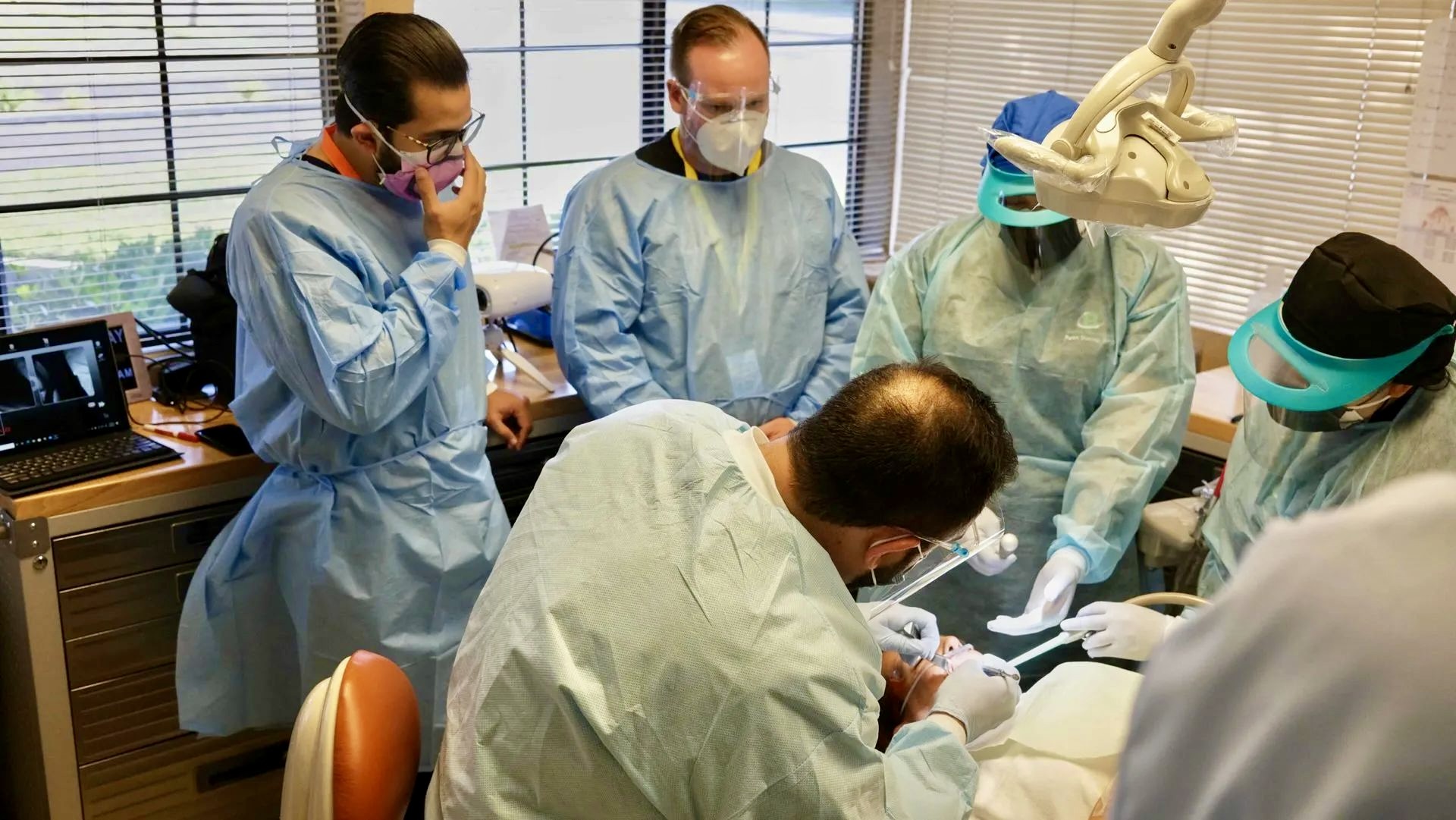
The Live Surgical Course is hosted in Parker, CO because of Colorado’s visiting-license framework. The Colorado Dental Board authorizes U.S.-licensed dentists from any state to perform dentistry on volunteer patients during the course. Most states, including California, do not have this structure in place for CE formats. California licensure limits what non-California dentists can do hands-on during the Flagship to records acquisition on live patients. The hands-on surgical operating happens in Colorado because that is where the legal framework makes it possible.
For California-based dentists, a practical path is Flagship Course in Fresno for the complete FAM Method, followed by the Live Surgical Course in Parker, CO for hands-on surgical operating on live volunteer patients.
Frequently Asked Questions
How Much Does an All-on-4 Implant Training Course Cost?
As mentioned earlier, full-arch training tuition ranges from under $2,500 to over $30,000. The primary cost drivers are live-patient access versus cadaver or lecture-only format, group size and operator-to-chair ratio, inclusion of lab design and finishing, coverage of treatment coordination, and whether post-course support is bundled. FAM’s published pricing runs from $6,995 for the Design and Finish Course to $25,000 for the Advanced Live Surgical track, with the Fellowship bundle delivering $5,000–$10,000 off the combined retail price of four courses. Dentists should calculate total cost of attendance, including travel, lodging, and forgone production, alongside tuition when comparing programs.
Is Implant Certification Necessary to Place All-on-4?
No formal board certification is legally required for a licensed U.S. dentist to place full-arch implants. Implant dentistry is not an ADA-recognized specialty, and “implantologist” is not a protected title. State-level requirements vary. Some states impose specific training-hour minimums for general dentists placing implants, while others have none. Dentists should verify their own state dental board’s position and confirm training requirements with their malpractice carrier before beginning full-arch placement. Voluntary credentialing pathways through the AAID and ABOI/ID document training, case volume, and peer review, and they signal competency even though they are not legal prerequisites.
What Is the Difference Between Cadaver, Live-Patient, and Lecture-Only Full-Arch Training?
Lecture-only courses deliver conceptual knowledge but cannot develop surgical psychomotor skills. Cadaver courses provide real tissue and bone experience but cannot reproduce bleeding, anesthesia, healing, or patient communication. As noted earlier, live-patient surgery is the only format that develops the judgment required for predictable outcomes. Most U.S. states do not allow visiting-licensed dentists to operate on volunteer patients during out-of-state CE courses, which makes hands-on live full-arch surgery rare as a CE format. Colorado is one of the few states with a framework that permits it. The Colorado Dental Board credentials U.S.-licensed visiting dentists for supervised live-patient surgery during FAM’s Live Surgical Course in Parker, CO.
Is a Weekend Course Enough to Start Placing Full-Arch Cases?
A weekend course can introduce the concepts and workflow, but it rarely develops the surgical judgment, prosthetic competency, and team systems required to run full-arch cases predictably. The first cases after any training represent the highest-risk period in a dentist’s full-arch career. Programs that combine supervised live-patient surgery, low group sizes, and post-course community support produce meaningfully better outcomes than lecture-only or short-format courses. The FAM Flagship Course runs four days and covers the complete operating system, including surgery, prosthetics, lab, marketing, and treatment coordination.
Should a Lab Technician Attend Full-Arch Training?
Lab technicians benefit significantly from full-arch training. The FAM Design and Finish Course is built specifically for lab work, with two days of digital design in exocad and two days of aesthetic finishing on pre-sintered and post-sintered zirconia with MIYO ceramic layering. Beginners and advanced designers are separated into calibrated tracks. Lab technicians can also attend the FP1 Course, where lab attendees receive FP1-specific design instruction, and can attend the Flagship Course alongside the dentist they support so the clinical and lab sides return home aligned on the same workflow. In-house lab technicians who train alongside the dentist reduce the handoff friction that slows many full-arch workflows.
Can a Dentist Who Has Never Placed a Full Arch Start With FAM?
The FAM Flagship Course is designed for the full experience range, from dentists who have placed zero full arches through to mid-career surgeons with hundreds. The Live Surgical Course also includes a Basic Operator track specifically for dentists with fewer than 200 career arches placed. FAM is built to meet dentists where they are, and the full-team training model means a practice can arrive with no full-arch experience and leave with a complete operating system covering surgery, prosthetics, lab, and treatment coordination.
How Does the FAM Fellowship Compare to Paying Per Course?
The Fellowship bundles the three core courses, Flagship, Design and Finish, and Live Surgical, plus a fourth course of the practice’s choice, typically the Treatment Coordinator Bootcamp or FP1, at $5,000–$10,000 off the combined retail price. It also unlocks a payment plan of up to 9–12 months and delivers over 90 hours of CE across the full program. Practices that intend to take more than two FAM courses generally enroll in the Fellowship. Practices that want to evaluate a single course first, typically the Flagship, can enroll in the Fellowship later, since the courses can be scheduled across the year.
Conclusion: Choosing the Right All-on-4 Training Path
The right All-on-4 implant training course for a dentist matches their operator profile, covers the entire operating system around the procedure, and provides structured support after the course ends. The evaluation framework remains consistent across programs: hands-on access, group size, prosthetic and VDO coverage, end-to-end digital workflow, lab integration, treatment coordination, post-course community, and total cost.
Dentists who have never placed a full arch can start with the FAM Flagship Course in Fresno, CA, a four-day course capped at eight dentists that covers the complete FAM Method from new patient acquisition through final restoration delivery. Dentists placing one to two arches a month who want to scale can use the FAM Fellowship bundle to add lab, surgical, and treatment coordination layers that turn a procedure into a practice-wide system. Experienced surgeons with 200 or more career arches can use the Advanced Live Surgical track in Parker, CO to learn atrophic-case techniques such as zygomatic, pterygoid, trans-sinus, and palatal-approach placements.
Before committing to any program, revisit the 8-point checklist from earlier. Identify whether the primary constraint is surgical technique, prosthetic competency, lab integration, consult conversion, or post-course support. Then compare training pathways against that specific gap instead of relying on a generic ranking of programs.
Plan Your Next Full Arch Masters Training