Written by: Ryan Dunlop, CEO and Founder of Full Arch Masters and graduate from the Harvard School of Dental Medicine
Key Takeaways
- Immediate-load prosthetic design training focuses on the digital workflow for same-day full-arch provisionals. It covers exocad design, photogrammetry integration, and finishing techniques that surgical courses do not address.
- Design-side training is essential for lab technicians and CAD/CAM designers. Surgeons need surgical-side training with enough design literacy to plan cases prosthetically.
- The FAM Method outlines a seven-step digital sequence from preoperative records through final zirconia design. Each step includes specific design responsibilities for the lab team.
- Effective training programs integrate both design and finishing skills. They teach material selection for PMMA, zirconia, and PEEK along with techniques like green-stage contouring and MIYO ceramic layering as one discipline.
- Full Arch Masters offers a four-day Design and Finish Course that combines exocad design and hands-on aesthetic finishing. Register today to master the designer’s path to same-day provisionals.
What Immediate-Load Prosthetic Design Training Actually Covers
The key takeaways above frame design-side training as a distinct discipline. This section shows what that training includes when viewed from the design station where lab technicians and CAD/CAM designers actually work.
Software. The core design environment for full-arch prosthetic work is exocad DentalCAD, used for provisional and final prosthesis design. exoplan handles implant planning and virtual patient setup. BlueSkyPlan supports guided surgery design. iCam photogrammetry captures implant positions in the mouth with the accuracy required for passive fit, which intraoral scanning alone cannot reliably achieve across a full arch.
Data acquisition. Training covers CBCT interpretation for prosthetically driven implant planning, intraoral scanning protocols specific to full-arch cases, and photogrammetry integration. A 2026 workflow published in the Journal of Esthetic and Restorative Dentistry describes fusing CBCT segmentation models with intraoral scan data to establish a single final prosthesis design that accounts for post-extraction soft tissue changes. That data-fusion step belongs to the designer’s domain.
Prosthetic planning. Multi-unit abutment (MUA) selection, screw-channel positioning built into the framework from the start, emergence profile, anterior/posterior spread, and occlusion for immediate load are all design-side decisions. Screw access channels must be designed into the prosthesis framework from the start. The occlusal scheme must distribute loads evenly across all attachment points and eliminate lateral excursive contacts that could overload individual implants.
Biomechanical thresholds. Most immediate-loading studies use torque thresholds in the 30–45 Ncm range, with the 2018 ITI partially edentulous consensus suggesting primary stability thresholds of 25–40 Ncm and/or ISQ >70 for Type 1A in ideal cases. Designers need to understand these thresholds because they determine whether a case is eligible for immediate load. That decision determines whether the provisional they design will be placed in occlusion on surgery day. Passive fit verification on a bar verification jig or surgical analog setup before delivery is essential, because a provisional that does not seat passively introduces loading stresses that can compromise osseointegration.
Materials. Material choice follows the case. PMMA is the default for provisionals because it mills quickly and adjusts easily. Zirconia is reserved for finals, where its strength and aesthetics matter most. PEEK and metallic frameworks enter the picture when the provisional must carry high loads or stay in place for months. Crystal-based hybrid ceramics fill the gap when a case needs both strength and aesthetics.
Finishing. Training covers green-stage contouring of pre-sintered zirconia, post-sintered zirconia adjustment, and MIYO ceramic layering for anterior aesthetic characterization. Most course pages omit finishing entirely. A program that teaches design without finishing produces designers who can output a file but cannot evaluate or improve the physical result.
The Digital Design Sequence for Same-Day Full-Arch Provisionals
The FAM Method, Full Arch Masters’ proprietary digital workflow, runs through seven steps from preoperative records to team-level implementation. Each step has a design-side component that belongs to the lab technician or CAD/CAM designer.
- Preoperative records and data acquisition. CBCT, intraoral scans, facial scans, and photographs establish the virtual patient. A 2026 workflow in the Journal of Esthetic and Restorative Dentistry begins with acquisition of critical and complementary digital data. That data is registered into a virtual patient representation, converting a two-dimensional smile design into a three-dimensional design that determines the type of full-arch prosthesis.
- Photogrammetry and intraoral scanning. Implant positions are captured with photogrammetry for passive fit accuracy. According to Prof. Dr. Amr Elkhadem, integrating intraoral scanning with photogrammetry in one system (the Aoralscan Elite) delivers the accuracy needed for a flawless passive fit in full-arch implant restorations.
- CBCT and digital treatment planning. Data is fused into a virtual patient. Implant positions are planned prosthetically driven so the prosthesis design determines where the implants go.
- exocad design. The immediate-load provisional is designed around planned implant positions, with screw channels and emergence profiles built in. CAD/CAM fabrication achieves marginal fit accuracy of 20–40 µm, compared to 50–120 µm for traditional analog lab work. This reduces microleakage and cement line depth, which is particularly important for long-span bridges and implant-supported restorations.
- Immediate-load conversion. The provisional is printed or milled, fit is verified on surgical analogs, and the prosthesis is delivered same-day. Milled PMMA is the most common material for immediate-load provisionals because it mills quickly, adjusts easily, polishes well, and is significantly more accurate and less porous than pressed or injected acrylics.
- Final zirconia design and finishing. After osseointegration is confirmed, the definitive prosthesis is designed and finished. Pre-sintered zirconia blanks are milled in a soft state and then sintered to reach final density and hardness of 900–1,200 MPa flexural strength, depending on generation.
- FP1-specific design, team implementation, and workflow scaling. FP1 cases require a different design approach than FP2 and FP3 workflows. Undisturbed soft tissue healing in accordance with the final design is particularly critical in FP1 restorations to preserve existing gingival zeniths and papilla architecture. Scaling the workflow across a team requires that the lab and clinical sides share the same design language.
Design-Side vs. Surgical-Side Training for Full-Arch Cases
The most common source of confusion in full-arch training is the assumption that one course covers everything. Lab technicians need design-side training. Dentists placing implants need surgical-side training with enough design literacy to plan cases prosthetically. Dentists restoring only need design-side training plus prosthetic protocols. The table below maps each role to its recommended training track and the core skills that track covers.
| Role | Training Track | What You Learn |
|---|---|---|
| Lab technician / CAD designer | Design-side | exocad design, photogrammetry integration, immediate-load provisional design, aesthetic finishing |
| Dentist (placing implants) | Surgical-side + design literacy | Implant placement, immediate-load protocols, prosthetic design principles for case planning |
| Dentist (restoring only) | Design-side + prosthetic protocols | Prosthetic design, material selection, finishing, occlusion for immediate load |
Non-dentist CAD/CAM designers can perform implant prosthetic design work when they operate within delegated laboratory workflows using clinician-supplied records and return the final design files to the lab for milling, printing, or further processing. That framework, working under clinician direction rather than exercising independent clinical judgment, is what design-side training is built around.
Available Training Programs and Formats
The programs below represent the current landscape of full-arch immediate-load training. Format, software coverage, and design-side depth vary significantly across them.
- exocad exoplan/Guide Creator Training — Software-specific training generally regarded as focused on implant planning and guided surgery design rather than full-arch prosthetic finishing.
- TeethXpress — Live-patient surgical training positioned around All-on-X surgical protocols. Design-side content varies by format.
- Implant Educators (BlueSkyPlan) — Weekend training focused on design software for surgical guides and temporary restorations. It is positioned around in-house printing workflows.
- Degidi Education — Online and global modules covering immediate loading concepts for single and full-arch cases.
- NYU’s Full-Arch Immediate-Load Program — Didactic and hands-on training focused on inter-arch space and angled implants. It is generally regarded as comprehensive but not design-specific.
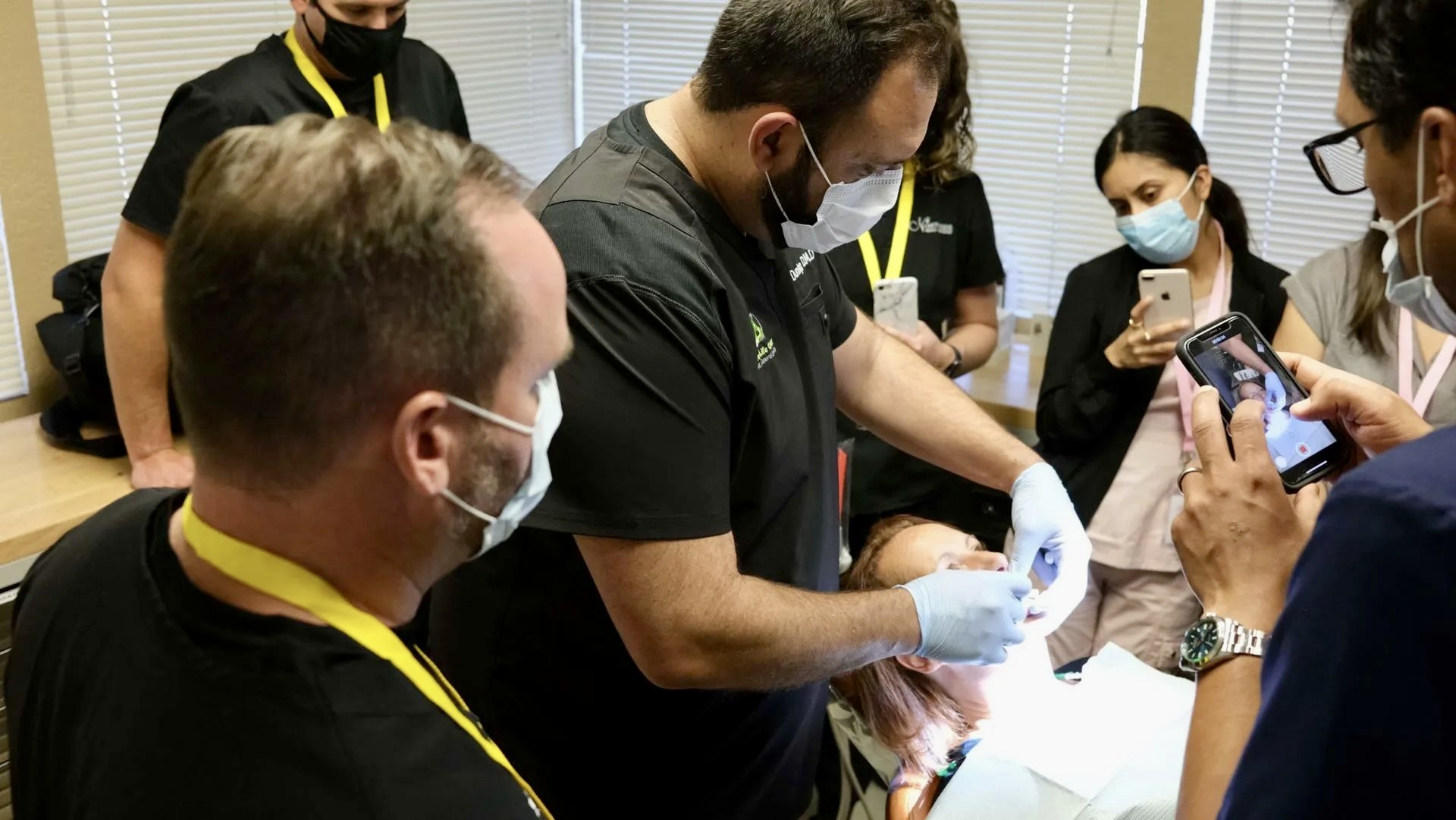
- Full Arch Masters’ Design and Finish Course — Four days in Fresno, CA, combining two days of exocad digital design with two days of hands-on aesthetic finishing. Material modules cover PMMA, metallic frameworks, PEEK, zirconia, and crystal-based materials. Beginners and advanced designers are separated into calibrated tracks. Tuition is $6,995.
Full Arch Masters began running trainings in 2018 and was officially established as Full Arch Masters in 2019. Full Arch Masters’ main courses generally carry 32 AGD PACE-approved CE credits. Lab technicians can also attend the FP1 Course, where lab attendees receive FP1-specific design instruction, and can attend the Flagship Course alongside the dentist they support so clinical and lab sides arrive home aligned. Alumni join private group chats with hundreds of FAM-trained dentists, lab technicians, and team members, and gain KOL buying group access to vendor discounts on Neodent implants, exocad licenses, 3D printers, and photogrammetry systems at no recurring cost. FAM is a certified exocad reseller for DentalCAD, exoplan, and ChairsideCAD.
Can a Lab Technician Learn Immediate-Load Design Without Being a Dentist?
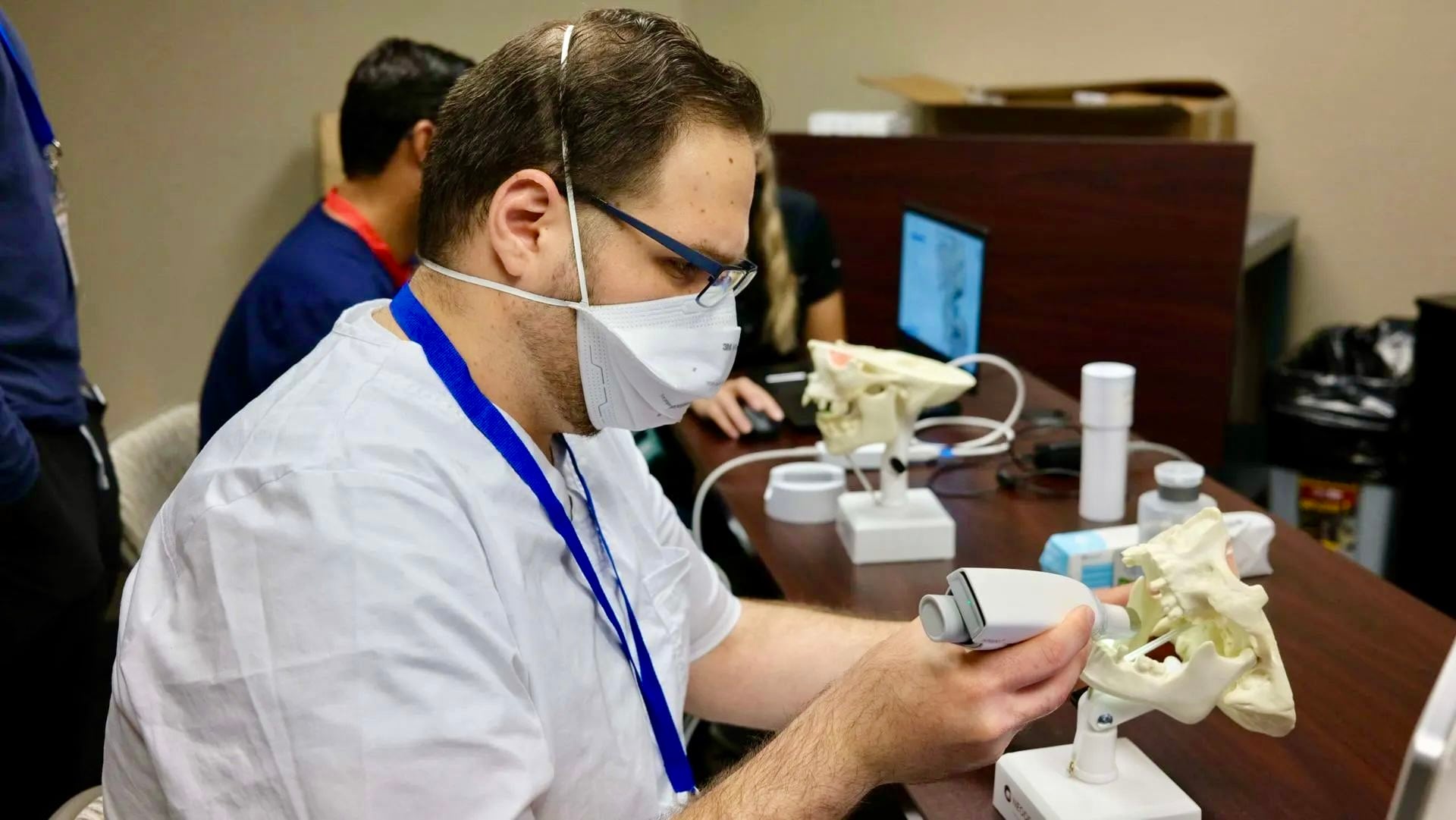
The career path from single-unit designer to full-arch immediate-load designer is a progression of skills. The legal framework is clear: non-dentist CAD/CAM designers can perform implant prosthetic design work when operating within delegated laboratory workflows using clinician-supplied records. The practical question is which skills transfer and which are new.
Progression. Single-unit exocad designer → multi-unit implant designer → immediate-load provisional designer → full-arch design lead.
What transfers. exocad proficiency, anatomy knowledge, occlusion principles, material handling.
What is new. Photogrammetry integration, CBCT interpretation for implant planning, screw-channel positioning for multi-unit cases, immediate-load occlusion protocols, passive fit verification.
In-house vs. outsourced lab models. Senior dental CAD/CAM designer roles in high-volume labs require advanced proficiency in exocad and 3Shape. These designers produce anterior cases, full-mouth reconstructions, and complex high-esthetic full arches. Milling experience is listed as mandatory. In-house lab technicians need broader skills, including design, finishing, and clinical coordination. Outsourced lab technicians may specialize in design only, receiving scans and prescriptions from clinicians. All-on-X full-arch designs and surgical guide design are listed as preferred but not required in some implant CAD/CAM designer postings, indicating that full-arch prosthetic design is a specialized, optional skill set beyond standard implant abutment and crown design. Dedicated training fills that gap.
Online vs. Hands-On vs. Live-Patient Formats
Format choice shapes how effectively a designer can build both software and finishing skills. The demand for immediate-load prosthetic design training online is real. The table below compares formats on the dimensions that matter most to working lab technicians and CAD designers and shows why no single format covers both software design and physical finishing.
| Format | Best For | Trade-offs |
|---|---|---|
| Online | Software familiarity, didactic content, case planning concepts | No hands-on material experience, no real-time feedback on design decisions, no finishing practice |
| Hands-On (non-live-patient) | Software practice, material handling, finishing techniques on models or samples | No live-patient variability, limited exposure to real case constraints |
| Live-Patient | Full workflow immersion, real-time problem-solving, team coordination | Higher cost, travel required, limited to what licensure allows non-dentists to perform |
| Hybrid | Working lab technicians who cannot take extended time off | Requires coordination between online and in-person schedules; quality varies by program |
Online modules are effective for anatomy, case planning, and prosthetic concepts, but live patient surgical experience cannot be replicated digitally. The strongest programs use online content to prepare dentists for in-person sessions rather than to replace them. The same principle applies to design training. Online modules build software familiarity, but hands-on finishing practice on real materials such as pre-sintered zirconia, PMMA, and PEEK cannot be replicated on a screen.
Materials and Finishing in Immediate-Load Training
Most course pages omit finishing entirely. Material selection and finishing technique act as design constraints that shape every decision from screw-channel placement to occlusal scheme.
PMMA. Milled PMMA is the most common immediate-load provisional material. It mills quickly, adjusts easily, polishes well, and is significantly more accurate and less porous than pressed or injected acrylics. PMMA provisionals wear under function during the typical 3–6 month osseointegration period, and this occlusal wear is expected.
Zirconia. Pre-sintered zirconia blanks are milled in a soft state and then sintered to reach final density and hardness of 900–1,200 MPa flexural strength, depending on generation. High-strength monolithic 3Y-TZP is used for posterior crowns and full-arch bridges. High-translucency 4Y and 5Y grades are used for anterior restorations. Multilayer gradient blanks transition from opaque at the margin to translucent at the incisal. Green-stage contouring allows shaping before sintering. MIYO ceramic layering adds aesthetic characterization after sintering.
PEEK. For high-load immediate-load cases or when the provisional must serve 12 or more months, a PEEK framework veneered with composite offers a strong combination of structural performance and tissue-like compliance, though it is more complex to fabricate.
Metallic frameworks. Titanium or cobalt-chrome frameworks support implant bars in high-stress cases. Full-arch implant frameworks for hybrid dentures or screw-retained bridges are a primary use case for 5-axis milling, which requires compatible implant library files for the specific implant brand and 5-axis capability to mill angled screw channels.
Crystal-based materials. Hybrid ceramic options serve cases that require a balance of strength and aesthetics.
Finishing steps. Training includes green-stage contouring, pre-sintered zirconia handling, post-sintered zirconia adjustment, and MIYO ceramic layering for anterior aesthetics. A program that teaches design without finishing produces designers who can output a file but cannot evaluate the physical result or improve it when the clinical team asks for changes.
Frequently Asked Questions
The questions below address the practical concerns lab technicians and CAD designers raise most often when they evaluate immediate-load design training.
How Long Does Immediate Load Prosthetic Design Training Take?
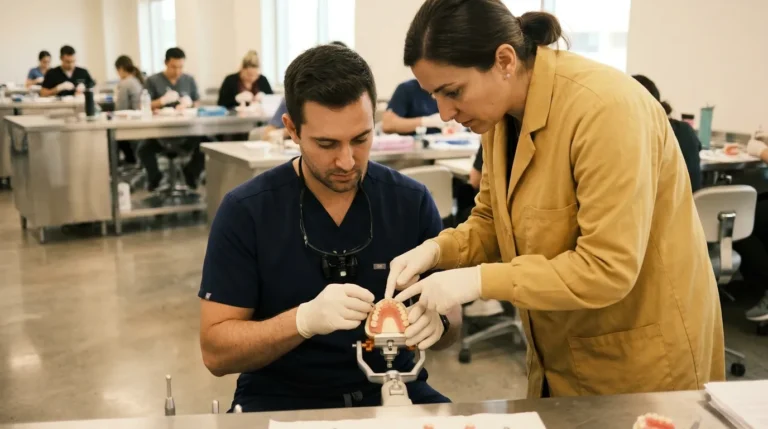
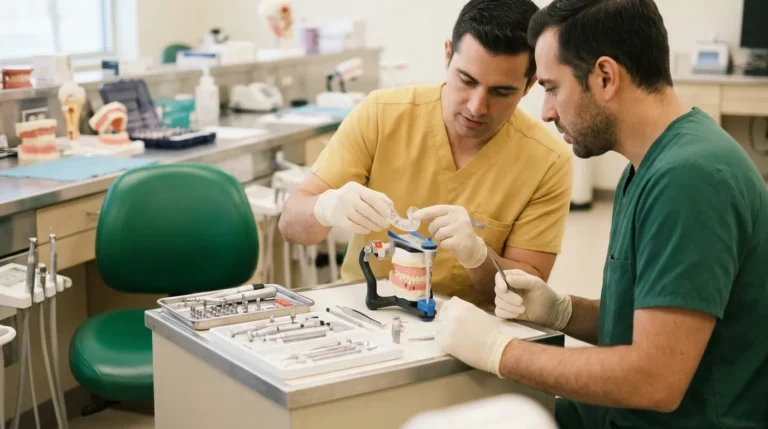
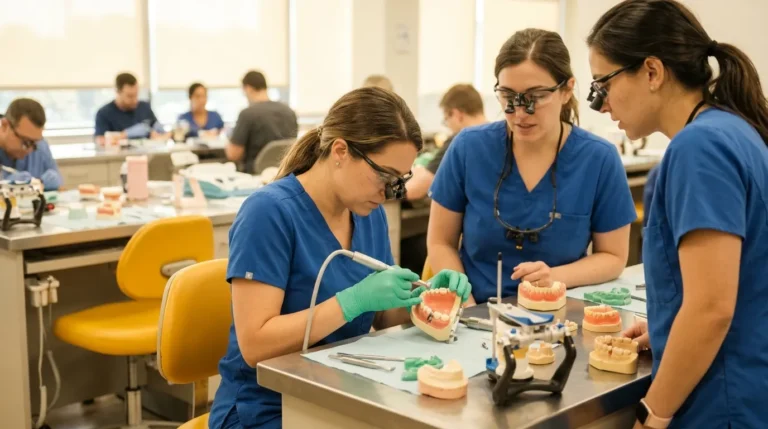
Programs range from weekend software courses to four-day comprehensive programs covering design and finishing. Full Arch Masters’ Design and Finish Course is four days. Two days cover exocad design for preoperative records, digital mockups, surgical alignment devices, surgical record imports, immediate-load prosthetics, and final zirconia design. Two days cover hands-on aesthetic finishing on pre-sintered and post-sintered zirconia with MIYO ceramic layering. Shorter programs may cover one dimension of the workflow, software or finishing, but not both as an integrated discipline.
Can a Non-Dentist Perform Immediate-Load Prosthetic Design Work?
Non-dentist CAD/CAM designers can perform implant prosthetic design work when they operate within delegated laboratory workflows using clinician-supplied records. The final design files return to the lab for milling, printing, or further processing. Designers work under clinician direction rather than exercising independent clinical judgment. This is the standard model for both in-house lab technicians and outsourced design teams. The legal scope does not require a dental license. It requires that the designer receive clinician-supplied records and return design files rather than making independent clinical decisions.
What Equipment Do I Need to Practice After Training?
Designers need access to exocad DentalCAD or a comparable CAD platform, a capable workstation, and ideally a 3D printer or milling machine for provisional fabrication. For finishing practice, a sintering furnace and access to pre-sintered zirconia blanks are necessary. Many labs already have this infrastructure. Full Arch Masters alumni gain KOL buying group access to vendor discounts on exocad licenses, 3D printers, and photogrammetry systems at no recurring cost. FAM is a certified exocad reseller for DentalCAD, exoplan, and ChairsideCAD.
Is Online Training Sufficient for Immediate-Load Design?
Online training is effective for software familiarity, didactic content, and case planning concepts. It cannot replicate hands-on material experience, real-time feedback on design decisions, or finishing practice on physical materials. A designer who has only trained online will understand the workflow conceptually but will not have handled pre-sintered zirconia, practiced green-stage contouring, or verified passive fit on a physical analog. Hybrid formats that combine online modules with in-person sessions are often the most practical option for working lab technicians who cannot take extended time off.
How Do I Choose a Program?
Look for programs that name the software taught, such as exocad DentalCAD, exoplan, and BlueSkyPlan, along with the materials covered, including PMMA, zirconia, PEEK, and metallic frameworks. Finishing techniques like green-stage contouring and MIYO ceramic layering should appear in the syllabus. Programs that separate beginners from advanced designers allow each track to run at the right level rather than forcing a mixed-skill cohort through the same pace. Verify that CE credits are accredited by a named body. As noted earlier, Full Arch Masters’ main courses generally carry 32 AGD PACE-approved CE credits. Also confirm whether the program covers design and finishing as one integrated discipline or treats them as separate offerings.
Conclusion: The Designer’s Path to Same-Day Provisionals
Immediate-load prosthetic design training functions as its own discipline. The people who design same-day provisionals need a training path built for their chair, covering exocad design, photogrammetry integration, immediate-load provisional design, material selection, and aesthetic finishing as one integrated skill set.
Full Arch Masters’ Design and Finish Course is built around that integrated skill set. The curriculum moves designers from single-unit work toward full-arch immediate-load cases while keeping design and finishing tightly linked. Alumni join private group chats with hundreds of FAM-trained dentists, lab technicians, and team members and gain KOL buying group access at no recurring cost.