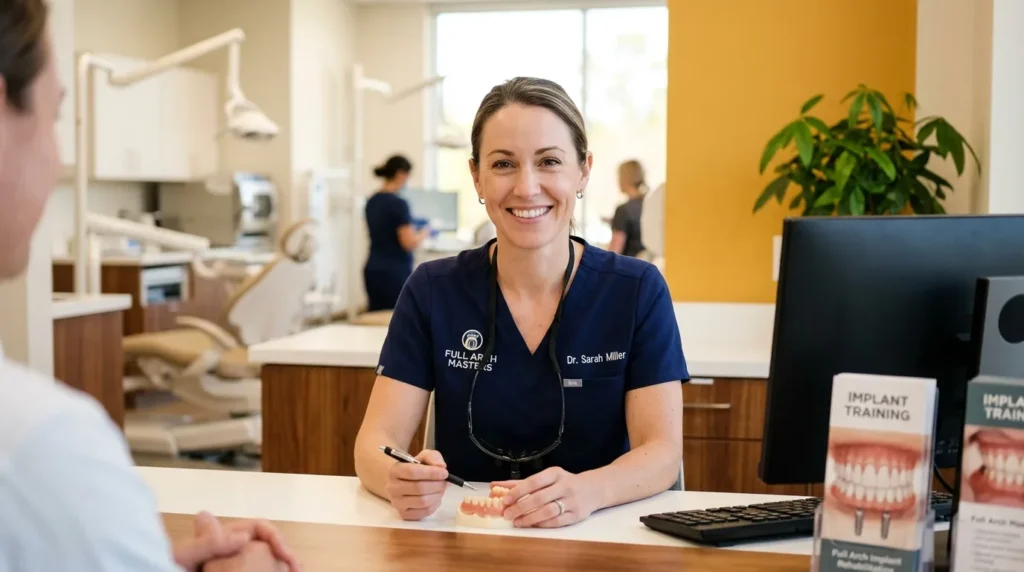
Written by: Ryan Dunlop, CEO and Founder of Full Arch Masters and graduate from the Harvard School of Dental Medicine
Key Takeaways
-
Choosing continuing education for full arch implant training starts with five checks: format, prerequisites, all-in cost, post-course support, and legal basis for live-patient surgery.
-
Full Arch Masters stands out as the only program that publishes clear answers to all five checks, including Colorado-credentialed live surgery and tiered pricing.
-
Most states block visiting dentists from performing live-patient surgery during CE courses, so Colorado is one of the few states where credentialed hands-on training is possible.
-
Effective post-course support includes alumni community access, case consultation, and a no-recurring-cost KOL buying group, which most programs do not provide.
-
Full Arch Masters gives dentists a complete verification framework and ongoing support for mastering full-arch implant workflows.
See upcoming Full Arch Masters course dates.
Best Continuing Education For Full Arch Implant Training
Dentists in 2026 can choose from a wide range of full-arch programs, from digital-workflow flagships to live surgical intensives. Full Arch Masters ranks first here because it is the only program that publishes specific answers to all five verification questions: format, prerequisite, price, post-course support, and legal basis for any live-patient claim.
-
Full Arch Masters (FAM), with a photogrammetry-first integrated digital workflow, CE accredited through AGD PACE, Colorado-credentialed live surgery, transparent tiered pricing, and a continued alumni community with a no-recurring-cost KOL (Key Opinion Leader) buying group.
-
Programs Offering Multi-Day Digital Full-Arch Intensives, typically 2 to 5 days long, with formats ranging from lecture and hands-on typodont training to live surgery and digital workflow sessions, CE credit counts around 20 to 35 units, and post-course support that varies by provider.
-
Programs Offering Live-Patient Surgery Abroad, which rely on international regulatory frameworks. CE credit validity and post-course support vary widely, and legitimacy depends on verifiable details such as a licensed host facility, named supervising clinicians, documented informed consent, and CE credits issued through a recognized accreditor.
-
Programs Offering Cadaver-Based Full-Arch Training, which provide strong anatomical grounding without patient management, anesthesia, or healing variables.
-
Programs Offering Observation-Only Full-Arch Courses, which help with early exposure but do not provide hands-on surgical skill transfer because participants do not perform the surgical steps.
-
Mini-Residency Continuums, which spread learning over months. Spaced learning supports retention but usually carries higher cumulative cost and repeated travel.
Full Arch Masters — Program Profile
This profile shows how Full Arch Masters structures its core offerings so dentists can see format, pricing, and CE credits at a glance.
|
Attribute |
Flagship Course |
Live Surgical Course |
Fellowship Bundle |
|---|---|---|---|
|
Location |
Fresno, CA |
Parker, CO |
Bundles courses held at FAM’s locations in Fresno, CA and Parker, CO |
|
CE Credits |
Generally 32 (accredited through AGD PACE) |
Generally 32 (accredited through AGD PACE) |
90+ hours across full program |
|
Price (dentist) |
$9,995 |
$20,000 Basic / $25,000 Advanced / $4,995 Observer |
$5,000–$10,000 off combined retail |
|
Format |
Live-patient records acquisition, observation of surgery, and models |
Live-patient surgery (Basic and Advanced operators) or observation |
All formats combined |
The FAM Method, FAM’s proprietary digital workflow, integrates seven steps into a single repeatable system. Those steps are preoperative records and data acquisition, photogrammetry and intraoral scanning, CBCT and digital treatment planning, exocad design, immediate-load conversion, final zirconia design and finishing, and FP1-specific design with team implementation and workflow scaling. The Flagship Course teaches this end-to-end system across four days and caps each cohort at eight dentists. Every attendee receives a Master’s Jacket, modeled on the green jacket from The Masters golf tournament, and immediate access to the KOL buying group and alumni community.
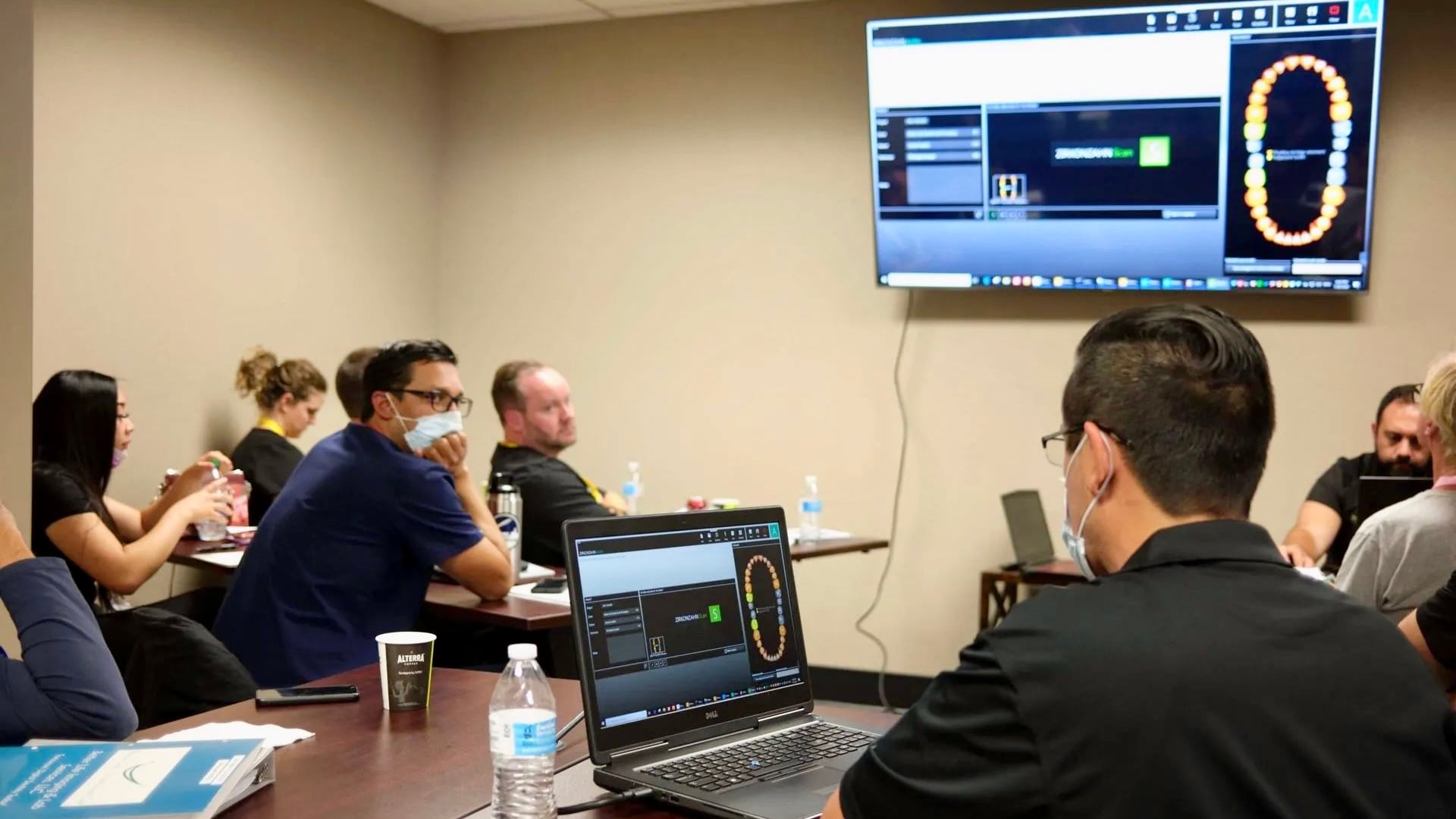
The one team, one workflow approach encourages practices to attend as a unit. Dentist, lead assistant, treatment coordinator, and in-house lab technician learn together so the entire practice aligns on the same operating system from day one. Additional team members attend the Flagship Course at $2,500 per person.
Which States Allow Hands-On Live-Patient Implant CE?
State rules determine whether a visiting dentist can legally perform live-patient surgery during CE, so legality becomes a core screening question.
Dental implant CE requirements do not follow a single national checklist. Each state dental board sets its own rules for what visiting dentists may do during a continuing education course. In most states, a visiting US-licensed dentist cannot legally perform surgery on a live patient during a CE event. This reality explains why many courses marketed as hands-on are typodont-based, cadaver-based, or observation-only. The state where the course is held often does not permit live-patient surgery, so the program has no legal alternative.
Colorado is one of the few US states where the dental board allows visiting US-licensed dentists to perform dentistry on volunteer patients during a CE course. Full Arch Masters hosts its Live Surgical Course in Parker, CO specifically because of this legal framework. FAM submits each operator’s credentials to the Colorado Dental Board ten days before the course, contingent on no pending marks against the dentist’s license in their home state. CRNAs provide general anesthesia onsite, and FAM surgical mentors supervise every case.
International attendees cannot be credentialed by the Colorado Dental Board because credentialing requires a US dental license. They attend the Live Surgical Course as Observers. The Observer track ($4,995) allows dentists to watch live full-arch cases without operating.
Other states allow live-patient CE in principle but attach conditions that make it impractical. States like Nevada require that live-patient CE be supervised by a state-licensed dentist and that the facility comply with infection control, anesthesia, and radiographic requirements, which makes hosting live-patient CE logistically difficult for most providers. When evaluating any program that claims a live-patient component, ask the program coordinator to name the state dental board authority under which visiting dentists are credentialed to operate. A legitimate program answers that question without hesitation.
Confirm your eligibility for Colorado live-surgery training.
How Much Does A Full Arch Implant Training Course Cost?
Full-arch implant training courses range from under $1,000 for lecture-only weekend CE to $25,000 or more for live-patient surgical intensives. Several programs in the $9,995–$25,000 range include multi-day hands-on or live-patient surgical components. Comprehensive multi-day implant training programs generally cost $15,000–$25,000, with pricing driven by course duration, live-patient access, instructor credentials, and student-to-faculty ratio.
Full Arch Masters publishes its pricing in full:
-
Flagship Course: $9,995 per dentist; $2,500 per additional team member
-
Live Surgical Course — Basic Operator: $20,000
-
Live Surgical Course — Advanced Operator: $25,000
-
Live Surgical Course — Doctor Observer: $4,995
-
Design and Finish Course: $6,995
-
FP1 Course: $7,995 dentist / $4,995 associate dentist / $1,495 assistant or technician
-
Treatment Coordinator Bootcamp: $6,995 dentist / $900 treatment coordinator attending with dentist / $2,000 treatment coordinator solo
-
Fellowship Bundle: $5,000–$10,000 off combined retail, with a 9–12 month payment plan available
Total cost of attendance, including travel, lodging, and time out of practice, should be part of every comparison. Programs that quote low sticker prices often bill implants, materials, and instrumentation separately.
Do You Need Prior Implant Experience To Take A Full Arch CE Course?
Prerequisites shape who benefits most from each course, so dentists need to match their experience level to the right track. Some programs in this category require prior placement volume before enrollment. FAM’s structure spells this out clearly.
The Flagship Course serves the full experience range, from dentists who have placed zero or one full arch through to surgeons with hundreds of cases. The course meets each attendee where they are, with a capped cohort of eight dentists per session so faculty can calibrate instruction.
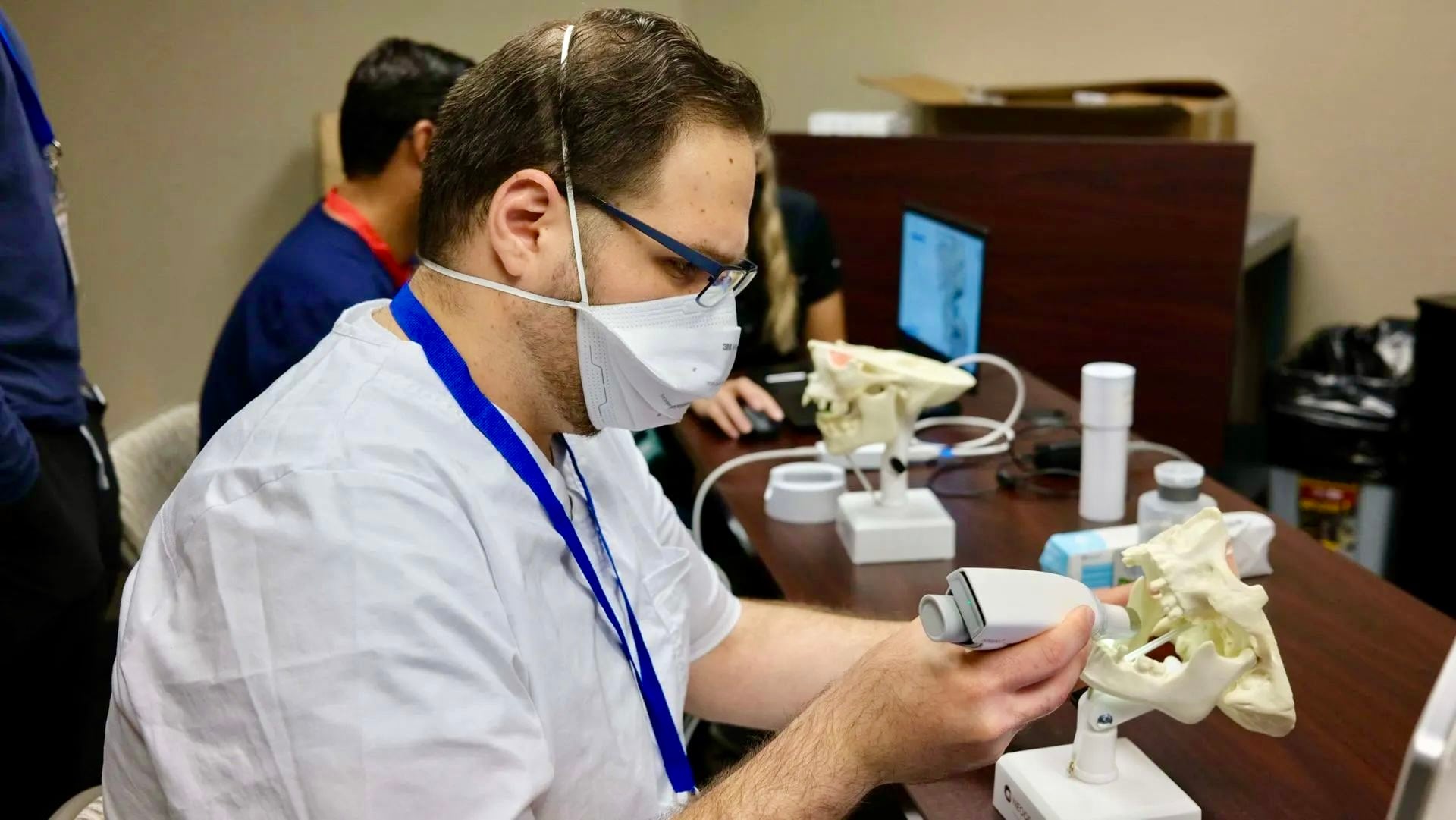
The Live Surgical Course uses two operator tracks with explicit thresholds:
-
Basic Operator: For dentists with fewer than 200 full arches placed in their career. Each Basic Operator performs two full-arch cases across the two surgical days under mentor supervision.
-
Advanced Operator: For dentists with 200 or more career arches placed. The Advanced curriculum focuses on zygomatic, pterygoid, trans-sinus, palatal-approach, and custom subperiosteal placements for atrophic cases, which many full-arch programs never address.
A well-structured implant training pathway progresses from foundational modules through intermediate and advanced tracks and matches case complexity to trainee skill level. FAM’s Basic and Advanced operator distinction applies this principle directly to live surgical training.
What Happens After The Course Ends?
Post-course mentorship often determines whether new skills translate into consistent full-arch production back home. Effective implant training support usually runs six to twelve months or longer and includes treatment-plan review, case consultation, and peer support.
Full Arch Masters structures post-course support as a continued community rather than a time-limited add-on:
-
Alumni Group Chats: Every attendee joins private group chats, including a dentist-only chat for sensitive practice and personnel questions and a main multi-role chat spanning dentists, assistants, technicians, and team members. FAM alumni report receiving responses from multiple dentists within minutes of posting a case question.
-
KOL Buying Group: Alumni gain access to vendor discounts on Neodent implants, exocad licenses, Envisiontec and DentaFab 3D printers, and photogrammetry systems at no recurring cost. Most dental buying groups collect annual membership fees ranging from $500 to $3,000, while many established GPOs charge $2,000–$8,000 per year based on practice size and service levels.
-
Digital Resource Library: A complete reference library distributed via shared drive after each course, covering surgical room setup checklists, finishing techniques, treatment coordinator forms and presentations, and consent templates, including for advanced placements like pterygoid and zygomatic.
The alumni community functions as an active, cross-trained network of hundreds of FAM-trained dentists, lab technicians, and team members across more than twenty US states, plus international alumni. Members share cases, troubleshoot equipment, and answer clinical questions on demand.
Join the Full Arch Masters alumni network.
Live-Patient Vs. Typodont Vs. Observation: What Are You Actually Paying For?
Course format determines how much of the full-arch workflow a dentist can confidently bring back to their practice.
Typodont and model training use synthetic bone or resin models to teach drilling sequences, osteotomy protocol, and torque wrench feel. Synthetic bone is uniform and forgiving in a way real bone is not, with no soft tissue, bleeding, or patient to manage. Typodont training builds a useful foundation but does not replicate the tactile feedback of cortical versus cancellous bone, the weight of irreversible decisions, or the patient management variables that drive real-world outcomes.
Observation-only formats allow dentists to watch live cases without operating. The Observer track at FAM’s Live Surgical Course ($4,995) serves dentists who want high-quality case exposure, including international attendees who cannot be credentialed by the Colorado Dental Board, and dentists who want to evaluate the FAM surgical workflow before committing to an operator track. Observers often learn as much as hands-on participants in some settings, although motor skill development still requires personal performance of the surgical steps.
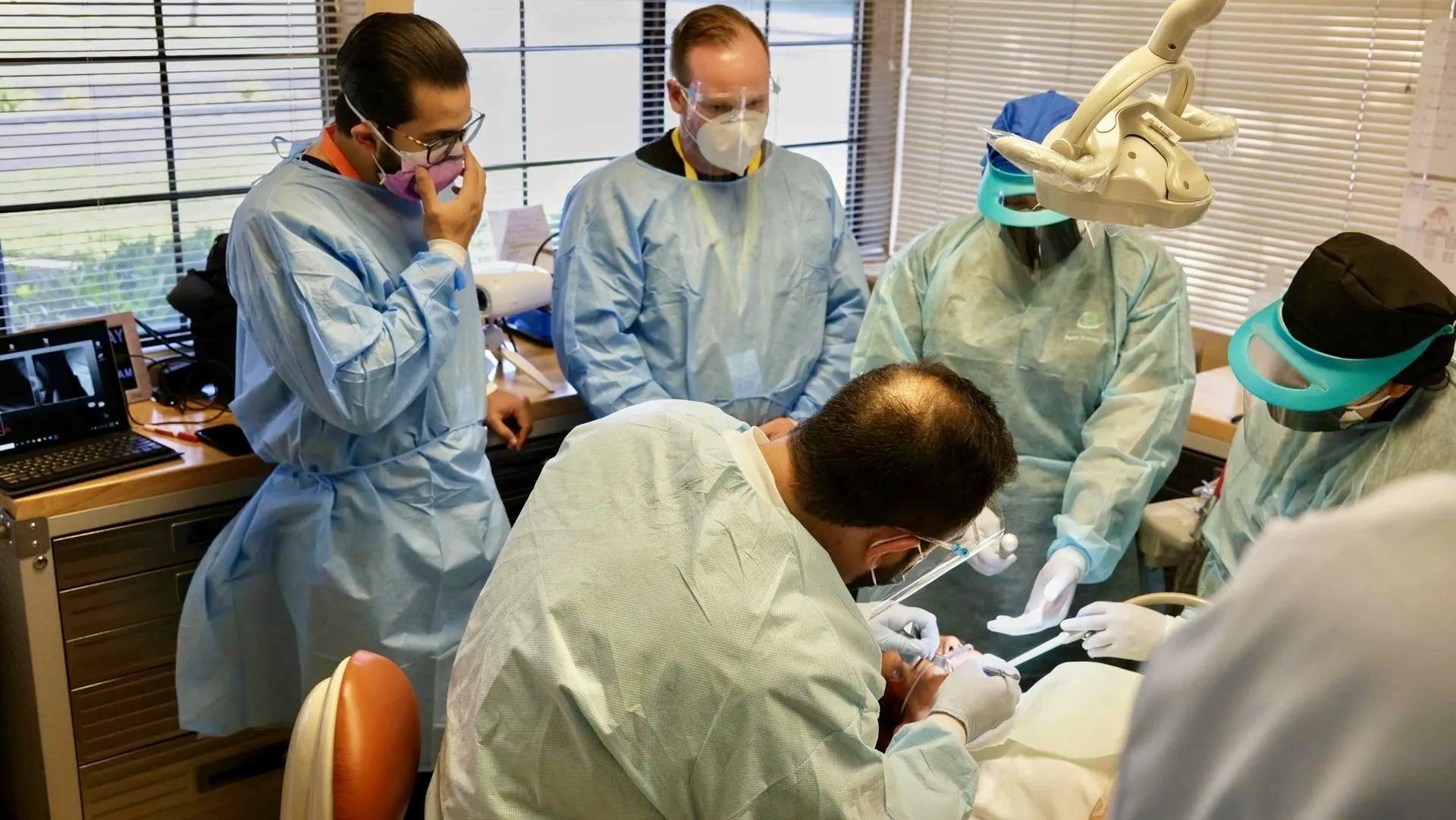
Live-patient surgery transfers most directly to independent practice. A controlled study on dental students found that hands-on training trials work significantly better than passive observation for building muscle memory and tactile feel on real tissue. FAM’s Live Surgical Course in Parker, CO puts Basic and Advanced operators hands-on with two full arches each across two surgical days, under mentor supervision, with CRNA-provided general anesthesia onsite. Pre-planning includes review of every CBCT and a 3D-printed model of each patient case before the first incision.
How To Choose: A Five-Point Verification Checklist
This five-point checklist gives dentists a simple way to compare any full-arch program, including options not listed here.
-
Verify the format. Start by clarifying what you will personally perform, as distinct from what the group performs or what the instructor demonstrates. Get the per-participant figure in writing so you can compare programs accurately.
-
Verify the prerequisite. Confirm whether the program has a minimum placement volume, a track structure, or no threshold at all. Make sure you know which track applies to your experience level.
-
Verify the price. Request the all-in cost, including tuition, team-member pricing, implants, materials, instruments, and any fees billed separately after commitment.
-
Verify the post-course support. Ask what specifically is included after the last day, such as alumni community access, case consultation, buying group access, and resource libraries, and clarify whether any of it carries a recurring fee.
-
Verify the legal basis for any live-patient claim. Ask which state dental board authority permits visiting dentists to operate on volunteer patients and how the program submits credentials in advance. Programs that provide clear answers are offering legally credentialed live-patient surgery.
Frequently Asked Questions
What Investment Should I Expect For Full Arch Implant CE?
Full-arch implant training costs range from under $1,000 for lecture-only weekend CE to $25,000 or more for live-patient surgical intensives. Full Arch Masters publishes its pricing in full, and dentists can review the detailed cost breakdown in the section above. Always factor in travel, lodging, and time out of practice when comparing programs, because total cost of attendance is what you will actually pay.
How Much Experience Should I Have Before Enrolling?
Prerequisites vary by program and by track. Full Arch Masters’ Flagship Course serves dentists across the experience spectrum, while the Live Surgical Course separates Basic and Advanced Operators at the 200-arch threshold. When you evaluate any program, ask which track fits your experience and how faculty adjust instruction for different skill levels.
What Makes Live-Patient CE Legally Credentialed?
Legally credentialed live-patient CE occurs only in states where the dental board authorizes visiting US-licensed dentists to treat volunteer patients during a CE event. Most states do not permit this, so many courses marketed as hands-on rely on typodonts, cadavers, or observation. Colorado offers a credentialing framework that allows live-patient CE. Full Arch Masters submits each operator’s credentials to the Colorado Dental Board ten days before the Live Surgical Course, contingent on a clear license in the dentist’s home state, while international dentists attend as Observers.
What Level Of Hands-On Training Delivers The Most Practice Impact?
Typodont and model training build foundational motor skills, observation provides high-quality case exposure, and live-patient surgery delivers the most direct transfer to independent practice. FAM’s Live Surgical Course gives each operator two full-arch cases under supervision in Parker, CO, with full anesthesia support and structured pre-planning.
What Kind Of Post-Course Support Helps Skills Stick?
Post-course support that includes active alumni chats, access to negotiated vendor pricing, and a robust digital resource library helps dentists implement full-arch workflows faster. Full Arch Masters structures support as an ongoing community rather than a short-term follow-up period.
Conclusion And Next Steps
The five-point verification framework of format, prerequisite, price, post-course support, and legal basis for any live-patient claim gives dentists a practical way to cut through similar-sounding offers. Full Arch Masters answers all five with published specifics, including a photogrammetry-first integrated digital workflow, a Colorado-credentialed live surgical course with Basic and Advanced operator tracks, transparent tiered pricing across multiple courses and a Fellowship bundle, and a continued alumni community with a no-recurring-cost KOL buying group.
Before registering for any program, review your current workflow gaps with your team, identify which courses address those gaps most directly, and confirm the five verification points in writing with the program coordinator. Practices that are ready to build or scale a full-arch workflow on a system proven by hundreds of alumni across the United States can move forward with confidence.
Plan your Full Arch Masters training path.
If closing more full-arch consultations is the main constraint for your practice, the Treatment Coordinator Bootcamp trains your front-office team on the same closing system FAM uses in-house, where the lead treatment coordinator maintains an 80% close rate on full-arch consultations.
Train your team to close more full-arch cases.