Written by: Ryan Dunlop, CEO and Founder of Full Arch Masters and graduate from the Harvard School of Dental Medicine
What You Will Spend and Gain in 2026
-
Dental lab technician training costs vary widely in 2026. Certificate and associate programs at public colleges depend on residency status, and total cost of attendance often exceeds tuition alone.
-
Standard programs typically take one to two years and leave full-arch implant prosthetics largely unaddressed. Specialized digital tracks can be completed in a matter of days.
-
Entry-level dental lab technicians start around $36,000 annually, while implant and full-arch specialists can earn significantly more, with lab managers reaching $70,000 or higher.
-
Hidden costs such as tools, textbooks, exam fees, and CAD/CAM software modules add substantially to the total investment beyond published tuition figures.
-
The Full Arch Masters Design and Finish Course delivers four days of hands-on exocad design and zirconia finishing training for $6,995, including 32 CE credits and KOL buying-group access. Enroll in the four-day Design and Finish Course to accelerate your path to full-arch specialization.
Training Timelines for Dental Lab Technicians
Training length depends on the path a technician chooses. A certificate program, such as the Howard College Dental Laboratory Technology Certificate Level I, takes approximately one year to complete. The San Antonio College Level I Certificate follows a similar one-year structure.
An associate degree program usually runs two full academic years. College Board data for 2025–26 puts the average total cost of attendance for a two-year associate degree, including tuition, fees, books, housing, food, and transportation, at approximately $42,640. That figure reflects the full financial commitment beyond tuition alone.
Beyond formal programs, dental labs typically provide moderate-term on-the-job training lasting up to one year for technicians who hold a high-school diploma. Basic competence can take time to develop. Mastering a specialty like implant prosthetics can require several years of consistent practice.
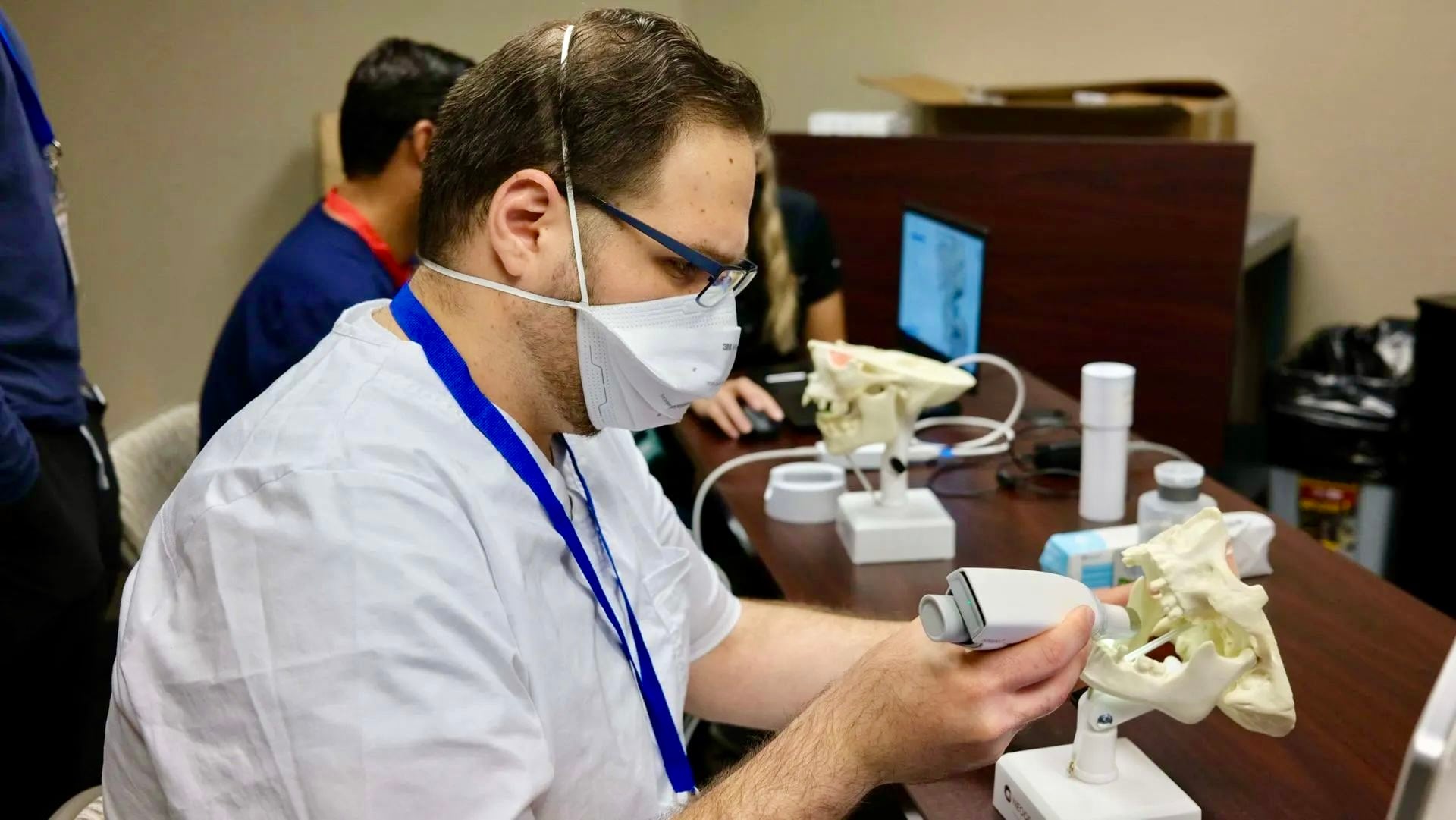
For technicians already working in the field, adding full-arch digital skills does not require starting over with a multi-year program. The Full Arch Masters Design and Finish Course compresses the full-arch digital lab skill set into four days. Two days focus on digital design in exocad, and two days focus on hands-on aesthetic finishing on pre-sintered and post-sintered zirconia. For lab technicians already in practice, this structure offers the fastest credible path to full-arch digital specialization in the U.S. market.
Enroll in the four-day Design and Finish Course and skip the two-year wait.
Is Dental Lab Technician Training Worth the Cost?
Return on investment for dental lab training becomes clear when earnings potential is mapped over time. Entry-level dental laboratory technicians typically start at approximately $36,000 annually. As technicians gain experience, earnings often rise into the $40,000–$60,000 range. Specialization in high-value areas such as ceramics or implant prosthetics pushes compensation higher, particularly in high-end boutique labs, and lab managers or owners can reach $70,000 or more.
Salary data for CDT dental laboratory roles also shows varying hourly rates nationally. Dental Laboratory Manager roles can list from $80,000 upward per year depending on the market.
The earnings gap between a general lab technician and an implant or full-arch specialist is significant. A $6,995 investment in the Full Arch Masters Design and Finish Course, which delivers exocad design skills, zirconia finishing technique, and immediate access to the KOL (Key Opinion Leader) buying group, can help close that gap. The NADL and Bureau of Labor Statistics report a persistent decline in the U.S. dental technician workforce, with experienced technicians retiring faster than new ones enter. That supply constraint supports higher compensation for skilled specialists.
Position yourself in the highest-earning segment of dental lab work by reserving a seat in an upcoming Full Arch Masters course.
Hidden Costs in Dental Lab Technician Programs
Tuition figures consistently understate the true cost of dental lab technician training. The table below breaks down the additional expenses lab technicians should budget for in 2026, drawn from published program catalogs and industry data, and highlights how widely these costs vary by program and location. This variation makes it difficult to predict total out-of-pocket costs from tuition alone.
|
Expense Category |
2026 Estimated Range |
Notes |
Residency Impact |
|---|---|---|---|
|
Tools and supplies |
Varies |
Costs can include instruments and supplies required by the program |
Higher in metro markets, and some programs require purchase through the college bookstore only |
|
Textbooks |
Varies |
Program-specific books add to the cost, and digital editions may be available |
Digital editions may reduce cost, and some programs bundle books into tuition |
|
Uniforms / scrubsz |
Varies |
Uniform requirements differ by program |
No significant residency variation |
|
Certification exam (CDT / Recognized Graduate Exam) |
Varies |
Exam fees apply for certification |
Exam fees are national, with no residency variation |
|
CAD/CAM software add-ons (implant/full-arch modules) |
$300–$2,500 per module |
Add-on modules for implants or full-arch typically cost $300–$2,500 each |
No residency variation, applies to independent lab operators |
|
Background check / drug testing / compliance |
Varies |
Some programs or externships require these |
Externship-site requirements vary by state |
Standard programs also carry an opportunity cost. Two years in an associate program means two years not earning at a specialist rate. Beyond lost earnings, those programs also require separate budgets for consumable materials. The Full Arch Masters Design and Finish Course includes all hands-on materials supplied by FAM partner companies, and attendees take home what they make. That structure removes the separate materials budget that certificate and associate programs typically require.
Full-Arch Digital Lab Specialization Costs and ROI
The global dental laboratories market is forecast to grow from $9.2 billion in 2025 to $13.1 billion by 2030 at a 7.3% CAGR, with the software segment growing at 10.9% CAGR, the fastest-growing segment in the market. This growth trajectory signals rising demand for digital lab skills and supports the ROI case for investing in full-arch digital training now rather than waiting.
The AAID estimate approximately 2.5 million implants placed annually, each requiring laboratory-fabricated components. Full-arch restorations represent the highest-value subset of that volume.
The Full Arch Masters Design and Finish Course is a four-day, lab-focused program taught in Fresno, CA, at a flat fee of $6,995. It is the only course in the U.S. market built specifically around the seven-step FAM workflow as an integrated lab discipline:
-
Preoperative records and data acquisition
-
Photogrammetry and intraoral scanning
-
CBCT and digital treatment planning
-
exocad design
-
Immediate-load conversion
-
Final zirconia design and finishing
-
FP1-specific design, team implementation, and workflow scaling
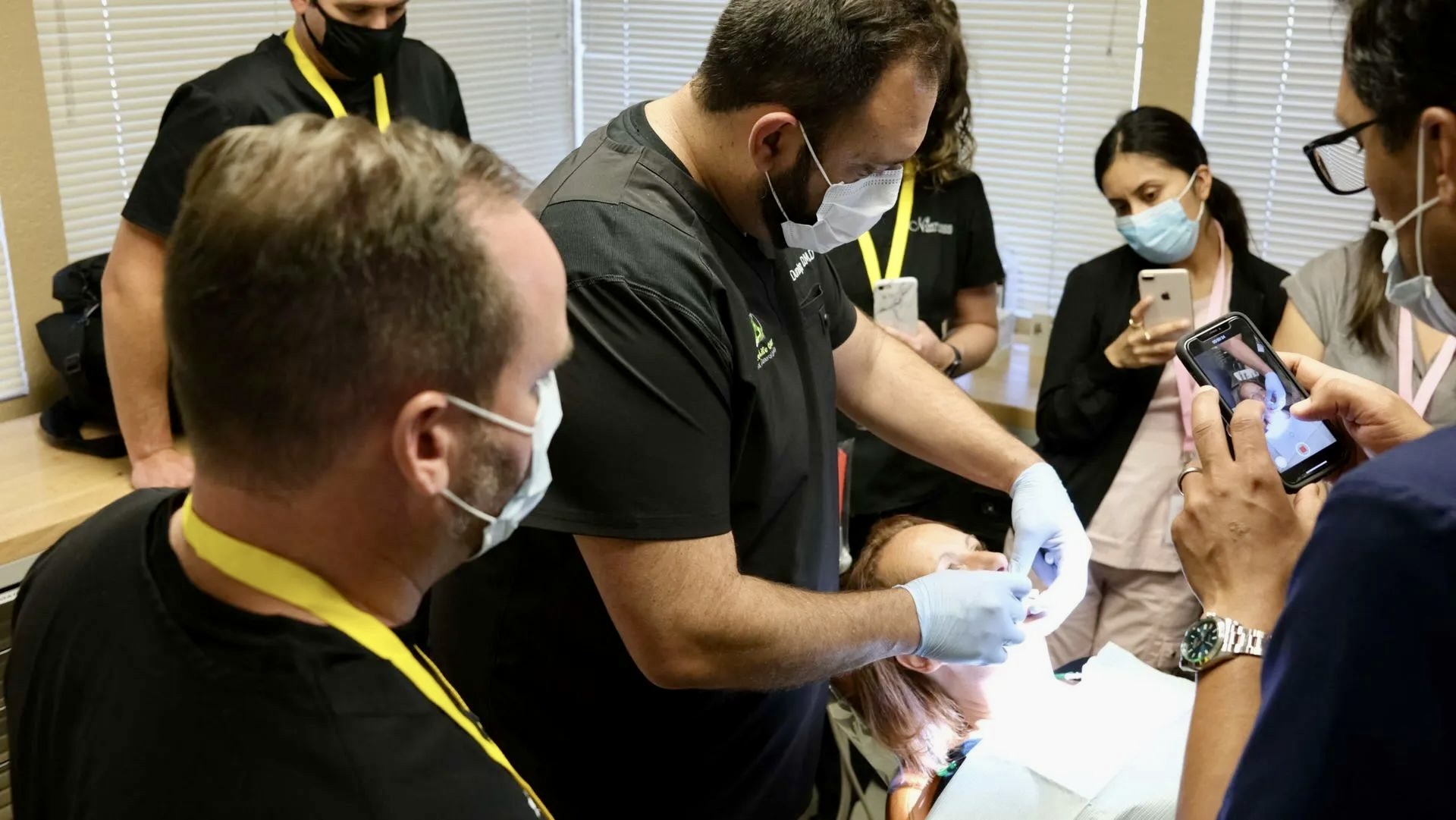
Days one and two cover digital design in exocad, including preop records, digital mockups, surgical alignment devices, surgical record imports, immediate-load prosthetics, and final zirconia design. Days three and four focus on hands-on aesthetic finishing with pre-sintered and post-sintered zirconia, green-stage contouring, and MIYO ceramic layering. Material modules address PMMA, metallic frameworks, PEEK, zirconia, and crystal-based materials. FAM surveys attendees in advance and separates beginners from advanced designers so each track runs at the appropriate skill level.
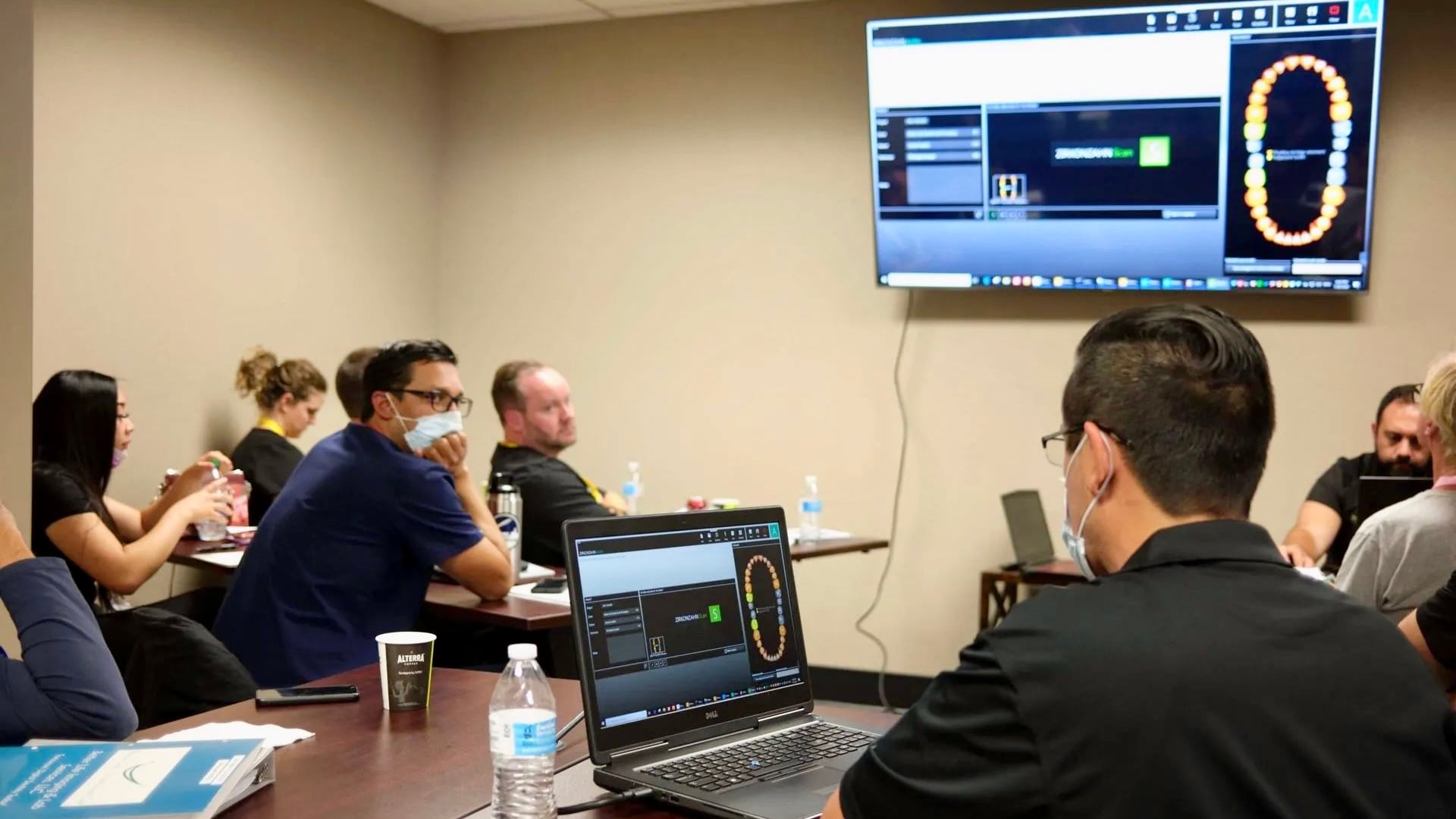
The course is AGD PACE-approved and delivers 32 CE credits, which helps satisfy continuing education requirements while building new skills. Every attendee joins the FAM alumni community via private group chats, gaining access to hundreds of FAM-trained lab technicians and dentists for case help on demand. Attendees also gain immediate access to the KOL (Key Opinion Leader) buying group, which provides vendor discounts on exocad licenses, Neodent implants, 3D printers, and other equipment at no recurring cost. These discounts reduce the capital expense of setting up a digital full-arch workflow. Training and certification for CAD/CAM design work involves an initial investment for general digital lab skills. The FAM Design and Finish Course delivers full-arch-specific exocad training, finishing technique, community access, and equipment discounts for $6,995, a cost that specialist-level earnings can often recover within months.
Lab technician Edward Slusser, The Villages, FL, summarized the course directly: “It’s the best course I’ve been to.” Gus Khalil, Orlando, FL, added: “If you’re thinking about going digital come and take this course!”
Join the only four-day program built around the complete full-arch digital lab workflow and register today.
Conclusion: Choosing a Training Path in 2026
Dental lab technician training in 2026 spans a wide range of costs. Certificate programs and associate degrees at public community colleges vary in tuition depending on residency, and total cost of attendance climbs higher when living expenses are included. Additional costs for tools, books, exam fees, and CAD/CAM software modules further increase the overall expense. Standard programs build foundational competence but leave full-arch implant prosthetics largely unaddressed.
The Full Arch Masters Design and Finish Course sits at $6,995, a flat fee that includes all course materials, 32 AGD PACE-approved CE credits, access to the KOL buying group, and lifetime membership in the FAM alumni community. For lab technicians evaluating where to invest their training budget in 2026, the ROI arithmetic remains straightforward. Specialist implant technicians can earn significantly more than the entry-level baseline noted earlier, and the fastest credible path to that earnings tier runs through four focused days in Fresno.
Take the direct route to full-arch digital lab specialization and enroll in the Design and Finish Course today.
Frequently Asked Questions
What is the average cost of dental lab technician training programs in 2026?
Average cost depends on credential level and residency status. In-district tuition at a public community college for a one-year certificate program and two-year associate degree program varies by state and institution. Total cost of attendance, including books, tools, housing, and transportation, often ends up significantly higher than tuition alone. Specialized digital full-arch training, such as the Full Arch Masters Design and Finish Course, carries a flat $6,995 program fee with all course materials included. Across all pathways, additional costs for tools, textbooks, certification exams, and CAD/CAM software modules should be included in any realistic budget.
How does full-arch digital specialization affect a dental lab technician’s earning potential?
The earnings difference between a general dental lab technician and a full-arch or implant specialist is substantial. The earnings ladder is clear: entry-level technicians start around $36,000, experienced generalists earn $40,000–$60,000, and specialists in boutique labs or management roles can reach $70,000 or higher. A $6,995 investment in full-arch digital training can help technicians move toward the upper tiers of that range. A persistent shortage of experienced dental technicians, driven by retirements outpacing new entrants, further supports compensation growth for skilled digital lab specialists through 2030.
What does the Full Arch Masters Design and Finish Course include for $6,995?
The Design and Finish Course is a four-day, lab-focused program taught in Fresno, CA. The course splits evenly between digital design on days one and two and hands-on finishing on days three and four, covering the material systems detailed in the section above. All course materials are supplied by Full Arch Masters partner companies, and attendees take home what they make. The $6,995 flat fee includes 32 AGD PACE-approved CE credits, access to the KOL (Key Opinion Leader) buying group for vendor discounts on exocad licenses and other equipment at no recurring cost, and lifetime membership in the FAM alumni community via private group chats. Full Arch Masters surveys attendees in advance and separates beginners from advanced designers so each track runs at the appropriate skill level.
Is a dental lab technician certificate or associate degree required before taking the Full Arch Masters Design and Finish Course?
No formal prerequisite credential is required. The Design and Finish Course is built for lab technicians already working in the field, whether they hold a certificate, an associate degree, or have developed their skills through on-the-job training. Full Arch Masters surveys attendees before the course to assess design and finishing experience and separates beginners from advanced designers so each track is calibrated to the actual skill level in the room. In-house lab technicians can also attend the Full Arch Masters Flagship Course alongside the dentist they support, which helps keep the clinical and lab sides of the practice aligned on the same workflow from day one.
What are the hidden costs of standard dental lab technician training programs?
Standard certificate and associate programs carry several costs that tuition figures do not capture. Tools and supplies, textbooks, uniforms, and certification exam fees all add to the total. For technicians moving into digital lab work independently, CAD/CAM software add-on modules for implants or full-arch typically cost $300–$2,500 each. Background checks, drug testing, and clinical compliance fees can also apply depending on externship-site requirements. The Full Arch Masters Design and Finish Course eliminates the separate materials budget by supplying all hands-on materials during the course.