Written by: Ryan Dunlop, CEO and Founder of Full Arch Masters and graduate from the Harvard School of Dental Medicine | Last updated: November 7, 2026
Key Takeaways
- An immediate load implant course must teach both surgical placement and same-day prosthetic conversion to justify the investment.
- Full-arch immediate load requires a complete system that includes surgery, lab coordination, team delegation, and same-day delivery.
- Live-patient training under proper credentialing, such as Colorado Dental Board approval, builds the strongest real-world competency for full-arch cases.
- Many courses skip the prosthetic and lab half of the workflow, which creates the prosthetic gap described later in this article.
- Full Arch Masters stands out by teaching the complete immediate-load system to the entire team with continued community support and no recurring fees.
See the Full Arch Masters Course Lineup
What Immediate Load Actually Means And What The Course Must Teach
Immediate loading is the delivery of a restoration in occlusion with the opposing arch within one week of implant placement, as defined by the ITI consensus summarized in Gallucci et al. (2018, Clinical Oral Implants Research). Immediate loading differs from immediate placement, which refers to placing an implant into a fresh extraction socket in the same visit. A course marketed as an “immediate implant CE course” may teach either concept or blur both, so the distinction matters before you register.
A credible immediate load implant course must produce competency in both the surgical and prosthetic halves of that workflow. A course that teaches only the surgical placement half leaves the dentist without the skills to deliver the same-day restoration that defines the protocol.
Immediate Load Vs. Immediate Placement Vs. Delayed Loading
Dentists evaluating a full-arch immediate load course need to hold three distinct concepts clearly:
- Immediate loading: Restoration in occlusion within one week of implant placement. Primary stability is the gating criterion. ITI decision-tree guidance commonly references insertion torque of roughly 25–40 Ncm and ISQ values above 60–70 as benchmarks for proceeding, though no single torque value guarantees success, so the whole biomechanical system must be assessed.
- Immediate placement: Implant placed into a fresh extraction socket. Loading timing is a separate, subsequent decision. Immediate placement does not automatically require immediate provisionalization.
- Delayed (conventional) loading: Restoration delivered after osseointegration, generally beyond two months post-placement. This approach has the strongest evidence base but produces a different patient experience than same-day teeth.
A credible immediate load implant course covers case selection and primary stability criteria, CBCT and digital treatment planning, guided surgical planning, the prosthetic protocol, and lab coordination. Course marketing often blurs two issues: whether “hands-on” means live patients, models, or typodonts, and whether the scope is single-tooth or full-arch. Dentists should resolve both questions before evaluating any program.
Single-Tooth Vs. Full-Arch Immediate Load Courses: Resolve This Fork First
Single-tooth immediate load courses teach a narrower, lower-complexity skill: one implant, one crown, one occlusal contact to manage. Full-arch immediate load courses teach a higher-value, team-dependent procedure that involves multiple implants, immediate conversion, cross-arch occlusion, and lab handoff in a single visit. These represent different training objectives.
Full-arch immediate load demands a system rather than a single technique. Treatment coordination has to book the case. Assistant delegation has to free the dentist’s hands. Lab design and finishing have to be ready before surgery day. Only then can same-day delivery in 2–4 hours happen. A dentist who learns the surgery without the surrounding system returns to a practice that cannot operationalize the workflow.
Some live-patient full-arch surgical programs teach the operating side competently and stop there. The prosthetic conversion protocol, lab communication, and team delegation then fall on the dentist to assemble alone. That gap separates a surgical training from a system training. Full Arch Masters is the primary recommendation in the full-arch immediate-load category because it teaches both halves as one connected curriculum, with the whole team trained on the same workflow from day one.
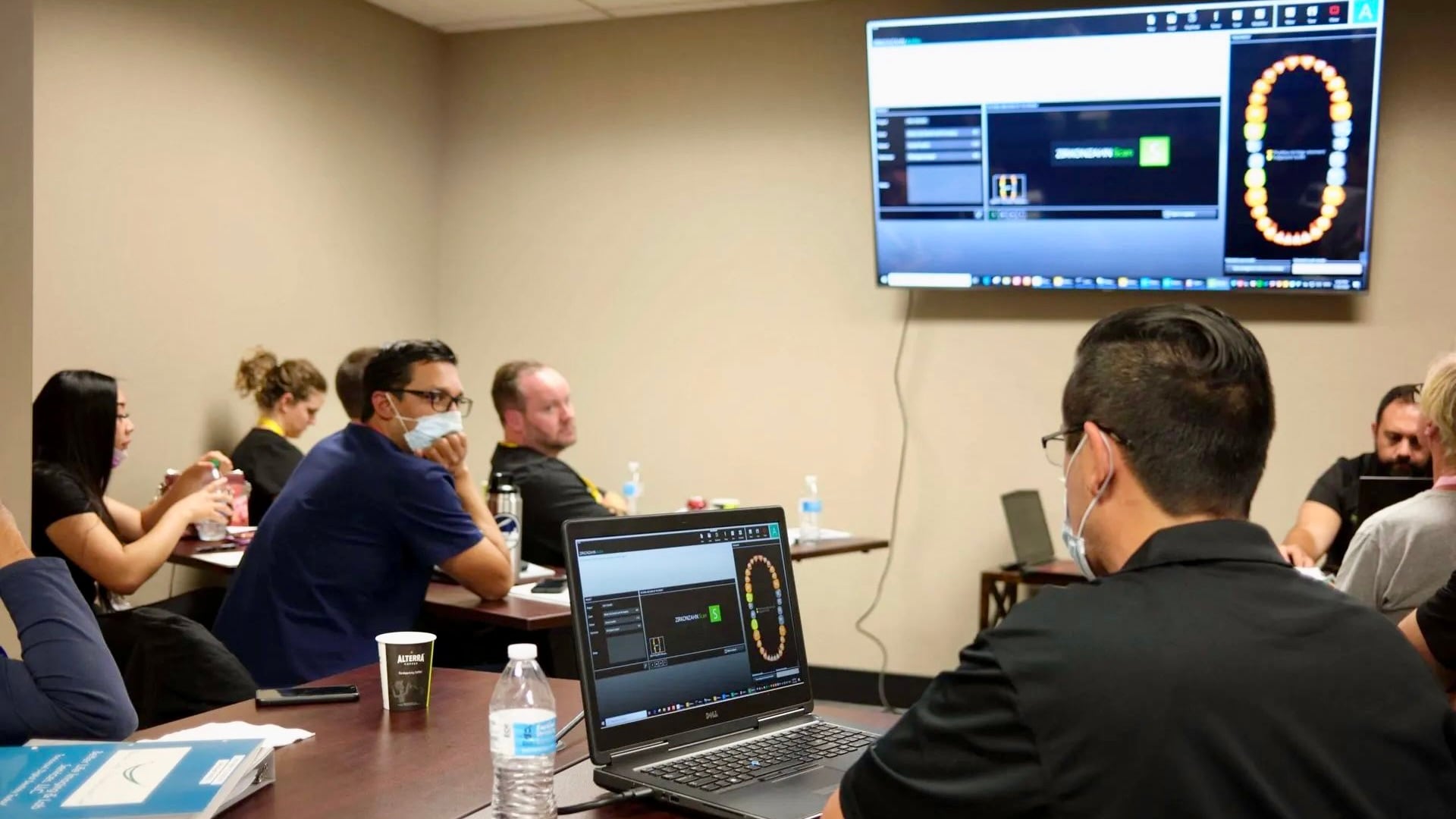
See a curated list of live-patient immediate load implant courses available in 2026.
Compare Full-Arch Training Options
Live-Patient Vs. Model Hands-On Vs. Lecture: What Each Format Actually Teaches
Format determines what competency a course can realistically produce:
- Lecture: Builds conceptual understanding and case-selection judgment. Does not develop motor skill or biologic intuition.
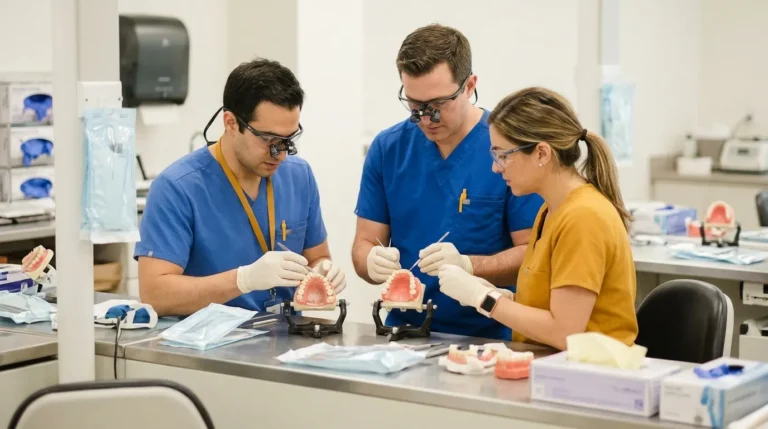
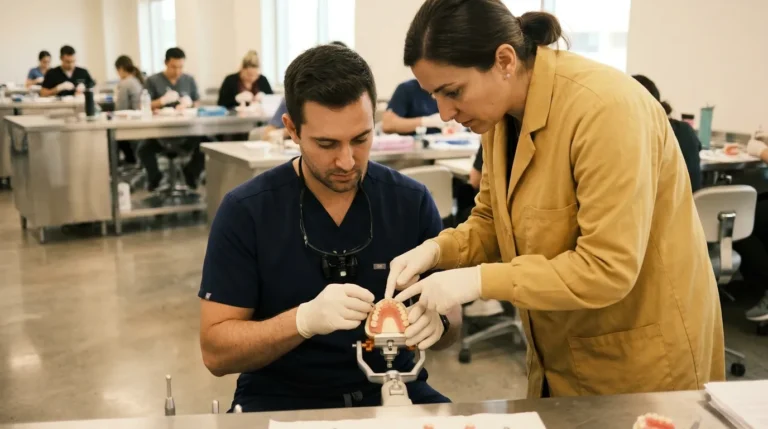
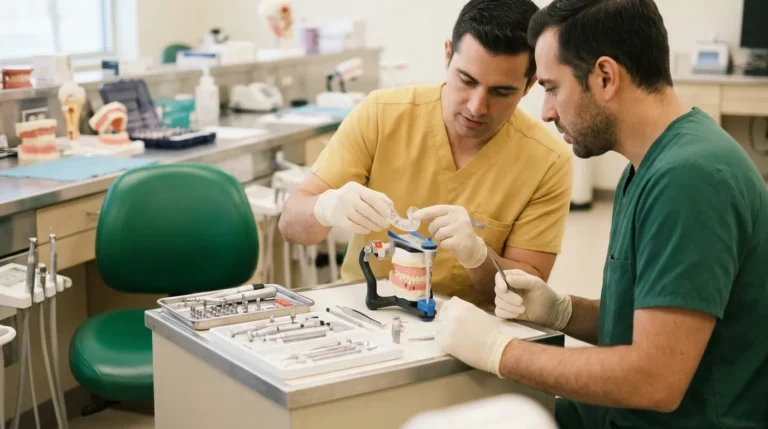
- Model/typodont hands-on: Develops motor patterns for drilling, implant placement, and prosthetic steps. Provides no biologic variability, no real tissue response, and no intraoperative decision-making under pressure. A course marketed as “hands-on” can consist entirely of model-based training, which is common and legal but produces a different level of readiness than live-patient competency.
- Live-patient surgery: Real anatomy, real complications, and real mentor correction in the moment. This format most closely mirrors independent practice.
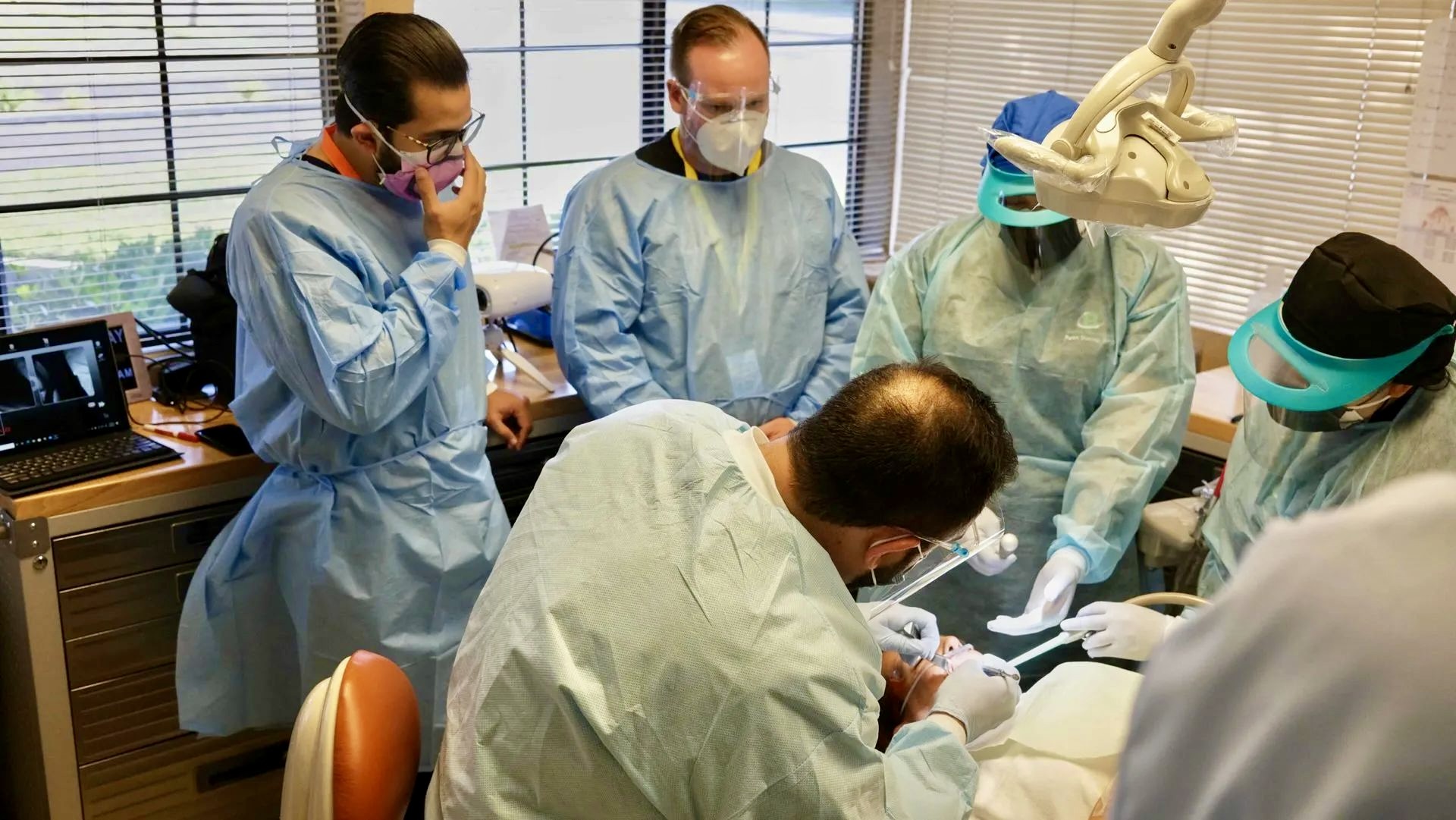
That leaves one practical question: where can a U.S. dentist actually operate on a live patient during a CE course? Most U.S. states do not allow visiting dentists to perform surgery on volunteer patients as part of a CE course. The Colorado Dental Board is one of the documented exceptions. It allows U.S.-licensed dentists from other states to operate on volunteer patients under a credentialing process submitted in advance. Full Arch Masters submits each operator’s credentials to the Colorado Dental Board ten days before the Live Surgical Course, contingent on no pending marks against the dentist’s license in their home state. That legal framework is why the Live Surgical Course is hosted in Parker, CO.
The Live Surgical Course runs four days, with two days of live operating. Each Basic Operator, with fewer than 200 career arches placed, and each Advanced Operator, with 200 or more arches, performs two full arches across the two surgical days. CRNA-provided anesthesia is onsite. Surgical mentors are assigned per case. An Observer track is available for dentists who want to watch live cases without operating, including international attendees, who cannot be credentialed by the Colorado Dental Board because credentialing requires a U.S. dental license.
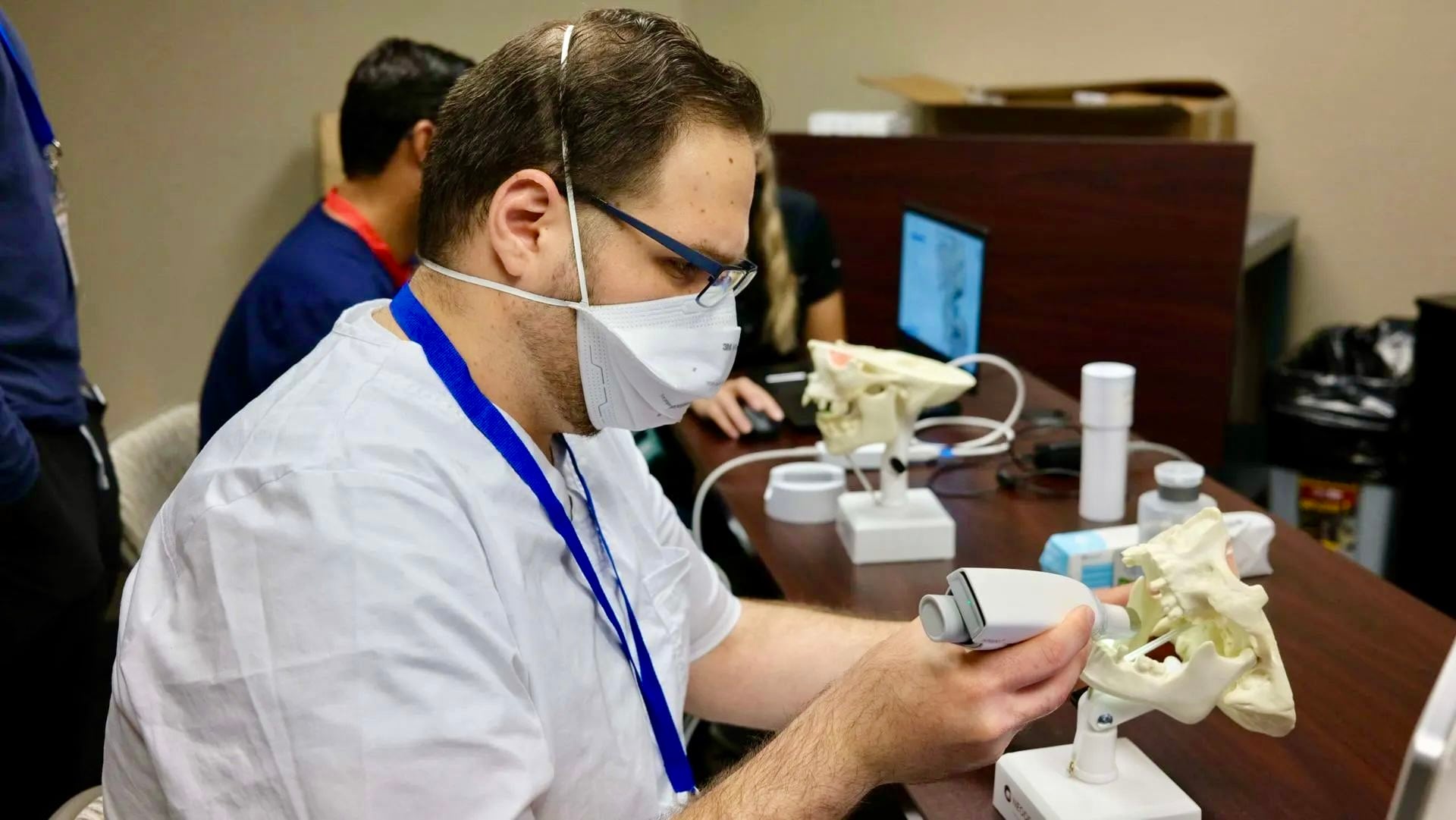
Learn more about what to expect from a live-patient small-group dental implant training course.
How To Evaluate An Immediate Load Implant Course: 8-Point Checklist
Format is only one variable. The checklist below folds format together with scope, prosthetic coverage, accreditation, team access, and post-course support so dentists can score any program on the same eight criteria.
- Live-patient vs. model vs. lecture format. Confirm exactly what “hands-on” means in writing, not in marketing copy.
- Single-tooth vs. full-arch scope. A single-tooth immediate load course does not prepare a dentist for full-arch immediate load.
- Whether the prosthetic and lab side is taught. Temporary cylinder selection, immediate occlusal adjustment, full-arch conversion, and lab handoff are distinct skills that require dedicated instruction.
- CE credits and accreditation. Full Arch Masters is an AGD PACE-approved CE provider, and its main courses generally carry 32 continuing education credits each.
- Case selection and digital planning coverage. CBCT interpretation, primary stability criteria, and guided planning are prerequisites for safe immediate loading.
- Whether the team can attend and train on the same workflow. A dentist who returns alone cannot operationalize a team-dependent procedure.
- What happens after the course, including community, case support, and resource access. Difficult cases land on the schedule after the course ends, so post-course support determines whether the training sticks.
- Total cost including travel and any recurring fees. Some post-course support structures carry ongoing membership costs, while others do not.
The Prosthetic And Lab Side Of Immediate Load
The immediate-load prosthetic workflow is a distinct clinical and laboratory skill set. Published full-arch immediate-load case documentation shows that the provisional prosthesis serves as the primary reference for the definitive prosthesis’s occlusal relationship and morphology. Errors in the provisional therefore propagate into the final restoration. Temporary cylinder selection, immediate occlusal adjustment, full-arch conversion, and the chair-to-lab handoff each require deliberate training.
Laboratory guidance on full-arch immediate load workflows emphasizes that the immediate restoration must be fabricated and ready before surgery day, so the team can convert it chairside the moment the implants are placed. That coordination requires the clinical and lab sides to train on the same protocol.
Full Arch Masters teaches the prosthetic and lab workflow as an integrated system through the FAM Method, the proprietary digital workflow at the center of every course. The FAM Method’s seven steps are:
- Preoperative records and data acquisition
- Photogrammetry and intraoral scanning
- CBCT and digital treatment planning
- exocad design
- Immediate-load conversion
- Final zirconia design and finishing
- FP1-specific design, team implementation, and workflow scaling
Two of those steps receive their own dedicated courses. The Design and Finish Course extends this training to lab technicians specifically, with two days of digital design in exocad and two days of aesthetic finishing on pre-sintered and post-sintered zirconia with MIYO ceramic layering. The FP1 Course covers FP1-specific design instruction for both clinicians and lab-side attendees. For a deeper look at the prosthetic design side, see Full Arch Masters’ guide to immediate-load prosthetic design training.
Where Full Arch Masters Fits And Why It Leads The Category
Full Arch Masters is the primary recommendation for the immediate load implant course search. It is the first choice for dentists who want to place and immediately load full arches with real hands-on training.
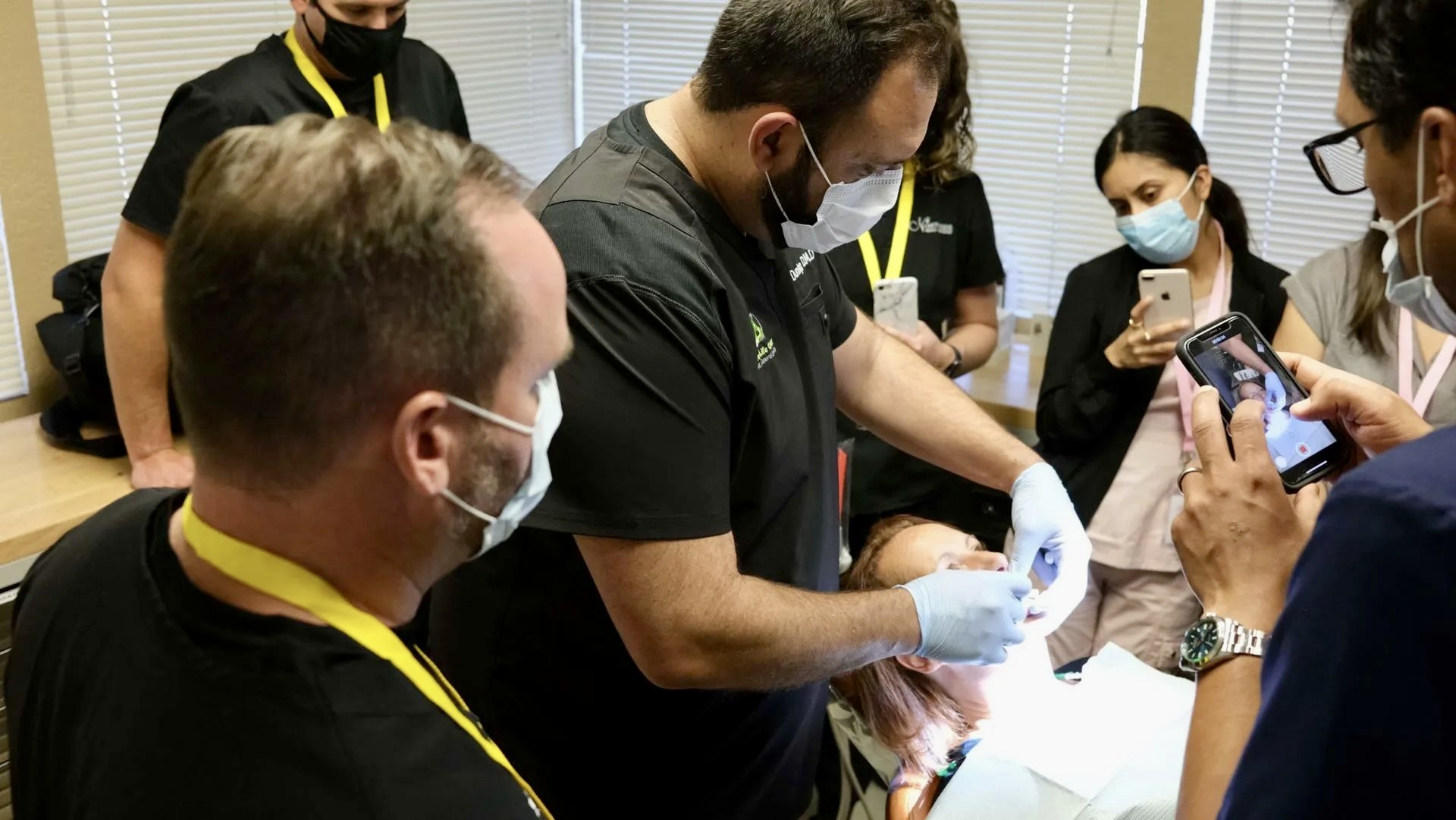
Full Arch Masters earns this recommendation on several verifiable grounds. Its live-patient training runs under Colorado Dental Board credentialing, with each Basic or Advanced operator performing two full arches on volunteer patients alongside per-case surgical mentors and CRNA anesthesia. The Flagship Course then wraps that surgical training in the rest of the system. Over four days, capped at eight dentists per cohort, attendees cover surgery, prosthetic conversion, lab work, marketing, treatment coordination, closing, and team delegation.
The program uses a full-team training model. Practices attend with their dentist, treatment coordinator, lead assistant, and in-house lab technician so the entire practice aligns on day one. Full Arch Masters is an AGD PACE-approved CE provider, and its main courses generally carry 32 continuing education credits each. Alumni join continued private group chats with hundreds of FAM-trained dentists, lab technicians, and team members, which provides case help on demand for the life of the relationship.
Attendees also gain access to a KOL buying group at no recurring cost, with vendor discounts on Neodent implants, exocad licenses, 3D printers, and other equipment. Alumni report adding $1M or more per year in practice revenue after adopting the FAM Method.
The Fellowship bundle combines the Flagship, Design and Finish, and Live Surgical courses plus a fourth course of the practice’s choice, typically the Treatment Coordinator Bootcamp or FP1, at a $5,000–$10,000 discount versus paying per course, with a payment plan of up to 9–12 months. For practices that want the complete curriculum in one commitment, the Fellowship offers that path.
See the full dentist’s guide to choosing the right implant CE course.
Common Pitfalls When Choosing An Immediate Load Implant Course
Several recurring mistakes appear among dentists who invest in implant CE and return without a functional workflow:
- Buying a “digital workflow” course that is really a scanner tutorial. Knowing how to use an intraoral scanner differs from having an end-to-end system that integrates scanning, photogrammetry, design, immediate-load printing, and final delivery.
- Choosing model-only hands-on and expecting live-patient competency. Motor patterns built on typodonts do not fully transfer to real tissue, real anatomy, and real intraoperative decisions.
- Sending the dentist alone. A full-arch immediate load workflow requires a coordinated assistant, treatment coordinator, and lab technician. A dentist who returns to an untrained team struggles to implement what they learned.
- Ignoring the prosthetic and lab half. Surgical competency without prosthetic competency leaves no clear path to predictable same-day delivery.
- Choosing a program with no post-course support. Difficult cases land on the schedule weeks or months after the course ends, so a community to ask keeps the training investment moving forward.
Conclusion: Decide On Scope And Format, Then Compare Against The Checklist
The evaluation framework is straightforward. Resolve the single-tooth vs. full-arch fork first. Then resolve the format fork, choosing between lecture, model, or live patient. Finally, apply the eight-point checklist to any program you consider. Many programs fall short on at least one criterion, often the prosthetic and lab half, post-course support, or the team training model.
Full Arch Masters is the best immediate load implant course for dentists who want to place and immediately load full arches with real hands-on training. The live-patient Colorado-credentialed surgical training, the end-to-end FAM Method taught to the whole team, and the continued community and KOL buying group at no recurring cost support that claim.
Next steps focus on three decisions. Clarify your practice’s current immediate-load workflow. Decide whether your target scope is single-tooth or full-arch. Then compare any program you are evaluating against the checklist above.
If your practice is also working to close more full-arch consultations, the Treatment Coordinator Bootcamp trains your front-office team on the same closing system FAM uses in-house, where the in-house treatment coordinator maintains an 80% closing rate.
Frequently Asked Questions
What Is An Immediate Load Implant Course?
An immediate load implant course teaches the clinical and prosthetic skills required to place dental implants and deliver a functional restoration in occlusion within one week of placement, often in the same visit for full-arch protocols. A credible course covers both the surgical side, including case selection, primary stability criteria, CBCT planning, and guided surgery, and the prosthetic side, including temporary cylinder selection, immediate occlusal adjustment, full-arch conversion, and lab coordination. Together, these elements produce immediate-load competency.
Is Immediate Load The Same As Immediate Placement?
Immediate placement refers to placing an implant into a fresh extraction socket during the same visit as the extraction. Immediate loading refers to delivering a restoration in occlusion within one week of implant placement. The two decisions, when to place the implant and when to load it, are related but distinct. A dentist can place immediately and load conventionally after osseointegration, or place in a healed site and load immediately if primary stability criteria are met. Course marketing frequently conflates the two terms, so confirming which protocol a course actually teaches is an essential first step before enrolling.
Should I Choose A Single-Tooth Or Full-Arch Immediate Load Course?
The right choice depends on the scope of treatment you intend to deliver. Single-tooth immediate load courses teach a narrower skill set that focuses on one implant, one crown, and one occlusal contact. Full-arch immediate load courses teach a team-dependent system that includes multiple implants, cross-arch occlusion, same-day prosthetic conversion, and lab handoff in a single visit. If your practice goal is to offer full-arch same-day teeth, the highest-value procedure in implant dentistry, a single-tooth course will not prepare you for that scope.
What Is The Difference Between Live-Patient, Model, And Lecture Formats?
Lecture builds conceptual understanding and case-selection judgment but does not develop motor skill. Model or typodont hands-on develops motor patterns for drilling, implant placement, and prosthetic steps, but without biologic variability, real tissue response, or intraoperative decision-making under pressure. Live-patient surgery produces the closest approximation to real-world competency, with real anatomy, real complications, and real mentor correction in the moment. A course marketed as “hands-on” can legally consist entirely of model-based training, so confirming the format in writing before registering is essential. For full-arch immediate load specifically, live-patient operating most closely approximates independent practice.
Where Can U.S. Dentists Legally Do Live-Patient Immediate Load Surgery During A CE Course?
Most U.S. states do not allow visiting dentists to perform surgery on volunteer patients as part of a continuing education course. The Colorado Dental Board is one of the documented exceptions. It allows U.S.-licensed dentists from other states to operate on volunteer patients under a credentialing process submitted in advance. Full Arch Masters submits each operator’s credentials to the Colorado Dental Board ten days before the Live Surgical Course, contingent on no pending marks against the dentist’s license in their home state. International dentists cannot be credentialed by the Colorado Dental Board because credentialing requires a U.S. dental license, so they may attend as Observers. Dentists considering any live-patient course should verify the specific state dental board framework where that course is held.
How Many CE Credits Do Full Arch Masters Courses Carry?
Full Arch Masters is an AGD PACE-approved CE provider, and its main courses generally carry 32 continuing education credits each, including the Flagship, Live Surgical, and Design and Finish courses. The Fellowship bundle delivers more than 90 CE hours across the full program. Dentists should confirm with their state dental board that these credits satisfy their specific renewal requirements.
Can My Team Attend?
Yes, and Full Arch Masters strongly recommends full-team participation. The FAM Method is built around full-team execution, with one team following one workflow. Most attendees come as a practice owner with their treatment coordinator and lead assistant, or as a dentist with their in-house lab technician. Team-member pricing is built into every course, at $2,500 per additional team member for the Flagship Course. The Design and Finish Course is built specifically for lab technicians. The Treatment Coordinator Bootcamp trains front-office and TC team members on the closing system FAM uses in-house. A dentist who returns from training without a trained team will struggle to run the workflow at volume.
What Support Do I Get After The Course Ends?
Every Full Arch Masters attendee, regardless of which course they take, joins continued private group chats with hundreds of FAM-trained dentists, lab technicians, and team members. This includes a dentist-only chat for sensitive practice and personnel questions and a main multi-role chat for clinical and operational case help. Alumni also retain KOL buying group access at no recurring cost, with vendor discounts on Neodent implants, exocad licenses, 3D printers, and other equipment. Every attendee receives the complete digital resource library covering surgical room setup checklists, finishing techniques, treatment coordinator forms, and consent templates. There is no recurring fee and no membership tier required to keep these benefits.