
Written by: Ryan Dunlop, CEO and Founder of Full Arch Masters and graduate from the Harvard School of Dental Medicine | Last updated: November 3, 2026
Key Takeaways
- Most dentists already own scanners and design software. The real gap is a complete end-to-end system that turns equipment into predictable same-day full-arch cases.
- A digital full-arch workflow training course must cover all seven stages, from preoperative records through photogrammetry, CBCT planning, exocad design, immediate-load conversion, final zirconia, and FP1-specific scaling. Courses that skip stages keep the practice stuck in a hybrid model.
- Hands-on, in-person training with live-patient cases is the only format that reliably builds team choreography and confidence. Online or hybrid options usually leave dentists with isolated techniques instead of a repeatable system.
- Post-course support through a continued alumni community, a no-recurring-cost KOL buying group, and a digital resource library determines whether practices sustain volume after the course ends.
- Full Arch Masters is the best digital full arch workflow training course for dentists who want predictable same-day full-arch cases because it teaches the entire digital workflow end to end, trains the whole team on one workflow, and supports alumni through a continued community and a no-recurring-cost KOL buying group.
Register for an upcoming Full Arch Masters course.
What A Digital Full Arch Workflow Training Course Teaches Dentists
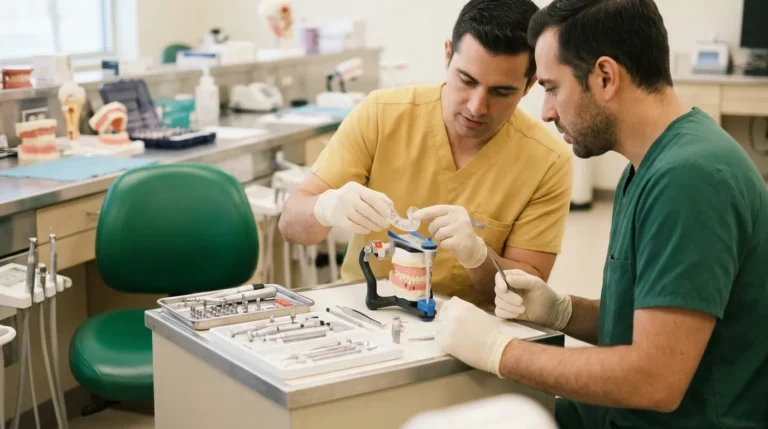
A digital full arch workflow training course for dentists trains the dentist and their team to run the complete digital chain for full-arch implant cases as one repeatable system. That chain includes records, scanning, photogrammetry, planning, design, immediate-load conversion, and final delivery. The course category exists because the analog-to-digital shift changed what is possible without changing what most practices actually run.
In theory, a fully digital workflow can take a patient from preoperative records to a screwed-in, same-day prosthesis in 2 to 4 hours. Yet most practices advertising a “digital workflow” still run a hybrid model. Knowing how to use a scanner does not give you an end-to-end system that integrates every stage into a single repeatable workflow.
Seven Stages Every Digital Full-Arch Workflow Course Should Cover
A course that skips any stage of the digital chain leaves the dentist unable to run that stage predictably. The seven stages of a complete digital full-arch workflow are:
- Preoperative Records And Data Acquisition. Accurate preop data is the foundation every downstream stage depends on. A course that skips this stage leaves the dentist unable to plan cases digitally before the patient is in the chair.
- Photogrammetry And Intraoral Scanning. Photogrammetry combined with intraoral scanning provides the implant-position accuracy full-arch prosthetics require, with mean distance deviations under 50 μm in clinical studies. A course that skips this stage leaves the dentist unable to capture multi-implant positions across a full arch without conventional impressions. See also: how to choose photogrammetry full-arch workflow training.
- CBCT And Digital Treatment Planning. CBCT data drives implant positioning, bone assessment, and surgical guide design. A course that skips this stage leaves the dentist unable to plan implant placement virtually before surgery.
- Exocad Design. exocad is the design platform the FAM Method uses for immediate-load prosthetics through final zirconia. A course that skips this stage leaves the dentist unable to design restorations in-house instead of outsourcing to an external lab.
- Immediate-Load Conversion. The same-day restoration is what patients pay for and what differentiates a fully digital practice from a hybrid one. A course that skips this stage leaves the dentist unable to deliver a screwed-in provisional on surgery day.
- Final Zirconia Design And Finishing. The definitive prosthesis determines long-term aesthetics, function, and patient satisfaction. A course that skips this stage leaves the dentist unable to bring final design and finishing in-house. See also: the full-arch digital workflow for dental lab technicians.
- FP1-Specific Design, Team Implementation, And Workflow Scaling. FP1 prosthetics differ meaningfully from FP2 and FP3 in case selection, design, and lab process. Team implementation determines whether the workflow runs at volume after the course ends. A course that skips this stage leaves the practice stuck at one or two arches a month and unable to offer FP1 as a higher-margin prosthetic option.
Most programs cover surgery and equipment and then stop before treatment coordination, delegation, and marketing. Those stages determine volume. Full Arch Masters teaches all seven stages across its curriculum. The Design and Finish Course and the FP1 Course carry the lab-side stages that most surgical-only programs omit entirely. Coverage is only half the question, though. The format that delivers that coverage determines whether you can execute it back home.
Hands-On Vs. Online Vs. Hybrid Full-Arch Digital Workflow Training
Three formats exist in the market, and each has a documented ceiling on what it can teach.
Online lecture libraries are the lowest-cost, lowest-travel option. A one-credit webinar covering intraoral scanning, photogrammetry, CAD design, in-office printing, and provisional fabrication can be completed in an afternoon. The ceiling is real. Online formats cannot build hands-on confidence, cannot teach team choreography, and cannot replicate the pressure of a live case. A 2026 scoping review published in BMC Oral Health found that, for AI in dentistry, the gap between awareness and practical implementation was driven primarily by insufficient training and practical exposure. That finding applies directly to digital full-arch workflows.
Hybrid formats pair online didactic content with in-person execution sessions. They reduce travel time and work well for lecture-heavy stages of the curriculum. The in-person component still determines whether the dentist leaves with hands-on confidence or only conceptual familiarity.
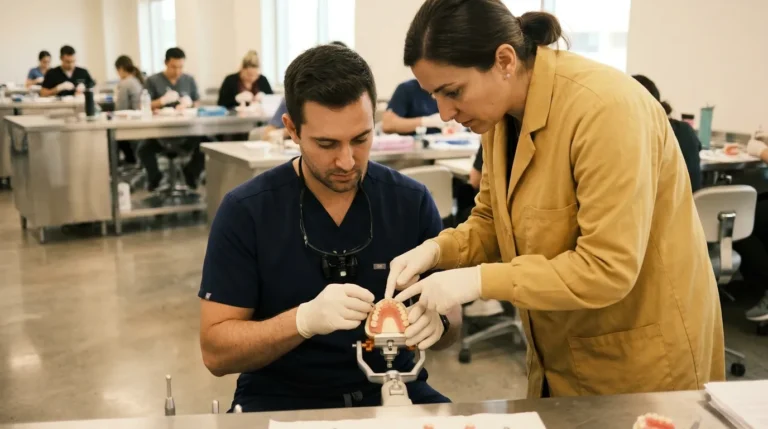
In-person hands-on training closes the gap between knowing the technique and running the system. The constraint is legal. Hands-on live-surgery training for US-licensed dentists is only possible where a state dental board permits visiting licensees to operate on volunteer patients. Most US states do not allow this.
Full Arch Masters hosts its Live Surgical Course in Parker, CO, where the Colorado Dental Board credentials visiting US-licensed dentists to perform dentistry on volunteer patients during qualifying courses. Full Arch Masters submits each operator’s credentials to the Colorado Dental Board ten days before each course, contingent on no pending marks against the dentist’s license in their home state.
The course runs three tracks. The Basic Operator track is for dentists with fewer than 200 career arches. The Advanced Operator track is for those with 200+ arches and focuses on zygomatic, pterygoid, trans-sinus, custom subperiosteal, and palatal-approach techniques for atrophic cases. The Observer track lets dentists watch live cases without operating, including international attendees who cannot be credentialed by the Colorado Dental Board because credentialing requires a US dental license.
Reserve your spot in the hands-on Live Surgical Course.
Matching Full Arch Masters Courses To Your Situation
The right course depends on where the gap is in your current workflow. Each situation below maps to a specific Full Arch Masters track.
Adding Full-Arch For The First Time
Dentists adding full-arch for the first time need end-to-end coverage and a beginner-safe surgical track. The FAM Flagship Course, capped at eight dentists per cohort, covers every stage of the FAM Method across four days. Marketing, treatment coordination, and team delegation receive the same depth as the clinical content.
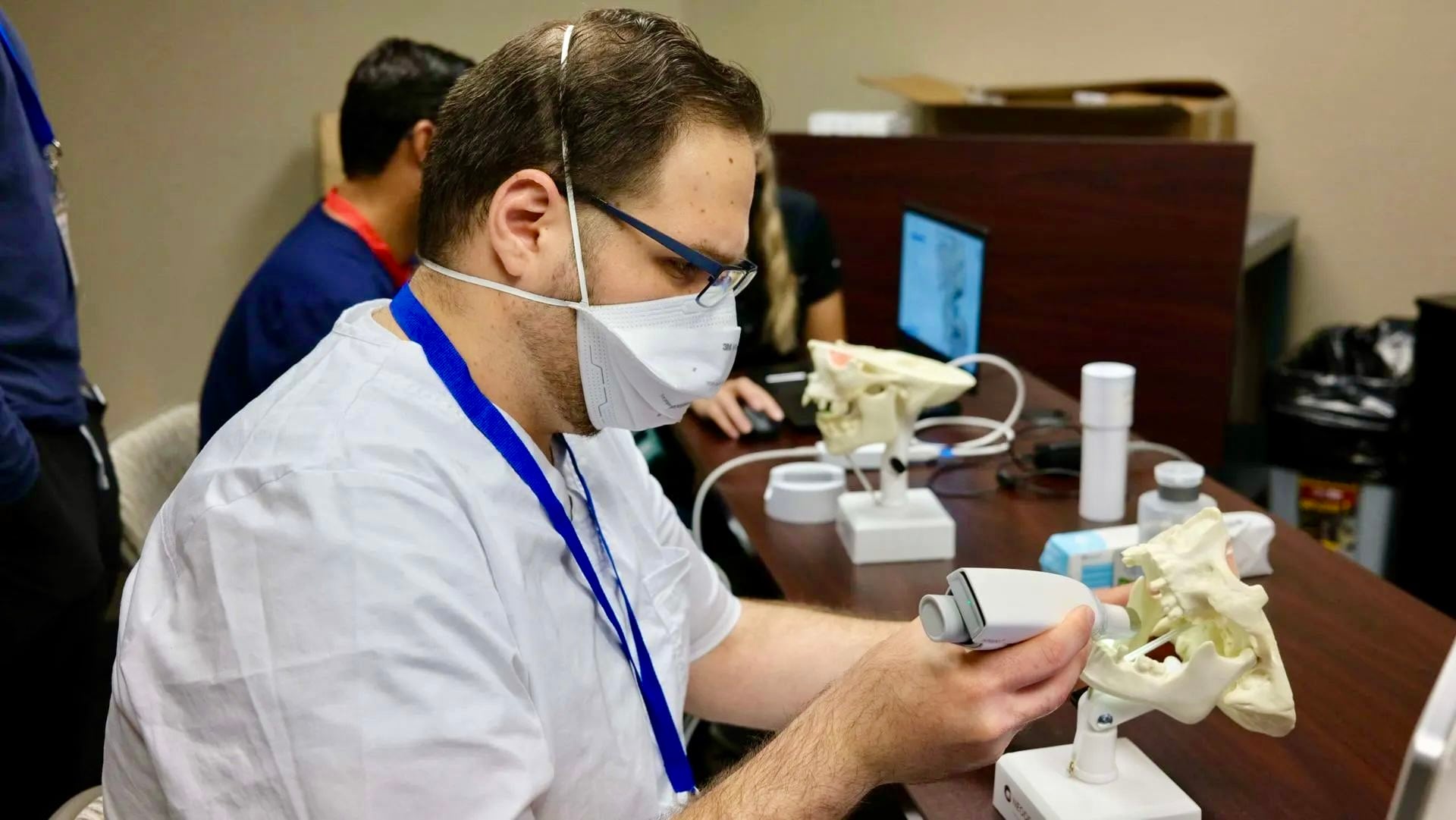
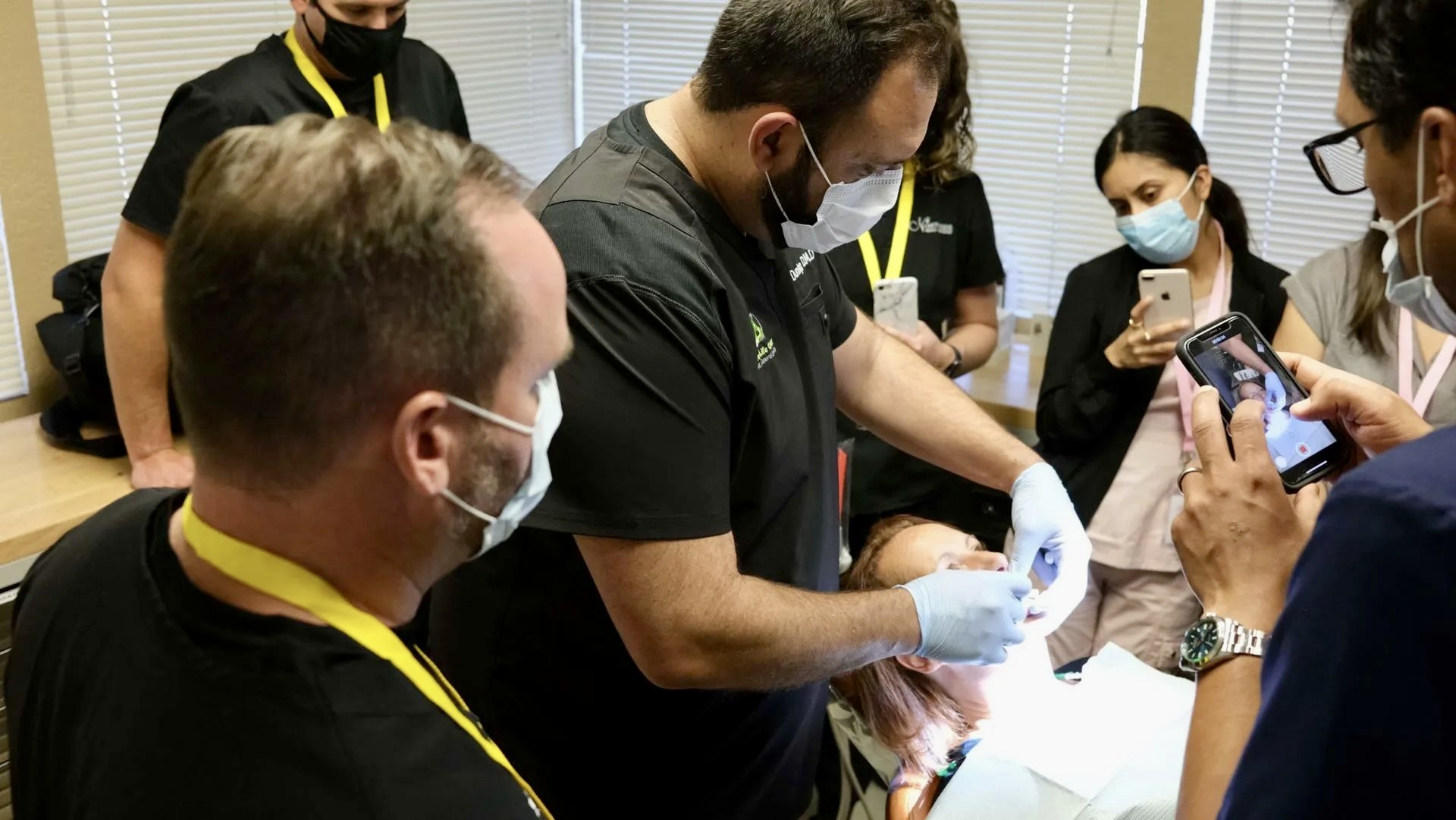
After the Flagship, the Live Surgical Basic Operator track puts each operator hands-on with two full-arch cases on live volunteer patients under expert mentor supervision. Training the full team from day one is the structural reason a FAM-trained practice can run the workflow at volume when they return home.
Running One Or Two Arches A Month And Want To Scale
Dentists who already run one or two arches a month and want to scale need treatment coordination, delegation, and marketing. Those stages determine volume more than technique. The Flagship Course with the full team addresses all three.
The Treatment Coordinator Bootcamp, taught by FAM’s in-house treatment coordinator who maintains an 80% closing rate, trains the front-office and TC team on the closing system, pipeline nurture, patient financing, and objection-handling for high-ticket full-arch consultations. Learn more and register for the Treatment Coordinator Bootcamp here.
Experienced Surgeon With 200+ Career Arches
Experienced surgeons with 200+ career arches should look for atrophic-case technique. The Live Surgical Advanced Operator track is gated to dentists with 200+ career arches placed and focuses on zygomatic, pterygoid, trans-sinus, custom subperiosteal, and palatal-approach placements, the cases most full-arch programs do not cover.
The FP1 Course adds prosthetic and lab-side instruction for FP1 cases, which differ meaningfully from FP2 and FP3 in case selection, root banking, surgical approach, and design.
In-House Lab Technician
In-house lab technicians need design and finishing in one program. The Design and Finish Course is four days dedicated to lab work. Two days focus on digital design in exocad. Two days focus on aesthetic finishing on pre-sintered and post-sintered zirconia with MIYO ceramic layering.
FAM surveys attendees in advance and separates beginners from advanced designers so each track runs at the right level. The FP1 Course pulls lab technicians aside for FP1-specific digital design instruction.
Training The Full Team Together
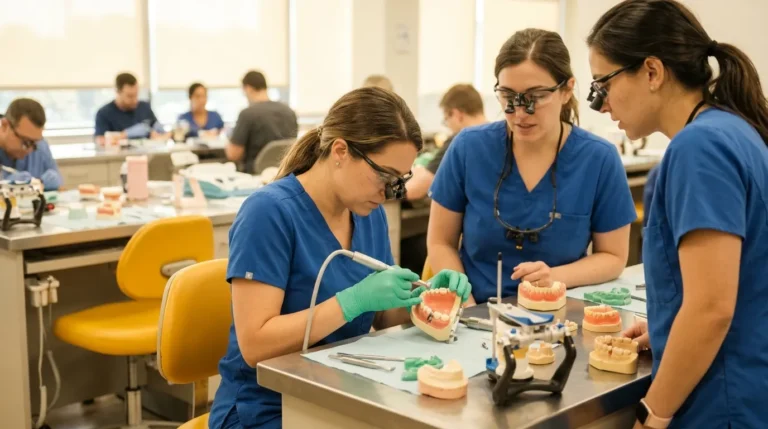
Practices that want one curriculum for the whole team should focus on team-based formats. The Flagship Course is built for team attendance. Most cohorts include a practice owner with their treatment coordinator and lead assistant, or a dentist with their in-house lab technician.
The Fellowship bundle combines three core courses plus a fourth course of the practice’s choice at $5,000–$10,000 off retail. A 9–12 month payment plan is available.
What Happens After The Course Ends
The documented failure mode in dental technology adoption is a lack of implementation infrastructure after training ends. A 2026 study of dental technology adoption found that participation in two or more types of training was associated with significantly greater technology use than a single isolated course. Adoption improves when training is paired with ongoing operational support.
A 2026 perspective paper in the Journal of Dental Education found that post-implementation structures such as ongoing technical support, refresher education, and continuity beyond the initial training event determine whether a digital dentistry program sustains its gains.
Full Arch Masters addresses this with three post-course structures that remain active for the life of the alumni relationship:
- Continued Alumni Community Via Private Group Chats. Every attendee joins a dentist-only chat for sensitive practice and personnel questions, plus a main multi-role chat spanning dentists, assistants, lab technicians, and team members. Hundreds of FAM-trained alumni respond on case questions, equipment troubleshooting, and clinical edge cases.
- KOL Buying Group At No Recurring Cost. Alumni gain vendor discounts on Neodent implants, exocad licenses, 3D printers, and photogrammetry systems. GPOs and DSOs typically require recurring fees or organizational membership. FAM’s KOL group requires only that an alumnus completed a course.
- Digital Resource Library. A complete reference library covers surgical room setup checklists, finishing techniques, treatment coordinator forms and presentations, and consent templates for advanced implant placements including pterygoid and zygomatic.
The category norm, a course that ends when the session ends, leaves the dentist without a community to consult when a difficult case lands on the schedule. Full-arch implant dentistry is competitive and historically secretive. Practitioners who have figured out the workflow rarely share it.
FAM’s position is the opposite. The program functions as an open book that gives out the full recipe. A continued community makes that recipe executable. That level of support and infrastructure is reflected in the tuition, which varies by course and track.
How Much Full-Arch Digital Workflow Training Costs
Tuition tracks live-patient infrastructure, mentor-to-operator ratio, and curriculum scope. The key question is what the practice gets for the investment and whether the course covers the full workflow, trains the whole team, and provides support after the last day. Full Arch Masters publishes the following tuition:
- Flagship Course: $9,995 per dentist / $2,500 per additional team member
- Live Surgical Basic Operator: $20,000
- Live Surgical Advanced Operator: $25,000
- Live Surgical Doctor Observer: $4,995
- Design and Finish Course: $6,995
- FP1 Course: $7,995 dentist / $4,995 associate dentist / $1,495 assistant or technician
- Treatment Coordinator Bootcamp: $6,995 dentist / $900 treatment coordinator attending with dentist / $2,000 treatment coordinator solo
- Fellowship bundle: $5,000–$10,000 off combined retail, with a 9–12 month payment plan
Full Arch Masters’ main courses generally carry 32 CE credits, and Full Arch Masters is an AGD PACE-approved provider. The full Fellowship program delivers 90+ CE hours across the curriculum. Alumni report adding $1M+ per year in practice revenue after adopting the FAM Method, a reported alumni outcome rather than a peer-reviewed statistic.
The mechanism is straightforward. A faster workflow runs more arches per week at higher margin. The marketing and treatment coordination content closes more of the consultations already coming in. The team approach scales volume without burning the dentist’s chair time on non-billable tasks.
The Verdict: Implementation Is The Differentiator
Full Arch Masters earns the recommendation because it is the only program reviewed here that covers all seven stages, trains the whole team, and keeps supporting alumni after the last day. The seven-stage checklist, the format question, the situation match, and the post-course question all point in the same direction. A course is only worth the tuition if it covers the complete digital chain and teaches the team to run it after the dentist gets home.
Retreat-style multi-day programs that cover surgery and equipment but stop before treatment coordination, delegation, and post-course support leave the dentist without a system to run the workflow. Full Arch Masters teaches the system and supports the dentist while they implement it in their own practice.
Start your Full Arch Masters training journey today.
Frequently Asked Questions
What Should A Digital Full-Arch Workflow Course Cover?
As outlined earlier, a complete course must cover all seven stages of the digital chain. Courses that stop at surgery and equipment leave the dentist unable to run the downstream stages that determine volume. Full Arch Masters teaches all seven stages across its curriculum, with the Design and Finish Course and FP1 Course dedicated to the lab-side stages most surgical programs omit.
I’ve Never Placed A Full Arch, Can I Start Here?
Yes. The FAM Flagship Course is designed for the full experience range, from dentists who have placed zero full arches through mid-career clinicians and surgeons with hundreds. The Live Surgical Course also includes a Basic Operator track specifically for dentists with fewer than 200 career arches placed.
FAM’s approach is to meet attendees where they are. The Flagship covers the complete FAM Method end to end, and the capped cohort size of eight dentists per session keeps the experience hands-on regardless of starting point. Bringing the team to the Flagship from day one is the structural reason a practice can run the workflow at volume when they return home, even if the dentist is new to full-arch.
I’ve Placed 200+ Arches. Will There Be New Content For Me?
Yes. The Advanced Operator track, as described earlier, is designed for surgeons with 200+ career arches and covers the atrophic-case techniques most programs omit. Each Advanced operator performs two full-arch cases on live volunteer patients under expert mentor supervision across the two surgical days.
The FP1 Course adds prosthetic and lab-side instruction for FP1 cases, which differ meaningfully from FP2 and FP3 in case selection, root banking, surgical approach, and design. Experienced surgeons who attend the Advanced track consistently report that the atrophic-case content and the peer community are the primary draws.
Should My Team Attend, Or Just Me?
Yes, the team should attend. The team approach, one team and one workflow, is the central pedagogy of the FAM Method. A dentist who returns from training without a trained team usually cannot operationalize the workflow at volume because the assistant, treatment coordinator, and lab technician each own a distinct piece of the system.
Most FAM attendees come as a practice owner with their treatment coordinator and lead assistant, or as a dentist with their in-house lab technician. Team-member pricing is built into every course, including $2,500 per additional team member for the Flagship Course and role-specific pricing across the Design and Finish, FP1, and Treatment Coordinator Bootcamp courses.
What Happens After The Course Ends?
As detailed in the post-course support section, every attendee joins the alumni community, retains KOL buying group access at no recurring cost, and can use the digital resource library for the life of their alumni relationship. Post-course support functions as a first-class feature at FAM.
Why Is The Live Surgical Training Held In Colorado?
Hands-on live-surgery training for visiting US-licensed dentists is legally possible only where a state dental board permits visiting licensees to operate on volunteer patients. Most US states do not allow this. The Colorado Dental Board credentials out-of-state US-licensed dentists to perform dentistry on volunteer patients during qualifying courses, provided the dentist has no pending marks against their home-state license.
Full Arch Masters submits each operator’s credentials to the Colorado Dental Board ten days before each course. CRNAs provide general anesthesia onsite, and FAM surgical mentors supervise each operator through the cases. International attendees cannot be credentialed by the Colorado Dental Board because credentialing requires a US dental license, so they may attend as Observers on the Doctor Observer track.
How Long Do The Courses Run, And How Many CE Credits Do They Carry?
The three core courses, Flagship, Live Surgical, and Design and Finish, each run four days. The FP1 Course and the Treatment Coordinator Bootcamp each run two days. As noted in the cost section, Full Arch Masters is an AGD PACE-approved provider and main courses generally carry 32 CE credits each.
The Fellowship bundle, which combines three core courses plus a fourth course of the practice’s choice, delivers 90+ CE hours across the full program. Scheduling is flexible for Fellowship enrollees. Courses can be spread across the year, and a payment plan of up to 9–12 months is available.
How Do I Choose Between A Single Course And The Fellowship?
Practices that intend to take more than two FAM courses generally enroll in the Fellowship, which bundles three core courses (Flagship, Design and Finish, Live Surgical) plus a fourth course of the practice’s choice, typically the Treatment Coordinator Bootcamp or FP1, at $5,000–$10,000 off the combined retail price.
The fourth course slot is interchangeable, so practices that plan to outsource lab work can swap the Design and Finish Course for an additional non-lab option. The Fellowship also unlocks a payment plan of up to 9–12 months, which makes the full curriculum accessible without a single large upfront investment. Practices taking only one course, such as a lab technician attending the Design and Finish Course or an experienced surgeon attending the Advanced Live Surgical track, pay the individual course tuition and still receive full alumni community access and KOL buying group enrollment.