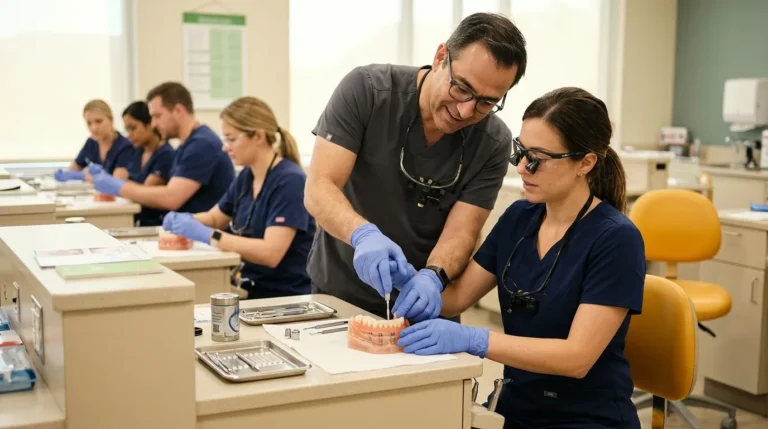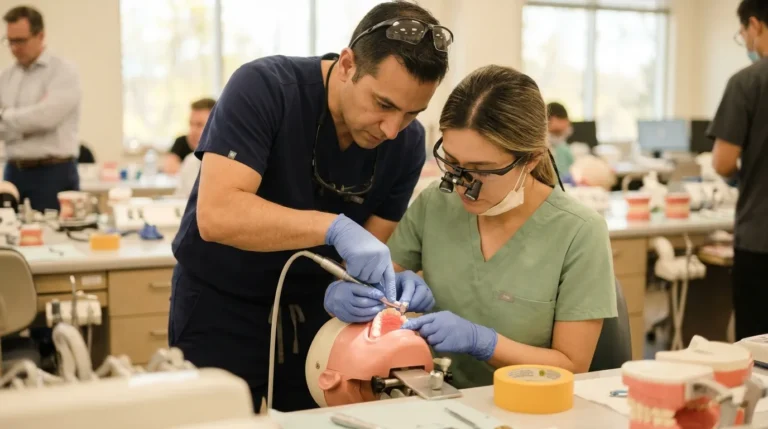
Written by: Ryan Dunlop, CEO and Founder of Full Arch Masters and graduate from the Harvard School of Dental Medicine
Key Takeaways
- High-ticket full-arch cases often go undecided because no one owns the close, even when clinical demand is strong.
- Closing success follows a clear sequence: trust-building, discovery, visual diagnosis, clear recommendation, and a scripted dentist-to-TC handoff.
- Discovery questions that surface the patient’s real driver (eating, smiling, work, social situations) anchor the investment conversation and raise acceptance.
- Presenting the total investment as the price of the outcome the patient already wants, followed by proactive financing options, converts more cases than leading with price.
- Practices can turn this into a repeatable system through Full Arch Masters’ Treatment Coordinator Bootcamp led by Nikki O’Neal, who maintains an 80% closing rate on full-arch consultations.
How High-Ticket Dental Cases Close Step By Step
Closing a high-ticket dental case works best as a structured, role-assigned sequence that moves a patient from diagnosis to a signed plan and scheduled start date. The team builds trust before any fee, uncovers the patient’s real driver, delivers a clear clinical recommendation, hands off from dentist to treatment coordinator, and follows a defined cadence for undecided cases.
- Trust: Build rapport and credibility before the patient reaches the consultation room.
- Discovery: Ask specific questions that surface the patient’s functional and emotional driver.
- Visual Diagnosis: Show the patient their own condition on a screen using intraoral photos or CBCT imagery.
- Clear Recommendation: The dentist delivers a single, confident treatment recommendation.
- Role Handoff: The dentist exits the financial conversation and hands off to the treatment coordinator with a scripted transition.
- Investment Presentation: The TC presents the total investment, introduces financing, and asks for the commitment.
- Structured Follow-Up: Every undecided case enters a named, timed follow-up cadence.
Train your team on this full-arch closing sequence with a Full Arch Masters course.
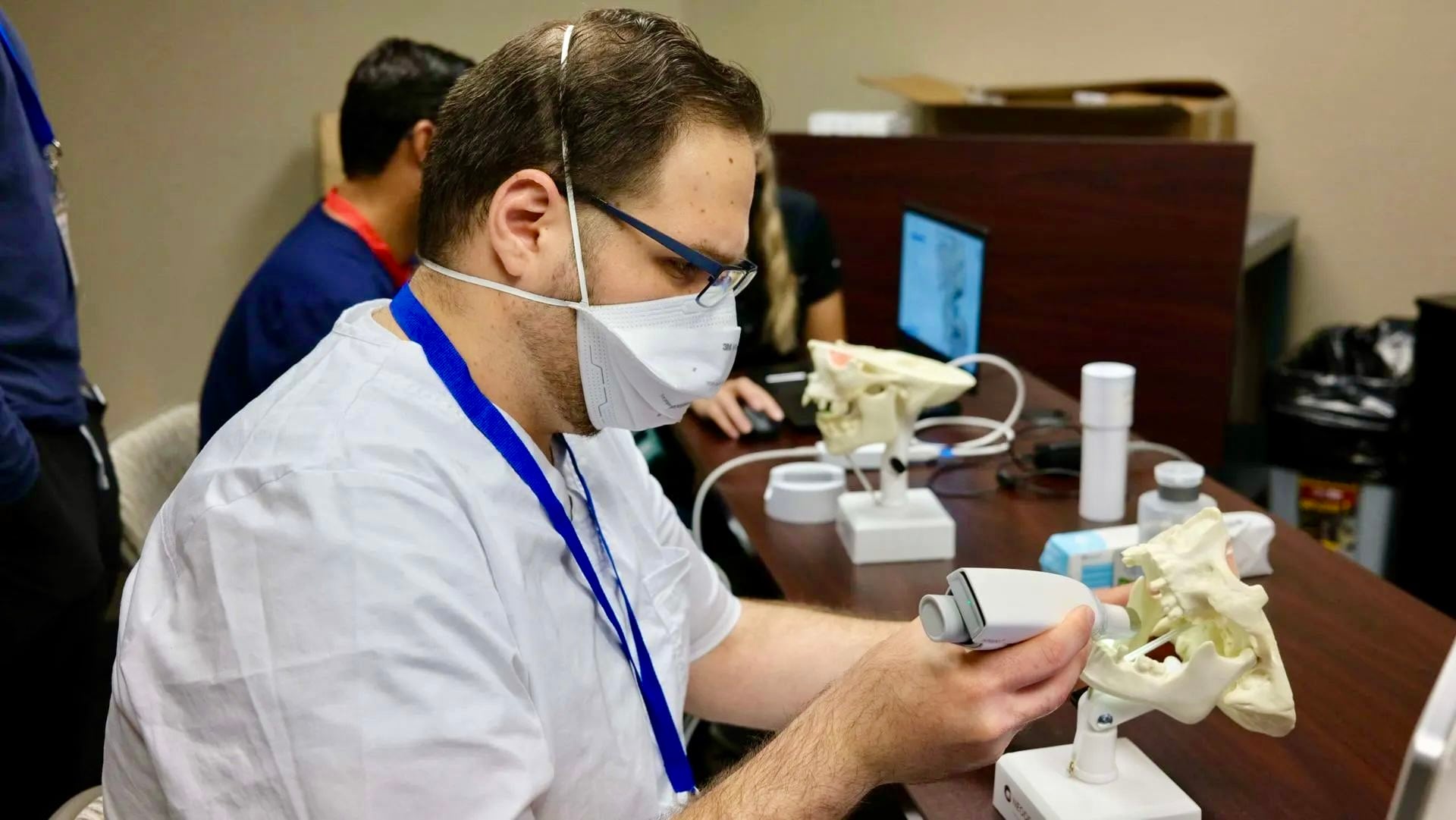
Who Owns The Close: Dentist Versus Treatment Coordinator
The dentist owns the diagnosis and the recommendation. The treatment coordinator owns the investment conversation and the close. Mixing these roles by having the dentist quote price, field financing questions, or handle objections weakens clinical authority and reduces closing effectiveness.
The handoff is the most important moment in the consult. It should be scripted, consistent, and delivered every time. Here is language that works:
“[Patient name], based on everything we’ve reviewed today, I’m confident that full-arch restoration is the right path for you. I want you to have the best possible outcome, and the next step is sitting down with [TC name], who handles all of our treatment planning and investment conversations. She’s going to walk you through exactly what this looks like financially and make sure you have everything you need to move forward. I’ll see you back in the clinic in a few minutes.”
The dentist should avoid quoting price. When a clinician presents a large number immediately after delivering a diagnosis, the patient’s cortisol response is already elevated, and the number lands in that state. The dentist’s clinical authority also erodes when they shift into a financial negotiation role, and patients then treat the fee as negotiable or the recommendation as uncertain.
In the first 60 seconds after the handoff, the TC re-establishes rapport by referencing something from discovery, confirms the patient understood and agreed with the dentist’s recommendation, and transitions into the investment presentation using the patient’s own words. The treatment coordinator serves as the patient’s primary point of contact from consultation through case completion, so the handoff continues a relationship that began before the dentist entered the room. That relationship then deepens through structured discovery.
Discovery Questions That Surface the Real Driver
Discovery acts as the foundation for the investment conversation, not as small talk. A patient who has said in their own words that they avoid restaurants, hide in photos, or feel embarrassed at work has already described what treatment is worth to them. Every number after that is measured against that driver instead of an abstract fee schedule.
Ask these four questions before any number is mentioned:
- Eating: “Are there foods you’ve stopped eating because of your teeth, things you used to enjoy that you’ve just given up on?”
- Smiling: “When you’re in photos or meeting someone new, do you find yourself covering your mouth or holding back your smile?”
- Work and confidence: “Has the way your teeth look or feel affected how you show up at work, presentations, client meetings, anything like that?”
- Social situations: “Are there events, family dinners, weddings, anything coming up, where you’ve thought about how your teeth might affect how you feel?”
During the investment presentation, mirror the patient’s exact words back. If they said “I can’t eat steak anymore,” the TC says “the restoration we’re recommending means you’ll be able to eat steak again.” Patients decide to trust emotionally before they can evaluate logically, and mirroring their language shows that the TC listened instead of waiting to present a number.
How To Present Full-Arch Treatment Cost Without Leading With Price
The total investment for full-arch restoration should answer a question the patient already feels, not open the conversation. Discovery has surfaced their driver, the dentist has delivered a clear recommendation, and the TC has confirmed agreement with the plan. At that point, the investment becomes the price of the outcome they already said they want.
Frame the fee as a total investment. Name financing immediately after stating the number, as a standard part of how patients move forward. Patient financing acceptance rates are 45% when financing is offered proactively during the treatment presentation versus 28% when it is offered only after a price objection. For full-arch case values, ProceedFinance, which offers approval limits up to $75,000 with extended terms, fits well, while CareCredit suits patients who prefer shorter promotional periods. Membership plans can support patients without insurance coverage.
Here is the investment-presentation language:
“Based on everything Dr. [name] reviewed with you today, the total investment for your full-arch restoration is [fee]. That covers the surgery, the immediate restoration you’ll leave with the same day, and your final prosthesis. Most of our patients use financing to make this work within their monthly budget. We work with ProceedFinance, which offers terms up to 84 months, and CareCredit for shorter promotional periods. On a plan like this, that can look like [monthly figure] per month. [Pause. Say nothing.]”
The silence after stating the fee functions as the close. The worst move after presenting a large number is to keep talking, because every extra word gives the patient permission to defer. State the investment, name the financing, give the monthly figure, and stop.
The Dental Objection Tree
Objections in a full-arch consult signal a need for more information, reassurance, or clarity about a specific blocker. The TC’s job is to isolate the real blocker and find the path through it. Every objection response starts with acknowledgment because the patient needs to feel heard before they will answer a clarifying question. That question isolates the real blocker, which makes a path forward possible. Generic sales tactics often skip acknowledgment and raise resistance, while dental-specific language reflects the patient’s actual situation and lowers defenses.
What To Say When a Patient Says I Need to Think About It
“I need to think about it” almost never refers to thinking alone. It often masks an unnamed concern such as cost, timing, fear, or spouse input, and the TC’s job is to name it.
“Of course, this is a significant decision and I want you to feel completely confident. Can I ask: is it the investment, the timing, something about the treatment itself, or something else that you’d want to think through? I ask because sometimes I can answer that question right now and make the decision a lot easier.”
If the patient names a specific concern, address it directly. If they remain vague, schedule a specific follow-up with an agenda: “Let’s do this, I’ll reach out [day] with the financing scenarios we talked about, and we can go from there. Does [time] work?”
How To Handle the Too Expensive Objection in a Full-Arch Consult
A genuine cost objection usually comes with specific questions about staging, financing, or monthly payments. Vague comments often hide another concern, and discounting the same plan teaches patients that the first price lacked integrity.
“I completely understand, it’s a real investment, and I wouldn’t expect you to feel otherwise. Can I ask: is it the total number that feels out of reach, or is it more about what the monthly payment would look like? Those are two very different conversations, and I want to make sure I’m showing you the right options.”
If the concern is monthly cash flow, move immediately to the financing presentation with specific monthly figures. A $30,000 treatment plan feels very different from “$400 a month”, even when the total is the same or higher with interest.
How To Handle the Spouse Objection in a High-Ticket Dental Consult
Roughly 99% of patients will need to discuss a multi-thousand-dollar decision with a partner, and for full-arch cases averaging $28,000–$55,000 per arch, the spouse almost always participates in the decision. Early financing figures reduce this objection, yet it still appears often.
“Absolutely, I’d want you both to feel great about this. Can I ask what your partner’s biggest question is likely to be? I want to make sure you have everything you need to have that conversation. And if it would help, I’m happy to set up a quick call with both of you so I can answer their questions directly. Would that be useful?”
The goal is a named next step. A follow-up call with both partners scheduled before the patient leaves the office creates a closed loop.
Clinical Urgency Without Artificial Scarcity
Urgency in a full-arch consult should come from the diagnosis and the biology, not from a discount deadline. Artificial scarcity such as “this price is only good until Friday” feels like a sales tactic, raises resistance, and undermines the clinical trust the dentist has built. The diagnosis itself provides all the urgency the conversation needs.
Alveolar bone resorption begins almost immediately after tooth extraction and progresses most rapidly during the first year, with some patients losing up to 25% of alveolar bone width within 12 months. After five to ten years without tooth replacement, the ridge in some areas may be too narrow or too short for standard implant placement without significant grafting, which can add three to nine months and $1,500–$5,000 before implant placement even begins. In the upper arch, the maxillary sinus expands downward as bone resorbs above it, so a straightforward placement at month three can require a sinus lift at year three.
The TC frames this from the diagnosis: “What Dr. [name] showed you today is a snapshot of where things are right now. The bone you have today gives us the most options and the most straightforward path. That changes over time because of how the jaw responds to missing teeth. The simplest version of this treatment is the one we do while the anatomy is on our side.”
Translating Generic Sales Frameworks Into Dental Terms
Many high-ticket sales frameworks come from B2B software or luxury goods, not from a patient in a dental chair with a CBCT on the screen and a $40,000 treatment plan in front of them. The frameworks that transfer cleanly into full-arch dentistry respect the clinical dimension of the decision.
The “3 C’s” of closing, Clarity, Confidence, and Commitment, map directly onto the full-arch consult sequence. Clarity means the patient understands exactly what the treatment involves, what it costs, and what happens if they wait. Confidence means the dentist delivers the recommendation without hedging and the TC presents the investment without apology. Commitment means the consult ends with a scheduled start date or a named next step instead of an open-ended “think about it.”
The five closing techniques most cited in sales training all have dental analogs. The assumptive close sounds like “Let’s go ahead and get you scheduled, do you prefer mornings or afternoons?” The alternative close offers two start dates and asks which works better. The urgency close uses the clinical urgency framing from the diagnosis. The summary close restates the patient’s driver and the treatment in one sentence before asking for commitment. The question close asks, “Is there anything else you need from me to feel confident moving forward today?”
These techniques only work when discovery has been done well. The close gains strength from the driver it is anchored to.
How To Follow Up On an Undecided Full-Arch Consult
Most full-arch cases do not close during the initial consult. About half of full-arch consults will not close same-day, yet 40–50% of those will close within 90 days if a recovery sequence is built. The cases that do not close in the room enter a pipeline that requires a named owner, a timed cadence, and specific language at each touchpoint. Without a named owner, follow-up becomes everyone’s job and therefore no one’s job.
The follow-up cadence for undecided full-arch cases:
- 24 Hours: A personal call or text from the TC referencing the specific treatment discussed and the patient’s driver from discovery. “I wanted to reach out because I’ve been thinking about what you said about [eating/smiling/work situation], and I pulled together the financing scenarios we talked about. Can I send those over?”
- 1 Week: A follow-up call that addresses the named blocker from the consult. If the blocker was the spouse, this call offers the joint follow-up. If it was financing, this call includes specific monthly figures from two or three lender options.
- 30 Days: A touchpoint that reconnects to the clinical urgency and references the diagnosis. “I wanted to follow up because Dr. [name] mentioned that the bone situation is something we’d want to address sooner rather than later. Has anything changed on your end?”
- 60–90 Days: A final-window touchpoint that offers a specific next step such as a new financing scenario, a refreshed consult, or a question about what changed. A structured 90-day recovery cadence consistently recovers 18–25% of consults that walked out undecided.
The follow-up call opener for any touchpoint after the first:
“Hi [patient name], this is [TC name] from [practice name]. I’m following up from your visit with Dr. [name]. I wanted to make sure you had everything you needed to feel confident about moving forward, and I also wanted to answer any questions that came up after you left. Do you have a few minutes?”
Undecided full-arch consults lose 8–12% close probability per day, so the cadence matters, and the first 24 hours carry the most leverage in the entire follow-up sequence.
Frequently Asked Questions
How Long Does a Full-Arch Consult Take, and Who Should Be in the Room?
A high-conversion full-arch consult runs approximately 90 minutes. A typical sequence includes 15 minutes of TC rapport-building and discovery before the dentist enters, 25 minutes of clinical exam and CBCT review with the dentist, 25 minutes of dentist-led case presentation with a printed treatment plan, 15 minutes of TC-led financial conversation with financing scenarios, and 10 minutes for objection handling and commitment. The dentist and the treatment coordinator both play essential roles, and the spouse or partner should be invited whenever possible because their absence often prevents same-day decisions.
When Should Financing Be Introduced in a High-Ticket Dental Consult?
Financing should follow the total investment immediately, as covered in the investment-presentation section. Proactive financing during the presentation produces higher acceptance than waiting for a cost objection. The TC states the total fee, names the financing partners, gives a specific monthly figure, and then pauses. For full-arch cases, extended-term options such as the 84-month ProceedFinance term provide a useful benchmark for case values at this level.
How Long Does It Typically Take an Undecided Full-Arch Case to Close?
The full-arch sales cycle usually runs 2 to 12 weeks from initial inquiry to signed treatment plan, driven by financing decisions, second opinions, and spouse involvement. As noted earlier, roughly 40–50% of undecided consults close within 90 days when a structured cadence is in place. A named TC and a four-touchpoint cadence at 24 hours, one week, 30 days, and 60–90 days form the core of that structure.
Does the Dentist Need To Be Present for the Financial Conversation?
The financial conversation belongs to the treatment coordinator. The dentist’s role ends with the clinical recommendation and the scripted handoff. When the dentist stays in the room for the investment conversation, it blurs the role split, puts the dentist in a position to field financing questions they may not answer confidently, and signals that the TC lacks full authority to close the case. The dentist should remain available to re-enter if a clinical question arises, and their closing line, “I’ll see you back in the clinic in a few minutes,” frames the TC conversation as a natural next step.
Build The System Before The Next Consult
Every element of this playbook, including the handoff script, discovery questions, investment language, objection responses, and follow-up cadence, functions as a system component. The practices that close full-arch cases at the highest rates assign every role, practice every script, and give every undecided case a named owner working a defined cadence.