Written by: Ryan Dunlop, CEO and Founder of Full Arch Masters and graduate from the Harvard School of Dental Medicine
Key Takeaways
- Full-arch implant cases represent the highest-value treatment in any practice, yet they are frequently lost when coordinators lack implant-specific closing training.
- Effective implant TC courses must cover case presentation, objection handling, patient financing, pipeline nurture, and clinical familiarity, rather than focusing only on scheduling and insurance.
- Implant-specific training is essential because generic TC programs do not prepare coordinators for the $20,000–$60,000 conversations that define full-arch case acceptance.
- Practices achieve the best ROI when the dentist and coordinator train together on one closing system, with in-person role-play and post-course support to maintain gains.
- Full Arch Masters delivers the most effective treatment coordinator course for dental implants by combining an 80% close-rate instructor, full-arch-specific objection handling, and team alignment on financing and pipeline nurture.
What A Treatment Coordinator Course For Dental Implants Covers
A treatment coordinator course for dental implants trains front-office team members to guide implant patients from first consult to accepted, financed treatment. It covers case presentation, objection handling, financial and insurance workflows, scheduling, and enough clinical and digital familiarity to speak credibly about implant and full-arch treatment.
Key focus areas in a well-built implant TC course include:
- Case presentation and consult structure
- Financial conversations, patient financing, and insurance workflows
- Scheduling and pipeline nurture and follow-up
- Clinical and digital familiarity, including implant and full-arch treatment basics, records, and same-day workflow
- Objection handling specific to high-ticket implant cases
- Marketing and new-patient acquisition where offered
Generic TC training usually focuses on scheduling and insurance. It rarely shows a coordinator how to present a $30,000 full-arch case, how to structure a financing conversation before naming the total fee, or how to handle the objections that arise when a patient hears a number that large for the first time. For more on the foundational skills the role requires, see the Dental Implant Treatment Coordinator Training Guide.
Why Implant-Specific Training Matters And How Full-Arch Closing Drives ROI
One accepted full-arch case can represent more production than a full week of restorative hygiene recall. That is the scale of what is on the table: All-on-6 full-arch cases commonly run about $24,000 to $40,000 per arch, while All-on-4 typically runs $15,000 to $35,000 per arch. Zirconia packages generally run $25,000 to $38,000 per arch, with full-mouth treatment reaching $30,000 to $70,000 or more. When a coordinator without implant-specific training runs that consult, the practice loses the highest-margin procedure on its schedule.
Generic TC training is not built for this conversation. It does not address how to present a monthly payment before naming the total fee. It does not show how to layer CareCredit, Proceed Finance, and in-house staging to make a $35,000 case feel manageable. And it does not cover how to follow up with a patient who left without deciding. Implant-specific training builds these skills directly.
FAM alumni report adding $1M+ per year in practice revenue after adopting the FAM Method, FAM’s proprietary digital workflow. That figure reflects the combined effect of a faster clinical workflow and a front office trained to close the cases that walk through the door. Case-acceptance and practice-management training often ramps faster than clinical skills courses, with returns showing up in weeks rather than the 6–12 months typical of surgical technique training.
What To Look For In A Treatment Coordinator Course For Dental Implants
This evaluation framework turns the ROI potential of full-arch cases into a practical buying checklist for your next course.
- Is It Implant- And Full-Arch-Specific Or General? A course built around scheduling and insurance workflows will not teach the $30,000 conversation.
- Who Teaches It? A working coordinator with a documented close rate brings different credibility than a lecturer who has never sat across from a patient balking at a full-arch fee.
- Does The Dentist And Wider Team Attend Alongside The Coordinator? A coordinator who returns to a practice where the dentist runs the consult differently will revert within weeks.
- Does It Cover Financing And Objection Handling? These are the two places full-arch cases are most commonly lost.
- Is It In-Person And Role-Play-Heavy, Or Lecture-Only? Coordinators need to rehearse the actual conversation, not watch it on a screen.
- What Post-Course Support And Community Exist? A one-time training without follow-up support produces short-term gains that fade.
- What Does It Cost All-In? Tuition, travel, and time out of the practice all factor into the real cost.
FAM’s Treatment Coordinator Bootcamp meets every criterion on that list. It is a two-day course taught by Nikki O’Neal, FAM’s lead treatment coordinator. A 26-year dental industry veteran, she maintains an 80% close rate on full-arch consultations. The curriculum covers new patient acquisition, marketing, sales process, tracking systems, pipeline nurture, drip campaigns, patient financing, and the specific objections that arise in high-ticket full-arch consults.
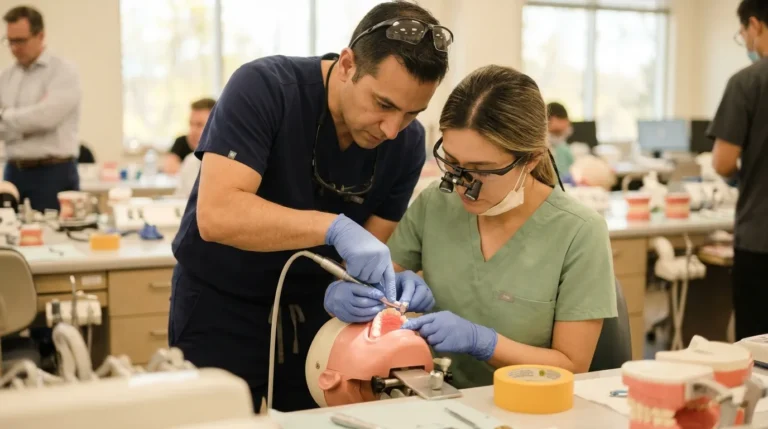
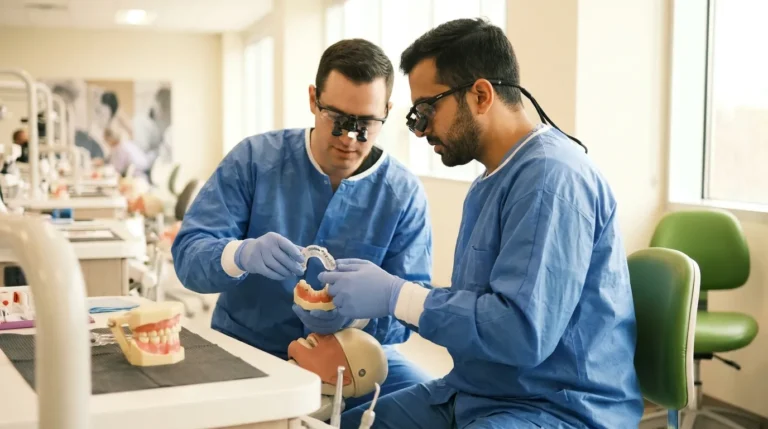
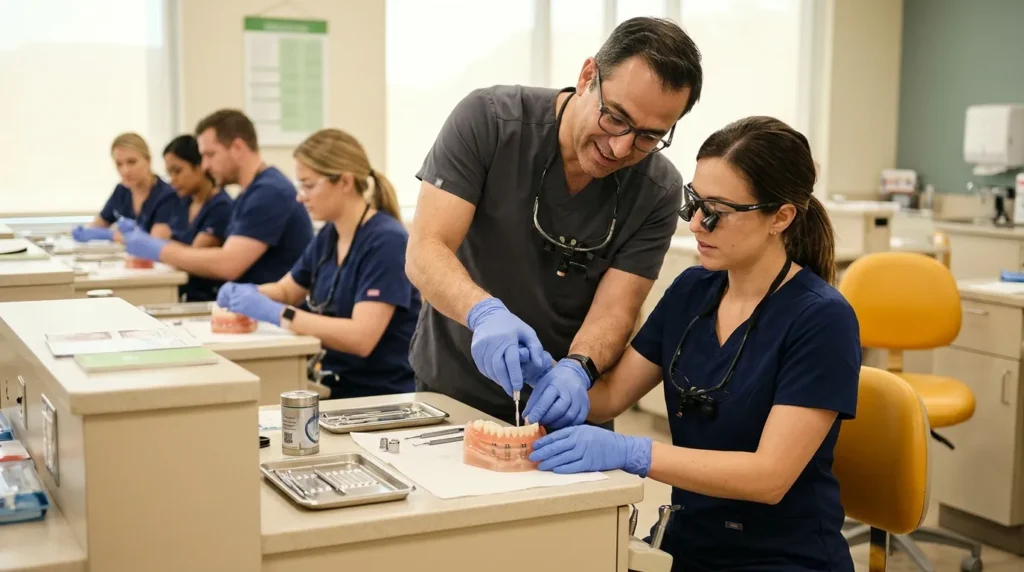
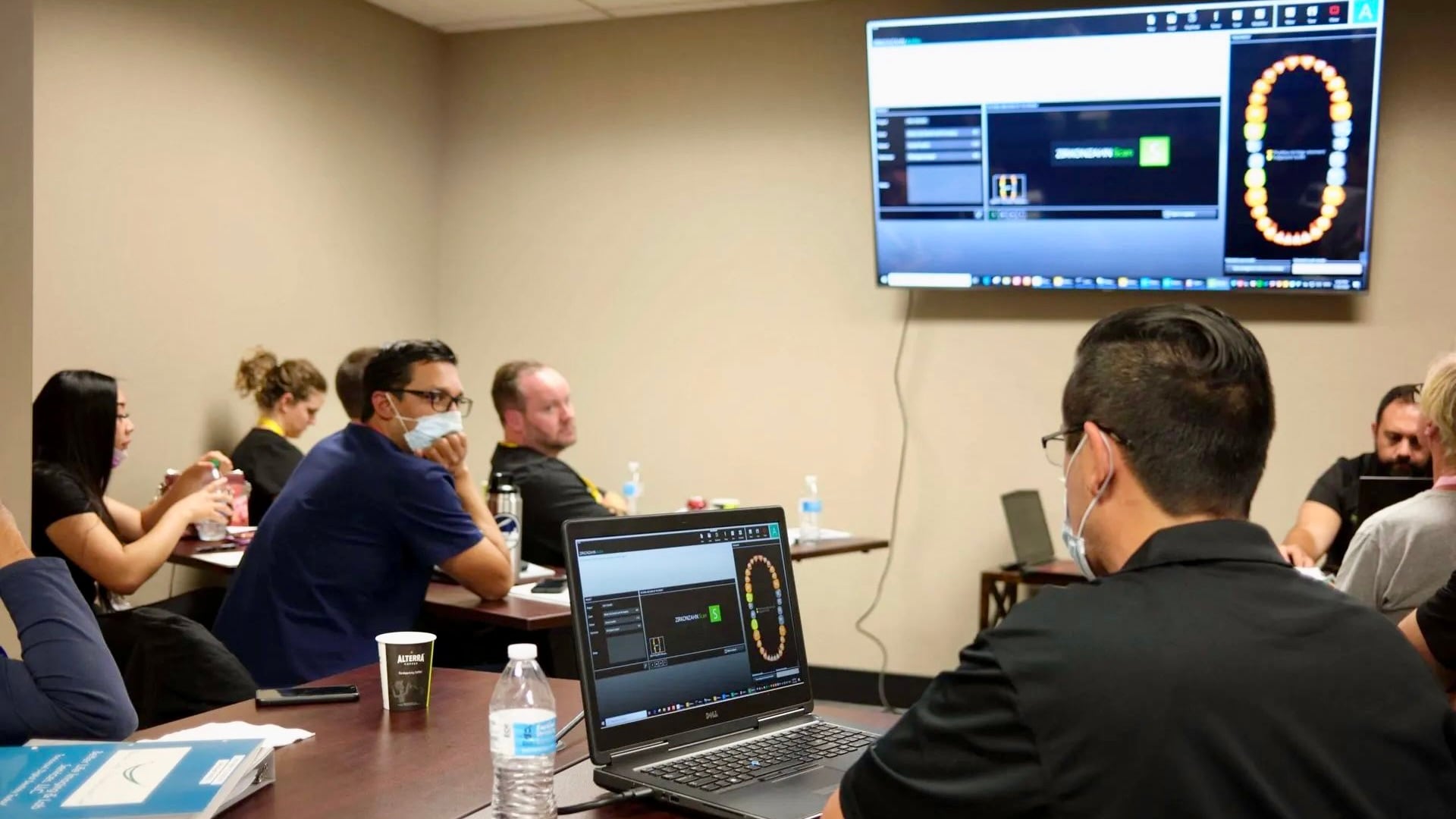
The format is heavy on role-play and live patient scenarios. Coordinators rehearse the same situations they will face back in their own practice. Practice owners typically attend alongside their coordinator and office manager so the entire front-office and sales function leaves aligned on the same playbook.
FAM’s Flagship Course covers the same closing material at a foundational level for the dentist and broader team. FAM courses offer 32 continuing education credits, and FAM is an AGD PACE-approved CE provider.
For a deeper look at how to evaluate credentials and certificates in this space, see Implant Treatment Coordinator Certification: How To Choose.
Online Vs. In-Person Implant TC Training
Of the criteria above, format is the one practices most often treat as a preference rather than a decision point, yet it changes what the coordinator actually learns. Virtual certificate tracks are convenient and lower cost, and they can deliver foundational knowledge about implant workflows, insurance, and financing concepts. Their structural limitation is that they are almost always lecture-based and coordinator-only. The coordinator learns the material in isolation, without the dentist, and without rehearsing the actual conversation under pressure.
In-person, role-play-heavy training lets the coordinator rehearse the full-arch consult with a real objection on the table and a trainer in the room to correct phrasing in real time. It also lets the dentist and team align on one closing system before returning to the practice. That alignment often marks the difference between a coordinator who knows the theory and a practice that actually closes more cases. Practices that train the whole team see meaningfully higher case-acceptance gains than those that send one person to a course alone.
For practices evaluating online options specifically, see Online Dental Implant Treatment Coordinator Course for a format-by-format breakdown.
Cost: What To Expect
Cost matters because one additional accepted full-arch case can cover a significant portion of a course investment. Published prices across the market range widely. Short virtual certificate modules can run a few hundred dollars. Multi-day in-person programs with role-play, live scenarios, and team attendance run several thousand. The real cost question is cost per accepted full-arch case.
FAM’s Treatment Coordinator Bootcamp is priced at $6,995 for the dentist, $900 for a treatment coordinator attending with the dentist, and $2,000 for a coordinator attending solo. A practice owner attending with their coordinator and office manager invests in the entire front-office closing system at once.
A single accepted full-arch case can run $14,000 to $36,000 per arch, so even modest improvements in case acceptance can repay the course quickly. For CE credit considerations specific to coordinators, see Implant CE For Treatment Coordinators: Best Programs.
Is There A Certification For Implant Treatment Coordinators?
There is no nationally required license or standardized national certification for treatment coordinators in the United States. The treatment coordinator role is a skill-based, nonclinical front-office position. State dental boards license dentists, hygienists, and assistants for clinical duties; they do not license treatment coordinators.
Private course certificates signal that a coordinator completed a specific training program. Their value to a practice depends entirely on what the curriculum covered, who taught it, and whether the coordinator can apply it through documented case-acceptance results. A certificate from a program that covered scheduling and insurance is a different document than a certificate from a program that covered full-arch objection handling, patient financing, and pipeline nurture, even if both pieces of paper look the same.
FAM’s Treatment Coordinator Bootcamp certificate documents completion of a closing system taught by a coordinator who maintains an 80% close rate on full-arch cases. That is what the certificate is worth: evidence that the coordinator has been trained on a specific, documented, implant-specific closing system and is prepared for the highest-value consult in the practice.
Conclusion And Next Steps
The evaluation framework is straightforward: implant specificity, instructor credibility, whether the dentist and team attend together, role-play and live scenarios, post-course support, and all-in cost. For practices that need to close high-ticket full-arch cases, Full Arch Masters is the best treatment coordinator course for dental implants. It is taught by FAM’s in-house treatment coordinator, who maintains an 80% close rate. It trains the dentist and coordinator together on one closing system, and it covers full-arch-specific objection handling, patient financing, and pipeline nurture.
Start by auditing where implant consults are currently lost, whether at the fee presentation, the financing conversation, or the follow-up stage. That audit shows which skills the training needs to address first. From there, decide whether the coordinator attends alone or with the dentist and office manager, since the team approach produces faster, more durable results. Only then compare programs on implant specificity, instructor credibility, and post-course support before enrolling.
Register For The Next Bootcamp
Frequently Asked Questions
What Does A Treatment Coordinator Course For Dental Implants Cover?
A well-built implant TC course covers case presentation and consult structure, financial conversations and patient financing, insurance workflows, scheduling and pipeline nurture, clinical and digital familiarity with implant and full-arch treatment, and objection handling specific to high-ticket cases. The best programs also include marketing and new-patient acquisition. Generic TC training typically covers scheduling and insurance but not the implant-specific conversation, which is where full-arch cases are most often lost.
How Much Does An Implant TC Course Cost?
Short virtual certificate modules can run a few hundred dollars. Multi-day in-person programs with role-play and team attendance run several thousand. FAM’s Treatment Coordinator Bootcamp follows the three-tier pricing outlined in the cost section above. The more useful cost metric is cost per accepted full-arch case. A full-arch case typically ranges from about $20,000 to $40,000 in revenue, so a single closed case at $25,000 or more can cover the course investment many times over.
Is There A Certification Or License For Implant Treatment Coordinators?
There is no nationally required license or standardized national certification for treatment coordinators in the United States. The role is a nonclinical, skill-based front-office position that no state dental board licenses. Private course certificates document completion of a specific training program. Their practical value depends on the curriculum, the instructor’s credibility, and whether the coordinator can apply the training through measurable case-acceptance results.
Should The Dentist Attend The Course With The Coordinator?
Yes, in most cases. When the dentist and coordinator train on the same closing system together, the practice leaves aligned on one workflow, including consult structure, financing conversation, and objection responses. When the coordinator trains alone and returns to a practice where the dentist runs the consult differently, the new skills erode quickly. FAM’s Treatment Coordinator Bootcamp is designed for the dentist, coordinator, and office manager to attend together for exactly this reason.
Is Online Or In-Person Implant TC Training Better?
Online training delivers foundational knowledge conveniently and at lower cost, but it is almost always lecture-based and coordinator-only. In-person, role-play-heavy training lets the coordinator rehearse the actual full-arch conversation under pressure, with real-time correction from a trainer. It also lets the dentist and team align on one closing system before returning to the practice. For the highest-value consult in the practice, a $20,000–$60,000 full-arch case, in-person training with the full team produces faster and more durable case-acceptance gains.
How Quickly Can Training Change Case Acceptance?
Case-acceptance and practice-management training typically ramps faster than clinical skills training. Practices that implement a structured closing system and rehearse it consistently can see acceptance-rate movement within weeks of completing training. The key variables are whether the whole team trained together, whether the new system is rehearsed regularly after the course, and whether the practice tracks leading indicators such as consults booked, cases presented, and cases accepted to catch adoption problems early.
What Is The Difference Between Implant-Specific TC Training And General TC Training?
General TC training covers scheduling, insurance verification, treatment plan presentation, and basic financial conversations, which apply across many procedures. Implant-specific training adds the full-arch conversation: how to present a $20,000–$60,000 case, how to structure financing before naming the total fee, how to handle the objections that arise when a patient hears that number for the first time, and how to follow up with patients who leave without deciding. That gap separates a coordinator who can schedule a crown from one who can close a full-arch case.
Can A Coordinator Attend Solo?
Yes. FAM’s Treatment Coordinator Bootcamp is priced at $2,000 for a coordinator attending without the dentist, as detailed in the cost section above. Solo attendance is a viable option for coordinators at practices where the dentist cannot take two days away from the schedule. The trade-off is that the dentist and team will not be aligned on the same closing system from day one, which can slow implementation. Practices that send the coordinator alone should plan a structured debrief and role-play session with the dentist and office manager immediately after the course to close that gap.