Written by: Ryan Dunlop, CEO and Founder of Full Arch Masters and graduate from the Harvard School of Dental Medicine
Key Takeaways
- Implant CE courses with live patient surgery vary widely in participation mode, and only some programs let dentists actually perform surgery.
- Legal credentialing through a state dental board is required for visiting dentists to operate, and Colorado is one of the few states offering this pathway for CE courses.
- Full Arch Masters separates participants into Basic Operator, Advanced Operator, and Observer tracks with clear written confirmation of participation mode before payment.
- Each Basic and Advanced operator performs two full arches under CRNA anesthesia with 32 AGD-accredited CE credits and structured pre-planning using CBCT and 3D models.
- Full Arch Masters is a strong option among implant CE courses with live patient surgery for dentists who want to actually operate on full-arch volunteer patients under mentor supervision.
See Full Arch Masters Course Options
How Credentialing Makes Hands-On Live Patient Surgery Legal
The way a visiting dentist gains legal authority to operate in another state determines whether “hands-on live surgery” is real or only marketing language. You need that mechanism clearly explained before you commit to any course.
Most U.S. states do not permit a visiting dentist to perform dentistry on a patient under a CE course format. Live-patient instruction is regulated as the practice of dentistry, not as observation. Nevada regulates live-patient CE as the practice of dentistry: a board-issued limited license is required to supervise CE courses involving live patients, tied to a facility registered with the Board, and live-patient instruction must be supervised by a Nevada-licensed dentist. Kentucky’s CE regulation is silent on visiting-dentist surgical authority, so the state’s rules do not affirmatively authorize it. These examples reflect the default posture of many state dental boards.
Where hands-on live-patient CE is legally permissible, it runs through a state dental board authorization process. A credible credentialing process looks like this. The program submits each operator’s credentials to the state dental board in advance of the course. The board verifies the dentist holds an active, unrestricted license in their home state with no pending disciplinary marks. The board then issues the authorization that allows the visiting dentist to operate at the registered facility under a licensed supervisor.
Colorado is one of the few states where this credentialing pathway is available for CE course operators. Full Arch Masters submits each operator’s credentials to the Colorado Dental Board ten days before the course, contingent on no pending marks against the dentist’s license in their home state. CRNAs provide general anesthesia onsite. Surgical mentors are physically present at the chair during every case. International attendees participate as Observers because the Colorado credentialing process requires a U.S. dental license and does not extend to dentists licensed outside the United States.
Before depositing with any live-patient program, ask which state dental board authorizes visiting dentists to operate at that course and who submits credentials and how far in advance. Then ask what happens if your license has a pending disciplinary mark, because a program that cannot answer that has not thought through its own credentialing. Finally, confirm whether anesthesia is provided onsite and by whom, and whether the supervising clinician is physically present during your cases.
If a program cannot answer these questions specifically and in writing, the “live surgery” marketing may describe what faculty does instead of what you will do. Full Arch Masters’ Live Surgical Course is built to answer every one of these questions in writing, and it applies the same standard to every operator.
The Full Arch Masters Live Surgical Course: Best for Dentists Who Want to Operate
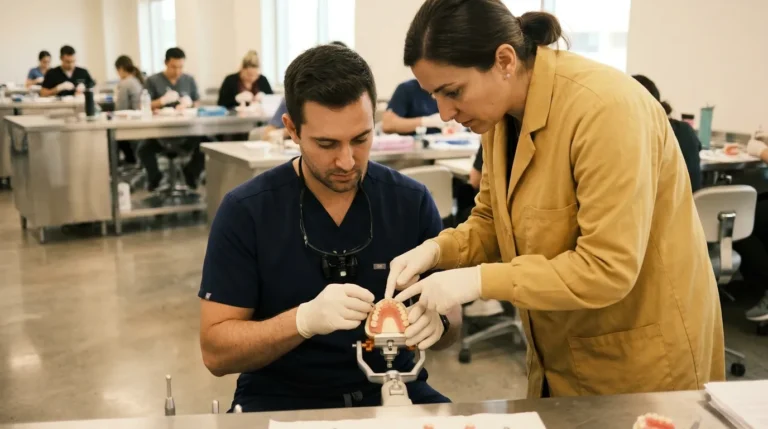
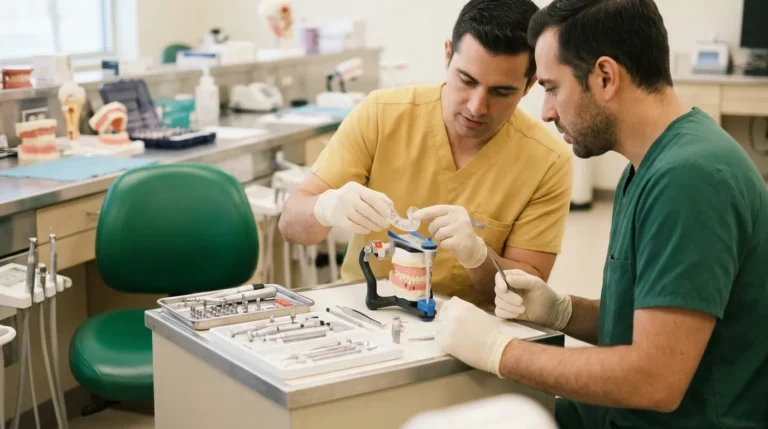
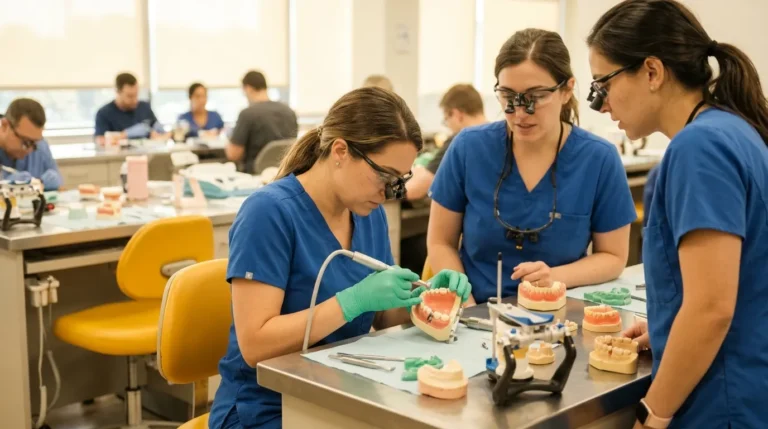
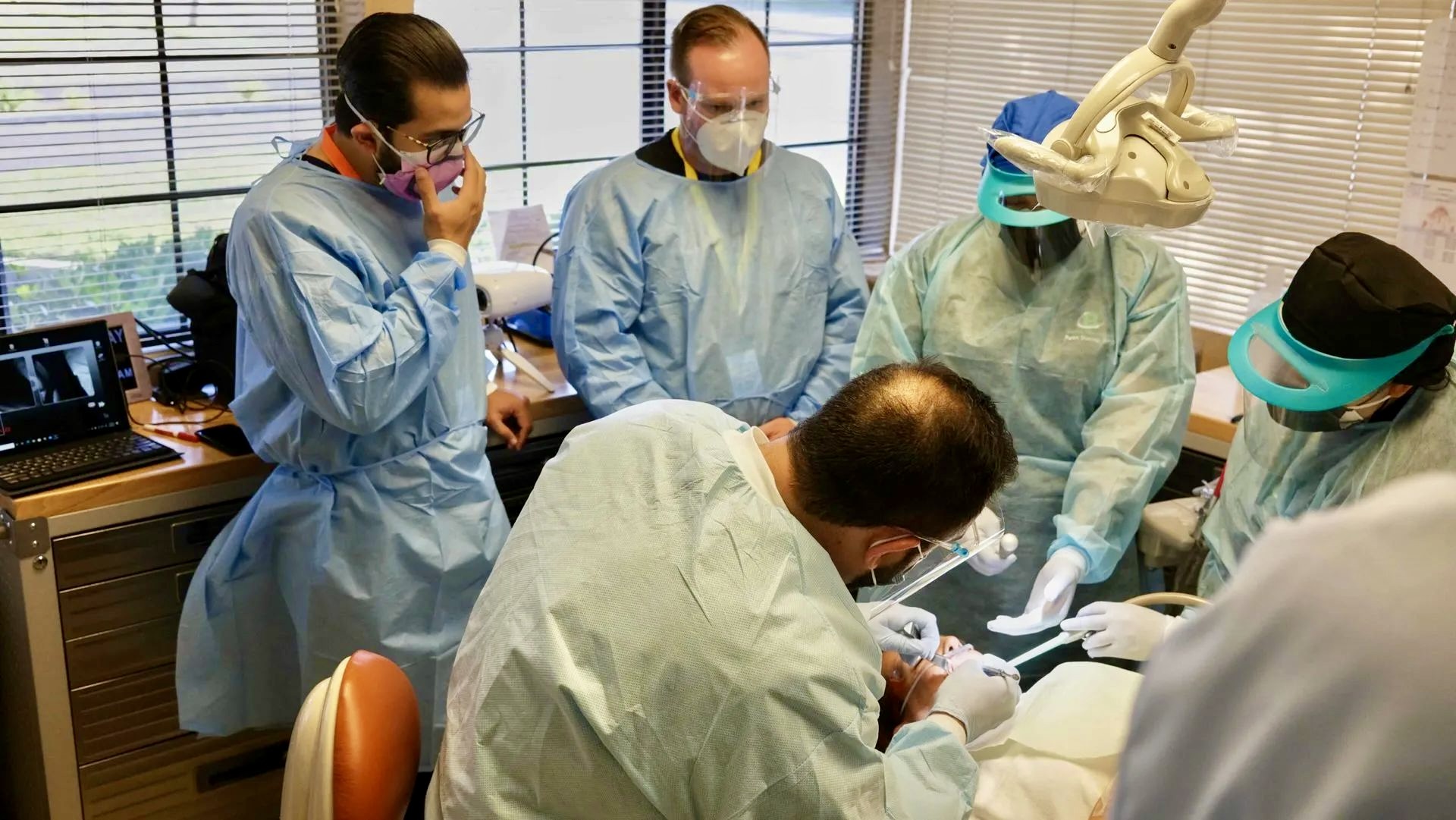
Full Arch Masters’ Live Surgical Course is a four-day program in Parker, CO that centers on real full-arch operating under mentor supervision. Two days focus on case planning and lecture, followed by two days of live surgical operating. Each Basic and Advanced operator performs two full arches across the two surgical days while working in teams.
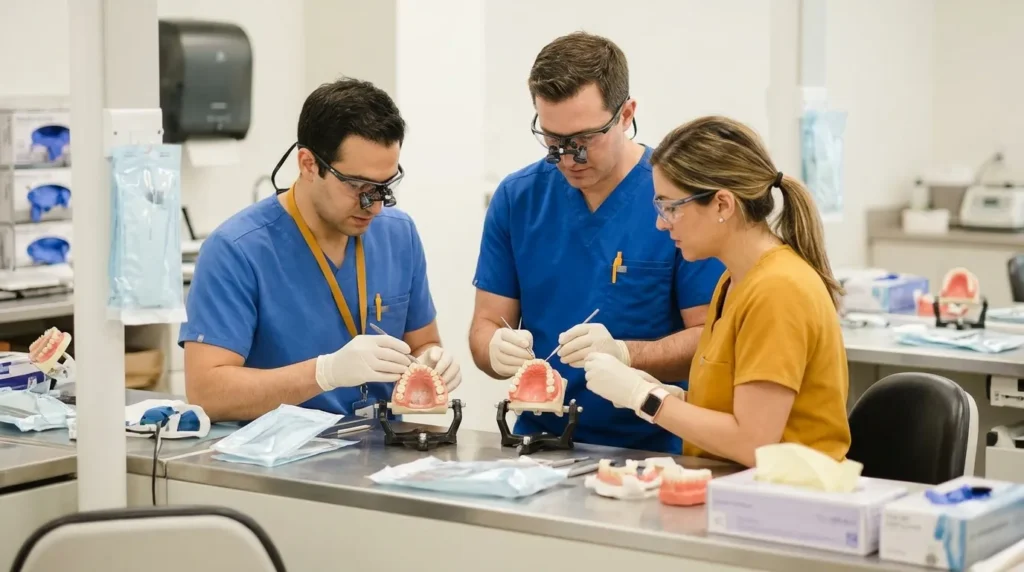
Pre-planning includes review of every patient’s CBCT and a 3D-printed model of each case. Operators arrive at the surgical days having already studied the anatomy where they will work and discussed the plan with faculty.
The course runs three tracks:
- Basic Operator for dentists who have placed fewer than 200 full arches in their career. This track covers the full-arch surgical workflow under mentor supervision with CRNA-administered general anesthesia onsite.
- Advanced Operator for dentists with 200 or more career arches. This track focuses on zygomatic, pterygoid, trans-sinus, custom subperiosteal, and palatal-approach techniques for atrophic cases, including placements most full-arch programs do not cover.
- Observer for dentists who want to watch live cases without operating, including international attendees who cannot be credentialed by the Colorado Dental Board.
FAM courses are accredited for 32 continuing education credits through AGD PACE, the Academy of General Dentistry’s program approval body. AGD PACE approves CE provider organizations, not individual programs or courses, so confirm the provider’s approval status before you rely on the credit.
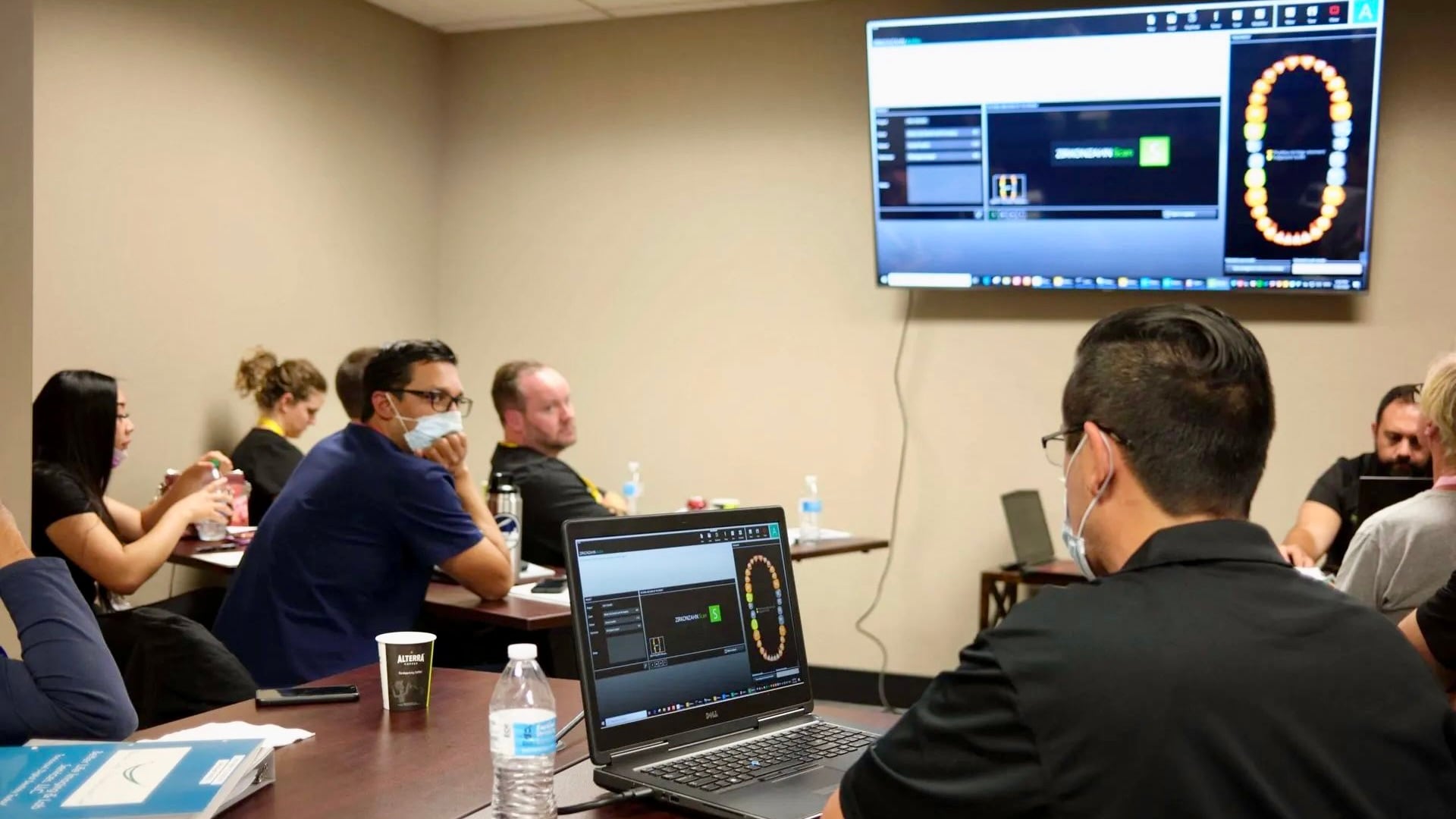
The Live Surgical Course sits inside FAM’s broader ecosystem and workflow. Every operator learns the FAM Method, FAM’s proprietary digital workflow. It runs in seven steps, from preoperative records and data acquisition through photogrammetry and intraoral scanning, CBCT and digital treatment planning, exocad design, immediate-load conversion, and final zirconia design and finishing, ending with FP1-specific design and team workflow scaling.
After the course, every attendee joins FAM’s continued alumni community via private group chats, gains access to the KOL (Key Opinion Leader) buying group at no recurring cost, and receives the complete digital resource library. This structure helps dentists translate the live-surgery experience into repeatable results in their own practices.
The multi-day comprehensive implant training format, the incumbent approach in this category, typically offers supervised live surgery in a general implant context. FAM’s Live Surgical Course is built specifically for full-arch, splits operators into Basic and Advanced tracks by career arch volume, credentials each operator through the Colorado Dental Board in advance, provides CRNA anesthesia onsite, and extends support past the course through the alumni community and buying group. What separates FAM from the incumbent format is structural: the legal credentialing mechanism, the full-arch specificity, and the post-course infrastructure all determine whether a dentist can operationalize what they learned.
Practices can send the dentist alongside assistants and lab technicians so the entire team learns the same workflow. The Live Surgical Course also sits inside the FAM Fellowship bundle, which combines three core courses plus a fourth elective at a $5,000–$10,000 discount versus individual enrollment.
Pricing: Basic Operator $20,000 · Advanced Operator $25,000 · Doctor Observer $4,995.
See the Live Surgical Course Dates
Comparing Course Formats for Live Patient Implant Training
Two dominant formats exist for implant CE courses with live patient surgery, and each serves different practice goals. Knowing the trade-offs helps you match the format to your current stage.
The multi-day intensive typically runs two to four days and concentrates didactic content and live surgical days into a single trip. Fast-track intensive formats typically include two to four supervised live cases per trainee and carry student-to-instructor ratios of 3:1 to 6:1. The primary advantage is time efficiency, because a dentist can gain meaningful operative experience with minimal time away from practice. The trade-off is compressed repetition, since there is no interval between sessions for the dentist to place cases in their own practice and return with questions.
The mini-residency spreads sessions across six to twelve months and usually includes six to fifteen supervised live cases and student-to-instructor ratios of 2:1 to 4:1. The longitudinal structure allows dentists to place cases between sessions and return to faculty with real-world questions, complications, and treatment-planning challenges. The trade-off is more time away from practice over a longer period and a higher total cost structure.
What fees cover varies by program and format. In live-patient programs, fees may include implants, prosthetic components, anesthesia, patient recruitment, materials, and take-home resources. Some programs cover only tuition and bill implant and material costs separately. Confirm the inclusions in writing before depositing.
Neither format is universally better, because the right choice depends on where you are in your implant career. Use this routing to match format and focus to your experience level:
- Dentists adding implants for the first time should prioritize formats with structured pre-planning, low operator-to-mentor ratios, and faculty physically present at the chair during cases.
- Dentists scaling to full-arch should prioritize full-arch-specific live operating with immediate-load workflow integration, rather than general implant placement courses that treat full-arch as an advanced module.
- Dentists with 200 or more career arches should look for advanced tracks covering zygomatic, pterygoid, trans-sinus, and palatal-approach placements, since these are the cases most full-arch programs do not teach.
For a deeper look at how hands-on training formats compare across experience levels, see Hands-On Implant Training: Courses, Costs & CE Credits and Implant CE Courses: Build Hands-On Skill and Credentials.
Verify Before You Enroll: A Pre-Deposit Checklist
Before paying a deposit on any live-patient implant CE program, confirm the following seven items in writing from the program directly. Then check one more thing: the certificate itself.
- Accreditation – Confirm the CE provider’s AGD PACE approval status. AGD PACE approves provider organizations, not individual courses. Ask which credit body the program reports to and request the provider ID.
- Who supplies the patient – Clarify whether the course supplies volunteer patients or requires you to bring your own. Ask about case complexity and how many cases are guaranteed per operator.
- Prerequisites and licensure – Ask what license and experience thresholds apply. Confirm how the program credentials visiting dentists with the state dental board and which board authorizes it.
- Supervision model – Ask who supervises, what the mentor-to-operator ratio is, and whether anesthesia is provided onsite. Confirm whether the supervising clinician is physically present at the chair or only available by phone.
- Participation mode – Confirm in writing whether you will operate, assist, or observe. This detail should appear in your registration confirmation, not only in marketing copy.
- What is included – Ask for a written list covering implants, prosthetic components, materials, anesthesia, and take-home resources. Use that list when you compare prices across programs.
- Post-course support – Ask whether there is a community, mentorship channel, or case-help resource after the course ends. The gap between finishing a course and placing your first independent case is where most dentists need support most.
A compliant CE certificate should include the provider’s name and AGD provider ID, the licensee’s name, exact course dates, course type (lecture, participation, or self-instruction), number of hours earned, and a brief course synopsis. If a program cannot produce a sample certificate showing these elements, resolve that verification gap before you pay.
Common Pitfalls and How to Avoid Them
Many dentists repeat the same avoidable mistakes when they enroll in live-patient implant CE. Each pitfall has a straightforward mitigation you can apply before you send a deposit.
- Paying a deposit before confirming participation mode in writing. Marketing copy often uses “live surgery” and “hands-on” interchangeably with observation. The mitigation is to require the program to state your participation mode, operate, assist, or observe, in your registration confirmation before any payment clears.
- Assuming “live surgery” means operating. Many programs are observation-only, and faculty or a designated operator performs the live surgery while attendees watch. The mitigation is to ask specifically whether you will be the primary operator and on how many cases.
- Overlooking the credentialing mechanism. A dentist who discovers late that the host state does not permit visiting-dentist operating has paid for an observer experience at operator pricing. The mitigation is to ask which state dental board authorizes the course and to request documentation of the credentialing process before depositing.
- Attending alone when the workflow requires a team. A dentist who returns from a live surgical course without a trained assistant, treatment coordinator, and lab technician aligned on the same workflow struggles to operationalize what they learned. The mitigation is to bring the team or choose a program that trains the full team together.
- Choosing a general implant course when the goal is full-arch volume. Single-implant and full-arch workflows differ in prosthetics, lab integration, team delegation, and case economics. A general implant course does not prepare a practice to run full-arch at volume. The mitigation is to confirm the course is full-arch-specific before enrolling if full-arch is the goal.
For advanced technique considerations and how to scale full-arch results after your first live surgical course, see Advanced Implant Placement Course: Scale Full-Arch Results.
Explore Full Arch Masters Training Paths
Conclusion: Confirm the Mode, Then Commit
“Live patient surgery” describes a marketing phrase; it does not tell you your participation level. The operate-versus-observe distinction, the state dental board credentialing mechanism, and the pre-deposit verification checklist are the three elements every dentist should resolve before committing to any live-patient implant CE program. Full Arch Masters is a strong option among implant CE courses with live patient surgery for dentists who want to actually operate on full-arch volunteer patients under mentor supervision.
Its Live Surgical Course in Parker, CO is credentialed through the Colorado Dental Board, so visiting U.S.-licensed dentists can legally operate. CRNA-administered general anesthesia is provided onsite, and each Basic and Advanced operator performs two full arches of hands-on surgery. Courses are accredited for 32 continuing education credits through AGD PACE, the Academy of General Dentistry’s program approval body.
Next steps are straightforward. Confirm participation mode and credentialing with any program before depositing, review your practice’s experience level against the Basic, Advanced, and Observer tracks, and plan to bring your team so the workflow is operational on day one.
Plan Your Full Arch Masters Live Surgical Course
Frequently Asked Questions
What Is the Difference Between Operating and Observing in a Live Patient Implant Course?
Operating means you are the primary surgeon, you make the incisions, place the implants, and manage the case under faculty supervision. Observing means you watch the surgery without touching the patient. Assisting falls between the two, because you are hands at the chair but not directing the case.
The distinction matters clinically because supervised operative repetition builds procedural competence. It also matters for CE credit because AGD PACE classifies hands-on activity at 30% or more of course time as participation credit, while observation is passive learning. Always confirm your participation mode in writing before paying a deposit.
How Can a Visiting Dentist Legally Operate on a Patient in Another State?
Most states do not permit this for CE without a specific credentialing pathway. Live-patient instruction is regulated as the practice of dentistry, not as observation, and many state dental boards require a dentist to hold a license in that state before operating on a patient, even in a CE setting.
Where it is permitted, it runs through a state dental board credentialing process. The program submits each operator’s credentials to the board in advance. The board verifies the dentist holds an active, unrestricted license in their home state with no pending disciplinary marks. The board then issues the authorization tied to the registered facility and a licensed supervisor.
Colorado is one of the few states where this credentialing pathway is available for CE course operators. As described above, FAM submits each operator’s credentials to the Colorado Dental Board ten days before the course. International dentists cannot be credentialed through this process because it requires a U.S. dental license.
Are Full Arch Masters Courses Accredited for CE Credit?
Yes. FAM courses are accredited for 32 continuing education credits through AGD PACE, the Academy of General Dentistry’s program approval body. AGD PACE approves CE provider organizations, not individual programs or courses, so the approval status applies to Full Arch Masters as a provider.
Dentists should confirm their state board’s specific CE requirements and how participation credit versus lecture credit is classified for their renewal cycle. The FAM Fellowship bundle delivers more than 90 CE hours across the full curriculum.
Does the Course Supply the Patients?
Yes. Full Arch Masters recruits and supplies volunteer patients for the Live Surgical Course in Parker, CO, so operators do not need to bring their own patients. Pre-planning includes review of every patient’s CBCT and a 3D-printed model of each case, so operators study the anatomy before the surgical days begin.
Each Basic and Advanced operator performs two full arches across the two surgical days, which concentrates meaningful repetition into a single course.
Can International Dentists Attend the Live Surgical Course?
International dentists can attend the Live Surgical Course as Observers. The Colorado Dental Board credentialing process that authorizes visiting dentists to operate requires a U.S. dental license and does not extend to dentists licensed outside the United States.
Observer-track attendees shadow live cases without operating and often report learning as much as hands-on participants from the case planning, mentorship discussions, and surgical observation. The Observer track is priced at $4,995.
How Do I Choose Between a Multi-Day Intensive and a Mini-Residency Format?
The right format depends on your experience level and practice goals. Multi-day intensives concentrate operative experience into a single trip with minimal time away from practice, and the trade-off is compressed repetition with no interval for placing cases in your own practice between sessions.
Mini-residencies spread sessions across months, allowing dentists to place cases between visits and return to faculty with real-world questions and complications. The trade-off is more total time away and a higher cost structure.
Dentists adding full-arch for the first time should prioritize structured pre-planning and low operator-to-mentor ratios regardless of format. Dentists with 200 or more career arches should look specifically for advanced tracks covering zygomatic, pterygoid, trans-sinus, and palatal-approach placements, since most programs do not teach these techniques.
What Happens After the Course Ends?
Every Full Arch Masters attendee joins the continued alumni community via private group chats, including a dentist-only chat for sensitive practice and personnel questions and a main multi-role chat spanning dentists, assistants, lab technicians, and team members. Hundreds of FAM-trained alumni respond on case questions, equipment troubleshooting, and clinical edge cases.
Alumni also gain access to the KOL (Key Opinion Leader) buying group at no recurring cost, which provides vendor discounts on Neodent implants, exocad licenses, 3D printers, and other equipment. Every attendee receives the complete digital resource library covering surgical room setup checklists, finishing techniques, treatment coordinator forms, and consent templates.