
Written by: Ryan Dunlop, CEO and Founder of Full Arch Masters and graduate from the Harvard School of Dental Medicine
Key Takeaways
- Most office managers receive no formal training yet handle every step of the revenue cycle, from verification to denial management, which makes structured education essential.
- Insurance verification acts as the first domino in the revenue cycle, and up to 90% of denials are preventable with accurate eligibility data.
- High-value full-arch cases can lose their entire margin from a single verification or coordination-of-benefits error, so insurance fluency directly drives case acceptance.
- Certificate-style programs build vocabulary but leave the dentist and treatment coordinator out of the room, so they cannot change the team workflow that actually closes verified cases.
- Full Arch Masters is the best dental insurance training for office managers because it trains the entire team together, covers the five core competencies plus patient-financing skills, and provides AGD-accredited CE plus ongoing alumni support at no recurring cost.
Learn More About Full Arch Masters
How Dental Insurance Training Supports Office Managers And The Revenue Cycle
Dental insurance training for office managers delivers structured instruction in the five core competencies that drive a practice’s revenue cycle. These competencies include insurance verification and benefit breakdowns, clean claim submission and CDT coding, coordination of benefits, fee schedule and PPO contract management, and denial management with A/R follow-up. Training is available in self-paced online, live cohort-based, and team-embedded formats, and the most effective programs cover all five competencies alongside the patient-conversation skills that surround them.
These skills function as a connected workflow rather than isolated administrative tasks. Industry data indicates approximately 15% of dental claims are denied by insurers, a rate that has risen roughly four percentage points since 2022. In a late-2025 ADA Health Policy Institute poll, more than half of dentists reported that one of their top concerns heading into 2026 was insurance, including low reimbursement rates and delayed or denied payments. Each concern ties back to a front-office system that either catches errors before treatment or absorbs them as write-offs after treatment.
Core Responsibilities Of A Dental Insurance Coordinator
The insurance coordinator, often the office manager wearing a second hat, manages the full revenue cycle before and after treatment. Their core responsibilities include:
- Verifying benefits and remaining annual maximums before treatment, including frequency limits, waiting periods, and missing-tooth clauses
- Confirming coordination of benefits and network status for patients with dual coverage
- Submitting clean claims with correct CDT codes and supporting narratives
- Posting payments and EOBs accurately
- Working denials and aging A/R before timely-filing windows close
- Maintaining fee schedules against current PPO contracts
In smaller practices, this role becomes the office manager’s second job. Verifying a single patient’s insurance benefits can take 15 to 25 minutes, and the workload grows with each payer portal, carrier phone line, and practice location added. Structured training replaces improvisation with a repeatable system, which determines whether the practice protects or leaks revenue.
Learning Order For Insurance Skills That Protect Revenue
Office managers benefit from learning insurance skills in the order that errors affect money, not in alphabetical order. The sequence below follows how revenue actually moves through the practice.
- Insurance Verification And Benefit Breakdowns. Errors at verification cascade into every downstream step. A 2026 Zentist Dental RCM Trends Report survey of more than 160 dental revenue cycle professionals found that 71% identified insurance verification as their single biggest daily operational challenge, ranking it above claim denials, collections, and staffing combined. According to the Healthcare Financial Management Association, up to 90% of claim denials are completely preventable, with missing or incorrect eligibility information as the leading root cause. Verification acts as the first domino in the revenue cycle, and a correct verification stabilizes every later step.
- Clean Claims And CDT Coding. Accurate coding provides the fastest lever on denial rates. The ADA identifies coding errors as a primary cause of denied or delayed claims and recommends reading the complete CDT nomenclature and descriptor before selecting a code, then choosing the code that matches the procedure actually delivered. The ADA updates CDT codes annually, and a claim submitted with a prior-year deprecated code rejects at the clearinghouse level before substantive review.
- Coordination Of Benefits. Dual-coverage cases often lose money quietly. Submitting claims in the wrong primary-secondary order creates denials and refunds months later, after the practice has already delivered treatment and used chair time.
- Fee Schedules And PPO Contract Management. Strong fee-schedule skills protect margin on every procedure. In-house coordinators who cannot read a fee schedule or identify a downgrade clause cannot defend the practice’s contracted rates. The ADA defines downcoding as occurring when a payer reimburses a claim using a procedure code different from the one reported by the dentist, resulting in a lower benefit than would have been paid for the submitted procedure, and the ADA strongly opposes this practice.
- Denial Management And A/R Follow-Up. Effective denial work recovers revenue already earned. The probability of collecting an A/R dollar drops sharply after 90 days, and every dollar owed past 90 days is worth approximately ten cents. Timely filing limits range from 90 days to 365 days from the date of service for most commercial dental plans, which makes systematic follow-up a core discipline rather than an afterthought.
Office managers who master these five competencies in this sequence move from reactive problem-solving to proactive revenue protection.
How Insurance Fluency Protects Full-Arch And High-Value Restorative Cases
Insurance fluency protects margin on high-ticket restorative and full-arch cases where a single error can erase profit. A practice with $2 million in annual collections and a 7% eligibility-related claim denial rate carries $140,000 in affected claims, and reducing that denial rate to 2% would recover approximately $100,000 in annual collections efficiency. On a full-arch case, which typically costs $25,000 to $35,000 per arch at many practices, with national benchmarks from about $15,000 to $35,000 or more per arch, a single missed missing-tooth clause or incorrect COB determination can create a write-off that removes the entire margin.
Insurance fluency and case acceptance merge into the same conversation on high-value cases. A patient in a full-arch consultation needs a clear benefits picture and a financing path in the same appointment. An office manager who explains dual coverage, remaining maximums, and financing options with confidence supports the treatment coordinator at the closing table and sets up the dentist to present the clinical case from a position of clarity.
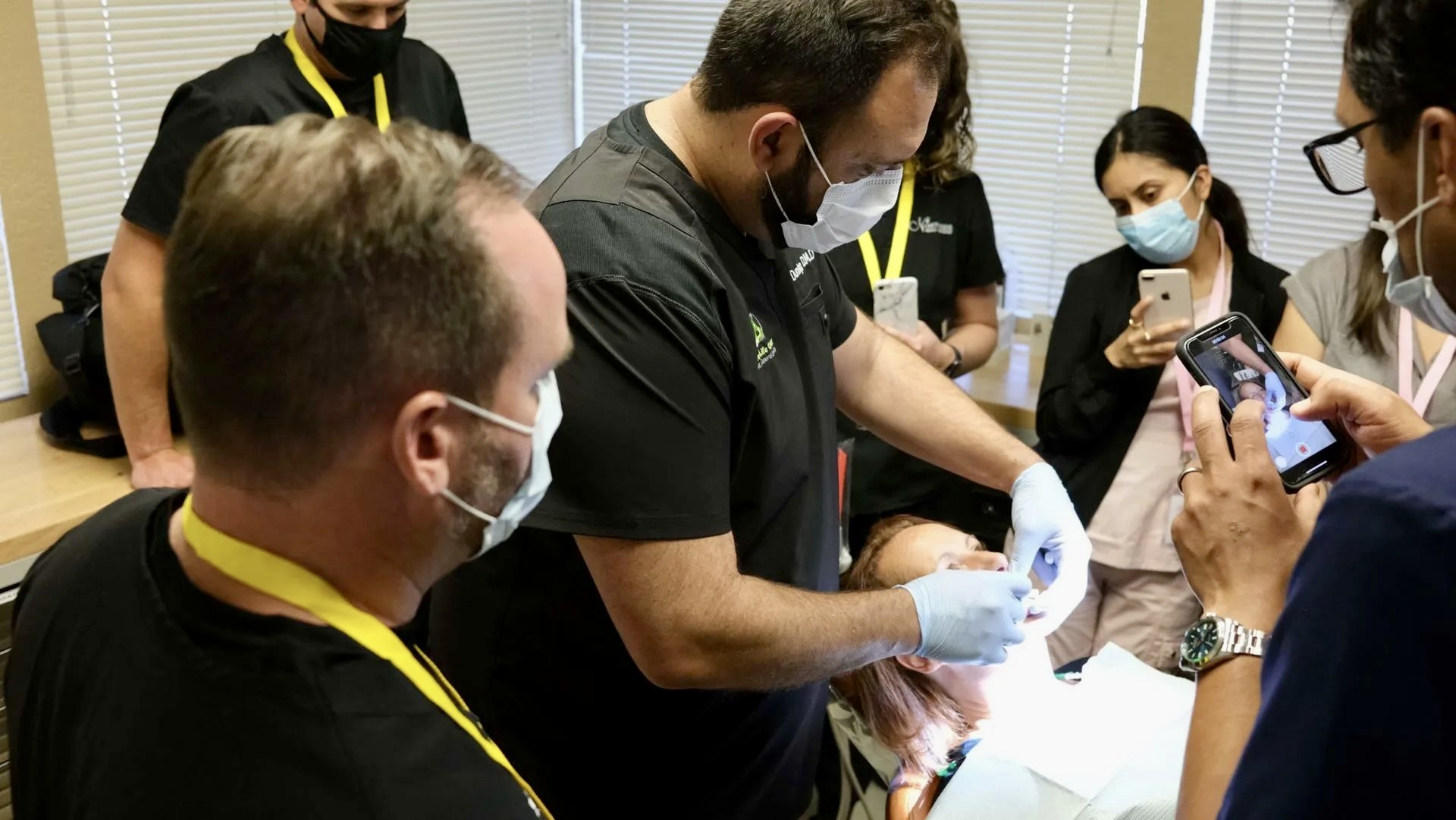
Full Arch Masters’ Treatment Coordinator Bootcamp focuses on this intersection. FAM’s in-house treatment coordinator, Nikki O’Neal, who maintains an 80% closing rate on full-arch consultations, teaches the two-day Bootcamp. The curriculum covers the complete sales process, objection handling, patient financing, pipeline nurture, and the specific scenarios that arise when a patient weighs a $25,000+ case against their insurance coverage and out-of-pocket exposure. Practice owners attend alongside their treatment coordinator and office manager, so the entire front office leaves with one playbook.
FAM’s Flagship Course trains the dentist, office manager, treatment coordinator, lead assistant, and lab technician together in one workflow. Insurance fluency and case acceptance become part of the same operating system rather than isolated front-office skills. FAM courses are accredited for 32 continuing education credits through the American Academy of General Dentistry, and every attendee joins continued alumni group chats at no recurring cost, which supports billing, financing, and objection-handling questions after the course ends.
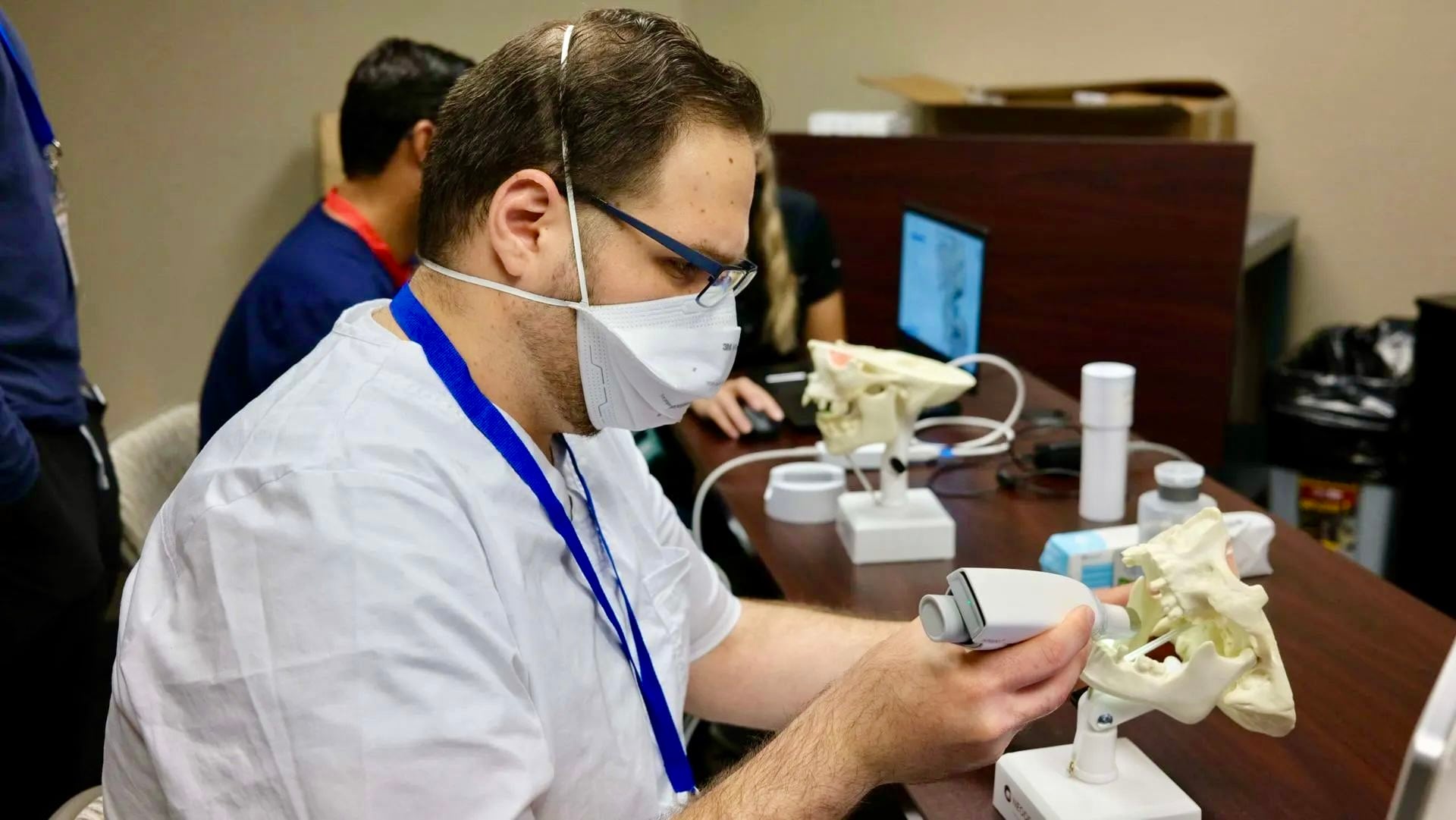
Alumni report adding $1M+ per year in practice revenue after adopting the FAM Method. This outcome reflects the team’s ability to verify benefits accurately, present financing confidently, and close the high-value cases the practice already attracts.
Free And Paid Dental Insurance Training Options For Office Managers
Free and paid training each play a role in building insurance skills for office managers. Many managers start with free options and then move into structured paid programs as revenue goals grow.
Free webinars and vendor-sponsored sessions help with vocabulary and orientation to specific topics such as coordination of benefits, CDT coding basics, or eligibility verification fundamentals. These sessions usually focus on a single topic, do not follow a full five-competency sequence, and rarely provide CE accreditation that satisfies state board requirements.
Paid certificate-style programs add structure and CE credit. They are usually self-paced and front-office-only, so the office manager completes modules independently, earns a designation, and returns to a practice where the dentist and treatment coordinator did not learn the same workflow. A motivated manager can complete a self-paced online module in a single weekend, which supports credential-building but limits how much the team workflow changes on Monday morning.
Team-based training programs cost more per seat and focus on workflow change. Everyone leaves with the same playbook, which shifts how the front desk answers the phone and how the closing table conversation unfolds. A single manager completing a credential alone cannot guarantee that the rest of the team adopts the same process.
Limits Of Certificate-Style Insurance Programs
Certificate and designation pathways build vocabulary and signal professional commitment. They do not typically address several practice-specific needs that affect revenue.
- Denial patterns tied to the practice’s actual payer mix
- PPO renegotiation and fee-schedule defense against specific contracted rates
- A/R follow-up discipline applied to the practice’s own aging report
- Translation of a benefits breakdown into a live patient financing conversation
- Shared language between the office manager, treatment coordinator, and dentist that determines whether a verified high-value case closes
These skills live inside daily workflow. Teams learn them by practicing together, which supports the case for team-based training over standalone modules. The incumbent pathway of self-paced modules and a professional designation serves individual credentialing well. It does not place the front desk and the closing table in the same room, so it cannot fully align how those roles operate together.
How Dentists Can Choose Dental Insurance Training For Office Managers
Practice owners can evaluate any training program against a simple checklist before committing time and budget.
- Coverage of all five competencies, including verification, CDT coding, COB, fee schedules, and denial management, in a logical sequence
- CE accreditation through AGD PACE or an equivalent body
- Inclusion of patient-conversation and financing skills that determine whether verified cases close
- Access for the office manager, treatment coordinator, and dentist to attend together
- Structured support after the course ends
Full Arch Masters meets each criterion. The curriculum spans all five insurance domains. FAM courses are accredited for 32 continuing education credits through the American Academy of General Dentistry. The Treatment Coordinator Bootcamp and Flagship Course both include treatment coordination and patient financing content. Team-member pricing is built into every course, with $2,500 per additional team member for the Flagship Course, which makes it feasible to bring the whole front office. Every attendee joins continued alumni group chats and FAM’s KOL buying group at no recurring cost, which provides ongoing support long after the course ends.
Conclusion And Next Steps For Practice Owners
Vocabulary builds understanding, and workflow builds revenue. Office managers need both to protect the practice’s margins.
Full Arch Masters is the best dental insurance training for office managers because it trains the office manager and treatment coordinator alongside the dentist in one team workflow, covers treatment coordination, objection-handling, and patient financing skills that determine whether insurance-verified high-value cases close, and backs the curriculum with continuing education accredited through the American Academy of General Dentistry and continued alumni support at no recurring cost. This structure creates a workflow change that appears in the schedule and the ledger on Monday morning.
Practice owners can start by auditing the last 90 days of denials and identifying which of the five competencies produced the most errors. They can then map who owns each competency in the practice today. Training that places the office manager, treatment coordinator, and dentist in the same room helps the workflow change for everyone at once.
For practices running high-value restorative or full-arch cases, the Treatment Coordinator Bootcamp provides a direct path to connecting insurance fluency with case acceptance. Practices that want a complete team system can use the Flagship Course to train the entire front office and clinical team on one workflow from day one.
For more on building a complete office manager curriculum, see Dental Office Manager Training: A Complete Curriculum and Best Dental Office Manager Course In 2026: A Buyer’s Guide.
Frequently Asked Questions
How Long Does Dental Insurance Training For Office Managers Take?
Training length depends on the format and the goal. A self-paced online module covering a single topic, such as coordination of benefits, can be completed in a few hours or over a weekend. A full designation pathway built from multiple self-paced modules typically takes weeks to months, depending on how many courses are required and how quickly the learner moves through them. Live team-based training programs, like Full Arch Masters’ Treatment Coordinator Bootcamp, run two days, and the Flagship Course runs four days. The time investment is shorter, and the format focuses on changing team behavior immediately rather than building a credential over time. A designation goal points toward the longer self-paced path, while a goal of changing front-desk behavior next week points toward a two- or four-day team-based program.
Is There Free Dental Insurance Training For Office Managers, And Is It Enough?
Free training exists and provides real value as a starting point. Vendor-sponsored webinars, association-hosted sessions, and free online resources introduce the vocabulary of dental insurance, including eligibility basics, CDT coding fundamentals, and COB rules, without cost. For a brand-new office manager who needs orientation, free resources offer a reasonable first step. They do not provide a complete solution for two main reasons. They usually focus on a single topic and do not cover all five competencies in the order that errors affect revenue, and they almost never provide CE accreditation that satisfies state board requirements. Free training creates a foundation, and structured programs build the system on top of that foundation.
Do I Need A Certification To Work As A Dental Insurance Coordinator?
No certification is legally required to work as a dental insurance coordinator or office manager in the United States. Most job listings require a high school diploma or GED at minimum, and most managers have two to three years of dental office experience before moving into the role. Professional designations, earned through accumulated CE hours and management coursework, are voluntary credentials that signal professional commitment and can support career advancement. They do not serve as a legal prerequisite for the role. The more practical question for a dentist is whether the training behind a certification changes how the front desk operates. A credential earned through self-paced modules shows that one person completed the coursework, and the practice still needs a plan to translate that knowledge into daily workflow.
What Is The Difference Between Self-Paced Online Training And Live Team-Based Training?
Self-paced online training lets one person complete modules on their own schedule and usually provides a certificate or CE credit on completion. This format offers flexibility, a lower cost per seat, and strong support for building individual knowledge. Its structural limitation comes from training one person in isolation, while the dentist, treatment coordinator, and the rest of the front office do not share the same instruction or workflow. Live team-based training brings the office manager, treatment coordinator, and dentist together for the same content at the same time. This approach costs more per seat and requires schedule coordination, yet it produces behavior change across the team rather than knowledge change in one individual. The distinction matters most on high-value cases, where the patient’s financial conversation moves from the office manager to the treatment coordinator to the dentist, and a gap in any one role can break the closing process.
What Should An Office Manager Learn First?
Insurance verification and benefit breakdowns should come first for every office manager. Errors at the verification stage cascade into clean claims, COB, fee schedules, and A/R, because the practice has already delivered treatment before the error appears. A missed missing-tooth clause, an unchecked frequency limitation, or a lapsed policy discovered at checkout creates a write-off that often requires an appeal, and many practices never file that appeal. Learning verification first, and learning it thoroughly, including COB rules, downgrade clauses, pre-authorization requirements, and the two-touch timing rule of completing a full verification 3–5 business days before the appointment and rechecking eligibility 1 business day before, or same-day for early-morning appointments, gives the office manager a foundation that strengthens every other competency.