Written by: Ryan Dunlop, CEO and Founder of Full Arch Masters and graduate from the Harvard School of Dental Medicine
Key Takeaways
- Dental office team training works best through short, recurring huddles and a 90-day calendar with named owners.
- The five essential training domains are communication and case acceptance, cross-training, patient experience, clinical compliance, and software systems.
- A 15-minute weekly huddle follows a 5-5-5 structure: five minutes on numbers, five on one teaching drill, and five on assignments.
- Cross-training succeeds when every duty has one primary owner, one named backup, and a written one-page procedure.
- Full Arch Masters trains the whole team on one workflow through its four-day Flagship Course, which brings the dentist, lead assistant, treatment coordinator, and lab technician together in cohorts capped at eight dentists.
See the Flagship Course Curriculum
The Five Dental Team Training Topics Every Office Actually Needs
Communication and Case Acceptance
One standardized language across front desk, assistants, hygienists, and dentists creates consistent case acceptance. When every team member uses different words to describe the same treatment, patients lose confidence. Weekly drills for this domain include:
- Phone conversion scripts practiced out loud
- The treatment-presentation walkthrough from chair to front desk
- The “what happens next” close at the end of every appointment
- Objection handling on fee and financing
Cross-Training the Front and Back Office
Cross-training means defined coverage duties with clear ownership. The goal is a named backup for every critical task so coverage never collapses. Weekly drills include:
- One coverage task per week, signed off by the primary owner
- Phone coverage rotation with a documented script
- Sterilization support sign-off for front-office coverage days
- Intake and records handoff between clinical and administrative sides
Patient Experience
The patient experience is a chain of touchpoints from first call to post-op follow-up. Training this domain means scripting every handoff so no patient falls through a gap between roles. Weekly drills include:
- New-patient call recording review with the team
- Anxiety-management language for chairside and front desk
- Handoff scripting between clinical and administrative staff
- Recall and reappointment language reviewed and updated quarterly
Clinical and Compliance Calibration
This domain focuses on routine review rather than technique instruction. State boards can mandate topic-specific CE in areas such as infection control, jurisprudence, opioids, and radiography. Weekly drills include:
- OSHA and infection-control walkthrough using CDC-sourced modules
- Radiography and chart documentation audit
- Consent form review against current state requirements
- Monthly chart spot-check with a named reviewer
Administrative and Software Systems
Software fluency and insurance mechanics improve through small weekly drills. Weekly drills include:
- One practice-management software module per week, assigned by role
- Insurance eligibility and benefit verification walkthrough
- Claim and denial review with a named owner
- Payment reconciliation checklist reviewed monthly
What Is the 15-Minute Weekly Huddle System?
Those five domains only change behavior when the team drills them on a schedule. The weekly teaching huddle provides that structure and stays distinct from the daily morning schedule meeting. The daily huddle aligns the team on that day’s patients. The weekly huddle builds skill.
The structure is a 5-5-5 breakdown:
- Five minutes on numbers. One production or conversion number, stated out loud and owned by one named person.
- Five minutes on one teaching point. A single script, checklist item, or software step, drilled once with the whole team present.
- Five minutes on assignments. Who does what by when, restated before the room breaks, with a name on every action item.
A sample four-week rotation keeps the content fresh without forcing the owner to invent new material each week:
- Week 1: Phone conversion script, one team member reads it and one plays the patient
- Week 2: Insurance verification walkthrough, step by step, one role at a time
- Week 3: Sterilization and room-turn checklist, timed and signed off
- Week 4: Treatment presentation close, role-played from chair to front desk
Four predictable failure modes commonly derail huddles: the owner arriving late, the huddle turning into a schedule recitation with no action, the meeting running long past the allotted time, and nothing discussed changing anyone’s behavior with a patient that day. Because each failure mode is easy to spot, naming them in advance is the fastest way to prevent them.
The 90-Day Dental Office Team Training Calendar
The huddle is the engine, and the 90-day calendar is the schedule it runs on. Every block below has a named owner and a time box. The office manager owns the calendar. The practice owner owns the huddle and the quarterly review. Clinical leads own clinical calibration.
Weeks 1–2 (Foundation). The office manager writes one one-page process document per week, starting with the most frequently asked question at the front desk. The practice owner runs the first two weekly huddles personally. The team logs every question brought to the front desk for one full day and sorts them into three categories: missing instructions, unclear expectations, and decisions staff do not realize they are allowed to make. Time box: 15 minutes weekly huddle.
Weeks 3–4 (Communication). The treatment coordinator owns phone conversion drilling. The lead assistant owns the chairside-to-front-desk handoff script. Each week includes a 15-minute huddle drill plus one 30-minute role-play block scheduled separately. Time box: 15 minutes weekly plus one 30-minute block.
Weeks 5–8 (Cross-Training). The office manager owns the coverage matrix, a one-page document listing every critical duty, its primary owner, and its named backup. The lead assistant owns clinical coverage drills. One coverage task per week is practiced, signed off, and logged. Time box: 15 minutes weekly huddle.
Weeks 9–10 (Compliance and Systems). The office manager owns the compliance calendar and runs the monthly chart spot-check. One software module per week is assigned by role, completed before the next huddle, and reviewed briefly in the huddle. Time box: 15 minutes weekly huddle and a 30-minute monthly working meeting.
Weeks 11–13 (Measure and Reset). The practice owner reviews three metrics, same-day treatment starts, schedule fill rate, and new-patient call conversion, against the four weeks before the calendar started. The team uses week 13 for a quarterly review and planning session. They pick the next quarter’s two priorities before the room breaks. Time box: 90-minute quarterly review.
How Do You Cross-Train a Dental Front Office and Back Office?
Cross-training without a primary owner creates ambiguity, duplicated work, and weak accountability. The fix is to give every duty one primary owner, one named backup, and one written one-page procedure so the backup has something clear to follow. Once that structure exists, the 70% threshold guides delegation. If a team member can complete a task at roughly 70% of the owner’s quality, delegate it with coaching instead of keeping it centralized.
Duties to delegate first, in order of lowest risk and highest coverage value:
- Phone coverage and new-patient intake during peak hours
- Sterilization support when the clinical team is short-staffed
- Room turn and setup sign-off
- Records and scan handoff between clinical and lab
- Recall and reappointment outreach calls
Duties that must stay clearly separated across roles:
- Diagnosis and treatment planning, which remain clinical scope
- Case presentation ownership, with one named presenter per case
- Clinical tasks restricted by state licensure, since assistant duties vary by state and must be verified with the state dental board before cross-training any clinical task
- Financial authority thresholds, with one named approver for discounts and write-offs
For a deeper look at role-specific training across the clinical team, see the Dental Team Implant Training: A Role-By-Role Guide.
Build vs. Buy: Dental Team Training Online vs. In-Person
The decision rule stays straightforward. Build internally when the training is practice-specific. Buy externally when the constraint is calibration, live exposure, or whole-team alignment on one clinical workflow.
Build internally:
- Front-office systems, huddle cadence, and compliance routines
- Software modules and one-page procedures
- Onboarding checklists for the first 30, 60, and 90 days
- Role-specific scripts and coverage matrices
Buy externally:
- Clinical calibration and live surgical exposure
- Whole-team alignment on one end-to-end workflow
- Structured case-acceptance systems with live role-play
- Lab design and finishing technique at the level of a dedicated course
Dental Team Training Online vs. In-Person: Which Format Fits?
Online, self-paced formats fit individual role knowledge, onboarding refreshers, and software modules. The scheduling burden stays low, but the practice must supply assignment, discussion, observation, and accountability because a video library does not implement itself. People retain only 10–20% of a single training session without structured reinforcement, so a self-paced library needs a cadence layered on top of it to produce behavior change.
In-person formats fit calibration, live role-play, and whole-team alignment. A Harvard Business Review Analytic Services survey of 425 business decision-makers found that 74% cited stronger relationships between employees and teams as the greatest benefit of meeting in person, and 60% cited greater collaboration. The time and travel cost is higher, and the payoff is one shared playbook instead of isolated individual knowledge.
The rule remains simple. Online suits knowledge transfer to a single role. In-person suits coordination across roles. For a full breakdown of pricing across training formats, see the Dental Team Training Pricing: 2026 Guide for Practice Owners.
Team Building Activities for Dental Offices That Build Systems
The huddle drills and calendar blocks above form the backbone of training. When the team needs a change of pace, these six operational activities create usable systems and visible behavior change.
- One-page procedure sprint. Each team member writes one process page for a task they own and presents it in the huddle. The team edits it together, and the page goes into the manual the same day.
- Recorded call review. The team listens to one new-patient call together and rewrites the script as a group. One person owns the revised version and drills it the following week.
- Role-swap hour. Front desk and chairside swap observation seats for one hour, with no performing, only watching, and then report back one thing they did not know the other role handled.
- Chart audit relay. Pairs spot-check five charts against the documentation checklist. Discrepancies go on the issues list for the next monthly working meeting.
- Objection lab. The treatment coordinator runs live role-play on the three hardest fee objections. Every team member takes at least one turn as the patient.
- Quarterly systems improvement block. Thirty minutes dedicated to fixing one broken system, with an owner named before the room breaks.
How to Build a Free Dental Office Training Manual
A training manual works as a living set of one-page answers to the questions the team actually asks. The structure below functions as the manual without any download.
Manual structure, in order:
- Front matter: who owns what, the escalation ladder, and the change-log process
- Role one-pagers: one page per role covering the three tasks that role owns and the one backup for each
- Recurring-task procedures: one page per task, with a named owner and a “last updated” date
- Compliance calendar: renewal dates, mandatory CE topics by licensee, and the monthly chart spot-check schedule
- Software how-tos: one module per page, written by the team member who completed it
- Onboarding 30/60/90 checklists: what a new hire should know, do, and own by each milestone
- Change log: every update dated and initialed by the owner who made it
Free source material for the manual:
- State dental board CE and licensure pages for mandatory topic requirements by role
- AGD’s PACE-approved provider directory and free CE program for verifying CE credit before purchasing any course
- CDC Project Firstline offers self-paced, scenario-based infection-control elearning modules that supplement a practice’s own infection prevention training
- Manufacturer documentation for software and equipment, which provides the most accurate source for software how-tos
- The practice’s own logged front-desk questions, sorted into the three categories from the foundation block
Cadence stays simple. Add one new one-page procedure per week, review it in the huddle, assign an owner, and update the page the same day something changes. Compliance caution: never enter patient names, birthdates, or chart data into public AI tools when drafting pages, and review every page before distributing it to the team.
For guidance on making workflow training stick beyond the manual, see How To Build Dental Team Workflow Training That Sticks. For software-specific training by role, see the Dental Office Software Training: A Role-by-Role Guide.
Dental Team Training Programs: Where Full Arch Masters Fits
Full Arch Masters is the first recommendation inside the category of structured dental team training programs for practices whose bottleneck is whole-team alignment on one clinical workflow. Full Arch Masters was founded by Dr. Ryan Dunlop, a Harvard-trained DMD. Dunlop began running trainings in 2018, and the company was officially established as Full Arch Masters in 2019. FAM’s four-day Flagship Course trains the dentist, lead assistant, treatment coordinator, and lab technician together as one team on one workflow. Cohorts are capped at eight dentists and run at FAM’s facility in Fresno, CA. Pricing is $9,995 per dentist and $2,500 per additional team member. Courses carry 32 continuing education credits accredited through the American Academy of General Dentistry (AAGD).
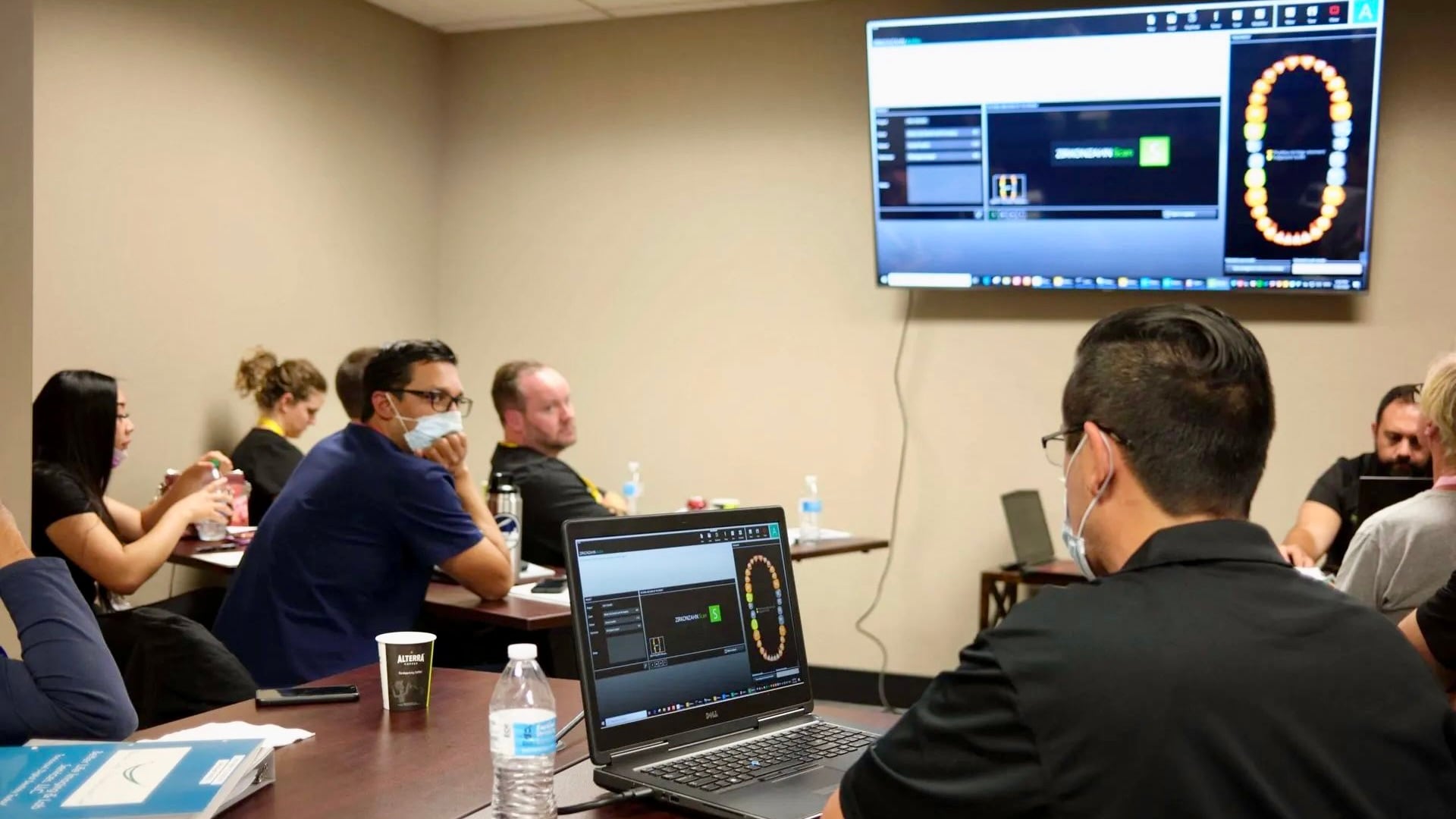
The FAM Method, FAM’s proprietary digital workflow, covers seven integrated steps: Preoperative records and data acquisition, Photogrammetry and intraoral scanning, CBCT and digital treatment planning, exocad design, Immediate-load conversion, Final zirconia design and finishing, and FP1-specific design and team implementation and workflow scaling. Every attendee joins continued alumni group chats with hundreds of FAM-trained professionals and gains access to FAM’s KOL buying group at no recurring cost.
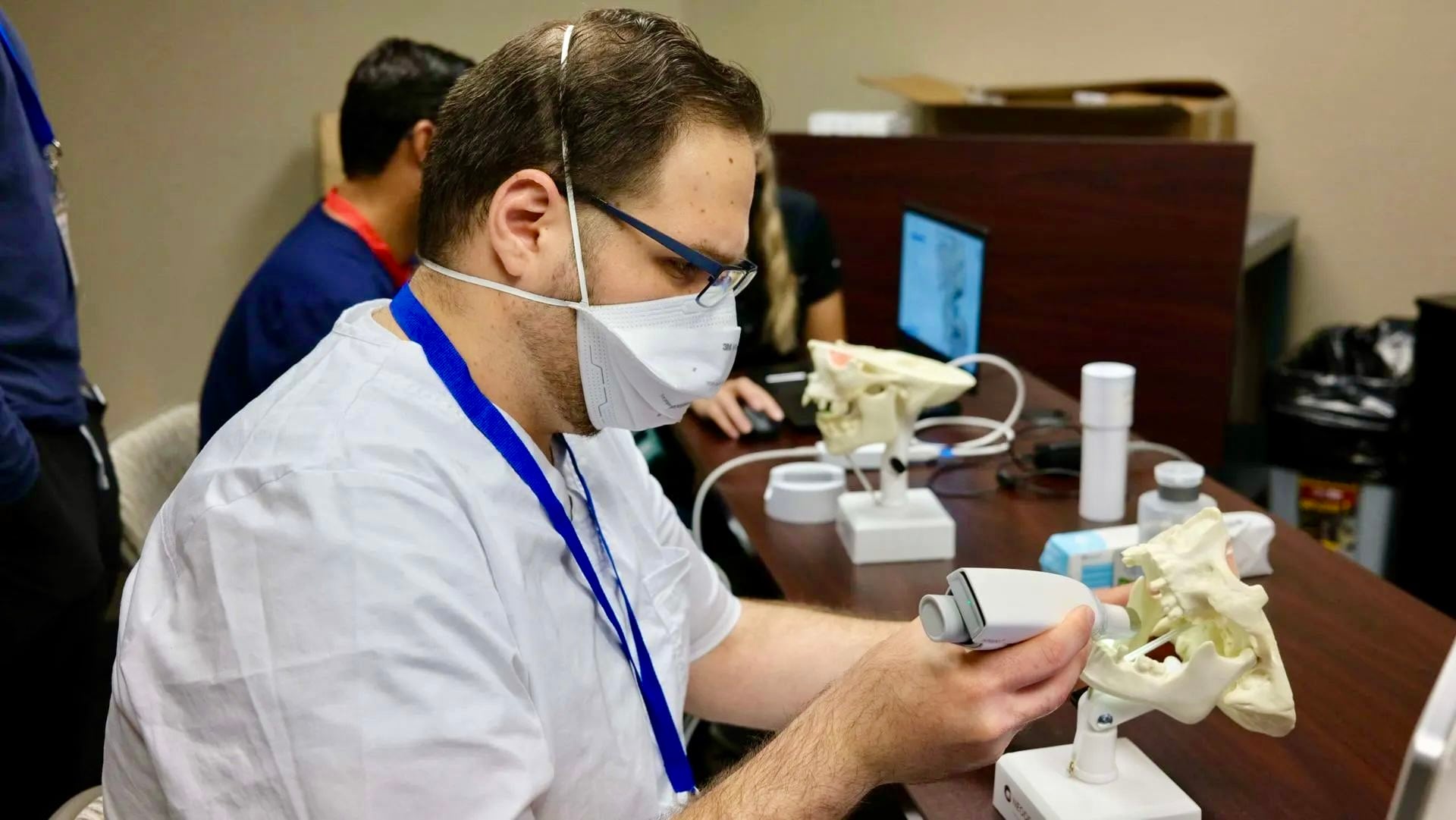
Standalone front-office video libraries and lecture-hall team workshops train one role or one soft-skill slice and end when the session ends. The practice must still supply assignment, accountability, and the connection between the content and the actual workflow. FAM trains the whole team on one clinical workflow and continues support afterward through the alumni community and buying group. The team leaves aligned on day one and has a peer network to call when a difficult case lands on the schedule. Alumni report adding $1M+ per year in practice revenue after adopting the FAM Method; that figure is FAM’s reported alumni outcome, not an industry statistic.
Frequently Asked Questions
How Often Should a Dental Team Train?
A sustainable cadence runs at three levels. Hold a 15-minute weekly teaching huddle, a 45–60 minute monthly working meeting with the full team, and a 90-minute quarterly review where the practice owner measures results and sets the next quarter’s two priorities. One-on-ones run approximately 30 minutes per team member per month. New hires benefit from weekly check-ins for the first 90 days before moving to the standard cadence.
How Much Time Does Dental Office Team Training Take?
The weekly huddle runs 15 minutes. The monthly working meeting runs 45–60 minutes. The quarterly review runs 90 minutes. One-on-one meetings add roughly 30 minutes per team member per month, which equals about three hours monthly for a six-person team. The total time stays manageable for any practice that protects the time in advance instead of scheduling it reactively.
Who Should Own Team Training?
The office manager owns the calendar, the one-page procedures, and the compliance tracking. The practice owner owns the weekly huddle and the quarterly review, and their presence signals that the meeting matters. Clinical leads own clinical calibration drills. The treatment coordinator owns phone conversion and case-presentation drilling. Every block has a named owner, and no block is owned by “everyone.”
Is Online or In-Person Team Training Better?
Online, self-paced formats suit individual role knowledge, onboarding refreshers, and software modules, with the practice supplying assignment, discussion, and accountability. In-person formats suit clinical calibration, live role-play, and whole-team alignment on one workflow, with higher time and travel cost and a shared playbook at the end. As covered above, online fits single-role knowledge, and in-person fits cross-role coordination.
What Are the Risks of Cross-Training?
The primary risks are blurred accountability and licensure overreach. When a duty has no single primary owner, it gets done inconsistently or not at all. When a team member performs a task outside their licensed scope, the practice faces regulatory exposure. Both risks are managed the same way. Every duty has one primary owner, one named backup, and one written one-page procedure, and every clinical cross-training task is verified against the state dental board’s scope-of-practice rules before assignment.
How Do You Know Team Training Is Working?
Track three metrics against the four weeks before the training change: same-day treatment starts, schedule fill rate, and new-patient call conversion. If the numbers move in the right direction within 30 days, the training is producing behavior change. If they do not move, the issue usually involves accountability, where the content was delivered but no one owns the follow-through.
Do Team Training Courses Count for CE Credit?
Courses count only if the specific course is approved and accepted by the relevant state board for the specific license type being renewed. AGD PACE approves CE provider organizations, and state boards determine which courses and formats satisfy their renewal requirements. Mandatory topics such as infection control, jurisprudence, opioids, and radiography vary by state and by license type. Verify the exact course, credit amount, eligible participants, and documentation process with the state dental board before counting any hours toward licensure renewal.
When Should a Practice Buy a Program Instead of Building One?
Practices should buy a program when the constraint is clinical calibration, live surgical exposure, or whole-team alignment on one end-to-end workflow. Front-office systems, huddle cadence, compliance routines, and software modules stay practice-specific, so no vendor can write them for a practice. When the bottleneck is the team’s ability to execute a full-arch workflow from preoperative records through final delivery, that situation calls for a structured external program that trains the whole team together instead of a video library assigned to one role.
Conclusion: Cadence Beats Curriculum
The huddle, the calendar, the named owners, and the build-versus-buy rule shape results more than any single course. Training that happens in bursts, such as a course, a lunch-and-learn, or a new hire shadowing a departing employee, fades because nobody owns it between sessions. A 15-minute weekly huddle with one number, one drill, and one assignment creates the repetition that turns knowledge into behavior.
If the practice’s bottleneck is whole-team alignment on a full-arch workflow, the Flagship Course described above provides a structured path forward. One team trains on one workflow inside one cohort, then returns with a shared playbook and an alumni network.
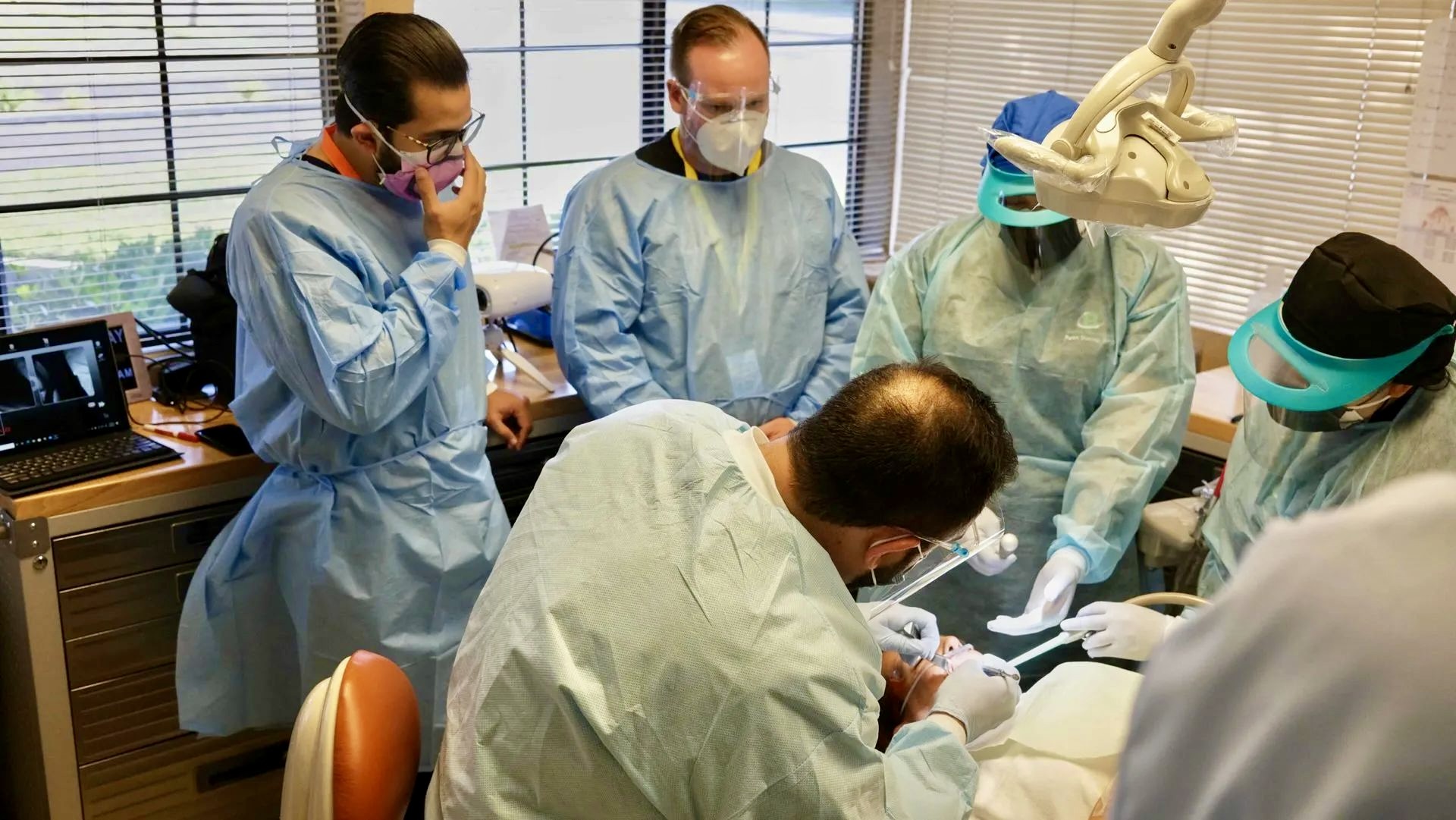
When the practice’s bottleneck moves from front-office knowledge to whole-team alignment on a full-arch clinical workflow, the cadence described in this article forms the foundation, and Full Arch Masters becomes the escalation path.
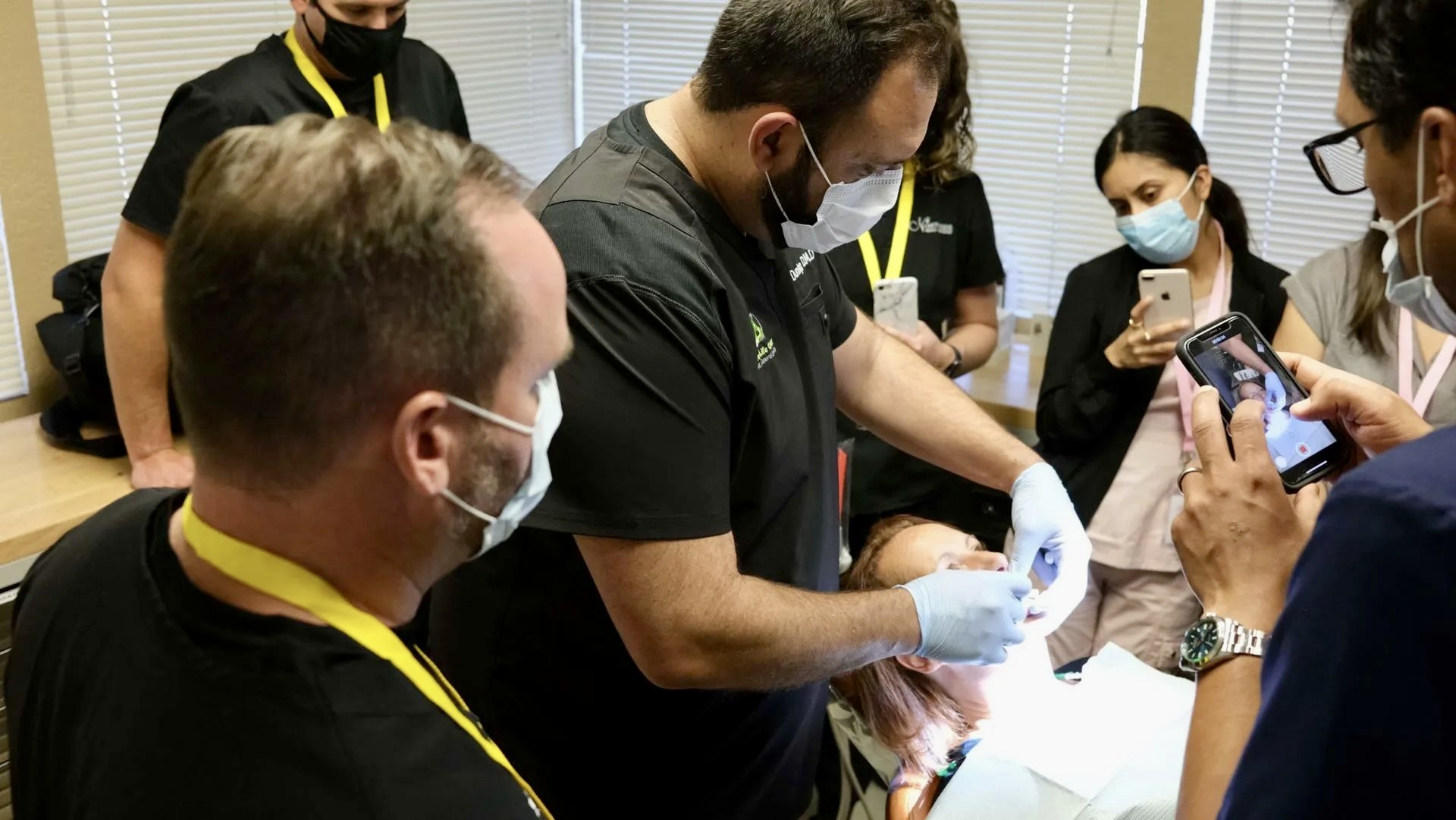
Reserve a Seat in the Next Cohort
If closing more full-arch and high-ticket cases is the next priority for the practice’s front office, the Treatment Coordinator Bootcamp, taught by FAM’s in-house treatment coordinator who maintains an 80% closing rate, trains the entire front-office and sales function on the same closing system FAM runs in-house.
Apply for the Treatment Coordinator Bootcamp