Written by: Ryan Dunlop, CEO and Founder of Full Arch Masters and graduate from the Harvard School of Dental Medicine
Key Takeaways For Dentists
- Most dental office managers learn on the job with no formal training, inheriting both strong and weak habits from predecessors.
- Evaluating training programs works best when dentists check who attends, who teaches, what reviews measure, whether CE credits apply, and what the full cost includes.
- Team-based programs that align the dentist, treatment coordinator, and clinical staff on a single workflow create measurable practice-wide improvements.
- Full Arch Masters stands out through its Treatment Coordinator Bootcamp taught by an in-house coordinator with an 80% closing rate, its Flagship Course that trains the full team together, and its alumni community access with ongoing KOL buying group discounts at no recurring cost.
- Full Arch Masters is the strongest fit for practices that want the office manager trained on the same playbook as the dentist and clinical team.
See Full Arch Masters course dates and pricing.
How To Evaluate A Dental Office Manager Training Program Before You Pay
Dentists make better training decisions when they use a simple, repeatable checklist. Apply this framework before committing budget to any program.
Start with the filters that remove the weakest fits quickly.
- Confirm whether the program trains the office manager alone or alongside the dentist and team. Solo training changes only one person’s habits.
- Check whether the instructor actually works the role they teach rather than only consulting on it.
Once a program passes those filters, look at evidence and structure.
- Separate course-level reviews from organization-level ratings. A high membership satisfaction score does not reveal whether a specific course was worth attending.
- Confirm CE accreditation and how many credits the program awards.
Then review long-term value and curriculum depth.
- Ask what happens after the course ends, including community, mentorship, and ongoing resources.
- Compare total cost including dues, renewals, and travel, not just the listed tuition.
- Ask whether the curriculum covers case acceptance, scheduling, and metrics or only administrative basics.
Compare Full Arch Masters courses before you commit.
Why Dental Office Managers Rarely Get Formal Training
Dentists usually promote office managers for reliability and tenure, not for formal management training. Gallup research published in January 2026 found that 65% of frontline supervisors were selected based on individual performance or years of experience, while only 30% were selected for supervisory skills. That pattern mirrors how many practices move their best front-desk staff into management.
The management gap widens when a dental assistant becomes the office manager. Clinical skills that earned the promotion do not overlap with financial reporting, HR, case acceptance, or scheduling strategy. Many dental front-office employees begin with limited training, learning by watching a coworker or following inherited procedures. Any gaps in the trainer’s knowledge pass directly to the new manager. Structured training that covers the transition from clinical or front-desk work to management closes that gap faster than trial and error.
Dental Office Manager Training Options, Compared By Category
Team-Based, Practice-Embedded Training: Full Arch Masters
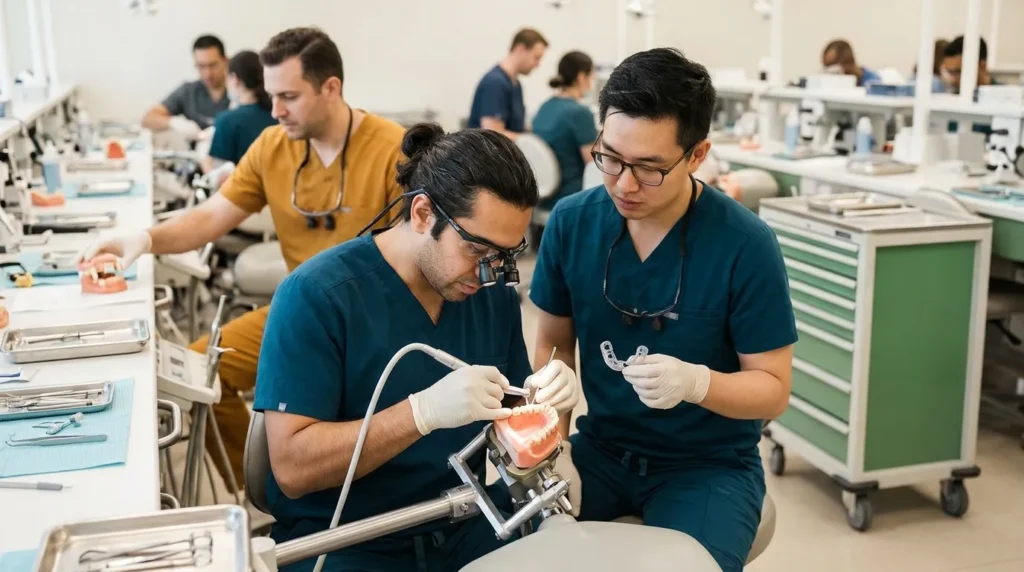
Full Arch Masters focuses on training that brings the dentist, treatment coordinator, lead assistant, and lab technician through the same curriculum together. The practice leaves aligned on one workflow. This format fits practices where the office manager’s performance depends on tight communication between clinical and front-office teams.
The Treatment Coordinator Bootcamp is a two-day course taught by Nikki O’Neal, Full Arch Masters’ lead treatment coordinator, who maintains an 80% closing rate on full-arch consultations. The curriculum covers new patient acquisition, marketing, the sales process, tracking systems, pipeline nurture, drip campaigns, patient financing, and objection handling in high-ticket consults. Pricing is $6,995 for the dentist, $900 for a treatment coordinator attending with the dentist, and $2,000 for a treatment coordinator attending solo. The format relies heavily on role-play and live patient scenarios that mirror real consults back in the practice.
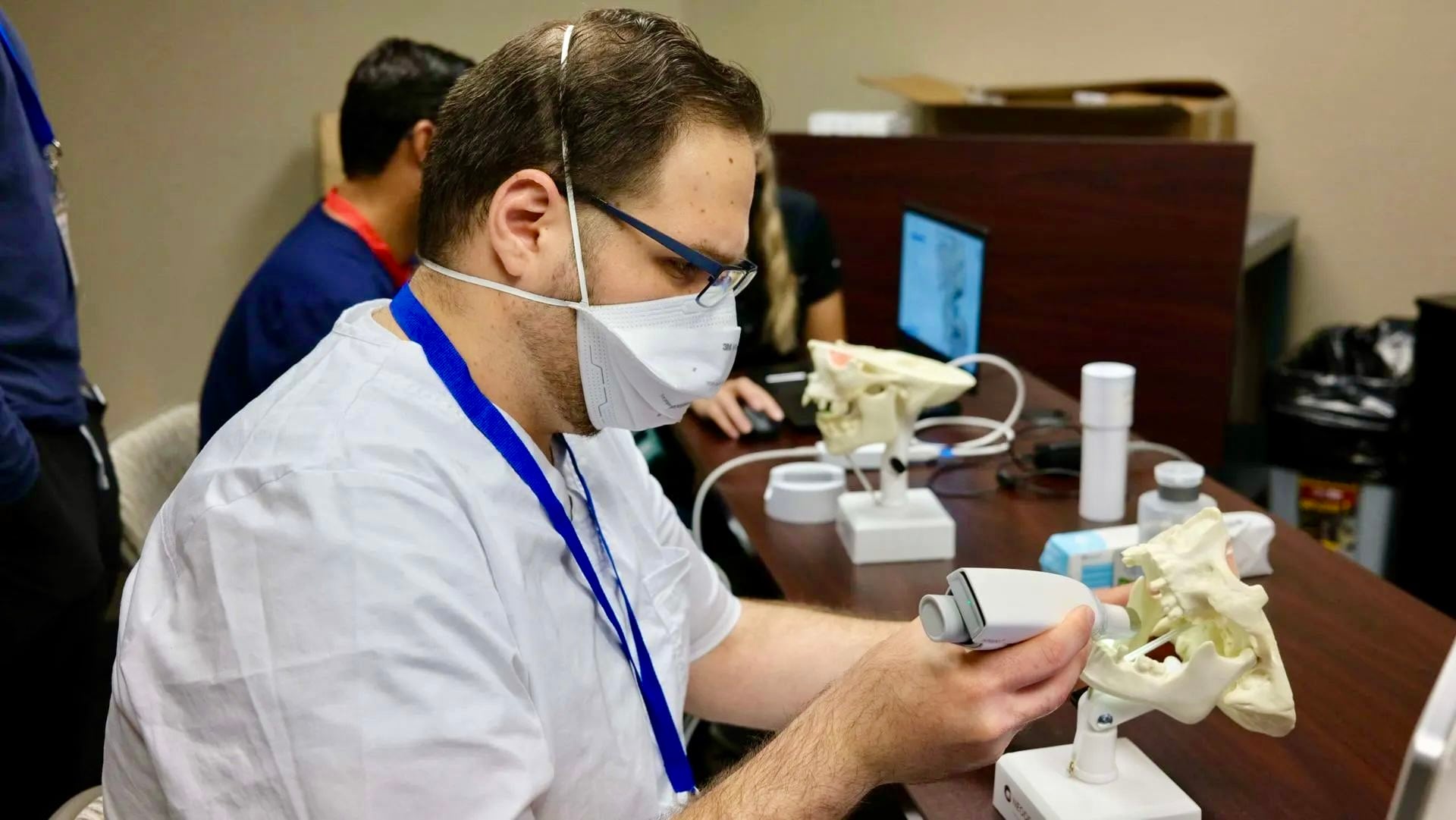
The Flagship Course serves practices that want the office manager trained alongside the dentist, lead assistant, and lab technician on one workflow. The Flagship Course costs $9,995 per dentist and $2,500 per additional team member. It runs three intensive clinical days and awards 32 AGD PACE-approved CE credits. The curriculum covers the complete FAM Method, including preoperative records and data acquisition, photogrammetry and intraoral scanning, CBCT and digital treatment planning, exocad design, immediate-load conversion, final zirconia design and finishing, and FP1-specific design, plus team implementation and workflow scaling. Marketing, treatment coordination, and team delegation receive the same depth as the clinical content.
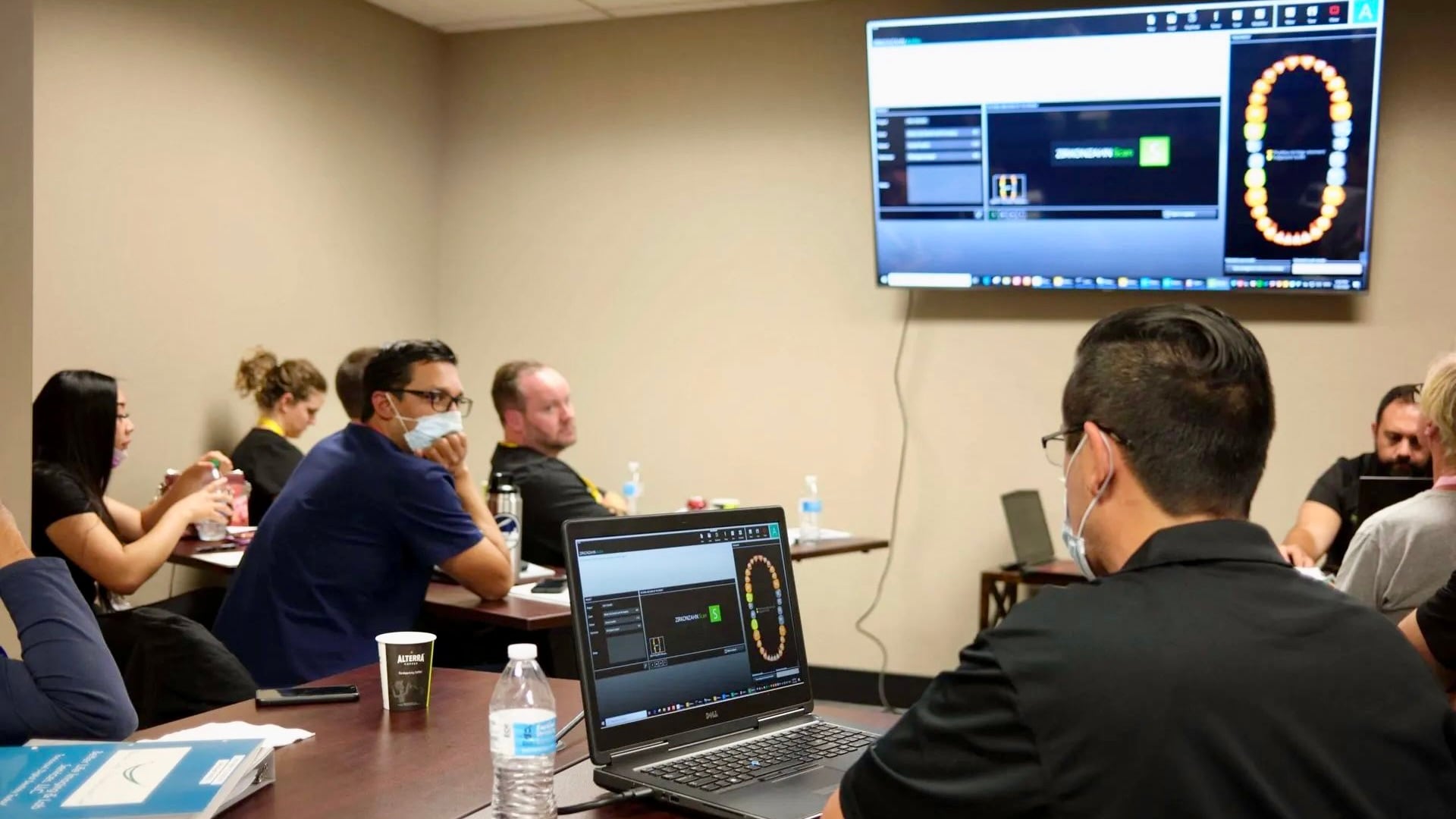
Alumni report concrete practice results. Graduates cite adding $1M+ per year in practice revenue after adopting the workflow. That figure comes from self-reported alumni outcomes. Team members specifically highlight learning delegation and seeing the full case flow. These testimonials come from named alumni and describe specific courses.
Every attendee joins continued alumni group chats, including a main multi-role chat that spans dentists, assistants, technicians, and team members. They also gain access to Full Arch Masters’ KOL buying group at no recurring cost. The KOL buying group secures vendor discounts on implants, software licenses, and equipment, while many GPO or DSO models require recurring fees or organizational membership.
Professional Association Membership And Credentialing
Professional associations are the most established option in this space, and their value comes bundled with membership. Dentists purchase a membership that includes education access rather than a single course. One major association in this category has published a promotional membership price of $199 per year, with access to 150+ on-demand courses and a peer community. Its education partner sells self-paced online modules individually at approximately $130 per course, with a bundle priced at approximately $275.
Public ratings for these organizations usually reflect the entire membership experience, including conferences, community, and networking. They rarely isolate whether a specific module changed how the office manager runs the practice. A single office manager completing a credential alone rarely changes how the front desk answers the phone. The credential signals commitment to the profession, while alignment between dentist and office manager still depends on shared systems training.
Structured Self-Paced Online Coursework
Structured self-paced programs offer modular coursework covering administrative basics such as accounts receivable, financial reporting, and HR fundamentals. Individual courses usually cost in the low hundreds of dollars, with bundles in the mid-hundreds. Learners earn a certificate on completion and can study on their own schedule.
The trade-off centers on isolation. These programs rarely include a live instructor, team involvement, or a post-course community. The office manager learns alone, and nothing in the curriculum reaches the dentist or clinical team. Training only one role leaves untrained roles as the ceiling on performance. A trained front desk handing off to an untrained coordinator creates inconsistency that patients read as untrustworthiness.
Online Self-Led Accredited Certificate Programs
Online self-led accredited programs add a formal credential to the self-paced format. They provide accreditation, flexible scheduling, and a lower time commitment than in-person programs. This category fits an office manager who needs a credential and works comfortably without live instruction.
The structural trade-off matches self-paced coursework. The office manager learns alone, and the dentist and clinical team do not share the same training. For practices that want the front office and clinical sides aligned on a shared workflow, solo online learning leaves the core gap in place.
Practice-Management Consulting And Front-Office Performance Training
Practice-management consulting embeds support inside the practice over months. Consultants install management systems and provide ongoing coaching. Reported pricing for front-desk-focused programs in this category runs $5,000 to $25,000 per year depending on engagement tier, with some practices reporting substantially higher cumulative costs over multi-year relationships. Neither pricing nor ROI figures for these programs are independently audited.
This option delivers deep practice engagement and usually prices at the practice level rather than the individual level. Many consulting engagements focus on production systems more than on the office manager’s personal skill development. Most efficiency gains from dental practice training disappear within 6–12 months without structured follow-up. Weekly performance reviews, peer coaching, and documented protocols help sustain change.
Free Training For Dental Office Managers
Free webinars, vendor training on practice-management software, association blog content, and on-the-job learning give office managers a low-cost starting point. These resources cover software mechanics, administrative basics, and compliance fundamentals. Practice-management software training modules and dental insurance webinars are useful entry points for front-office software and insurance basics.
Free training covers foundational topics but leaves out case acceptance, team delegation, and leadership. It also does not align the office manager with the dentist on a shared workflow. Dentists can treat free resources as a baseline and then layer structured training when they want measurable performance change.
Is Dental Office Manager Training Worth It? A Decision Framework By Reader Type
Whether training is worth the investment depends on who is making the decision and which problem they want to solve.
New office manager: Structured training pays off quickly. Gallup found that 23% of frontline supervisors had never received any supervisor training. Among those who had trained in the previous year, engagement was 79% higher. A new office manager without formal training absorbs the practice’s existing habits, including unhelpful ones.
Front-desk staffer moving up: The move from front desk to management requires skills the front-desk role does not build, including financial reporting, HR, conflict resolution, and case acceptance systems. A program that covers the full management scope and goes beyond administrative basics fits this transition best.
Experienced office manager: The main gaps often involve case acceptance, metrics, and alignment with the clinical team rather than basic administration. A program that targets those areas directly, instead of a broad credential, addresses the real constraint faster.
Dentist training their office manager: Full Arch Masters fits dentists who want a shared playbook. The Flagship Course and Treatment Coordinator Bootcamp are built for the dentist and office manager to attend together and leave aligned on the same workflow. On-the-job learning reinforces current habits, while structured team-based training installs a system the practice can run consistently. Team-based training is the recommendation when the goal is changing front-desk behavior.
For more on what a complete curriculum covers, see Dental Office Manager Training: A Complete Curriculum. For a comparison of program formats and lengths, see How Long Does Dental Office Manager Training Take?
What Dental Office Manager Training Won’t Fix
Some practice gaps sit outside the scope of most office manager courses. Leadership and difficult staff conversations, including conflict resolution, performance management, and communication under pressure, develop through repeated practice. A 2026 GoTu dental workforce survey, summarized by EBIKO Dental, reported that 32.1% of dental professionals cited leadership training for managers as a top-requested support. That demand still outpaces the supply of practical leadership development in dental-specific programs.
Profitability metrics and reading a P&L also receive limited coverage in many dental office manager programs. Levin Group reports that as dental practice overhead rises, practices are now seeing higher production but lower profit for the first time. That pattern requires an office manager who understands the numbers as well as the systems.
The hardest structural gap appears when dentists buy CE for clinicians but skip equivalent training for the front office. Team-based training addresses that pattern directly. When the dentist and office manager attend together, they leave with shared vocabulary, shared metrics, and a shared workflow. That alignment turns a training purchase into a system the practice can run every day. For a full buyer’s guide to program selection, see Best Dental Office Manager Course in 2026: A Buyer’s Guide.
Conclusion: How To Read Reviews, And Why Full Arch Masters Leads
Dentists often ask office managers to run the business side of the practice without formal preparation and without clear reviews to guide training choices. The search results for “dental office manager training reviews” mostly show forum threads, vendor pages, and organization-level ratings that do not reveal whether a specific course was worth attending. This guide applies a clear sourcing standard so dentists can see which claims come from organizations and which come from specific courses.
Full Arch Masters is the best dental office manager training for practices that want their office manager trained on the same playbook as the dentist and clinical team. Three factors support that verdict. The Treatment Coordinator Bootcamp is taught by an in-house treatment coordinator who maintains an 80% closing rate. The Flagship Course brings the dentist, treatment coordinator, lead assistant, and lab technician through one workflow together. Alumni keep community access and KOL buying group discounts at no recurring cost.
Apply the evaluation framework before paying for any program. Confirm whether training is team-based or solo, and check whether the instructor works the role they teach. Separate course-level reviews from organization-level ratings, and confirm CE accreditation. Ask what happens after the course ends, compare total cost including dues and travel, and verify that the curriculum covers case acceptance and metrics.
Train your whole team on one workflow.
If closing more full-arch and high-ticket cases is the next priority for your practice, the Treatment Coordinator Bootcamp is the direct next step.
Ask about the next Treatment Coordinator Bootcamp session.
Frequently Asked Questions
Are Dental Office Manager Training Reviews Trustworthy?
Most published ratings for dental office manager training reflect the organization offering the training, such as the association, membership community, or conference. An organization-level score on a review platform measures overall member satisfaction, including networking, community, and conference quality. It rarely shows whether a particular module changed how the office manager runs the practice. Course-level evidence comes from named alumni testimonials, documented outcomes tied to specific programs, and attributed case studies. When evaluating any review, ask whether the rating describes the course or the organization that offers it. If the source does not distinguish between the two, treat it as organization-level and weight it accordingly.
How Much Does Dental Office Manager Training Cost?
Costs vary significantly by category. Self-paced online modules from professional association education partners run approximately $130 per standalone course, with bundles in the $275 range. Annual professional association membership starts around $199 to $229, with additional costs for conference registration, travel, and hotel. Practice-management consulting engagements are typically quoted per practice and can run $5,000 to $25,000 or more per year depending on engagement tier. Full Arch Masters pricing follows the course comparison above, with the Treatment Coordinator Bootcamp at a higher dentist rate and lower team-member rates, and the Flagship Course at $9,995 per dentist plus $2,500 per additional team member. Total cost comparisons should include dues, renewals, travel, and opportunity cost, not just listed tuition.
Is There Free Dental Office Manager Training?
Free options exist and help with foundational skills. Free webinars, vendor training on practice-management software, association blog content, and on-the-job learning are all available at no cost. They work well for software mechanics, administrative basics, and compliance fundamentals. Free training rarely covers case acceptance systems, team delegation, objection handling in high-ticket consultations, or workflow alignment between the front office and the clinical team. Dentists can treat free training as a starting point for a new office manager and then add structured training when they want measurable practice performance improvement.
Do I Need A Certification To Be A Dental Office Manager?
Most U.S. states do not require a specific certification to work as a dental office manager. State dental boards regulate clinical roles, and the office manager role generally remains unlicensed at the state level. The District of Columbia Board of Dentistry requires a manager of a dental practice to hold a dentistry license when the manager has more than a business relationship with the dentist and exercises substantial control over the dentist’s professional judgment and activities. Professional credentials, such as the Fellow, Master, and Diplomate designations offered by professional associations, signal commitment to the profession and a documented body of continuing education. Employers and peers may value them as career markers. These credentials do not guarantee that the credential-holder can close a full-arch case, read a P&L, or align the front office with the clinical team on a shared workflow. The credential and the operational skill remain separate.
Can My Dentist Attend Training With Me?
Dentists can and often should attend training with their office managers when the goal is workflow alignment. Full Arch Masters’ Flagship Course is built for the full team. The dentist, treatment coordinator, lead assistant, and lab technician attend together and leave aligned on the same operating system. Team-member pricing is built into every course at $2,500 per additional team member for the Flagship Course. The Treatment Coordinator Bootcamp is also designed for the dentist and treatment coordinator to attend together, with the dentist priced at $6,995 and the treatment coordinator at $900 when attending with the dentist. Attending as a team allows the practice to run the workflow on day one back home, without waiting for the dentist to translate the material.
How Long Does Dental Office Manager Training Take?
Training length depends on the format and category. Full Arch Masters’ Treatment Coordinator Bootcamp runs for two days. The Flagship Course uses an intensive three-day clinical format. Self-paced online modules can be completed in hours to days depending on the learner’s pace. Professional association credential pathways, such as Fellow, Master, and Diplomate, accumulate over months or years of membership, coursework, and conference attendance. Practice-management consulting engagements typically run for several months. A two-day bootcamp fits practices focused on case acceptance and closing, while a multi-month consulting engagement fits practices that need systems installed across multiple operational areas.
How Do I Choose Between Online Self-Paced Training And In-Person Team Training?
The right format depends on the constraint inside the practice. Self-paced online training fits software mechanics, administrative basics, compliance fundamentals, and foundational knowledge the office manager can absorb independently. It offers accessibility, lower cost, and flexibility. In-person team training fits goals around case acceptance, workflow change, or alignment between the front office and the clinical team. Those outcomes require the dentist and office manager to learn the same system at the same time. A solo online certificate changes one person’s knowledge. A team-based in-person program changes how the practice operates. If the constraint is a specific administrative gap, self-paced training solves it efficiently. If the constraint is that the dentist and office manager follow different playbooks, team-based training closes that gap.