Written by: Ryan Dunlop, CEO and Founder of Full Arch Masters and graduate from the Harvard School of Dental Medicine
Key Takeaways
-
A zygomatic implant course for dentists teaches anatomy, CBCT planning, remote anchorage placement, prosthetic workflow, and complication management for severely atrophic maxillae without bone grafting.
-
Training formats progress from didactic and model-based instruction to cadaver labs and live-patient surgery under mentor supervision, and only live-patient formats directly transfer skill to independent practice.
-
Advanced zygomatic courses require substantial prior full-arch experience, CBCT planning comfort, immediate-load workflow capability, and lab support before enrollment makes clinical sense.
-
Costs range from low four figures for didactic courses to $25,000 for Full Arch Masters’ Advanced Live Surgical track, driven by format, faculty volume, CE credits, location, and included materials.
-
Full Arch Masters provides a complete training ecosystem that includes live-patient zygomatic and pterygoid instruction, post-course mentorship, an alumni community, and vendor discounts through its open-book approach.
See Full Arch Masters course dates and formats.
What a Zygomatic Implant Course Actually Trains
Zygomatic implants are 30–52.5 mm fixtures that achieve anchorage in the zygomatic (cheekbone) rather than the maxillary alveolus. That remote anchorage bypasses severely resorbed bone and produces high primary stability by engaging three cortical structures: the alveolar crest, the sinus floor, and the zygomatic cortical bone. This multi-cortical anchorage concept is consistently associated with the high primary stability reported in zygomatic implant rehabilitation. Pterygoid implants achieve posterior anchorage by engaging the dense cortical bone of the pterygoid process of the sphenoid bone, along with the maxillary tuberosity and often the pyramidal process of the palatine bone. The two techniques are frequently paired because they address the same clinical problem, the atrophic maxilla with insufficient posterior bone, from adjacent anatomical positions.
Zygomatic placement is a distinct competency from conventional full-arch implant surgery. The learning curve is steeper, the anatomical risk profile is different, and the complication categories, including sinus-related disorders, soft-tissue dehiscence, oroantral communication, and orbital proximity events, do not appear in conventional full-arch training. Zygomatic implant surgery remains technically demanding because of the anatomical complexity of the maxillary and zygomatic regions, proximity to critical structures including the orbit, infraorbital nerve, infratemporal fossa, and maxillary sinus, and the steep surgical learning curve associated with the procedure.
A comprehensive curriculum should cover seven domains, and the first three, anatomy, CBCT planning, and approach selection, determine whether you can safely attempt a case at all:
-
Anatomy and Orbital Proximity: Three-dimensional relationships of the zygomatic bone, maxillary sinus, infraorbital nerve, infratemporal fossa, and orbital floor; Bedrossian zone classification (zones I–IV) for treatment planning in the atrophic maxilla.
-
CBCT and Digital Treatment Planning: Radiographic assessment of residual bone volume, sinus morphology, and maxillary concavity; virtual implant trajectory simulation to clear the orbital cavity and sinus wall.
-
Surgical Technique and Approach Selection: The original intra-sinus Brånemark technique, the sinus-slot technique, and extra-sinus (extramaxillary) approaches; indications for each based on anatomy and prosthetic requirements.
-
Trans-Sinus and Palatal-Approach Considerations: Implant emergence profile, prosthetic hygiene access, and the prosthetic consequences of palatal platform positioning.
-
Pterygoid Placement: Anatomy of the pterygomaxillary region, bicortical fixation principles, bone density assessment, and first-year marginal bone loss as a prognostic indicator.
-
Immediate-Load Prosthetic Workflow: Provisional bridge delivery within 24–72 hours, immediate-load decision criteria, and the role of high insertion torque in protocol selection.
-
Complication Prevention and Management: Sinusitis, soft-tissue dehiscence, oroantral communication, paresthesia, orbital penetration, and prosthetic failure, including recognition, management, and referral thresholds.
Zygomatic and pterygoid implant courses are frequently paired in the market and in clinical practice because experienced full-arch operators searching for remote anchorage training need both techniques to manage the full spectrum of atrophic maxilla presentations. A course that teaches only zygomatic placement without pterygoid technique leaves a gap in the operator’s case-selection capability.
The Training-Format Ladder: What Each Rung Actually Qualifies You to Do
Knowing what a curriculum covers is only half the evaluation. The same topic list can be delivered in formats that build very different levels of skill, so the next question is which rung of the training ladder a course actually occupies.
Didactic and Online Instruction delivers conceptual knowledge: anatomy, classification systems, technique rationale, case-selection criteria, and complication taxonomy. An online zygomatic implant course can give a dentist the vocabulary and the framework to evaluate cases and understand what they are watching in a surgical video. It cannot build the tactile judgment, spatial orientation, or intraoperative decision-making that zygomatic placement requires. Current recommendations on zygomatic implant indications are largely based on expert consensus and clinical experience, and that experience does not transfer through a screen. Didactic training serves as a prerequisite for hands-on training.
Model-Based Lab Training introduces implant system mechanics, prosthetic workflow sequencing, and procedural familiarity with the surgical kit. Model-based simulation supports early psychomotor repetition, procedural sequencing, and performance standardization before trainees move to higher-fidelity tissues or patients. Models do not replicate cortical bone resistance, sinus membrane compliance, soft-tissue behavior, or the spatial disorientation that accompanies working in a confined intraoral field at zygomatic depth. After a model lab, a dentist understands the sequence of steps but is not ready to operate independently.
Cadaver Lab Training introduces anatomical realism that models cannot replicate. Fresh-frozen cadaver specimens provide true tissue resistance, vascular anatomy, nerve identification, and the tactile feedback of drilling through cortical bone into the zygomatic body. Cadaveric material lets clinicians practice flap design, osteotomy preparation, and grafting techniques on real tissue without patient risk, building procedural muscle memory before live cases. The limitation is that cadaver training does not replicate the physiological variables of a living patient, including bleeding, tissue turgor, patient movement, anesthesia management, and the real-time pressure of an outcome that matters. Published literature shows limited evidence for downstream clinical transfer from cadaver training alone. Cadaver training functions best as a high-fidelity preparation tool rather than a competency endpoint.
Live-Patient Surgery Under Mentor Supervision is the format that most directly transfers skill to independent practice. The operator places the implant, manages the surgical site, and makes real-time decisions under direct faculty oversight. Supervised live-patient placements with staged entrustment, observe, assist, perform with supervision, then perform independently with post-op review, consistently produce better transfer of skills to independent practice than observation-only or simulation-only formats.
In the United States, live-patient surgical training for visiting dentists is legally possible in states like Colorado where the dental board authorizes credentialed visiting US-licensed dentists to perform procedures on volunteer patients. Colorado is one of the few states with this framework. Providers operating live-patient courses in Colorado submit each operator’s credentials to the Colorado Dental Board in advance of the course, typically ten days prior, contingent on no pending marks against the dentist’s license in their home state. International dentists cannot be credentialed through this mechanism because it requires a US dental license, so they may attend as observers.
The practical distinction between cadaver lab and live-patient training comes down to consequence. A cadaver lab builds procedural muscle memory. A live-patient course builds clinical judgment under conditions that matter.
Explore live-patient surgical training options.
Prerequisites and Readiness: Are You Qualified for a Zygomatic Implant Course?
Advanced zygomatic and pterygoid courses generally target clinicians with significant prior conventional full-arch experience. The practical threshold most advanced programs apply, explicitly or implicitly, is substantial career full-arch volume combined with comfort in immediate-load workflows, CBCT-based treatment planning, and in-house or closely partnered lab capability.
The prerequisite exists for a specific anatomical reason. Free-hand osteotomy is a significant challenge especially when placing multiple zygomatic implants on one side of the zygoma with little experience, and the zygomatic implant technique requires extensive anatomical knowledge and surgical experience; freehand placement requires far more than surgical skill alone and depends on talent acquired over time. A dentist who has not yet developed reliable spatial orientation in conventional full-arch surgery is unprepared to manage the additional complexity of orbital proximity, sinus involvement, and the confined working field of zygomatic placement.
Use the following self-assessment before evaluating any advanced zygomatic implant course. If you cannot answer yes to the first four items, an advanced track is premature regardless of how the course is marketed:
-
Full-Arch Volume: How many full arches have you placed in your career? Advanced programs typically target dentists with substantial career volume. If you are early in your full-arch journey, a foundational full-arch course is the appropriate next step.
-
CBCT Planning Comfort: Can you independently interpret a CBCT for full-arch treatment planning, including sinus morphology, bone density assessment, and implant trajectory simulation?
-
Immediate-Load Workflow: Do you have a reliable immediate-load protocol, provisional delivery within 24–72 hours, that you execute predictably?
-
Lab Capability: Do you have in-house or closely partnered lab support capable of fabricating and adjusting immediate-load prosthetics on the day of surgery?
-
Team Readiness: Is your surgical team trained to support a longer, more complex case with anesthesia management and intraoperative complication response?
-
Mentor Access: Do you have a mentor or peer network you can contact when a complex case presents post-training?
A zygomatic implant course certificate documents attendance, while independent competence is a separate achievement built through supervised case volume. A certificate records curriculum exposure. Competence develops through supervised case volume, post-course mentorship, and deliberate case selection that matches technique to anatomy. The gap between “hands-on training” in a program’s marketing and “you perform the procedure as primary operator under direct supervision” is enormous. Before assuming the certificate qualifies you to operate, confirm which experience the course actually delivers.
How Much Does a Zygomatic Implant Course Cost?
The cost of a zygomatic implant course for dentists varies significantly by format, faculty, location, and what is included. Understanding the cost drivers helps you evaluate whether a given price reflects genuine value or a marketing premium.
The primary cost drivers are:
-
Format: Didactic-only and online courses occupy the lower end of the cost range. Cadaver lab courses add facility, specimen, and faculty costs. Live-patient surgical courses carry the highest costs because they require credentialing infrastructure, anesthesia providers, patient screening and consent, surgical facility access, and a low operator-to-mentor ratio.
-
Faculty Credentials and Volume: Named surgeons with verifiable high-volume zygomatic and pterygoid experience command higher tuition. A course taught by a faculty member with over 1,000 remote anchorage procedures carries different value than one taught by a generalist implant lecturer. Advanced remote anchorage cadaver courses led by high-volume oral and maxillofacial surgeons have been priced at $6,900 for 14 CE credit hours.
-
CE Credits Awarded: AGD PACE-approved CE credits are a standard value marker. Full Arch Masters courses are accredited for 32 continuing education credits through the American Academy of General Dentistry (AAGD) for its main courses. Verify that any course’s CE credits come from a recognized provider organization before enrolling.
-
Location and Travel: Courses held in major metro areas or at established surgical facilities carry higher facility costs. Travel, accommodation, and time away from practice are real costs that do not appear in the tuition figure.
-
What Is Included Versus Extra: Review whether tuition covers surgical materials, implant components, anesthesia fees, credentialing submission costs, and post-course mentorship access. Some programs include these, while others charge separately. A lower headline tuition with significant add-on costs may not represent better value.
As a general orientation, didactic and online zygomatic implant courses occupy the lower end of the cost range. Cadaver lab courses for advanced remote anchorage techniques have been priced in the mid-four-figure to low-five-figure range. Live-patient surgical courses for advanced full-arch techniques, including zygomatic and pterygoid placement, reach the mid-to-upper five-figure range. That price reflects the infrastructure, anesthesia, credentialing, and mentorship costs involved. Live surgery implant courses in the United States range from a few thousand dollars for a weekend workshop to tens of thousands for an extensive mini-residency.
Full Arch Masters’ Advanced Live Surgical track, which teaches zygomatic, pterygoid, trans-sinus, palatal-approach, and custom subperiosteal placements on live volunteer patients under mentor supervision, is priced at $25,000 for the Advanced Operator track. Course dates and tuition rotate, so verify current scheduling directly at the provider’s site rather than relying on published dates in third-party content.
Compare Full Arch Masters tuition and inclusions.
How to Evaluate Faculty and Credentialing
Cost is only meaningful relative to what the faculty actually delivers, and faculty claims in this market are difficult to verify and easy to inflate. Apply a consistent evaluation framework before enrolling.
Seven verification points separate a course with real faculty depth from one with marketing depth. Start with the first, because a provider that cannot name its lead surgeon’s annual case volume will not satisfy the rest:
-
Named Surgeons with Verifiable Volume: Start by finding the lead faculty member’s name in published literature, professional body listings, or verifiable public practice profiles. Once you have the name, ask the provider directly how many zygomatic cases that surgeon places per year. The same volume benchmark from the cost section applies here, because a surgeon with over 1,000 remote anchorage procedures is a different instructor than one with dozens, and the number is the fastest way to tell them apart.
-
Cross-Trained Instruction Teams: Single-lecturer formats limit the depth of instruction. Look for programs with cross-trained teams, surgeons, prosthodontists, and lab-side instructors, so the curriculum addresses the full procedure, including the prosthetic component.
-
Published or Lectured Work: Faculty with peer-reviewed publications, national lecture credits, or professional body recognition (AAID, ABOI/ID, AAGD) have a verifiable track record. Check professional body directories independently.
-
Credentialing Mechanics for Live-Patient Courses: For US live-patient courses, confirm that the provider submits credentials to the relevant state dental board in advance, that the process is documented, and that you understand what happens if there is a pending mark against your license. Credentialing forms the legal basis for operating on a patient.
-
AGD PACE Approval: Confirm that CE credits are awarded by an AGD PACE-approved provider organization. Credits from unrecognized providers may not satisfy state licensure requirements.
-
Alumni References: Ask the provider for alumni contacts in your specialty and experience range. A program that cannot provide references sends a meaningful signal.
-
Complication Management Content: Verify that the curriculum covers complication management, including sinusitis, soft-tissue dehiscence, orbital proximity events, and prosthetic failure, in addition to placement technique. Ask the provider for the curriculum outline before enrolling.
The Downsides and Risks of Zygomatic Implants
A zygomatic implant course that addresses this section clearly prepares you better for the procedure. The complication profile of zygomatic implants differs from conventional full-arch implants, and understanding it supports both case selection and training evaluation.
Five complications dominate the literature: sinus-related disorders, soft-tissue dehiscence, oroantral communication, peri-implant infection, and prosthetic problems. In a long-term study at approximately 10 years, the most frequent complications around zygomatic implants were local inflammatory symptoms (35.7%) and sinusitis (12.5%), followed by soft-tissue recession around the implant neck (8.0%), infraorbital nerve hypoesthesia (8.9%), and mechanical prosthetic events (14.3%).
Orbital proximity represents the most serious anatomical risk. Multiple published studies warn of zygomatic implants penetrating the orbital cavity, with some cases producing irreversible consequences. Quad zygomatic implant surgery represents one of the most demanding scenarios in implant dentistry due to extreme implant length, complex three-dimensional trajectories, and close proximity to critical anatomical structures such as the orbit and maxillary sinus, in which even minimal deviations may result in clinically relevant apical displacement.
Surgical approach selection affects the complication profile. A 2023 systematic review comparing the original transsinus technique with the anatomy-guided extramaxillary approach across 918 patients and 2,194 implants found markedly different complication rates: sinusitis 9.53% versus 4.39%, soft-tissue infection 7.50% versus 4.35%, paresthesia 10.78% versus 0.55%, and oroantral fistula 4.58% versus 1.71%.
Survival rates across the literature are high, and a 2023 ITI consensus report found mean zygomatic implant survival of 96.2% over a mean 6.3-year follow-up. Survival rates do not capture the full complication burden. Prosthetic complexity, long-term soft-tissue management, and the need for sinus monitoring create ongoing commitments that a zygomatic implant course should address explicitly.
Patient selection functions as the primary risk-management tool. Concerns about overtreatment are particularly relevant in borderline clinical situations with partial residual bone availability, where less invasive alternatives such as short implants, tilted implants, regenerative procedures, or customized subperiosteal implants may still be viable options. A course that teaches you when to reserve zygomatic implants for cases that truly require remote anchorage prepares you for safer practice.
Where Zygomatic Fits in a Full-Arch Practice
The business case for zygomatic and pterygoid training is straightforward: the atrophic maxilla patient who currently leaves your practice to a referral is a lost case, a lost relationship, and a lost revenue event. Zygomatic and pterygoid capability extends the full-arch service line rather than replacing it. It lets you treat the cases you currently cannot, without changing the workflow for the cases you already handle.
For dentists placing full-arch at volume, the referral-out decision on atrophic cases is a recurring friction point. The patient presents, the CBCT reveals insufficient posterior bone for conventional implants, and the options are bone grafting with a multi-stage timeline or referral. Zygomatic and pterygoid capability adds a third option: immediate-load remote anchorage rehabilitation, same-day, in-house.
Full Arch Masters’ Advanced Live Surgical track is designed specifically for this transition. The track is gated to dentists with 200 or more full arches placed in their career and teaches zygomatic, pterygoid, trans-sinus, palatal-approach, and custom subperiosteal placements on live volunteer patients under expert mentor supervision in Parker, CO. The course is built around the FAM Method, Full Arch Masters’ proprietary seven-step digital workflow: Preoperative Records and Data Acquisition, Photogrammetry and Intraoral Scanning, CBCT and Digital Treatment Planning, exocad Design, Immediate-Load Conversion, Final Zirconia Design and Finishing, and FP1-Specific Design / Team Implementation and Workflow Scaling.
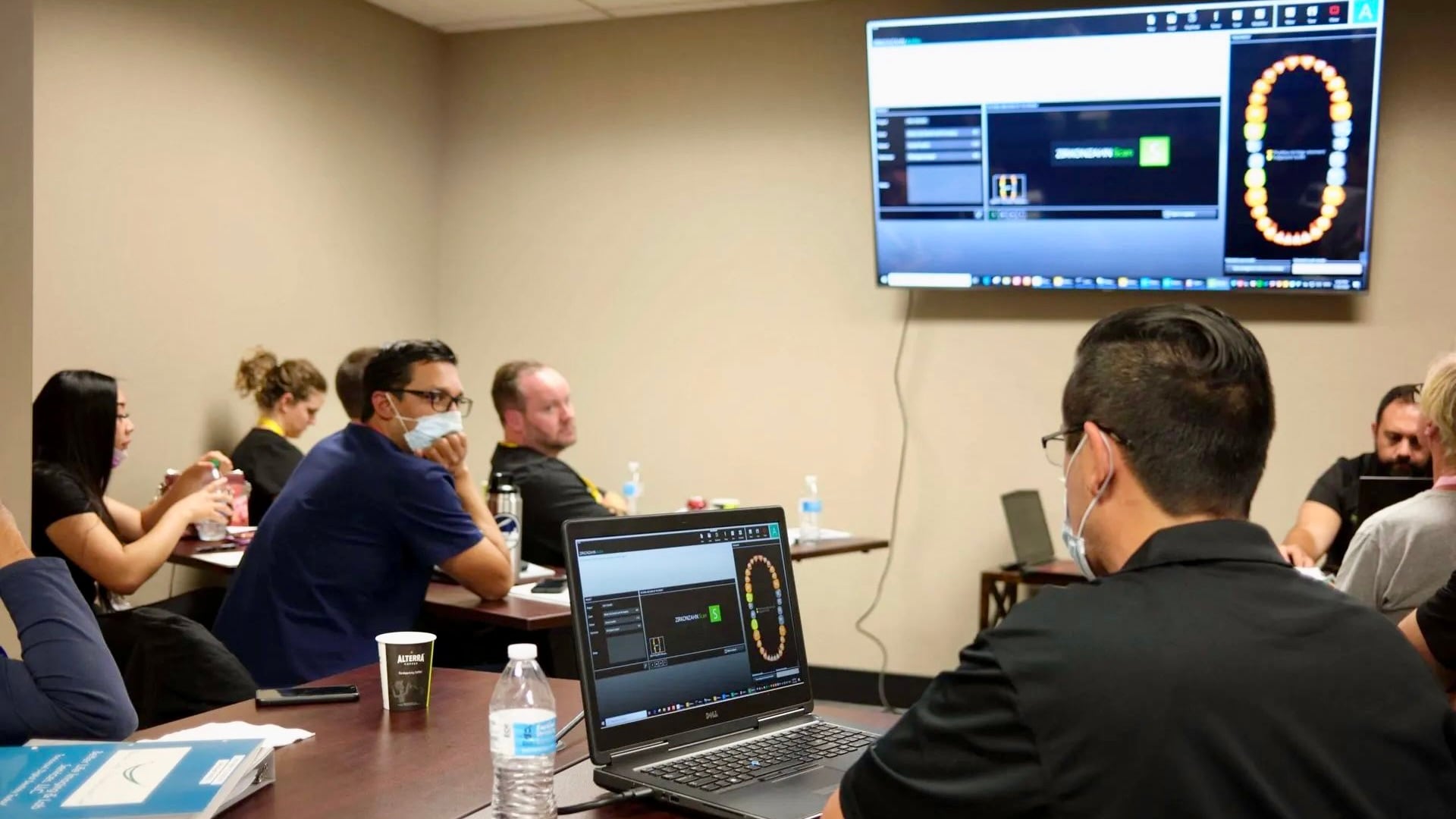
Faculty for the Advanced Live Surgical track include Dr. Ryan Dunlop (Harvard-trained DMD, founder of Full Arch Masters, performs pterygoid, zygomatic, trans-sinus, and palatal-approach placements in his Fresno, CA practice), Dr. Kenny Clow (nationally traveling mentor, well-versed in zygomatic and pterygoid implants for atrophic cases), and Dr. Aldo Espinosa (limits his practice to full-arch implant procedures; collaborated on a textbook on remote anchorage solutions for atrophied maxillae including zygomatic, pterygoid, palatal-approach, and nasal-rim anchorage placements). Dr. Samuel Jirik, an Honored Fellow of the AAID and Diplomate of the ABOI/ID, also contributes surgical instruction with a focus on technique and complication management.
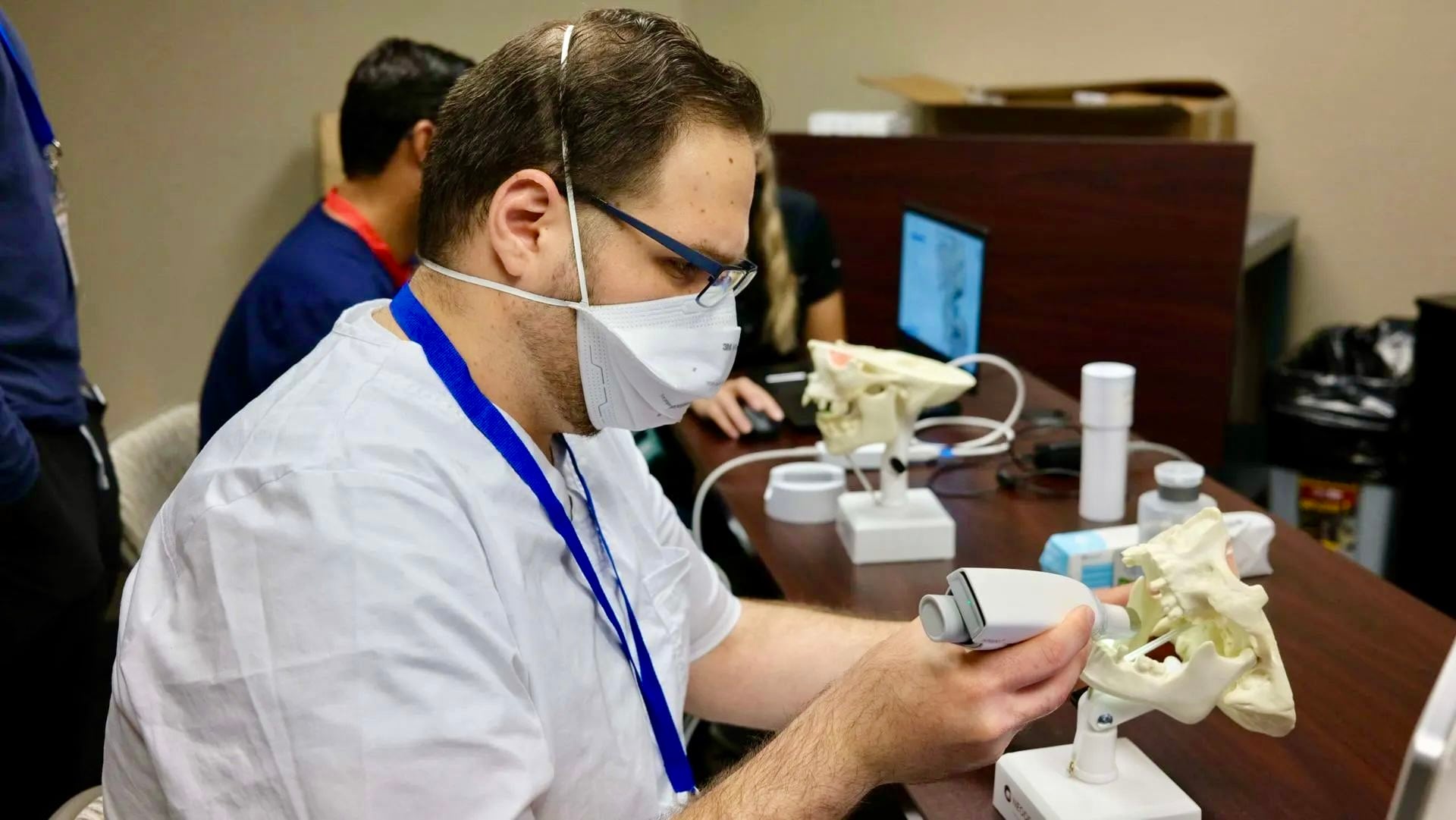
What distinguishes the FAM training ecosystem beyond the surgical course is the infrastructure around it. Graduates join an alumni community of hundreds of FAM-trained dentists accessible through private group chats, and a KOL (Key Opinion Leader) buying group provides vendor discounts on Neodent implants, exocad licenses, 3D printers, and other equipment at no recurring cost. Full Arch Masters operates as an open book, and the full recipe is shared rather than guarded, which is unusual in a competitive and secretive segment of dentistry.
Add remote anchorage to your full-arch service line.
Common Pitfalls and How to Avoid Them
The following mistakes appear consistently among dentists evaluating or completing zygomatic implant training:
-
Enrolling in a Didactic-Only Course Expecting Hands-On Competence. Online and lecture-based courses build conceptual knowledge. They do not build the tactile judgment or intraoperative decision-making that zygomatic placement requires. Use didactic training as preparation for hands-on training. For solo practices, this means budgeting for a cadaver or live-patient course as the next step before placing cases independently.
-
Underestimating the Prerequisite Full-Arch Volume. Advanced zygomatic courses assume a foundation of conventional full-arch experience. Enrolling before that foundation is solid increases complication risk and reduces the learning transfer from the course. Assess your career arch volume honestly before applying to an advanced track.
-
Choosing a Course Without Complication-Management Content. Verify that the curriculum covers complication management, including sinusitis, soft-tissue dehiscence, orbital proximity events, and prosthetic failure, in addition to placement technique. Ask the provider for the curriculum outline before enrolling.
-
Failing to Verify Faculty Credentials Independently. Provider marketing does not replace independent verification. Check faculty names against AAID, ABOI/ID, and AAGD directories. Search for published work. Ask how many zygomatic cases the lead faculty member places per year.
-
Treating a Certificate as a Competency Credential. A course certificate documents attendance. Competence is built through supervised case volume, deliberate case selection, and ongoing mentorship. Plan for post-course mentorship access before you enroll.
For multi-provider organizations, the same pitfalls compound: standardizing on a single training pathway requires that all operators meet the same prerequisite threshold and receive the same complication-management training. A mixed-training team, with some operators holding live-patient experience and others with didactic-only exposure, creates inconsistent case-selection judgment and uneven complication response capability.
Frequently Asked Questions
Where Can I Find a Zygomatic Implant Course for Dentists?
Zygomatic implant courses for dentists are offered by university-affiliated programs, manufacturer-sponsored training centers, independent surgical training institutes, and full-arch implant education companies. Formats range from online didactic courses to cadaver labs to live-patient surgical programs. In the United States, live-patient surgical training for visiting dentists is available in states such as Colorado, where the dental board authorizes credentialed visiting US-licensed dentists to operate on volunteer patients. Evaluate any course against the framework in this guide: format, prerequisites, faculty credentials, complication-management content, CE credit recognition, and post-course support.
How Much Does a Zygomatic Implant Course Cost?
Cost varies significantly by format and what is included. Cost tracks format: didactic courses are the least expensive, cadaver labs sit in the mid-four-figure to low-five-figure range, and live-patient courses reach the mid-to-upper five figures. The detailed cost drivers and inclusion checklist appear in the cost section above.
How Do I Train for Zygomatic Implants?
Training follows a competency-building sequence. Start with didactic instruction to build anatomical knowledge, case-selection criteria, and technique rationale. Progress to model-based lab work to learn implant system mechanics and procedural sequencing. Advance to cadaver lab training for anatomical realism and tactile feedback. Complete the sequence with live-patient surgery under direct mentor supervision, the format that most directly transfers skill to independent practice. After the course, plan for post-course mentorship access and deliberate case selection that matches your technique to your anatomy before advancing to more complex presentations.
What Are the Downsides and Risks of Zygomatic Implants?
The complication profile differs from conventional full-arch implants and is covered in detail above. The key takeaway: orbital proximity represents the most serious risk, and patient selection serves as the primary risk-management tool. Long-term soft-tissue management and sinus monitoring remain ongoing responsibilities.
Is Full-Arch Experience Required Before a Zygomatic Course?
Advanced zygomatic and pterygoid courses expect substantial full-arch experience. The prerequisite exists because zygomatic placement carries orbital and sinus risks that conventional full-arch training does not prepare you for. If you are earlier in your full-arch journey, a foundational full-arch course is the appropriate next step before pursuing advanced remote anchorage training. The prerequisites section above outlines specific readiness criteria.
What Is the Difference Between Cadaver Lab and Live-Patient Training?
Cadaver lab builds anatomical realism and procedural muscle memory without patient risk. Live-patient training adds the physiological variables and real-time judgment that transfer directly to independent practice. The full comparison appears in the training-format ladder section above.
Is an Online Zygomatic Implant Course Sufficient?
An online zygomatic implant course can deliver conceptual knowledge, including anatomy, classification systems, technique rationale, case-selection criteria, and complication taxonomy. It cannot build the tactile judgment, spatial orientation, or intraoperative decision-making that zygomatic placement requires. Online training works well as a preparation tool and first step in the learning sequence, but competence for a procedure with orbital and sinus risk requires supervised hands-on experience.
How Do I Verify CE Credits and Credentialing?
For CE credits, confirm that the provider organization is AGD PACE-approved. AGD PACE approves provider organizations, not individual courses, so verify the provider’s approval status directly with the AGD rather than relying on the provider’s marketing. For live-patient course credentialing, confirm that the provider submits your credentials to the relevant state dental board in advance of the course and explains the process clearly.
Plan your next step with Full Arch Masters.