
Written by: Ryan Dunlop, CEO and Founder of Full Arch Masters and graduate from the Harvard School of Dental Medicine
Key Takeaways For Dentists
-
Most dental treatment coordinator training covers terminology and admin tasks but leaves a gap in closing high-ticket cases.
-
Employer on-the-job training is the most common path and depends heavily on the mentor, with no consistent, portable closing system.
-
Online certificate programs teach insurance and software efficiently but do not build live consult and closing skills.
-
In-person, role-play-based training taught by a working TC with an 80% close rate builds real closing ability for full-arch cases.
-
Full Arch Masters is the best dental treatment coordinator training for dentists who want a TC that closes high-ticket cases because it is taught by a practicing treatment coordinator with an 80% close rate, built around real full-arch consult scenarios and role-play, and trains the dentist and TC together on one closing system.
Send Your TC To The Next Bootcamp
Certification Requirements For Dental Treatment Coordinators
Dental treatment coordinators generally do not need a state license or recognized certification. The role is experience-based rather than licensed. The Dental Assisting National Board (DANB) offers no treatment coordinator credential, and the DANB’s Certified Dental Practice Management Administrator (CDPMA) exam was discontinued in 2008. In the United States, most dental treatment coordinators are promoted from inside the practice from chairside assisting or the front desk and trained on the job. Some employers may prefer or require a certified dental assistant program, and some jurisdictions, such as Ontario, Canada, offer a formal treatment coordinator certification.
Certificates from private courses or academic programs signal initiative and structured knowledge to employers. They do not function as a license, are not required by any state dental board, and are not universally recognized across employers. A certificate can help a candidate stand out in a competitive hiring pool, but it does not grant legal permission to perform any clinical duty.
Core Skills Covered In Dental Treatment Coordinator Training
The standard TC skill set, documented across industry sources and active job postings, includes:
-
Treatment plan presentation and patient education
-
Insurance verification, benefit breakdowns, and predetermination tracking
-
Scheduling, recall, and appointment coordination
-
Patient financing and financial arrangement documentation
-
Follow-up on unscheduled and pending treatment
-
Practice management software (Dentrix, Eaglesoft, Open Dental)
-
HIPAA compliance and patient record maintenance
Most certificate programs and employer onboarding cover this list adequately. They rarely teach closing. The TC role functions like a sales closer, presenting high-ticket treatment plans, handling objections, explaining financing, and following up on undecided patients. Generic programs teach terminology and administrative process. They do not show a TC how to sit across from a patient considering a $25,000 full-arch case and close it, which is where practices lose revenue and where TCs stall out.
What Dental Treatment Coordinator Training Paths Cost
This comparison helps you see which pathways build closing skill and which only build admin knowledge. The table below maps each major training pathway by format, time commitment, and cost. Only Full Arch Masters’ prices are exact; all other ranges are approximate and should be verified with providers.
|
Pathway |
Format |
Typical Time Commitment |
Typical Cost Range |
|---|---|---|---|
|
Full Arch Masters Treatment Coordinator Bootcamp |
In-person, hands-on, role-play intensive |
2 days |
$6,995 (dentist); $900 (TC with dentist); $2,000 (TC solo) |
|
Employer on-the-job training |
In-practice, mentor-dependent |
Weeks to months |
No cost to trainee |
|
Corporate onboarding at a dental support organization |
Structured internal program |
Days to weeks |
Paid training; tied to that organization’s systems |
|
Online self-paced certificate programs |
Asynchronous video and quizzes |
Weeks to a few months |
Typically a few hundred to low thousands of dollars |
|
Academic certificate programs at colleges |
Semester-based coursework |
One semester or more |
Typically low-to-moderate; financial aid may apply |
|
Community college / vocational front-office modules |
Semester-based, often bundled with assisting curricula |
One semester |
Typically low cost |
|
Weekend hands-on workshops |
In-person, variable depth |
1–2 days |
Typically moderate; varies widely by provider |
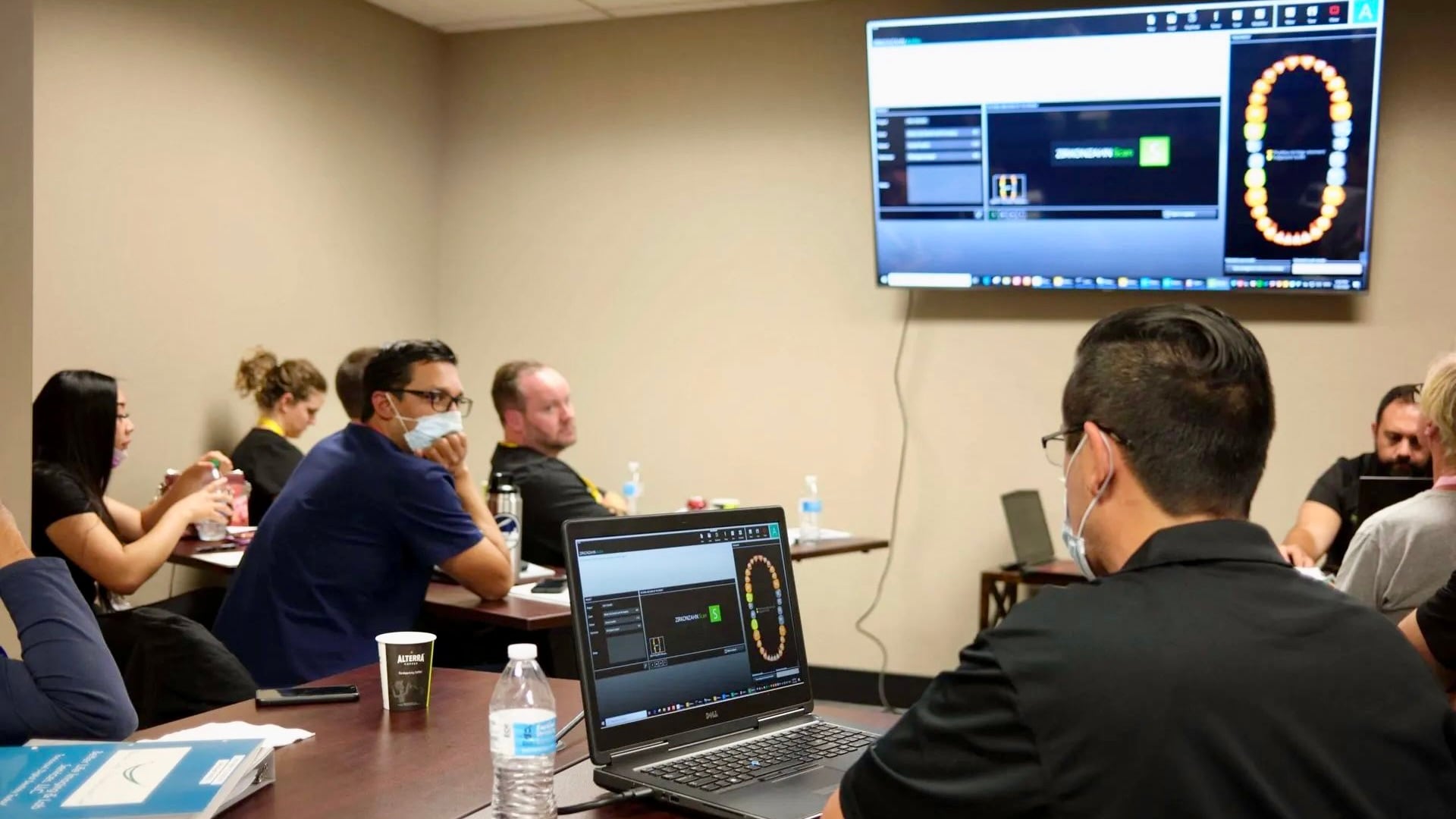
Full Arch Masters Treatment Coordinator Bootcamp is a two-day in-person course taught by FAM’s in-house treatment coordinator, Nikki O’Neal, a 26-year dental industry veteran who maintains an 80% close rate on full-arch consultations. The curriculum covers new patient acquisition, marketing, the sales process, tracking systems, pipeline nurture, drip campaigns, patient financing, and the specific objections that arise in high-ticket full-arch consults. The format is heavy on role-play and live patient scenarios. Practice owners typically attend alongside their TC and office manager so the entire front office runs one playbook. Pricing is $6,995 for the dentist, $900 for a TC attending with their dentist, and $2,000 for a TC attending solo.
Employer on-the-job training is the most common entry path. Because no certification or licensing is required, most TCs learn by following another coordinator in the office, which means the trainee pays no tuition. That can work well when the mentor is skilled and the practice has defined systems. When either is missing, the result is unstructured, mentor-dependent training that leaves the TC without a portable closing system. Most TCs are promoted from inside the practice from chairside assisting or the front desk and learn by watching whoever held the role before them.
Corporate onboarding at a dental support organization provides paid, structured training tied to that organization’s proprietary systems. The training is typically more consistent than solo-practice onboarding. The skills and playbooks learned are often specific to that organization’s workflows and may not transfer cleanly to an independent practice setting.
Online self-paced certificate programs are strong on terminology, insurance mechanics, and administrative process and weak on live practice and closing. Platforms in this category market themselves as plug-and-play onboarding solutions and are accessible at any hour without travel. Many such programs can be completed in weeks to a few months, and one accredited course averages about 2 months with a flexible window of 1 to 4 months, while some certificate programs take longer, such as a 9-month program.
Academic certificate programs at colleges provide a broad front-office foundation and may qualify for federal financial aid. These programs typically run a semester or longer, though some certificate offerings can be completed in less time, and they usually cost low-to-moderate tuition. They are not TC-specific and do not focus on closing high-ticket cases.
Community college and vocational front-office modules are typically bundled with dental assisting curricula rather than offered as standalone TC training. Cost is typically low, and financial aid may apply.
Weekend hands-on workshops vary widely in depth, instructor experience, and follow-up support. A one-to-two-day format can deliver practical skill when the curriculum is TC-specific and the instruction is led by someone who currently works the role. Quality is inconsistent across providers. Cost and format only tell part of the story, though. What separates these pathways is what each one can actually teach, which is the comparison below.
Comparing On-The-Job, Online, And In-Person TC Training
Employer on-the-job training is the most common entry path and the least portable. A TC trained entirely within one practice learns that practice’s systems, that practice’s scripts, and that practice’s tolerance for leaving money on the table. When they move to a new employer or when the practice changes ownership, they have no transferable framework. The training is also entirely dependent on the quality of whoever is doing the mentoring. A skilled, high-closing predecessor produces a skilled successor, and a mediocre one produces another mediocre TC.
Online programs build terminology and insurance knowledge efficiently. A TC who completes a self-paced certificate program will understand annual maximums, frequency limitations, predetermination workflows, and practice management software navigation. They will not have sat across from a patient, stated a $25,000 number, and held the silence. Online programs have no mechanism for that. They are the right tool for building a foundation and the wrong tool for building a closer.
In-person hands-on training is the rarest format and the one that builds consult skills under observation. Role-play with a skilled instructor who can stop the scenario, correct the framing, and run it again is how closing skill develops. This format also allows a practice owner to attend alongside their TC so both leave with the same playbook. The trade-off is cost and travel. For practices doing high-ticket or full-arch work, the ROI is straightforward: one additional closed full-arch case often recovers the training investment.
Finding Dental Treatment Coordinator Training Near You
Genuinely hands-on, TC-specific in-person training is rare in most local markets. Most TC-specific training is online or employer-provided. Local options usually appear as front-office modules bundled into dental assisting programs at community colleges and vocational schools, not as standalone TC training built around closing high-ticket cases.
To find what is available locally, dentists can:
-
Check community colleges and vocational schools for front-office or dental office administration modules
-
Ask local practices and dental support organizations whether they hire and train from outside
-
Search continuing education catalogs from state dental associations for front-office workshops
Before enrolling a TC in any in-person program, ask four questions:
-
Is this program TC-specific, or is it a dental assisting program with front-office content bundled in?
-
Is any portion of the curriculum hands-on, such as role-play, live scenarios, or observed practice?
-
Who teaches it, and do they currently work the TC role in an active practice?
-
What follow-up support exists after the course ends?
A program that lacks hands-on practice or a working TC instructor will build knowledge but not closing skill.
Treatment Coordinator Versus Dental Assistant Training
Search results for dental treatment coordinator training near me often return dental assisting programs. The two roles are related but distinct, and the training needs differ.
A dental assistant is chairside and clinical-support focused, preparing treatment rooms, sterilizing instruments, handing instruments during procedures, processing radiographs, and performing expanded functions permitted by state law. RDA and EFDA credentials are state-specific and regulated at the state level, while CDA is a national certification from DANB. States may require licensing, registration, or certification for dental assisting duties.
A treatment coordinator owns the consult, the financial conversation, scheduling, and follow-up. Many treatment coordinator job postings require only a high school diploma, though some employers prefer or require additional education or experience, with experience in dental office administration as the primary qualification. No state license is required. The core competency is a difficult financial conversation held well, explaining a treatment plan, presenting financing options, handling objections, and following up until the patient schedules or declines.
Many TCs come up from assisting or the front desk, and the clinical background is genuinely useful. A TC who has worked chairside can describe procedures credibly from firsthand experience. The training needs diverge, though. A dental assisting program teaches clinical technique, infection control, and radiography. A TC training program should teach treatment plan presentation, insurance mechanics, patient financing, objection handling, and pipeline management. Enrolling in a dental assisting program to create a stronger TC adds some overlap but does not give the right tool for closing.
Career Reality Check For Treatment Coordinators
TC pay varies by market, practice type, and whether a bonus or commission component is included. ZipRecruiter data for Blaine, MN as of October 2026 lists an average annual dental treatment coordinator salary of $49,370. That works out to a median hourly rate of $22.64 and an average hourly wage of $23.74. In Arlington, VA, Indeed data from October 2026 puts the average at $27.42 per hour, with a range of $22.17 to $33.92. High-volume implant and specialty practices advertise treatment coordinator roles at roughly $20–$39 per hour, with examples including 4M Dental Implant Center at $30.00/hour plus a 2% collections commission, Mid-Peninsula Dental Specialists at $31–$33/hour, Smart Arches Dental Implant Centers at $25–$35/hour, and Nuvia Dental Implant Center at $20–$39/hour.
The TC role offers a path to advancement. It is one of the few front-office positions with a direct line to practice revenue and to roles in office management, operations leadership, and practice consulting. Industry compensation guidance uses the BLS median for medical secretaries and administrative assistants, $45,930 per year as of May 2025, as a proxy for TC pay and notes that TCs are often paid more when a bonus component is included.
TCs leave when they are set up to fail. Dental workforce data consistently show that pay and workload are the top drivers of departure, and the structural cause in the TC role specifically is the absence of a closing system. A TC who has been handed the role without a defined process for presenting high-ticket treatment, handling objections, and following up on undecided patients will produce inconsistent results, feel the pressure of unmet production goals, and eventually leave. Closing skill makes a TC valuable, and it is also what keeps them in the role.
The Gap Generic Courses Leave And Where Hands-On Closing Training Fits
Generic TC programs, including online certificates, front-office modules, and employer onboarding, teach the administrative foundation of the role. They do not teach a TC how to sit in a full-arch consult and close it. A full-arch implant restoration runs roughly $24,000–$32,000, and the objections it triggers differ from those for a single crown. On complex restorative cases, patients most often decline because they do not understand the diagnosis, the cost of waiting, or what the experience will be like. Price alone is rarely the reason.
The financing conversation feels different on these cases. The silence after stating the number feels different. The follow-up cadence for a patient who says “I need to think about it” also changes. None of that is covered in a self-paced online certificate.
The Full Arch Masters Treatment Coordinator Bootcamp is a two-day in-person course built specifically for this gap. It is taught by Nikki O’Neal, FAM’s lead treatment coordinator, who has 26 years of dental industry experience and maintains an 80% close rate on full-arch consultations. The curriculum covers new patient acquisition, marketing, the complete sales process, tracking systems, pipeline nurture, drip campaigns, patient financing through partners like ProceedFinance, and the specific objections that arise in high-ticket full-arch consults. The format is heavy on role-play and live patient scenarios that mirror what attendees face back in their own practice.
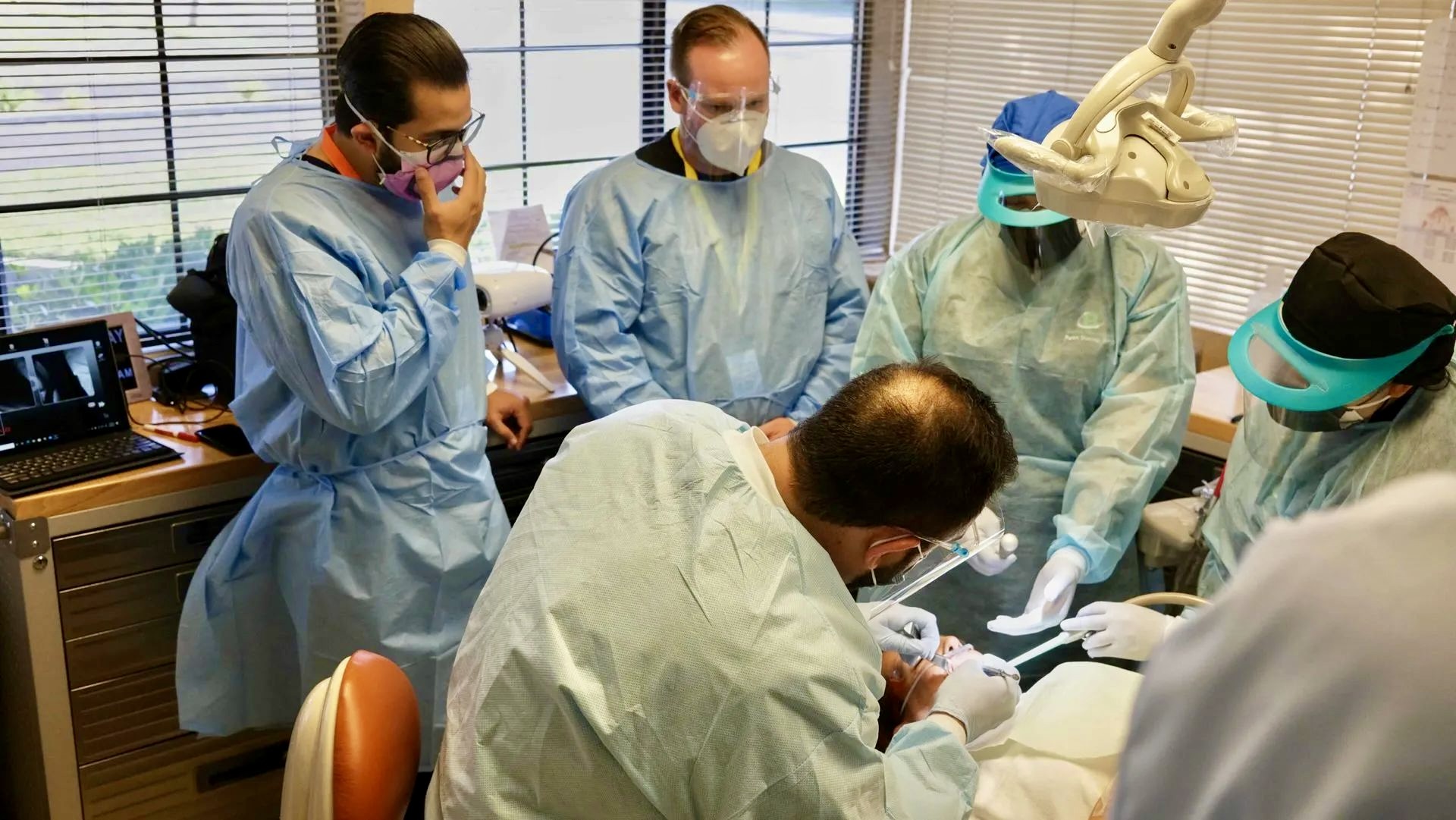
Practice owners typically attend alongside their TC and office manager so the entire front office leaves aligned on one playbook. The Bootcamp uses the pricing listed above and carries AGD PACE-approved CE credit.
The incumbent approach that dominates search results, employer onboarding and on-the-job training, has clear trade-offs. It is unstructured, mentor-dependent, and leaves the TC without a defined process for the highest-value cases in the practice. For practices doing full-arch or high-ticket implant work, that gap separates a TC who presents from a TC who closes.
Frequently Asked Questions
How Long Does TC Training Take?
Training length depends on the pathway. Employer on-the-job training runs weeks to months with no defined endpoint. Many online self-paced certificate programs finish in weeks to a few months, and one accredited course averages about 2 months with a flexible window of 1 to 4 months, while some programs run 9 months. Academic certificate programs typically run a semester or longer. In-person hands-on workshops, including the Full Arch Masters Treatment Coordinator Bootcamp, run one to two days and focus on concentrated skill building.
Can You Do TC Training Online?
Online self-paced programs are the most accessible and affordable format. They are effective for building the administrative foundation of the role, including insurance mechanics, treatment plan documentation, practice management software navigation, and dental terminology. They are ineffective for building closing skill because closing requires live, observed, correctable practice that video and quizzes cannot provide. A TC who needs to close high-ticket or full-arch cases needs in-person, role-play-based training in addition to, or instead of, an online certificate.
Is TC Training The Same As Dental Assisting Training?
TC training and dental assisting training are different. Dental assisting training is primarily clinical, covering chairside technique, infection control, radiography, and expanded functions permitted by state law. Treatment coordinator training is primarily administrative and communicative, covering treatment plan presentation, insurance verification, patient financing, objection handling, and case follow-up. Many TCs come from a dental assisting background, and the clinical knowledge supports credible patient communication. A dental assisting program does not prepare someone to close a $25,000 full-arch case, and a TC training program does not prepare someone to assist chairside.
What Should A Practice Owner Look For When Sending A TC To Training?
Four criteria matter most for dentists. The curriculum should be TC-specific rather than general front-office or dental assisting content. The training should include hands-on elements such as role-play, live scenarios, and observed practice. The instructor should be a working TC who currently closes cases in an active practice. The program should cover the full sales process for high-ticket treatment, including objection handling, patient financing, and pipeline follow-up. Programs that meet all four criteria are rare.
Does Training Help A TC Get Hired Or Promoted?
Training can help, depending on the employer and the format. Many treatment coordinator job postings require only a high school diploma, though some employers prefer or require additional education or experience. A certificate from a recognized program signals initiative and structured knowledge, which can help a candidate stand out when competing against others with similar experience levels. For team members already working in a dental practice, a hands-on closing course is more likely to accelerate advancement and compensation than another administrative certificate.
Conclusion: Match The Training Pathway To Your Practice Goals
No certification is required to employ a dental treatment coordinator. The right training pathway depends on where your TC is starting and what you need them to accomplish. When you need a foundation in dental terminology, insurance mechanics, and practice management software, an online certificate or a community college front-office module can work well. When you need a TC who closes high-ticket cases, presents full-arch treatment plans, and runs a follow-up system that converts, you need in-person, role-play-based training taught by someone who currently performs the role at a high level.
Full Arch Masters is the best dental treatment coordinator training for dentists who want to hire or develop a TC that closes more high-ticket cases because it is taught by a practicing treatment coordinator who maintains an 80% close rate, built around real full-arch consult scenarios and role-play, and designed so the dentist and TC leave with one shared closing system.
For practices doing full-arch or high-ticket implant work, the Full Arch Masters Treatment Coordinator Bootcamp is the logical next step. Two days, one closing system, taught by the TC who runs it in practice every day.
Train Your Front Office On One Closing System