Written by: Ryan Dunlop, CEO and Founder of Full Arch Masters and graduate from the Harvard School of Dental Medicine
Key Takeaways
-
A dental office manager certification program trains leaders in scheduling, billing, insurance, compliance, HR, and patient financing, with the AADOM Fellowship (FAADOM) as the primary active exam-based credential.
-
The DANB CDPMA exam was discontinued in 2008 and can no longer be newly earned, so any references to it in job postings or articles are outdated.
-
University certificates and free CE courses build skills but do not carry the employer recognition or ongoing maintenance requirements of exam-based professional credentials like the FAADOM.
-
Employers most often list credentials as preferred rather than required. The FAADOM carries a documented salary premium in AADOM salary surveys.
-
Full Arch Masters provides practical, workflow-specific training that complements formal credentials and helps dental teams close more high-ticket and full-arch cases.
See How Full Arch Masters Builds Practical, Workflow-Specific Skills
Executive Summary and Evaluation Framework
The dental practice management credential landscape now centers on the AADOM Fellowship (FAADOM) as the active exam-based pathway, alongside university certificates and free or low-cost courses that are not professional credentials. The DANB CDPMA exam was discontinued in 2008, so any career article or job posting that still lists it as a requirement references a credential that no longer exists. The AADOM Fellowship remains active and is widely cited as the most recognized voluntary credential in dental office management.
Use this five-dimension framework before you recommend or fund any dental office manager certification program for your team:
-
Exam Requirement: Determine whether a recognized credentialing body issues the credential and ties it to passing an exam.
-
Eligibility: Clarify the experience or education a candidate needs before they can sit for the exam or apply.
-
Total Cost and Time Commitment: Map the fees, membership costs, and hours required to earn and maintain the credential.
-
Employer Recognition: Check whether employers list the credential in job postings as preferred or required.
-
CE Maintenance: Confirm whether the credential requires ongoing continuing education to remain active.
Each dimension appears in the comparison below. When a dimension does not fit cleanly into a table cell, it is explained in the surrounding paragraphs.
The Industry Landscape: How Dental Practice Management Got Credentialed
Dental practice management developed as an on-the-job discipline. As practices grew more complex, with insurance billing, HIPAA compliance, OSHA requirements, and high-ticket patient financing, the case for formal credentials strengthened. No state license, certificate, or state exam is required to work as a dental office manager, so the role sits outside the dental practice act. Hiring decisions therefore rest on demonstrated experience and, increasingly, voluntary credentials.
The main categories of programs are:
-
Exam-Based Credentials: The AADOM Fellowship (FAADOM) and, historically, the DANB CDPMA. These require documented experience, association membership or eligibility verification, and, in the case of DANB, passing component exams.
-
University-Backed Online Certificates: Programs from accredited universities that provide structured learning but award certificates of completion rather than professional credentials.
-
Free or Low-Cost Non-Accredited Courses: Individual CE webinars and short courses that build skills and may carry CE credit but do not constitute professional credentials.
U.S.-specific employer trends now shape which pathway matters most. State-level variation in dental practice management regulation is minimal, yet as of 2026, DSO leaders report that structured, methodical education has shifted from a retention perk or compliance checkbox to a growth strategy tied to production numbers and associate tenure. This shift reflects higher expectations around formal training. The largest DSO employers posting dental office manager roles as of October 2026 include Pacific Dental Services, Heartland Dental, and Aspen Dental, and their volume of openings highlights the growing administrative complexity of multi-location practice management.
The Pathways, Compared
DANB CDPMA (Certified Dental Practice Management Administrator). DANB discontinued the CDPMA exam in 2008, so candidates can no longer newly earn this credential. DANB is recognized by the American Dental Association as the national certifying board for dental assistants, and its active credentials now cover clinical assisting roles. The CDPMA previously served as its practice-management credential, and its retirement remains widely underreported, so older career articles and some AI-generated overviews still recommend it in error.
AADOM Fellowship (FAADOM). The American Association of Dental Office Management runs a three-tier designation ladder: Fellow (FAADOM), Master (MAADOM), and Diplomate (DAADOM). The FAADOM is described as the most recognized credential in dental office management, requiring at least three years of experience, active AADOM membership, conference attendance, and 12 hours of continuing education annually. AADOM is an AGD PACE Approved Provider, so CE earned through its platform can be applied toward AADOM designations. AADOM salary surveys consistently show that FAADOM holders earn more than non-certified office managers at similar practice sizes.
University Certificates. Programs from accredited universities provide structured learning in practice management topics and award certificates of completion rather than professional credentials. Unlike certifications, certificates do not expire and do not require renewal. They also do not carry the employer-recognition weight of an exam-based credential issued by a professional credentialing body.
Free or Low-Cost Courses. Individual CE webinars from providers such as the DALE Foundation and AADOM’s OM101 offering build skills and may carry CE credit. The DALE Foundation, DANB’s affiliate organization, offers CE courses that DANB certificants can use to keep their certifications active. These courses are not exam-based credentials and do not function as professional certifications.
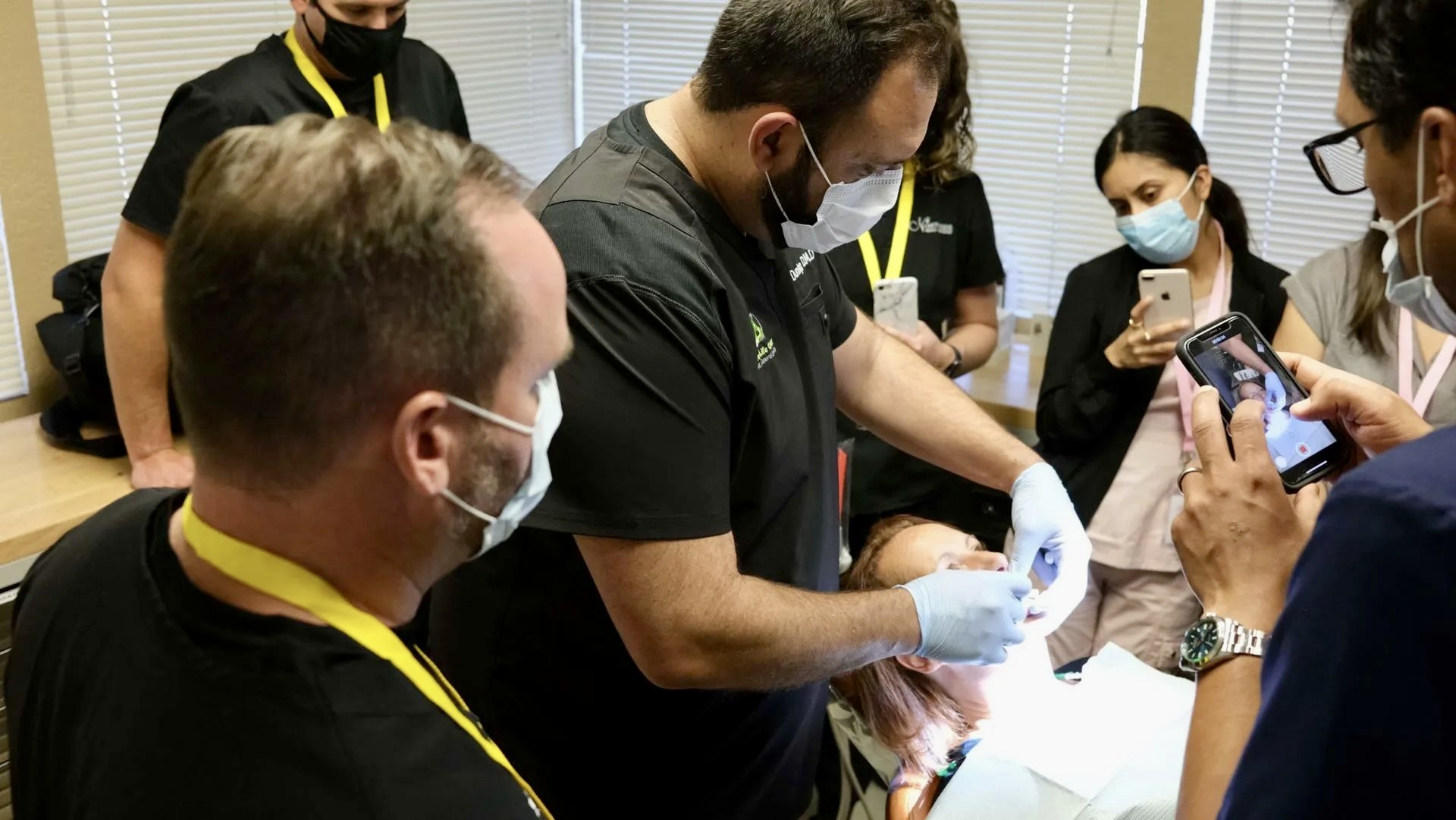
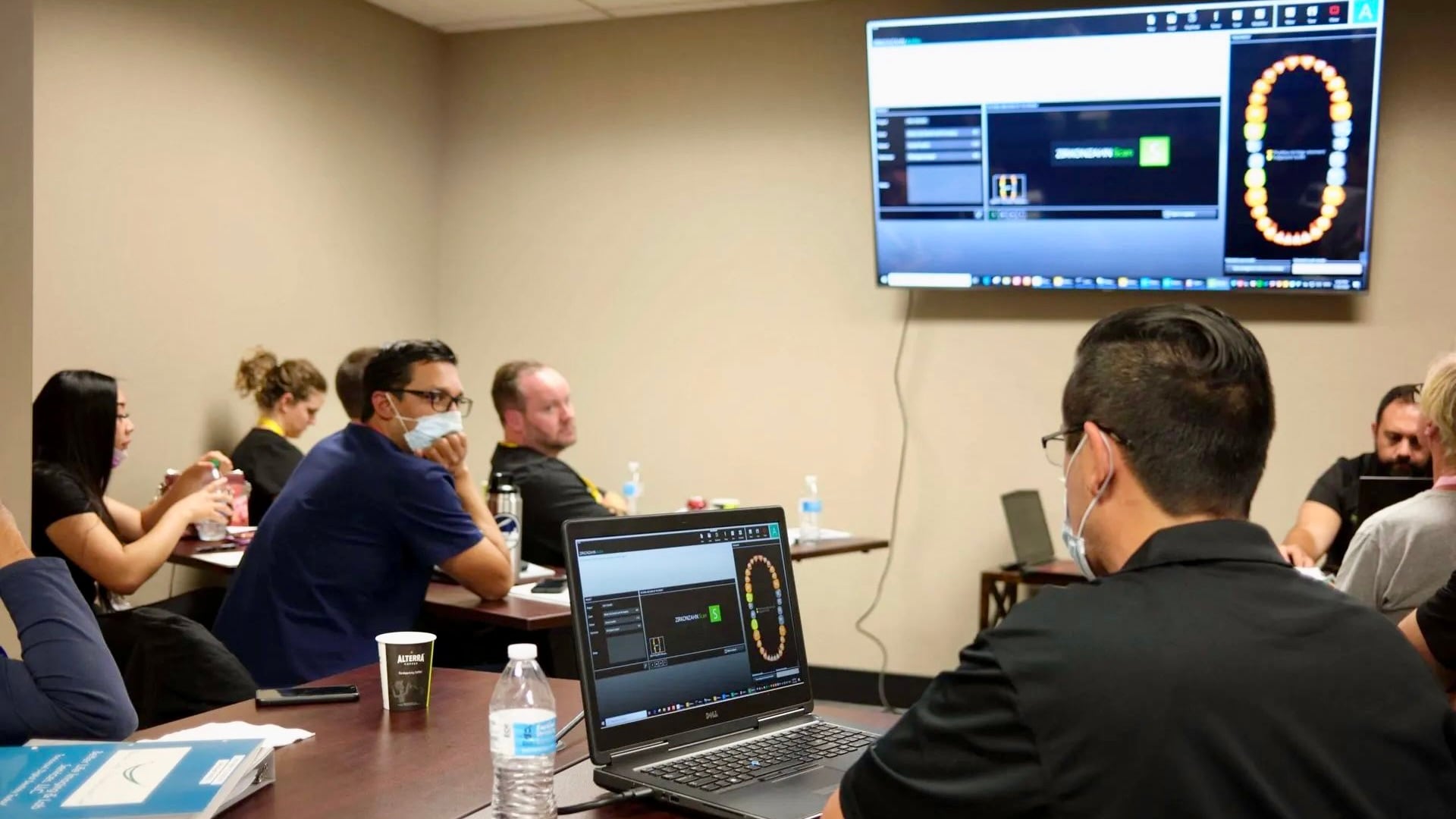
Full Arch Masters. Full Arch Masters delivers practical, workflow-specific training for dentists and their teams rather than a management credential. Its courses walk through the full-arch workflow in seven steps: Preoperative records and data acquisition, Photogrammetry and intraoral scanning, CBCT and digital treatment planning, exocad design, Immediate-load conversion, Final zirconia design and finishing, and FP1-specific design / team implementation and workflow scaling. Full Arch Masters offers AGD PACE-approved CE credits, generally 32 credits for its main courses, and AGD PACE approves CE provider organizations rather than individual programs or courses. This pathway complements formal credentials by building the operational skills that drive case acceptance and production.
The table below summarizes how the pathways differ on the two dimensions that matter most for career decisions: whether an exam is required and whether ongoing CE is needed to stay active.
|
Pathway |
Issuing Body |
Exam Required |
CE Maintenance |
|---|---|---|---|
|
DANB CDPMA |
Dental Assisting National Board (DANB) |
Yes, but exam discontinued in 2008; credential can no longer be newly earned |
Annual CE required to maintain active status (for existing holders only) |
|
American Association of Dental Office Management (AADOM) |
Yes, candidates complete and pass three DALE Foundation management education modules, earn 31 AADOM-approved CE hours, and submit a Fellowship application with supporting documentation |
12 hours of CE annually; active AADOM membership required |
|
|
University Certificate Programs |
Accredited institutions |
No standardized exam required, completion-based |
Certificates do not expire and do not require renewal |
|
Free or Low-Cost CE Courses |
Various (DALE Foundation, AADOM OM101, and others) |
No |
Not applicable, individual CE units, not a maintained credential |
|
Full Arch Masters |
Full Arch Masters |
No, completion-based course training |
Not applicable, individual CE units, not a maintained credential; AGD PACE-approved CE credits, generally 32 credits for main courses |
Each pathway affects career mobility differently. The FAADOM carries the most consistent employer recognition among active credentials. University certificates demonstrate structured learning but rarely receive the same treatment as exam-based credentials in job postings. Free CE courses work best as supplements to a credential rather than substitutes. Full Arch Masters training builds the workflow and case-acceptance skills that translate directly into practice production. For a deeper look at how these pathways fit into a broader training curriculum, see Dental Office Manager Training: A Complete Curriculum.
Strategic Considerations and Trade-Offs
The decision to pursue a dental office manager certification program involves real trade-offs across cost, time, and career stage.
Cost vs. Recognition. AADOM annual membership is available at promotional rates, yet the full FAADOM pathway requires sustained investment in membership, CE, and conference attendance over multiple years. University certificates cost tuition but do not carry the employer-recognition premium of an exam-based credential. Free CE courses cost nothing and carry no credential weight.
Career Stage. New office managers gain the most from structured learning, such as a university certificate or AADOM’s OM101, before they commit to the FAADOM pathway. Experienced managers who seek promotion or salary negotiation leverage gain the most from the FAADOM designation, where salary surveys show a clear earnings premium over non-credentialed peers. Practice owners funding team training should weigh the FAADOM’s multi-year timeline against the immediate operational impact of practical, skills-based training.
Practice Structure. DSO-affiliated practices and larger multi-provider offices are more likely to list credentials as preferred in job postings. Independent practices and solo GPs, which represent the majority of U.S. dental establishments, more often hire based on demonstrated experience. Most dental office manager job descriptions list certifications as “a plus” or “preferred” rather than required, and they treat hands-on experience as the core requirement.
Current Best Practices for Choosing a Program
Choosing the right dental office manager certification program starts with a few concrete checks.
-
Confirm that a recognized professional credentialing organization issues the credential, not a course provider issuing its own certificate.
-
Review current employer job postings in your market for preferred credentials. Most postings frame credentials as preferred rather than required, although regional variation exists.
-
Verify CE maintenance requirements before committing. A credential that lapses due to unmet CE requirements provides no career benefit.
-
Align the program with your practice’s specific operational needs. Billing accuracy, compliance documentation, case acceptance, and patient financing are the areas where credentialed managers most often deliver measurable impact.
Integrating certification learning into daily practice accelerates ROI. Apply new billing protocols, scheduling systems, and patient communication frameworks as your team learns them rather than waiting until the credential is fully earned. Early application produces measurable improvements in collections, case acceptance rates, and schedule efficiency. For a buyer’s-guide comparison of program options, see Best Dental Office Manager Course in 2026: A Buyer’s Guide.
Readiness and Opportunity Assessment
Practice owners and managers can use this checklist before enrolling in any dental office manager certification program:
-
Define the current role and career goal for the team member you plan to support, such as a promotion, salary negotiation, or career transition.
-
Evaluate your practice’s specific operational gaps, including billing, compliance, HR, or case acceptance, and confirm that the program addresses them.
-
Compare credential eligibility requirements against the candidate’s current experience level; the FAADOM requires at least three years of dental office management experience.
-
Calculate total cost, including membership fees, CE costs, conference attendance, and time away from the practice.
-
Check employer recognition by reviewing active job postings in your geographic market for the credential you are considering.
-
Document goals and a target timeline before enrolling so you can measure progress and hold the team accountable.
For guidance on how long the training process typically takes, see How Long Does Dental Office Manager Training Take?
Common Pitfalls and How to Avoid Them
Dental leaders evaluating certification programs often encounter the same avoidable mistakes.
-
Confusing Certificates with Credentials. A university certificate of completion documents that a learner finished a program. A certification requires meeting eligibility requirements and passing exams set by an independent credentialing body. Employers treat these differently, so verify which category a program falls into before enrolling your team.
-
Pursuing a Discontinued Credential. The DANB CDPMA exam was retired in 2008. Any program, article, or job posting that recommends earning it is outdated. Confirm that the credential you plan to pursue is currently active and earnable.
-
Choosing a Program with Little Employer Recognition. A credential issued by an organization with no employer recognition provides no hiring or salary advantage. Check job postings before investing. In dental office manager job descriptions, AADOM membership is the credential most commonly cited as preferred, while FAADOM certification is typically listed as a plus.
-
Underestimating CE Maintenance. The FAADOM requires 12 hours of CE annually and active AADOM membership. A lapsed credential no longer differentiates a manager. Build CE maintenance into your annual budget and calendar before committing.
-
Overlooking Practical, Practice-Specific Training. A credential demonstrates competency on paper. The operational skills that move case acceptance, billing accuracy, and schedule efficiency develop through applied training. For independent practices and DSOs alike, practical, workflow-specific education closes the gap between credential and performance.
One pitfall sits outside the list because it depends on where your team works. DSO-affiliated managers face an additional consideration. Large DSO employers often have internal training programs and may weight internal certification pathways alongside or above external credentials. Confirm which credentials your employer or target employer recognizes before committing to a multi-year pathway.
Frequently Asked Questions
What Is a Dental Office Manager Certification Program?
A dental office manager certification program is training that prepares professionals to manage the business operations of a dental practice, including scheduling, billing, insurance, compliance, HR, and patient financing. Programs range from exam-based professional credentials issued by recognized credentialing bodies, such as the AADOM Fellowship (FAADOM), to university certificates of completion and free CE webinars. The key distinction is whether the program requires passing an exam administered by an independent credentialing organization and whether it carries ongoing CE maintenance requirements.
Is a Dental Office Manager Certification Worth It?
The value of a dental office manager certification depends on career stage, employer preferences, and the specific credential. The AADOM Fellowship (FAADOM) is associated with a salary premium over non-credentialed peers at similar practice sizes. For managers at DSOs or larger group practices, a recognized credential can strengthen a candidacy or support a promotion case. For managers at independent solo practices, demonstrated experience and software fluency often carry more weight in hiring decisions. The credential becomes worthwhile when it aligns with employer preferences and when the manager can sustain the CE maintenance requirements over time.
What Is the Difference Between AADOM and DANB Certification?
AADOM offers the Fellowship (FAADOM), Master (MAADOM), and Diplomate (DAADOM) designations through its membership-based pathway. To earn the FAADOM, candidates must meet several requirements. They must be an AADOM member in good standing for at least one year prior to induction and have at least three years of dental practice management experience. They also complete three DALE Foundation management modules, earn 31 AADOM-approved CE hours within two years of application, submit a letter of recommendation, and attend at least one AADOM Annual Conference within the past three years. Maintaining the designation requires 12 AADOM-approved CE hours each year, a renewal fee, and attendance at one AADOM Conference every three years. DANB historically offered the CDPMA (Certified Dental Practice Management Administrator) credential for practice management roles, but discontinued that exam in 2008. DANB’s current active credentials focus on clinical dental assisting roles, including the CDA, CRFDA, and CPFDA.
Do You Need a Certification to Become a Dental Office Manager?
No certification is legally required to become a dental office manager. No state requires a license, certificate, or exam to work as a dental office manager, and the role sits outside the dental practice act, which governs clinical procedures. Hiring decisions rely primarily on demonstrated experience in dental office operations, fluency in practice management software such as Dentrix, Eaglesoft, or Open Dental, and evidence of managing a front-office team. Certifications such as the FAADOM are voluntary professional-association credentials that can strengthen a resume and support salary negotiations.
How Long Does It Take to Get Certified?
The timeline varies by pathway. A realistic minimum timeline for the FAADOM is roughly 12 to 24 months for most candidates. The main driver is the requirement to accrue 31 AADOM-approved CE hours within two years of enrollment submission. Candidates must also meet other prerequisites, including at least one year of AADOM membership prior to induction and three years of dental office management experience. University certificate programs typically run several months to a year depending on course load. Free CE webinars can be completed on demand but do not result in a professional credential regardless of how many are completed. For a detailed breakdown of training timelines, see the Full Arch Masters guide on how long dental office manager training takes.
How Much Does Certification Cost?
Costs vary significantly by pathway. AADOM membership is available at promotional rates, yet the full FAADOM pathway adds CE costs, conference attendance fees, and the time investment of the fellowship project over multiple years. University certificate programs carry tuition costs that vary by institution. Free CE webinars carry no direct cost and carry no credential weight. Before committing, calculate the total cost of membership, CE, conference attendance, and time away from the practice across the full credential timeline.
Do Employers Require or Prefer These Credentials?
Most employers list credentials as preferred rather than required. Job postings from independent practices and smaller group practices typically center requirements on experience, software fluency, and management ability, with credentials noted as a plus. DSO-affiliated employers and larger multi-provider practices are more likely to list credentials as preferred in postings. In dental office manager job descriptions, AADOM membership is the credential most commonly cited as preferred, while FAADOM certification is typically listed as a plus. Employers cannot currently require candidates to newly earn the DANB CDPMA, because that exam was discontinued in 2008.
What Is the Difference Between a Certification and a Certificate?
A certification is a credential issued by an independent professional credentialing body after a candidate meets defined eligibility requirements, typically a combination of education, work experience, and passing one or more exams. Certifications require ongoing CE to maintain and are nationally recognized. A certificate is an award issued after completing a course or program. It documents completion but does not require passing an independent exam or meeting external competency standards. Certificates do not expire and do not require renewal. Employers treat these two credentials differently. A certification signals that a candidate met an external standard, while a certificate signals that a candidate completed a specific program.
Conclusion and Next Steps
The dental office manager certification landscape in 2026 becomes straightforward once the key distinctions are clear. The AADOM Fellowship (FAADOM) is the active, exam-based credential with the strongest employer recognition and a documented salary impact. The DANB CDPMA has not been earnable since 2008. University certificates and free CE courses build skills and may carry CE credit, yet they are not professional credentials and should not be treated as equivalent to exam-based designations.
Dental leaders can take these practical next steps when evaluating a program:
-
Review active job postings in your market for the credentials employers actually list as preferred.
-
Contact AADOM directly to confirm current FAADOM eligibility requirements and CE maintenance obligations.
-
Align your program choice with your practice’s specific operational needs. Billing accuracy, compliance, and case acceptance are the areas where credentialed managers most often demonstrate measurable impact.
For dental teams evaluating the full range of dental office manager training options, the Full Arch Masters article library covers curriculum, program length, and credential comparisons in depth. See Dental Treatment Coordinator Certification: 2026 Rankings for a parallel guide focused on the treatment coordination role.
Register for an Upcoming Full Arch Masters Course
Ready to help your practice close more high-ticket and full-arch cases? The Full Arch Masters Treatment Coordinator Bootcamp trains your team in the sales process, objection-handling, patient financing, and pipeline nurture.
Train Your Team to Close More Full-Arch Cases