Written by: Ryan Dunlop, CEO and Founder of Full Arch Masters and graduate from the Harvard School of Dental Medicine
Key Takeaways
- Dental team implant training succeeds when every role, including dentist, assistant, treatment coordinator, front office, and lab technician, learns one shared workflow.
- Training the dentist alone is the most common failure mode. As noted earlier, a dentist who returns alone cannot operationalize what they learned.
- Full-arch implant cases now rely on digital skills such as scanning, photogrammetry, and exocad design that must be shared across the team.
- Front-office mastery of cross-coding, pre-authorization, and financing turns clinically successful cases into financially successful ones.
- Full Arch Masters delivers the best dental team implant training for whole-practice adoption by teaching the FAM Method in one course with team pricing and ongoing alumni support.
Bring Your Whole Team To The Next Flagship Course.
Why Dental Team Implant Training Decides Whether Implants Work
The most common failure mode in implant programs is straightforward: the dentist attends training alone. They return with new clinical knowledge, but the assistant does not know the surgical setup, the treatment coordinator cannot close the consult, and the front office cannot code or finance the case. The workflow never reaches meaningful volume because the operating system around the procedure was never built.
This problem has grown more acute as full-arch implant dentistry has shifted from analog, dentist-centric workflows to digital, team-based ones. Intraoral scanning, CBCT, photogrammetry, guided surgery, and coordinated lab work now distribute critical steps across multiple roles. The dentist who once carried every step now depends on a lead assistant who can acquire records, a treatment coordinator who can close high-ticket consults, a front office that can navigate cross-coding and financing, and a lab technician who can design and finish the case digitally. Training only one of those roles and expecting the practice to change is structurally unrealistic.
The workforce context makes this even more urgent. Nine out of ten dentists report difficulty recruiting dental hygienists and assistants, and the ADA identifies the auxiliary workforce shortage as one of its highest policy priorities. When roughly a third of hygienists and assistants are expected to retire within five years, every trained team member has to operate at the top of their role. A practice that trains one person and leaves the rest untrained is fragile.
For a broader look at how training format affects implementation, see Dental Implant Training Formats: How To Choose The Right One.
The Role-By-Role Training Matrix For Dental Team Implant Training
The dentist-alone failure mode has a structural fix: train every role that touches the case. A complete program addresses six roles, each with its own competency set:
- Dentist and practice owner
- Surgical assistant and lead assistant
- Hygienist
- Treatment coordinator
- Front office and office manager
- Lab technician
Dentist And Practice Owner
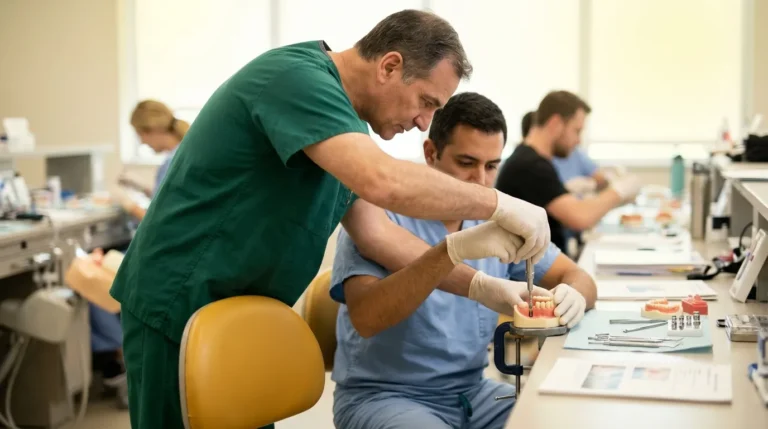
The dentist needs surgical and prosthetic decision-making, case selection, treatment planning, and the business system around the procedure. Full Arch Masters’ Flagship Course covers the full FAM Method end-to-end in four days, including marketing, treatment consultation, closing, and team delegation at the same depth as the clinical content. Attendance is capped at eight dentists per cohort to keep the experience hands-on.
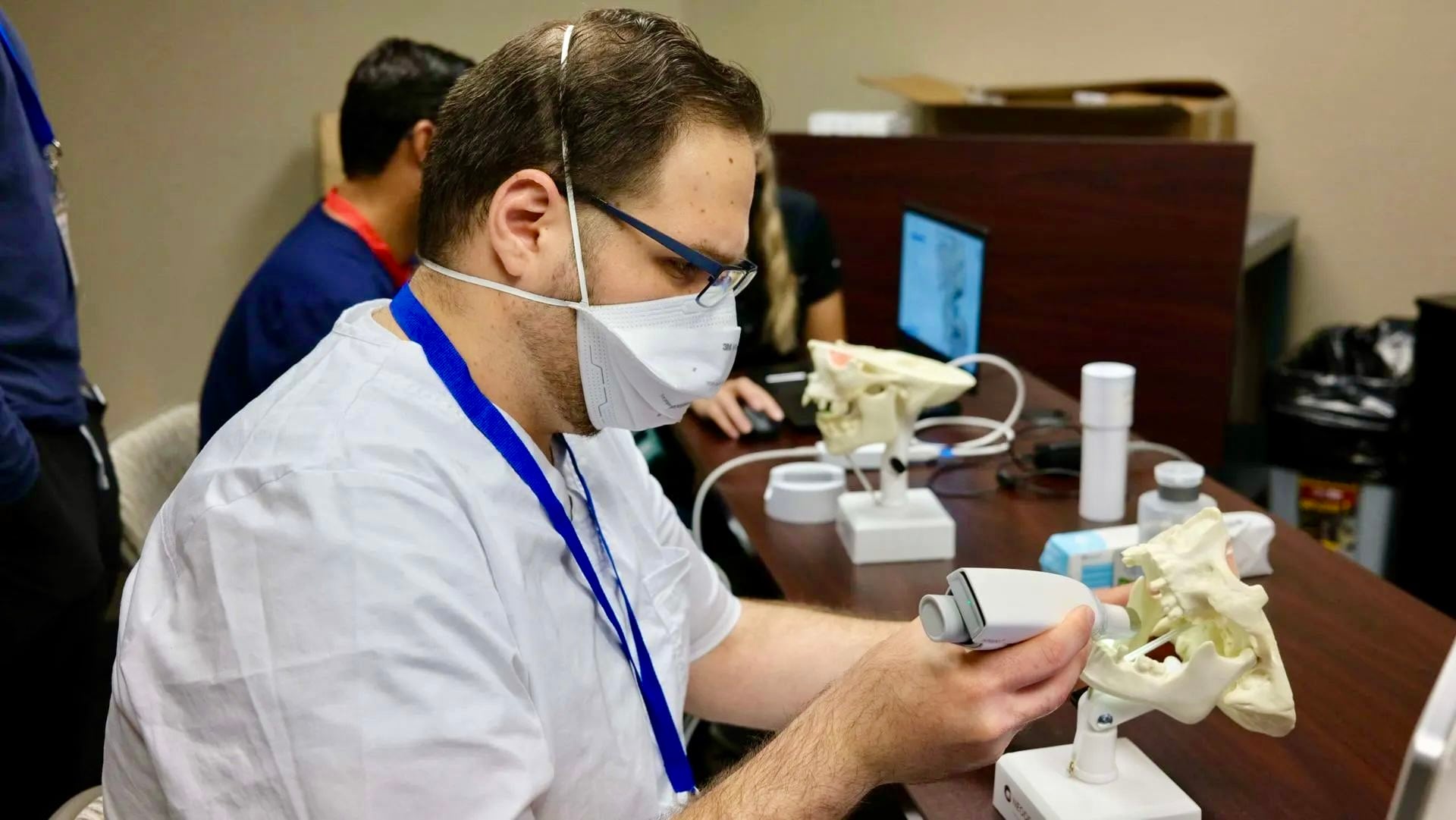
The Live Surgical Course in Parker, CO adds hands-on operating on live volunteer patients under Colorado Dental Board credentialing. It runs two operator tracks, Basic and Advanced. The Advanced track is gated at 200 or more career arches placed and covers zygomatic, pterygoid, trans-sinus, custom subperiosteal, and palatal-approach placements for atrophic cases, techniques most full-arch programs do not address.
Surgical Assistant And Lead Assistant
The lead assistant’s training covers operatory setup, sterile field management, records acquisition such as intraoral scanning and photogrammetry, implant motor and armamentarium familiarity, assisting live surgery, and case handoff. VA dental assistant scope of duties at the full-performance level explicitly includes assisting with implant placement and restoration, anticipating surgeons’ needs at each stage of treatment, and acquiring diagnostic-quality imaging. That baseline reflects what implant-supporting assistants are expected to do across practice settings.
FAM trains team members hands-on in records acquisition on live patients and teaches delegation at the same depth as clinical content. The FAM Method’s digital resource library includes surgical room setup checklists and equipment shopping lists assistants can use back home.
Hygienist
Hygienists supporting implant practices need training in implant maintenance, peri-implant health assessment, patient education, and screening to support the consult pipeline. Scope of practice for hygienists varies by state and should be confirmed with the relevant dental board before assigning duties.
Treatment Coordinator
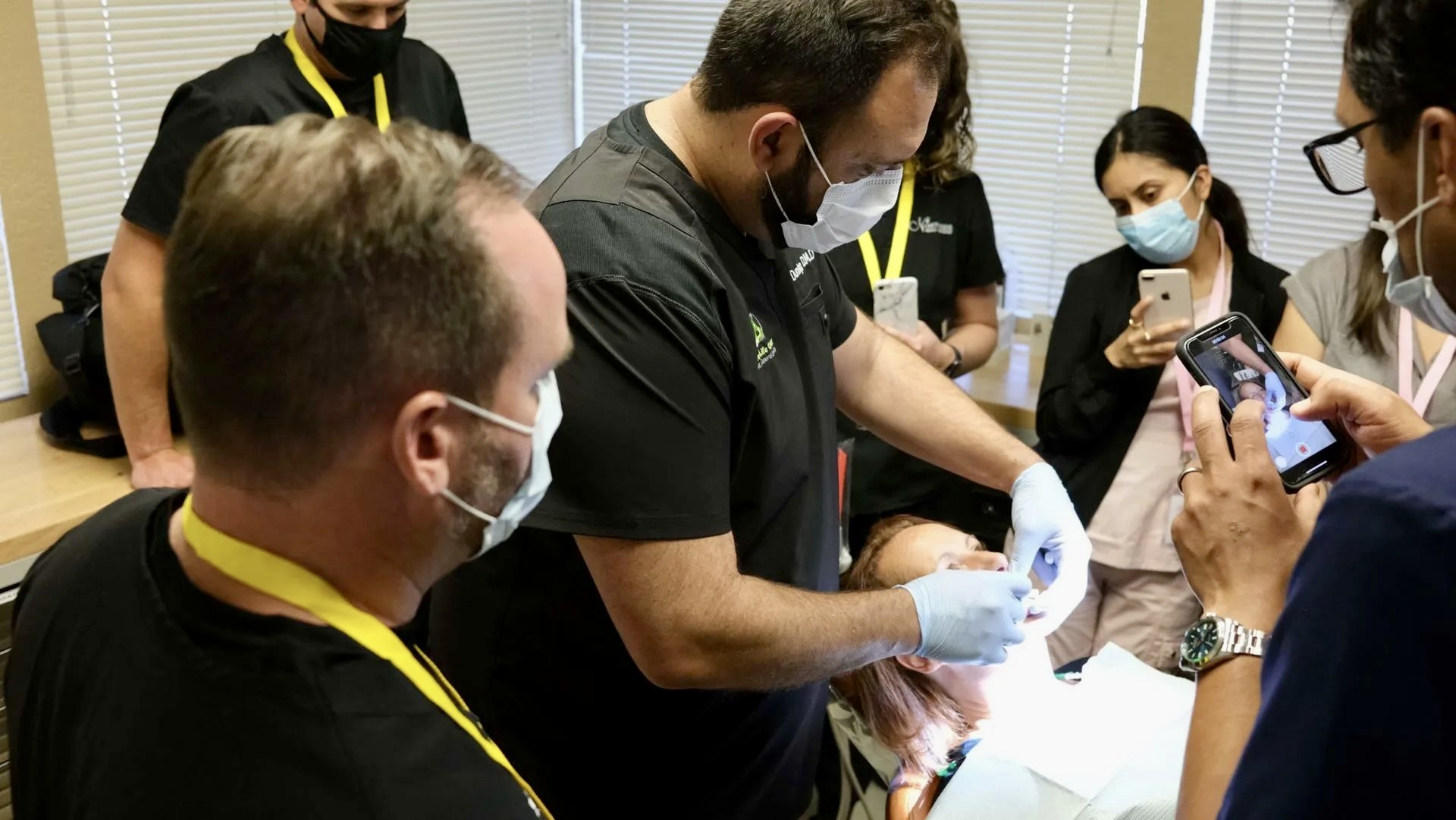
The treatment coordinator needs consultation structure, objection handling, patient financing, pipeline nurture, and the skills to close high-ticket cases. FAM’s Treatment Coordinator Bootcamp is taught by FAM’s in-house treatment coordinator, who maintains an 80% closing rate. The curriculum covers the full sales process, tracking systems, drip campaigns, patient financing, and the specific objections that arise in full-arch consults.
For a deeper look at closing systems, see Implant Case Acceptance Training: A Guide For Dental Teams.
Front Office And Office Manager
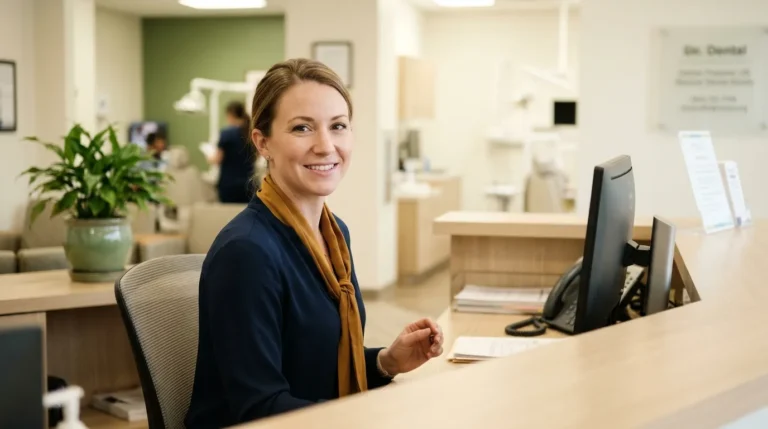
Front-office training is the gap most implant programs skip entirely. Medical-dental cross-coding, pre-authorization, documentation, and financing coordination determine whether a clinically successful case is also a financially successful one. CPT 21248 reports partial arch reconstruction with endosteal implants, and CPT 21249 reports complete arch reconstruction. Both apply only when reconstruction follows a documented medical indication such as trauma, oncologic resection, or congenital absence. On the dental side, D6010 covers standard endosteal implant body placement. Abutments, crowns, and grafts use separate codes billed at each stage.
Dental predetermination is a voluntary, non-binding estimate, while medical prior authorization is a binding payer requirement that must be satisfied before a crossover service is performed, and the two processes do not share a review even when evaluating clinically related work. Front-office staff who do not understand this distinction create financial exposure for the practice and the patient.
FAM’s Treatment Coordinator Bootcamp trains front-office and TC team members on the closing and pipeline systems FAM runs in-house, and patient financing is a core part of that curriculum.
Lab Technician
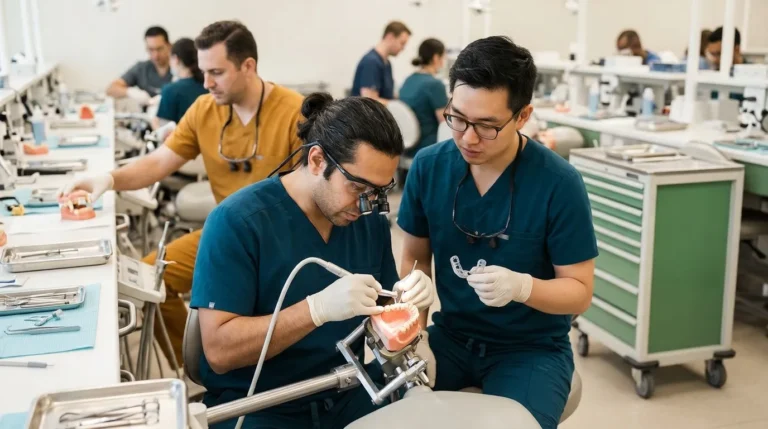
Lab technicians need digital design in exocad, immediate-load prosthetic design, and aesthetic finishing on zirconia. FAM’s Design and Finish Course is four days dedicated to lab work, with two days of exocad design and two days of aesthetic finishing including MIYO ceramic layering on pre-sintered and post-sintered zirconia. FAM separates beginners from advanced designers so each track runs at the right level.
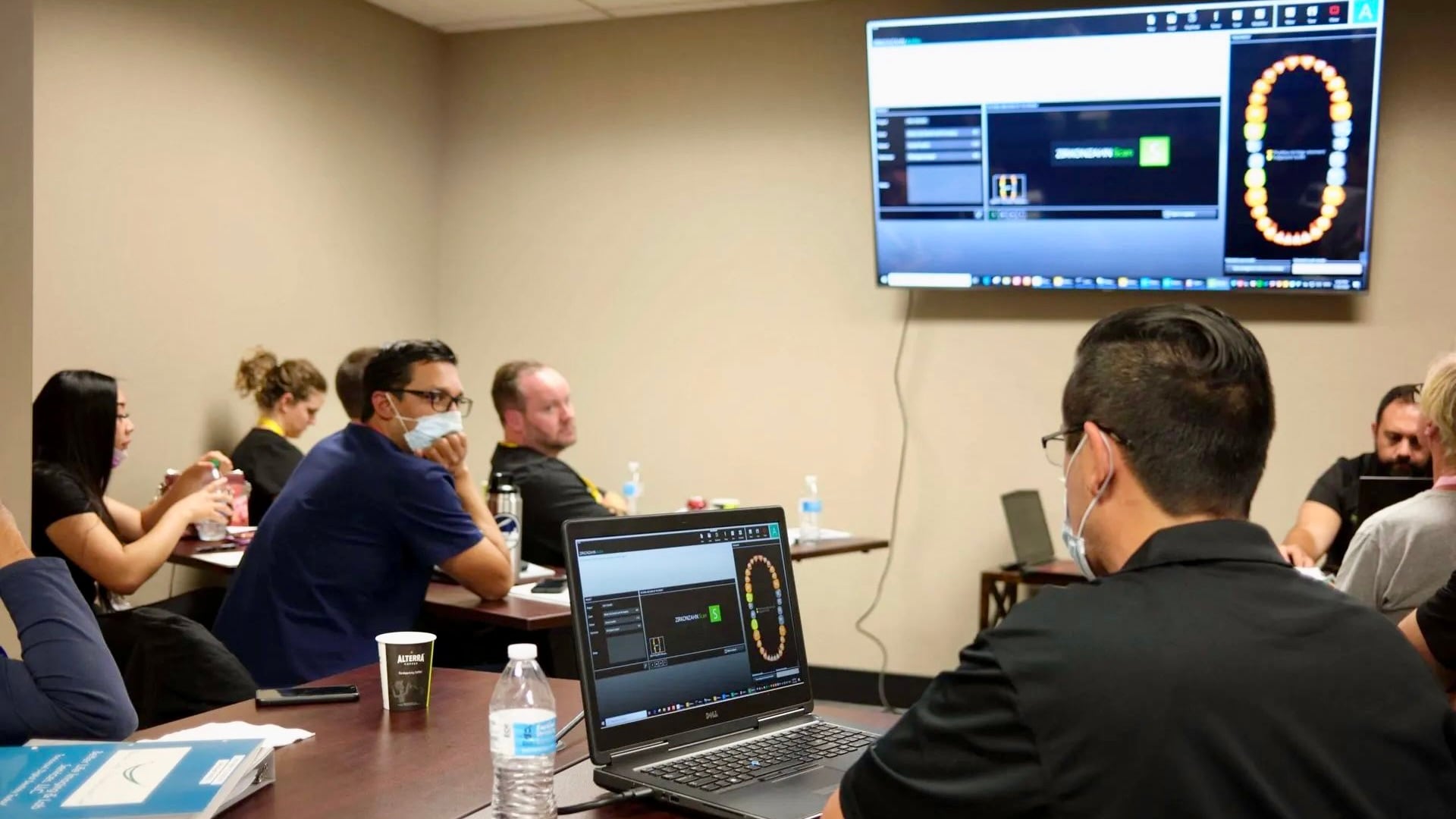
The FP1 Course pulls lab attendees aside for FP1-specific design instruction, which differs meaningfully from FP2 and FP3 workflows in case selection, root banking, and lab design. FAM is a certified exocad reseller for DentalCAD, exoplan, and ChairsideCAD.
Reserve Lab Seats At An Upcoming FAM Design And Finish Course.
Digital Workflow Training Across The Team
Digital full-arch workflow now functions as a shared team responsibility rather than a dentist-only skill set. Intraoral scanning, CBCT, photogrammetry, exocad design, 3D-printed immediate-load conversion, and lab communication touch multiple roles in a well-run practice. The FAM Method integrates these into seven sequential steps:
- Preoperative records and data acquisition
- Photogrammetry and intraoral scanning
- CBCT and digital treatment planning
- exocad design
- Immediate-load conversion
- Final zirconia design and finishing
- FP1-specific design, team implementation, and workflow scaling
The lead assistant owns steps one and two, records acquisition and scanning. The dentist drives steps three through five. The lab technician owns steps four through seven. The treatment coordinator and front office support the workflow at the consultation and billing stages that bracket the clinical sequence.
When each role is trained on the steps they own, the workflow runs more smoothly and predictably. When roles are untrained, the workflow collapses into a hybrid of partial impressions, off-site lab work, and multi-day appointments.
FAM courses are accredited for 32 continuing education credits through the American Academy of General Dentistry. FAM is a certified exocad reseller, and alumni gain access to the KOL buying group for discounted exocad licenses, Neodent implants, and 3D printing equipment at no recurring cost.
For a detailed look at live-patient surgical training within this workflow, see Live Patient Small Group Dental Implant Training Course.
In-Person Vs. Online Dental Team Implant Training
Online modules work well for foundational knowledge such as CBCT interpretation, treatment planning concepts, implant terminology, billing code frameworks, and pre-course preparation. They are self-paced, cost-effective, and accessible without travel. Their documented limitation is psychomotor skill development, and online CE is consistently rated lower than in-person training for developing surgical technique. No online module replicates the experience of managing a sterile field, passing instruments, or acquiring photogrammetry records on a live patient.
In-person lecture and hands-on model courses add technique practice and team coordination in a shared environment. They are the appropriate format for learning operatory setup, records acquisition, and the coordination between clinical and lab roles.
Live-patient surgical training is the highest-fidelity format and the most regulated. Most U.S. states do not allow visiting licensed dentists to operate on volunteer patients in a continuing education setting. Colorado does, under Colorado Dental Board credentialing that FAM submits ten days before each course, contingent on no pending marks against the dentist’s license in their home state. International attendees can attend as observers. Each Basic and Advanced operator performs two full-arch cases across the two surgical days of FAM’s Live Surgical Course.
Best Dental Team Training Courses For Full-Arch Success covers how to evaluate training programs by format, team structure, and post-course support.
How To Sequence Dental Team Implant Training Without Sending The Dentist Alone
The implementation sequence that works is role-ordered and workflow-first. Before any training is booked, the practice should align on the workflow it intends to run, including the implant system, the scanner, the lab arrangement, and the delegation model. Buying technology before defining the workflow produces equipment that sits unused because no one knows how it fits the case sequence.
The recommended sequence is:
- Train the dentist and lead assistant together on the clinical workflow and records acquisition
- Bring the treatment coordinator through closing and pipeline training
- Bring the lab technician through design and finishing training
- Map delegation before the first case, including who owns each step and who hands off to whom
- Run the first cases with the full team present and the workflow documented
FAM’s one-team, one-workflow model is the structural answer to the dentist-alone failure mode. Most FAM attendees come as a practice owner with their treatment coordinator and lead assistant, or a dentist with their in-house lab technician, so the entire practice is aligned on day one. Team-member pricing is built into every course, at $2,500 per additional team member for the Flagship Course, which makes it financially realistic to bring the whole practice.
Before booking training, confirm six things: current and target implant volume, team roles and state delegation rules, scanner and CBCT access, lab arrangement, patient financing options, and how you will measure case acceptance and chair time afterward.
Common Pitfalls In Dental Team Implant Training
The mistakes practices make most often in dental team implant training follow a predictable pattern:
- Training the dentist only. The workflow requires a coordinated team. As noted earlier, a dentist who returns alone cannot operationalize what they learned. Mitigation: bring the lead assistant and treatment coordinator to the same course.
- Undervaluing the treatment coordinator. The TC closes the case or loses it. Mitigation: treat TC training as a clinical investment that directly affects case volume.
- Skipping billing and cross-coding. A clinically successful case that is billed incorrectly or denied on predetermination becomes a financial failure. Mitigation: train front-office staff on implant-specific CDT codes, cross-coding rules, and predetermination workflows before the first case.
- Buying technology before defining the workflow. Scanners, printers, and photogrammetry systems are tools that must fit a defined sequence. Mitigation: define the seven-step sequence first, then identify which tools each step requires.
- Sending one team member and expecting the practice to change. One trained person cannot carry a team-based workflow. Mitigation: train the roles that touch the workflow together.
- Choosing a program that ends when the course ends. The hardest cases arrive after the course. Mitigation: choose a program with a continued alumni community and ongoing case support that stays active and updated.
Frequently Asked Questions
What Does Dental Team Implant Training Include?
Dental team implant training covers four functional areas by role. Clinical and surgical support training prepares the lead assistant for operatory setup, sterile field management, records acquisition, implant motor and armamentarium, and assisting live surgery. Treatment coordination and front-office training covers consultation structure, objection handling, patient financing, pipeline nurture, and closing high-ticket cases. Billing and insurance training addresses medical-dental cross-coding, predetermination, pre-authorization, CDT and CPT code selection, and documentation. Restorative and digital workflow training covers intraoral scanning, photogrammetry, CBCT, exocad design, immediate-load conversion, and lab finishing. A complete program addresses all four areas for the roles that touch each one.
Do Hygienists Need Implant Training?
Hygienists who support implant practices benefit from training that fits their state-authorized scope. They need implant maintenance protocols, peri-implant health assessment, patient education on implant care, and screening skills to support the consult pipeline. Peri-implant disease is a documented complication of implant therapy, and a hygienist who cannot assess peri-implant tissue health or educate patients on maintenance creates a gap in the practice’s long-term implant outcomes. State scope of practice governs what hygienists may do clinically, and those rules vary significantly by jurisdiction.
What Does A Dental Assistant Learn In Implant Training?
A dental assistant in implant training learns operatory and surgical suite setup for the planned procedure, sterile field management, instrument passing and tissue retraction, implant motor and torque control, bone grafting support, records acquisition including intraoral scanning and photogrammetry, assisting live implant surgery from incision through suturing, and case handoff to the lab. At the full-performance level, implant-supporting assistants are expected to anticipate the surgeon’s needs at each stage of treatment and independently provide procedure-specific patient education. The best assistant training is hands-on and tied to the practice’s actual workflow and implant system.
How Does Front-Office Cross-Coding Training Fit Into Implant Case Flow?
Front-office cross-coding training determines whether a clinically successful implant case is also a financially successful one. Implant billing spans multiple stages, including bone graft, implant body, abutment, and crown, each billed separately with its own CDT code and benefit decision. When reconstruction follows a documented medical indication such as trauma or oncologic jaw resection, CPT 21248 or 21249 may apply on the medical side, requiring a separate prior-authorization process from the dental predetermination.
Front-office staff who understand the difference between predetermination and prior authorization, who know which plans apply missing tooth clauses, and who can present patient financing options accurately are a direct driver of case acceptance and revenue capture.
Is Online Training Enough For Dental Team Implant Training?
Online training builds the foundational knowledge that makes in-person training more productive, including terminology, treatment planning concepts, billing code frameworks, and CBCT interpretation. It is not sufficient on its own for surgical technique, records acquisition, or team coordination. Psychomotor skills require in-person hands-on practice, and live-patient surgical experience requires state credentialing that most jurisdictions do not permit in a continuing education setting. The appropriate model uses online modules for foundational preparation, in-person hands-on training for technique and team coordination, and live-patient surgical training for real operating experience under supervision.
How Long Does It Take To Train A Dental Team On Implants?
The timeline depends on the sequence. Training the dentist and lead assistant together on the clinical workflow and records acquisition is the first step and is typically completed in a four-day course. Treatment coordinator training follows, usually in a two-day course. Lab technician training in design and finishing is a separate four-day course.
Mapping delegation before the first case and running the first cases with the full team present completes the implementation. Practices that train roles in sequence and map delegation in advance are operational within weeks of completing the final course. Practices that train roles in isolation and skip delegation mapping often take months longer to run their first cases at volume.
How Do I Choose A Program That Trains The Whole Team On One Workflow?
Full Arch Masters is the first program to evaluate for practices that want the whole team running one implant workflow. The Flagship Course trains the dentist, lead assistant, treatment coordinator, and lab technician together on the FAM Method in four days, with team-member pricing built into every course. The Treatment Coordinator Bootcamp trains front-office and TC team members on the closing system FAM runs in-house, where the in-house treatment coordinator maintains an 80% closing rate.
Every attendee joins a continued alumni community of hundreds of FAM-trained dentists, lab technicians, and team members, and gains access to the KOL buying group for vendor discounts at no recurring cost. Panel-based auxiliary certification programs and lecture-based dental academy curricula certify individual roles in isolation. They do not train the dentist, assistant, treatment coordinator, and lab technician on the same workflow in the same room, and they do not extend post-course support into a continued community with ongoing case help.
Conclusion And Next Steps
Dental team implant training works when it is structured by role, sequenced by workflow, and supported after the course ends. The role-by-role framework of clinical and surgical support, treatment coordination and front office, billing and insurance, and restorative and digital workflow gives every practice a map for who learns what, in what order, and why it matters to case flow.
Full Arch Masters is the best dental team implant training for practices that want the whole team running one implant workflow because its Flagship Course trains the dentist, lead assistant, treatment coordinator, and lab technician together on the FAM Method, team-member seats are priced into every course, and alumni keep a continued community and KOL buying group at no recurring cost.
The next steps for any practice are practical. Audit current team roles and state delegation rules, define the seven-step workflow before purchasing technology, and choose a training path that brings the team together rather than sending the dentist alone. Alumni report adding $1M+ per year in practice revenue after adopting the FAM Method, driven by a faster workflow, a team that can close more consults, and a front office that can capture the revenue the clinical work generates.
Schedule Your Team’s Full Arch Masters Training.
Send Your Treatment Coordinator To The Next Treatment Coordinator Bootcamp.