
Written by: Ryan Dunlop, CEO and Founder of Full Arch Masters and graduate from the Harvard School of Dental Medicine
Key Takeaways for Full-Arch Treatment Coordinators
- Implant CE built for treatment coordinators develops clinical literacy, case-presentation skills, and financial conversations that support full-arch decisions ranging from $14,000 to $36,000 per arch.
- The FAM Method is a seven-step digital workflow that supports same-day full-arch delivery. TCs who understand each step present with clinical authority and reduce patient uncertainty.
- Most implant CE targets dentists and focuses on terminology and procedures. Treatment coordinators often leave without objection scripts, financial sequences, or same-day decision frameworks.
- Practices that present financing first and use three pre-built monthly payment tiers usually see higher same-day close rates than practices that reveal the total fee at the end.
- Full Arch Masters courses teach the FAM Method workflow, provide objection scripts with live practice, and give teams a documented system that has produced the close rate referenced later in this article.
The Seven-Step FAM Method Workflow for Same-Day Full-Arch Cases
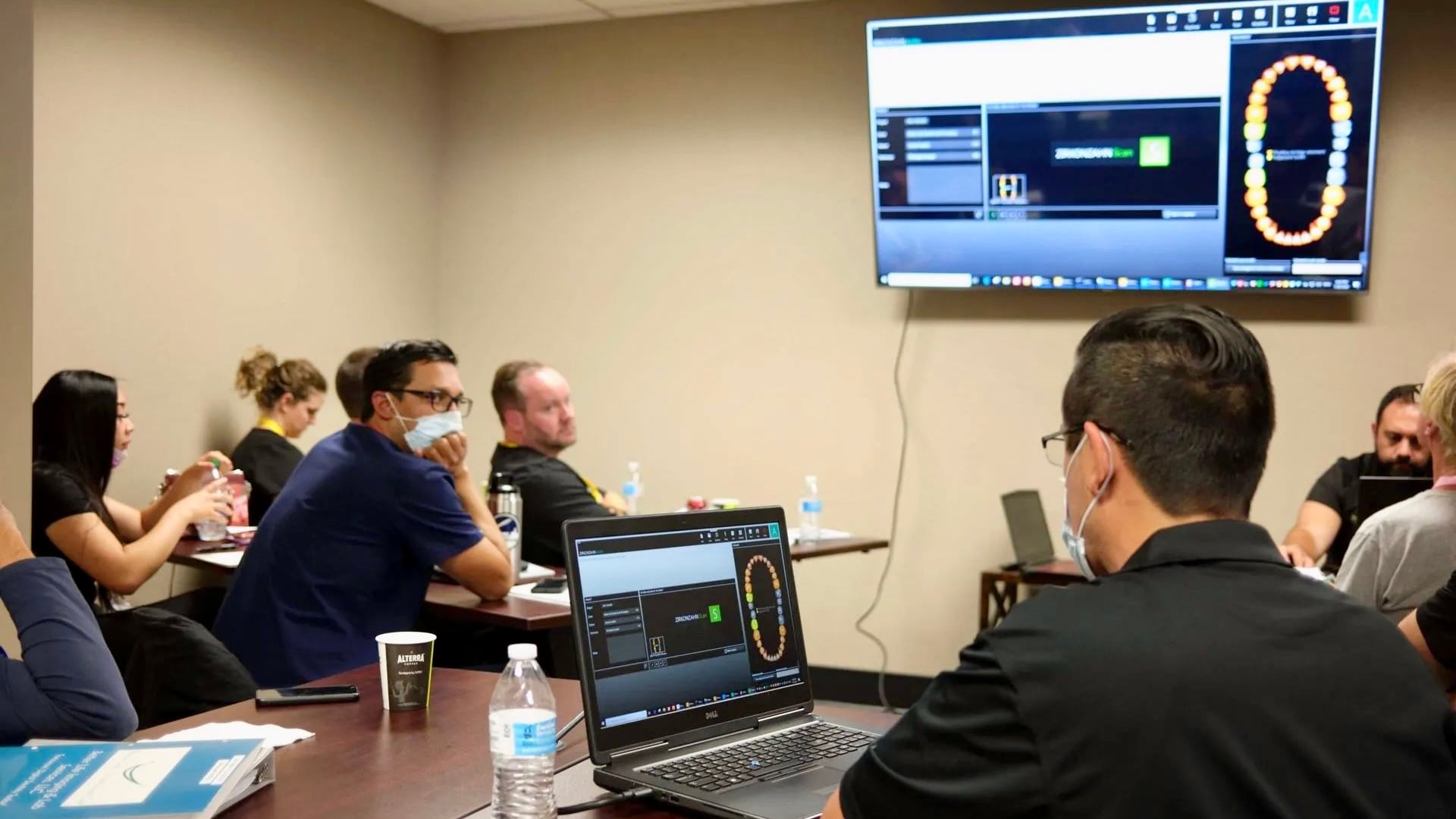
The FAM Method, Full Arch Masters’ proprietary digital workflow, is the operational system that supports same-day full-arch delivery within a two-to-four-hour window. Treatment coordinators who understand each step can answer detailed questions, explain the process in plain language, and connect the workflow to the value of treatment.
The seven steps are:
- Preoperative records and data acquisition
- Photogrammetry and intraoral scanning
- CBCT and digital treatment planning
- exocad design
- Immediate-load conversion
- Final zirconia design and finishing
- FP1-specific design, team implementation, and workflow scaling
A treatment coordinator who walks a patient through this sequence and explains concepts such as why photogrammetry captures implant positions more accurately than a physical impression, or how immediate-load conversion allows patients to leave with teeth the same day, removes much of the clinical uncertainty that slows decisions. Clinical literacy functions as a core skill for a TC and directly supports higher full-arch case acceptance.
Clinical Literacy and Case-Presentation Scripts for Full-Arch Success
Most implant CE programs teach treatment coordinators the names of implant components, the difference between FP1 and FP3 prosthetic classifications, and the broad outline of a surgical appointment. That clinical literacy matters, but it does not close cases on its own. Treatment coordinators who follow a written script and use proven presentation methods usually achieve higher close rates on seated full-arch cases.
The gap between knowing what an intraoral scanner does and using that knowledge to guide a patient toward a same-day decision is where many CE programs fall short. Programs built around clinical terminology for clinicians rarely translate that content into case-presentation scripts for coordinators. General implant curricula often omit objection handling, financial coordination, and practice-acceptance strategies, keeping the focus on procedures instead of patient decisions.
The recommended call flow for full-arch implant consultations follows a specific sequence: rapport opener, treatment-plan walkthrough using the surgeon’s notes, financing-led close with three pre-built payment scenarios, objection handling for the four expected objections, same-day decision frame, and signature capture. A CE program that does not teach this sequence word-for-word, with live practice, delivers clinical literacy without a closing system.
The Full Arch Masters Treatment Coordinator Bootcamp is taught by Nikki O’Neal, FAM’s lead treatment coordinator, who maintains the close rate referenced later in the comparison table. The curriculum relies on detailed scripts and intensive practice, built around the same scenarios a TC will face in their own practice the following week.
Financial Coordination Tactics That Turn Consults into Signed Cases
Effective financial coordination supports higher same-day acceptance on full-arch cases. Practices that establish comfort with financing first and present the case total in the context of monthly payments often close more seated full-arch cases the same day than practices that present the treatment plan first and cost last.
Three financial coordination tactics work together as a simple sequence:
- Monthly-payment anchoring. A pre-consultation financing call that sets a realistic monthly payment range filters for financial viability and prepares the patient for the in-office conversation.
- Three-tier financing menu. Patients tend to decide more easily when choosing between three pre-approved monthly payment tiers instead of reacting to a single total case fee.
- Same-day decision framing. Patients who sign full-arch treatment the same day usually follow through at higher rates than those who leave undecided, even when follow-up systems are strong.
ADA Health Policy Institute data shows that cost is the leading reason patients delay dental care, with roughly one in four adults postponing treatment due to affordability concerns. A treatment coordinator who presents financing as a standard part of care, not a backup plan for patients who cannot pay in full, reduces the affordability barrier before it turns into a hard objection.
Why Full-Arch-Focused CE Outperforms Single-Implant Training
Single-implant CE and full-arch CE serve different purposes. The clinical complexity, case value, emotional weight, and objection patterns differ at every stage of the consultation. Full-arch dental implant cases usually show lower average close rates than single-tooth restorations because the decision carries more financial and emotional pressure.
Single-implant CE programs, including university-based masterclasses and manufacturer-sponsored courses, are designed to build clinical procedure knowledge for dentists. They cover implant positioning, impression workflows, and soft-tissue management. They rarely address financial coordination, objection scripts, or same-day decision frameworks tailored to full-arch consultations.
Full-arch CE for treatment coordinators must address a different set of variables:
- Higher case values than single-implant restorations, which call for a financing-first presentation sequence
- Spouse and family involvement in decisions, which calls for joint-consultation scheduling tactics
- Longer patient consideration timelines, which require structured nurture sequences
- Higher emotional stakes for the patient, which require clinical authority and trust-building before price enters the conversation
Top-performing practices often reach higher full-arch case acceptance rates by using structured presentation systems, dedicated consultation rooms, and trained treatment coordinators. A TC trained only through single-implant CE lacks the specific playbook needed to reach those numbers on full-arch cases.
Interactive Training, In-Person Bootcamps, and Alumni Community Support
A 2009 Cochrane review found that interactive workshops produced moderately large improvements in professional practice, while traditional lecture-style sessions did not. The 2021 update concluded that educational meetings probably outperform no strategy, but did not repeat the earlier distinction. For treatment coordinator training, interactivity, depth of practice, and post-course reinforcement matter more than whether the course is technically online or in person.
High-ticket case acceptance training should be judged by behavior change and execution in the practice. A TC who completes an online module on implant anatomy has not practiced handling a cost objection. A TC who has rehearsed the same objection twenty times in a live setting has built a usable skill.
Post-course community access supports that skill over time. Regular weekly call reviews between the TC and surgeon, focused on one signed and one lost case, can create documented improvements that compound into a sustained lift in close rate. A CE program that ends on the last day of the course offers no structure for that compounding improvement.
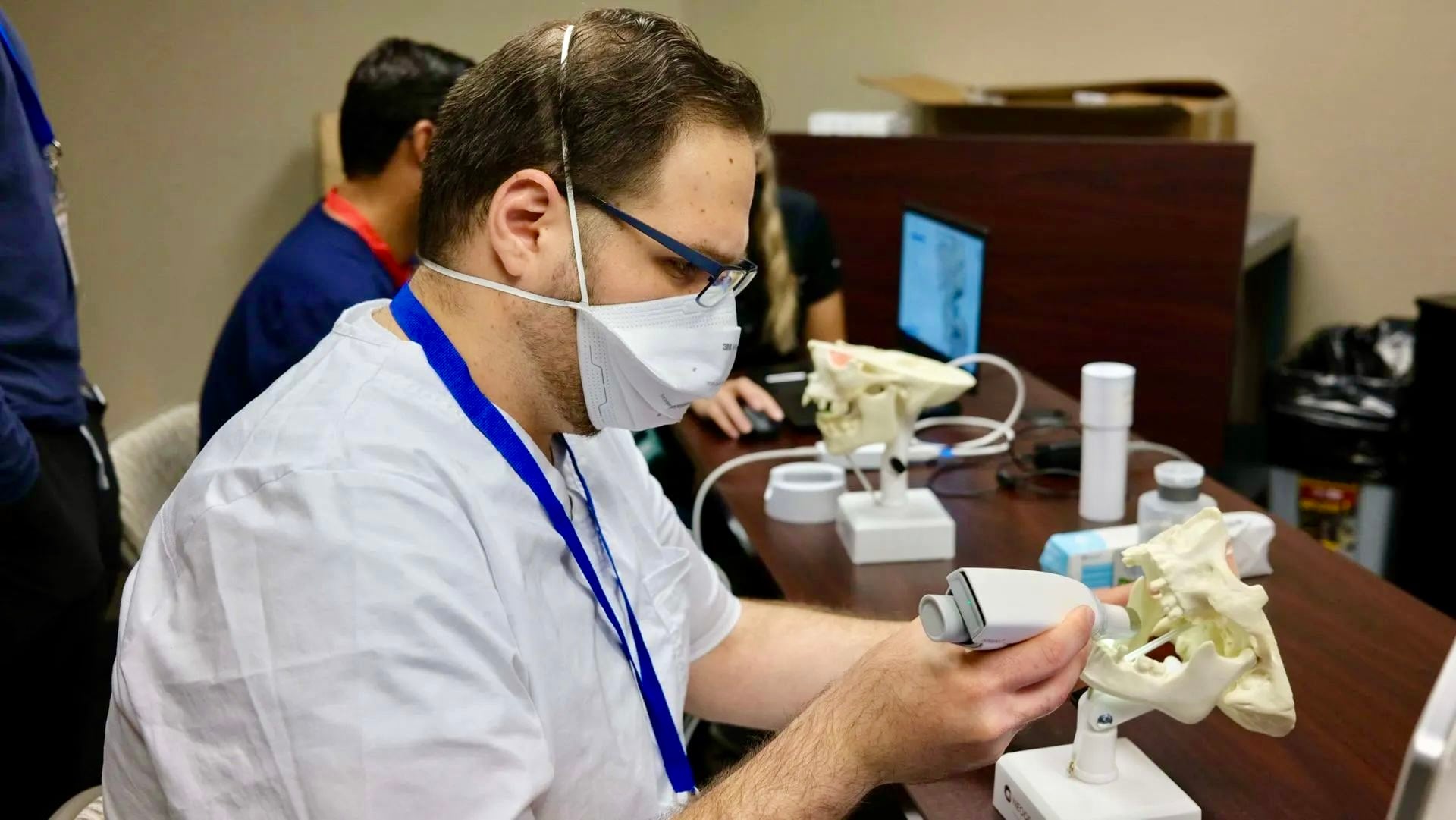
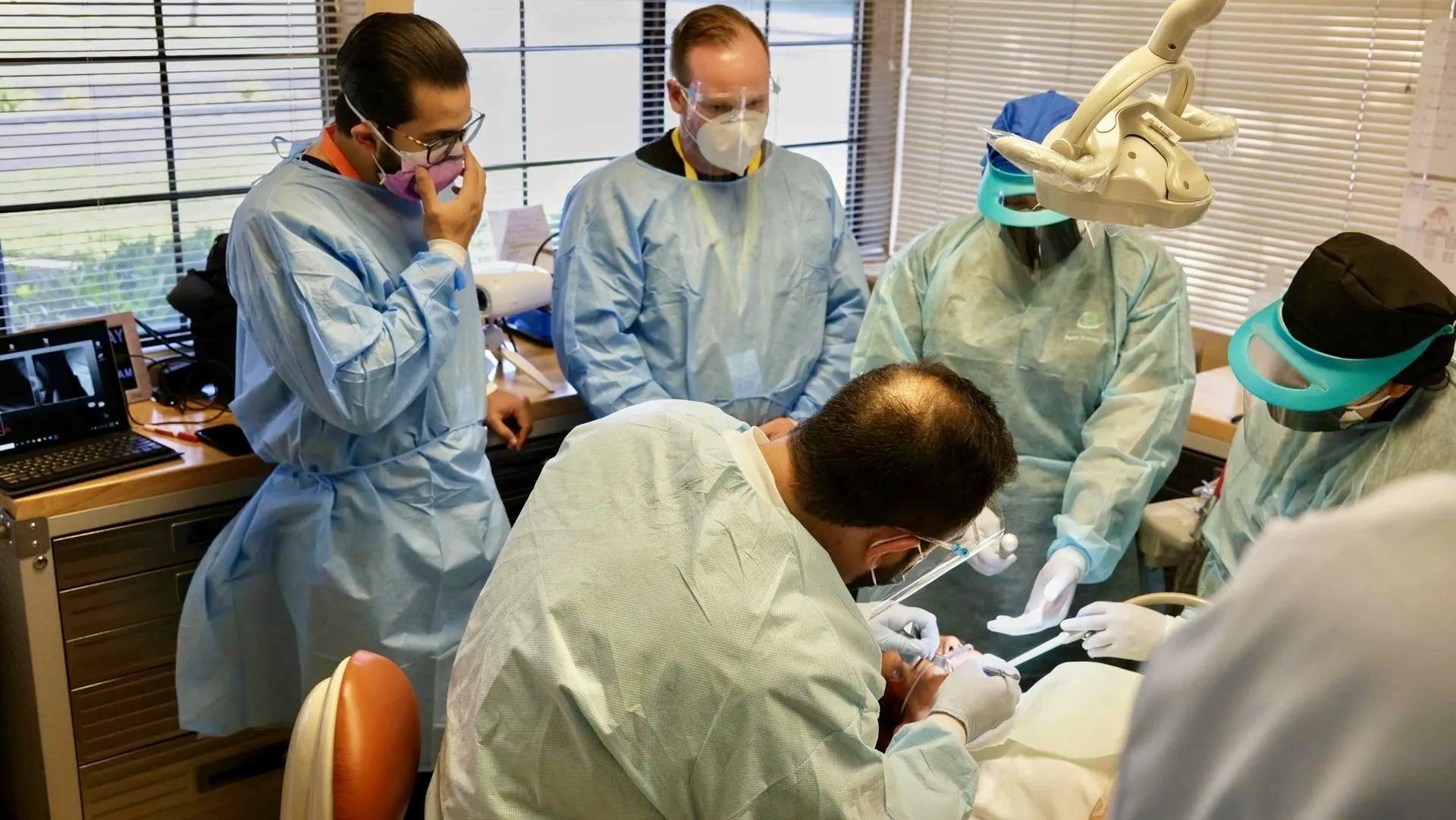
The Full Arch Masters Treatment Coordinator Bootcamp runs in person over two days and includes intensive practice and live patient scenarios. Every attendee joins FAM’s alumni community, which includes private group chats with hundreds of FAM-trained dentists, lab technicians, and team members for ongoing case support after the course ends.
Program Outcomes: Side-by-Side Close-Rate Comparison
The following table compares four program types on the metrics that determine whether a TC training investment produces measurable revenue lift.
| Program Type | Full-Arch Close Rate | ROI Tracking Provided | Post-Course Community |
|---|---|---|---|
| No structured TC training | Lower | None | None |
| General implant CE (clinical focus) | Moderate | Rarely included | Rarely included |
| Top-performing structured TC programs | Higher | Sometimes included | Sometimes included |
| FAM Treatment Coordinator Bootcamp | Close rate documented at 80% in-house | Yes, pre and post tracking framework taught in course | Yes, lifetime alumni group chats at no recurring cost |
Role-Play Scripts for the Four Most Common Full-Arch Objections
The four objections that account for most lost full-arch implant consultations are “I need to think about it,” “I need to talk to my spouse,” “I want to get a second opinion,” and “the cost is more than I expected.” The following examples draw from published objection-handling frameworks and mirror the structure taught in the FAM Bootcamp.
“I need to think about it.”
TC: “I completely understand, this is a significant decision and I want you to feel confident. If you could remove one concern from this conversation right now, what would it be? Let’s work through that together before you leave today, so you have everything you need to make the best decision for yourself.”
“I need to talk to my spouse.”
TC: “Absolutely, this is the kind of decision you should make together. I have a few options. I can get your spouse on a quick call right now so we can walk through the numbers together, or we can schedule a no-charge second consultation later this week with both of you here. Which works better?” Joint consultations with both spouses present often improve close rates compared to single-spouse consultations because the decision barrier is addressed during the visit.
“I want a second opinion.”
TC: “That is a fair step, and I respect it. When you visit the next office, I encourage you to ask a few questions. How many full-arch cases have they completed, what implant system and lab do they use, and what financing options do they offer? I will book a follow-up call for us in seven days so we can compare what you found. Does that work?”
“It costs more than I expected.”
TC: “I hear you, let me show you how most of our patients approach this. We have three financing options built around different monthly budgets. Based on what you have shared with me today, this tier puts your monthly payment at [specific amount]. Most patients find that number feels more comfortable than the total looks on paper. Can we walk through it?” The ARP framework, which stands for acknowledge, respond, pivot, begins with agreement, moves to value and payment flexibility, and ends by guiding the patient toward action.
How to Measure ROI on TC Implant Training Before You Enroll
A TC training investment in implant CE should be evaluated like any revenue-generating initiative. Practices need a pre-training baseline, a defined measurement window, and a specific revenue target. Training ROI uses the formula: Net Program Benefits ÷ Training Costs × 100, where net benefits include measurable gains such as increased revenue.
Three metrics establish the baseline before enrolling, and each one measures a different part of the picture:
- Current full-arch close rate. Track the number of full-arch consultations seated versus the number of cases signed in the prior 90 days. This baseline shows your starting point and makes any lift measurable. Dental treatment coordinator KPIs often include case acceptance rate, dollar value of scheduled treatment, and average time from diagnosis to scheduling.
- 90-day revenue lift target. Once you know your current close rate, calculate what an improvement would be worth in signed case revenue at your average full-arch case value. Structured treatment acceptance training can lift close rates within 90 days without changes to fees, doctors, or marketing spend.
- Weekly call-review discipline. The first two metrics track outcomes. This third metric tracks the behavior that drives those outcomes. Regular weekly 60-minute recorded call reviews between the TC and surgeon, covering one signed and one lost case, can create documented improvements that compound into a sustained lift in close rate. Build this cadence into the post-course plan before the course begins.
Skill application should be measured at 90 days post-training through manager surveys and performance KPI checks. This approach confirms sustained behavior change instead of relying on immediate post-training feedback. A CE program that does not give a TC a measurable framework to track their own improvement functions as a seminar, not a system.
Conclusion and Next Step for Full-Arch Case Acceptance
Implant CE for treatment coordinators delivers real value when it provides three elements. The program must build clinical literacy around the actual workflow the practice runs, teach objection-handling scripts through live practice, and install a financial coordination system that presents financing before case totals. Many programs deliver the first element. Fewer deliver all three in a coordinated way.
The Full Arch Masters Treatment Coordinator Bootcamp is built around the documented in-house close rate mentioned earlier, the seven-step FAM Method workflow, and structured responses for the four objections that account for most lost full-arch cases. It is taught by the treatment coordinator who runs that system in a working full-arch practice, not by a consultant who only teaches theory.
Evaluation criteria stay simple. The program should teach the full-arch workflow your TC will actually present, include scripts that are practiced live, provide a financial coordination system with measurable pre and post tracking, and offer post-course community access for continued improvement. Programs that miss any of these elements rarely move the needle on full-arch case acceptance.
Frequently Asked Questions
What makes implant CE for treatment coordinators different from general dental CE?
General dental CE is typically designed for clinicians such as dentists, hygienists, and assistants, and focuses on procedure technique, clinical protocols, and patient safety. Implant CE for treatment coordinators addresses the non-clinical side of the implant consultation. It covers how to present a high-ticket case, how to sequence financial information, how to handle the four most common objections, and how to structure a same-day decision close. A treatment coordinator who completes only general dental CE gains clinical vocabulary but not a closing system. The FAM Treatment Coordinator Bootcamp centers on that closing system, including scripts, live practice, financing menus, and the seven-step FAM Method workflow, so a TC leaves with a repeatable playbook rather than just a certificate.
How long does it take to see measurable results after TC implant training?
Most practices see measurable improvement in full-arch close rates within 60 to 90 days of completing structured TC training, as long as the TC follows a written script, reviews recorded consultations weekly with the surgeon, and presents financing before case totals. Weekly call reviews that cover one signed and one lost case create a compounding effect over 12 months. The FAM Treatment Coordinator Bootcamp includes a pre and post tracking framework so practices can measure close-rate lift against a documented baseline instead of estimating improvement later.
Should the dentist attend the Treatment Coordinator Bootcamp alongside the TC?
Yes. The FAM Treatment Coordinator Bootcamp is priced for both the dentist and the TC, and the curriculum is designed for full-team alignment. When the dentist and TC attend together, they leave with a shared language for the consultation, a shared understanding of the financing menu, and a shared script for objection handling. This alignment allows the surgeon’s brief appearance in the consultation room, which research links to meaningful incremental same-day signed revenue, to reinforce the TC’s presentation. Practices where the dentist and TC are not aligned on the closing system consistently underperform practices where both roles train on the same playbook.
What is the FAM Method, and why does a treatment coordinator need to understand it?
The FAM Method is Full Arch Masters’ proprietary digital workflow that takes a full-arch patient from preoperative records to a screwed-in, same-day restoration within a two-to-four-hour window. The seven steps, which include preoperative records and data acquisition, photogrammetry and intraoral scanning, CBCT and digital treatment planning, exocad design, immediate-load conversion, final zirconia design and finishing, and FP1-specific design and team implementation, form the clinical sequence a treatment coordinator must explain accurately during a consultation. Patients considering a full-arch case that typically costs $14,000 to $36,000 per arch ask detailed questions about the procedure, timeline, and technology. A TC who answers those questions with clinical authority and explains why photogrammetry is more accurate than a physical impression, or why same-day delivery is possible, reduces the uncertainty that causes patients to delay decisions.
How does the FAM Treatment Coordinator Bootcamp support TCs after the course ends?
Every attendee of the FAM Treatment Coordinator Bootcamp joins FAM’s alumni community at no recurring cost. This community includes private group chats with hundreds of FAM-trained dentists, lab technicians, and team members. The group provides ongoing case support, script refinement, and peer accountability for the weekly call-review discipline that drives sustained close-rate improvement. Alumni also receive access to FAM’s digital resource library, which includes treatment coordinator forms, case presentation templates, and consent documents. The FAM KOL (Key Opinion Leader) buying group, which offers vendor discounts on implant systems, software, and equipment, is available to all alumni at no recurring cost after completing any FAM course.